• About

doubtfulsea

~ adventure fantasy

Category Archives: Uncategorized

READING OUT–LOUD

23 Wednesday Dec 2020

Posted by Ollamh in Uncategorized

≈ Leave a comment

As ever, dear readers, welcome.

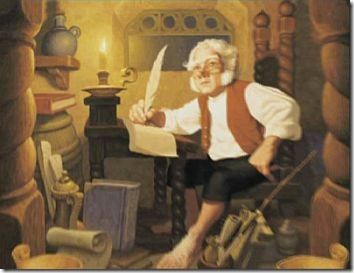
Back in early November, I wrote a posting which explored the idea of how Bilbo had “learned [Sam] his letters”. 

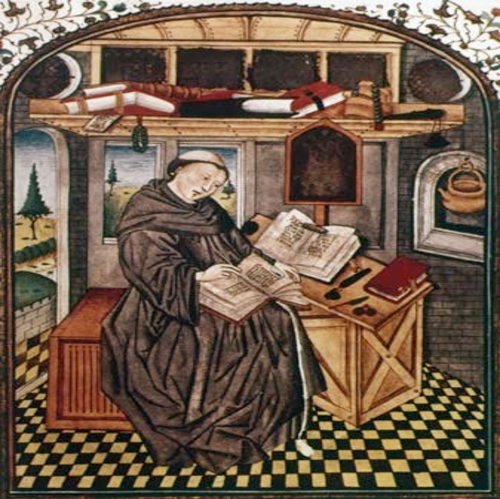
Because Middle-earth is a place which roughly mirrors the Western Middle Ages, I imagined that Bilbo had begun with the equivalent of the Roman alphabet, Tengwar, and Sam had practiced saying and writing the letters.  In earlier times, just as literate people were many fewer in the West until the 19th century, material for writing was often hard to come by.  Scriptoria (medieval writing centers in ecclesiastical establishments)
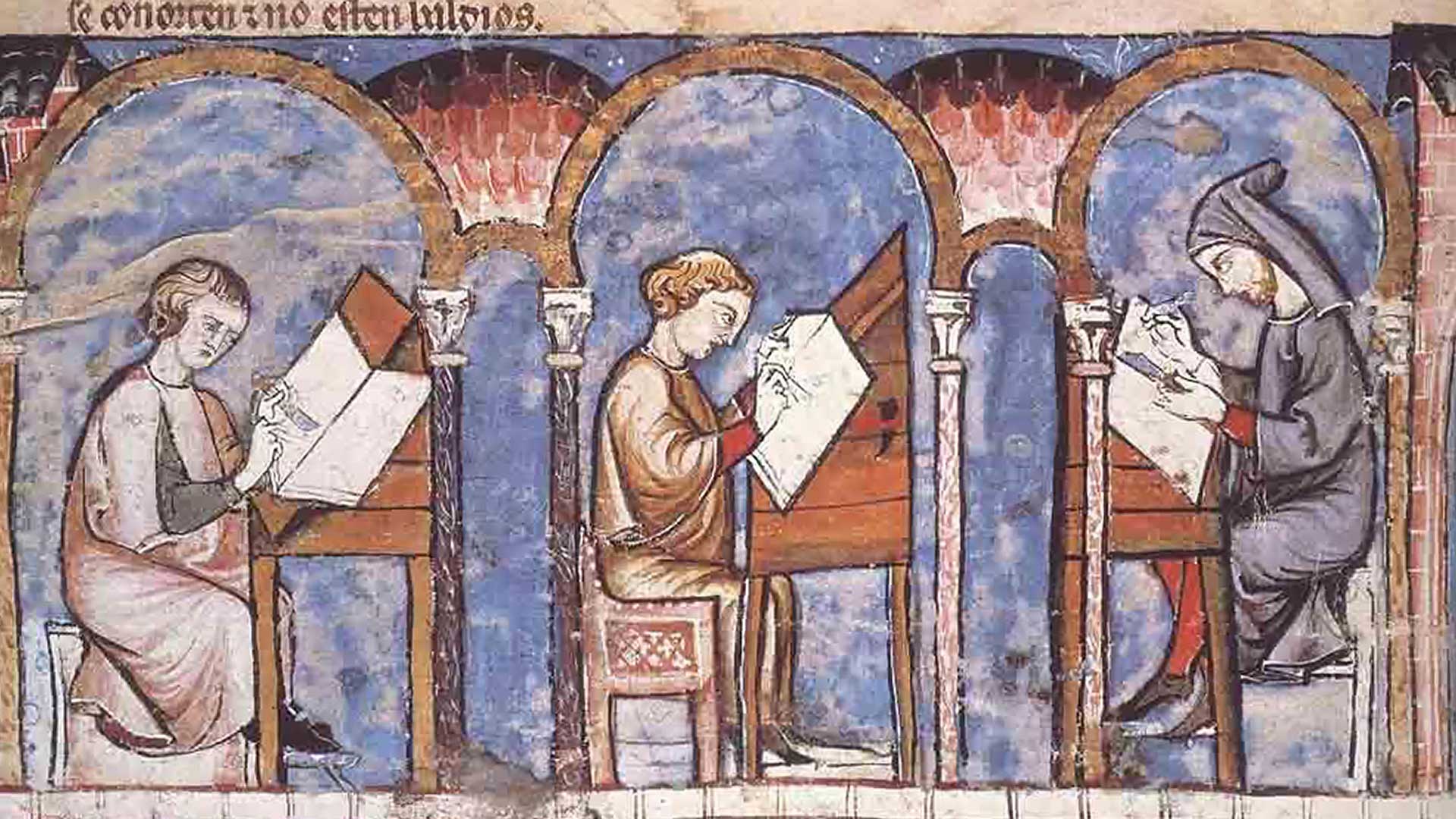
used prepared animal skins—parchment–for copying older works and writing new ones.

Our paper, made from wood pulp, is a 19th-century invention, created as a replacement for its predecessor, paper made from rags.  The earlier paper had been invented by the Chinese about 100AD, only reaching the West, via the Islamic world, by the 12th century.

As literacy grew rapidly in the West in the 19th century and printing methods improved, the demand for the older rag paper outpaced supply.  This brought on a shortage and it seems that wood pulp paper was produced as a cheaper and more plentiful substitute.  With our medieval view of Middle-earth, then, we can expect that Bilbo, being wealthy, could afford as much parchment as he wanted, but we can also expect that, like medieval students, as they learned their letters, Sam might have used a cheaper and easily-renewable resource:   a slate and chalk,
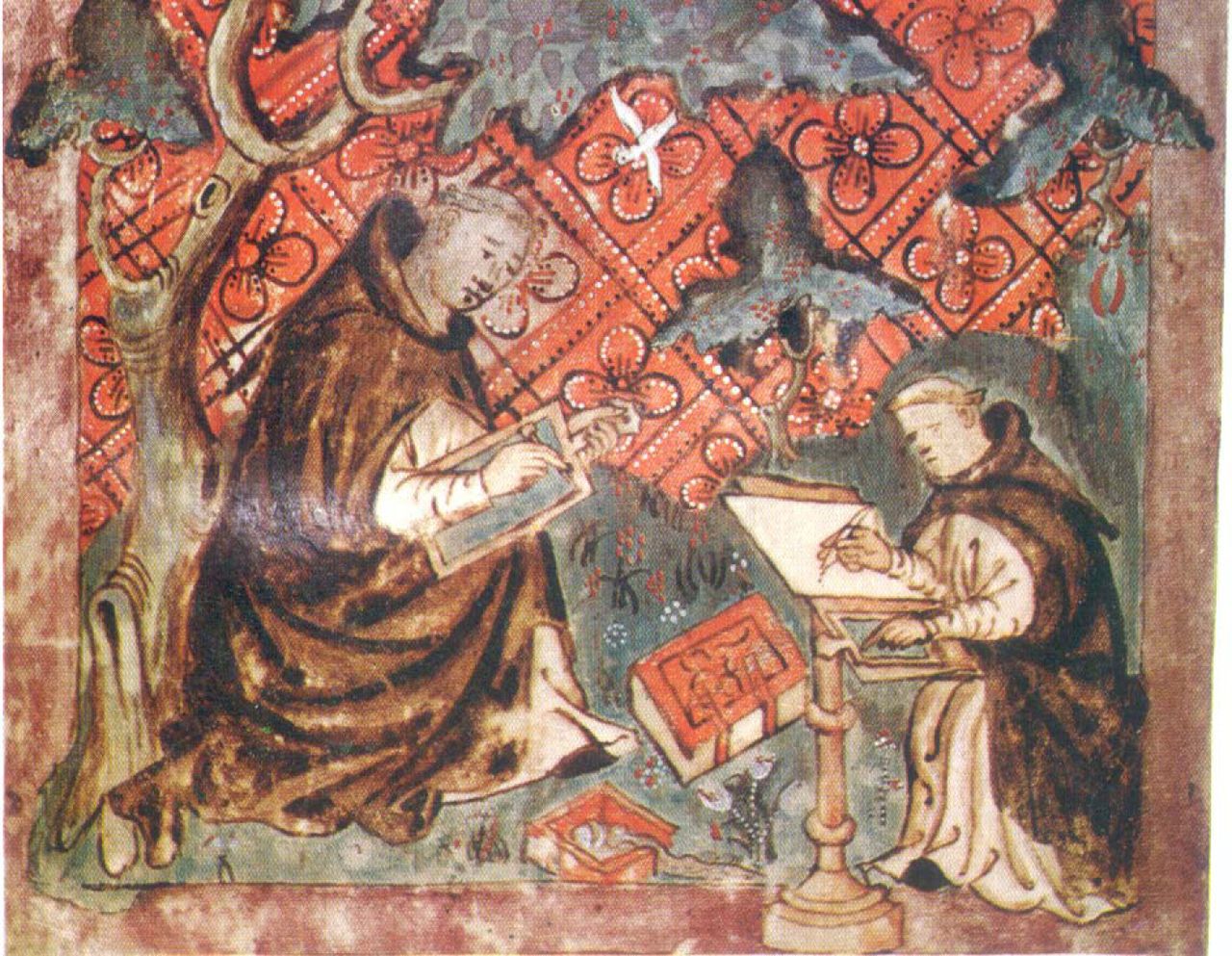
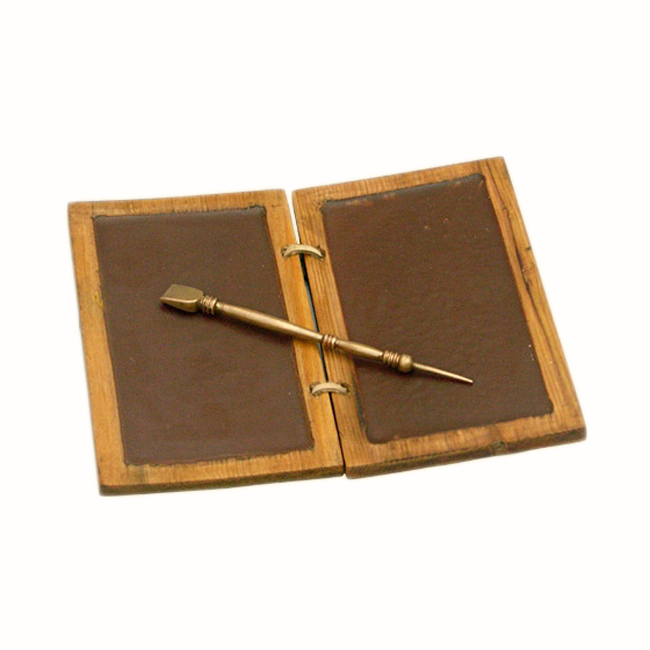
or another tool, handed down from the Classical world,
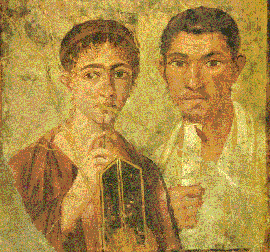
the diptych of wax-covered board and stilus.

We might see another part of what we can imagine was Sam’s education in something he does on the long journey into Mordor:

“Sam stood up, putting his hands behind his back (as he always did when ‘speaking poetry’), and began…”—his poem being that about the “oliphaunt”.  (The Two Towers, Book Four, Chapter 3, “The Black Gate is Closed”)

Medieval schoolrooms, for all that they were situated in places which often had strict rules about speech and silence, must have been relatively noisy places.  First, because books were copied by hand, which took time, and the materials were somewhat expensive, there would have been few of them–perhaps, in fact, only one copy of the text and that in the hands of the master, who would have read the text to be studied aloud, while the students took notes—like Sam, on slate or tablet.

Second, because, unlike the modern idea of reading:  eyes scanning the page, mouth tightly shut,

Western people all the way back to the Greeks, whose alphabet, derived from the Phoenician, forms the basis of the Roman writing system which, in turn, forms the basis of the system I’m writing this posting in, customarily read everything aloud.  They would begin to do this from their days learning the letters

and continue throughout their lives.

In fact, monastery schools, like that of St Gall in what is now western Switzerland,

taught not only how to make sense of the letters, words and sentences, but how to deliver a text publicly.  This was important in worship services,

but it was also employed during mealtimes, when one of the monks would be given the job of reading some religious work aloud while the others ate.
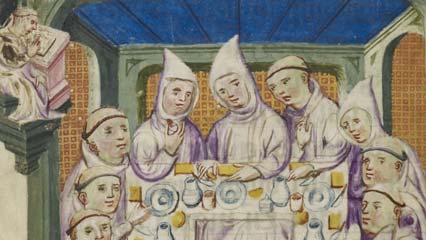
 There were strict standards for public reading and so early drill was intense and texts might even carry conventional signs to indicate things like correct pronunciation, where it was appropriate to raise or lower the voice, and where and how to end a passage.

A schoolroom, then, would be filled with voices, those of the master reading and commenting and correcting, those of the students reciting and repeating what they’d been taught—just like Sam and his “speaking poetry”. 

It’s not known why people began to read silently, although there is lots of theory and scholarly argument on the subject.  Certainly it seems to be true that, somewhere perhaps in the later 17th century, the custom had changed. 
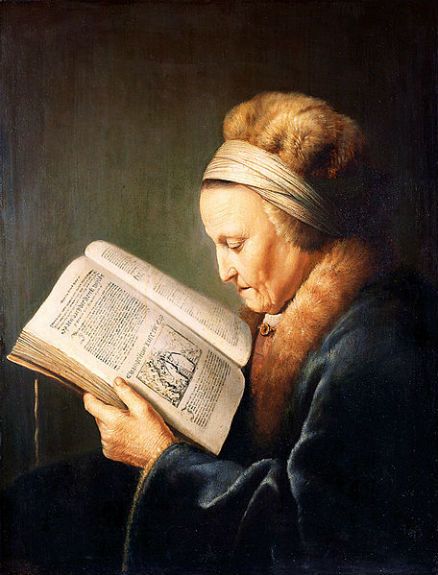
This isn’t to say that, by the way, that everyone from the beginning had conformed to the custom.  In a famous passage in his autobiography (Book 6, Chapter 3), St Augustine (354-430AD)

 describes his bishop in Milan, St Ambrose (c340-397AD),

as a silent reader.  Scholars have seen this from two directions, depending on what they want to say about the act of reading.  Some say that this suggests that it wasn’t unusual for at least some people to read to themselves.  Others, however, say that St Augustine mentions it because it seems so odd.  For myself, I suspect that it’s the latter, but, not being so well-versed in both texts and arguments as such scholars, I would claim that this is no more than a hunch on my part.

Although there is academic argument over silent versus aloud, I’ve recently been rereading a fantasy novel in which, for some people, it’s actually dangerous for them to read aloud.  This is Inkheart (Tintenherz  in the original German),

published in 2003, and written by Cornelia Funke.        
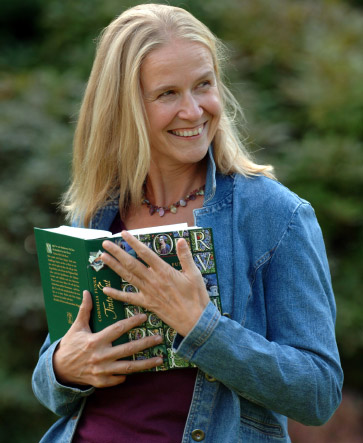
In time, she has added two more novels to this, Inkspell (Tintenblut—why the title change, I don’t know) 2005, and Inkdeath (Tintentod) 2007.  (She now promises a fourth volume, Die Farbe der Rache—The Color of Revenge—to be published next October.)

These are books all about the love of books and the adventures you can find in them—and the peril if they become too real, a major theme being that there are certain people in the world whose ability to read a book—specifically a novel—is so magical that they can actually bring characters out of books—and send people into them (a sort of literary cosmic balance).

Needless to say, I recommend them to you, along with an earlier novel, Herr der Diebe (The Thief Lord )

published in Germany in 2000 and in an English translation in 2002.

But—at this moment, it’s almost Christmas—or, if you prefer, the Feast of Sol Invictus, or that which Bilbo and Gandalf celebrate with Beorn, Yule, and, while I continue to read, I’m in hopes that someone else has read something of mine and, following that list, is bringing a pile of treats on his epic trip Thursday night flight.  (He can’t be scanning my list—that one’s much too short!)

Because this blog has readers from around the world, perhaps the best wish that I can make is that the new year brings peace and health throughout the world for everyone.

In the meantime,

Thanks, as always for reading, stay well,

And trust that, in the last week of the old year, there will be

MTCIDC

O

PS

I would also recommend the films made from The Thief Lord (2006)

and Inkheart (2008).

Both do a very good job of providing you with a visual context for their respective books, as well as employing actors who do a convincing job of being their characters.
One Amazon Too Many?

17 Thursday Dec 2020

Posted by Ollamh in Uncategorized

≈ Leave a comment

Welcome, as ever, dear readers.

As I taught The Hobbit again this term, a student’s question from last year came back to me once more:  “Where are the women?”

The answer is, aside from a few words about Bilbo’s mother, Belladonna nee Took (about whom I would love to know so much more—why was Gandalf, not, I would say, someone easily impressed–so taken with her?) and her sisters, the answer is simple:  there really aren’t any.  An author as fruitfully inventive as Tolkien (just look at the pile of volumes of manuscript material published by Christopher Tolkien) could easily have created some, but didn’t.  And, as far as I know, he provided no explanation for this:  it’s simply as much the case as Cinderella has a step-mother with two daughters.

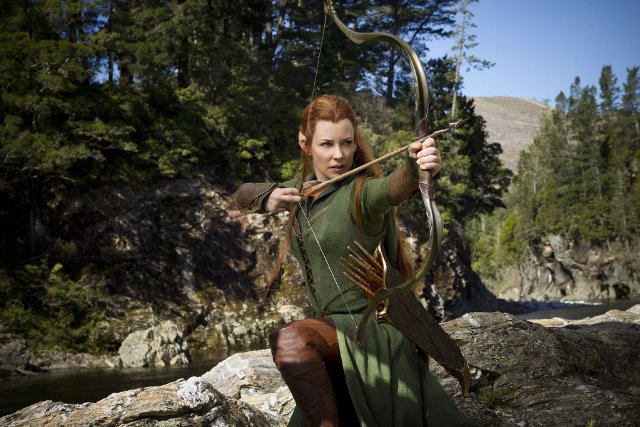
This lack, clearly felt by Jackson & Co in their 3-part adaptation of The Hobbit, led to the stitching-in of “Tauriel”, a warrior elf,

and a subplot which, to me, caused there to be an imbalance in the story, whose original focus was upon Bilbo and his development from a Baggins who flees even from the idea of adventure—

“We are plain quiet folk and have no use for adventures.  Nasty disturbing uncomfortable things!  Make you late for dinner!  I can’t think what anybody sees in them…”  (The Hobbit, Chapter One, “An Unexpected Party”)

to someone who, in later chapters, has so changed that Gandalf, seeming to appear out of nowhere, claps him on the back and says, “Well done!  Mr Baggins!…There is always more about you than anyone expects!” (The Hobbit, Chapter 16, “A Thief in the Night”)

The complications of a brief but improbable romance with a dwarf, a conflict with the king of the forest elves, and combat with sinister orcs, all take away from the author’s original intent.  In the novel, Bilbo is always center stage and is meant to be and subplots of any sort can only distort and dilute the author’s intent as embodied in the text.

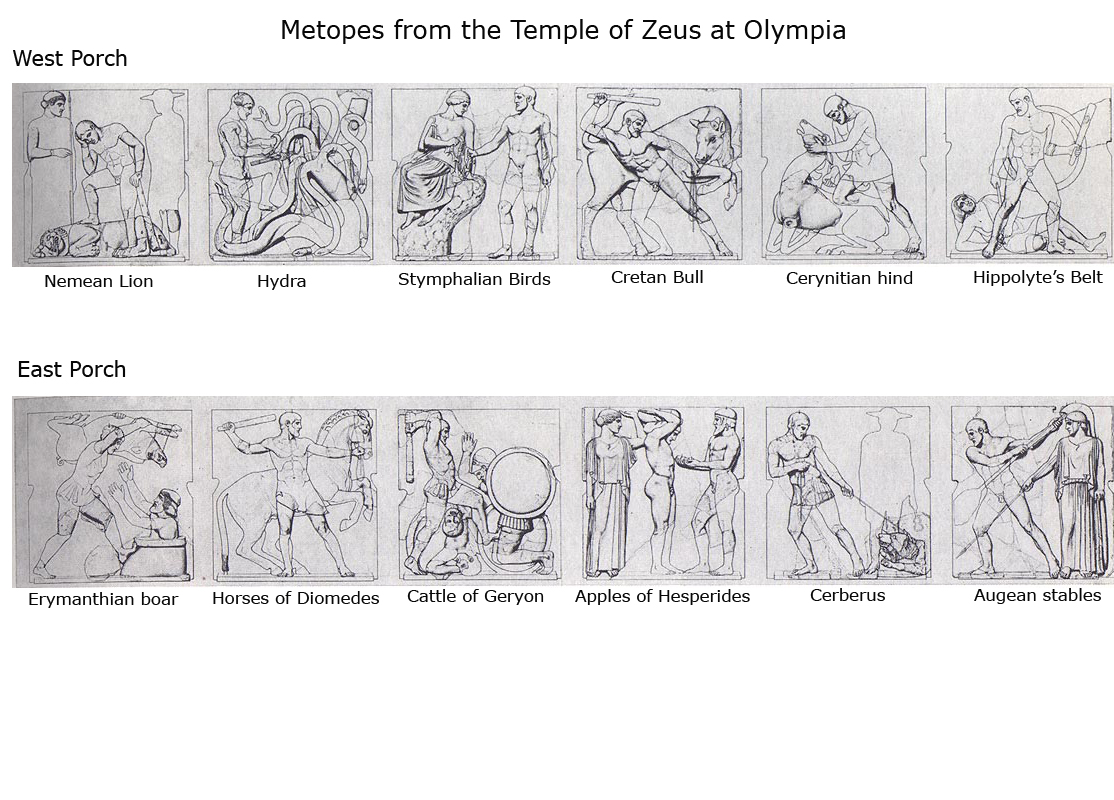
Women warriors, however, appear almost at the beginnings of western literature.  As one of his labors,Herakles must obtain the zone (that’s “ZOE-nay”), a kind of belt, of the queen of the Amazons, Hippolyte (“hih-poh-LOO-tay”). 

In Book 2 of Apollonius of Rhodes’ Argonautica, Jason, of Golden Fleece fame,

almost encounters the Amazons on his trip eastwards to Colchis (a wind blows the Argo away from their land at the last minute).

And the Athenian hero, Theseus, not only battles the Amazons,

but, in some versions of the story (there are a number of these) marries their queen, Antiope (in Greek, “ahn-tee-AH-pay”, but in English we say “an-TIE-oh-pee”)

Even Achilles is matched against the Amazons when they come to aid the Trojans and, in a dramatic moment in one version of the story, fights their leader, Penthesilea (in Greek, “pen-theh-SEE-lay-ah”, in English, “pen-theh-sih-LAY-a”) and, even as he kills her, falls in love with her.

The idea of Amazons inspired several generations of Greek sculptors and pot-painters, including the famous frieze (a sculptured band of stone) from the 5th-century temple of Apollo at Bassae (modern Greek VAH-seese).

The site was excavated in the early 19th century

and the frieze was sold to the British Museum, where it’s on display to this day.

Although ancient people seemed to believe in their existence, whether there were real Amazons has been debated by scholars for years.  The pot depictions, in particular, often look like, never having seen one, Athenian artists based their depictions upon the wild tribesmen they saw every day in the city, the Skythians, a horse people from north of the Black Sea,

whom the government of Athens used both as policemen and as missile troops in war,

as you can see from this depiction of Amazons fighting Greeks.

New archaeological evidence from southern Russia, however, suggests that perhaps those artists weren’t improvising, as recent finds provide the possibility that, among the Skythians, woman warriors were part of the culture.  (See, for example, this CNN piece from January, 2020:  https://www.cnn.com/2020/01/06/world/scythian-amazon-burial-scn-intl-scli/index.html )

If there was no woman warrior like “Tauriel” in The Hobbit, there is certainly one in The Lord of the Rings and, in fact, there were almost two. 

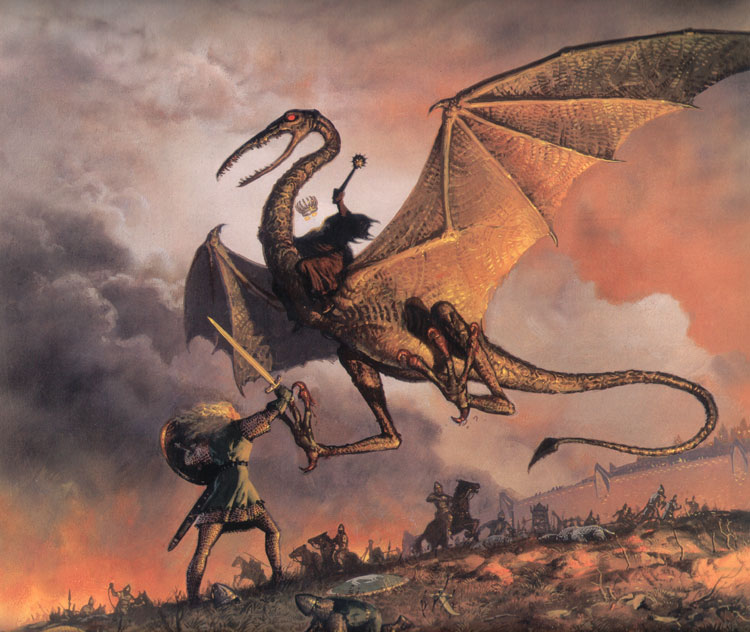
Those of us who are readers of the text have always known and loved Eowyn and that amazing scene in The Return of the King (Book Five, Chapter 6)—but, pictures are (almost) better than words here—

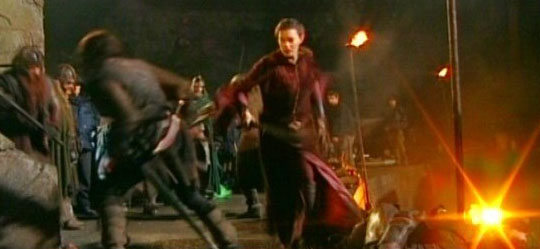
Somewhere in the scripting of The Lord of the Rings, a combat role had been given to another woman:  Arwen and some scenes were actually filmed.  Here’s a rough image—

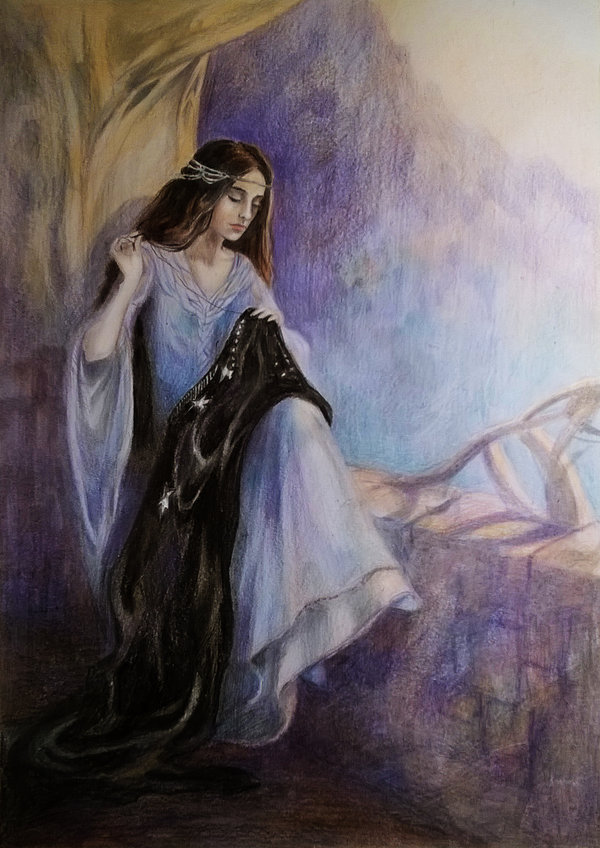
As in the case of “Tauriel”, I can understand the temptation:  in the book, Arwen seems a very passive figure, at best sending Aragorn a banner she has sewn for him:

“ ‘It is a gift that I bring you from the Lady of Rivendell,’ answered Halbarad.  ‘She wrought it in secret, and long was its making.’ “ (The Return of the King, Book Five, Chapter 2, “The Passing of the Grey Company”)

(This is a 1911 painting by Sir Edmund Leighton, 1852-1922, which has had various titles, including “Stitching the Banner”.  I’ve used Leighton paintings before, generally classical scenes, for which he was famous, but I was directed to this work from the Wiki entry for “Arwen”, which had this, by Anna Kulisz, which credited its origin to the Leighton.)

And making only a kind of traditional story-book last appearance, to marry him.

The script writers had already changed the text, removing Glorfindel, and putting Arwen on his horse, Asfaloth.

As well, it’s not Frodo alone who crosses the ford of the Bruinen and turns back to defy the Nazgul, it’s Arwen,

who then calls up the water to wash them away, which was done by Elrond and Gandalf in the book (The Fellowship of the Ring, Book Two, Chapter 1, “Many Meetings”)

(A powerful illustration by John Howe)

In the second film, this was to be expanded by having her bring the reforged sword, Anduril, to Aragorn at Helm’s Deep and to join in the fighting there, but for reasons I have so far seen no documentary evidence for—possibly a very loud fan revolt?—that idea was scrapped.  And I’m glad that it was, for the same reason that I believe that the introduction of “Tauriel” was not a good choice.  Everything we know up to this point in the story about Eowyn has led us logically to the moment of her confrontation with the Nazgul:  a “Shield-maiden”, frustrated at always being left behind, in despair at the thought of Aragorn’s imagined death on the Paths of the Dead, conspiring with Merry though both have been ordered to stay behind, it seems completely natural that she would face the chief of the Nazgul over her uncle’s body.  To have a parallel in Arwen would be to seriously dilute the impact of that scene, especially in that it’s clear that Eowyn has not planned to return from the relief of Minas Tirith.  As Merry sees her at the moment of facing the Nazgul:

“Eowyn it was, and Dernhelm also.  For into Merry’s mind flashed the memory of the face that he saw at the riding from Dunharrow:  the face of one that goes seeking death, having no hope.”  (The Return of the King, Book Five, Chapter 6, “The Battle of the Pelennor Fields”)

I know that this relegates Arwen to the lesser position she actually holds in The Lord of the Rings, but I would prefer that to losing the full impact of this—

Thanks, as always, for reading,

Stay well,

And remember that, as ever, there’s

MTCIDC,

O

Have Confidants!

09 Wednesday Dec 2020

Posted by Ollamh in Uncategorized

≈ Leave a comment

Hamlet is talking to himself again.

“Oh that this too too solid Flesh, would melt,

Thaw, and resolue it selfe into a Dew:

Or that the Euerlasting had not fixt

His Cannon ‘gainst Selfe-slaughter. O God, O God!

How weary, stale, flat, and vnprofitable

Seemes to me all the vses of this world?”

(from the First Folio, 1623—if you would like to read this play in this early edition:  https://internetshakespeare.uvic.ca/Library/Texts/Ham/ )

(And welcome, as ever, dear readers.)

Hamlet often does so, his seven soliloquies being among the most famous of all of Shakespeare’s speeches, (for a really interesting essay about these, see:   https://www.shakespeareflix.net/2014/10/accurate-list-of-hamlets-soliloquies.html )

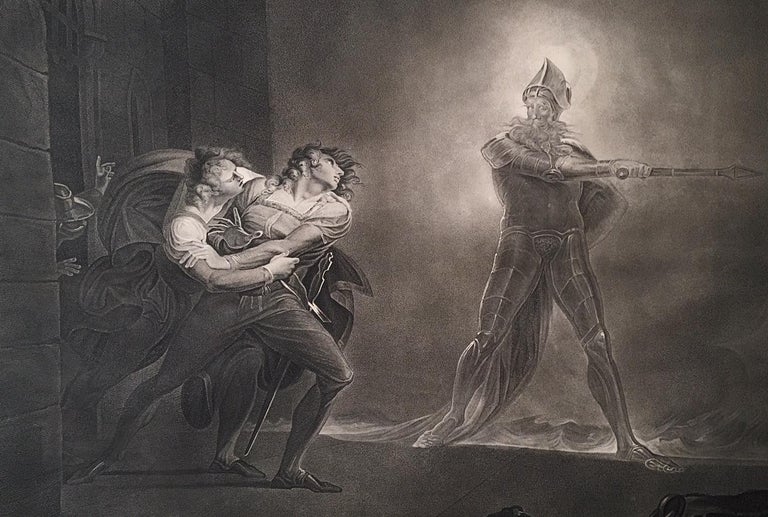
but Hamlet does have a friend from school who has come to attend his father’s funeral, Horatio, and it’s at Horatio’s urging that Hamlet first sees the ghost of his murdered father.

It’s also to Horatio that Hamlet talks about Yorick the jester

and meditates on life and death.

And, when he’s dying, it’s to Horatio that Hamlet entrusts his story, saying, basically, “clear my name”.

Although he talks a good deal to himself, we have a much fuller sense of Hamlet because of his dealings with Horatio.

The older literary term for this kind of character is confidant/confidante, the spelling of which suggests English gets the word from French, as the Latin original is confidens, ”trusting in (someone/something)”.  This was the term for a standard character in French tragedies of the 17th century by authors like Pierre Corneille (1606-1684),

and Jean Racine (1639-1699),

where many major characters have a secondary figure who acts like Horatio—as Oenone the nurse does for Phedre in Racine’s 1677 play.

XIR239567 Phaedra and Oenone, illustration from Act I Scene 3 of ‘Phedre’ by Jean Racine (1639-99) engraved by Raphael Urbain Massard (1775-1843) 1824 (engraving) (b/w photo) by Girodet de Roucy-Trioson, Anne Louis (1767-1824) (after); Bibliotheque de L’Arsenal, Paris, France; (add. info.: daughter of Minos and Pasiphae; inspired by classical Greek and Roman art; revealing her love for Hippolytus); Giraudon; French, out of copyright

In our world, we might call Horatio Hamlet’s BFF, and the idea of a hero having one goes far back into the history of western literature.  Odysseus often seems to be the archetypical loner,

even though, by the end of The Odyssey, his son Telemachus, and several of his serving men help him in dealing with the 100+ suitors and their servants.

Other Greek literary figures, however, are often paired,

Achilles with Patroclus,

Orestes and Pylades,

even Heracles, with his nephew, Iolaus.

In Vergil’s Aeneid, Aeneas has a shadow in Achates

who is even given a repeated adjective which reflects his closeness to his friend, fidus, “faithful”.

There are more of these through the centuries, everyone from Oliver, Roland’s friend in the 11th-century Chanson de Roland

to Dr. Watson in the Sherlock Holmes stories–

and early mystery stories seem almost to require them, such as the combination of Lord Peter Wimsey and Bunter in the novels and short stories of Dorothy Sayers (1893-1957)

and Albert Campion and Lugg in the novels of Margery Allingham (1904-1966).

Bunter and Lugg are servants, and obviously not of the same social class as their masters, and Lugg is a retired burglar.  His stated goal, however, is to make the seemingly-feckless but obviously upper-class Campion respectable and this provides a second form of confidant:  the comic side.  This parallel of comic with serious is as old as the 5th-century BC dramatist, Aristophanes, whose god, Dionysos, has a slave named Xanthias, in whom he confides in the play, Frogs of 405BC.  

Classic comic confidants would include characters like Sancho Panza in Miguel Cervantes’ (1547-1616) Don Quixote

and Jeeves in PG Wodehouse’s (1881-1975) novels and short stories about the cheerful idiot, Bertie Wooster. 

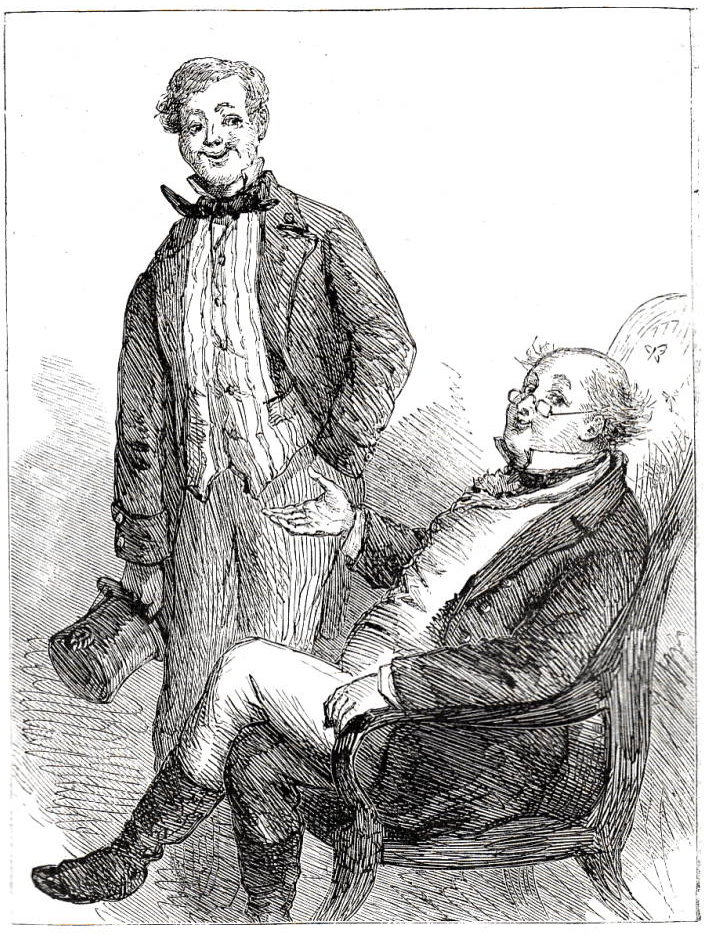
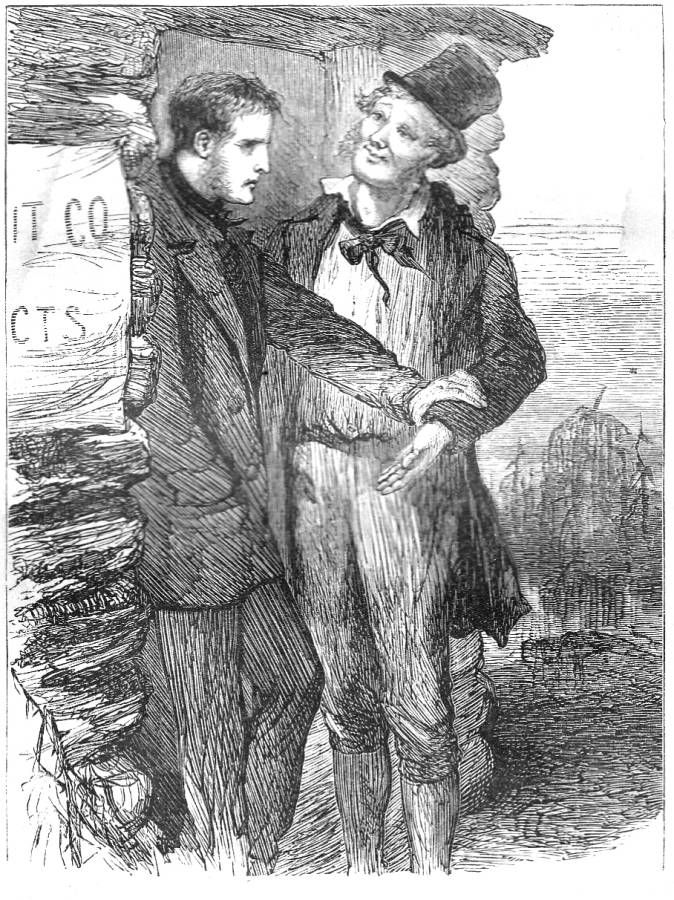
People like Xanthias and Sancho could easily fit into the purely comic category, but Jeeves, in an odd way, is involved in the comedy, but also steers Bertie out of many of his worst disasters, putting him into a slightly different category and two other figures in this category have, I think, a special resonance for the inspiration of this posting, both from novels by Charles Dickens (1812-1870).  These are Sam Weller, from The Pickwick Papers (1837)

and Mark Tapley, from Martin Chuzzlewit (first published serially in 1842-44).

Both of these are lower class men by their manner of speech, but clever, resourceful, and like Achates, faithful to their masters, Sam to Mr Pickwick and Mark to Martin Chuzzlewit.  And thus it is more than the name of Mr Pickwick’s servant which brought to mind another Sam.

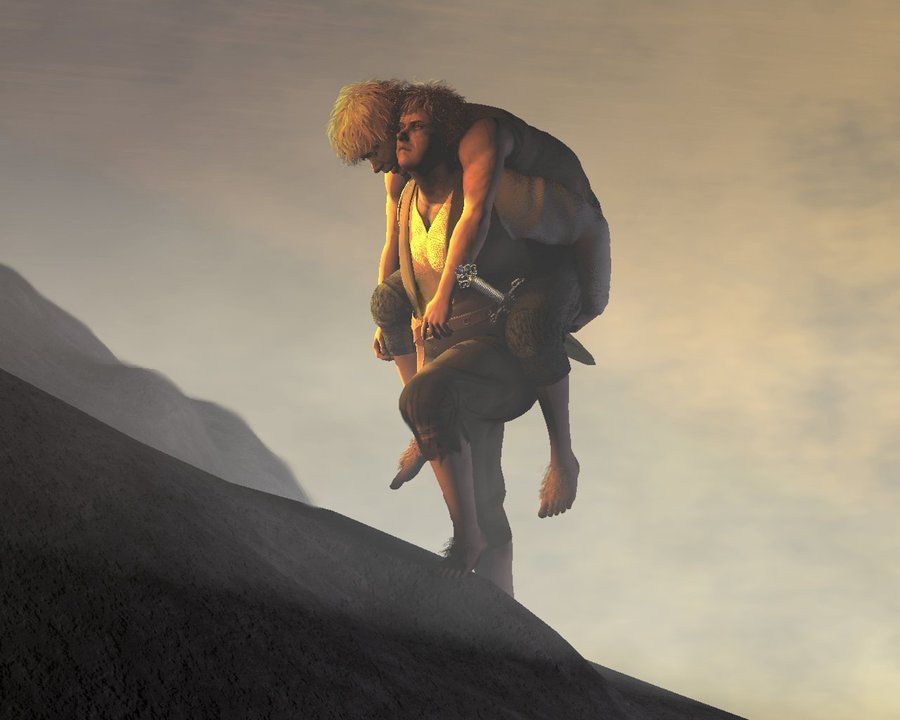
When teaching The Hobbit this fall, I had been struck by the fact that most of what we know about Bilbo comes from the narrator or from Bilbo’s internal monologue:  for all that he’s in the company of a gang of dwarves, he has no real friend among them.  He manages to turn from the timid Baggins of the book’s beginning to the bold Took of later chapters almost completely by himself and our knowledge of that development comes to us almost entirely through the narrator. It’s easy to remember the physical side of Sam, how he grits his teeth and goes on, no matter what, even to carrying Frodo up Mount Doom, but

there is another side to their relationship.  Frodo and Sam are always talking and that back-and-forth often reveals the thoughtful side of Frodo and how his sense of himself and the world changes over the span of the book.  Among other conversations, I think of what may be my favorite between the two, at the end of which Frodo seems to be teasing Sam, who replies:

“ ‘Now, Mr Frodo…you shouldn’t be making fun.  I was serious.’

‘So was I,’ said Frodo, ‘and so I am.  We’re going on a bit too fast.  You and I, Sam, are still stuck in the worst places of the story, and it is all too likely that some will say at this point, “Shut the book now, dad; we don’t want to read any more.” ‘ “

And here is where we learn more about Sam, as well:

“ ‘Maybe,’ said Sam, ‘but I wouldn’t be one to say that.  Things done and over and made into part of the great tales are different.’ “ (The Two Towers, Book Four, Chapter 8, “The Stairs of Cirith Ungol”)

which makes me want to go back to Hamlet and see what more I can learn about Horatio.

Thanks as always for reading,

Stay well,

And remember that, as ever, there’s

MTCIDC

O

ps

Today is English poet John Milton’s birthday (1608-1674). 

Here’s a LINK to one of his richest descriptive works, “L’Allegro”:  https://www.poetryfoundation.org/poems/44731/lallegro

and tomorrow is Emily Dickinson’s (1830-1886). 

Here’s poem #1286

There is no Frigate like a Book

To take us Lands away

Nor any Coursers like a Page

Of prancing Poetry –

This Traverse may the poorest take

Without oppress of Toll –

How frugal is the Chariot

That bears the Human Soul –

Remember them today and tomorrow.

I Dream of Djinni in the Bright Brass Lamp

02 Wednesday Dec 2020

Posted by Ollamh in Uncategorized

≈ Leave a comment

As ever, welcome, dear readers!  It’s the beginning of December here in the Northern Hemisphere and I wished for snow—and got it.  My wish didn’t come from the following, however–

“ ‘Mr. Aladdin, sir, what will your pleasure be?
Let me take your order, jot it down?’
You ain’t never had friend like me!”

sings a very large, blue spirit in a song which practically bursts off the screen with energy.

(Here it is, if you don’t know it, or if you do and, like me, never get tired of seeing it again: https://www.youtube.com/watch?v=Qx91ff77yzM )

This is, of course, from Disney’s Aladdin, which is probably how most younger people know the story—but, in fact, don’t know the story, at least the old story upon which this wonderful adaptation is based, as well as the story of how the story came to us.

I first met the story in the form in which it may have originated:  orally.  Before I could read, like most children, I imagine, I loved being read to and someone (mother or grandmother, I’d guess) had sat me in a lap and read me the story.  I have no recollection from where—probably a children’s storybook, but a more modern one than the one I can imagine JRRT would have heard or read it from, Andrew Lang’s The Blue Fairy Book (1889).

(We know that he had access to the second in the series, The Red Fairy Book (1890),

because “Soria Moria Castle” and “The Story of Sigurd”, two stories known to be associated with him, are in it, and therefore it seems to me likely that he would have been acquainted with the previous volume.)

Perhaps it was something like this—

Whatever it was, it was a story I loved—and was spooked by, when Aladdin’s “uncle” abandoned him in that underground labyrinth without getting what he wanted, the lamp.

Before we go on, in case you don’t know the story, or need to refresh your memory, here’s an anonymous translation which appears to be taken from Andrew Lang’s The Arabian Nights’ Entertainments (1898):  https://www.gutenberg.org/files/57/57-h/57-h.htm

I’ll wait in this garden till you finish…

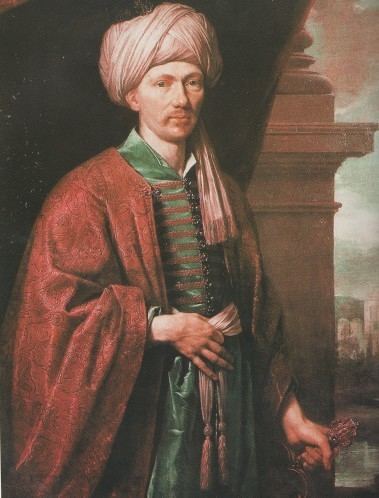
The story itself is old, first appearing in Antoine Galland’s (1646-1715)

French translation from Arabic of a vast collection of stories, which he called, after the title of the manuscript, Les Mille et Une Nuits (“The Thousand and One Nights”) (1704-1717). 

(As you can see, this is a very early Volume 3, but from an edition published in the Netherlands, although claiming to be “following the copy printed in Paris”.)

But the story of how this came to be in Galland’s collection has its own twist:  it’s not from the Syrian manuscript from which Galland worked.  Instead, he had met Antun Yussuf Hanna Diyab, a Syrian whom Galland had met on a visit to Paris, and who told him 14 more stories, one of them being “Aladdin”.  Supposedly, Diyab recited these to Galland from memory, but, in more recent years, some scholars have wondered whether Diyab was himself the source of these stories, as “Aladdin” and another famous story, “Ali Baba”, don’t appear to survive in any other early collection.  (There are also those who believe that Galland himself created them—after all, one of his friends was Charles Perrault, who gave us Mother Goose.)

The first English translation, retitled “The Arabian Nights Entertainment” appeared surprisingly quickly, in 1706 to 1721, even as Galland was still publishing his French translation.  This was the famous “Grub Street edition”.

(This is an early, but not first, edition.  The title on the spine is that of the first translation, but the only known copies are in the Bodleian Library in Oxford and the Princeton University library and I found this image on E-Bay!)

It was given its odd name because it was an anonymous translation, probably done by one of the many would-be famous authors

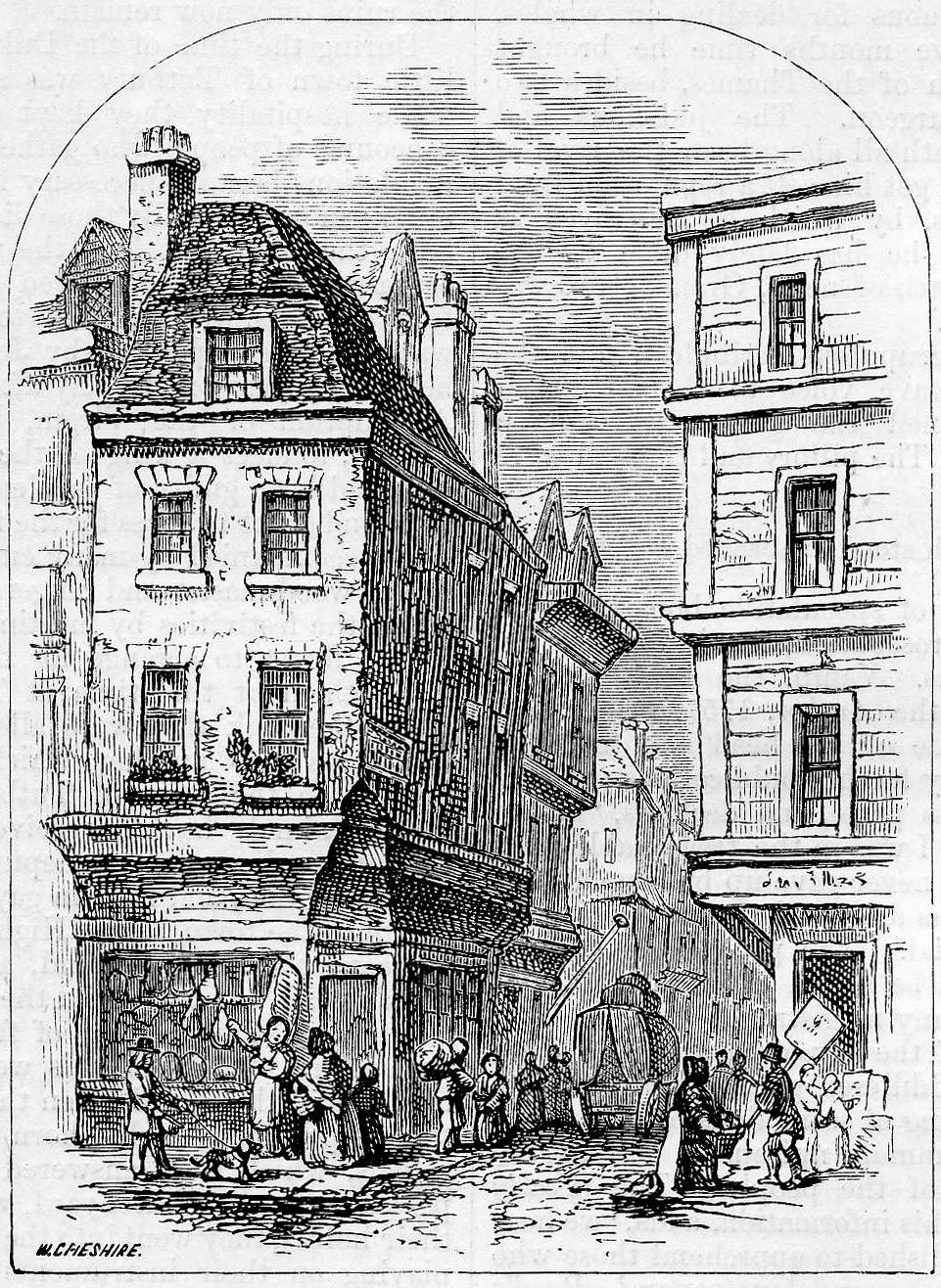
 who lived in an edgy area of London (now almost disappeared and what survives has a different name), called—surprise!—Grub Street,

a medieval relic which had somehow survived the Great Fire of 1666,

 but was so run-down that rent was cheap.

Through endless reprints, forms of this translation would have been the standard until Jonathan Scott’s new translation of Galland appeared in 1811

to be replaced by Edward William Lane’s translation of 1839-1841.

Lane’s, however, was not a translation from Galland’s French, as were the Grub Street and the Scott, but a new translation based upon an entirely different manuscript, published in Cairo in the 1830s.  It also has the most wonderfully elaborate illustrations, by William Harvey (and some by Lane, as well).

(I’ve recently seen a first edition copy of the 3-volume set for $1000.00, but you can have a copy for free from an 1840s US 2-volume edition by following these LINKS:    

https://archive.org/details/thousandonenight01lane (volume 1);    https://archive.org/details/thousandonenight02lane (volume 2);  )

Into the 20th century, Lane’s was the standard translation and I can imagine that whatever was read to me was a distant descendant, although perhaps it came through The Blue Fairy Book, or perhaps from Lang’s later Arabian Nights’ Entertainments (1898), which uses the same text.  Lang says that his translation goes back to the French of Galland, in fact, bringing us back in a circle.

But, outside, the snow is already melting.  If I only had a dirty old lamp…

As always, thanks for reading,

Stay well,

And be reassured that, even without a genie or djinni, if you need more than one, there will be

MTCIDC

O

ps

When you read, or reread, the old story from the LINK above, you will interested to see that the authors of the Disney version have done some narrative slight-of-hand with the plot, removing Aladdin’s mother, combining the king’s vizier with the wicked magician who claims to be Aladdin’s “uncle”, turning two genies into one, and even introducing a flying carpet—and a monkey side kick for Aladdin.  At the same time, they have kept the basic story and, if it’s actually based on a folktale, such variants are always possible—after all, in Galland’s original version, the story was set in China.

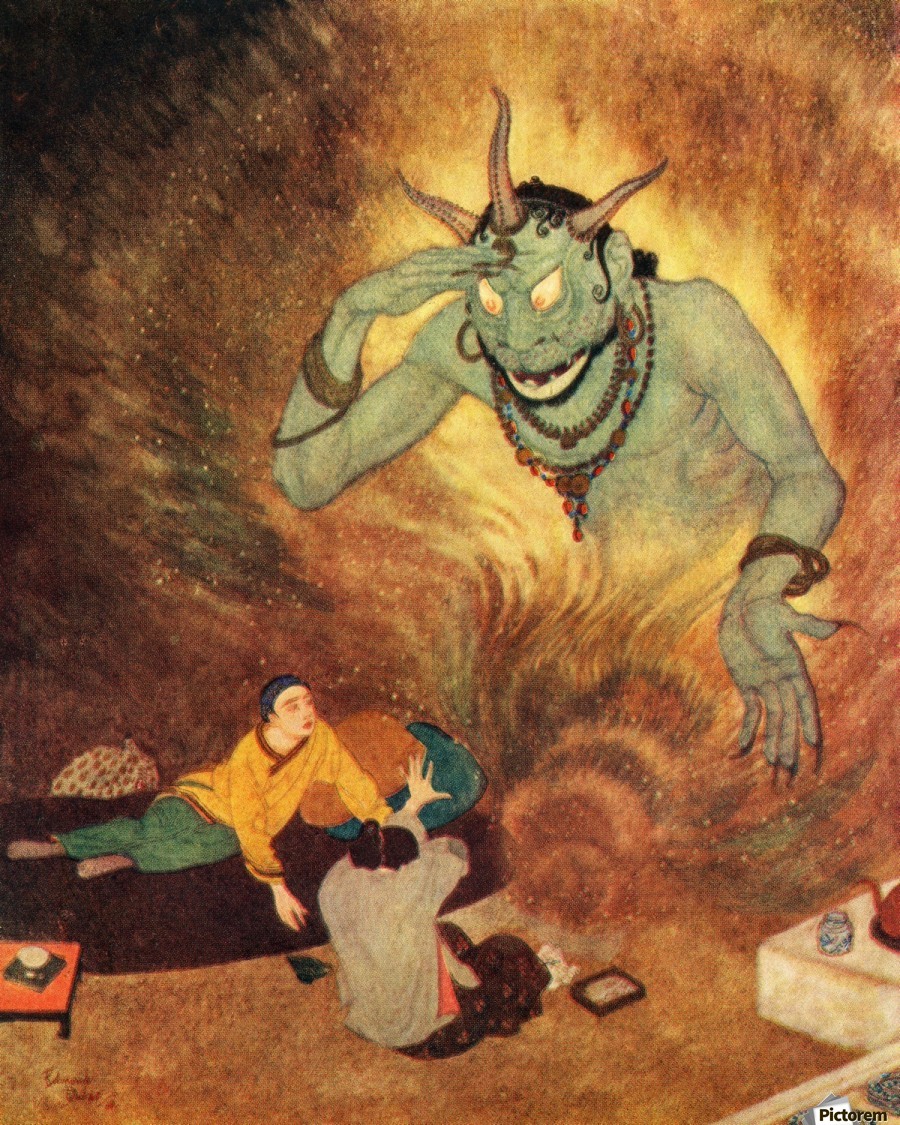
This is from Edmund Dulac’s illustrations for Laurence Housman’s 1914 Stories from the Arabian Nights—of which your own copy awaits you here:  https://archive.org/details/storiesarabian00housmiss/page/n1/mode/2up

Upon Reflection

25 Wednesday Nov 2020

Posted by Ollamh in Uncategorized

≈ Leave a comment

Welcome, as ever, dear readers.

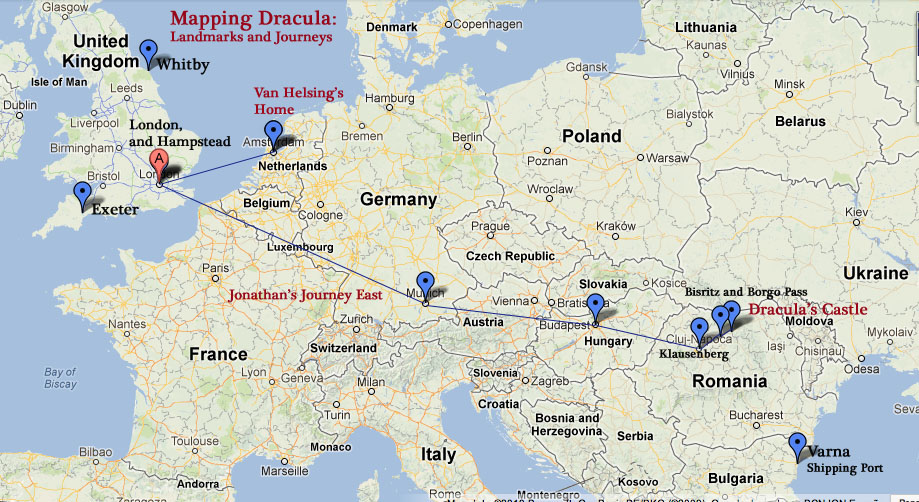
Jonathan Harker is puzzled.  He is in the castle of a Count

and something seems odd about his bedroom:

“The curtains and upholstery of the chairs and sofas and the hangings of my bed are of the costliest and most beautiful fabrics, and must have been of fabulous value when they were made, for they are centuries old, though in excellent order. I saw something like them in Hampton Court, but there they were worn and frayed and moth-eaten. But still in none of the rooms is there a mirror. There is not even a toilet glass on my table, and I had to get the little shaving glass from my bag before I could either shave or brush my hair.”

Although he may not have expected anything as sophisticated as the next image, which he might have encountered in a wealthy house in England (this is the 1890s, after all),

he would have imagined that his bedroom would have been at least equipped with the standard washstand and mirror—

But then things get stranger:

“I only slept a few hours when I went to bed, and feeling that I could not sleep any more, got up.  I had hung my shaving glass by the window, and was just beginning to shave.  Suddenly I felt a hand on my shoulder, and heard the Count’s voice saying to me, ‘Good-morning.’  I started, for it amazed me that I had not seen him, since the reflection of the glass covered the whole room behind me.  In starting I had cut myself slightly and did not notice it at the moment.  Having answered the Count’s salutation, I turned to the glass again to see how I had been mistaken.  This time there could be no error, for the man was close to me, and I could see him over my shoulder.  But there was no reflection of him in the mirror!  The whole room behind me was displayed; but there was no sign of a man in it, except myself.”

As many times as I’ve read this book or taught it, this, for me, is still a striking moment.  It obviously rattles the narrator, Jonathan Harker, but, what’s equally interesting, it seems to disturb Dracula, as well:

” Then seizing the shaving glass, he went on:  ‘And this is the wretched thing that has done the mischief. It is a foul bauble of man’s vanity. Away with it!’ and opening the heavy window with one wrench of his terrible hand, he flung out the glass, which was shattered into a thousand pieces on the stones of the courtyard far below.” (Dracula, Chapter II, beginning the section dated “8 May”)

We know, of course, that the fact that the Count has no reflection means that he is a vampire—

(this is from The Return of Dracula, 1958)

The ironic fact, however, is that we know it from this book, in which Jonathan will only gradually learn what he has innocently encountered on what was supposed to be a rather exotic business trip.

But mirrors are an odd thing, in general. Within the last few years, animal behavior researchers have found that, while primates of various types will recognize their reflection as their reflection,

dogs will not,

seeming, at best, to see them as other dogs, before losing interest.  (Here’s are some LINKS to articles on the subject which you might enjoy:   https://www.psychologytoday.com/us/blog/canine-corner/201107/does-my-dog-recognize-himself-in-mirror  (Psychology Today),  https://blogs.scientificamerican.com/dog-spies/what-do-dogs-see-in-mirrors/ (Scientific American), https://tuftoys.com/why-cant-dogs-recognize-themselves-in-the-mirror-10-animals-that-can/ (Tuftoys) )

Babies—human ones—begin to recognize themselves and not to imagine that it’s another baby sometime between 20 and 24 months.

There may be a danger in recognizing yourself, however.  In the Roman poet, Ovid’s, long collection of verse stories about changes, The Metamorphoses, one character, Narcissus, finds his own reflection so fascinating that he stares at himself in a pool

until, about to die, a thoughtful god turns him into a flower, which we aptly call the narcissus.

(It’s in Book 3, lines 339-510—here’s a LINK to a translation:  https://www.theoi.com/Text/OvidMetamorphoses3.html#5 )

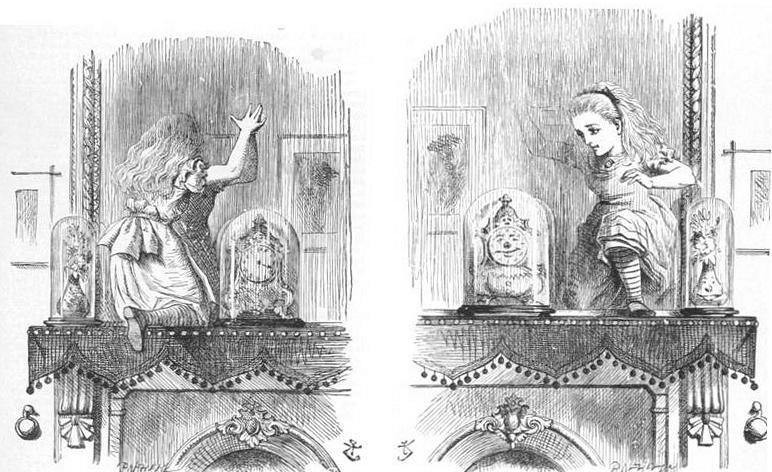
And Alice, on a winter’s day, while talking to a kitten about Looking-glass House, soon finds herself there:

“Now, if you’ll only attend, Kitty, and not talk so much, I’ll tell you all my ideas about Looking-glass House. First, there’s the room you can see through the glass—that’s just the same as our drawing room, only the things go the other way. I can see all of it when I get upon a chair—all but the bit behind the fireplace. Oh! I do so wish I could see that bit! I want so much to know whether they’ve a fire in the winter: you never can tell, you know, unless our fire smokes, and then smoke comes up in that room too—but that may be only pretence, just to make it look as if they had a fire. Well then, the books are something like our books, only the words go the wrong way; I know that, because I’ve held up one of our books to the glass, and then they hold up one in the other room.

‘How would you like to live in Looking-glass House, Kitty? I wonder if they’d give you milk in there? Perhaps Looking-glass milk isn’t good to drink—But oh, Kitty! now we come to the passage. You can just see a little peep of the passage in Looking-glass House, if you leave the door of our drawing-room wide open: and it’s very like our passage as far as you can see, only you know it may be quite different on beyond. Oh, Kitty! how nice it would be if we could only get through into Looking-glass House! I’m sure it’s got, oh! such beautiful things in it! Let’s pretend there’s a way of getting through into it, somehow, Kitty. Let’s pretend the glass has got all soft like gauze, so that we can get through. Why, it’s turning into a sort of mist now, I declare! It’ll be easy enough to get through—’ She was up on the chimney-piece while she said this, though she hardly knew how she had got there. And certainly the glass was beginning to melt away, just like a bright silvery mist.

In another moment Alice was through the glass, and had jumped lightly down into the Looking-glass room. The very first thing she did was to look whether there was a fire in the fireplace, and she was quite pleased to find that there was a real one, blazing away as brightly as the one she had left behind.”  (Through the Looking-Glass and What Alice Found There, Chapter I. “Looking-Glass house”)

Alice is correct, of course, when she says that it “may be quite different”, but it doesn’t require “on beyond”—just look at the contrast between the chimney-piece in her house and its counterpart in Tenniel’s illustration–

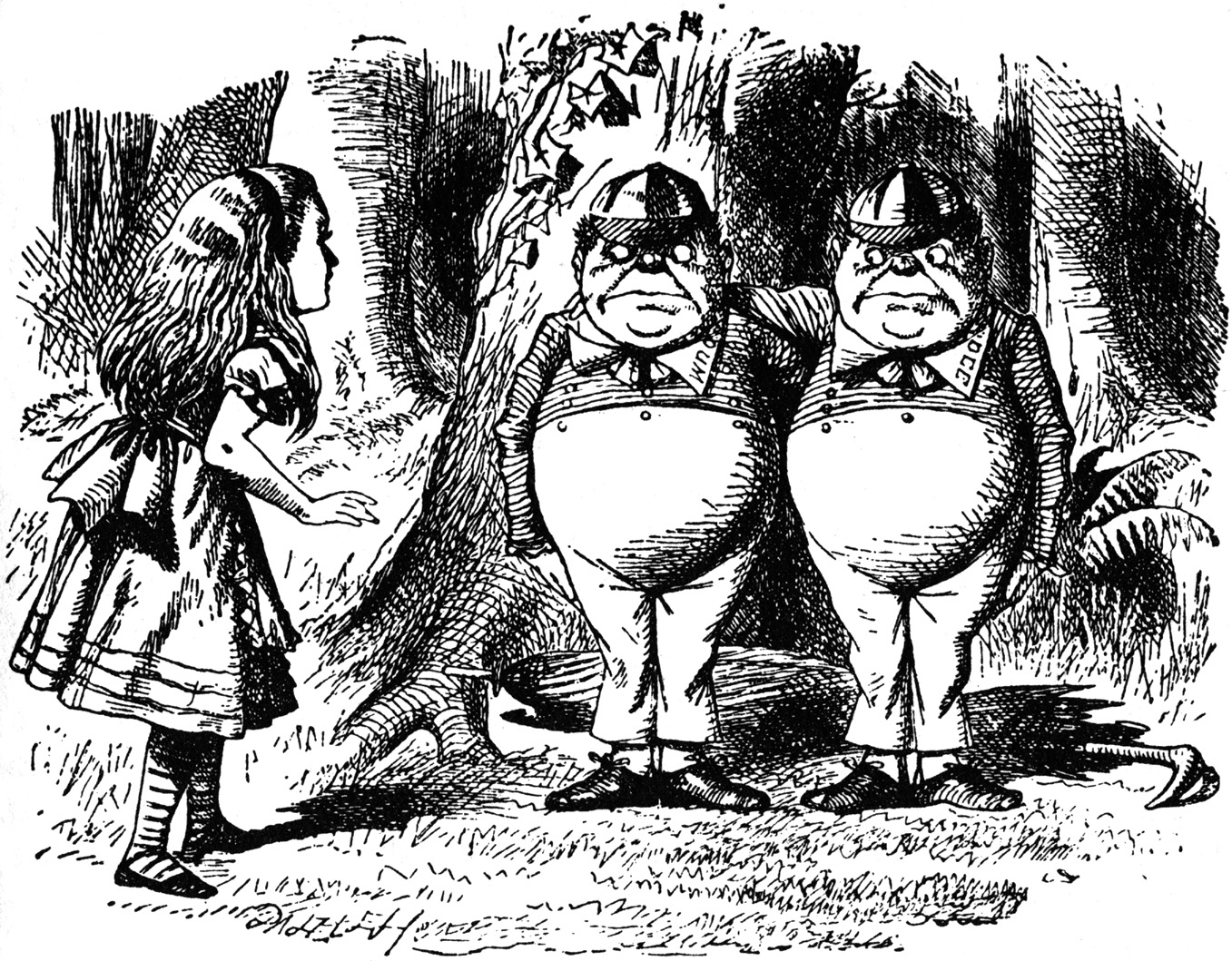
the clock has become a clown and the vase for the dried flowers has now become a face for dried flowers.  And this is only the beginning—“quite different” will include Tweedledum and Tweedledee,

Humpty Dumpty,

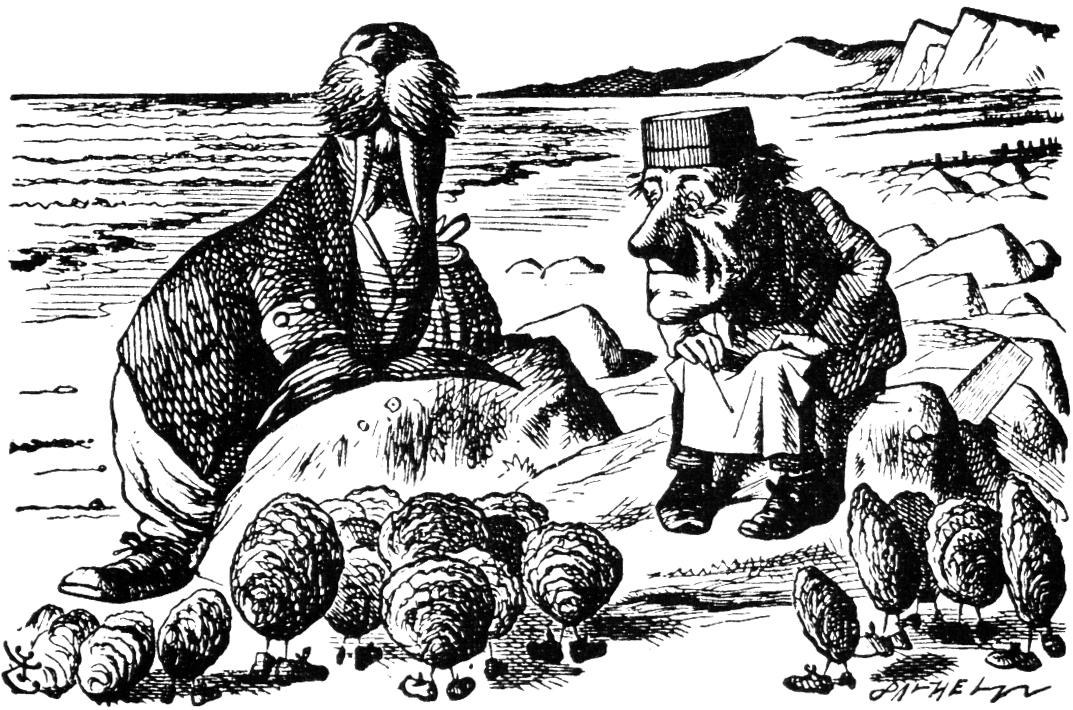
and the very odd combination of a walrus and a carpenter (at second hand—through Tweedledum and Tweedledee).

And then there is that moment in the Marx Brothers’ Duck Soup (1933)

when Groucho, in nightshirt and cap, thinks that he sees his mirror image

and yet—https://www.youtube.com/watch?v=O_fmUYyWSyE

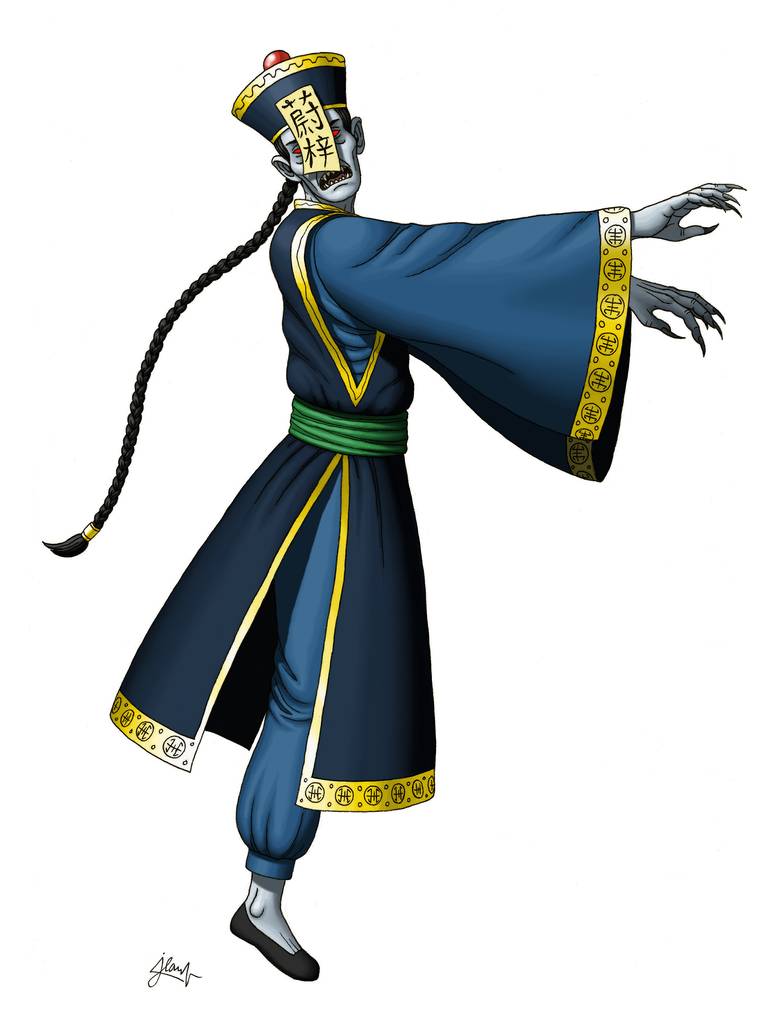
Perhaps, then, Dracula is right when he calls Jonathan’s mirror “a foul bauble”.  Then again, there’s the Jiangshi, an undead figure from ancient China.

They are animated corpses—greeny-yellow in color, who wear the clothes of the mandarin class of the Qing Dynasty (1644-1912),

hiding during the day and coming out at night to attack the living and drink their blood.  They share with Dracula an aversion to mirrors, although they apparently can see themselves—and that’s what can drive them away.   (Here’s a LINK which will give you an entire menu of ways to deal with one: https://en.wikipedia.org/wiki/Jiangshi )

And maybe this is a clue to Dracula’s reaction:  not that he’s afraid of the mirror, or even that it might suggest something sinister to his soon-to-be-prisoner, Jonathan, but that it’s the fact that arrogant creature that he is, he can no longer, like Narcissus, admire himself. 

Thanks, as always, for reading,

Stay well and, if you’re in a place which celebrates Thanksgiving, may you enjoy the day,

And, as always, know that there’s

MTCIDC

O

ps

If you don’t have your own copy of Dracula, here’s the American edition of 1897:

http://www.gutenberg.org/files/345/345-h/345-h.htm

and, if you don’t have Through the Looking-Glass, here’s a turn-of-the-century edition:

https://www.gutenberg.org/files/12/12-h/12-h.htm#link2HCH0008

Holes!

19 Thursday Nov 2020

Posted by Ollamh in Uncategorized

≈ Leave a comment

As always, dear readers, welcome.

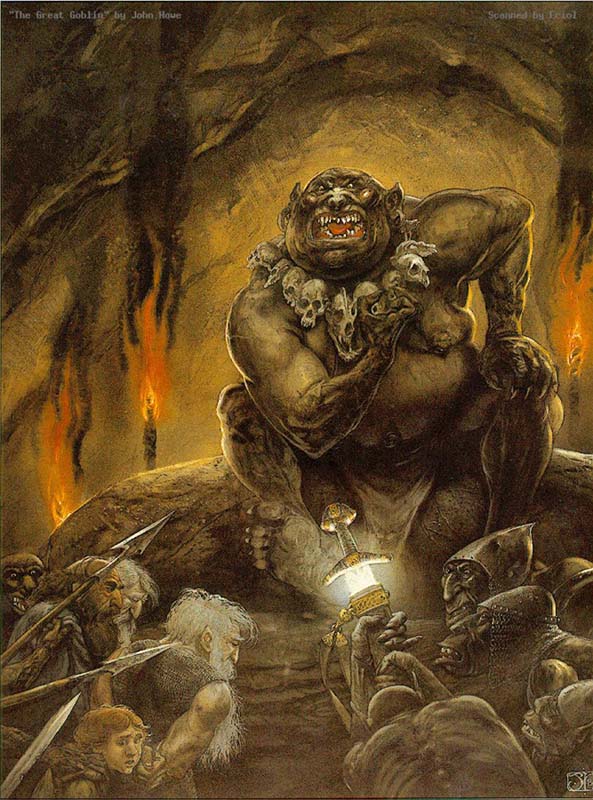
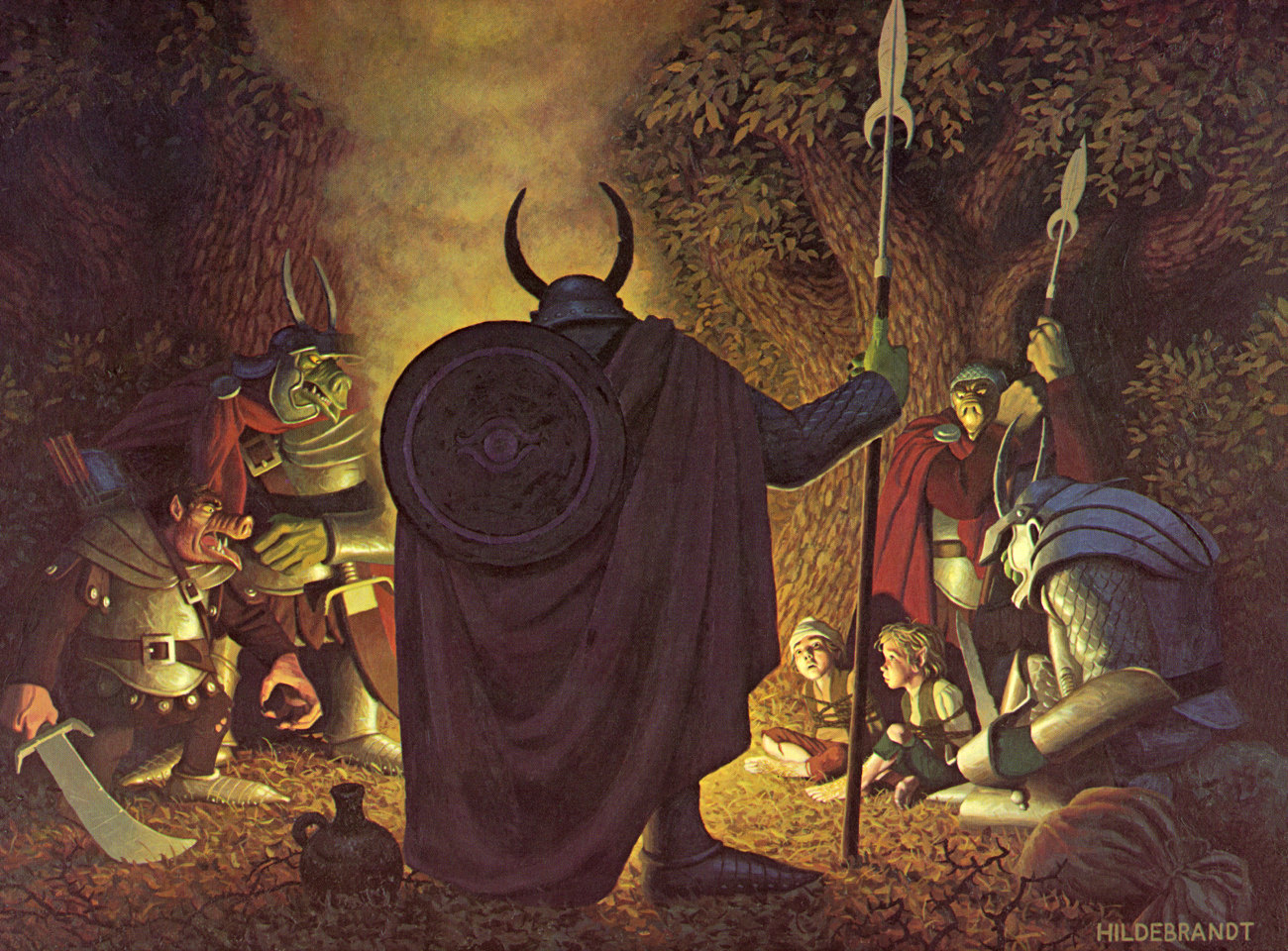
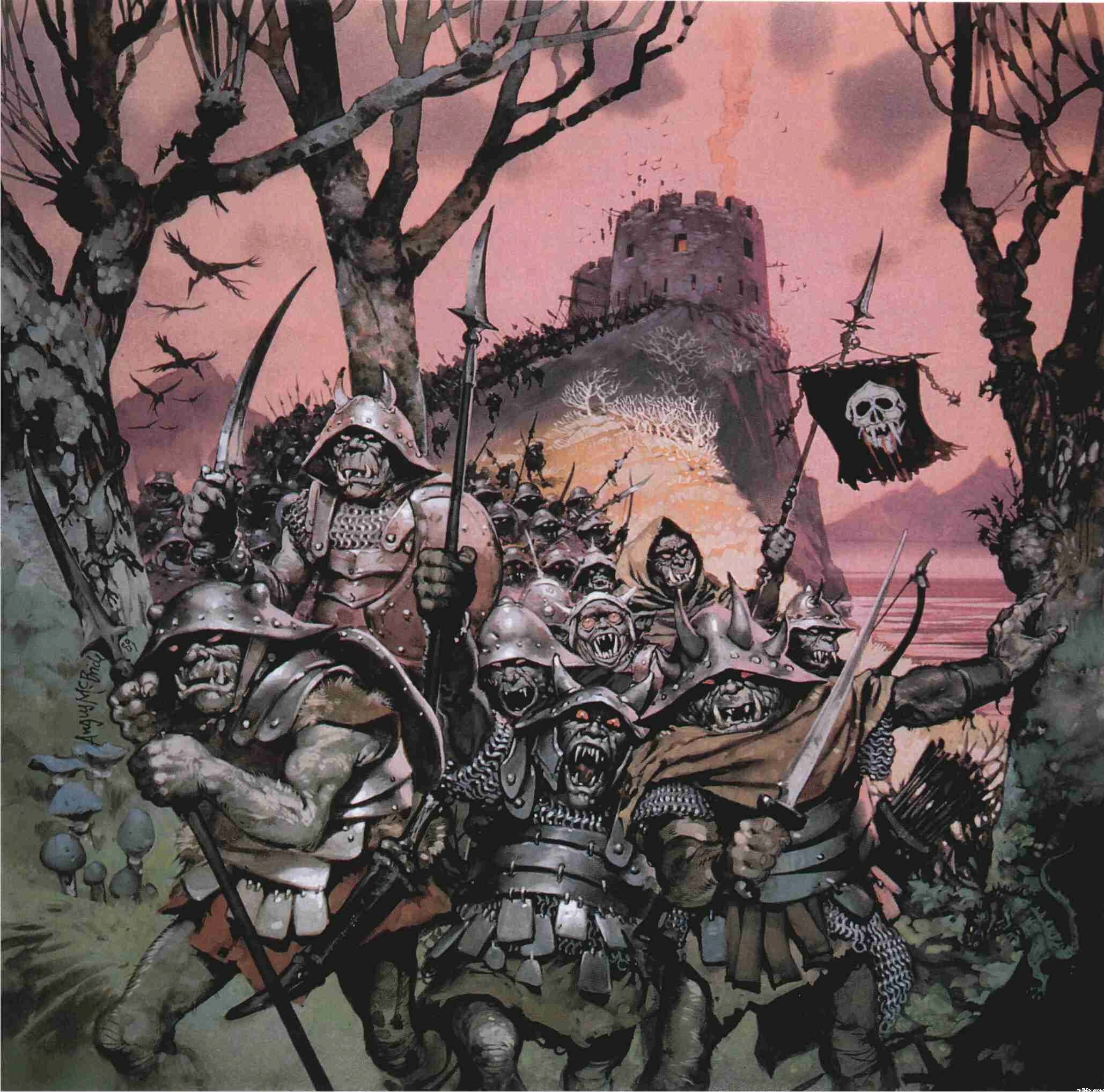
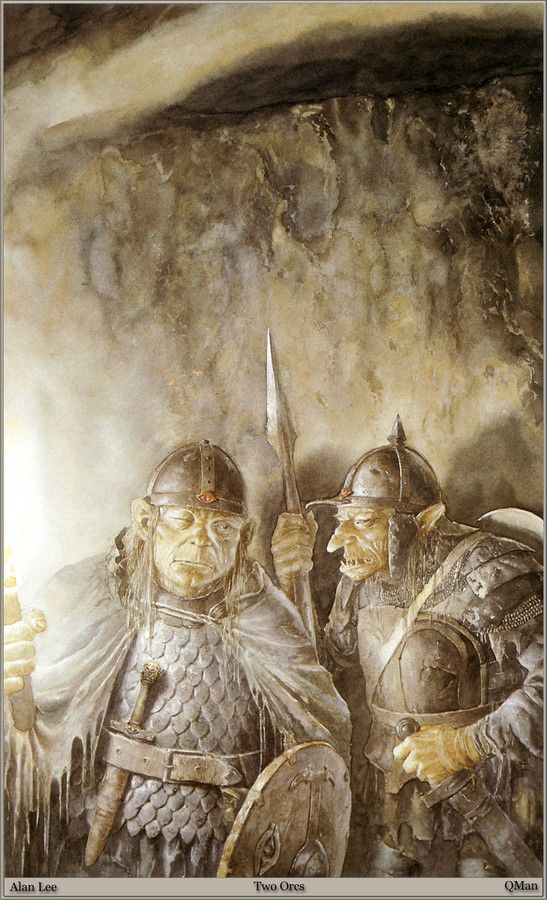
In past years, Orcs have appeared a number of times in CD’s postings, including a study of the appearance of Orcs as Tolkien describes them versus the ways in which artists have depicted them (“Orc Looks”, 13 November, 2019).  Recently, however, I’ve been thinking about something Frodo sees—not through his own eyes but through the Ring, on Amon Hen (appropriately, as it is called “the Hill of the Eye of the Men of Numenor”):

“But everywhere he looked he saw the signs of war.  The Misty Mountains were crawling like anthills:  orcs were issuing out of a thousand holes.” (The Fellowship of the Ring, Book Two, Chapter 10 , “The Breaking of the Fellowship)

I’ve recently taught The Hobbit again (it never gets old) and the Misty Mountains, of course, appear.

There were no orcs then, just goblins on the way in,

and goblins on the way out.

Others have written about the influence of George MacDonald (1824-1905)

on Tolkien and the title of one of MacDonald’s best-known books suggests one influence:

The Princess and the Goblin (1872).

In the Letters, JRRT twice associates MacDonald with goblins (178, to Naomi Mitchison, 25 April 1954;  185, to Hugh Brogan, 18 September 1954), but another influence besides the word and the idea may lie in where the goblins live.  In The Princess and Curdie, a boy, Curdie, who works in the mines, has broken through into the goblin realm and comes upon a great hall:

“He was at the entrance of a magnificent cavern, of an oval shape, once probably a huge natural reservoir of water, now the great palace hall of the goblins. It rose to a tremendous height, but the roof was composed of such shining materials, and the multitude of torches carried by the goblins who crowded the floor lighted up the place so brilliantly, that Curdie could see to the top quite well. But he had no idea how immense the place was until his eyes had got accustomed to it, which was not for a good many minutes. The rough projections on the walls, and the shadows thrown upwards from them by the torches, made the sides of the chamber look as if they were crowded with statues upon brackets and pedestals, reaching in irregular tiers from floor to roof. The walls themselves were, in many parts, of gloriously shining substances, some of them gorgeously coloured besides, which powerfully contrasted with the shadows…
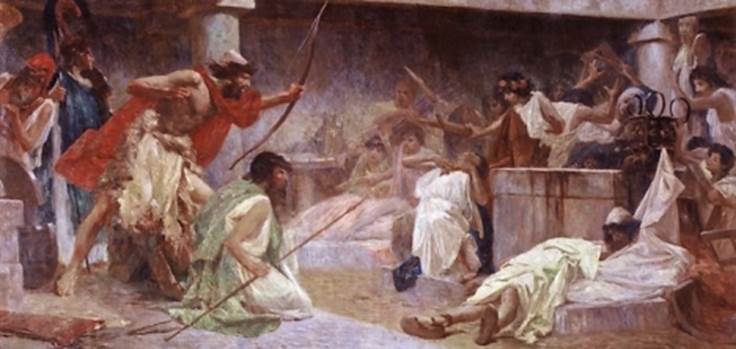
At the other end of the hall, high above the heads of the multitude, was a terrace-like ledge of considerable height, caused by the receding of the upper part of the cavern-wall. Upon this sat the king and his court: the king on a throne hollowed out of a huge block of green copper ore, and his court upon lower seats around it.” (The Princess and the Goblin, Chapter 9, “The Hall of the Goblin Palace”)

Here is the equivalent in The Hobbit:

“…they stumbled into a big cavern.

It was lit by a great red fire in the middle, and by torches along the wall, and it was full of goblins…

There in the shadows on a large flat stone sat a tremendous  goblin with a huge head, and armed goblins were standing round him carrying the axes and the bent swords they use.”  (The Hobbit, Chapter 4, “Over Hill and Under Hill”)

MacDonald’s goblins have extensive tunnels and are planning to use them both the kidnap the princess of the book’s title and to cause great destruction by employing the tunnels to flood the human mines to which they are adjacent. 

Tolkien’s goblins also have extensive tunnels, as we hear when the news spread about the death of the Great Goblin:

“Messengers had passed to and fro between all their cities, colonies and strongholds…Tidings they had gathered in secret ways; and in all the mountains there was a forging and an arming.  Then they marched and gathered by hill and valley, going ever by tunnel or under dark, until around and beneath [the great mountain Gundabad of the North, where was their capital, a vast host was assembled…” (The Hobbit, Chapter 17, “The Clouds Burst”)

By the time of The Lord of the Rings, it is clear that those Hobbit goblins had metamorphosed into orcs—Tolkien, basically, had decided that “goblin” was too close to the fairy tale world with which he did not want his work too closely associated—and even in the Letters, if you look for references to them in the index, you are referred to orcs (Letters, 470).

Their appearance, goblin or orc, varies.  Take Ugluk and Ghrishnakh, for instance:

“…a large black Orc, probably Ugluk, standing facing Grishnakh, a short crook-legged creature, very broad and with long arms that hung almost to the ground.  Round them were many smaller goblins.  Pippin supposed that these were the ones from the North.” (The Two Towers, Book Three, Chapter 3, “The Uruk-hai”)   In an undated letter to Forrest J Ackerman, from June, 1958, Tolkien describes them as:  “squat, broad, flat-nosed, sallow-skinned, with wide mouths and slant eyes” (Letters, 274). 

This has, in turn, spawned a wide variety of images, from the early Hildebrandts

and Angus McBride

to the later Alan Lee,

John Howe,

and Ted Nasmith.

In terms of following JRRT’s idea, that, as Trolls were made “in mockery of Ents”, so “Orcs were made of Elves”, I would say that only the Nasmith is close, but what Frodo saw in his vision has suggested a completely different possibility, one which is furthered by something Tolkien wrote in a long letter of 1954 to Peter Hastings.  He has been discussing Morgoth and the orcs:

“I have represented at least the Orcs as pre-existing real being on whom the Dark Lord has exerted the fullness of his power in remodelling and corrupting them, not making them.”

But it’s what appears at the end of the paragraph which caught my attention:

“There might be other ‘makings’ all the same which were more like puppets filled (only at a distance) with their maker’s mind and will, or ant-like operating under direction of a queen-centre.”  (Letters, 195)

This matches, of course, what Frodo saw: 

“The Misty Mountains were crawling like anthills:  orcs were issuing out of a thousand holes.”

Orcs as the equivalent of insects who live in holes?  I would add another detail, however.  As Treebeard has said that orcs are a mockery of elves, he has also noticed something else:

“…he has been doing something to them; something dangerous.  For these Isengarders are more like wicked Men.  It is a mark of evil things that came in the Great Darkness that they cannot abide the Sun; but Saruman’s Orcs can endure it, even if they hate it.”  (The Two Towers, Book Three, Chapter 4, “Treebeard”)

Insects of varied size and color, but can’t endure the sun.  Might another model for orcs be cockroaches?

With that very creepy thought, I thank you as ever, dear readers, saying

Stay well and be sure that there’s

MTCIDC

O

Ps

If you’d like to read The Princess and the Goblin yourself, here’s a LINK:

http://www.gutenberg.org/files/708/708-h/708-h.htm

I recommend it, not only as a (distant) source for JRRT, but as a very interesting and engaging piece of Victorian fantasy.

Banazir and Ranugad

11 Wednesday Nov 2020

Posted by Ollamh in Uncategorized

≈ Leave a comment

Welcome, as always, dear readers. 
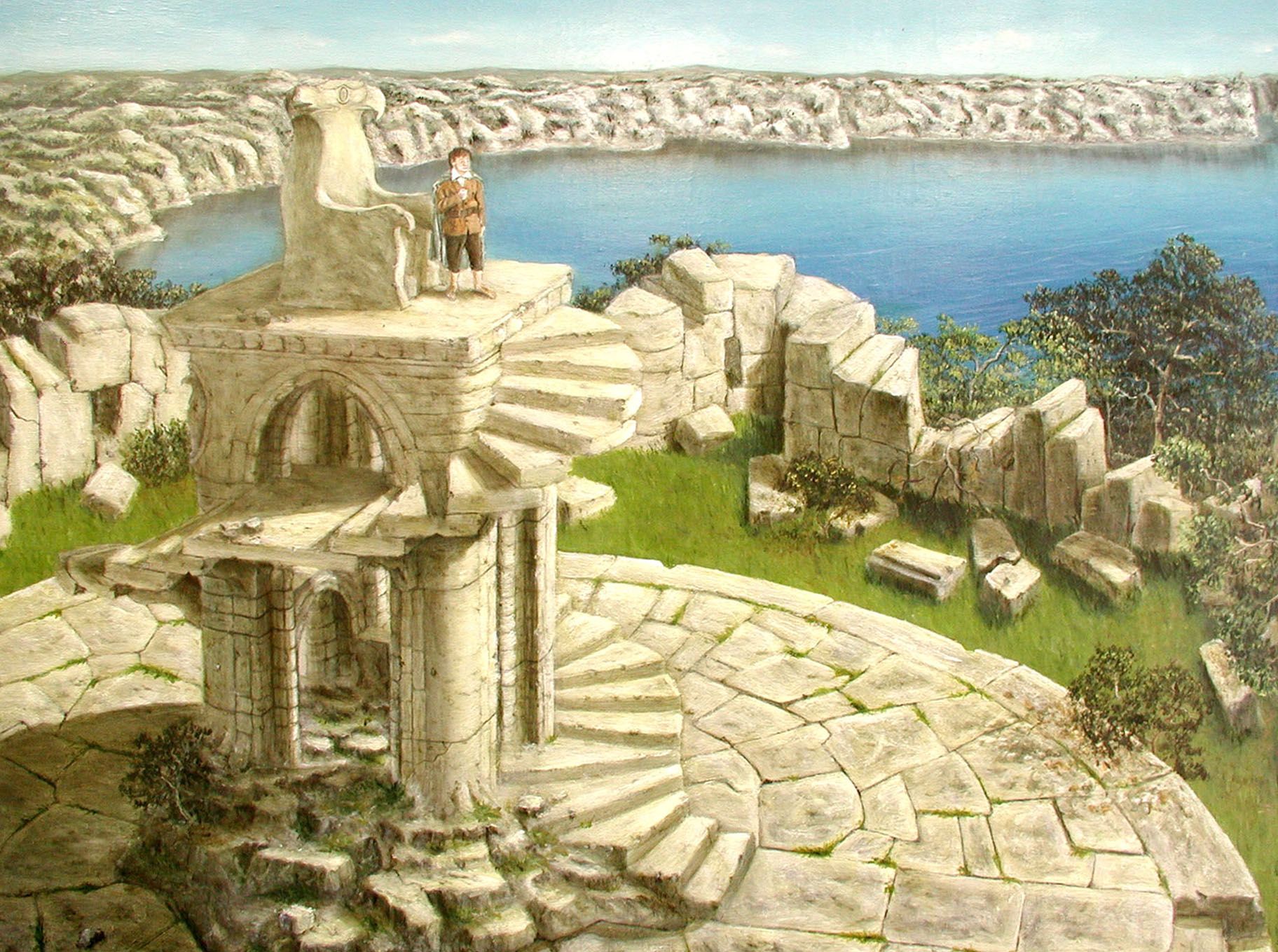
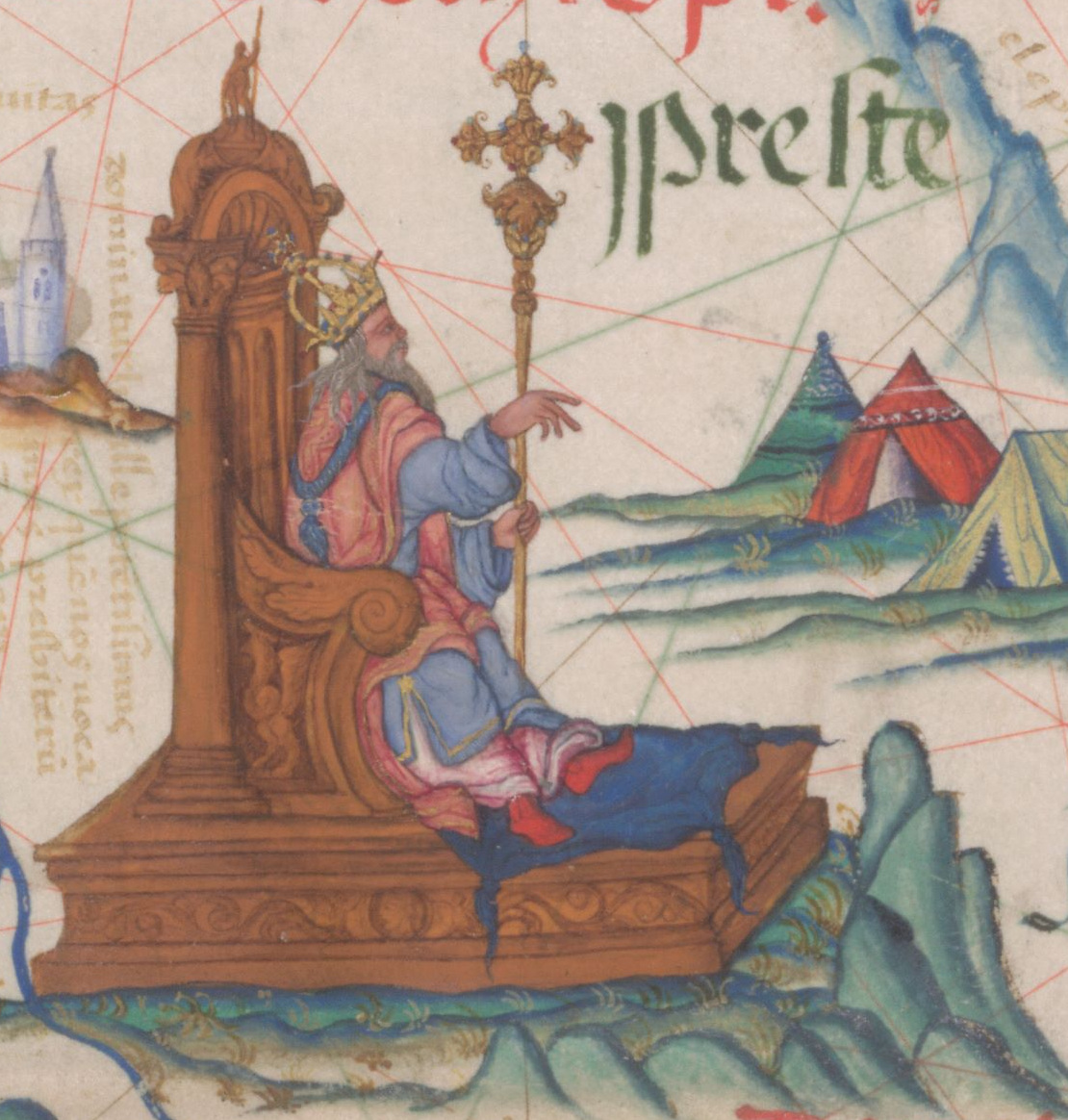
If you are, like me, a compulsive reader of footnotes, endnotes, and appendices, you’ll immediately recognize the names in the title of this posting.  If not, you’ll probably imagine them as locations on a very exotic map, somewhere south of the Kingdom of Prester John.

They are in fact, the original names of Sam

and the Gaffer,

(Seen here giving directions to a tourist.)

from The Lord of the Rings—or, rightfully, Ban and Ran.  As Tolkien explains:

“But Sam and his father Ham were really called Ban and Ran.  These were shortenings of Banazir and Ranugad, originally nicknames, meaning ‘halfwise, simple’ and ‘stay-at-home’; but being words that had fallen out of colloquial use they remained as traditional names in certain families.  I have therefore tried to preserve these features by using Samwise and Hamfast, modernizations of ancient English samwis and hamfast which corresponded closely in meaning.” (The Lord of the Rings, Appendix F, Part II, “On Translation”)

(“Samwis” , my Old English dictionary tells me, means “stupid/foolish”, and “hamfast” means “resident/homeowner”.)

JRRT’s pains in creating the world of Middle-earth are endlessly surprising and, to me, oddly touching.  He will spend hours or even days adjusting a lunar cycle (as mentioned in a letter to his son, Christopher, on 14 May, 1944, Letters, 80—there’s a very interesting article about this and other lunar sightings here:  https://shire-reckoning.com/moon.html ) and go to such trouble to translate names he has created in a language he has created into an earlier form of the language he has “translated” his story into.

Which brings me to the subject of this posting:  that The Lord of the Rings (and The Hobbit, for that matter), are not written by JRR Tolkien, but “drawn mainly from the Red Book of Westmarch”, and edited and translated by him.  (The Lord of the Rings, Prologue, “Note on the Shire Records”)

Claiming to be other than the author is not a new game in English literature.  Horace Walpole (1717-1797),

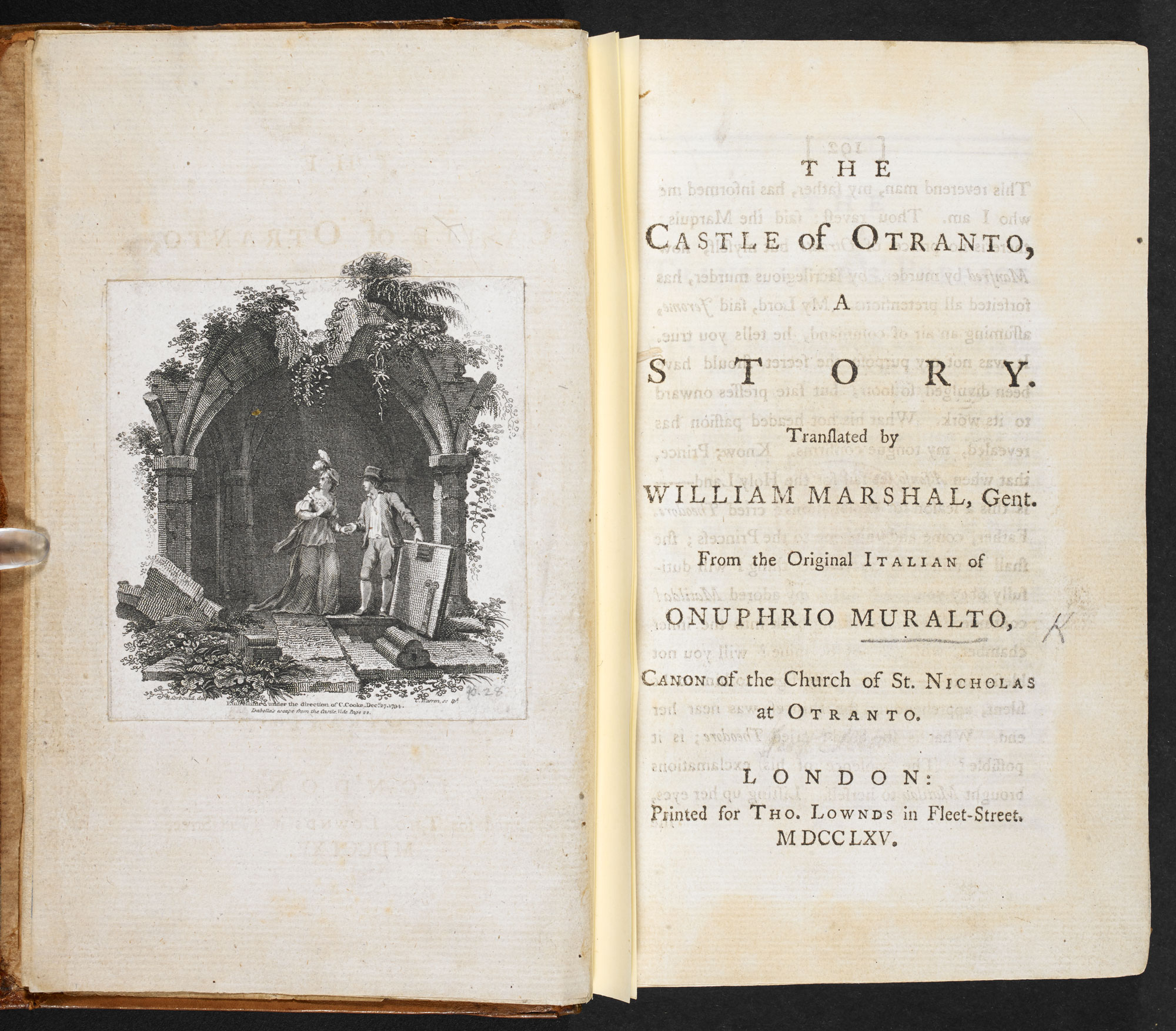
the author of the early Gothic novel, The Castle of Otranto (1764),

(by the date on the title page, I’m presuming that this is a later printing)

provides quite a lot of information on the title page:  “A Story Translated by William Marshal, Gent. From the Original Italian of Onuphrio Muralto, Canon of the Church of Saint Nicholas at Otranto”.  And he doesn’t stop there, but goes on in the “Preface” to explain that this supposed true story was “found in the library of an ancient Catholic family in the north of England.  It was printed at Naples, in the black letter, in the year 1529.”  And, if that’s not enough:  “If the story was written near the time when it is supposed to have happened, it must have been between 1095, the era of the first Crusade, and 1243, the date of the last, or not long afterwards.”   So, this was a medieval manuscript which somehow found its way into print in the Renaissance.  All of which is false, of course.  The whole thing was made up by Walpole, the 1529 volume, the manuscript, the Canon—only the castle is real.

Walpole was a wealthy gentleman with a high social position to maintain, being not only the son of a former prime minister of Great Britain, Sir Robert Walpole (1676-1745),

but would himself become the 4th Earl of Orford.  It would be easy, perhaps, to understand why he would choose to distance himself from his creation, on social grounds alone—but then something happened:  the book was a big success.

This prompted him to write in the “Preface to the Second Edition”:

The favourable manner in which this little piece has been received by the public calls upon the author to explain the grounds on which he composed it. But before he opens those motives, it is fit that he should ask pardon of his readers for having offered his work to them under the borrowed personage of a translator. As diffidence of his own abilities, and the novelty of the attempt, were the sole inducements to assume that disguise, he flatters himself he shall appear excusable. He resigned his performance to the impartial judgment of the public; determined to let it perish in obscurity, if disapproved; nor meaning to avow such a trifle, unless better judges should pronounce that he might own it without a blush.

Clearly, being the author of a book which met with popular favor put a different complexion upon things for Walpole!

But what can we say about Tolkien’s choice?  It’s possible that this was just all part of his project to provide a kind of mythical history for England, as Verlyn Flieger has ably discussed in several books (which I would very much recommend to anyone interested in understanding The Lord of the Rings in a larger context).  Mythology may be collected by someone with an identity, but myth is created before authors—and especially editors—ever exist.

Although a reader of and occasional writer about Tolkien, I am not a Tolkien scholar.  I sometimes happen upon books and articles either by recommendation or by accident, and so I wasn’t aware until recently of this interesting book, published last year by Oxford.

The author points out that Tolkien had long been uncomfortable about his creative work versus his scholarly responsibilities, citing, for example, this, in a 1956 letter to Anne Barrett, of his American publisher, Houghton Mifflin:

“Most of my philological colleagues are shocked (cert. behind my back, sometimes to my face) at the fall of a philological into ‘Trivial literature’; and anyway the cry is:  ‘now we know how you have been wasting your time for twenty years’.”  (Letters, 238)

The above speculation about Tolkien’s distancing may be true, probably is true, but perhaps we might not be totally wrong to wonder whether this pretense at translation also has a subconscious motive?  Did JRRT say to himself, “Author of ‘trivial literature’?  Not at all.  You see, this is really a medieval manuscript, the sort we medievalists deal with all the time, and all I’m doing is exactly what a medievalist might do in preparing a modern edition”?

As ever, thanks for reading,

Stay well,

And be assured that there is

MTCIDC

O

ps

If you don’t know The Castle of Otranto, an important work for the history of the Gothic in English literature and as an ancestor of English Romanticism, here’s a LINK to your own copy:  https://www.gutenberg.org/files/696/696-h/696-h.htm Be warned, however:  by modern standards, it’s all pretty silly stuff, including the fall of selective pieces of a giant suit of armor at useful moments.

 Walpole was such a highly intelligent and witty man that it’s hard to tell just how seriously to take it all.  Reading his letters makes you wish that he were your correspondent.)

pps

While rewriting this, I realized that, since first reading The Lord of the Rings, many years ago, I had always assumed that the Gaffer was Sam’s grandfather, with “gaffer” being an ancient contraction of “grandfather”.  Because of that assumption, it was only when I reread Tolkien’s explanation of his and Sam’s names that I saw my mistake.  As Holmes says to Watson in “A Scandal in Bohemia”:  “You see, but you do not observe.”!

Learned Him His Letters

04 Wednesday Nov 2020

Posted by Ollamh in Uncategorized

≈ Leave a comment

As always, welcome, dear readers.

Recently, I was overhearing Gaffer Gamgee correcting a wild rumor from “a stranger, a visitor on business from Michel Delving” about Bilbo, his fortune, and about the Gaffer’s grandson, Sam:

“Crazy about stories of the old days, he is, and he listens to all of Mr. Bilbo’s tales. Mr. Bilbo has learned him his letters—meaning no harm, mark you, and I hope no harm will come of it.” (The Fellowship of the Ring, Book One, Chapter 1, “A Long-Expected Party”)

(Gaffer conversing with a more sinister visitor, one on business from Mordor.)

“Learned him” might strike you as odd—Tolkien himself would have said, “Mr. Bilbo has taught him his letters”.  Tolkien, however, is using what would have been an archaic form still in use in rural areas, “to learn someone something”, to suggest that the Gaffer is himself someone without much learning.

As I listened, I thought about the idea of Bilbo teaching Sam to read.

We learn from Humphrey Carpenter’s biography of Tolkien that:

“Mabel [Tolkien’s mother] soon began to educate her sons, and they could have had no better teacher—nor she an apter pupil than Ronald, who could read by the time he was four and had soon learnt to write proficiently.”  (Carpenter, 20)

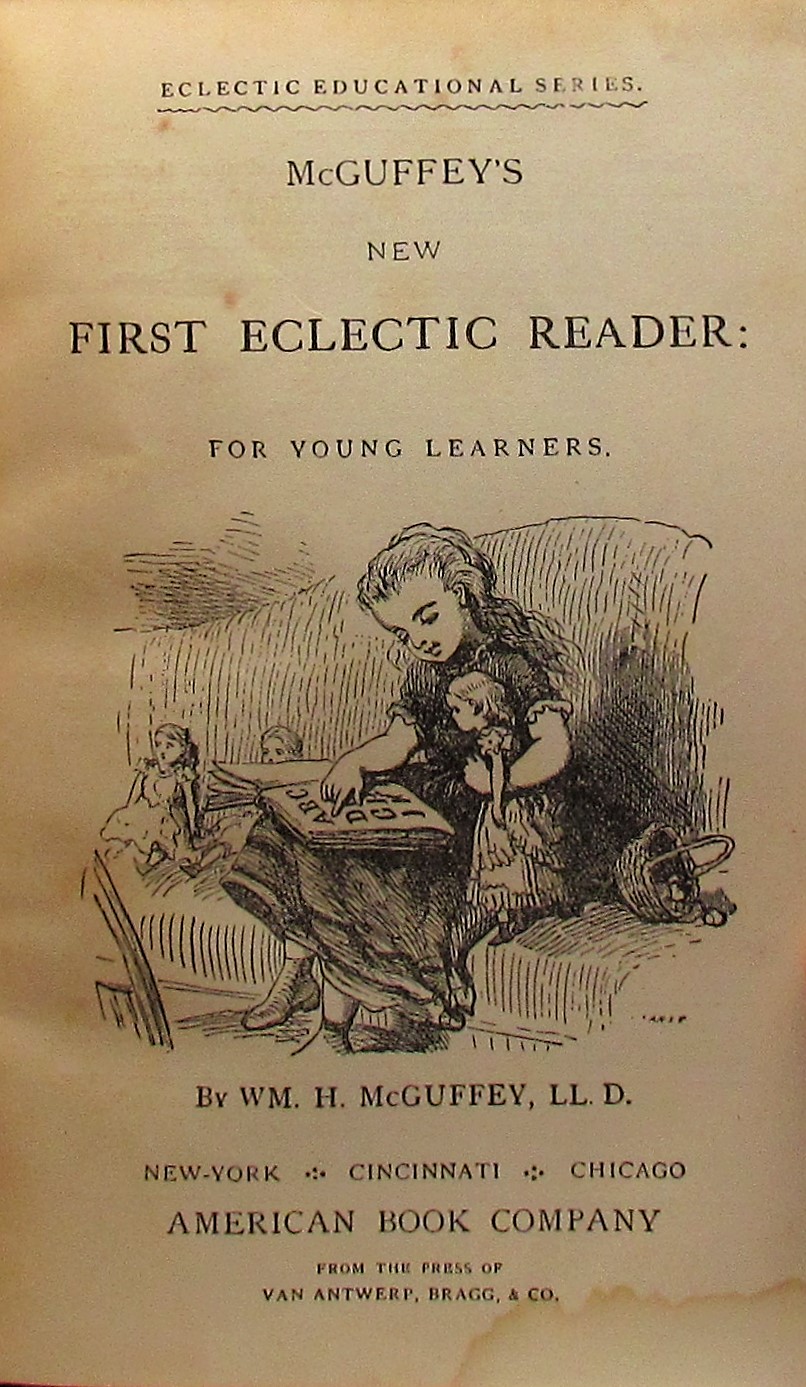
What did she use to teach him? I wondered.  If he had been an American child in 1896, his mother might have used a very standard method employed in US schools into the 20th century, McGuffey’s First Eclectic Reader,

created by William Holmes McGuffey (1800-1873)

and first published in 1836.

When it came to “learn him his letters”, this was taken literally, as the first thing to which a child was introduced was the alphabet, immediately followed by a first lesson, which included an image and a simple sentence about the image, that first image being a dog.

As the pupil worked his way through the book, sentences gradually become more complex, although the words remain simple, having no more than three letters until Lesson VI. 

(If you would like to see a copy for yourself, follow this LINK:  http://www.gutenberg.org/files/14640/14640-pdf.pdf )

There were English equivalents—here’s a page from one called The Victoria Primer, though, by the clothing on the children in the illustration, it’s an edition from early in the 19th century.

There is a problem with these, of course.  As different as they look from the kinds of books you and I learned from, dear readers,

they are printed books and, as far as I can tell, the Middle-earth equivalent of Johannes Gutenberg (c.1400-1468)

^BJohannes Gutenberg^b, (c.1398-1468), German inventor. Artwork of Johannes Gutenberg (centre right) examining type printed by his printing press (left). Gutenberg is credited with inventing the both moveable type printing and the mechanical printing press (c.1450).

has yet to appear.  This means that, if Bilbo taught Sam from a book, it was a manuscript, that is, something copied by hand, probably from another book. 

So often, Middle-earth has parallels in our Middle Ages, and, in our Middle Ages, that manuscript would probably have been the product of a scriptorium, a kind of medieval writing center, where books were created and copied.

Such centers were commonly part of monasteries and monasteries and cathedrals, besides being religious centers, were also the site of medieval schools, where most teaching and learning was done.

Study began with learning the letters of the alphabet, then moved on to words and from there to sentences.

Everything was done aloud, it being the custom in general that all reading was done that way.

And lack of attention or mistakes were not treated kindly.

When it came to practicing writing, it was done on a wax tablet, of the very sort which the Romans had used for rough drafts.

(You used the pointy end of the stylus to write, the blunt end to erase, smoothing the wax over with it.  The Roman poet Horace makes a witty remark about its use:  “If you’re going to write things which may be worthy to be read again, turn your stylus over often.”  That is:  “If you’re going to write things worth a second reading, do lots of erasing.”– Saepe stilum vertas, iterum quae digna legi sint scripturus.  Horace, Satires, Book I, X.75 )

Presumably, then, Bilbo began by sitting down with Sam (when Sam wasn’t evesdropping)

and began with the letters of tengwar—

Children in the US commonly begin with something called “the alphabet song” (in case you don’t know it, here’s a LINK:  https://www.youtube.com/watch?v=75p-N9YKqNo ) in which all the letters of the writing system used for many Western languages (with some variations) are set to a simple tune.

If you try reciting the tengwar table, it easily (more or less) fits into a rhythmic pattern:

Tinco, parma, calma, quesse,

Ando, umbar, anga, umwe,

Thule, formen, harma, hwesta,

Anto, ampa, anca, unque,

Numen, malta, ngoldo, ngwalme,

Ore, vala, anna, vilya,

Romen, arda, lambe, alda,

Silme, silme nunquerna,

   esse, esse nunquerna,

Hyarma, hwesta sindarinwa,

   yanta, ure

So we perhaps can imagine Sam at work, trimming hedges,

and repeating the letters until he had them down.  Then it would be back to learn to form words and then sentences and then?

The ultimate goal of monastic students would be to study religious texts, but to what use would Sam put his newly-acquired learning?

On the Stairs of Cirith Ungol, Frodo and Sam are talking about their journey and Sam, still “crazy about stories”, as the Gaffer has described him, has proposed that they are in such a story themselves—

“Still, I wonder if we shall ever be put into songs or tales.  We’re in one, of course; but I mean:  put into words, you know, told by the fireside, or read out of a great big book with red and black letters, years and years afterwards.”

Assuming that Bilbo had books with such stories in his library,

is this the sort of thing which Sam would then have opened and read?

If so, it’s an uncomfortable feeling to remember where they are in light of what the Gaffer had added, “Mr. Bilbo has learned him his letters—meaning no harm, mark you, and I hope no harm will come of it.” And to hear Frodo’s reply to Sam’s fantasy:

“ ‘We’re going on a bit too fast.  You and I, Sam, are still stuck in the worst places of the story, and it is all too likely that some will say at this point:  “Shut the book now, dad; we don’t want to read any more.” ‘ “ (The Two Towers, Book Four, Chapter 8, “The Stairs of Cirith Ungol”)

Thanks, as always, for reading,

Stay well,

And know that there’s

MTCIDC

O

Hey, Guys!

29 Thursday Oct 2020

Posted by Ollamh in Uncategorized

≈ Leave a comment

Welcome, dear readers, as ever.

It’s time for the annual Halloween/All Saints/Guy Fawkes posting and this may be a particularly sinister one, although it seems to start off innocently enough with an expression you hear all the time, “You guys”—though now being replaced with “dude” in some areas.

“Guy”? 

A little etymological work gives us “a Norman French name, based upon Germanic ‘Wido’—perhaps through Italian ‘Guido’?” 

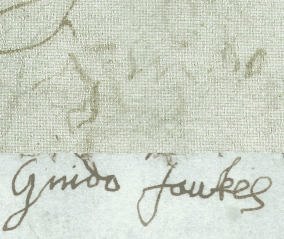
And that brings us right to Guy Fawkes, who was also known to call himself, “Guido Fawkes”—and sign his name that way.

There are no known actual images of him, but here’s our favorite Victorian version, an illustration from William Harrison Ainsworth’s (1805-1842) novel, Guy Fawkes, or The Gunpowder Treason (1840) by George Cruikshank.

(If you’d like to read it, or at least enjoy Cruikshank’s illustrations, see:  http://www.gutenberg.org/files/37750/37750-h/37750-h.htm )

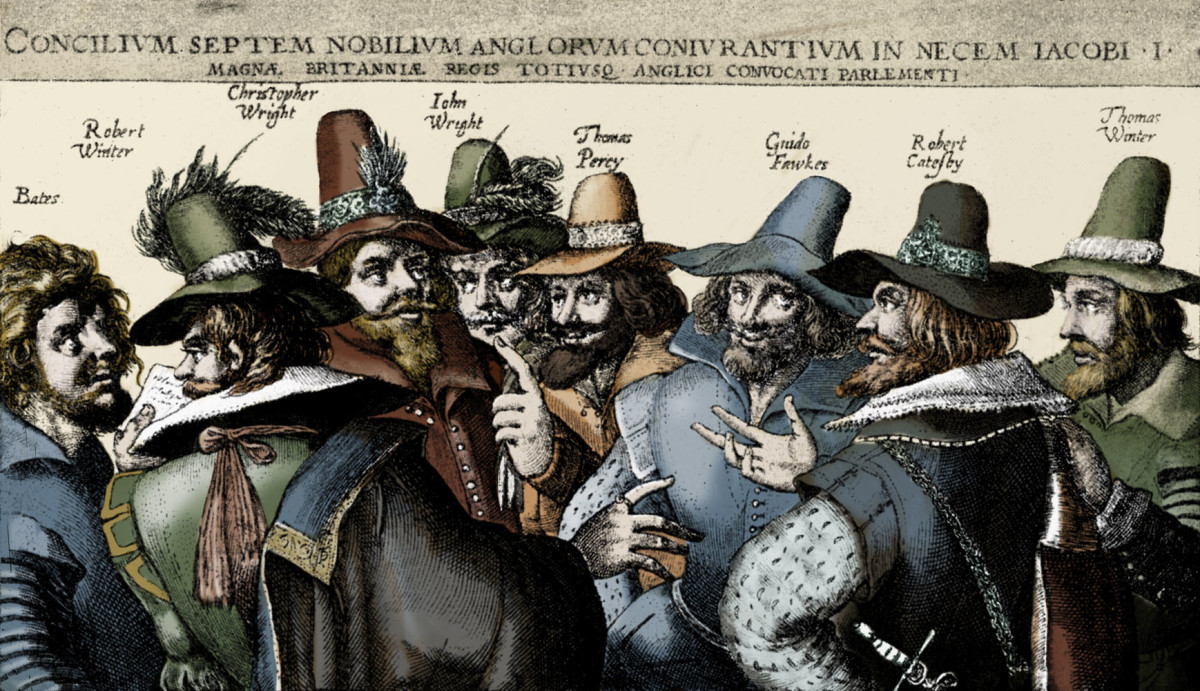
If you’re not familiar with Mr Fawkes, he was one of a band of English Catholics with a plan.

(This is from a period illustration, a broadside sheet by Crispijn van de Passe, which I’ve seen both in Latin and German—this one even has a little French at the bottom, as well as a little Latin—but it’s not the equivalent of an actual group photo.)

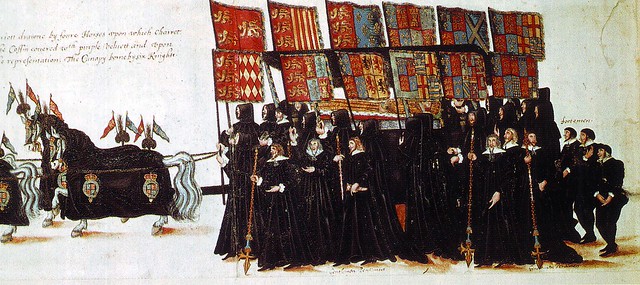
When Elizabeth I died in 1603,

she was succeeded by James VI of Scotland, the son of her cousin, Mary, once Queen of Scotland.

James got the job not only because of his kinship with Elizabeth, but because he was a Protestant, and those in charge of England, mostly Protestants, intended to keep the country that way.  This brings us back to Guy/Guido and his band—which was not his band, in fact, as he was brought in as a gunpowder specialist, the actual leader being Robert Catesby.  As a technician, however, Guy was a major figure, as Catesby’s plot involved nothing less than:

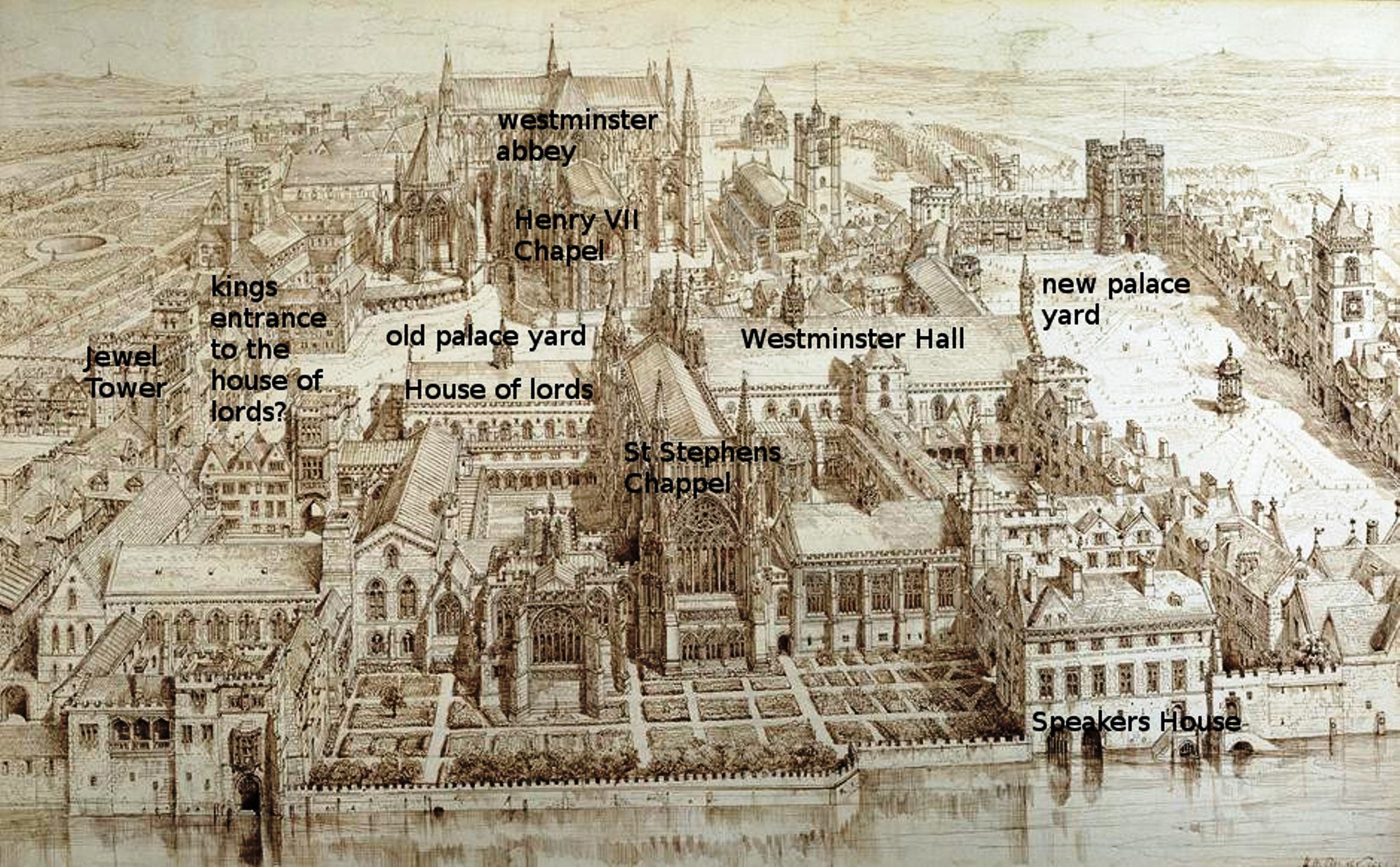
1. blowing up the House of Lords

when the King and the Heir, Prince Henry,

were there for the ceremonial opening, while others

2. would kidnap James’ 9-year-old daughter, the Princess Elizabeth,

and put her on the throne, presumably claiming that she was a Catholic.  It all sounds completely unreal—but the conspirators had actually gotten as far as managing to get 36 barrels of gunpowder hidden in a basement under the House of Lords. 

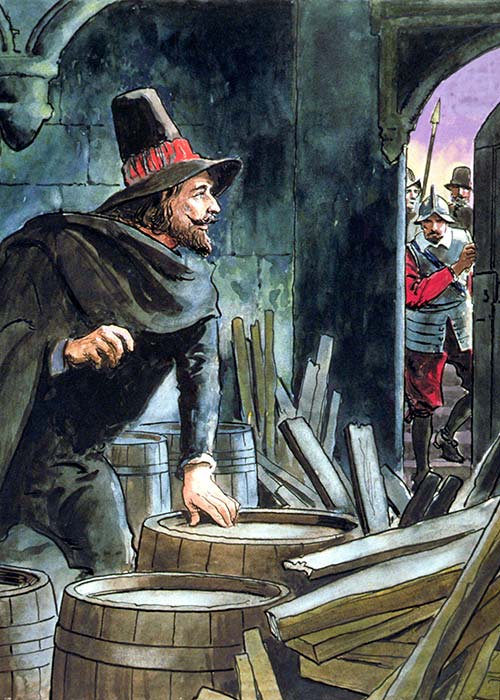
There is apparently some scholarly argument as to how the plot came to light, but a major factor was an anonymous letter of warning delivered to someone who planned to attend the ceremony.  The letter was passed on, eventually reaching the King himself, who ordered a search to be made of the basements.  A first search failed to find anything (except for Guy himself, who explained that he was only a servant), but a second search found not only Guy,

who had slow match in his pocket—not matches, which had not been invented yet—but a kind of fuse used in setting off explosions—

and then the 36 barrels, hidden under a pile of firewood and coal. 

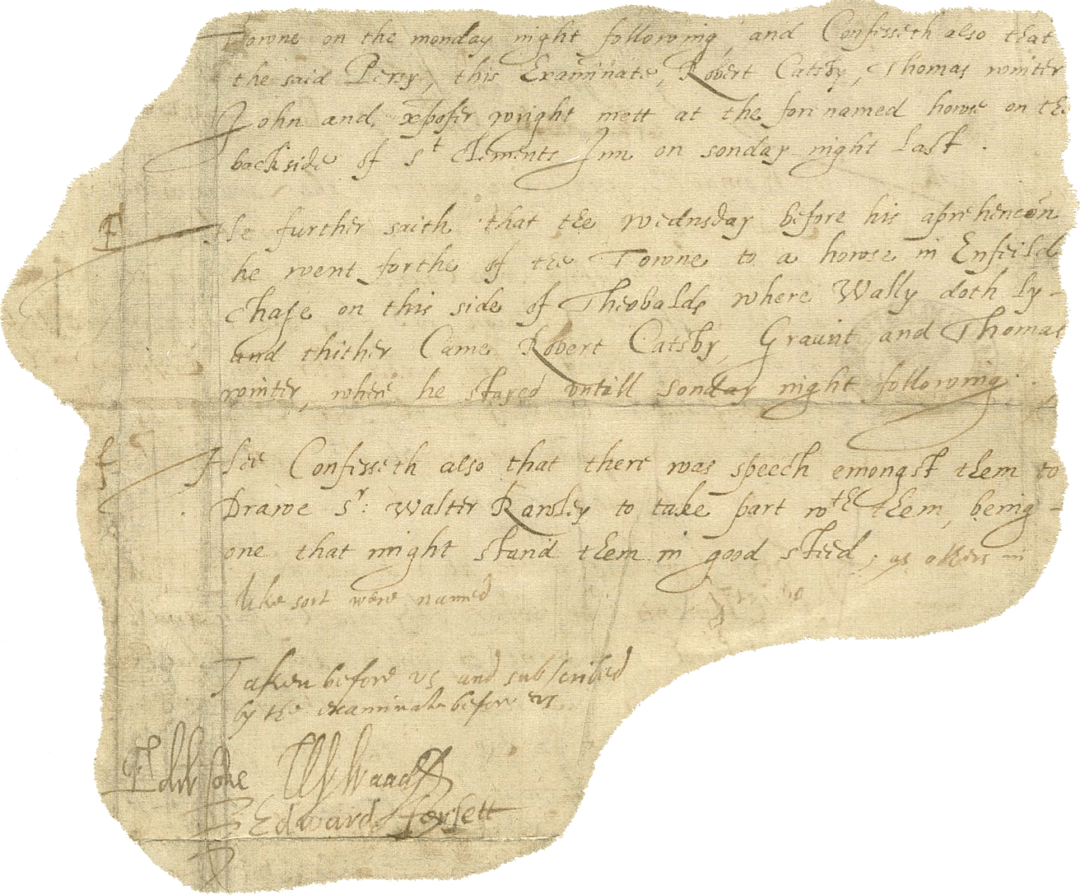
Needless to say, after two days of torture, he confessed

and named the other conspirators, 8 of whom, including Guy, being immediately apprehended, were sentenced to the usual punishment for treason:  drawing and quartering.  If you don’t know what this entails, here’s a LINK: https://en.wikipedia.org/wiki/Hanged,_drawn_and_quartered, but I’ll skip the grisly details (although Guy escaped by jumping off the scaffold and breaking his neck), not only because of their grisliness, but because what happened next takes us back to the opening of this essay.  To celebrate the failure of the plot, people lit bonfires all over England and Parliament soon passed into law “The Observance of 5th November Act 1605”, which was in force until 1859.  This led, in time, to the English tradition of “Guy Fawkes Day”, celebrated on the 5th of November each year.

It’s that word “bonfires” which caught my attention.  It’s really “bonefires”, from Middle English “banefire” and, another name for “Guy Fawkes Day”—or, rather, its evening, is “Bonfire Night”.

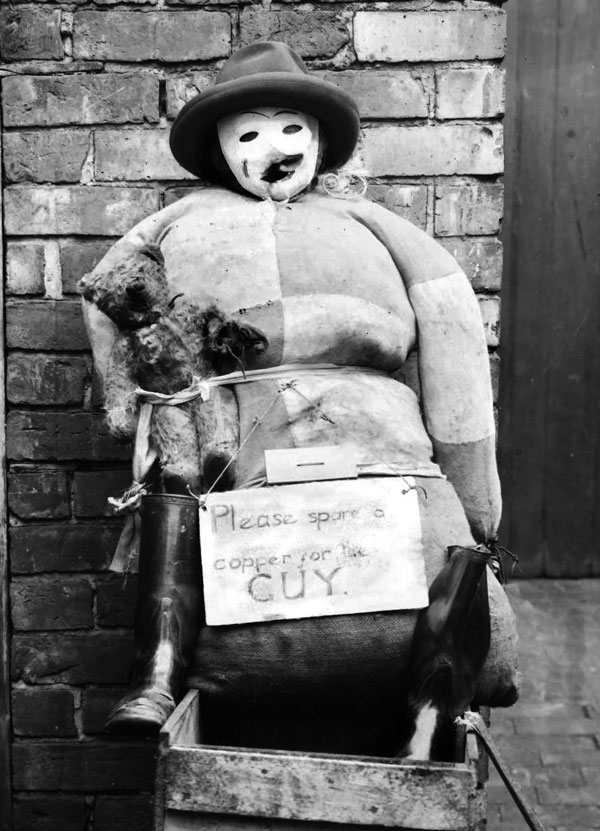
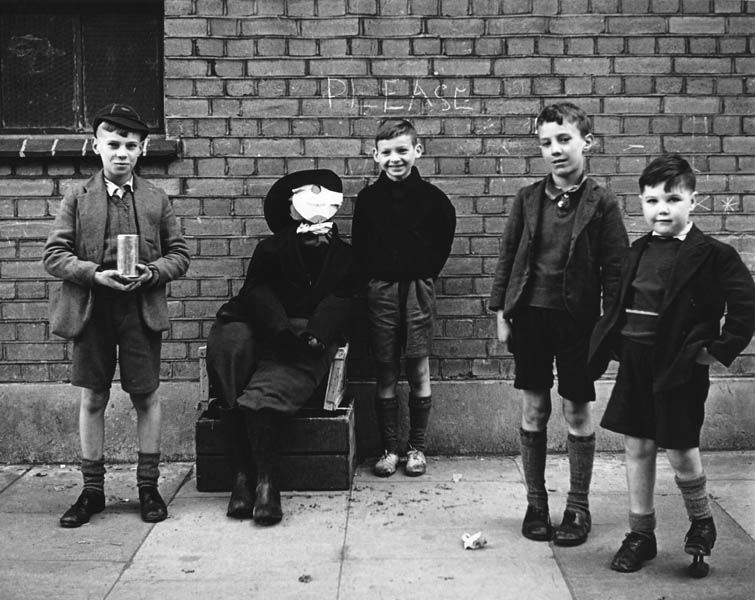
No one is sure when the customs surrounding Guy Fawkes Day began.  Traditionally, it became a children’s event, beginning with the creation of a “guy”,

a kind of scarecrow figure, who was carried about the streets

(although this one is labeled “poor joe”—a local joke?),

while children chanted variations on

“Remember, remember

the Fifth of November,

gunpowder, treason and plot.

I see no reason

why gunpowder treason

should ever be forgot.”

Adding “A penny for the old guy!”

The coins collected were then used to buy sweets and fireworks, to be used during the evening when the guy was placed upon a bonefire—bonfire—and burnt.

The scarecrow-like clothing of the guy appears to have produced the early 19th-century definition of a poorly-dressed person as a “guy”, and, somehow, between that time and late in the 19th century, it gradually became a kind of loose generic term for “male person”, eventually, in the 20th century, becoming even more generic and referring, by the later 20th century, to any group of people, as in the “Hey, guys!” of the title of this posting.

But why burn the guy?

I wonder if it doesn’t have to do so much with the actual Guy Fawkes, or any of his fellow conspirators, but with the time of year:  that period when, in the ancient Celtic world, summer, Sam, sat on the edge of winter, Gam, and people celebrated the Samhain (SAH-vuhn in Old Irish, SAH-win in more modern pronunciation).  If people were worried about the turn of the sun towards winter, then it would be best to encourage it with as big a fire as you could.  And, if you were really nervous, perhaps you might add a little something extra—

This is an illustration based upon a passage in Julius Caesar’s (100-44BC)

De Bello Gallico (“About the War In Gaul”), in which he describes a human sacrifice by the Gauls in which

“Others have sacrifices with an image of immense size, the limbs of which, woven from twigs, they fill with living people.  When those limbs have been set alight, the people, surrounded by flame, are killed.”

(Alii immani magnitudine simulacra [sacrificia] habent, 4 quorum contexta viminibus membra vivis hominibus complent; quibus succensis circumventi flamma exanimantur homines.)

A reason for this sacrifice Caesar has earlier explained as:

“unless the life of a person is paid for with the life of a person, they think that they can’t appease the divine will of the immortal gods.”

(pro vita hominis nisi hominis vita reddatur, 3 non posse deorum immortalium numen placari arbitrantur,)

What better way to continue an ancient tradition than to add the guy to the pyre?

As ever, thanks for reading,

Stay well,

Happy:  Halloween, Guy Fawkes Day, All Saints,

And be sure that there’s

MTCIDC

O

ps

If you would like to see the effect those 36 barrels would have had if they had been touched off, follow this LINK:  https://www.youtube.com/watch?v=e2G8k7zXhkI

Gambol Upon Gossamer

21 Wednesday Oct 2020

Posted by Ollamh in Uncategorized

≈ Leave a comment

“Why she was invaluable to me! Who taught me to curl myself inside a buttercup? Iolanthe! Who taught me to swing upon a cobweb? Iolanthe! Who taught me to dive into a dewdrop—to nestle in a nutshell—to gambol upon gossamer? Iolanthe!”  (WS Gilbert, Iolanthe, Act I)

As ever, dear readers, welcome.

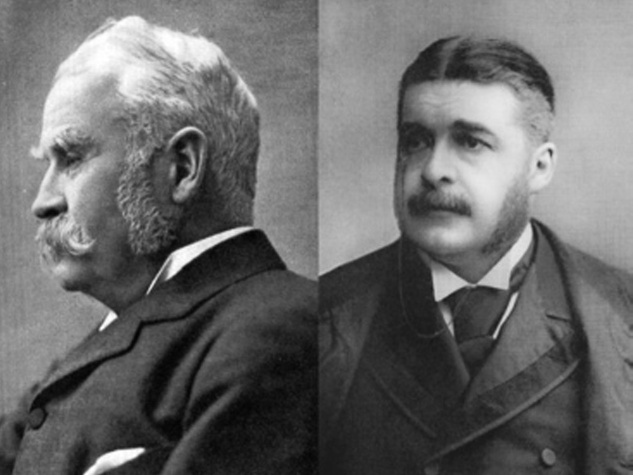
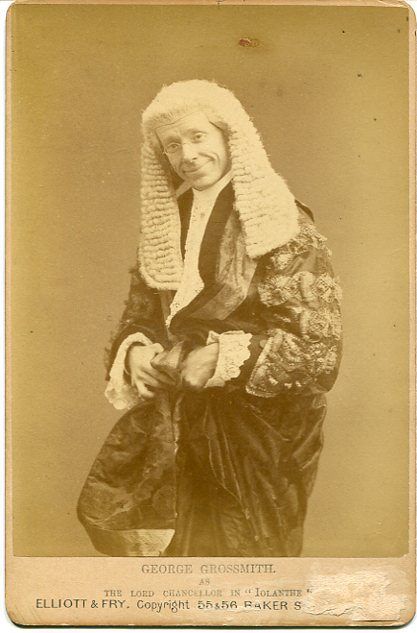
In 1882, dramatist W.S. Gilbert and composer Arthur Sullivan

produced what they called “An Entirely Original Fairy Opera In Two Acts Entitled Iolanthe; or The Peer and the Peri”.

The “Peer” in this case, is the Lord Chancellor,

described in the Wiki article as “the highest-ranking among the Great Officers of State who are appointed regularly in the United Kingdom, nominally outranking the Prime Minister”. 

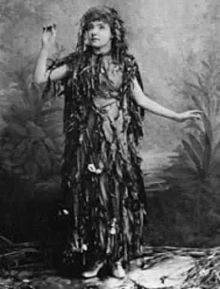
The “Peri”—from the Persian word “pari”, a kind of angelic being and standing in here (for alliterative purposes) for “fairy”—is the title character, Iolanthe.

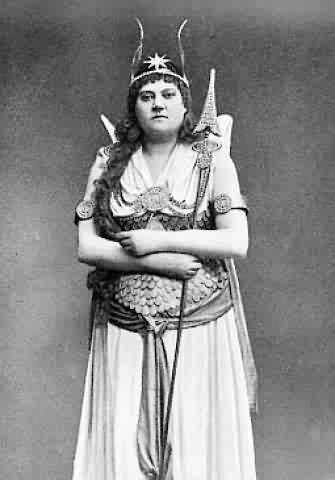
The person speaking about her in the quotation above is the Queen of the Fairies,

(looking suspiciously like someone escaped from Wagner’s Der Ring Des Nibelungen)

who has banished Iolanthe years before for the crime of marrying a mortal (in fact the man who will become the Lord Chancellor).  A running joke in the play is that, although the fairies are meant to be tiny—as in the description above of the activities of the Queen of the Fairies—on stage, they are the same size as the mortals. And this is still true today, of course, when you see a revival.

 A second joke is that the Queen, beginning with the original actress, Alice Barnett (in the photograph above), has a deep voice, being a contralto, and is of ample size (Barnett was 5 feet 10 inches—177cm tall).

Gilbert, who was a very subtle man, chose to draw no direct attention to the potential problem of difference in scale, but, to any Victorian who considered it, the joke would have been obvious, as fairies had been thought of as tiny beings since at least Shakespeare’s time, when, in A Midsummer Night’s Dream, Titania, that Queen of the Fairies’, attendants are named “Peaseblossom, Cobweb, Moth, and Mustardseed”. 

(And perhaps even earlier than Shakespeare, if the 12th-century priest, Giraldus Cambrensis’ , story of the boyhood adventure of the Welsh priest, Elidorus, in his The Itinerary and Description of Wales—it’s in Book I of the Itinerarium Kambriae, in Chapter 8– is referring to fairies.  For an English translation of the relevant passage, see:                                                            

https://archive.org/details/itinerarythroug00girauoft/page/68/mode/2up )

This tiny tradition was carried on into the 17th century by Michael Drayton (1563-1631)

in his poem, Nymphidia (1627), with passages such as this (lines 41-48, describing the fairy palace):

“The walls of spiders’ legs are made

Well mortised and finely laid;

He was the master of his trade

     It curiously had builded;

The windows of the eyes of cats,

And for a roof, instead of slats,

Is covered with the skin of bats,

     With moonshine that are gilded.”

(for more, see:  http://www.luminarium.org/editions/nymphidia.htm )

In the essay “On Fairy Stories” (1939/1947), Tolkien expresses his intense dislike of this sort of thing:

“Drayton’s Nymphidia is one ancestor of that long line of flower-fairies and fluttering sprites with antennae that I so disliked as a child, and which my children in turn detested.” 

And, citing the above passage in particular, he continues:

“Drayton’s Nymphidia is, considered as a fairy-story (a story about fairies), one of the worst ever written.”

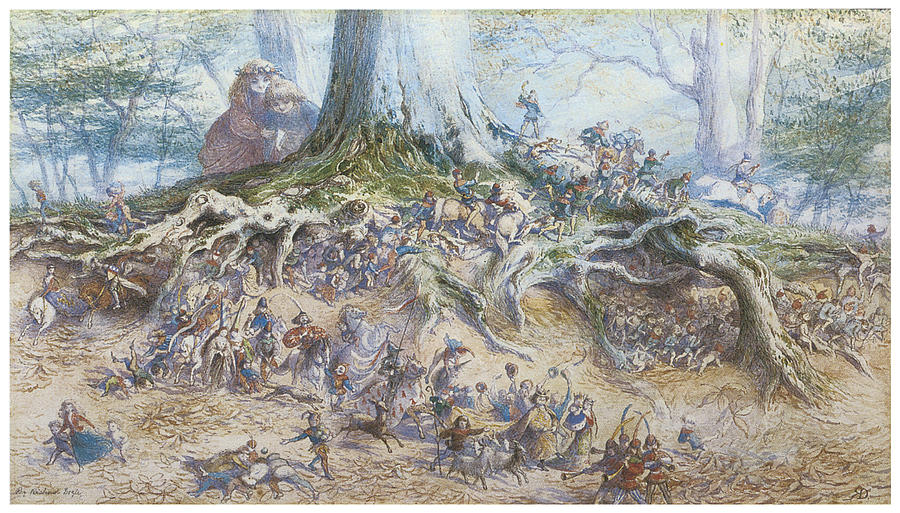
JRRT’s very negative reaction comes at the end of a long tradition of the miniaturized world he disliked. The Elizabethan/Jacobean fancies of Shakespeare and Drayton inspired 19th-century English artists from Landseer (1802-1873),

Richard Dadd (1817-1886),

 and Robert Huskisson (1820-1861),

to Richard Doyle (1824-1883)—perhaps the most famous fairy painter–

and Arthur Rackham (1867-1939).

And then there were the photographs.

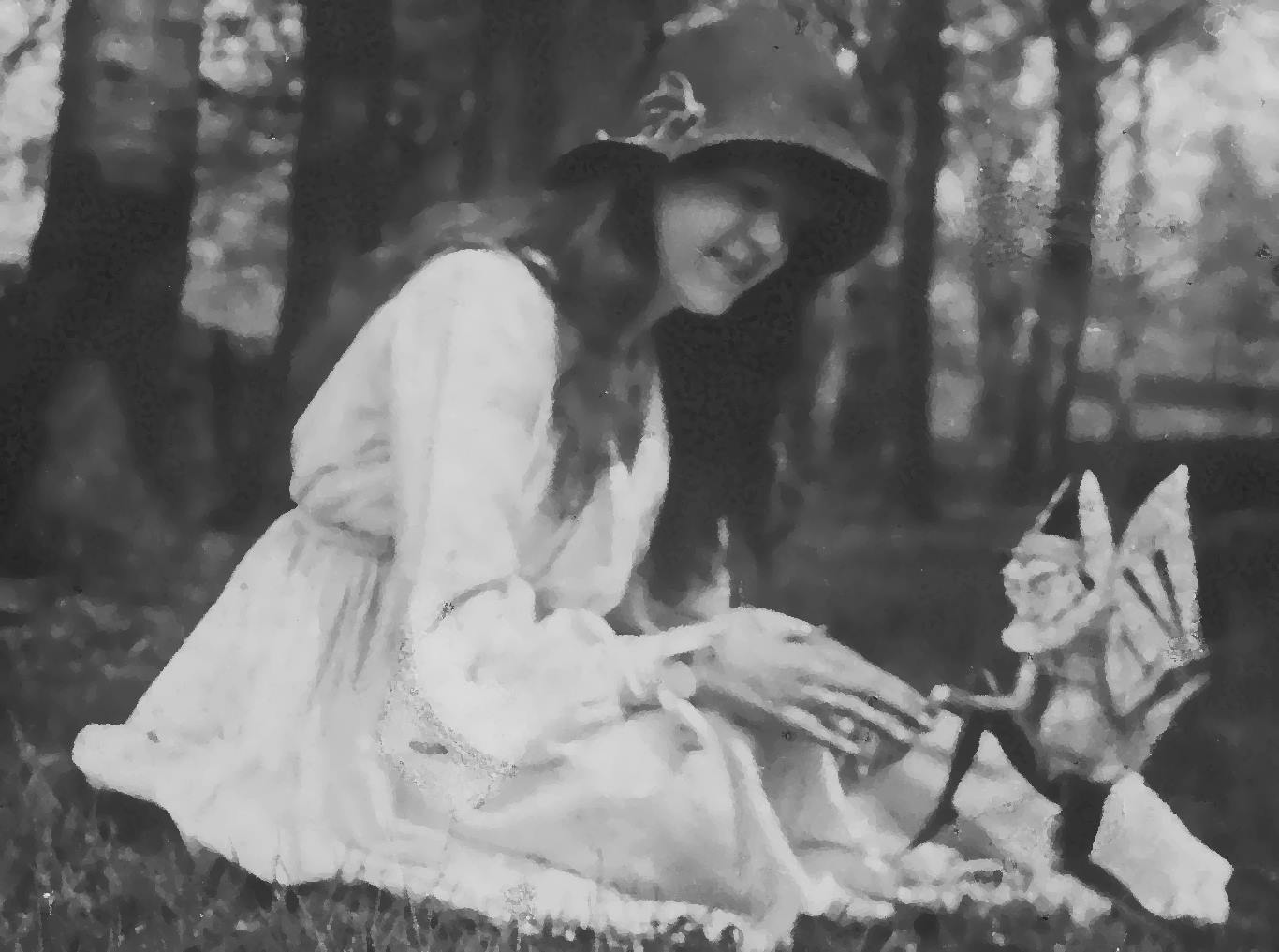
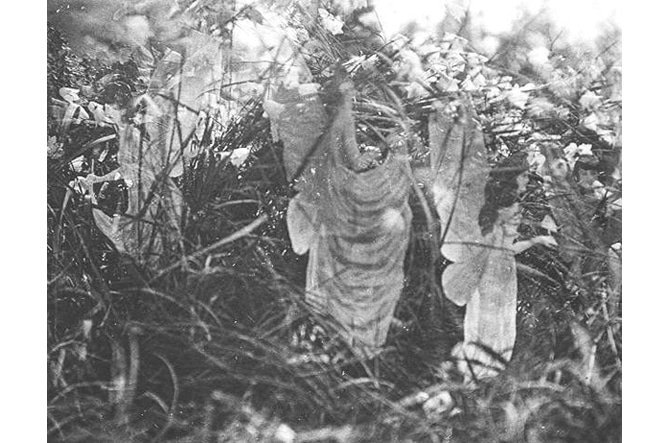
In The Strand Christmas issue for December, 1920, there appeared these two very odd pictures–

Here are larger versions:

These were followed, in time, by three more—

To our 21st century eyes, these look impossibly faked.  The children are three-dimensional, but the “fairies” in four of the photos and the “gnome” in the other have the appearance of colored cardboard cut-outs—which is exactly what they are, some actually modeled upon an illustration in a popular book of the period, Princess Mary’s Gift Book (1914).

(Here’s a LINK so that you can have your own copy:  https://archive.org/details/princessmarysgif00mary

The illustration, one of several, accompanies a poem, “A Spell for a Fairy” by the once well-known poet, Alfred Noyes (1880-1958) and can be seen on page 102.  This is actually quite a remarkable book, seeming to have contributions by every prominent author of the period, in particular adventure writers like the Baroness Orczy and H. Rider Haggard, and even a poem by Rudyard Kipling.)

“Spirit photography” had been around since the 1860s, when a Boston photographer, William Mumler (1832-1884) began to add faint extra exposures to actual portrait photos.  If you’re at all familiar with this kind of cheap trickery, you’ll recognize this of Mary Todd Lincoln, the widow of Abraham Lincoln, with a ghostly (literally) President Lincoln behind her.

Mumler was exposed as a fraudster in 1869, but that didn’t stop some from continuing to believe that the spirit world was desperate for a “Kodak moment” with the living.  And among those was a surprising figure, the creator of the original sceptical detective,

Sir Arthur Conan Doyle (1859-1930).  His name was on that 1920 Strand article and, soon after, Sir Arthur published both The Coming of the Fairies

and The Case for Spirit Photography in 1922.  (If you’re interested, here are LINKS to both: 

https://archive.org/details/comingoffairies00doylrich

and 

https://archive.org/details/1923DoyleTheCaseForSpiritPhotography  )

Conan Doyle was already in the “Spiritualist” movement.  As early as 1887, he had published an article on a séance (a meeting in which a “medium”—that is, a person supposedly sensitive to the spirit world—and a group of interested people attempt to contact the dead) he had attended.  And, in 1917, he delivered his first public lecture on the subject. 

He was predisposed, then, to believe what he saw, almost as if he were hearing Holmes, in his head, saying, “Eliminate all other factors, and the one which remains must be the truth.” (The Sign of the Four, 1890)

In fact, considering what was the truth, he should have been hearing:

“Let me run over the principal steps. We approached the case, you remember, with an absolutely blank mind, which is always an advantage. We had formed no theories. We were simply there to observe and to draw inferences from our observations.”  (The Adventure of the Cardboard Box, 1893)

But perhaps the same spirit—no pun intended—which keeps us from thinking too hard about the scale of the characters in Iolanthe was behind Conan Doyle’s firm assertion of the veracity of those photographs.

Or, perhaps it was the same impulse which makes us clap when, in the play Peter Pan, Tinkerbell is dying and our clapping will bring her back:  a basic need, even for the creator of Sherlock Holmes, to believe in fairies?

Thanks, as always, for reading,

Stay well,

And remember, as always, that there’s

MTCIDC,

O

ps

In 1908, Arthur Rackham illustrated perhaps the most beautiful and certainly the most creatively constructed edition of Shakespeare’s A Midsummer Night’s Dream.  Here’s a LINK so that you can have your own copy of this impressive work:

https://archive.org/details/midsummernightsd00shak

← Older posts
Newer posts →

The Doubtful Sea Series Facebook Page

The Doubtful Sea Series Facebook Page

  • Ollamh

Categories

  • Artists and Illustrators
  • Economics in Middle-earth
  • Fairy Tales and Myths
  • Films and Music
  • Games
  • Heroes
  • Imaginary History
  • J.R.R. Tolkien
  • Language
  • Literary History
  • Maps
  • Medieval Russia
  • Military History
  • Military History of Middle-earth
  • Narnia
  • Narrative Methods
  • Poetry
  • Research
  • Star Wars
  • Terra Australis
  • The Rohirrim
  • Theatre and Performance
  • Tolkien
  • Uncategorized
  • Villains
  • Writing as Collaborators
Follow doubtfulsea on WordPress.com

Across the Doubtful Sea

Recent Postings

  • The Damage of Dragons March 11, 2026
  • Encouragement March 4, 2026
  • Eavesdropping February 25, 2026
  • Do You Speak Villain? (Part 3) February 18, 2026
  • Do You Speak Villain? (2) February 11, 2026
  • Do You Speak Villain? (Part 1) February 4, 2026
  • Towering January 28, 2026
  • Tolkien Among the Indians January 21, 2026
  • Thin and Stretched January 14, 2026

Blog Statistics

  • 109,100 Views

Posting Archive

  • March 2026 (2)
  • February 2026 (4)
  • January 2026 (4)
  • December 2025 (5)
  • November 2025 (4)
  • October 2025 (5)
  • September 2025 (4)
  • August 2025 (4)
  • July 2025 (5)
  • June 2025 (4)
  • May 2025 (4)
  • April 2025 (5)
  • March 2025 (4)
  • February 2025 (4)
  • January 2025 (5)
  • December 2024 (4)
  • November 2024 (4)
  • October 2024 (5)
  • September 2024 (4)
  • August 2024 (4)
  • July 2024 (5)
  • June 2024 (4)
  • May 2024 (5)
  • April 2024 (4)
  • March 2024 (4)
  • February 2024 (4)
  • January 2024 (5)
  • December 2023 (4)
  • November 2023 (5)
  • October 2023 (4)
  • September 2023 (4)
  • August 2023 (5)
  • July 2023 (4)
  • June 2023 (4)
  • May 2023 (5)
  • April 2023 (4)
  • March 2023 (5)
  • February 2023 (4)
  • January 2023 (4)
  • December 2022 (4)
  • November 2022 (5)
  • October 2022 (4)
  • September 2022 (4)
  • August 2022 (5)
  • July 2022 (4)
  • June 2022 (5)
  • May 2022 (4)
  • April 2022 (4)
  • March 2022 (5)
  • February 2022 (4)
  • January 2022 (4)
  • December 2021 (5)
  • November 2021 (4)
  • October 2021 (4)
  • September 2021 (5)
  • August 2021 (4)
  • July 2021 (4)
  • June 2021 (5)
  • May 2021 (4)
  • April 2021 (4)
  • March 2021 (5)
  • February 2021 (4)
  • January 2021 (4)
  • December 2020 (5)
  • November 2020 (4)
  • October 2020 (4)
  • September 2020 (5)
  • August 2020 (4)
  • July 2020 (5)
  • June 2020 (4)
  • May 2020 (4)
  • April 2020 (5)
  • March 2020 (4)
  • February 2020 (4)
  • January 2020 (6)
  • December 2019 (4)
  • November 2019 (4)
  • October 2019 (5)
  • September 2019 (4)
  • August 2019 (4)
  • July 2019 (5)
  • June 2019 (4)
  • May 2019 (5)
  • April 2019 (4)
  • March 2019 (4)
  • February 2019 (4)
  • January 2019 (5)
  • December 2018 (4)
  • November 2018 (4)
  • October 2018 (5)
  • September 2018 (4)
  • August 2018 (5)
  • July 2018 (4)
  • June 2018 (4)
  • May 2018 (5)
  • April 2018 (4)
  • March 2018 (4)
  • February 2018 (4)
  • January 2018 (5)
  • December 2017 (4)
  • November 2017 (4)
  • October 2017 (4)
  • September 2017 (4)
  • August 2017 (5)
  • July 2017 (4)
  • June 2017 (4)
  • May 2017 (5)
  • April 2017 (4)
  • March 2017 (5)
  • February 2017 (4)
  • January 2017 (4)
  • December 2016 (4)
  • November 2016 (5)
  • October 2016 (6)
  • September 2016 (5)
  • August 2016 (5)
  • July 2016 (5)
  • June 2016 (5)
  • May 2016 (4)
  • April 2016 (4)
  • March 2016 (5)
  • February 2016 (4)
  • January 2016 (4)
  • December 2015 (5)
  • November 2015 (5)
  • October 2015 (4)
  • September 2015 (5)
  • August 2015 (4)
  • July 2015 (5)
  • June 2015 (5)
  • May 2015 (4)
  • April 2015 (3)
  • March 2015 (4)
  • February 2015 (4)
  • January 2015 (4)
  • December 2014 (5)
  • November 2014 (4)
  • October 2014 (6)
  • September 2014 (1)

Blog at WordPress.com.

  • Subscribe Subscribed
    • doubtfulsea
    • Join 78 other subscribers
    • Already have a WordPress.com account? Log in now.
    • doubtfulsea
    • Subscribe Subscribed
    • Sign up
    • Log in
    • Report this content
    • View site in Reader
    • Manage subscriptions
    • Collapse this bar
 

Loading Comments...