• About

doubtfulsea

~ adventure fantasy

Monthly Archives: February 2025

Drogo?

26 Wednesday Feb 2025

Posted by Ollamh in Uncategorized

≈ Leave a comment

Tags

Chingiz Khan, Drogo, Frodo, Hobbit genealogy, Mongols, Normans, Prose Edda, Saint Drogo, Tolkien

Welcome, as ever, dear readers.

If you’re a Game of Thrones fan (and I include myself here), you’ll immediately think of Khal Drogo, the leader of a tribe of the nomadic Dothraki,

whether you’ve seen the films,
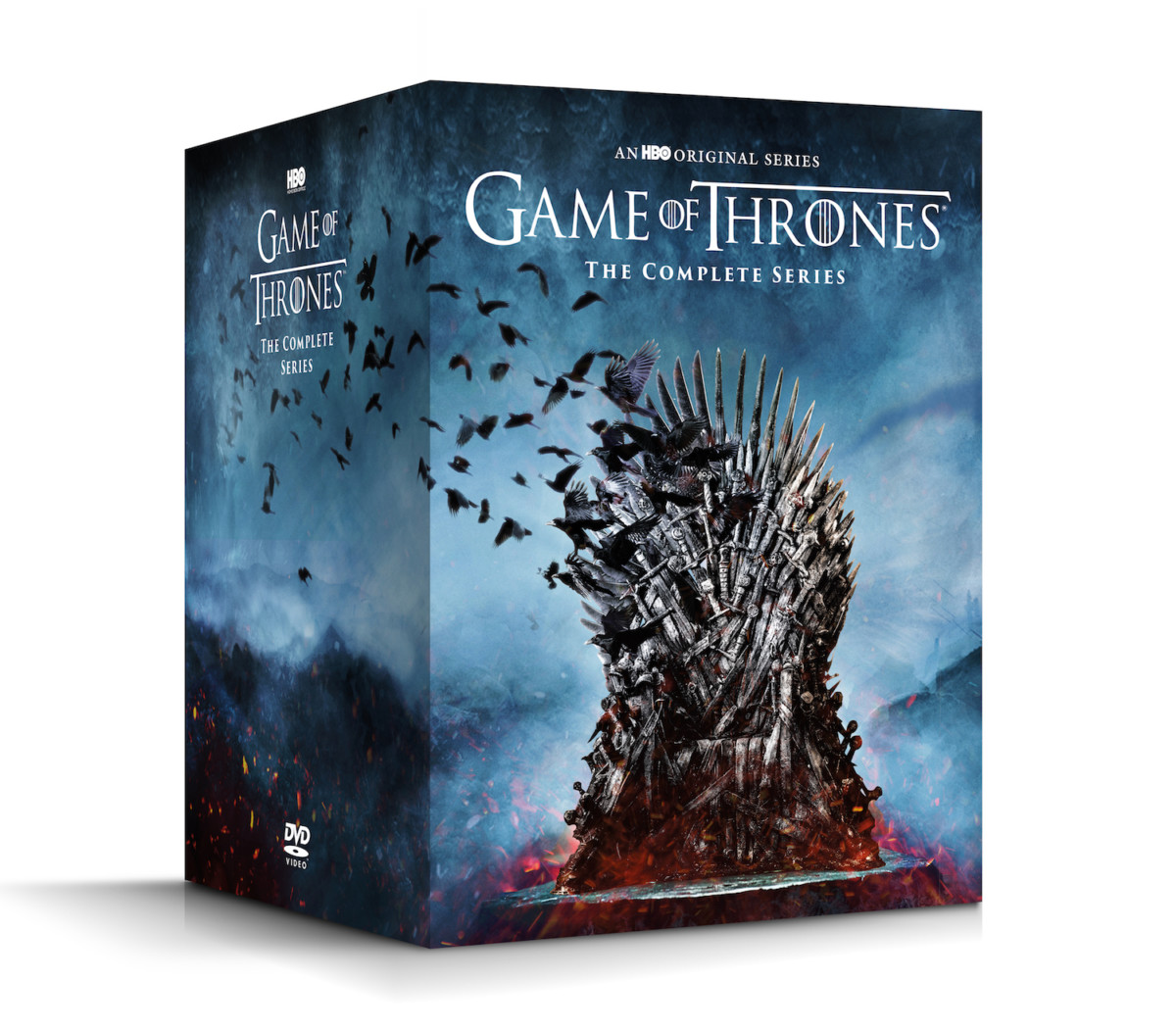
or read the books,
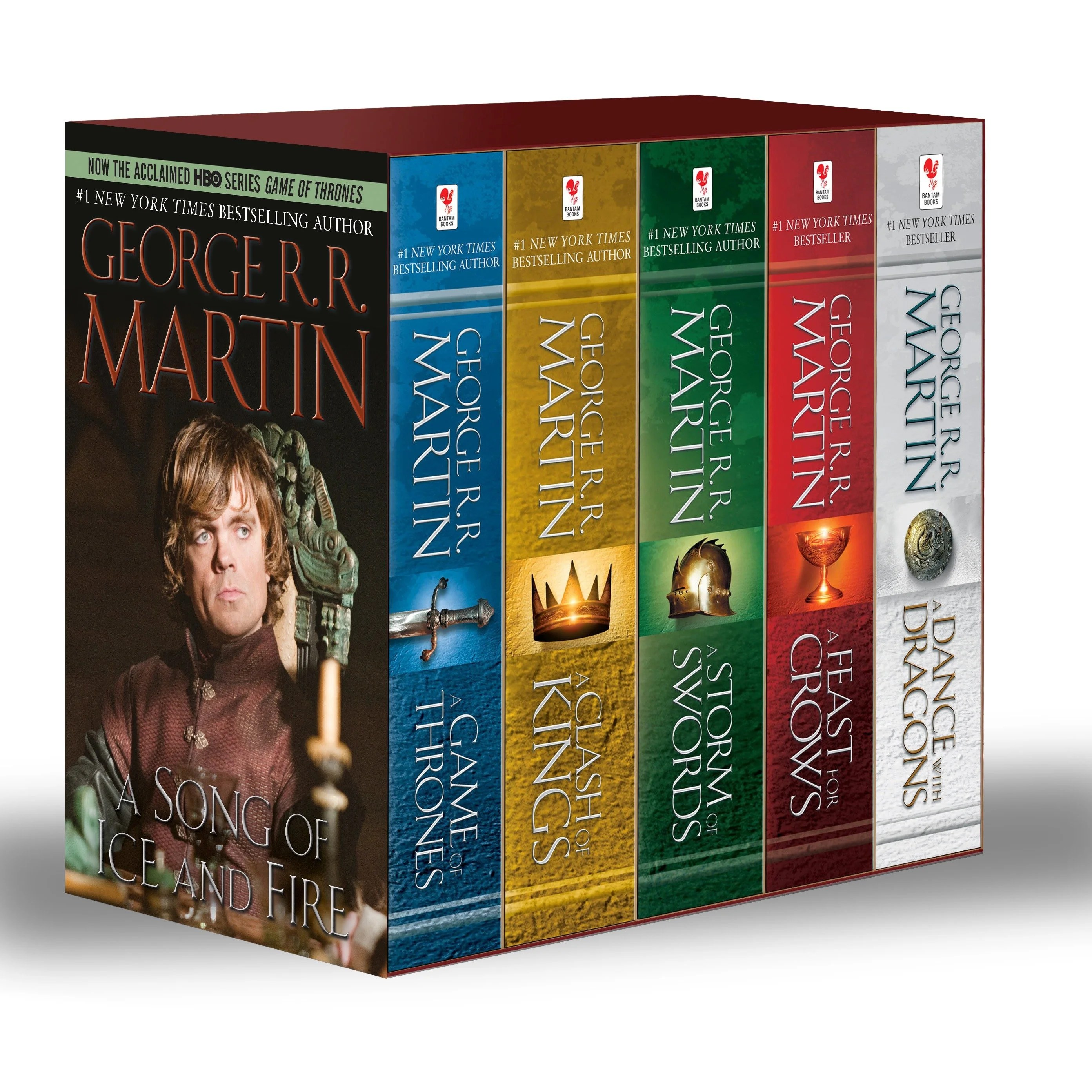
or both.  

I’m presuming that “Khal” is modeled on “khan”, a word of disputed origin among scholars, but which signifies someone above “king”—imagine something more like “high king”—and is used as the title for the ruler of an “ulus”, a “horde” in English.  (For more about the name, see:  https://en.wikipedia.org/wiki/Khan_(title) )  When you hear that word, you may think of Temujin, c.1162-1227AD, aka Chinggiz/Genghis Khan,

who founded the Mongol Empire and began the great wave of conquest from China to Russia.  (More about him here:  https://en.wikipedia.org/wiki/Genghis_Khan I’ll add here that, so far, I’ve been unable to locate an artist for the illustration below.)

But he’s not the Drogo who is the subject of this posting.

Instead, it’s a much more humble Drogo, but, without him, Sauron’s Ring

would, barring that near disaster,

(Ted Nasmith)

never have been destroyed and, with it, Sauron.

(another Nasmith—and you can see why he’s one of my favorite Tolkien illustrators:  no scene too big and also no scene less known will stop him)

JRRT has reported to us the Hobbits’ passion for genealogy:

“All Hobbits were, in any case, clannish and reckoned up their relationships with great care.  They drew long and elaborate family-trees with innumerable branches.”  (The Lord of the Rings, Prologue I, “Concerning Hobbits”) 

And here we see that name in the Appendices, C “Family Trees (Hobbits)”

     I                                        I                                I

Dora                               Drogo                         Dudo

1302-1406                    1308-1380                 1311-1409

                                         = Primula                     I

                                         Brandybuck                 I

                                              I                                I

                                         Frodo                       Daisy

                                         1368                         1350

                                                                            = Griffo

                                                                            Boffin

It is, of course, Frodo’s father, drowned in a boating accident thought suspicious by some.  (The Fellowship of the Ring, Book One, Chapter 1, “A Long-expected Party)

I don’t have either the Hobbits’—or Tolkien’s—enthusiasm for genealogy, but I was curious, as I always am, about JRRT’s sources:  just where did this name come from?  It could be entirely from his fertile imagination, of course, but, as so much good scholarship has pointed to medieval sources for certain details in his works—think about those dwarvish names, right out of Icelandic saga material—the 13th-century Prose Edda of Snorri Sturluson (whose own name has a dwarvish ring and whose work you can read here:  https://archive.org/details/proseedda01brodgoog/page/n54/mode/2up   The dwarf name list is to be found on page 26)—I thought that a medieval influence might be possible.

At the moment, I have a short list of possible medieval candidates:

1. Drogo, the short-lived Duke of Brittany (reigned 952-958AD)—who may have been murdered by the connivance of his step-father, Fulk II, the Count of Anjou.  (This is from the 11th-century Chronicle of Nantes, of which only fragments survive, but the murder plot does—Fulk threatens and persuades Drogo’s nurse to do away with him in his bath—see pages 109-110 in the 1896 edition of the fragments by Rene Merlet here:  https://archive.org/details/lachroniquedenan00merl/page/108/mode/2up )

2. Drogo de la Beuvriere (? 11th century)—a companion of William the Conqueror, best known for poisoning his wife (these Normans and their allies seem to specialize in violence, don’t they?)—this information is in little bits of gossip, with the added fact that Drogo then borrowed travel money from William to enable his escape–https://en.wikipedia.org/wiki/Drogo_de_la_Beuvri%C3%A8re

3. Drogo d’Hauteville, the Norman count of Apulia (died 1051AD)—the Normans had gradually conquered whole sections of Italy and Sicily in the 11th century

and this Drogo succeeded his brother, William, as count, only to be murdered! 

4. and then there’s Saint Drogo (1105-1186AD)—a Flemish nobleman who, suffering from a disease that made it difficult for people to look at him (leprosy?), he became a hermit and, not surprisingly, is the patron saint of shepherds  (feast day, April 16).  As, unlike the other Drogos, he seems to have died of natural causes, after a long life, I think that we should end our catalogue here!

Thanks, as always, for reading.

Stay well,

Be very suspicious of ambitious Normans,

And remember that there’s always

MTCIDC

O

PS

Perhaps the violence done to so many of those Drogos influenced Tolkien in that nasty rumor about his Drogo?

PPS

If you are Hobbitish or Tolkienean in your interest in genealogy, there’s another Drogo—Drogo de Teigne—whom you can read about here—with the warning:  if there were a genealogical rabbit hole, you’ll be standing at the mouth of it when you begin to read this:  https://www.carolbaxter.com/Drew-families-of-Devonshire-and-Ireland?r_done=1   
Into the Fire

19 Wednesday Feb 2025

Posted by Ollamh in Uncategorized

≈ Leave a comment

Tags

Aetius, Attila, Chalons, Denethor, Faramir, Gandalf, lotr, Middle-earth, Palantir, Pippin, Saruman, Sauron, Tolkien

As ever, welcome, dear readers.

I’ve always admired the way in which JRRT shows the slow descent of Denethor into darkness, from someone who rules Gondor

(Denis Gordeev)

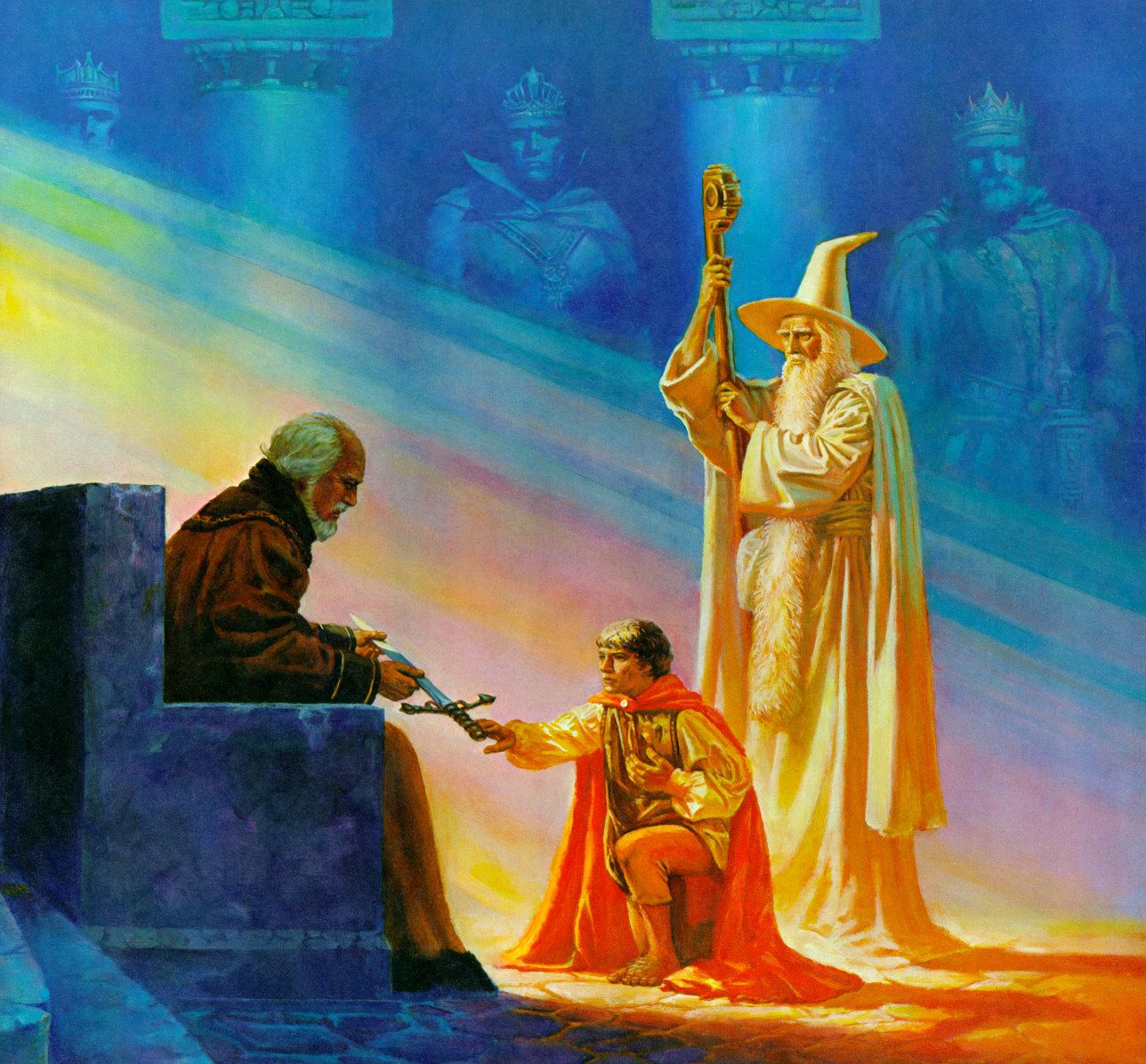
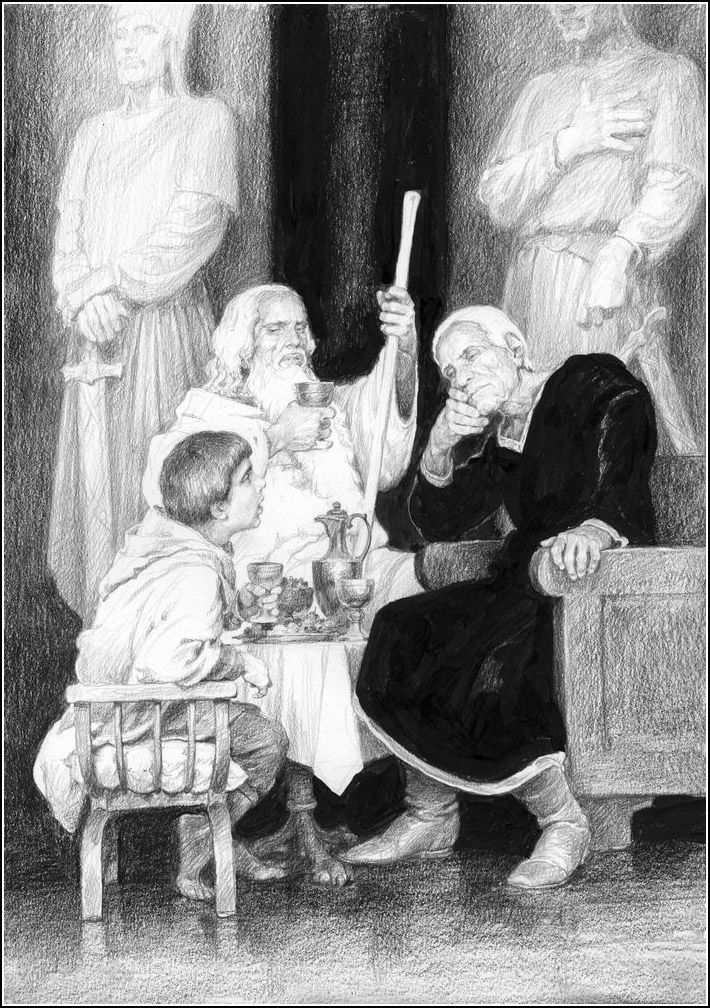
as if he were its rightful king, accepting Pippin’s offer of allegiance,

(Douglas Beekman—a prolific sci-fi fantasy illustrator.  You can see numbers of his illustrations here:  https://www.isfdb.org/cgi-bin/ea.cgi?23068  This catalogue if from the Internet Speculative Fiction Data Base, a wonderfully rich site if you have an interest in sci-fi.)

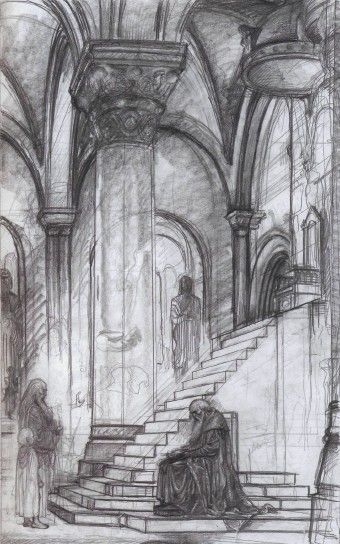
to the pensive and grieving father,

(an Alan Lee sketch)

to the desperate madman of his last scene—

(artist? so far, I can’t locate one)

But that last scene has always impressed me as Tolkien at his dramatic best.

It begins with the setting:

“There Pippin, staring uneasily around him, saw that he was in a wide vaulted chamber, draped as it were with the great shadows that the little lantern threw upon its shrouded walls.  And dimly to be seen were many rows of tables, carved of marble; and upon each table lay a sleeping form, hands folded, head pillowed upon stone.  But one table near at hand stood broad and bare.  Upon it at a sign from Denethor they laid Faramir and his father side by side, and covered them with one covering, and stood then with bowed heads as if mourners beside a bed of death.”

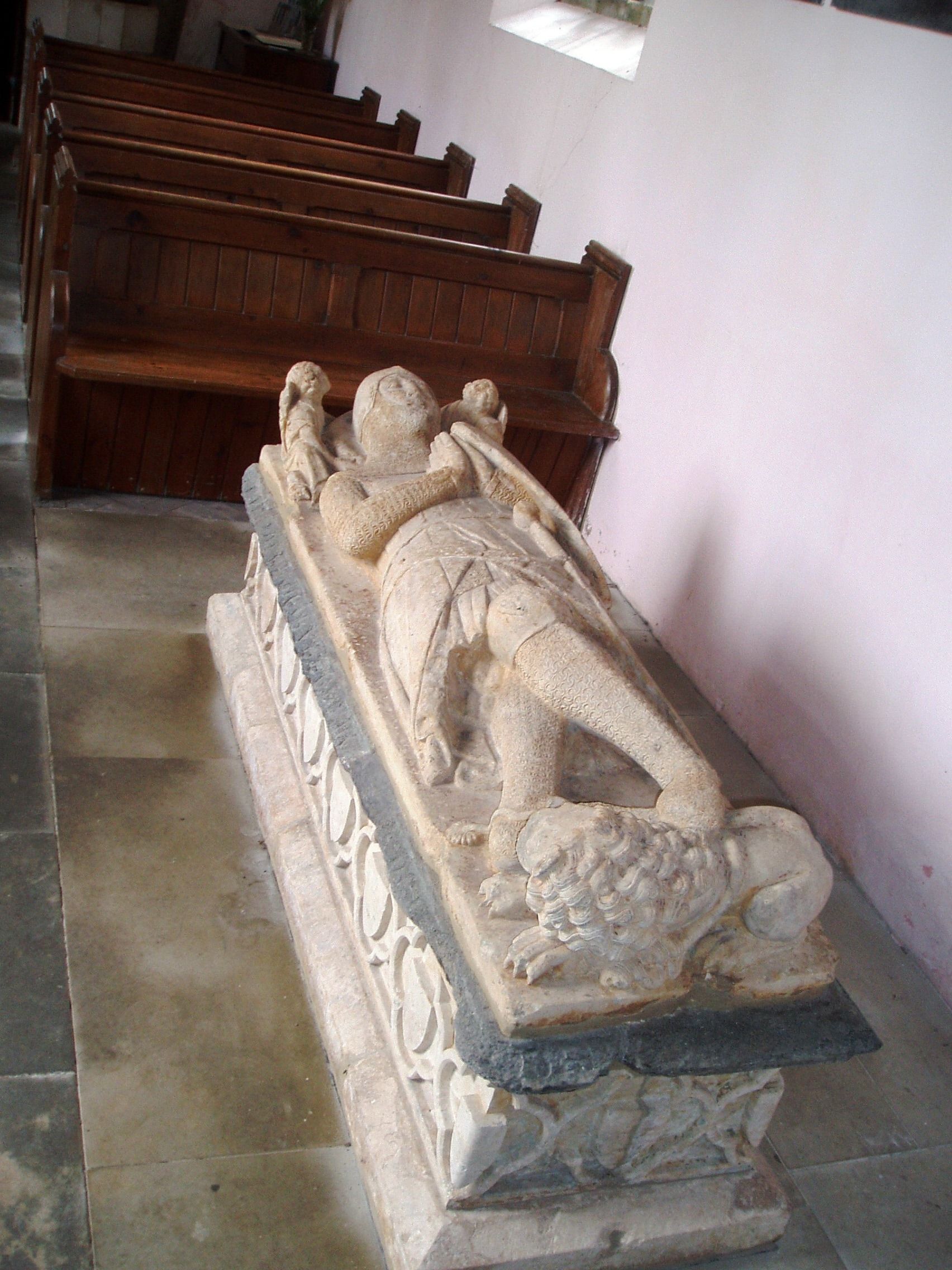
I think that we can imagine that JRRT’s image here is based upon any number of medieval English churches, with their tombs, usually along the walls, or,

more grandly,  the basilica of St Denis, in a northern suburb of Paris,

of which he might have seen a photo.  (As I haven’t found a reference that he had actually visited the place.)

What happens next, however, has a different model—or, rather, perhaps two. 

After having himself and Faramir placed on that empty table, Denethor then makes the terrible command:

“ ‘Here we will wait,’ he said.  ‘But send not for the embalmers.  Bring us wood quick to burn, and lay it all about us, and beneath; and pour oil upon it.  And when I bid you thrust in a torch.’ “ (all of the above from The Return of the King, Book Five, Chapter 4, “The Siege of Gondor”)

What’s going on here?   When Gandalf, summoned by Pippin attempts to stop this, Gandalf says to Denethor:

“ ‘Authority is not given to you, Steward of Gondor, to order the hour of your death,’…And only the heathen kings, under the domination of the Dark Power, did thus, slaying themselves in pride and despair, murdering their kin to ease their own death.’”  (The Return of the King, Book Five, Chapter 7, “The Pyre of Denethor”)

“Heathen”, from Old English haethen, came into English with the meaning “non-believer (in Christianity)” and seems, at first, rather an odd word for Gandalf to have employed, as Tolkien has written himself that “…the ‘Third Age’ was not a Christian world.” (letter to the Houghton Mifflin Co., 30 June, 1955, Letters, 319)

I wonder, however, whether JRRT was remembering something from early medieval history, which he might have read in conjunction with his early avid study of Gothic (which almost ruined his academic career—see his letter to Christopher of 2 January, 1969 (Letters, 558).

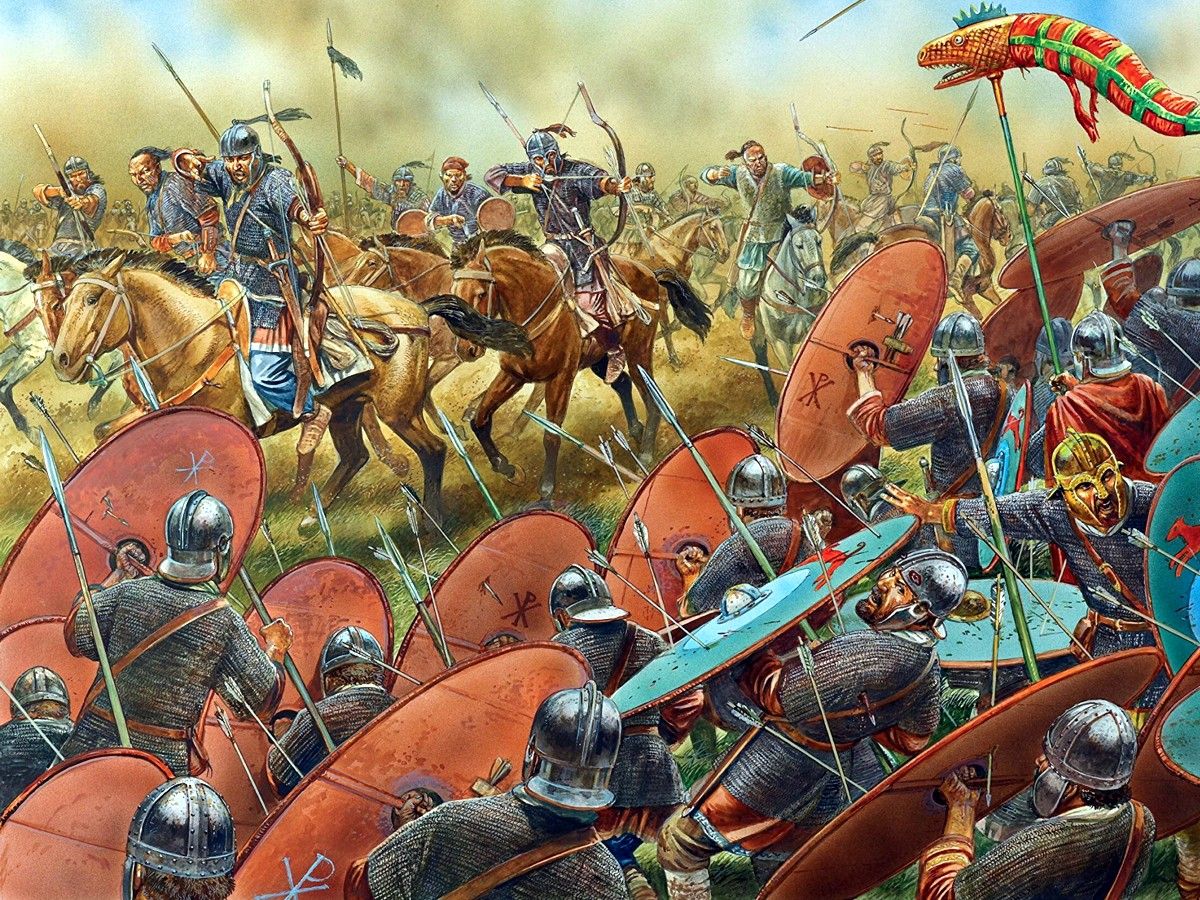
It’s in the account by the 6th-century Gothic historian, Jordanes, of the Battle of the Catalaunian Plains (also known as the Battle of Chalons), between Roman and their Germanic allies, including Visigoths, led by the Roman general, Aetius, and an invading army of Huns and their subject peoples, led by Attila, a battle fought on 20 June, 451.

(by Peter Dennis, one of my favorite contemporary military artists)

The battle was very much a back-and-forth affair, but late in it, the Huns had been driven back to their camp and Attila, usually the soul of confidence, was troubled–and this is where Jordanes’ description comes in:

Fertur autem desperatis rebus praedictum regem adhuc et suppraemo magnanimem equinis sellis construxisse pyram seseque, si adversarii inrumperent, flammis inicere voluisse, ne aut aliquis eius vulnere laetaretur aut in potestate hostium tantarum gentium dominus perveniret.  (Jordanes, De Origine Actibusque Getarum, XL, 213—my translation)

“It is said, moreover, that things were [so] despaired of, that the king [that is, Attila] still supremely brave,  commanded at this point that [they] build a pyre from horse saddles and, should the enemy break in [to his camp], he wished to throw himself into the flames lest either anyone take joy in wounding [him] or lest he, the master of so many peoples come into the power of the enemy.”

None of Attila’s kin is involved in this potential self-immolation, but certainly the pride is there and even despair (as in that “desperatis rebus”) which Gandalf mentions.

But, as I said earlier, there might be another model—and perhaps an even darker one.  Notice that

“But one table near at hand stood broad and bare.”

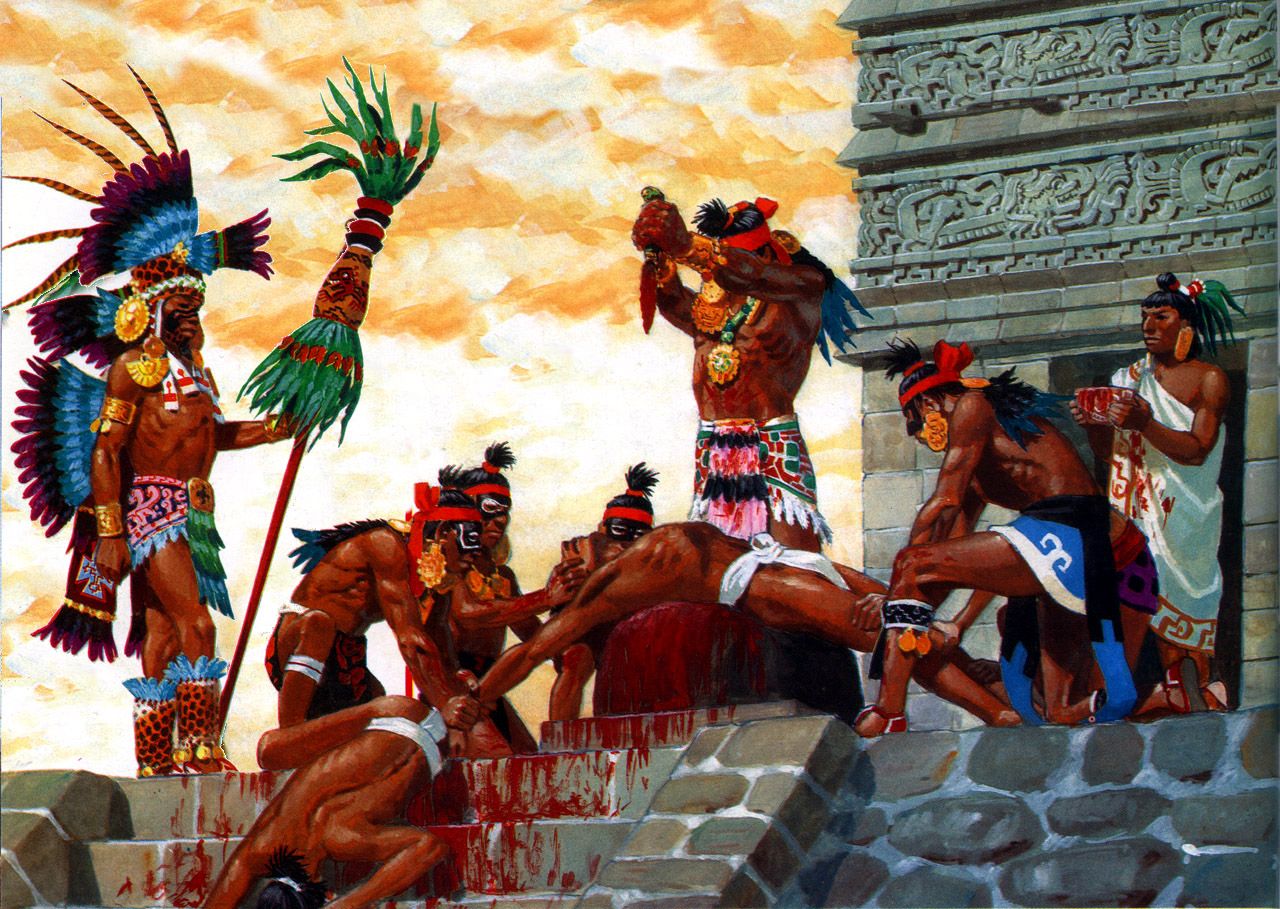
What immediately came to mind was that it resembled an altar—not a Christian one, but something from a different world, in which the symbolic sacrifice of the Christian religion was a real sacrifice—

(artist unknown)

I thought of this because of something which Tolkien had written about Sauron, who has become the prisoner of the Numenorean king Tar-Calion:

“…and seduces the king and most of the lords and people with his lies.  He denies the existence of God, saying that the One is a mere invention of the jealous Valar of the West, the oracle of their own wishes.  The chief of the gods is he that dwells in the Void, who will conquer in the end, and in the void make endless realms for his servants…

A new religion, and worship of the Dark, with its temple under Sauron arises.  The Faithful are persecuted and sacrificed.”  (letter to Milton Waldman, late 9n 1951, Letters, 216)

Why, we might ask, is Denethor so prepared to make a fiery end to himself and his son?

“ ‘Come!’ said Gandalf.  ‘We are needed.  There is much that you can yet do.’

Then suddenly Denethor laughed.  He stood up tall and proud again, and stepping swiftly back to the table he lifted from it the pillow on which his head had lain.  Then coming to the doorway he drew aside the covering, and lo!  he had between his hands a palantir.  And as he held it up, it seemed to those that looked on that the globe began to glow with an inner flame, so that the lean face of the Lord was lit as with a red fire, and it seemed cut out of hard stone, sharp with black shadows, noble, proud, and terrible.  His eyes glittered.

‘Pride and despair!’ he cried.  ‘Didst thou think that the eyes of the White Tower were blind?  Nay, I have seen more than thou knowest, Grey Fool.  For thy hope is but ignorance.  Go then and labour in healing!  Go forth and fight!  Vanity….The West has failed.  It is time for all to depart who would not be slaves.”

And the answer is in that palantir.  As it had earlier corrupted Saruman,

(the Hildebrandts)

and nearly driven Pippin mad with only one look into it, so it has shown Denethor exactly what Sauron had wanted him to see and, deluded, we might imagine that, in his action, he was not only destroying the current ruler of Gondor and his son, but was also acting like the Numenoreans who were his ancestors, making a sacrifice which Sauron had once demanded of them.

And, although Faramir is rescued, Denethor:

“…leaped upon the table, and standing wreathed in fire and smoke he took up the staff of his stewardship that lay at his feet and broke it on his knee.  Casting the pieces into the blaze he bowed and laid himself on the table, clasping the palantir with both hands upon his breast.  And it was said that ever after, if any man looked in that Stone, unless he had a great strength of will to turn it to other purpose, he saw only two aged hands withering in flame.”

And so Sauron had his sacrifice.

Thanks, as ever, for reading.

Stay well,

And remember that, as always, there’s

MTCIDC

O

Chickening In

12 Wednesday Feb 2025

Posted by Ollamh in Uncategorized

≈ Leave a comment

Tags

anachronisms, bacon and eggs, Billina, Chickens, Claymation, Nomes, Oz, Ozma, The Hobbit, Winky Guards

Welcome, dear readers, as always.

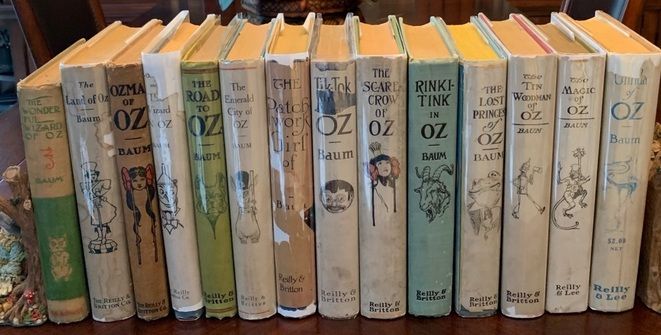
Recently, I had an interesting conversation with a dear friend on the subject of Oz books.  As a child, he had read all of them, whereas I used to look at the whole shelf of them in the local library

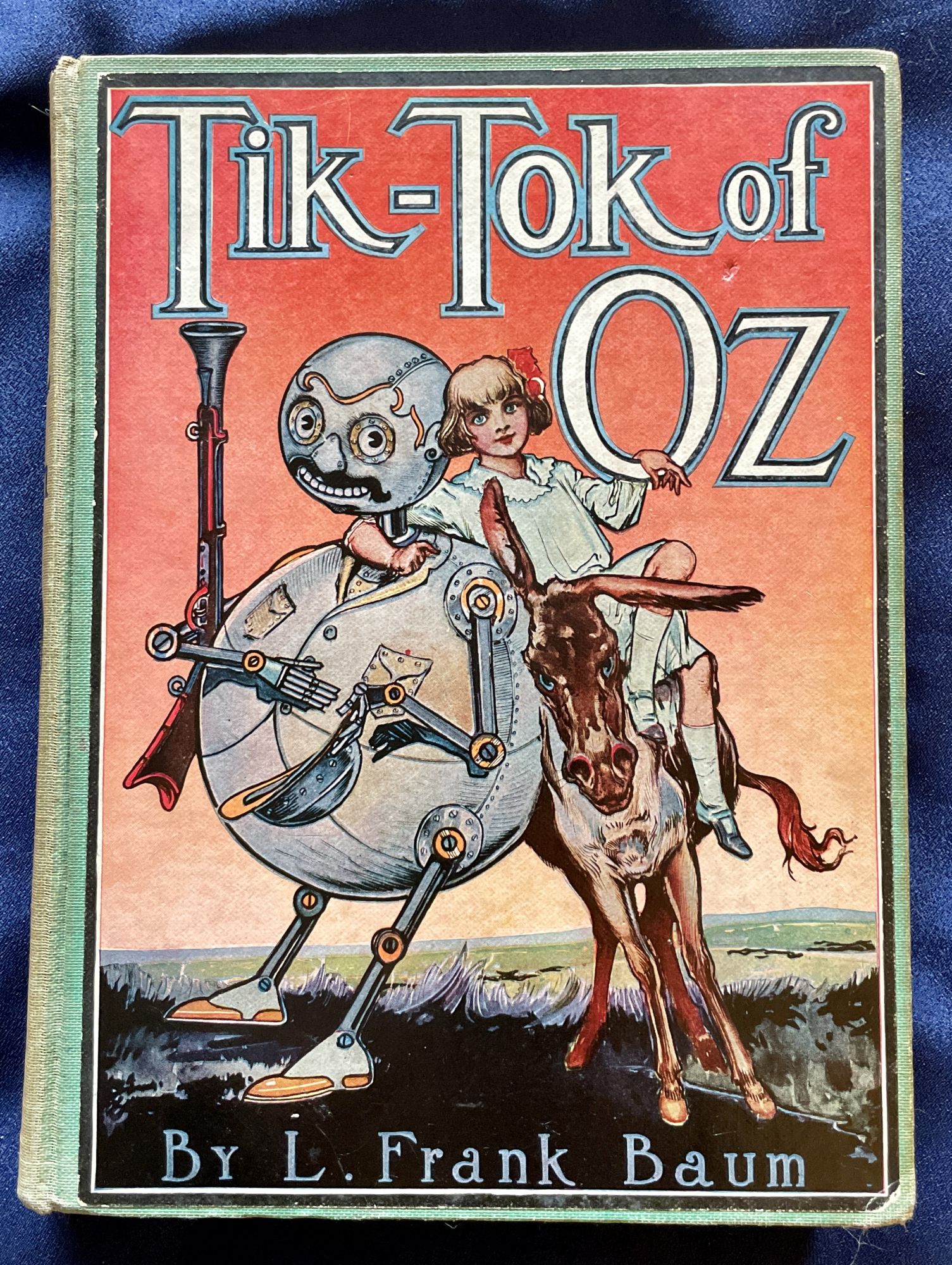
and puzzle over names like “Tik-Tok” and “Rinky-Tink”, with their strange covers,

but, interested in history and science fiction, I never read one of them, going to other sections of the library for my books.  My only contact with Oz lay in the (then) yearly showing of “The Wizard of Oz” on TV, where I would be yearly creeped out by what I later found out were the Winky Guards and their song—

which you can see/hear here, in case you’ve forgotten the Winkies:  https://www.youtube.com/watch?v=nx8-J66yawM

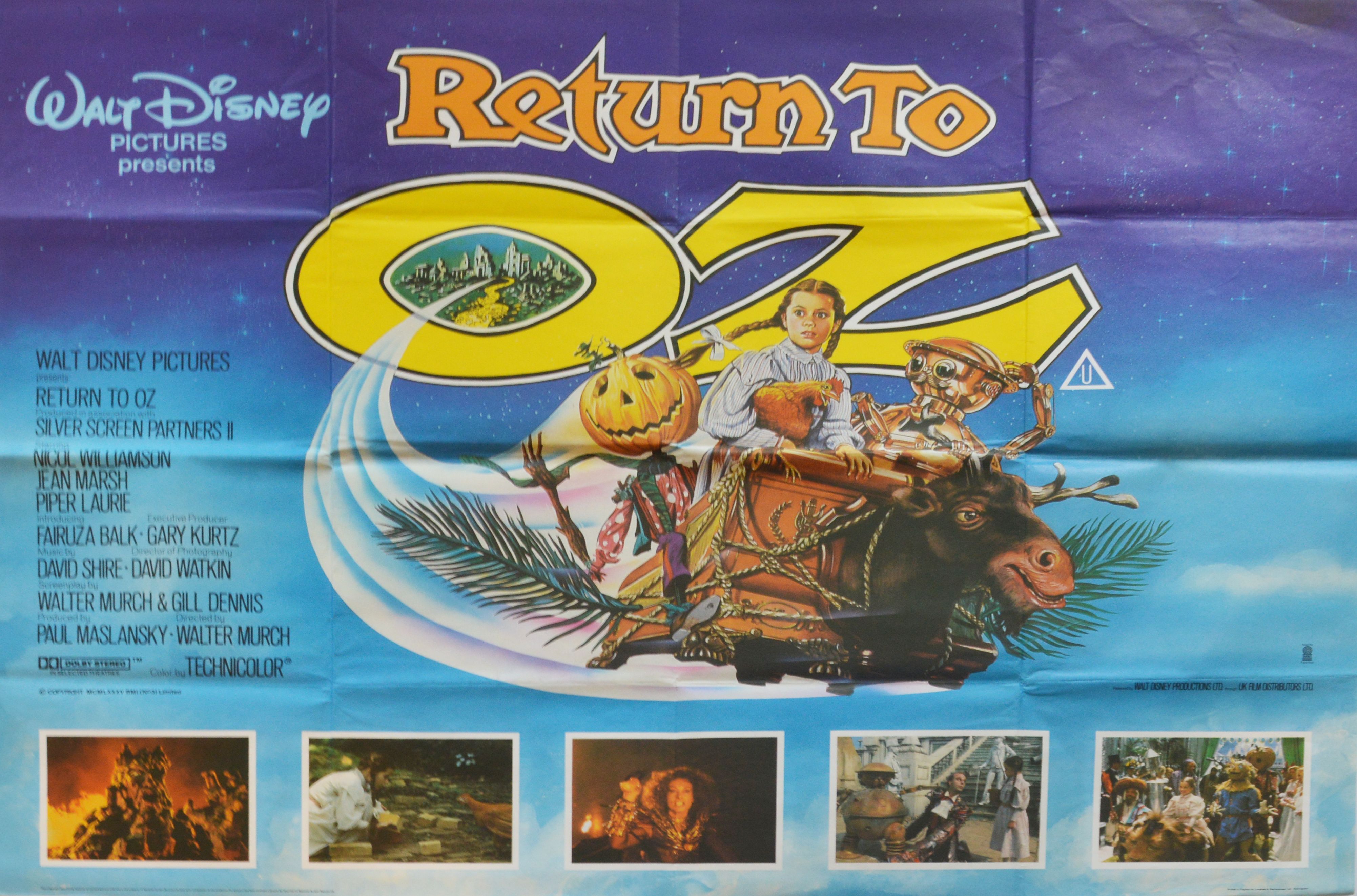
Then came a kind of sequel, “The Return to Oz”,

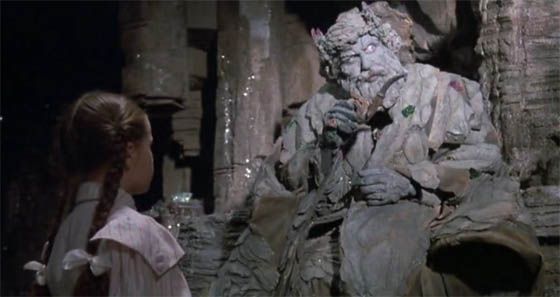
with its wonderful Claymation figures

and its critics:  it had run together a number of different Oz books, taking something from here and there, as well as adding what might be a disturbing element about the early use of shock treatment (Dorothy’s Aunt Em has Uncle Henry take her to an early clinic where her stories of her adventures in Oz are to be—literally—shocked out of her.  Anyone who has read Silvia Plath’s The Bell Jar, 1963, will know what a horrific form of treatment this is.)

As someone innocent of Oz, I had no idea if any of this criticism were true—although I was sure that L. Frank would never have sent Dorothy to such a place—but much later, doing research for an earlier posting, I saw that the script writers had combined two figures the witch Mombi, from The Marvelous Land of Oz, 1904

with Princess Langwidere, from Ozma of Oz, 1907,

making her the “Princess” Mombi and giving her the actual Princess’ collection of heads (she liked to change them, depending upon her mood).  Also from Ozma, along with other characters and details, came the Nomes, led by their king, Dorothy, and Dorothy’s pet chicken, Billina, who, in the world of Oz, could talk.

This last character would actually be crucial in the film as in the book, as the Nomes had a definite weakness:

“But—thunderation! Don’t you know that eggs are poison?” roared the King, while his rock-colored eyes stuck out in great terror. «Poison! well, I declare,” said Billina, indignantly. «I’ll have you know all my eggs are warranted strictly fresh and up to date. Poison, indeed!” «You don’t understand,” retorted the little monarch, nervously. “Eggs belong only to the outside world—to the world on the earth’s surface, where you came from. Here, in my underground kingdom, they are rank poison, as I said, and we Nomes can’t bear them around.” (Ozma of Oz, Chapter XV, “Billina Frightens the Nome King”)

In the film, it’s one of Billina’s eggs which destroys the Nome king, but, in the book, they are more of a provocation and the Nome king is defeated—but not killed—when his magic belt (which Billina has heard mentioned earlier) is pulled from him.

Dorothy and Billina are, of course—and proudly—from Kansas but, as I’m always interested in backstories and origins, I wondered:  before Kansas, where did chickens come from originally?  Are chickens indigenous?

But, as chickens turn out to be ancient, the answer is “it’s complicated”.

Wikipedia begins:

“The chicken (Gallus gallus domesticus) is a large and round short-winged bird, domesticated from the red junglefowl of Southeast Asia around 8,000 years ago.”

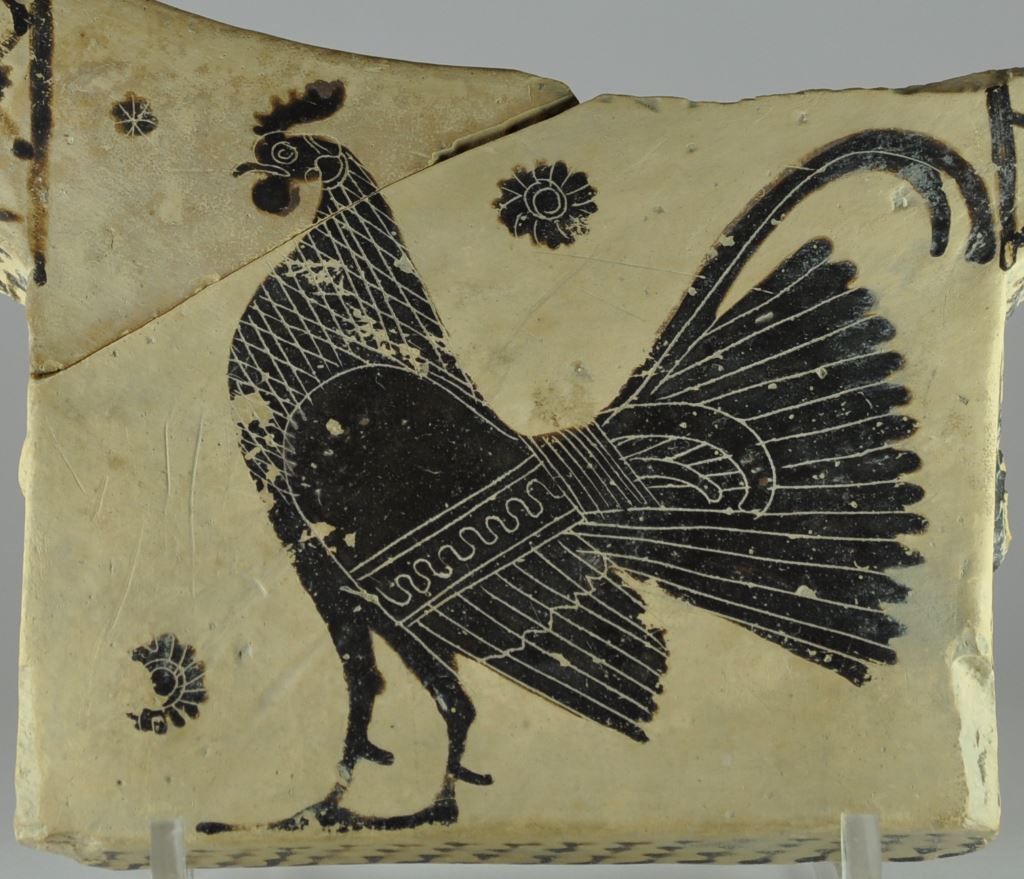
The first question which immediately springs to mind is:  “Southeast Asia?  Around 8,000 years ago?”  And how did this domesticated creature come west—and when?  Lots of mystery here, with explanations like “it came via Persia”, which is a pretty long distance from Southeast Asia.  Ancient Greece, clearly had them, but, although it has a word for “rooster” (“alektor”, among related forms, transliterated) and provides us with lots of illustrations of them,

(5th century BC)

doesn’t appear to have a separate word for hens—without hens, however, no more roosters, so hens were obviously present.  Ancient Rome has gallus for a rooster and gallina for a hen (along with pullus, which has a more generic meaning of “young one”—but is clearly the ancestor of “pullet” from Old French poulette, a diminutive of poule, “a hen”), but, when it comes to illustrations, images are seemingly almost entirely of roosters

and images of hens are as rare as—dare I say it?—hens’ teeth.

The Romans didn’t introduce chickens to the UK—recent archeological evidence suggests the pre-Roman 5th-3rd century BC—but we can presume that the chickens found a home there and, from there, traveled to the New World in the Age of Colonization, eventually making their way to Kansas, where some gallinaceous ancestors produced Billina.

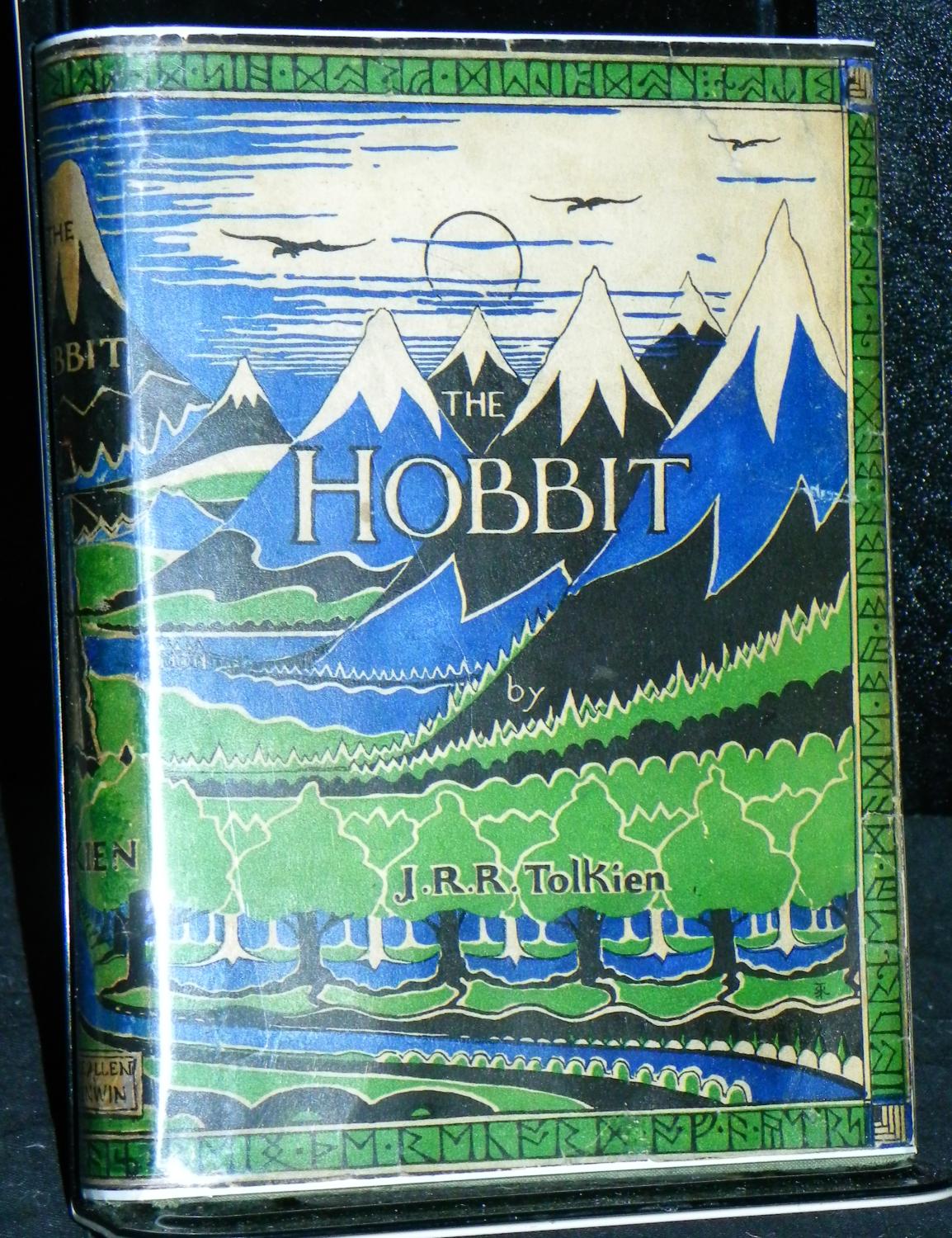
As we know, Tolkien became aware of anachronisms in the 1937 The Hobbit—

things like:

“…he began to feel a shriek coming up inside, and very soon it burst out like the whistle of an engine coming out of a tunnel”

and, in the 1966 revision of the text, he considered replacing them.  Ultimately, references to tobacco remained, as did that engine, but one thing did change, Gandalf’s demand:

“And just bring out the cold chicken and tomatoes”

 became “And just bring out the cold chicken and pickles!” 

Gandalf just previously had requested, “Put on a few eggs, there’s a good fellow!”

showing an instance where the egg came before the chicken—always a philosophical problem as to precedence—but it’s clear that JRRT was quite convinced that, although tomatoes might be alien, chickens and their produce were native and that the Nome king’s view of eggs:

“Eggs belong only to the outside world—to the world on the earth’s surface, where you came from. Here, in my underground kingdom, they are rank poison, as I said, and we Nomes can’t bear them around.”

might pertain to Oz, but not to Middle-earth.

As always, thanks for reading.

Stay well,

Whichever came first, where would bacon be without eggs?

Fresh breakfast with a tasty fried egg and crispy bacon in a sauce pan waiting to be served and eaten

(Bilbo might be polled on this as, throughout The Hobbit, his thought of comfort always includes this dish)

And remember that there’s always

MTCIDC

O

At Their Pleasure

05 Wednesday Feb 2025

Posted by Ollamh in Uncategorized

≈ Leave a comment

Tags

Boccacio, Elves, Horace Walpole, letters, Middle-earth, pleasaunce, Ranelagh Gardens, Roman de la Rose, Tolkien, Vauxhall Gardens

Dear readers, welcome, as always.

Because I enjoy reading letters from people in the past, I sometimes wonder from whom I would like to receive one—or more.  Certainly from the 18th-century English literary man, Horace Walpole (1717-1797),

who is credited with writing the first “Gothic” novel—1764—and, on the title page of the 2nd edition of 1765 actually calls it one—

and who so loved what he understood to be the medieval past that he built himself a castle in a “Gothic” style, Strawberry Hill, which you can visit today as it’s being lovingly restored.

The letters are gossipy and often quietly humorous and have the sound of a real voice, which is one reason why I enjoy reading them.  Here he is in 1760 complaining about the mail—

“I would give much to be sure those letters had reached you. Then, there is a little somebody of a German prince, through whose acre the post-road lies, and who has quarrelled with the Dutch about a halfpennyworth of postage ; if he has stopped my letters, I shall wish that some frow may have emptied her pail and drowned his dominions !”  (letter to Sir Horace Mann, 14 November, 1760—this is #722 in Volume V of the 16-volume Oxford collection, which you can find here:  https://archive.org/details/lettersofhoracew56walp/page/n7/mode/2up   “frow” is Walpole’s spelling of Dutch huisvrouw, “housewife” and I suspect that the “pail” is more likely a chamberpot, from his tone–)

Certainly I would be glad to receive something from Emily Dickinson, 1830-1886, which might even include a poem, as hers sometimes did.

Like Walpole’s, these are missives full of a living—and like Walpole, sometimes skeptical and humorous—person.  (There are two modern editions of the letters, the more recent just published last year, but you can get a sense of her for free from volume one of the first edition, from 1894, here:  https://archive.org/details/lettersofemilydi00dick )

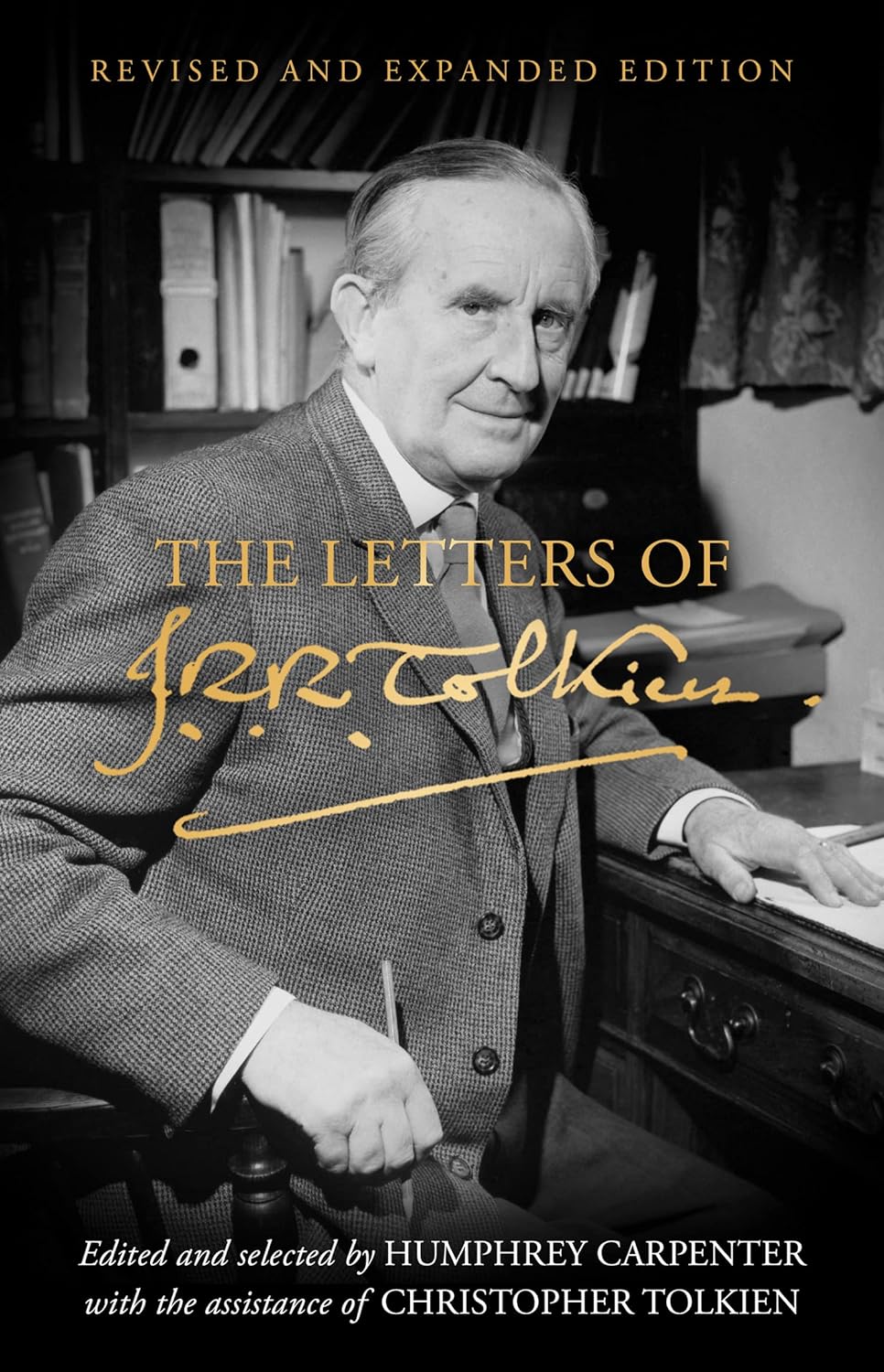
And, of course, letters directly from Tolkien, rather than being forced to read over his shoulder as we do with The Letters of J.R.R. Tolkien,

would be wonderful, not only for their voice, everything from affectionate to outraged, but also because there may be something more, even perhaps something unexpected to be read in them, even if you’ve read the same letters more than once.

Just the other day, for example, I was thumbing through, looking for something else, and I came upon this:

“But the Elves are not wholly good or in the right.  Not so much because they flirted with Sauron; as because with or without his assistance they were ‘embalmers’.  They wanted to have their cake and eat it:  to live in the mortal historical Middle-earth because they had become fond of it (and perhaps because they had there the advantages of a superior caste), and so tried to stop its change and history, stop its growth, keep it as a pleasaunce, even largely a desert, where they could be ‘artists’—and they were overburdened with sadness and nostalgic regret.” (to Naomi Mitchison, 25 September, 1954, Letters, 293)

What an interesting view of the Elves!  And that’s another reason to read letters:  you never know what you may learn and what may surprise you.  In this case, we are given a very much more nuanced picture of Middle-earth than, say, The Hobbit or The Lord of the Rings—and, in this case, a darker picture.

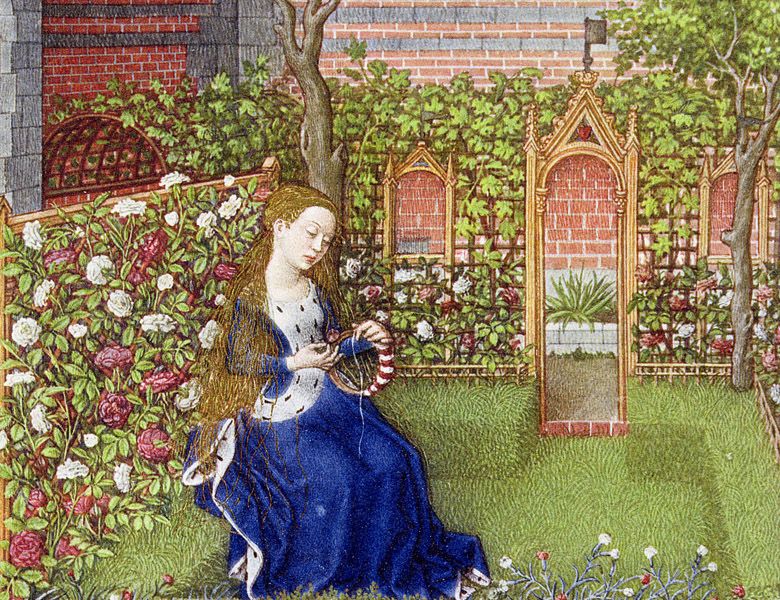
And one word in particular in this letter caught my attention:   “pleasaunce”, which can mean a “pleasure garden”.  Harkening back to Eden,

(Adam and Eve and a scaly friend from my favorite west-Byzantine mosaics in Monreale cathedral)

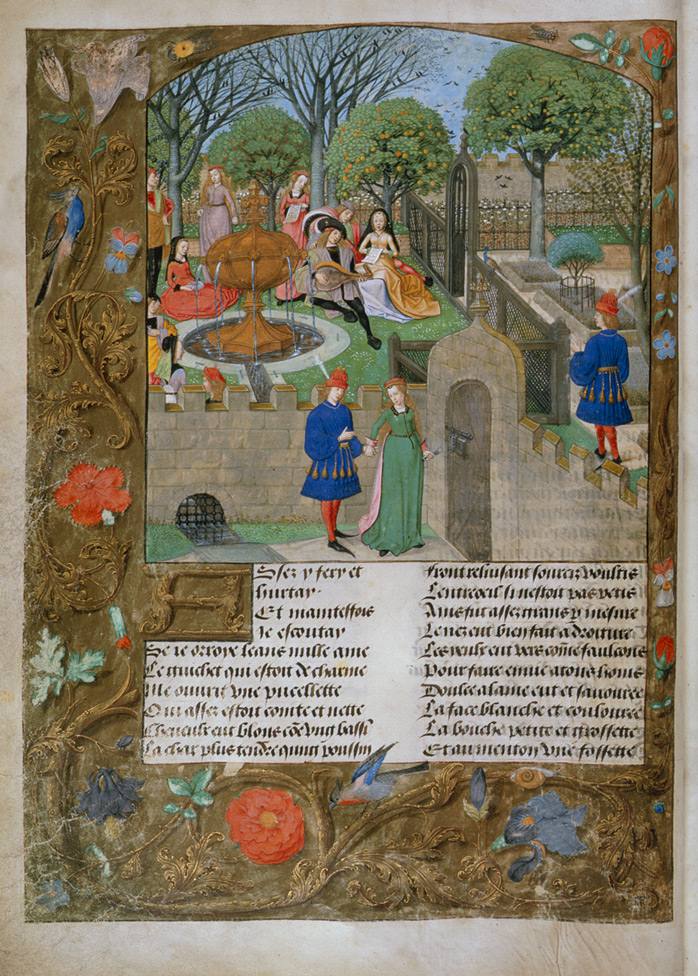
such places became a feature of medieval settings—both real and in literature—as we see in this depiction of the garden which is the scene of the opening of the 13th-century Roman de la Rose.

or Emilia in Theseus’ garden from Boccacio’s 14th-century Teseida.

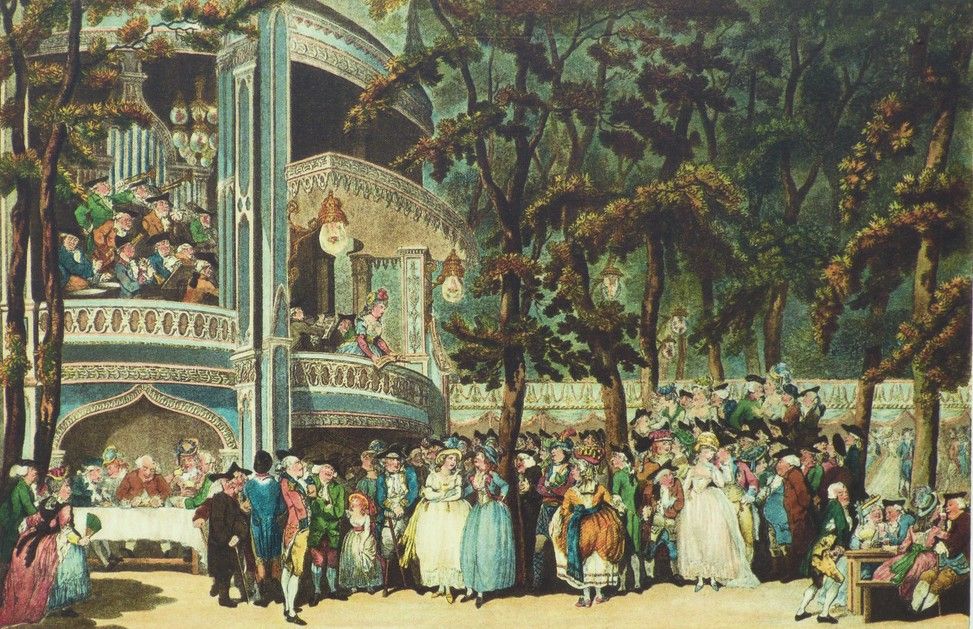
They reached big—commercial—time in 18th-century London, with the very elaborate Ranelagh Gardens

with its large and elegant rotunda, and famous organ (Mozart at 9 played a concert at Ranelagh)

and Vauxhall,

known for its long, green avenues, its music,

and for the suggestion of naughtiness in such a large, but shadowy place.  (Although older, Vauxhall survived longer—its final closing came in 1859.  For more on both Gardens, see:  https://en.wikipedia.org/wiki/Ranelagh_Gardens and https://en.wikipedia.org/wiki/Vauxhall_Gardens )

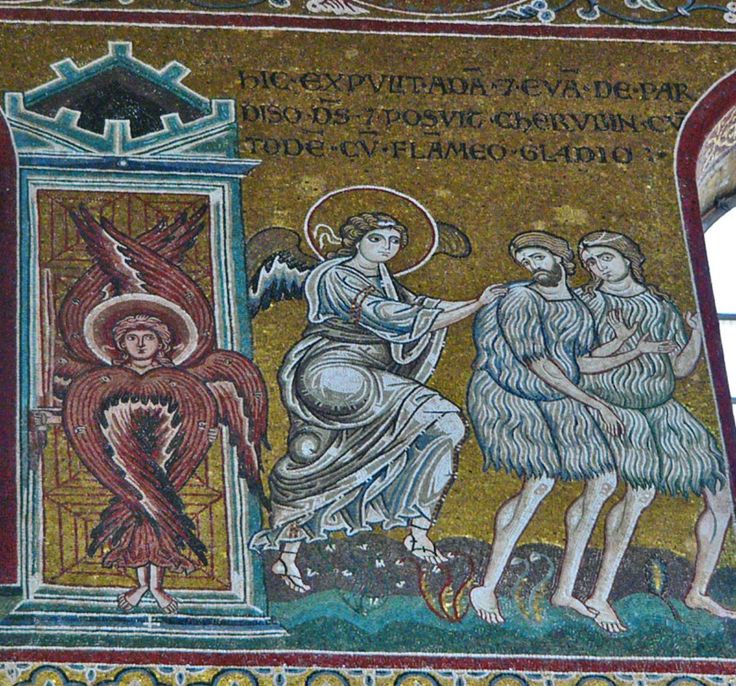
A key feature of such places is the potential not only for including, but for excluding, as well.  After all, because of their naughtiness, Adam and Eve were eventually barred from their pleasaunce,

(another image from Monreale)

medieval gardens had walls to allow for limited entrance (the protagonist of The Roman of the Rose has to have the help of a character called “Indolence” to get in), and Ranelagh and Vauxhall had gates and entrance fees, so it’s interesting to see what Tolkien means by his choice of word.  As he says, his Elves had become “embalmers’, by which he means that they were like Egyptian mummifiers,

although their body was still alive, and their process was meant to stop history, not decay, and, at the same time, to change Middle-earth from something naturally progressing through time for all its inhabitants into a “pleasaunce”—an artificial walled pleasure garden for themselves, something frozen in time, in which they could enjoy themselves as if they were the sole owners and masters, including and excluding as they wished.

It would be easy to believe that Tolkien means by this to show the Elves as ultimately lordly and selfish and there is the suggestion of this—but there’s something more and I would suggest that this makes clear JRRT’s wish to move beyond the surface of his elaborate creation.  By their desire, the Elves might be thought selfish, but Tolkien reveals for us the price for such behavior:  “they were overburdened with sadness and nostalgic regret.”  By attempting to preserve the past, and yet seeing that it couldn’t be preserved, the Elves had created not a pleasaunce, but a mirror of the passing of time which, powerful as they were, they could never control, and, gazing into that mirror, they could only see that truth, leaving them with nothing more than to feel sadness and regret.

The melancholy of the Elves is always there, but, in this particular letter, Tolkien explains and therefore deepens that haunting feeling, giving us figures who, in some sense, have tried to do the impossible:  to stop time, and, realizing that they can’t, can only grieve—and retreat from the world of their failure. 

I’ll always read letters for the living voice I might find there (the ancient Roman Seneca, c.4BC-65AD, first became real for me from one of his letters), but this one underlines my other point:  reading letters—rereading letters—may bring surprises.

Thanks, as always, for reading.

Stay well,

Beware of staring too long into mirrors (think of Snow White’s stepmother),

And remember that, as always, there’s

MTCIDC

O

The Doubtful Sea Series Facebook Page

The Doubtful Sea Series Facebook Page

  • Ollamh

Categories

  • Artists and Illustrators
  • Economics in Middle-earth
  • Fairy Tales and Myths
  • Films and Music
  • Games
  • Heroes
  • Imaginary History
  • J.R.R. Tolkien
  • Language
  • Literary History
  • Maps
  • Medieval Russia
  • Military History
  • Military History of Middle-earth
  • Narnia
  • Narrative Methods
  • Poetry
  • Research
  • Star Wars
  • Terra Australis
  • The Rohirrim
  • Theatre and Performance
  • Tolkien
  • Uncategorized
  • Villains
  • Writing as Collaborators
Follow doubtfulsea on WordPress.com

Across the Doubtful Sea

Recent Postings

  • On the Road(s) Again—Again November 26, 2025
  • On the Road(s) Again November 19, 2025
  • To Bree (Part 2) November 12, 2025
  • To Bree (Part 1) November 5, 2025
  • A Plague o’ Both—No, o’ All Your Houses! October 29, 2025
  • It’s in Writing (2:  I’st a Prologue, or a Poesie for a Ring?) October 22, 2025
  • It’s in Writing (1) October 15, 2025
  • King Trotter? October 8, 2025
  • The Voices in His Head  October 2, 2025

Blog Statistics

  • 102,108 Views

Posting Archive

  • November 2025 (4)
  • October 2025 (5)
  • September 2025 (4)
  • August 2025 (4)
  • July 2025 (5)
  • June 2025 (4)
  • May 2025 (4)
  • April 2025 (5)
  • March 2025 (4)
  • February 2025 (4)
  • January 2025 (5)
  • December 2024 (4)
  • November 2024 (4)
  • October 2024 (5)
  • September 2024 (4)
  • August 2024 (4)
  • July 2024 (5)
  • June 2024 (4)
  • May 2024 (5)
  • April 2024 (4)
  • March 2024 (4)
  • February 2024 (4)
  • January 2024 (5)
  • December 2023 (4)
  • November 2023 (5)
  • October 2023 (4)
  • September 2023 (4)
  • August 2023 (5)
  • July 2023 (4)
  • June 2023 (4)
  • May 2023 (5)
  • April 2023 (4)
  • March 2023 (5)
  • February 2023 (4)
  • January 2023 (4)
  • December 2022 (4)
  • November 2022 (5)
  • October 2022 (4)
  • September 2022 (4)
  • August 2022 (5)
  • July 2022 (4)
  • June 2022 (5)
  • May 2022 (4)
  • April 2022 (4)
  • March 2022 (5)
  • February 2022 (4)
  • January 2022 (4)
  • December 2021 (5)
  • November 2021 (4)
  • October 2021 (4)
  • September 2021 (5)
  • August 2021 (4)
  • July 2021 (4)
  • June 2021 (5)
  • May 2021 (4)
  • April 2021 (4)
  • March 2021 (5)
  • February 2021 (4)
  • January 2021 (4)
  • December 2020 (5)
  • November 2020 (4)
  • October 2020 (4)
  • September 2020 (5)
  • August 2020 (4)
  • July 2020 (5)
  • June 2020 (4)
  • May 2020 (4)
  • April 2020 (5)
  • March 2020 (4)
  • February 2020 (4)
  • January 2020 (6)
  • December 2019 (4)
  • November 2019 (4)
  • October 2019 (5)
  • September 2019 (4)
  • August 2019 (4)
  • July 2019 (5)
  • June 2019 (4)
  • May 2019 (5)
  • April 2019 (4)
  • March 2019 (4)
  • February 2019 (4)
  • January 2019 (5)
  • December 2018 (4)
  • November 2018 (4)
  • October 2018 (5)
  • September 2018 (4)
  • August 2018 (5)
  • July 2018 (4)
  • June 2018 (4)
  • May 2018 (5)
  • April 2018 (4)
  • March 2018 (4)
  • February 2018 (4)
  • January 2018 (5)
  • December 2017 (4)
  • November 2017 (4)
  • October 2017 (4)
  • September 2017 (4)
  • August 2017 (5)
  • July 2017 (4)
  • June 2017 (4)
  • May 2017 (5)
  • April 2017 (4)
  • March 2017 (5)
  • February 2017 (4)
  • January 2017 (4)
  • December 2016 (4)
  • November 2016 (5)
  • October 2016 (6)
  • September 2016 (5)
  • August 2016 (5)
  • July 2016 (5)
  • June 2016 (5)
  • May 2016 (4)
  • April 2016 (4)
  • March 2016 (5)
  • February 2016 (4)
  • January 2016 (4)
  • December 2015 (5)
  • November 2015 (5)
  • October 2015 (4)
  • September 2015 (5)
  • August 2015 (4)
  • July 2015 (5)
  • June 2015 (5)
  • May 2015 (4)
  • April 2015 (3)
  • March 2015 (4)
  • February 2015 (4)
  • January 2015 (4)
  • December 2014 (5)
  • November 2014 (4)
  • October 2014 (6)
  • September 2014 (1)

Blog at WordPress.com.

  • Subscribe Subscribed
    • doubtfulsea
    • Join 78 other subscribers
    • Already have a WordPress.com account? Log in now.
    • doubtfulsea
    • Subscribe Subscribed
    • Sign up
    • Log in
    • Report this content
    • View site in Reader
    • Manage subscriptions
    • Collapse this bar
 

Loading Comments...