• About

doubtfulsea

~ adventure fantasy

Category Archives: Uncategorized

Paws in Posting

29 Wednesday Sep 2021

Posted by Ollamh in Uncategorized

≈ Leave a comment

Paws in Posting

Yesterday, melanoma finally took Minerva, the little Siberian cat.
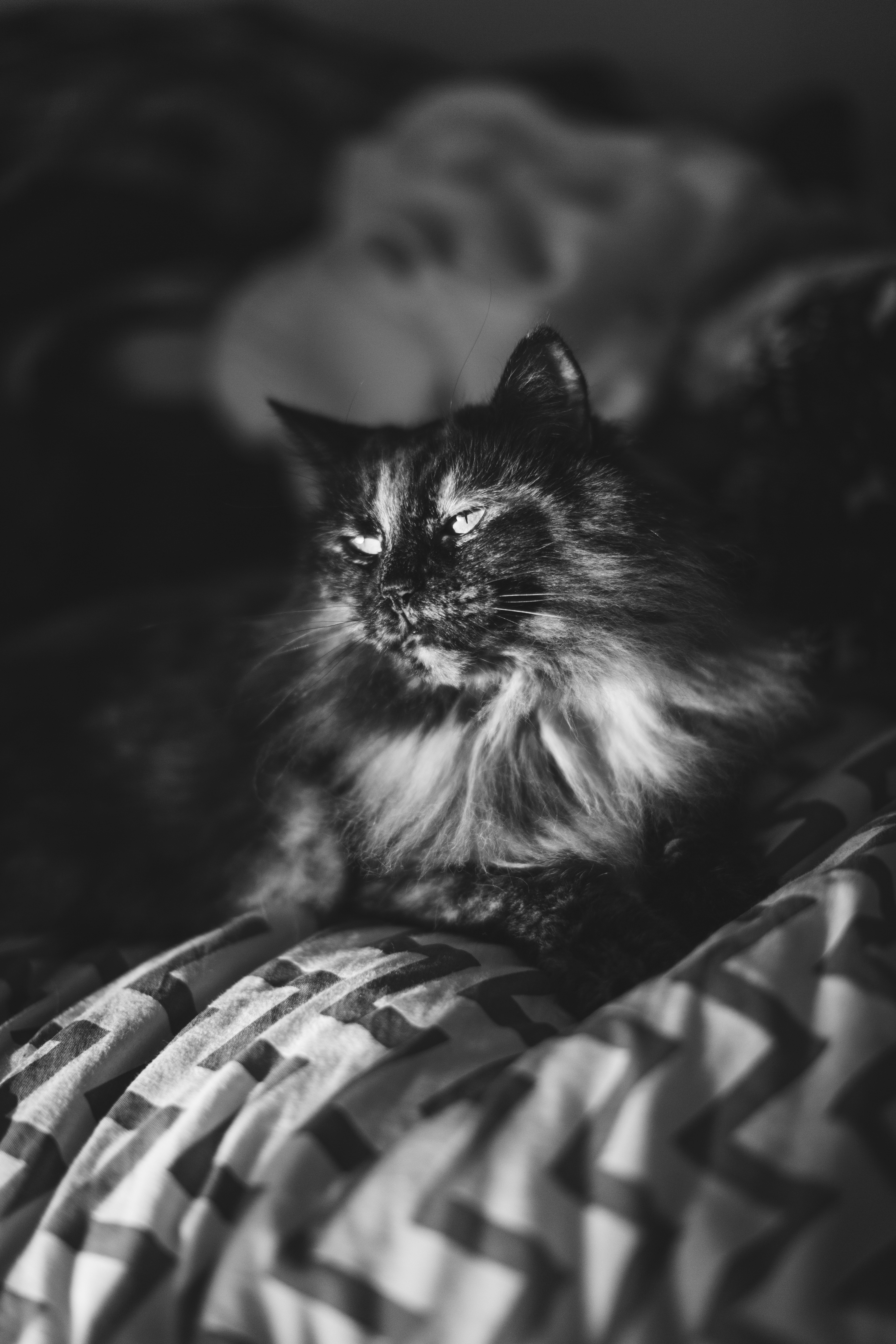
 She was a quiet, sweet little person, who, when she was younger, used to sleep on the back of the couch where I often work, and I’d sometimes hear a cheerful prrrrr as I was typing.  She will be much missed.

In her memory, I was thinking what I might do and, as this is a literary kind of blog, I began to think about cats in books and poems I’ve read.

Cats, as far as is currently known, have been with us in the Western world since perhaps 7500BC—in other words, from the Neolithic Era–a complete cat burial being discovered, along with a human, on the island of Cyprus (here’s a really interesting article on the subject:  https://www.thearchaeologist.org/blog/neolithic-cat-burial-in-cyprus-the-oldest-known-evidence-of-cat-taming )

It used to be believed that the Egyptians were the original domesticators and it’s clear that, from everything from wall paintings

to large numbers of cat mummies
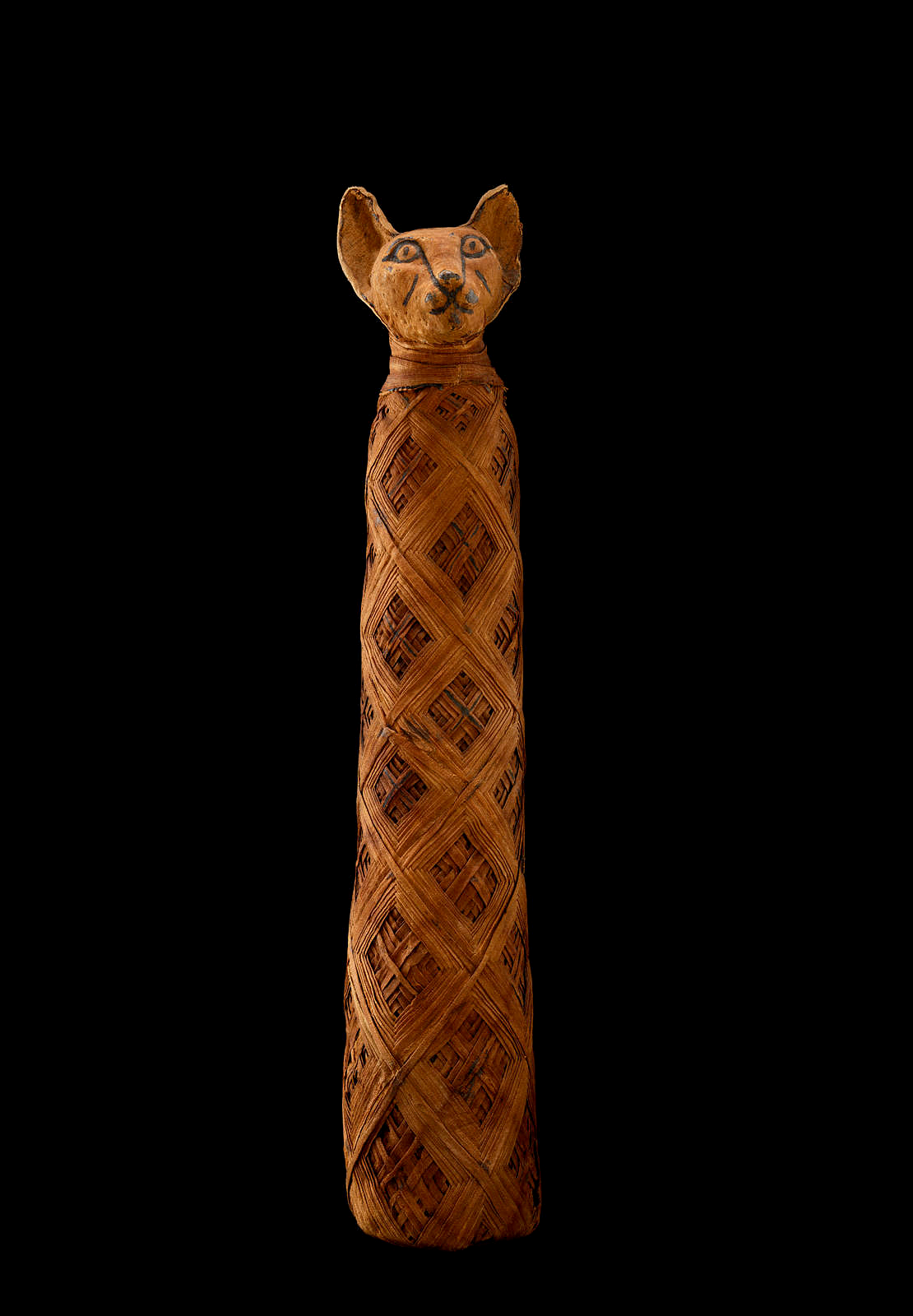
to numerous different goddesses with feline features like     
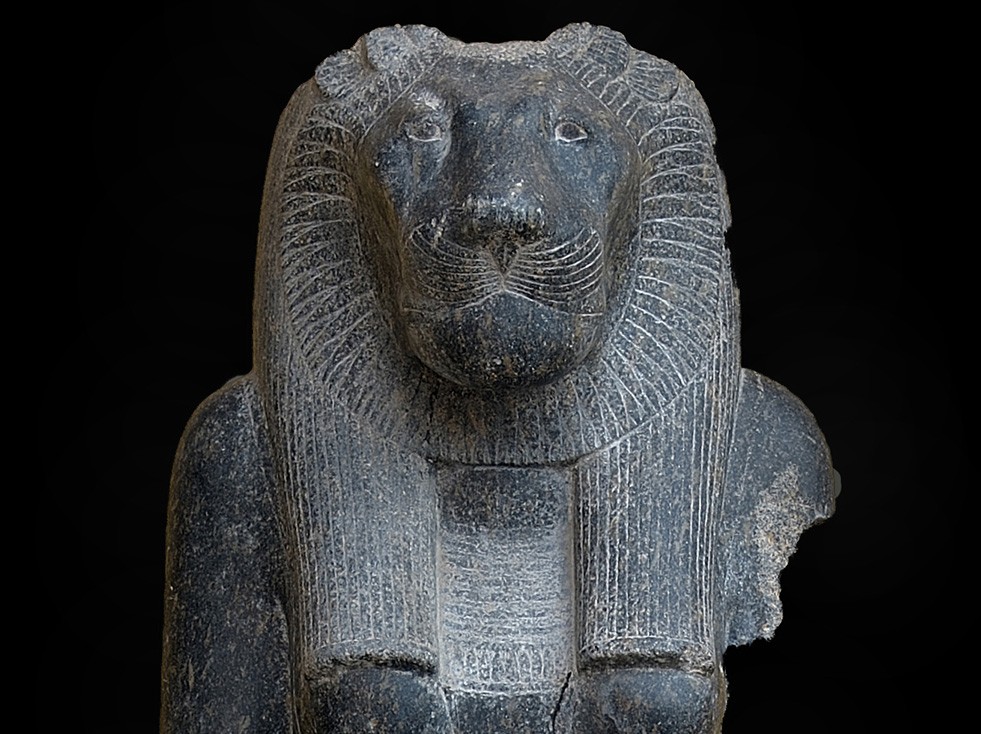
Mafdet,
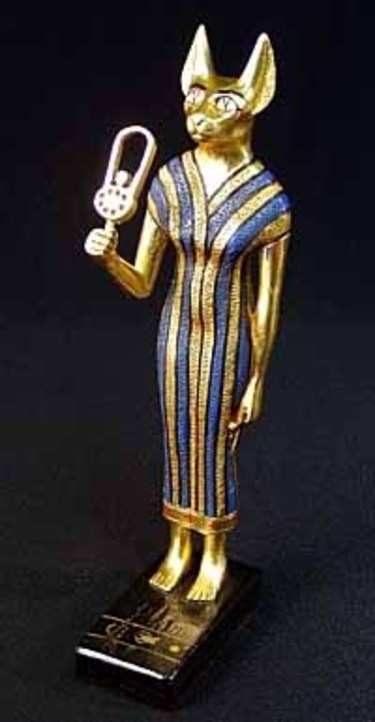
and the best known, Bastet,
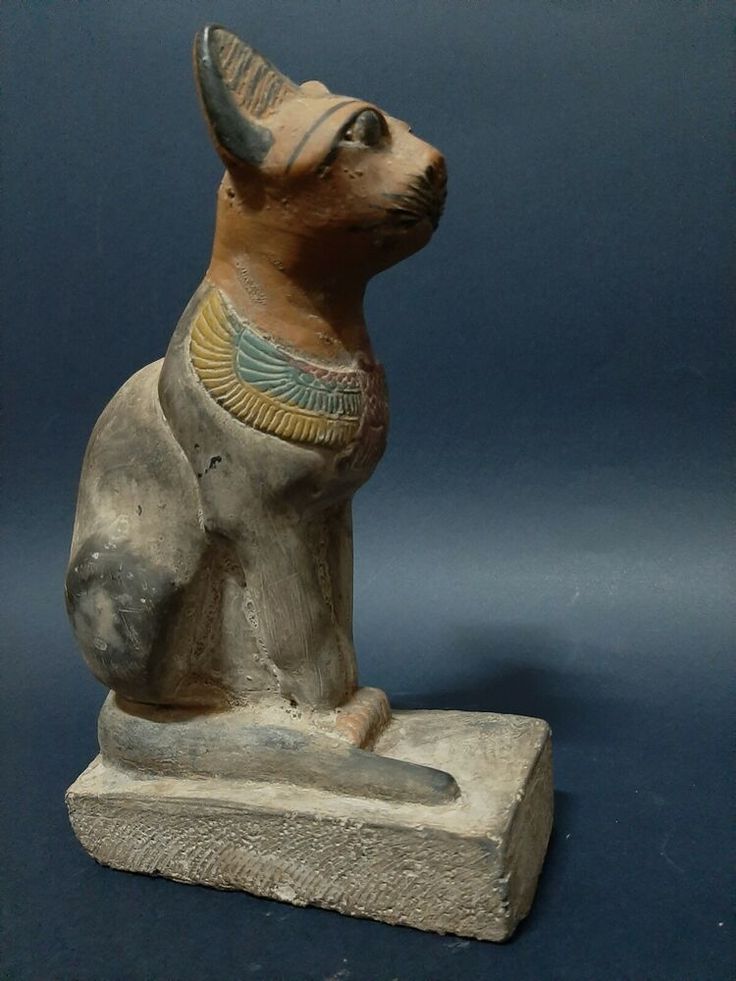
that cats were part of Egyptian daily life.  (For a fun article on feline divinities in Egypt see: http://www.landofpyramids.org/cat-goddesses.htm )

The first cat piece—a poem—which comes to mind, however is much later in time and is dedicated to his cat, Pangur Ban, “Pangur the White”, by the 9th-century AD Irish monk who owned her.  It appears in what is called the “Reichenauer Primer”, a collection of all sorts of information, like grammar texts and Latin hymns, but it also contains poems in Old Irish, including this one.  Here’s the page with “Pangur Ban” on the left-hand side, at the bottom. 

And here’s the first English translation, by Whitley Stokes and John Strachan, from 1903:

I and Pangur Bán, each of us two at his special art:
his mind at hunting (mice), my own mind is in my special craft.
I love to rest—better than any fame—at my booklet with diligent science:
not envious of me is Pangur Bán: he himself loves his childish art.
When we are—tale without tedium—in our house, we two alone,
we have—unlimited (is) feat-sport—something to which to apply our acuteness.
It is customary at times by feat of valour, that a mouse sticks in his net,
and for me there falls into my net a difficult dictum with hard meaning.
His eye, this glancing full one, he points against the wall-fence:
I myself against the keenness of science point my clear eye, though it is very feeble.
He is joyous with speedy going where a mouse sticks in his sharp-claw:
I too am joyous, where I understand a difficult dear question.
Though we are thus always, neither hinders the other:
each of us two likes his art, amuses himself alone.
He himself is the master of the work which he does every day:
while I am at my own work, (which is) to bring difficulty to clearness.

(This is a flat prose translation, but to give you a little flavor of the rhythm of the original, the opening goes roughly something like this—my own version–

I and Pangur Ban, my cat,

Each has craft which he is at—

To hunting mice he puts his mind

While bookish meaning’s what I find.)

I make a big hop here from the 9th century to the 18th, and what must have been a rather peculiar, but perhaps quite lovable man, the English poet, Christopher Smart (1722-1771).

His “cat work” is in a remarkable free verse poem, written between 1758 and 1763, which sat in manuscript
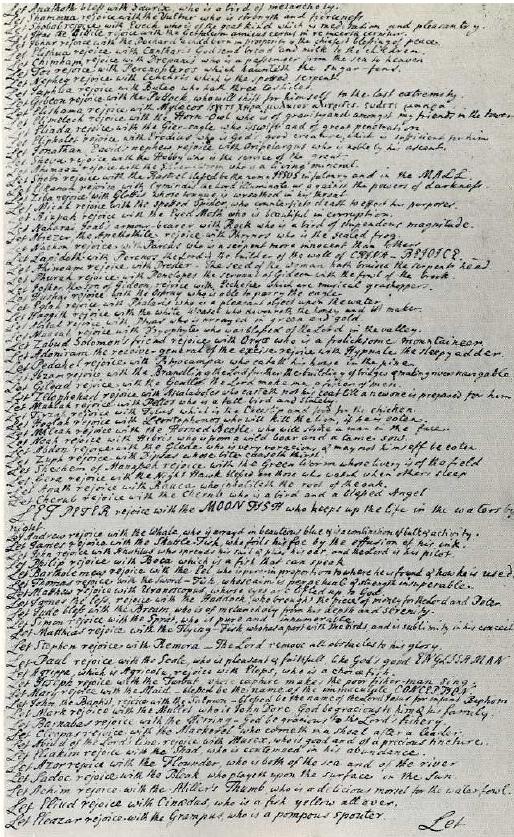
until its first publication, in 1939, under the odd title Rejoice in the Lamb:  A Song from Bedlam.  “Bedlam” is shorthand for a series of London-area asylums for the mentally disturbed, originally part of the medieval Priory of Our Lady of Bethlehem, and located at Bishopsgate, just beyond London’s wall. 
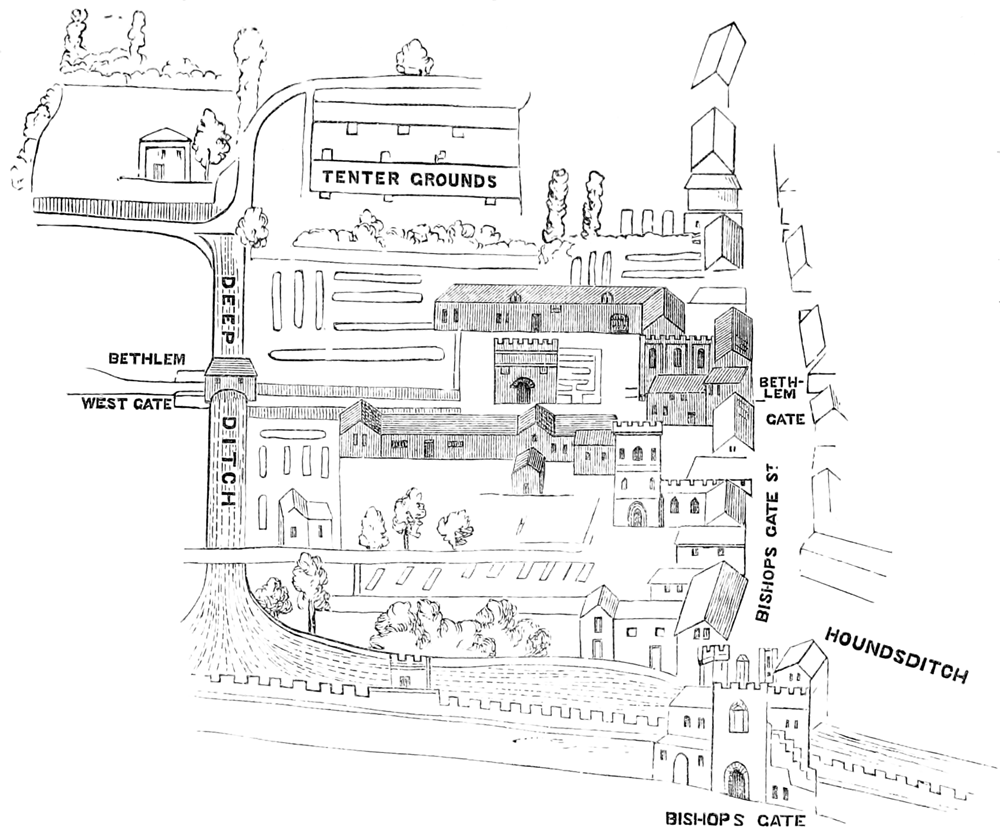
Here is its incarnation at the time of the composition of Smart’s poem.

Smart had, indeed, been committed to an asylum–not to this one, but rather to St Luke’s Hospital for Lunatics,

but the point was being clearly made by the editor, W.F. Stead, that this was a poem composed by someone possibly not in his right mind.  There is scholarly argument as to why Smart was in any asylum, but, luckily for us, he was not alone, as his cat, Jeoffry accompanied him and his observations of Jeoffry in the manuscript of Jubilate Agno (Smart’s title) form the basis of our second selection.  It’s a very long passage, so I’ll only include an excerpt, but point you to this website, where you will find the whole manuscript and all the lines about Jeoffry in Fragment B, 4:  https://www.pseudopodium.org/repress/jubilate/

“For I will consider my Cat Jeoffry.

For he is the servant of the Living God duly and daily serving him.

For at the first glance of the glory of God in the East he worships in his way.

For is this done by wreathing his body seven times round with elegant quickness.

For then he leaps up to catch the musk, which is the blessing of God upon his prayer.

For he rolls upon prank to work it in.

For having done duty and received blessing he begins to consider himself.

For this he performs in ten degrees.

For first he looks upon his fore-paws to see if they are clean.

For secondly he kicks up behind to clear away there.

For thirdly he works it upon stretch with the fore paws extended.

For fourthly he sharpens his paws by wood.

For fifthly he washes himself.

For Sixthly he rolls upon wash.

For Seventhly he fleas himself, that he may not be interrupted upon the beat.

For Eighthly he rubs himself against a post.

For Ninthly he looks up for his instructions.

For Tenthly he goes in quest of food.”

For me, there is a playfulness in this and in the other lines which suggests that, if Smart was mad, he still retained both a powerful mind and a great creativity, besides a deep affection for his cat, viewing him as much a fellow creature in the world as the anonymous Irish monk saw Pangur Ban.

But madness brings us to a third literary–Victorian–cat.

This is, of course, the Cheshire Cat from Lewis Carroll/C. L. Dodgson’s (1832-1898)
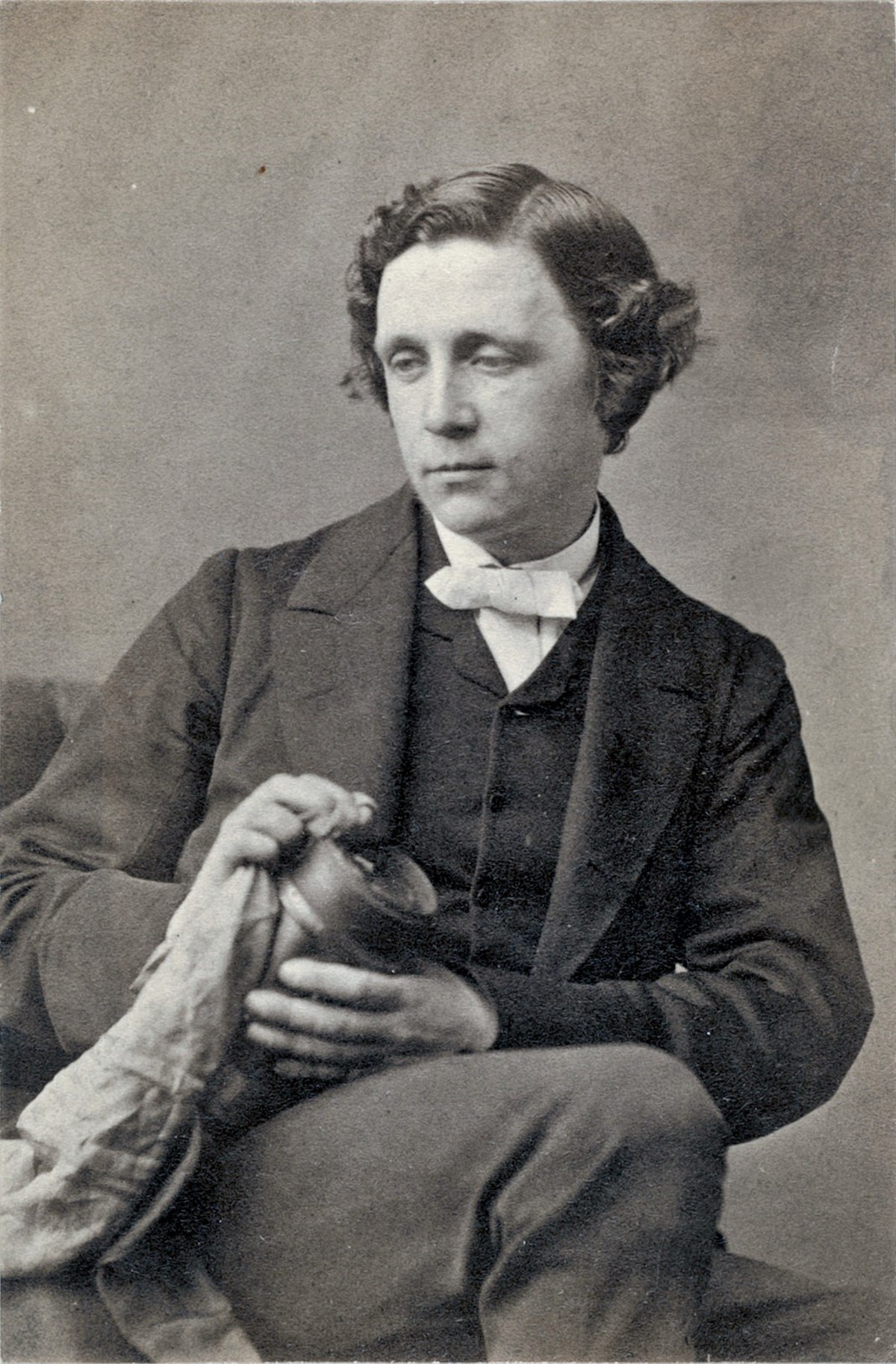
Alice’s Adventures in Wonderland (1865),

in which the cat makes several appearances, each time both mocking and disturbing.

“ The Cat only grinned when it saw
Alice. It looked good-natured, she
thought; still it had very long claws
and a great many teeth, so she felt that
it ought to be treated with respect.
‘Cheshire Puss,’ she began, rather timidly, as she did not at all know whether
it would like the name; however, it only grinned a little wider. ‘Come, it’s pleased
so far,’ thought Alice, and she went on, ‘would you tell me, please, which way
I ought to go from here?’
‘That depends a good deal on where you want to get to,’ said the Cat.
‘I don’t much care where – ’ said Alice.
‘Then it doesn’t matter which way you go,’ said the Cat.
‘ – so long as I get somewhere,’ Alice added as an explanation.
‘Oh, you’re sure to do that,’ said the Cat, ‘if you only walk long enough.’
Alice felt that this could not be
denied, so she tried another question,
‘What sort of people live about here?’
‘In that direction,’ the Cat said,
waving its right paw round, ‘lives
a Hatter; and in that direction,’ wav-
ing the other paw, ‘lives a March
Hare. Visit either you like: they’re
both mad.’
‘But I don’t want to go among mad people,’ Alice re-
marked.
‘Oh, you can’t help that,’ said the Cat, ‘we’re all mad
here. I’m mad. You’re mad.’
‘How do you know I’m mad?’ said Alice.
‘You must be,’ said the Cat, ‘or you wouldn’t have come
here.’
Alice didn’t think that proved it at all; however, she went
on, ‘And how do you know that you’re mad?’
‘To begin with,’ said the Cat, ‘a dog’s not mad. You
grant that?’
‘I suppose so,’ said Alice.
‘Well, then,’ the Cat went on, ‘you see, a dog growls when it’s angry, and wags
its tail when it’s pleased. Now I growl when I’m pleased, and wag my tail when
I’m angry. Therefore I’m mad.’
‘I call it purring, not growling,’ said Alice.
‘Call it what you like,’ said the Cat, ‘Do you play croquet with the Queen
to-day?’
‘I should like it very much,’ said Alice, ‘but I haven’t been invited yet.’
‘You’ll see me there,’ said the Cat and vanished.
Alice was not much surprised at this, she was getting so used to queer things
happening. While she was looking at the place where it had been, it suddenly
appeared again.
‘By-the-bye, what became of the baby?’ said the Cat, ‘I’d nearly forgotten to
ask.’
‘It turned into a pig,’ Alice quietly said, just as if it had come back in a natural
way.
‘I thought it would,’ said the Cat and vanished again.
Alice waited a little, half expecting to see it again, but it did not appear, and
after a minute or two she walked on in the direction in which the March Hare was
said to live. ‘I’ve seen hatters before,’ she said to herself, ‘the March Hare will be
much the most interesting, and perhaps as this is May it won’t be raving mad – at

least not so mad as it was in March.’ As she said this, she looked up, and there
was the Cat again, sitting on a branch of a tree.
‘Did you say pig or fig?’ said the Cat.
‘I said pig,’ replied Alice, ‘and I wish you wouldn’t keep appearing and van-
ishing so suddenly: you make one quite giddy.’
‘All right,’ said the Cat; and this
time it vanished quite slowly, begin-
ning with the end of the tail, and
ending with the grin which remained
some time after the rest of it had gone.
‘Well! I’ve often seen a cat with-
out a grin,’ thought Alice, ‘but a grin
without a cat! It’s the most curious
thing I ever saw in my life!’ “

(Apologies for the odd placement on the page—I had hoped to include the illustrations, which are set into the text, but I’m afraid that my cut-and-paste appears to have been heavier on the cut than the paste!  Here’s a LINK, by the way, to a painstaking digital version of that first, 1865 edition:  https://www.adobe.com/be_en/active-use/pdf/Alice_in_Wonderland.pdf )

If we jump from the Victorians to the 20th century, there are lots of possibilities:

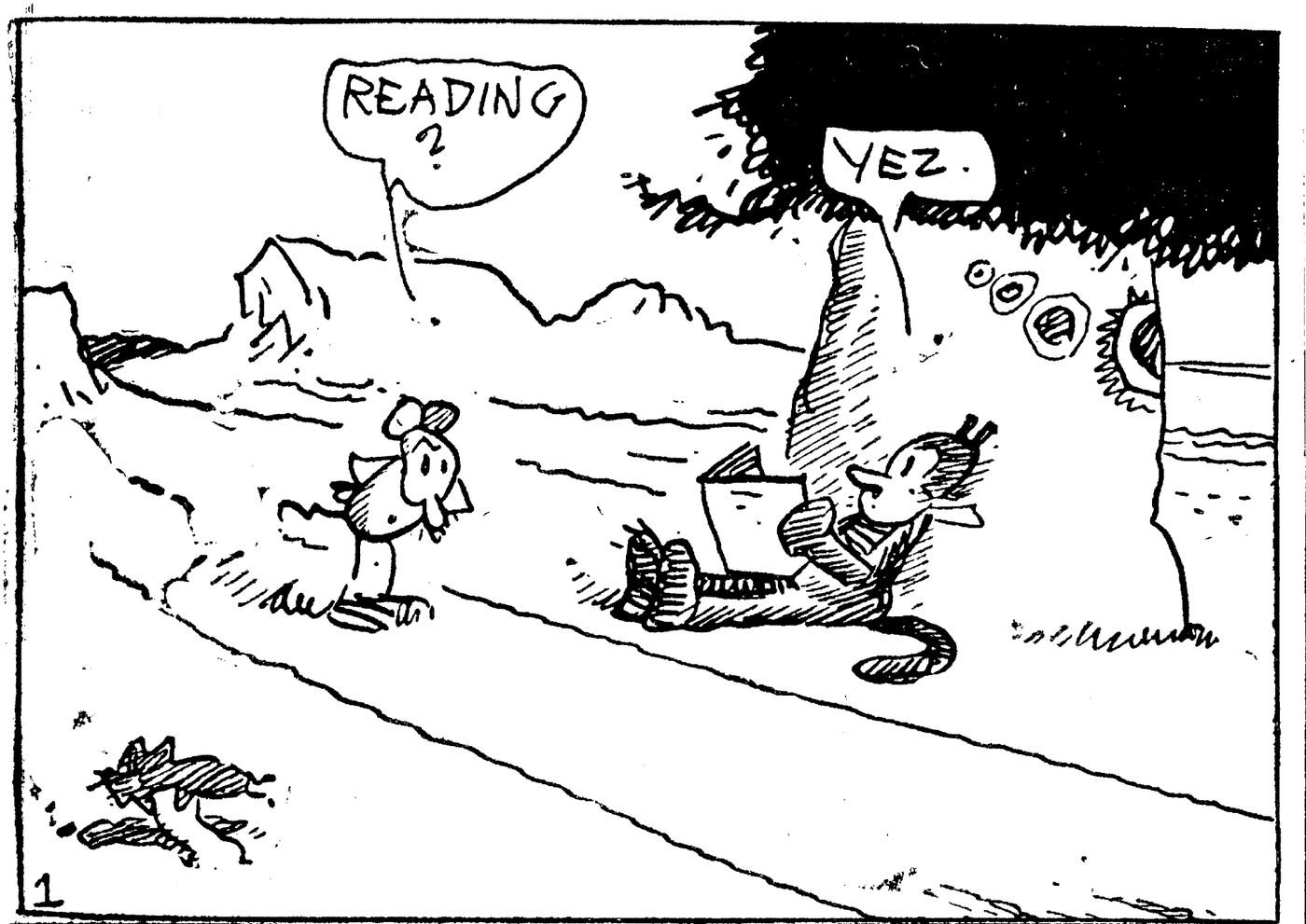
George Herriman’s (1880-1944)           

surreal Krazy Kat comic strip from 1913 to 1944
or Don Marquis’ (1878-1937) 

newspaper column chronicle from 1916 to the 1930s of the free-verse poet–and cockroach–Archy and his girlfriend, Mehitabel, the cat, a reincarnation of Cleopatra.

We might even include T.S. Eliot’s (1888-1965)
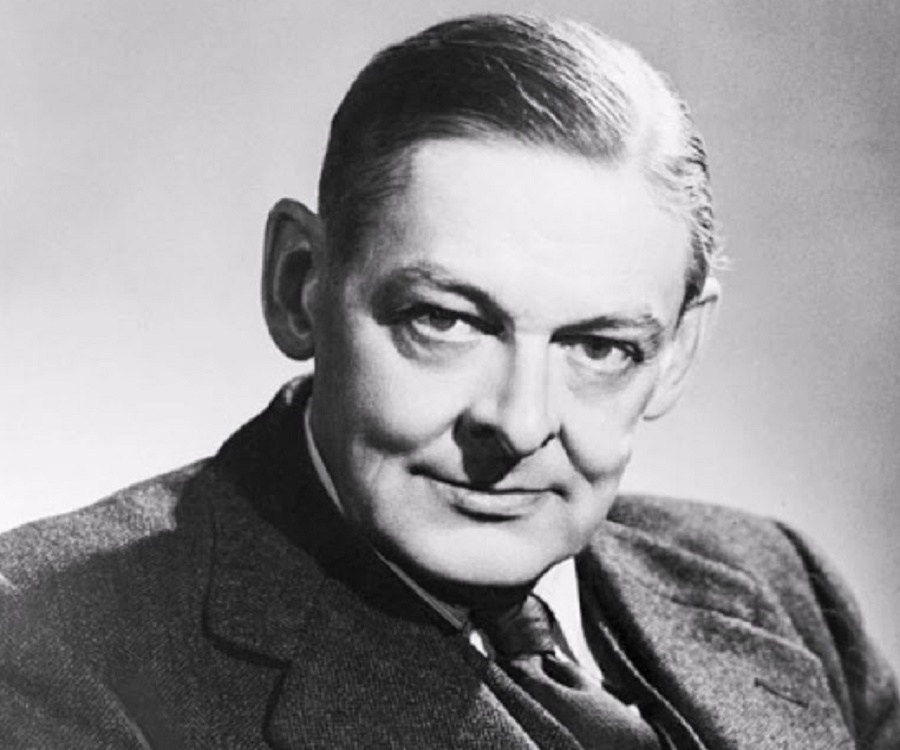
Old Possum’s Book of Practical Cats (1939),

but I want to end with one more item from the 20th century.  It’s a remark of Gandalf’s about Aragorn, which I hope will be true as well of Minerva, as she finds her way perhaps to the goddess Bastet and a new rebirth:

“He will not go astray—if there is any path to find.  He has led us in here against our fears, but he will lead us out again, at whatever cost to himself.  He is surer of finding the way home in a blind night than the cats of Queen Beruthiel.” (The Fellowship of the Ring, Book Two, Chapter 4, “A Journey in the Dark”)

As ever, thanks for reading.

Stay well,

Remember that all cats are not, indeed, grey, in the dark,

And know, as well, that there will be

MTCIDC,

O
Sci-Fi

22 Wednesday Sep 2021

Posted by Ollamh in Uncategorized

≈ Leave a comment

As always, dear readers, welcome.

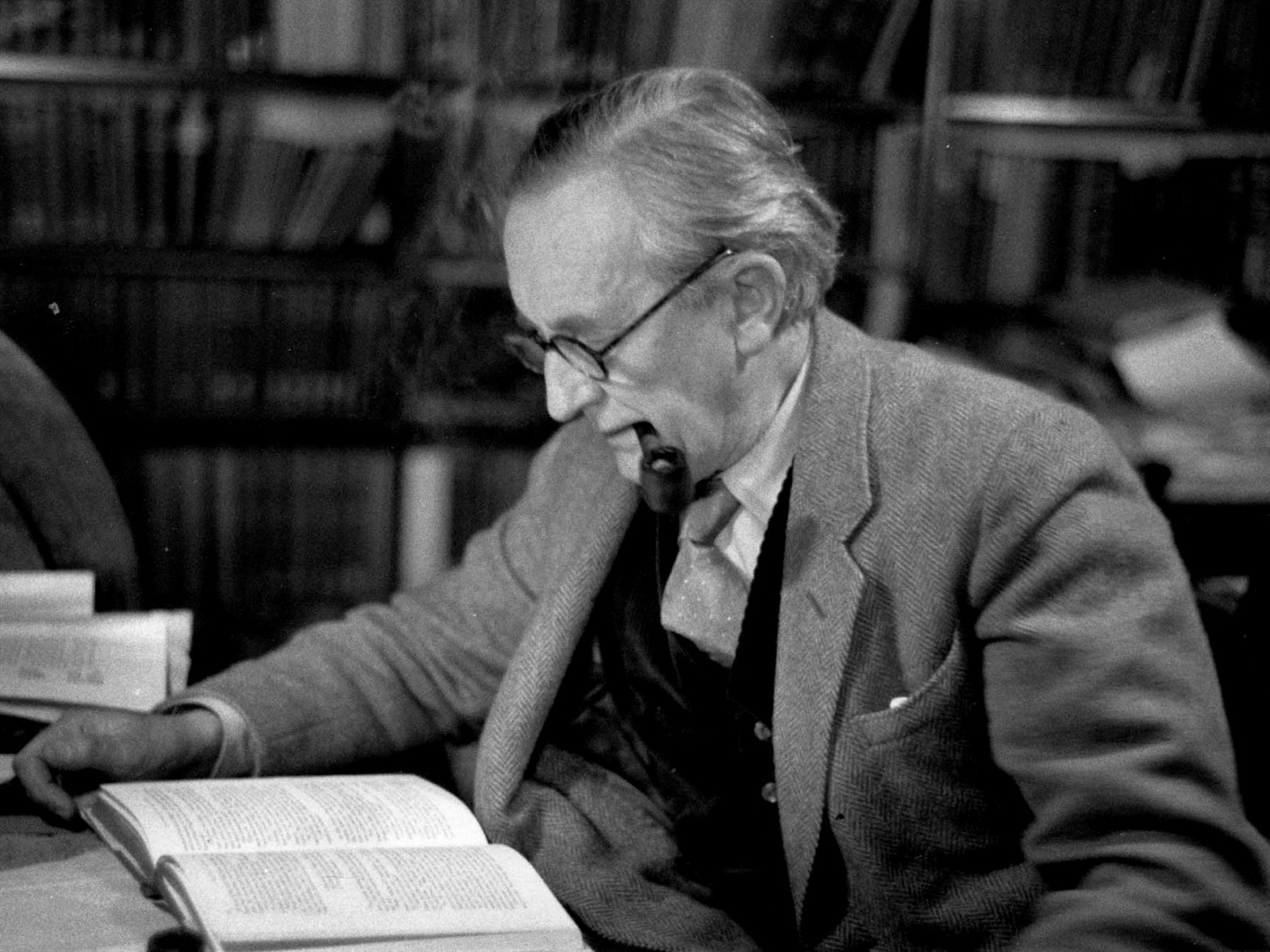
In my last, I was discussing Tolkien’s

reading as mentioned in his comments to the draft of an interview with him in The Daily Telegraph Magazine for 22 March, 1958.

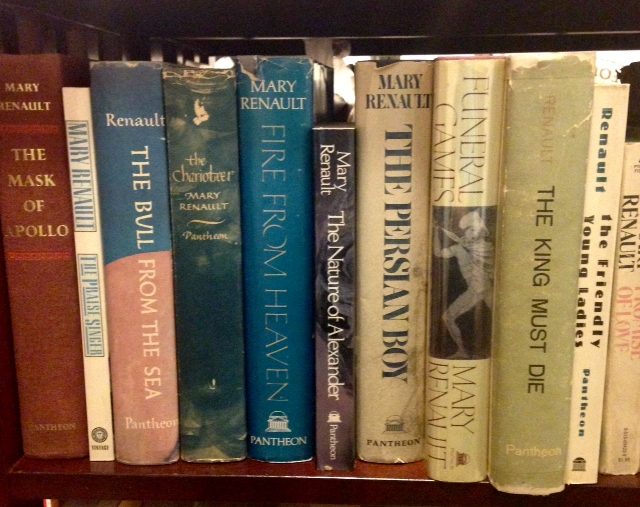
In a footnote to his comments, JRRT mentions that he particularly enjoyed the historical novels of “Mary Renault” (her pen name–she was actually Eileen Mary Challans, 1905-1983).

Tolkien began by writing:

“I read quite a lot—or more truly, try to read many books.”

and then adds in parentheses:  “(notably so-called Science Fiction and Fantasy)”, which he footnotes as “I enjoy the S.F. of Isaac Azimov.” (from Letters, 377—excerpts from all of his comments appear on pages 372-378)

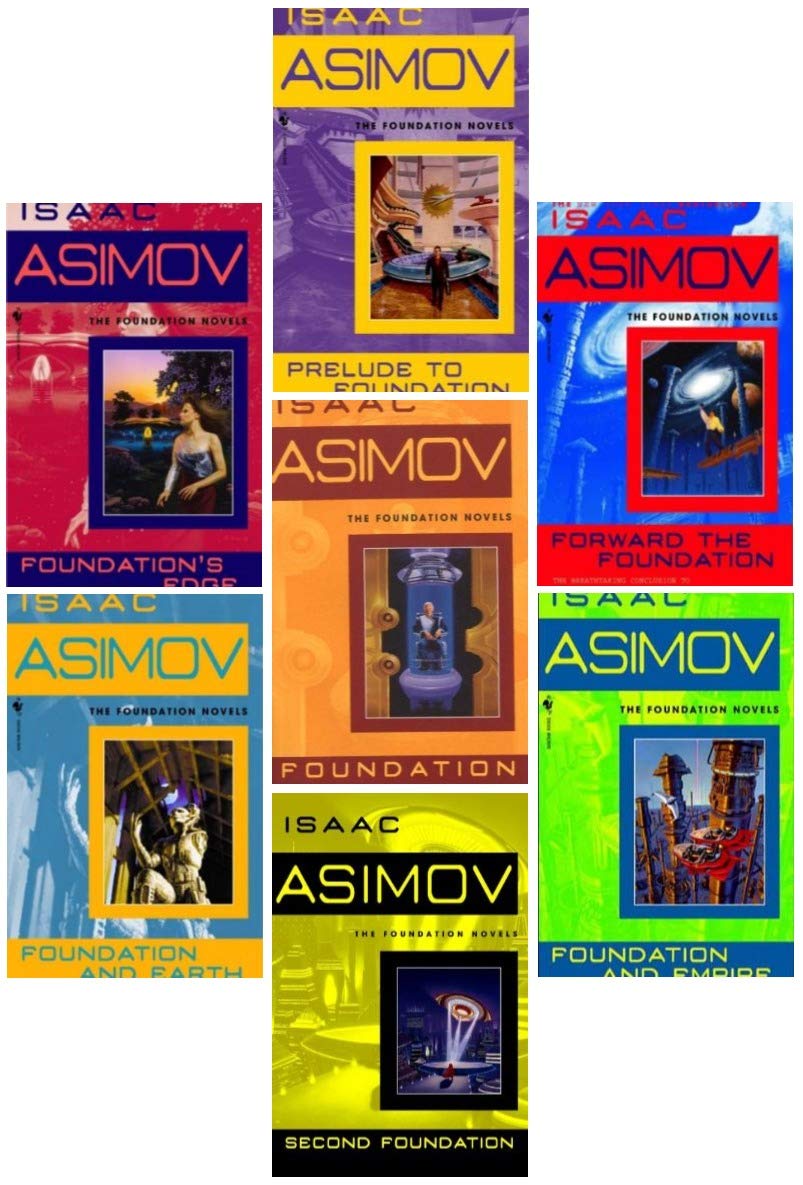
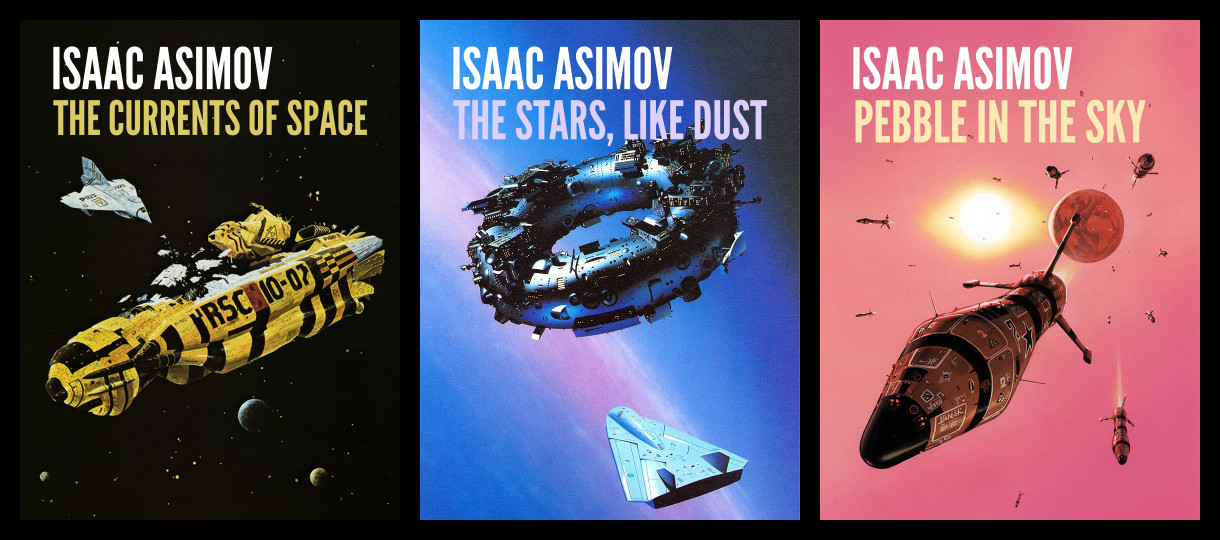
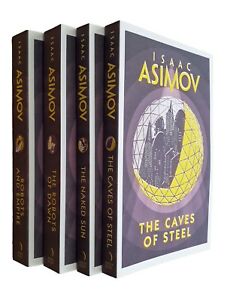
Isaac Asimov (the correct spelling–1920-1992),

was actually Dr. Isaac Asimov, Professor of Biochemistry at Boston University, but also the author numerous novels, in particular three series,

Foundation (1951-1993),

Galactic Empire (1950-1952)

and Robot (1954-1985)

over 380 short stories, as well as other works. 

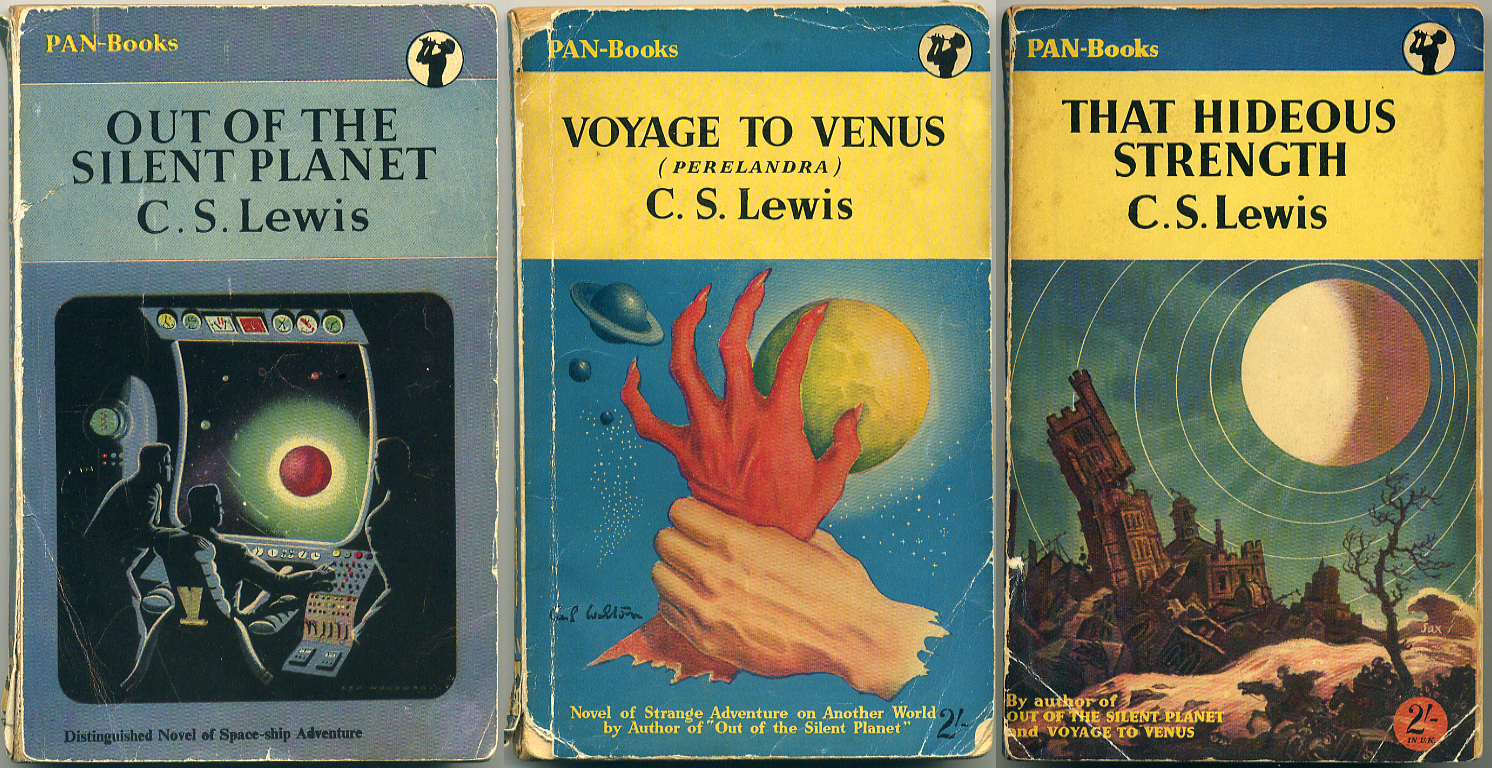
As Tolkien isn’t specific, and Asimov was prolific, it’s probably impossible to know, at the present time, which books by Asimov Tolkien enjoyed.  I find it a little odd, however, that, when he mentions Science Fiction, JRRT doesn’t include the work of his friend and encourager, C.S. Lewis (1898-1963),

who, between 1938 and 1945, produced his own trilogy:  Out of the Silent Planet (1938), Perelandra (1943), and That Hideous Strength (1945).

As well, although Tolkien wasn’t specific in his mention of Asimov, Lewis has given us a few clues to his Science Fiction reading in an essay, “On Science Fiction”, which appears in the posthumous collection Of Other Worlds (1966) (Here’s a LINK to your own copy:  https://www.catholicculture.org/culture/library/view.cfm?recnum=9116 )

For me, Lewis is the kind of writer with whom you may disagree but, because he never writes anything without quiet wit and deep thoughtfulness, you read because you may disagree and therefore can learn more about what you know—or think you do.

In this essay, Lewis makes distinctions among subgenres, mentioning

1. novels set in the future—and he further subdivides those into

 a. works which are imaginatively set in time to come, in which differences from the present are important to the narrative (and he condemns the author who, having presented a future as a backdrop, “then proceeds to develop an ordinary love-story, spy-story, wreck-story, or crime-story”, suggesting that such writers are “Displaced Persons—commercial authors who did not really want to write science fiction at all, but who availed themselves of its popularity by giving a veneer of science fiction to their normal kind of work”)

 b. works which are “satiric or prophetic”, using that future to reflect upon the consequences of present actions

2. that which Lewis calls “the fiction of Engineers”, explaining:

“It is written by people who are primarily interested in space‑travel, or in other undiscovered techniques, as real possibilities in the actual universe. They give us in imaginative form their guesses as to how the thing might be done.”

3. a third whose motive Lewis is at some pains to describe, the essence being that the author, living in a world in which elements like science and exploration have removed the marvelous from the everyday around us, employs fiction to take readers to places of wonder or terror.  As he puts it:

“ It is not difficult to see why those who wish to visit strange regions in search of such beauty, awe, or terror as the actual world does not supply have increasingly been driven to other planets or other stars. It is the result of increasing geographical knowledge. The less known the real world is, the more plausibly your marvels can be located near at hand. As the area of knowledge spreads, you need to go further afield: like a man moving his house further and further out into the country as the new building estates catch him up. Thus in Grimm’s Märchen, stories told by peasants in wooded country, you need only walk an hour’s journey into the next forest to find a home for your witch or ogre.”

Lewis then subdivides this genre, although confessing that:

“But here sub-species and sub-sub-species break out in baffling multitude. The impossible—or things so immensely improbable that they have, imaginatively, the same status as the impossible—can be used in literature for many different purposes.”

Those purposes might include:

 a. “It may represent the intellect, almost completely free from emotion, at play.”

 b. “the impossible may be simply a postulate to liberate farcical consequences”

 c. “Sometimes it is a postulate which liberates consequences very far from comic”

4. “Eschatological”—“This kind gives an imaginative vehicle to speculations about the ultimate destiny of  our species.”

So far, these subgenres are clearly defined.  The last Lewis discusses seems more impressionistic. 

5. “in the next type (and the last I shall deal with) the marvelous is in the grain of the whole work. We are, throughout, in another world. What makes that world valuable is not, of course, mere multiplication of the marvelous either for comic effect… or for mere astonishment… but its quality, its flavor. If good novels are comments on life, good stories of this sort (which are very much rarer) are actual additions to life; they give, like certain rare dreams, sensations we never had before, and enlarge our conception of the range of possible experience.”

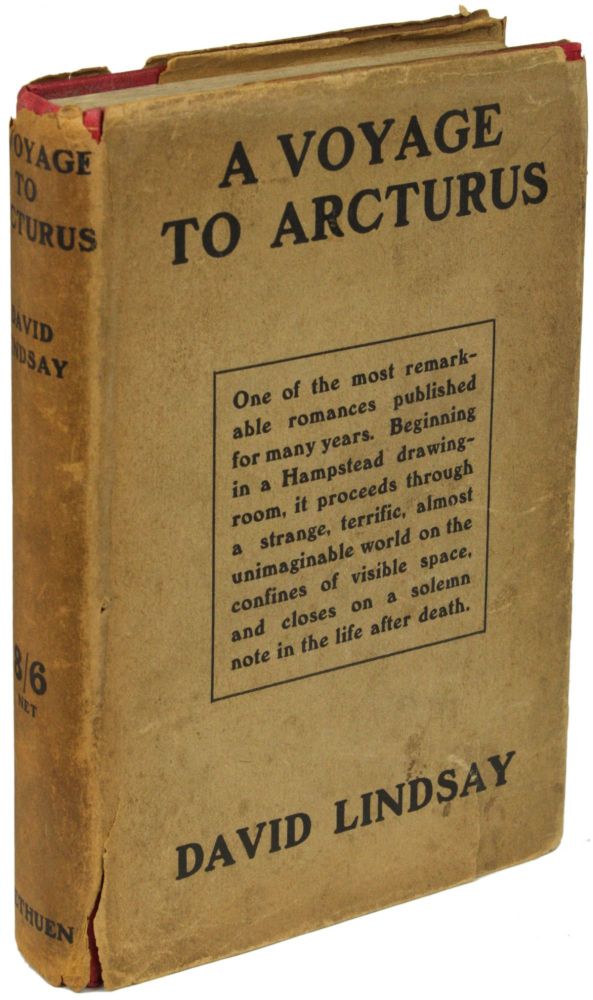
But when he begins to list works which, to his mind, fit this category, the essay might better have been called “Fantasy/Science Fiction”, since the list includes works like The Odyssey,  “The Rime of the Ancient Mariner”, and even The Lord of the Rings.  There are a certain number of actual Science Fiction works scattered throughout the essay, however, and, as one, David Lindsay’s (1876-1945)

A Voyage to Arcturus (1920)

JRRT once wrote that he had read “with avidity” (Letters, 34), we might imagine at least some of the others might have appeared on Tolkien’s shelves or at least on his library card.  Here’s a list in the order the books (and occasional short story or novella) appear in the text (more or less—I group more than one work by the same author together—I’ve also included LINKS to any work out of copyright):

John Collier (1901-1980), Tom’s A-Cold (1933)

George Orwell (Eric Blair) (1903-1950), Nineteen Eighty-four (1949)

Aldous Huxley (1894-1963), Brave New World (1932)

Jules Verne (1828-1905), Twenty Thousand Leagues Under the Sea (1869-70)  https://www.gutenberg.org/files/2488/2488-h/2488-h.htm

Arthur C. Clarke (1917-2008), Prelude to Space (1951); Childhood’s End (1953)

H.G. Wells (1866-1946), “The Land Ironclads” (1903) (https://gutenberg.net.au/ebooks06/0604041h.html ); The Sleeper Awakes (1899/1910) (https://ia902606.us.archive.org/26/items/sleeperawakes00welluoft/sleeperawakes00welluoft.pdf ) ; The Time Machine (1895) (https://archive.org/details/ost-english-timemachineinven00welluoft )  ; The First Men in the Moon (1901) (https://www.gutenberg.org/ebooks/1013 )

Olaf Stapledon (1886-1950), Last and First Men (1930)

Edwin Abbott Abbott (1808-1882), Flatland (1884)   (https://archive.org/details/flatlandromanceo00abbouoft )

Charles Williams (1886-1945), Many Dimensions (1931)

W.H. Hodgson (1877-1918), The Night Land (1912)     ( https://gutenberg.org/ebooks/10662  )   ,

“Ray Bradbury’s stories” (unspecified)

If you take these as “recommended by Lewis” and you haven’t read some, or even any of them, why not start at the top and read all the way down?  Here’s a great place to do it–

And thanks, as always, for reading this.

Stay well,

Remember—use bookmarks—no dog-earing!

And know that, as ever, there’s

MTCIDC

O

Fan Mail

15 Wednesday Sep 2021

Posted by Ollamh in Uncategorized

≈ Leave a comment

As ever, dear readers, welcome.

In the March 22, 1968 issue of The Daily Telegraph Magazine, you will find an interview with Tolkien.

It’s not a very good piece—being very much of its time:  surface-y and obviously desperate to sound “hip”–but with a few interesting quotations from JRRT.  (Here’s a reprint from a later issue—2015–so that you can read it and judge for yourself:  https://www.telegraph.co.uk/books/authors/tolkien-interview-its-easier-to-film-the-odyssey/ )  What I find much more interesting are Tolkien’s original comments on the draft of the interview, which you will find on pages 372-378 of Carpenter’s The Letters of J.R.R. Tolkien.

It’s clear from Tolkien’s comments that in 1967, when the interview was conducted, he was not a happy man.  As he says, referring to his current home, but easily read as a broader statement:

“I am caught here in acute discomfort; but the dislocation of a removal and the rearrangement of my effects cannot be contemplated, until I have completed my contracted work.  When and if I do so, if I am still in health, I hope to go away to an address that will appear in no directory or reference book.”  (Letters, 373)

Among those comments is this:

“I read quite a lot—or more truly, try to read many books…But I seldom find any modern books that hold my attention.”

To which he added this footnote:

“Above these [other works], I was recently deeply engaged in the books of Mary Renault; especially the two about Theseus, The King Must Die, and The Bull from the Sea.”

Mary Renault (1905-1983),

who was actually Eileen Mary Challans, was originally a writer of contemporary fiction, but who, from 1956 to 1981, produced a series of historical novels set in the classical Greek past, both mythical, as in the two books mentioned by Tolkien, and historical, with volumes in which Socrates, Plato, the 6th-century poet Simonides, and Alexander the Great appear.

Although I enjoy them all, my personal favorites of these are The Mask of Apollo (1966),

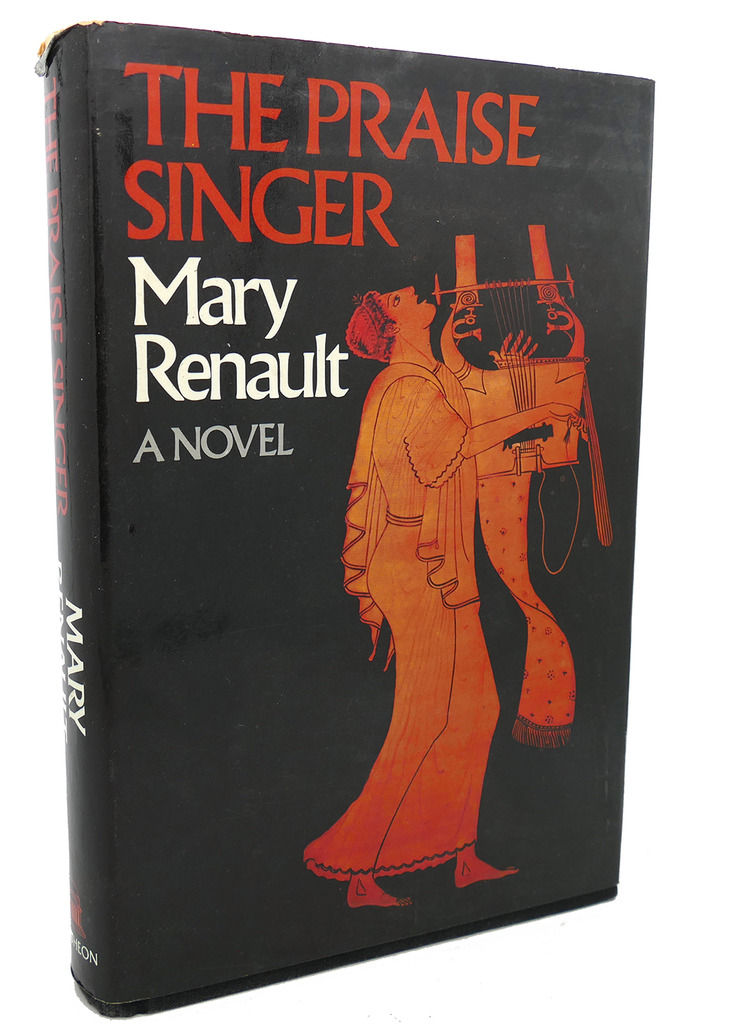
which recreates the world of early Greek drama, and The Praise Singer (1978),

which follows the life of the ancient Greek poet, Simonides of Keos (c.556-468BC).

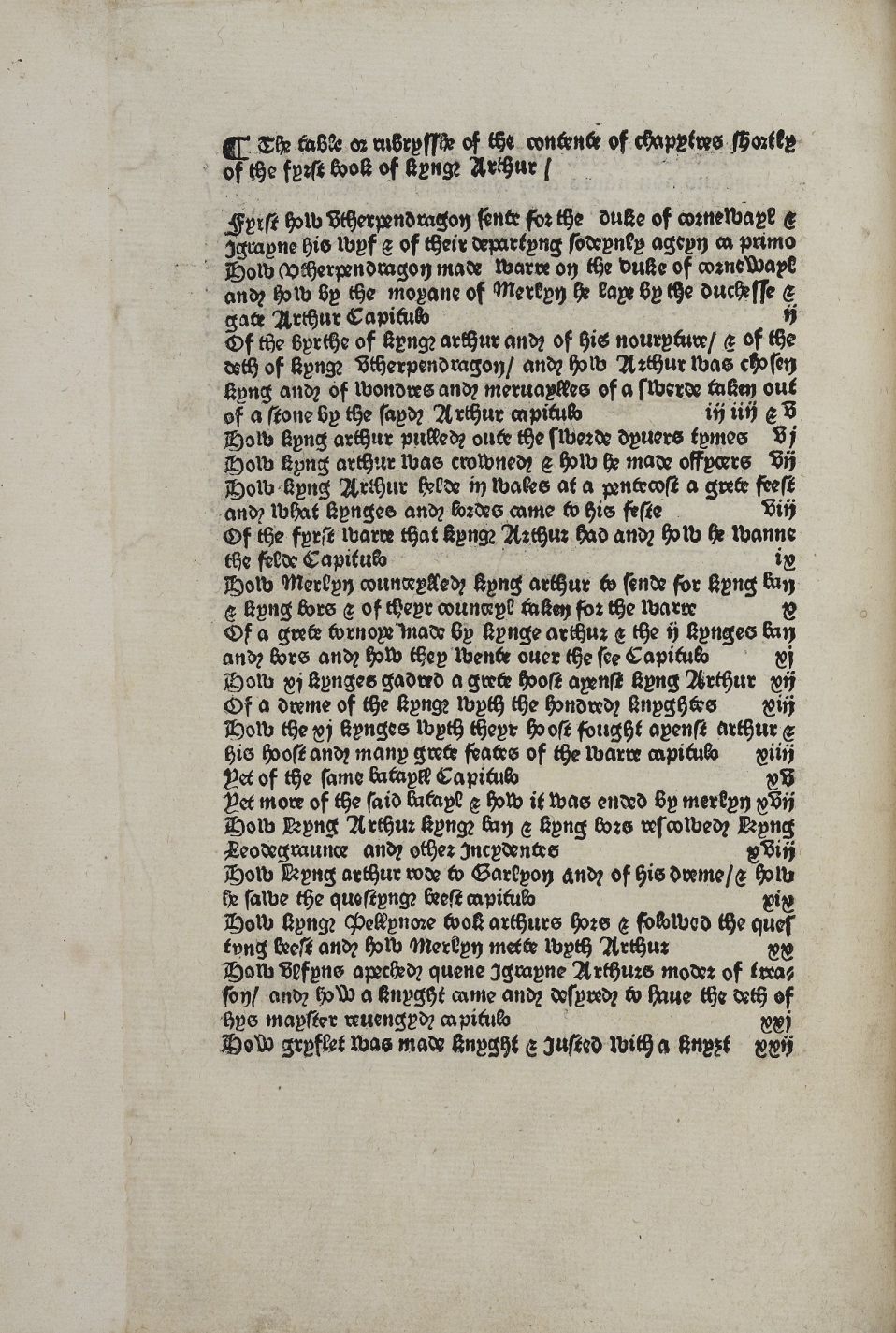
Historical novels in English literature might be said to stretch all the way back to writers like Thomas Malory (c.1415-1471), with La Morte d’Arthur,

(This is a page from Caxton’s original edition of 1485)

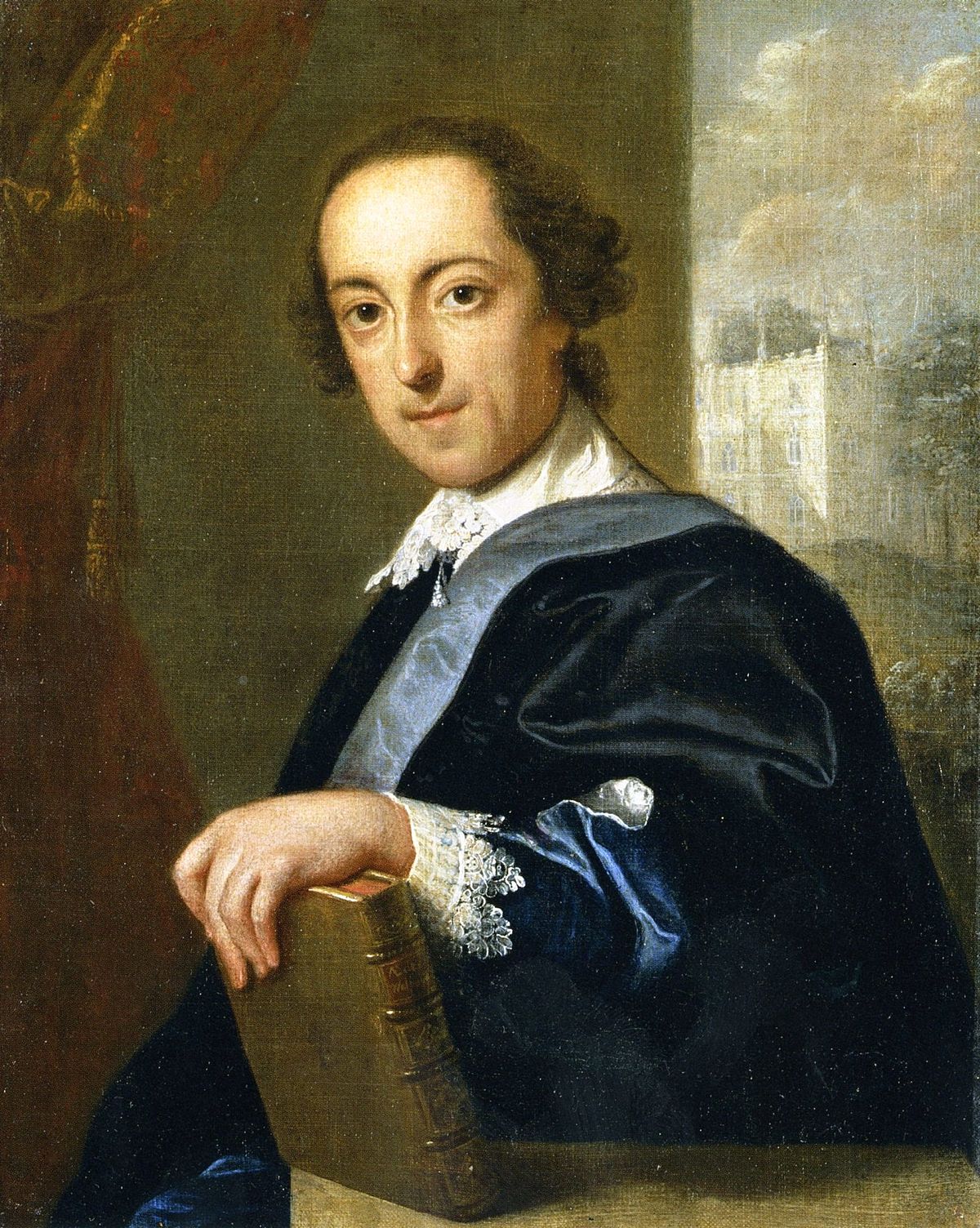
or maybe to Horace Walpole’s (1717-1797)

(with his crazily wonderful “castle”, Strawberry Hill, in the background)

 pre-Romantic “gothic story” of The Castle of Otranto (1764),

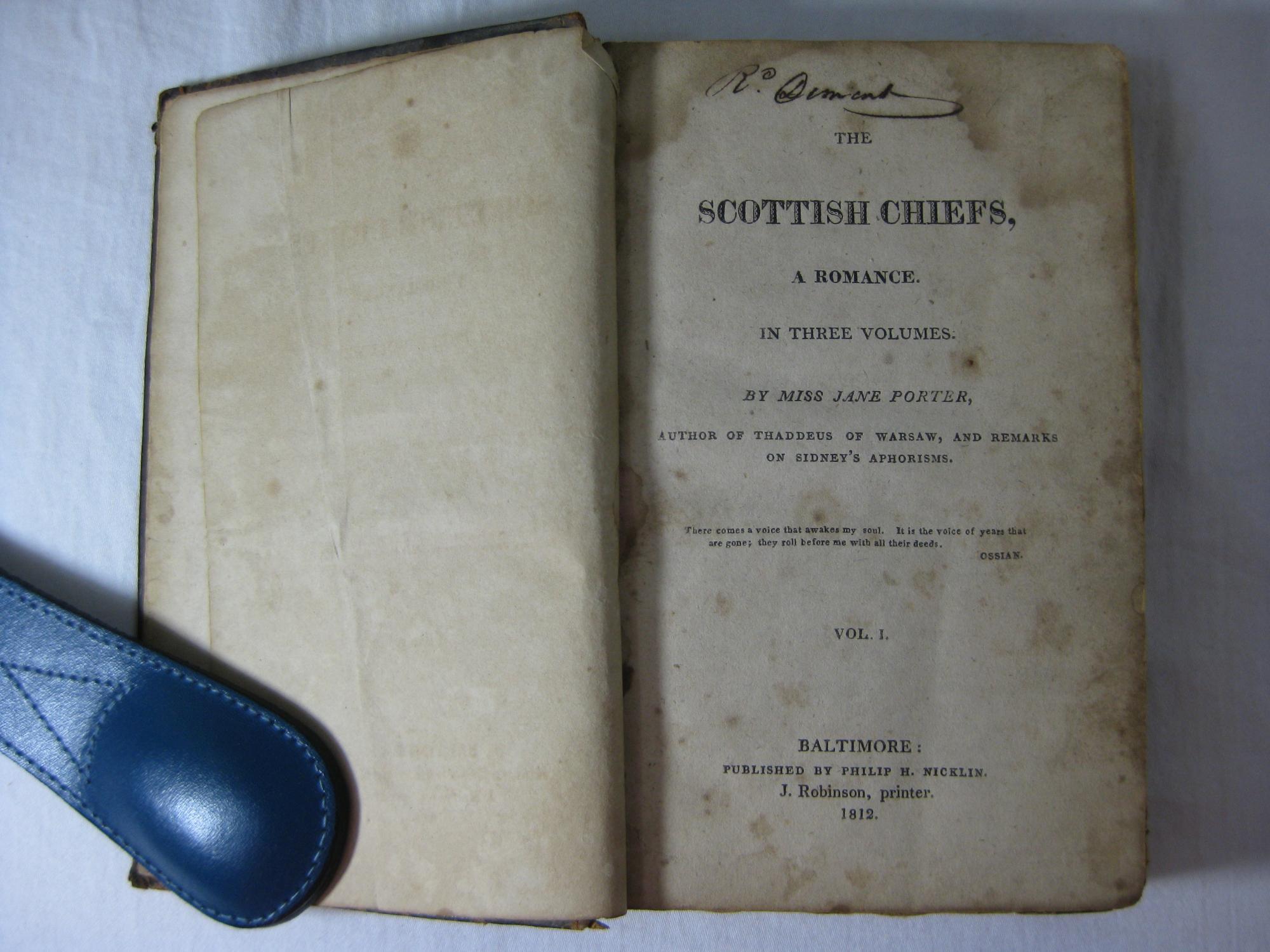
but perhaps a firmer claim might be that of Jane Porter (1776-1850)’s

extremely popular novel of 1810, The Scottish Chiefs about the life of the Scottish independence fighter, William Wallace (c1270-1305), a caricatured version of which appears in M Gibson’s Braveheart.  (If you’re a fan of this movie, I apologize for what I hope is unaccustomed harshness, but the actual Wallace was a southern Scottish knight, who didn’t wear kilts or paint his face blue and would have been very surprised to see himself so depicted.)

(the first American edition of 1812)

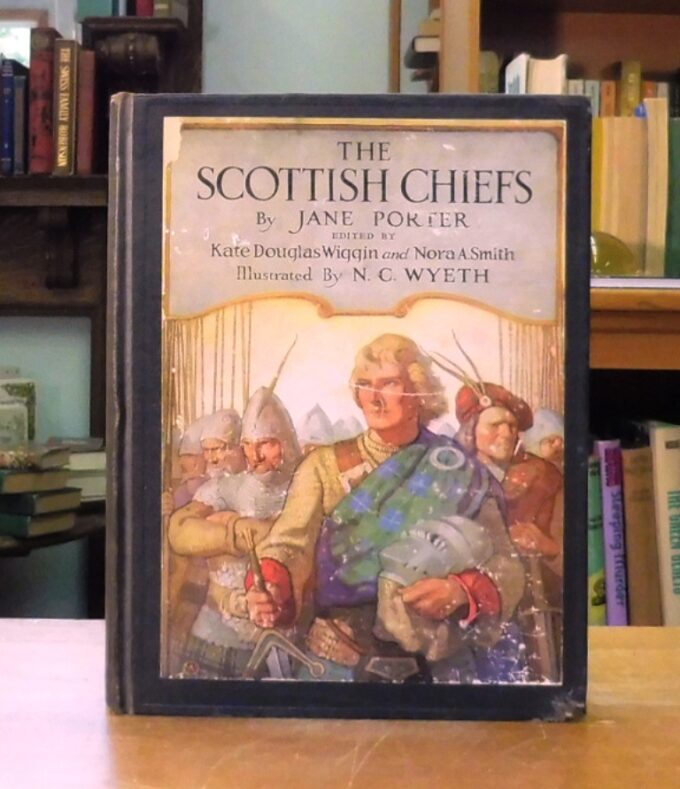
And I can’t resist adding the 1921 edition,

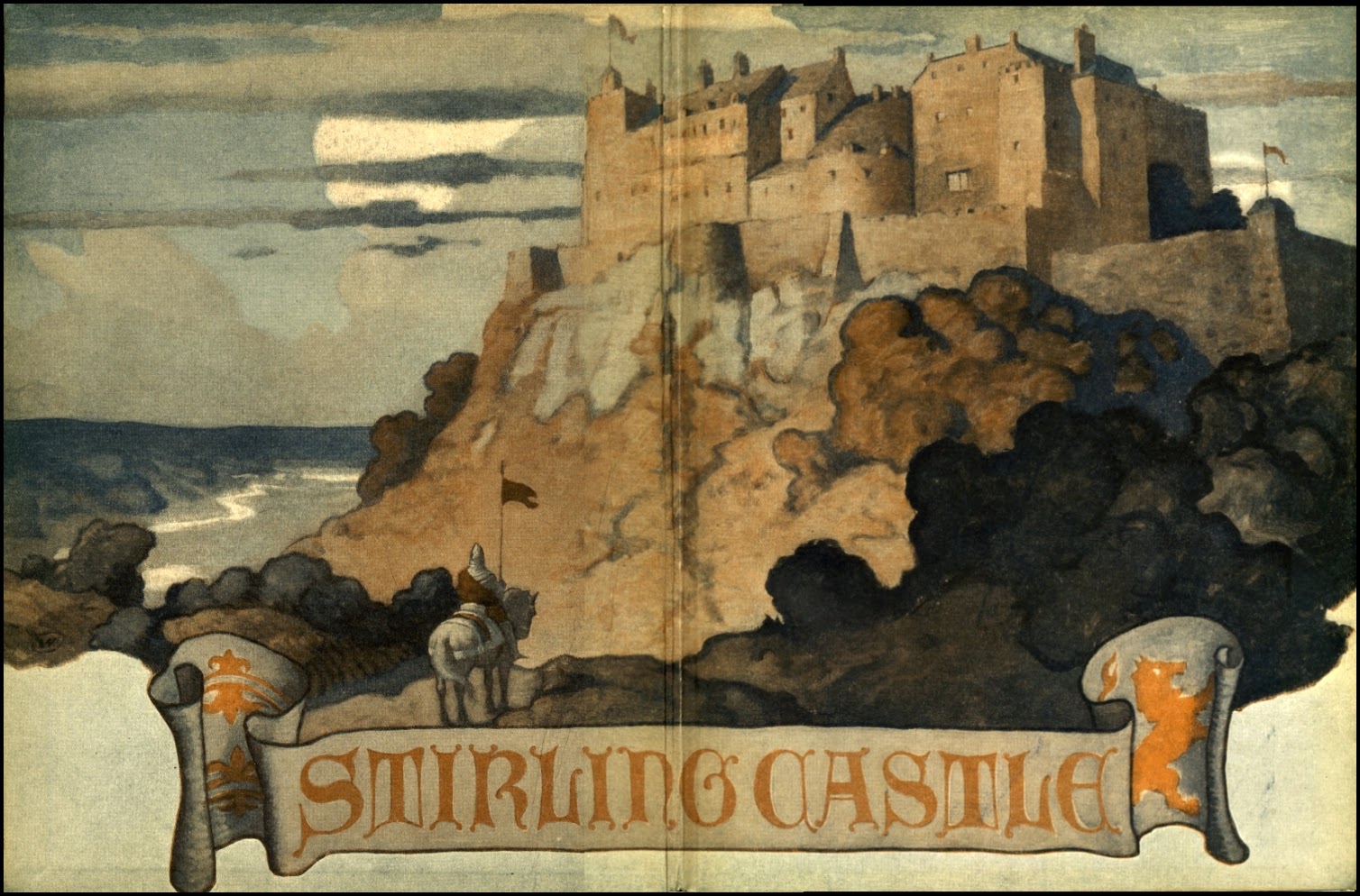
with illustrations by N.C. Wyeth (1882-1945), for those very illustrations.  Here are the endpapers, just to give you an idea–      

Here’s the LINK so that you can own your own copy:  https://archive.org/details/scottishchiefs00port/page/n3/mode/2up

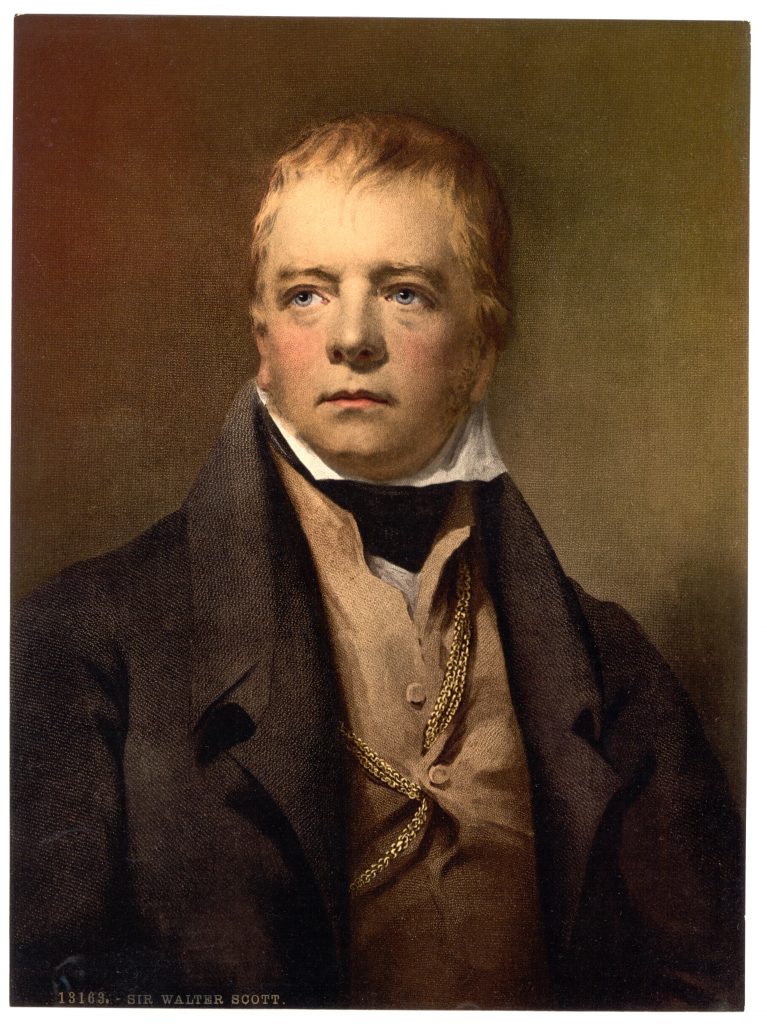
As the Porter novel was published in 1810, it actually pre-dated Sir Walter Scott’s (1771-1832)

1814 novel, Waverley,

with its complex and dramatic story of the last Jacobite rebellion of 1745-46,

although I would bet that Scott, probably now not read outside specialty English courses, is, at present, the better-known.

Scott’s succeeding historical novels, in fact, seemed to have opened the proverbial flood gates, even inspiring beginning authors from across the ocean as, only seven years after Waverley, James Fenimore Cooper (1789-1851),

produced the first successful American historical novel, The Spy, set during the American Revolution,

beginning a career which would make him wealthy and well-known, not only in the US, but in Europe, as well. 

And, beyond Cooper, there was a full century of historical fiction, including authors like George Eliot, Charles Dickens, Robert Louis Stevenson, and Arthur Conan Doyle, as well as a host of people who are now only names, at best.

(For an interesting, but too short, piece on the multitude of such authors, see: https://www.oxfordbibliographies.com/view/document/obo-9780199799558/obo-9780199799558-0098.xml   )

With the 20th century, the number of books set in the past—whether Robert Graves’ Julio-Claudian Rome or Kenneth Roberts’ 18th-century America, among nearly-countless others, can appear quite overwhelming and this leads me back to Tolkien’s quotation:  “I read quite a lot—or more truly, try to read many books…But I seldom find any modern books that hold my attention.”

His explanation for this combines being “under ‘inner’ pressure to complete my own work—and because [as he states in the interview] ‘I am looking for something I can’t find.’ “

And yet he could be “deeply engaged in the books of Mary Renault”. 

He provides no explanation for this.  We might guess that in the two Theseus novels, Renault depicts a troubled hero in a world of myth and speculate about Frodo as another such figure, but, that is just that, a guess.

And yet there is one more bit of the Tolkien quotation which I haven’t cited.

In the interview published in 1968, there is this:

“Any hobbit would trust this man, any dragon quail before him, any elf name him friend.  Effortlessly, he compels you to admire as much as–and herein lies his charm–he clearly admires himself.”

In his comments on the manuscript draft of the interview, just after his mentioning his engagement with novels by Renault, Tolkien adds:

“A few days ago I actually received a card of appreciation from her; perhaps the piece of ‘Fan-mail’ that gives me most pleasure.”

Might we say that, along with the solid literary pleasure of The King Must Die and The Bull from the Sea, there was the added pleasure that he was admiring the work of someone who admired his work?

Thanks for reading, as always.

Stay well,

Remember that you, too, are in history,

And know that, as ever, there’s

MTCIDC

O

Marcho and Hengist and… Romulus?

08 Wednesday Sep 2021

Posted by Ollamh in Uncategorized

≈ Leave a comment

As ever, dear readers, welcome.

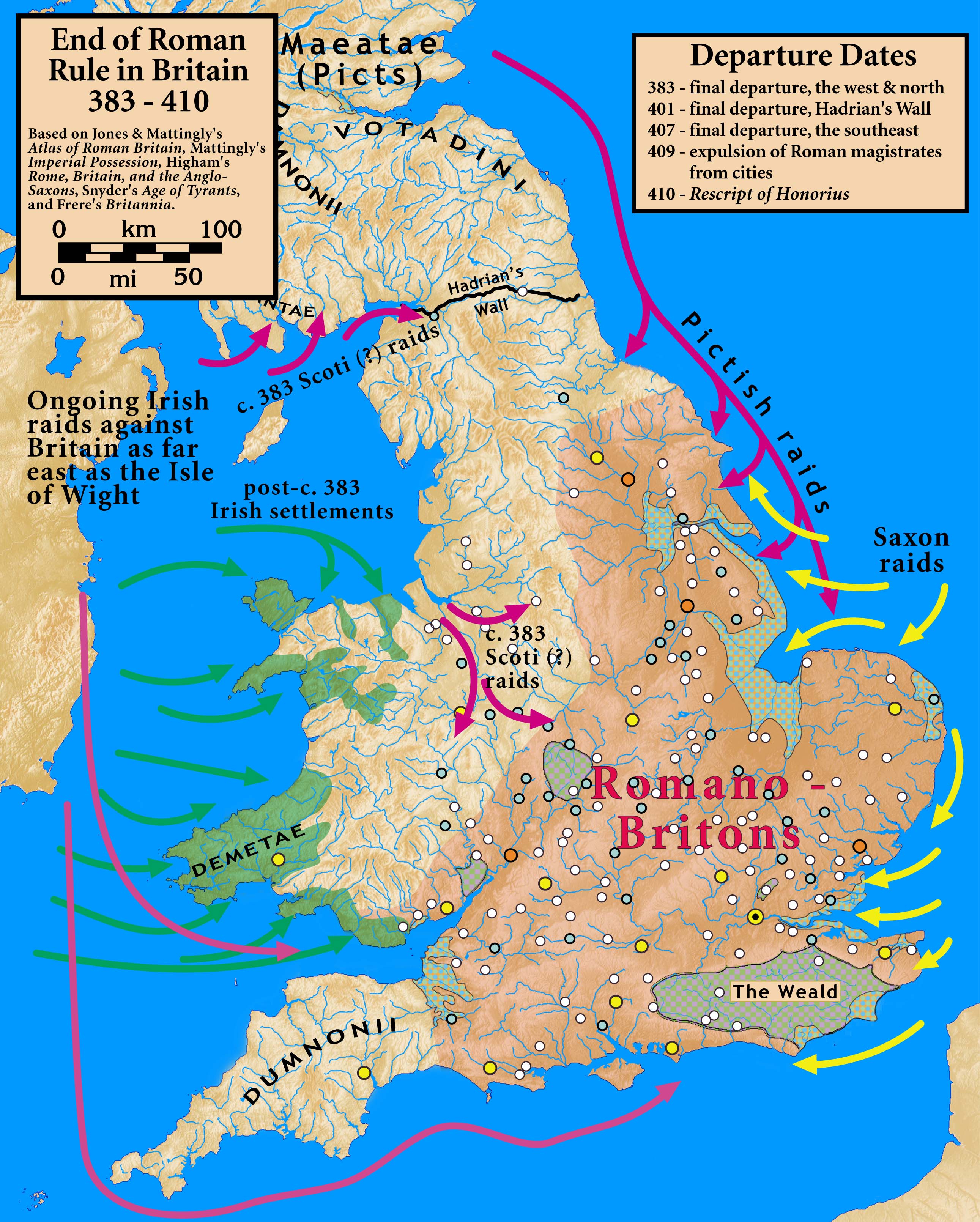
At the end of the 4th century AD, the westernmost Roman province, Britannia, was in serious trouble.

Founded after a long conquest in the 1st century AD,

it had gradually become stable, in part because there were Roman military outposts throughout the province,

not to mention the 90 miles of wall which separated the province from its not always friendly neighbors to the north.

Stability—as well as security—came with the garrisons of such places, however,

and, late in the 4th century, these were being withdrawn.

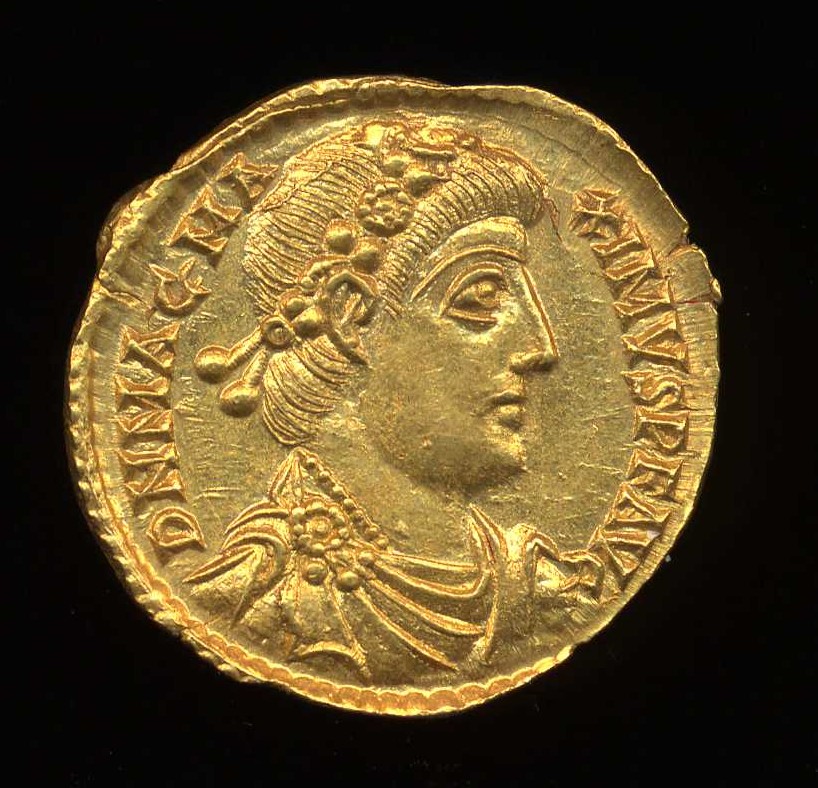
It had really started with Magnus Maximus (c.335-388AD),

a general who would become emperor of the West in 383AD, in part with the aid of troops which he had withdrawn from those garrisons.

A second would-be emperor, who called himself “Constantine III” (?-411AD),

drew even further upon the troops in Britain in 406AD, seemingly pulling out the last of the regulars.

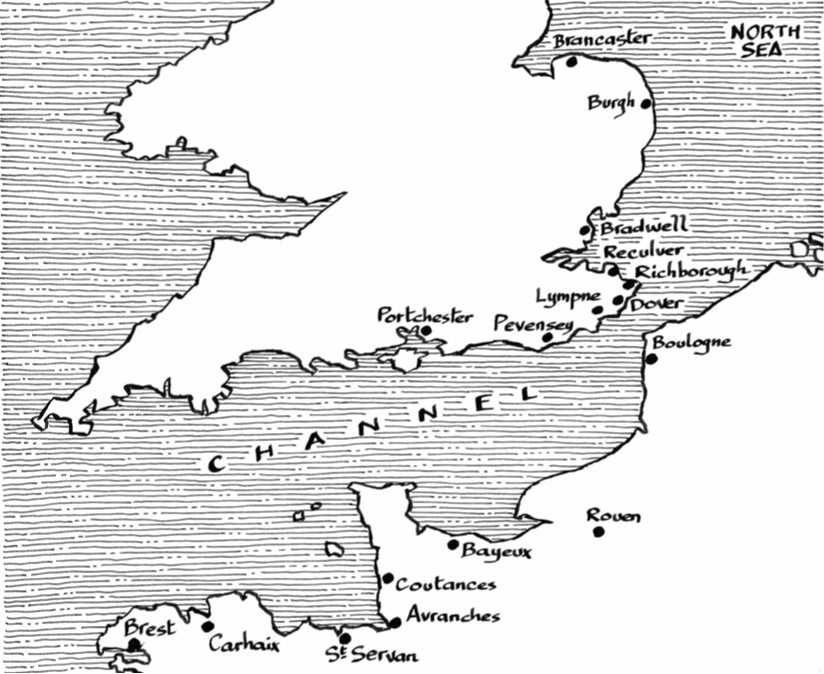
Britannia had already been suffering from coastal raids by pirates and Germanic peoples and the later Roman government had constructed a number of coastal defenses, the so-called “Saxon Shore Forts”,

but, without those troops, Britannia was about to be on her own when it came to defense.  The last straw came about 410AD, when the Western emperor, Honorius (384-423AD),

sent a letter (an “imperial rescript”), which appears to reply to an appeal by the province for help, in which he addressed the leaders of the cities (he calls them “civitates”)–rather than his own government’s officials, which looks like a bad sign–telling them that they need to take up arms themselves, implying that no imperial soldiers will be sent.

This, and what came before it, plunged Britannia into an era of raids from several directions,

including Ireland,

the north of England,

and Germanic tribesmen from the east.

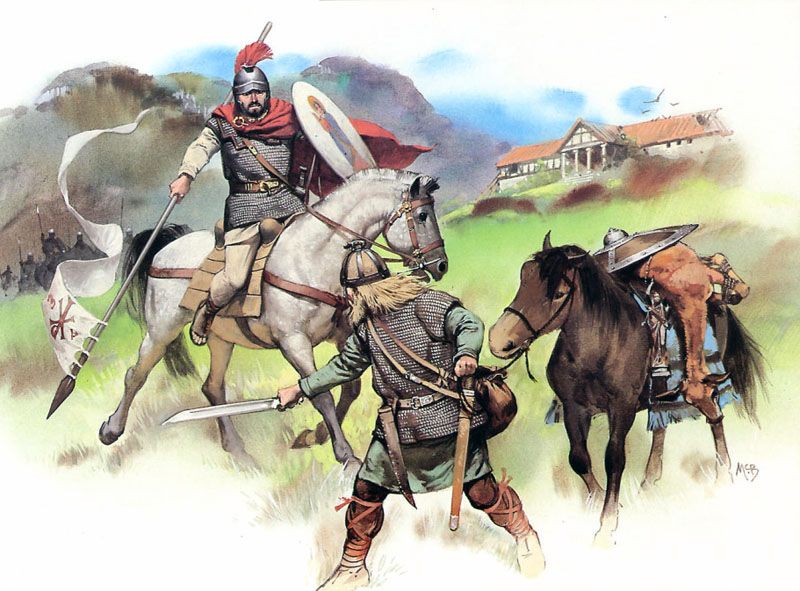
Amidst this chaos, we have mention of a local king, Vortigern, who, with the idea of “set a thief to catch a thief” hired some Germanic invaders who’ve been living on coast to add muscle to his own fighters.

These mercenaries were led by two brothers, called “Hengist” and “Horsa”

and Vortigern soon regretted his offer, as Hengist and Horsa sent for their relatives from across the North Sea and, within a few years, southern and central Britain were overrun with Germanic peoples.

Magnus Maximus, Constantius III, and Honorius were real people, from the historical record.  Vortigern, Hengist, and Horsa are from a very murky period in early British history and may be nothing more than a way to explain the explosion of Germanic colonization of southern Britain in the next couple of centuries.

In Tolkien commentaries, Hengist and Horsa and their part in Germanicizing Britain are often equated with this:

“About this time legend among the Hobbits first becomes history with a reckoning of years.  For it was in the one thousand six hundred and first year of the Third Age that the Fallohide brothers, Marcho and Blanco, set out from Bree; and having obtained permission from the high king at Fornost, they crossed the brown river Baranduin with a great following of Hobbits.  They passed over the Bridge of Stonebows…and they took all the land beyond to dwell in, between the river and the Far Downs.” (The Lord of the Rings, Prologue, I, “Concerning Hobbits”)

This was, of course, the founding of the Shire

and thus, it is suggested, Marcho and Blanco equal Hengist and Horsa, two sets of brothers involved in creating new settlements—but I’m not so sure.

That JRRT associated the Hobbits with the mercenaries is possible, of course—after all, Tolkien would certainly have been well aware of early British history, but I would add another possible duo, one of which he had known since his first days studying Latin at King Edward’s School in Birmingham:  the founders of Rome, Romulus and Remus.

If you’re not familiar with their story, in brief it goes like this:

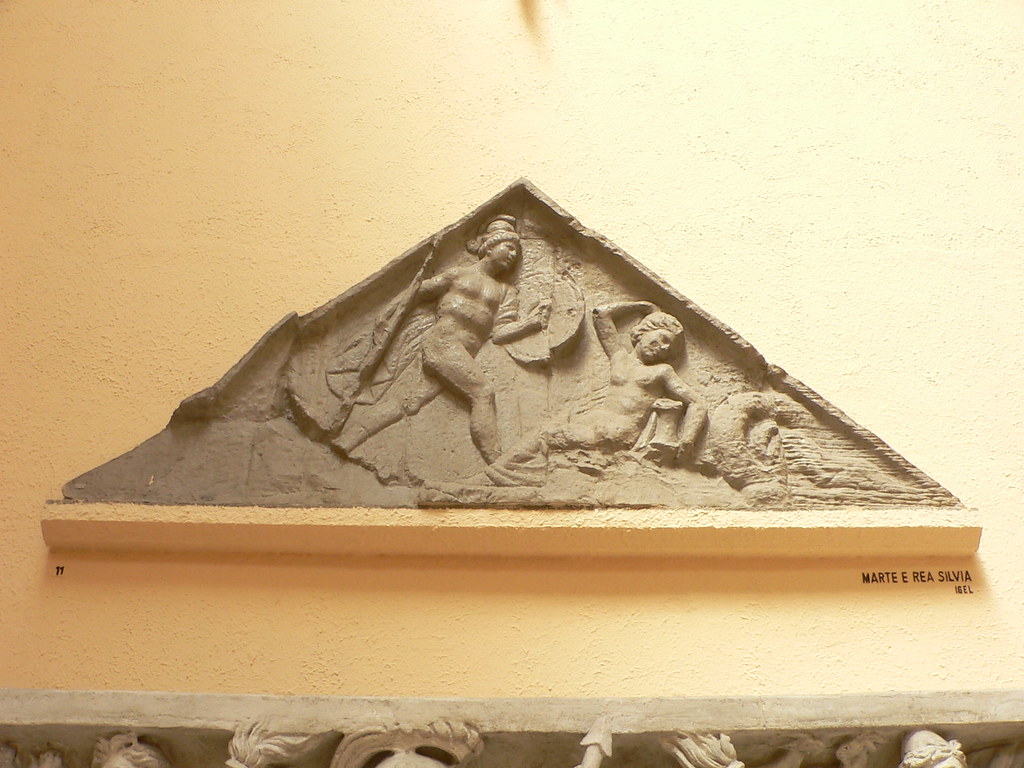
Their mother was a priestess, Rhea Silvia, and their father may have been the Roman war god, Mars.

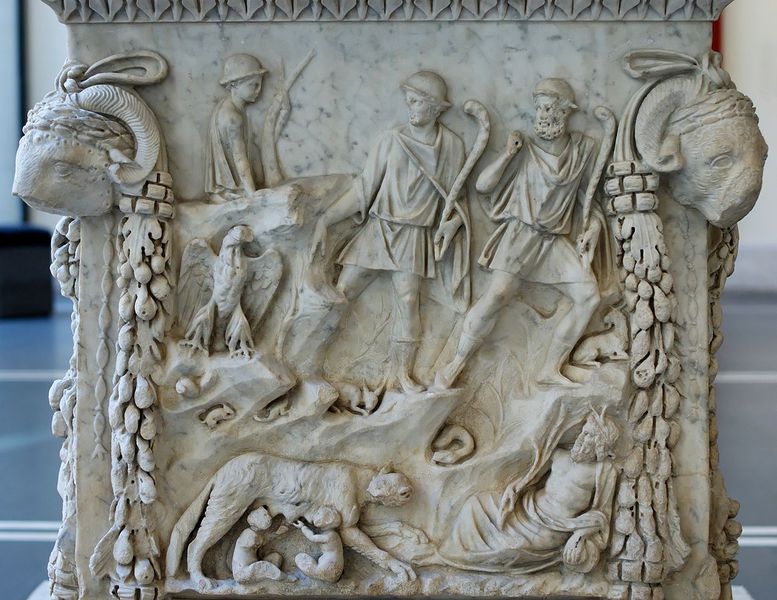
Their grandfather, Numitor, had been the king of Alba Longa, the forerunner of Rome, but had been forced out of power by his brother, Amulius.  When his grandnephews, Romulus and Remus were born, Amulius saw them as a potential threat, and so he had them put into a basket and dropped into the Tiber, thus—or so he hoped—removing the kin blood guilt he would have suffered had he killed them himself.

The god of the Tiber, however, was on the side of the family of the rightful king, and the basket was washed ashore, where the twins were adopted by a local she wolf.

They were then discovered by a local shepherd and raised among the flocks, only to be discovered, in time, as the missing princes.  Their wicked great uncle was overthrown and their grandfather was restored to the throne, but the restless boys, instead of waiting to inherit the throne, set out to found their own city.  They later quarreled and Romulus killed Remus,

and so Romulus alone was the builder of Rome.

But why add Romulus and Remus to this foundation myth?

The land which became the Shire, although part of the northern realm of Gondor, was abandoned when the Hobbits arrived, empty of all people, although the East Road and the Great Bridge survived and were still in use (part of the King’s grant to the Hobbits had included the obligation of keeping them in repair—The Lord of the Rings, Prologue I, “Concerning Hobbits”).  Romulus and Remus, like the Hobbit brothers, left the inhabited part of Latium and their grandfather’s city, just as the Hobbits left Bree, to create a new settlement on empty land.  (For more on this, see Livy, Ab Urbe Condita, Book 1, Sections 3-7—here’s a LINK so that you can refer to it yourself:  https://www.perseus.tufts.edu/hopper/text?doc=Perseus%3Atext%3A1999.02.0151%3Abook%3D1%3Achapter%3D3 )  Thus, like Marcho and Blanco, Romulus and Remus were founders, characters Tolkien would have known about from his early teens.

In contrast, Hengist and Horsa were leaders of a violent invasion of land which had been settled long before the Roman arrival in 43BC and still was, in the early 5th century, AD.  They were conquerors, then, not founders, and thus perhaps less likely models.  So far as I know, however—at least from the Letters—JRRT makes no connection between the Hobbits and the Germanic invaders or the proto-Roman twins, so perhaps we can imagine both as (rather distant) models for the founders of the Shire?

Thanks, as always, for reading,

Stay well,

Be careful whom you invite to help you with invaders,

And

Know that there’s always

MTCIDC

O
Ringing False (3)

01 Wednesday Sep 2021

Posted by Ollamh in Uncategorized

≈ Leave a comment

Saruman

although he declares himself “Saruman the Wise, Saruman Ring-maker, Saruman of Many Colours!” (The Fellowship of the Ring, Book Two, Chapter 2, “The Council of Elrond”)

is not so wise as he thinks.  In his lust for the Ring, he has made a number of mistakes.  In one conversation with Gandalf, he has:

1. revealed a deep jealousy of his fellow Maia, saying scornfully, “…one so cunning and so wise, wandering about the lands, and concerning himself in every business, whether it belongs to him or not.”

2. mocked a second Maia, Radagast, as “the Bird-tamer, Radagast the Simple!  Radagast the Fool!”

3. laid bare his own desire not just to provide counsel for the people of Middle-earth against Sauron which was the purpose for which he had been sent there, but to control them:  “…but our time is at hand:  the world of Men, which we must rule.  But we must have power, power to order all things as we will, for that good which only the Wise can see.”

4. made clear that he is not only in contact with Sauron, but admires and fears him:  “A new Power is rising.  Against it the old allies and policies will not avail us at all.  There is no hope left in Elves or dying Numenor.  This then is one choice before you, before us.  We may join with that Power.  It would be wise, Gandalf.  There is hope that way.  Its victory is at hand; and there will be rich reward for those that aided it.”

5. given away the fact that he has been spying on the Shire:  “For I have many eyes in my service, and I believe that you know where this precious thing now lies.  Is it not so?  Or why do the Nine ask for the Shire, and what is your business there?”

And, in admitting to his suspicion that the Ring may be somehow tied to the Shire, Saruman also admits to his own desire for the Ring:  “Why not?  The Ruling Ring?  If we could command that, then the Power would pass to us.”

Welcome, dear readers, as ever.

In the last two postings, I’ve been playing a game which historians and fantasy/sci-fi writers call “What If?”

In this game, they take a known situation:  that, for instance, the Nazis never invaded England, but, in Len Deighton’s (1929-) 1978 novel,

 SS-GB,

they now occupy the country. 

Now we’ve come to “What if Saruman got the Ring?”

It’s interesting that Saruman has already so strongly identified himself with Sauron that he’s called himself “Ring-maker” and, as Gandalf has noticed, “He wore a ring on his finger.”   What Saruman hasn’t realized, however, is that Sauron is well aware of Saruman’s thoughts on the subject of becoming the new Sauron, even without the Ring, as is evident in the speech of Sauron’s Orc captain, Grishnakh.   He has been arguing with Saruman’s Uruk-hai leader, Ugluk, on what’s best to do with Merry and Pippin.  Ugluk has tried to take command, saying, “We are the servants of Saruman the Wise, the White Hand…”  Grishnakh then makes a very interesting reply:

“You have spoken more than enough, Ugluk…I wonder how they would like it in Lugburz [the Barad-dur]…They might ask where his strange ideas came from.  Did they come from Saruman, perhaps?  Who does he think he is, setting up on his own with his filthy white badges?  They might agree with me, with Grishnakh their trusted messenger; and I Grishnakh say this:  Saruman is a fool, and a dirty treacherous fool.  But the Great Eye is on him.”  (The Two Towers, Book Three,  Chapter 3, “The Uruk-hai”)

That Great Eye is more than on him—Saruman is also unaware that he’s being manipulated by Sauron through the Orthanc Palantir

as we hear in that conversation which so reveals his true self and intent to Gandalf.  Is he really speaking for himself when he launches into what he believes is a logical laying-out of the path both he and Gandalf should take?   As Gandalf describes him:

“He drew himself up then and began to declaim, as if he were making a speech long rehearsed.  ‘The Elder Days are gone.  The Middle Days are passing.  The Younger Days are beginning.  The time of the Elves is over, but our time is at hand:  the world of Men, which we must rule.  But we must have power, power to order all things as we will, for that good which only the Wise can see.’ “

Elrond has said that the Ring can only be wielded by one with great power already, but that “It belongs to Sauron and was made by him alone, and is altogether evil…The very desire of it corrupts the heart.  Consider Saruman.  If any of the Wise should with this Ring overthrow the Lord of Mordor, using his own arts, he would then set himself up on Sauron’s throne, and yet another Dark Lord would appear.” (The Fellowship of the Ring, Book Two, Chapter 2, “The Council of Elrond”)

And it’s clear that this is Saruman’s plan, even as he tries to persuade Gandalf to join him, sharing joint custody of the Ring, to which Gandalf wisely replies:

“Saruman…only one hand at a time can wield the One, and you know that well, so do not trouble to say we.”

Saruman is, unknowingly, already corrupt and much less in control than he believes and I wonder if, once he had the Ring, a winged Nazgul would appear and soon either his head and/or the Ring would be on its way to its true master in Lugburz.

Immune to Saruman’s combination of wheedling and threats, Gandalf has refused either to join Saruman or confirm his suspicions about the Ring, declaring, “But I would not give it, nay, I would not give even news of it to you, now that I learn your mind.  You were head of the White Council, but you have unmasked yourself at last.”

And, when offered the Ring himself by Frodo,

his reaction is the very opposite of what we might expect of Saruman’s—and here we see the answer to “What if Gandalf got the Ring?”:

“ ‘No!’ cried Gandalf, springing to his feet.  ‘With that power I should have power too great and terrible.  And over me the Ring would gain a power still greater and more deadly.’  His eyes flashed and his face was as if lit by a fire within.  ‘Do not tempt me!  For I do not wish to become like the Dark Lord himself.” (The Fellowship of the Ring, Book One, Chapter 2, “The Shadow of the Past”)

Saruman would gladly grasp the Ring so that he—and Gandalf, perhaps, at this point, since Saruman is still unsure of Gandalf’s response—would achieve “the high and ultimate purpose:  Knowledge, Rule, Order; all the things that we have so far striven in vain to accomplish…There need not be, there would not be, any real change in our designs, only in our means.”  Or so he says.  In fact, his “high and ultimate purpose” is sheer mastery:  “Why not?  The Ruling Ring?  If we could command that, then the Power would pass to us.”

In contrast, Gandalf refuses the Ring because “…the way of the Ring to my heart is by pity, pity for weakness and a desire to do good.” 

And Galadriel’s rejection is much like Gandalf’s:

“ ‘…You will give me the Ring freely!  In place of the Dark Lord you will set up a Queen.  And I shall not be dark, but beautiful and terrible as the Morning and the Night!  Fair as the Sea and the Sun and the Snow upon the Mountain!  Dreadful as the Storm and the Lightning!  Stronger than the foundations of the earth.  All shall love me and despair!’

She lifted up her hand and from the ring that she wore there issued a great light that illumined her alone and left all else dark…Then she let her hand fall, and the light faded, and suddenly she laughed again, and lo! She was shrunken:  a slender elf-woman, clad in simple white, whose gentle voice was soft and sad.

‘I pass the test,’ she said.  ‘I will diminish, and go into the West, and remain Galadriel.’ “ (The Fellowship of the Ring, Book Two, Chapter 7, “The Mirror of Galadriel”)

Galadriel has already had her own “What if?”, telling Frodo:

“I do not deny that my heart has greatly desired to ask what you offer.  For many long years I had pondered what I might do, should the Great Ring come into my hands, and behold!  It was brought within my grasp.”

But she, like Gandalf, and like Elrond, knows that Sauron’s Ring is nothing more than a kind of poison, offering power, but taking control and corrupting as it does so.  As she says:  “The evil that was devised long ago works on in many ways, whether Sauron himself stands or falls.”

I began this little series with Faramir’s rejection of the Ring, even though he was unsure of what exactly it was:

“I would not take this thing, if it lay by the highway.  Not were Minas Tirith falling in ruin and I alone could save her, so, using the weapon of the Dark Lord for her good and my glory.  No, I do not wish for such triumphs, Frodo son of Drogo.” (The Two Towers, Book Four, Chapter 5, “The Window on the West”)

Bilbo, with Gandalf’s help, let the Ring go.  Frodo tried to give it to both Gandalf and Galadriel, and each refused.  Saruman coveted it, but probably could never have kept it, at the best surrendering it to its rightful owner, at the worst ruined and driven mad, like Gollum, and still losing it in the end, just as Gollum did.  I would like, however, to add perhaps the oddest possible recipient to this list, Tom Bombadil.

Early in the story, after Tom has rescued them from Old Man Willow, he suddenly asks to see the Ring and Frodo, to his own surprise, immediately hands it to him.  And, although Frodo is a little miffed by it, Tom’s reaction is to clown with it, peeking through it, putting it on and not disappearing, even doing a little disappearing trick with it, all of which confirms something Gandalf will later say, when it’s suggested that the Ring be sent to him for safe-keeping:

“Say rather that the Ring has no power over him.  He is his own master…And if he were given the Ring, he would soon forget it, or most likely throw it away.  Such things have no hold on his mind.” (The Fellowship of the Ring, Book Two, Chapter 2, “The Council of Elrond”)

It’s never clear why the Ring has no power over Tom, and a “What if?” would clearly only end in disaster, but I’ve included him because of that last remark:  “Such things have no hold on his mind.”  On the minds of good characters and bad, with Tom as the one exception, the Ring has a hold and that strong attraction lies at the center of the story, making a game of “What if?” possible.  And that’s one reason why “What if” is a good game to play.  We know what actually happens, of course, but, when we suppose different outcomes, we can gain a clearer sense of why it happens.  On the one hand, it shows us the protagonists as deeply thoughtful people, more concerned for those around them than their own power—with the strong exception of Saruman.  On the other, it points up the terrible power of the Ring that Frodo a good person, at the last minute of dropping the Ring into the Cracks of Doom, suddenly seems much closer to the Ring’s maker than to the Hobbit who has barely survived a terrible quest to erase the very thing he now declines to destroy.

As always, thanks for reading,

Stay well,

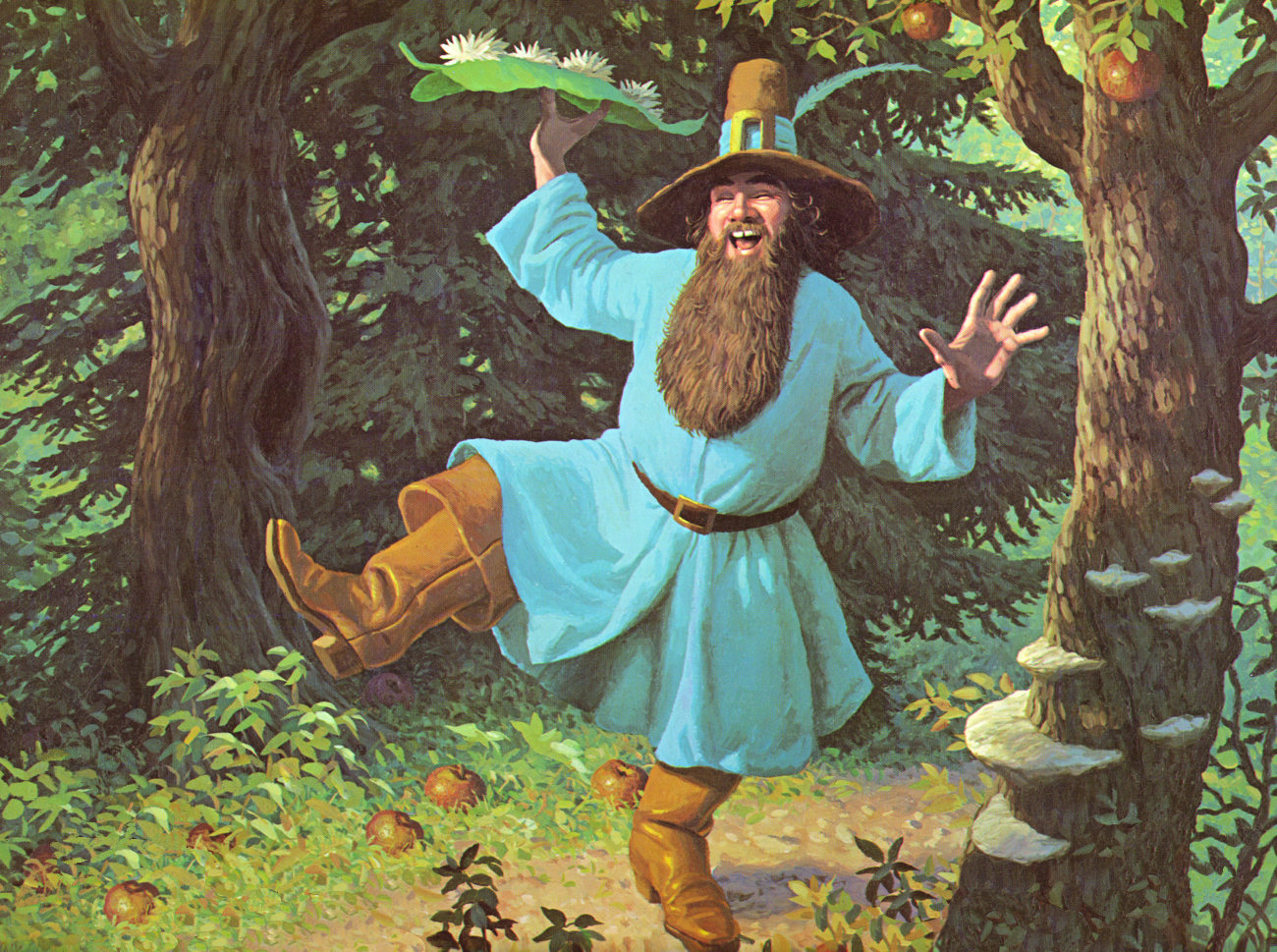
Look for yellow boots if you’re lost in the forest,

And know that, as ever, there’s

MTCIDC

O
Ringing False (2)

25 Wednesday Aug 2021

Posted by Ollamh in Uncategorized

≈ Leave a comment

You might say that it all started not with:

“He only needs the One; for he made that Ring himself, it is his, and he let a great part of his former power pass into it, so that he could rule all the others.” (The Fellowship of the Ring, Book One, Chapter 2 “The Shadow of the Past”)

but really with:

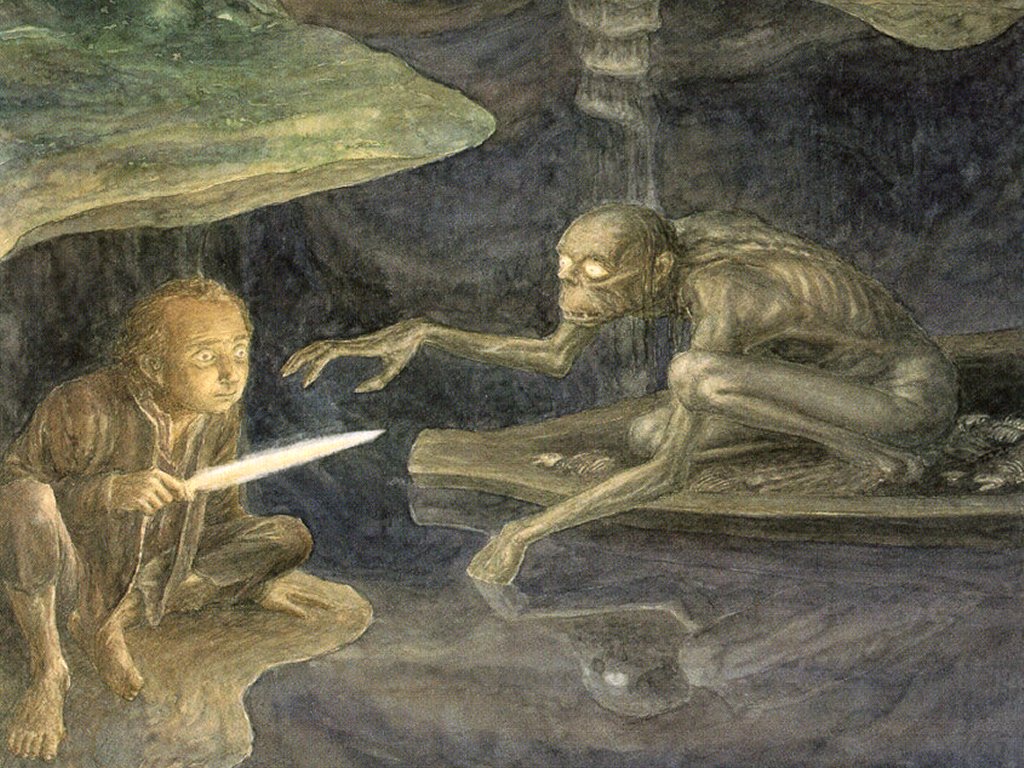
“His head was swimming, and he was far from certain even of the direction they had been going in when he had his fall.  He guessed as well as he could, and crawled along a good way, till suddenly his hand met what felt like a tiny ring of cold metal lying on the floor of the tunnel.”  (The Hobbit, Chapter 5, “Riddles in the Dark”)

The author goes on to add, “It was a turning point in his career, but he did not know it…” but, in fact, this—although the author himself didn’t know it in 1937—was a tremendous understatement, that finding being a turning point in more than the career of one small Hobbit.  Suppose, however, that, in the dark and in his confusion—he had just recently “bumped his head on hard rock, and remembered nothing more” after all—the “he” in that passage had missed that “tiny ring of cold metal”?

Welcome, dear readers, as ever.

In my last posting, I began to play a kind of game, enjoyed both by historians and by science fiction/fantasy writers, called “What If?”, using that tiny ring as the focus. 

Such a game produces books like the well-known If the South Had Won the Civil War, by MacKinlay Kantor (1904-1977),

first published in Look Magazine in November, 1960,

and then released as a short novel in 1961.

The possible fantasy/science fiction titles we might cite are probably endless, as “What If” now forms the basis of whole series.  In the last posting, I mentioned as a good example the classic short story by Ray Bradbury (1920-2012)

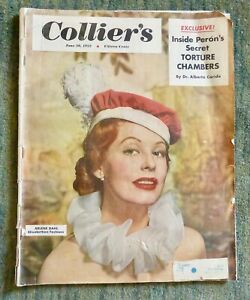
“A Sound of Thunder”, originally published in Collier’s magazine in 1952,

in which the death of a butterfly in the prehistoric past will change history in the 20th century.

In that previous posting, I discussed What If’s centered upon Isildur, Gollum, and Bilbo, and now I want to do what Bilbo did and pass the Ring to his heir, Frodo.

In that previous posting, I began with Faramir’s total rejection of the Ring:

“I would not take this thing, if it lay by the highway.  Not were Minas Tirith falling in ruin and I alone could save her, so, using the weapon of the Dark Lord for her good and my glory…”  (The Two Towers, Book Four, Chapter 5, “The Window on the West”)

Initially, Frodo seems to have a similar reaction, saying to Gandalf:

“All the same…even if Bilbo could not kill Gollum, I wish that he had not kept the Ring.  I wish he had never found it, and that I had not got it!  Why did you let me keep it?  Why didn’t you make me throw it away, or, or destroy it?” (The Fellowship of the Ring, Book One, Chapter 2, “The Shadow of the Past”)

And yet, there is something terribly attractive about the thing:

“Frodo drew the Ring out of his pocket again and looked at it.  It now appeared plain and smooth, without mark or device that he could see.  The gold looked very fair and pure, and Frodo thought how rich and beautiful was its colour, how perfect was its roundness.  It was an admirable thing and altogether precious.  When he took it out, he had intended to fling it from him into the very hottest part of the fire.  But now he found that he could not do so, not without a great struggle.  He weighed the Ring in his hand, hesitating, and forcing himself to remember all that Gandalf had told him; and then with an effort of will he made a movement, as if to cast it away, but he found that he had put it back in his pocket.”

Gollum had had the Ring for nearly 500 years, and Bilbo had had it for about 60 years.  When Gandalf arrives at Frodo’s house, it’s been only 9 years since Bilbo left the Ring behind and Frodo’s behavior can only cause Gandalf great concern, as he says when Frodo is unable to part with it:  “You see?  Already you too, Frodo, cannot easily let it go, nor will to damage it.”

This possessiveness will only grow in time, making Frodo’s beloved kinsman, Bilbo, when he asks only to see the Ring in Rivendell, seem a monster:

“Slowly he drew it out.  Bilbo put out his hand.  But Frodo quickly drew back the Ring.  To his distress and amazement he found that he was no longer looking at Bilbo; a shadow seemed to have fallen between them, and through it he found himself eyeing a little wrinkled creature with a hungry face and bony groping hands.  He felt a desire to strike him.”  (The Fellowhip of the Ring, Book Two, Chapter 1, “Many Meetings”)

Now that Frodo has found the Ring “altogether precious”, his judgment is already so distorted that he can only see Bilbo as another Gollum, “a little wrinkled creature with a hungry face and bony groping hands”.

With such reactions at the beginning of Frodo’s quest, I suppose we shouldn’t be surprised that, at the end of that terrible journey, standing at the very edge of the Ring’s destruction, we see this:

“Then Frodo stirred and spoke with a clear voice, indeed with a voice clearer and more powerful than Sam had ever heard him use, and it rose above the throb and turmoil of Mount Doom, ringing in the roof and walls.

‘I have come,’ he said.  ‘But I do not choose now to do what I came to do.  I will not do this deed.  The Ring is mine!’  And suddenly, as he set it on his finger, he vanished from Sam’s sight.” (The Return of the King, Book Six, Chapter 3, “Mount Doom”)

And this brings us to the What If. 

It’s clear from what Gandalf has told Frodo long before that, even he had wanted to, Frodo would be unable to reject the task of holding the Ring:

“I can put it no plainer than by saying that Bilbo was meant to find the Ring, and not by its maker.  In which case you also were meant to have it.” (The Fellowship of the Ring, Book One, Chapter 2, “The Shadow of the Past”)

Frodo has been chosen, then, by whom and for what ultimate purpose is not clear—or Gandalf, at least, isn’t about to divulge it.  For a mysterious reason, Frodo is bound to go.  It would appear, then, that there can be no What If of “What if Frodo refused to leave the Shire?”

Instead, we have:  “What if Gollum hadn’t bitten the Ring from Frodo’s hand?”

This new imperious attitude of Frodo’s—the voice, the very formal language—seem to come from nowhere, although I would suggest that they are the ghostly echo of Isildur’s rejection of his comrades’ urging that he throw the Ring into the fire, nearly 3000 years earlier.  And, for all the tone, Frodo was only a Hobbit from the Shire, and, as Gandalf says of Gollum, “The Ring had given him power according to his stature” (The Fellowship of the Ring, Book One, Chapter 2, “The Shadow of the Past”):  he could never have been a great power in Middle-earth and, would probably, like Gollum, have been ruined in time by the Ring, which then would have slipped from him, as it did Gollum.  As Elrond says to Boromir:

“We cannot use the Ruling Ring.  That we now know too well.  It belongs to Sauron and was made by him alone, and is altogether evil.  Its strength, Boromir, is too great for anyone to wield at will, save only those who have already a great power of their own.”  (The Fellowship of the Ring, Book Two, Chapter 2, “The Council of Elrond”)

Had Frodo worn the Ring for no more than a day, however, it would have spelled ultimate disaster for the West.  Even as he totters on the edge both of the Cracks of Doom and his refusal to destroy it, Gandalf, Aragorn, and the meager forces of Gondor and Rohan are surrounded and about to be destroyed by the far superior numbers of Sauron just outside the Morannon.

 The destruction of the Ring means the destruction of Sauron and the panicked flight of his armies.

Without that destruction at that very moment in the story, Sauron will overwhelm the forces of the West and what happens next to Frodo and the Ring will become nothing more than a footnote in Sauron’s history of his triumph.  This is a terrible “What If” and it makes me even more thankful for Gandalf’s remark about Gollum back at the story’s beginning: 

“And he is bound up with the fate of the Ring.  My heart tells me that he has some part to play yet, for good or ill, before the end; and when that comes, the pity of Bilbo may rule the fate of many—yours not least.”  (The Fellowship of the Ring, Book One, Chapter 2, “The Shadow of the Past”)

But, as this is just that, a “What If”, we can breathe a sigh of relief and, in the third and final part of this set of postings, we’ll consider a few more possibilities, when those with the great power Elrond describes as necessary to wield the Ring are offered the opportunity—or try to make it—to possess the Ring.

Thanks, as always, for reading,

Stay well,

Always choose wisely,

And know that, as ever, there’s

MTCIDC

O

Ringing False (1)

18 Wednesday Aug 2021

Posted by Ollamh in Uncategorized

≈ Leave a comment

Welcome, as always, dear readers.

Faramir (always one of my favorite characters)

is adamant:

“I would not take this thing, if it lay by the highway.  Not were Minas Tirith falling in ruin and I alone could save her, so, using the weapon of the Dark Lord for her good and my glory…”  (The Two Towers, Book Four, Chapter 5, “The Window on the West”)

He means The Ring, of course,

(a John Howe—I like the fact that it’s a painting, not a photographic image)

and, as Frodo is standing in front of him, the ring in a thin chain around his neck, when Faramir says this, it doesn’t seem like posturing:  unlike others in The Lord of the Rings, he truly doesn’t want it.

There are others like him, who fear what it might do to them, one who doesn’t seem even to understand what it is, as well as those who lust after it, for various reasons and this brings me to today’s subject.

I am a respecter of fan fiction.  I know that there are those who condemn it, since some of it is not at the same literary level as the original work upon which the fan fiction writers base their creations.  In my view, that may be true, but it misses several important points:

1. young writers have imitated the work of their elders for centuries and, as a good imitation means close attention to the admired original, such imitation can act as a kind of writing school, in which a beginner who pays that attention can learn a good deal about the craft of writing.

2. fan fiction shows not only a deep affection for an author’s work, but a hunger for more of the same and here we see the Inklings, and Tolkien and CS Lewis, in particular,

famously saying that, having read all they could find which they liked, resolved to create more.  Imagine, then, that the fan fiction writer of today, having learned from what she/he loves to read, will now make plans to add to the pool of what she/he enjoys.  And, if the person has talent, like Tolkien and Lewis, as well as passion, who knows but she/he will be inspired to create works which the rest of us will enjoy as much as the original inspirations?

That being said, I’m not about to produce for you a short story entitled “Falling from the Bridge”, in which we see Boromir and Faramir’s failed defense of Osgiliath.  Instead, just as in fan fiction in which characters and situations are borrowed from earlier authors, inspired by Faramir’s rejection of the Ring, I want to borrow some of JRRT’s characters and employ them in that kind of speculative historical fiction called “What If?” 

A very famous story in this genre is Ray Bradbury’s (1920-2012)

 “A Sound of Thunder”, originally published in Collier’s magazine for 28 June, 1952,

and republished in Bradbury’s 1953 collection The Golden Apples of the Sun.

If you aren’t familiar with this story, here’s a LINK so that you can read it (and it’s well worth reading, which I think is true for just about anything Bradbury wrote): https://docs.google.com/viewer?a=v&pid=sites&srcid=bW91bnRhaW52aWxsZWFjYWRlbXkub3JnfGNyYWlnLXMtY2xhc3Nlc3xneDoxMjI3ODZmYmIzNjY2OTk1

For our purposes, the most important element is that a wealthy man buys the chance, via a time-traveling firm, to hunt a dinosaur. He has been warned that the firm is anxious about potential changes to the future, should something unpredictable happen in the past, and so the dinosaur with which he’s provided has been seen to have been killed in the near future:  therefore, it’s believed safe to shoot him just before his actual death.  Things go awry, however, when the wealthy man first loses his nerve, then goes off the specially-engineered metal pathway which keeps the time-travelers off the actual earth.  When the travelers return to the present, they find that things have changed in their own time and the wealthy man finds the explanation on the sole of his boot, where there is a dead butterfly from that far past.

My “what if”, then, is about the Ring and what might happen if, rather than it melt in the fires of Mt Doom,

(rather than use a more dramatic image, I’ve thought it interesting to use this by Pauline Baynes, who illustrated both some of Tolkien’s work as well as, at Tolkien’s recommendation, Lewis’ Narnia books)

it fell (literally) into other hands than Gollum’s.

(this is by one of my heroes among the many excellent Tolkien illustrators, Ted Nasmith, who often picks scenes from all over JRRT’s works, as well as depicting them with such flair)

Its first hand was, of course, Sauron’s, until Isildur defeated him and cut the ring from his fiery finger.

(this is by “Tulikoura”, who describes himself on his website as someone who loves traditional illustration, and here’s a LINK to that site so that you can see his other work: https://www.deviantart.com/tulikoura )

And here’s our first—and very easy—What If:  what if, instead of keeping the Ring, saying that it was “weregild [blood price] for my father, and my brother” (The Fellowship of the Ring, Book Two, Chapter 2, “The Council of Elrond”), Isildur had tossed the Ring into the fire, as his surviving companions urged him?  As happened when the Ring was finally destroyed, I presume that Isildur and the others would have felt that:

“…the earth rocked beneath their feet.  Then rising swiftly up, far above the Towers of the Black Gate, high above the mountains, a vast soaring darkness sprang into the sky, flickering with fire…And as the Captains gazed south to the Land of Mordor, it seemed to them that, black against the pall of cloud, there rose a huge shape of shadow, impenetrable, lightning-crowned, filling all the sky.  Enormous it reared above the world, and stretched out towards them a vast threatening hand, terrible but impotent:  for even as it leaned over them, a great wind took it, and it was all blown away, and passed; and then a hush fell.” (The Return of the King, Book Six, Chapter 4, “The Field of Cormallen”)

(another spectacular Nasmith)

Should this have happened, The Hobbit might still have occurred—after all, although Bilbo uses the Ring to avoid goblins and forest elves and even Smaug, we might imagine him proving his developing burglarious skills by normal means.  After all, the author says of Hobbits: 

“They possessed from the first the art of disappearing swiftly and silently, when large folk whom they do not wish to meet come blundering by; and this art they have developed until to Men it may seem magical.  But Hobbits have never, in fact, studied magic of any kind, and their elusiveness is due solely to professional skills that heredity and practice, and a close friendship with the earth, have rendered inimitable by bigger and clumsier races.” (The Lord of the Rings, Prologue I:  “Concerning Hobbits”)

As for The Lord of the Rings, well, no Ring, no lord, even though Sauron was well on his way to a come-back in the later Third Age, even without the Ring.

(the Hildebrandts at their wildest)

After the Ring had betrayed Isildur to the orcs, however,

it was acquired in time by Gollum, but, for all its potential power on the hand of its maker (after all the Barad-dur itself was founded upon that power—The Fellowship of the Ring, Book Two, Chapter 2, “The Council of Elrond”), Gollum uses it for nothing more than eavesdropping and relatively petty nastiness, revealing, as Gandalf says, something about the true nature of what he had found:  “The ring had given him power according to his stature.” (The Fellowship of the Ring, Book One, Chapter 2, “The Shadow of the Past”)  Thus, had Gollum never lost it, he would never have been anything more than he already was—a sneaking nobody deep under the Misty Mountains (although he might have slipped up on Bilbo in the dark and The Hobbit would have ended rather abruptly).

Bilbo did find the Ring, however, but, like Gollum, although in a less sinister way, it’s simply part of a disappearing act, even the last time he uses it, at his joint birthday party with Frodo.  It originally saved him from Gollum in that role, but that may have been Bilbo’s ultimate salvation, as well, as Gandalf replies to Frodo’s cry, “What a pity that Bilbo did not stab that vile creature, when he had a chance!”:

“Pity?  It was Pity that stayed his hand.  Pity, and Mercy:  not to strike without need.  And he has been well rewarded, Frodo.  Be sure that he took so little hurt from the evil, and escaped in the end, because he began his ownership of the Ring so.  With Pity.” (The Fellowship of the Ring, Book One, Chapter 2, “The Shadow of the Past”)

But what would have happened, had Bilbo kept the Ring?  Would that earlier act of mercy have continued to save him?  Two possibilities, perhaps stages of the same fate, might occur, Gollum being our example.  In the first stage, as Gandalf tells Frodo:

“But still the thing was eating up his mind, of course, and the torment had become almost unbearable…He hated the dark, and he hated light more:  he hated everything, and the Ring most of all.”

That this was already happening to Bilbo is suggested by his remark to Gandalf:

“…And yet it would be a relief in a way not to be bothered with it any more.  It has been so growing on my mind lately.  Sometimes I have felt it was like an eye looking at me.  And I am always wanting to put it on and disappear, don’t you know; or wondering if it is safe and pulling it out to make sure.  I tried locking it up, but I found I couldn’t rest without it in my pocket.  I don’t know why…” (The Fellowship of the Ring, Book One, Chapter 1, “A Long-Expected Party”)

The second and final stage for Bilbo might be:

“A Ring of Power looks after itself, Frodo.  It may slip off treacherously, but its keeper never abandons it.  At most he plays with the idea of handing it on to someone else’s care—and that only at an early stage, when it first begins to grip.”

That Ring’s eventual escape from Bilbo might appear simply as a loss—Gollum had no idea that it had slipped from his finger in The Hobbit—but it might be much worse, as happened to Isildur:  “The Ring was trying to get back to its master.  It had slipped from Isildur’s hand and betrayed him; then when a chance came it caught poor Deagol, and he was murdered…”

as Gandalf explains to Frodo.

But with our next character, Frodo, we move from the past of the Ring to the present of The Lord of the Rings, and we’ll consider more What Ifs in Ringing False (2) in the next posting.

Meanwhile, thanks, as ever, for reading,

Stay well,

Refrain from picking up small shiny objects in tunnels,

And know that, as always, there’s

MTCIDC

O

The Staff of Life

11 Wednesday Aug 2021

Posted by Ollamh in Uncategorized

≈ Leave a comment

(“Here is bread, which strengthens a man’s heart, and therefore called the staff of life…”

Matthew Henry, Exposition of the Old and New Testaments, 1708-1710, commentary on Psalm CIV, Verse 15)

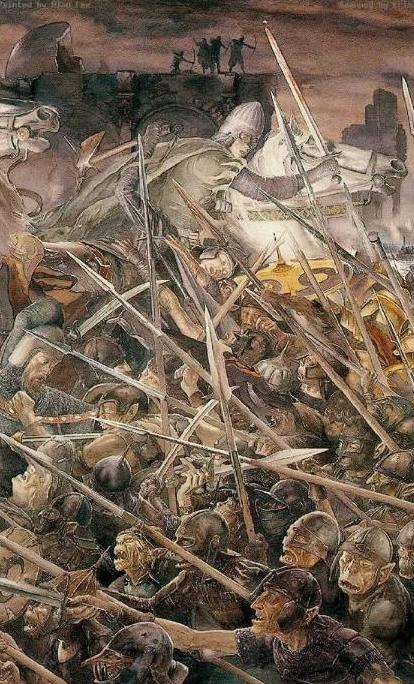
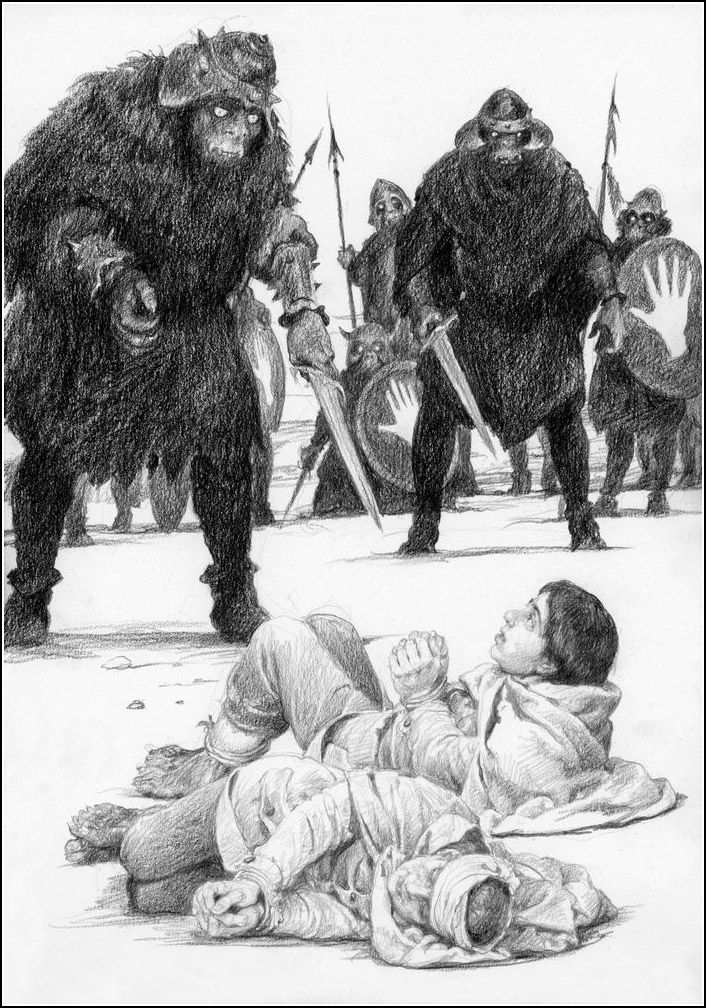
Merry and Pippin are in trouble.  Separated from their companions in their search for the missing Frodo, they tangle with a band of Orcs, witness the fall of Boromir,

and are carried off, eastwards, towards Saruman’s lair, at Isengard.

As they are driven on by the orcs, there are occasional pauses for breath and, at one point, Pippin is handed a meal:

“An Orc stooped over him, and flung him some bread and a strip of raw dried flesh.  He ate the stale grey bread hungrily, but not the meat.  He was famished but not yet so famished as to eat flesh flung to him by an Orc, the flesh of he dared not guess what creature.”  (The Fellowship of the Ring, Book Two, Chapter 3, “The Uruk-hai”)

The grey bread, in fact, may not necessarily have been grey from age—rye flour when baked into loaves can have a natural grey look—

As for the dried meat, I always think of something like South African biltong,

but Pippin is right to be suspicious, remembering the previous words of Ugluk the captain of the Uruk-hai:

“We are the servants of Saruman the Wise, the White Hand:  the Hand that gives us man’s-flesh to eat.”

As much as they often seem more like hordes of goblins (Tolkien blends goblins and Orcs together after The Hobbit)

than drilled troops, the Orcs, however, at least Saruman’s Uruk-hai, are actually war-bands of soldiers with some discipline(as Ugluk says, when some of Sauron’s Orcs complain about his plans:  “By the White Hand!  What’s the use of sending out mountain-maggots on a trip, only half trained.”)  We can imagine then that what is tossed to Pippin is actually a typical Orc military ration, containing the sorts of things which possess some nourishment, are portable, and which can keep for a long time.

Since the days of the Romans, a major issue for standing armies has been how to feed soldiers on campaign.  The Romans issued their soldiers with some basics, including grains of various sorts, which the soldiers would grind into flour in portable hand-mills

and bake into various basic forms of bread, sometimes being something like modern pita

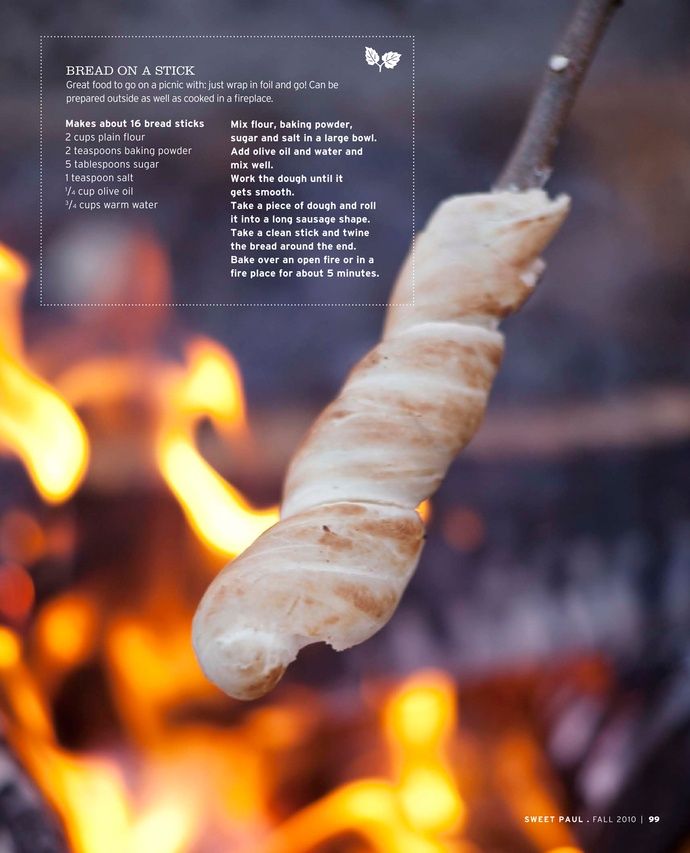
or even so-called “campfire bread”—dough wrapped around a stick.

(for a good introduction to Roman military eating, see:  https://www.roman-reenactor.com/roman%20military%20bread%20making.html )

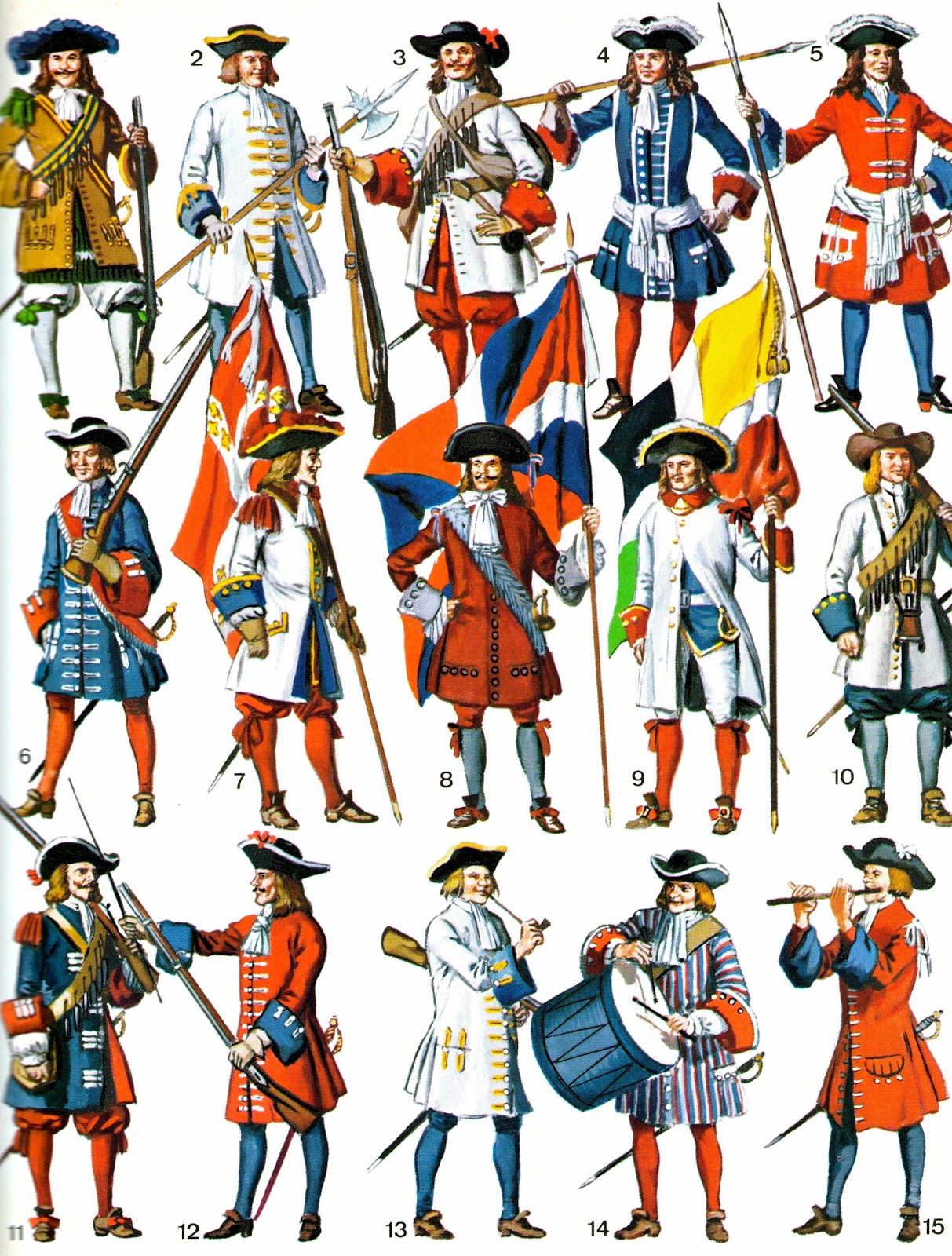
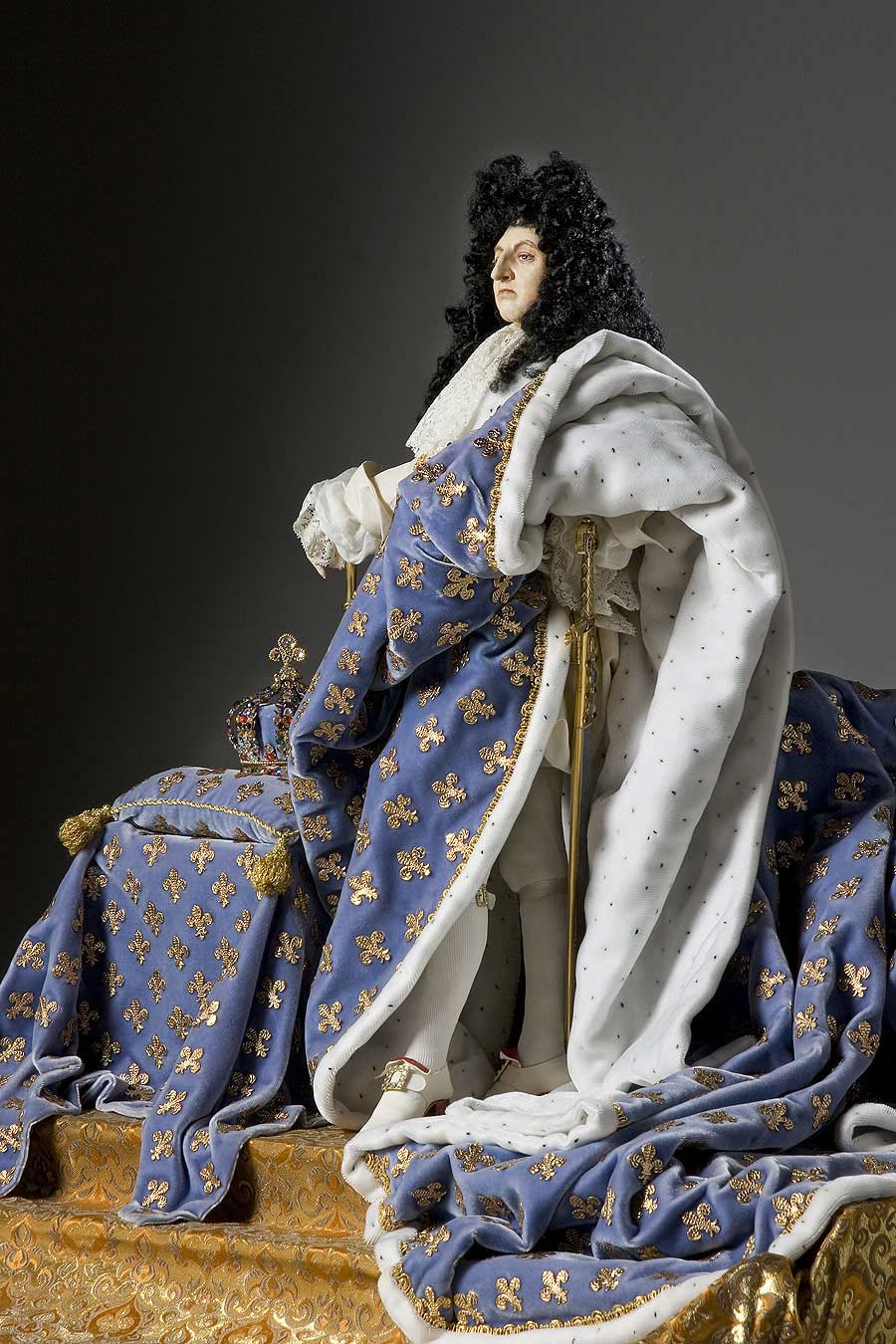
Such large, organized, and permanent armies wouldn’t appear again in Europe until the 17th century, when monarchs like Louis XIV (1638-1715),

eager to extend their reach—and their territory—would begin to build bigger and bigger forces.

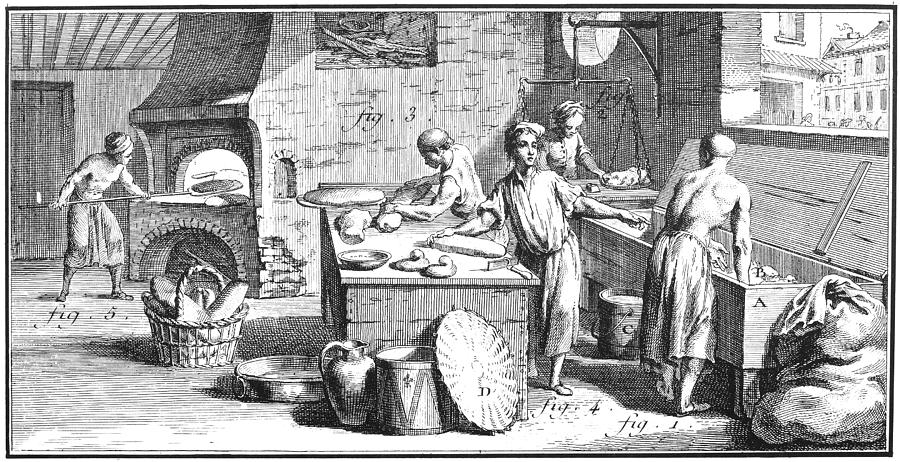
Then the same problem which challenged the Romans arose once more–how to feed armies on the march–and part of the solution was to establish depots along the major military routes, with bakeries attached, so that soldiers could be issued fresh bread every few days as they passed such depots on their way into the field.

Another possibility was to develop portable ovens, which could march along with the troops and, when they stopped, the ovens could be stoked and bread could appear for evening meals.

A third possibility would be to develop some sort of long-lasting bread, something which could be stored for long periods without losing at least some of its nutritive value.  As sailors began to make longer and longer voyages from the days of the Age of Discovery on, this was a problem for mariners as well as for soldiers and the solution was what was called “ship’s biscuit”, a hardened version of a mixture of salt, water, and flour.

With such basic ingredients, this would seem to have the potential to last forever, but there was one problem:  not only did sailors eat these cracker-like things, but so did weevils—

(Here is a little scene from Peter Weir’s wonderful film, Master and Commander, where you can see both biscuit and bugs:  https://www.youtube.com/watch?v=Y-aPp7Kiiyg )

These horrible little passengers actually came from the flour out of which the biscuits were made

and can be evident in several stages, from larvae to six-legged insects.  For something on the disposal of them, see this little documentary presented by the ship’s cook of the Cutty Sark, a famous tea clipper:  https://www.youtube.com/watch?v=5Onem-n-y64

Ship’s biscuit supplied sailors on long voyages.  With its alternate name of “hard tack” or “hard crackers” or, as governments called it, “army bread”, it was baked, packed,

and shipped to feed soldiers in the US Civil War.  Just like its naval cousin, it would seem to last forever, but, just like that cousin, it was prone to bugs and, just as bad, it soon became very hard on the teeth

—and this in a world where dentistry was just beginning to become a medical science (although details like scrubbing hands and instruments after each operation would only appear later—and slowly—in the 19th century).

Pippin—and Merry—were handed an Orc ration issued to its soldiers by the Sauronic or Sarumanic government, but there was an alternative in Middle-earth and both of the Hobbits had tasted it:  lembas.

Because it clearly is similar to something like hard tack, Gimli mistakes it for cram, which he describes as “such as the Dale-men make for journeys in the wild.”  He is corrected by the Elves, who tell him that it has a like purpose, “But we call it lembas or waybread, and it is more strengthening than any food made by Men, and it is more pleasant than cram, by all accounts.”  (The Fellowship of the Ring, Book Two, Chapter 8, “Farewell to Lorien”)

More than once, we see this waybread sustaining characters, even in the worst of circumstances, as on the final, nearly-fatal, slog to Mt Doom, where the narrator says of Sam:

“As for himself, though weary and under a shadow of fear, he still had some strength left.  The lembas had a virtue without which they would long ago have lain down to die.  It did not satisfy desire, and at times Sam’s mind was filled with the memories of food, and the longing for simple bread and meats.  And yet this waybread of the Elves had a potency that increased as travelers relied on it alone and did not mingle it with other foods.  It fed the will, and it gave strength to endure, and to master sinew and limb beyond the measure of mortal kind.”  (The Return of the King, Book Six, Chapter 3, “Mount Doom”)

Tolkien so believed in this inherent spiritual quality that, seeing it turned into a “food concentrate” in an early proposed film script (which he clearly hated—I think that some of the strongest language in Letters appears here), he wrote:

“We are not exploring the Moon or any other more improbable region.  No analysis in any laboratory would discover chemical properties of lembas that made it superior to other cakes of wheat-meal…In the book lembas has two functions. It is a ‘machine’ or device for making credible the long marches with little provision, in a world in which as I have said ‘miles are miles.’  But that is relatively unimportant.  It also has a much larger significance, of what one might hesitatingly call a ‘religious’ kind.”  (from a letter of June, 1958, to Forrest J. Ackerman, Letters, 274-275)

Although our breads—and they come in many different forms, from many different grains—

aren’t supplied by the Elves of Lorien, perhaps, in their ability to be the staff of our lives, we can see them as having a little of the spiritual quality of lembas?

As ever, thanks for reading,

Chew slowly and thoughtfully,

And know that, as always, there’s

MTCIDC

O

ps

For more on ship’s biscuit, see:  https://historiesoftheunexpected.com/magazine/the-unexpected-history-of-ships-biscuits/   This is from a really interesting website, Histories of the Unexpected, in which two very bright and witty men investigate, well, just about anything.  Warning:  this site could be addicting—once you listen to one podcast, can you stop?  https://historiesoftheunexpected.com/

In Mint Condition

04 Wednesday Aug 2021

Posted by Ollamh in Uncategorized

≈ Leave a comment

Welcome, as ever, dear readers.

A Nazgul

(By Anato Finnstark—I very much like the misty effect of the rider)

is prowling the Shire, asking about “Baggins”.

 He has made the mistake not only of trying to get information out of Farmer Maggot, but of trying to bribe him, when told that he’s in the wrong part of the Shire:

“ ‘Baggins has left,’ he answered in a whisper.  ‘He is coming.  He is not far away.  I wish to find him.  If he passes will you tell me?  I will come back with gold.’ “ (The Fellowship of the Ring, Book One, Chapter 4, “A Short Cut to Mushrooms”)

Although Maggot rejects that offer of gold, I found it interesting.  Where will he go to obtain such gold?  And what gold will it be?

Unfortunately, there is no answer in the text to either question.  If he’s not simply lying (who would trust a Nazgul?), he is on horseback, not on one of those dragon/pterodactyl mounts the Nazgul are fond of.

A trip back to Mordor for cash would take too long, then, when he’s in hot pursuit of Frodo.  This would suggest, if he is telling the truth, that he has a local source.  It will later become clear that Saruman has agents in the Shire, so perhaps Sauron does, too?

As to the second question, the Nazgul says, “gold”, so I presume he means not ingots,

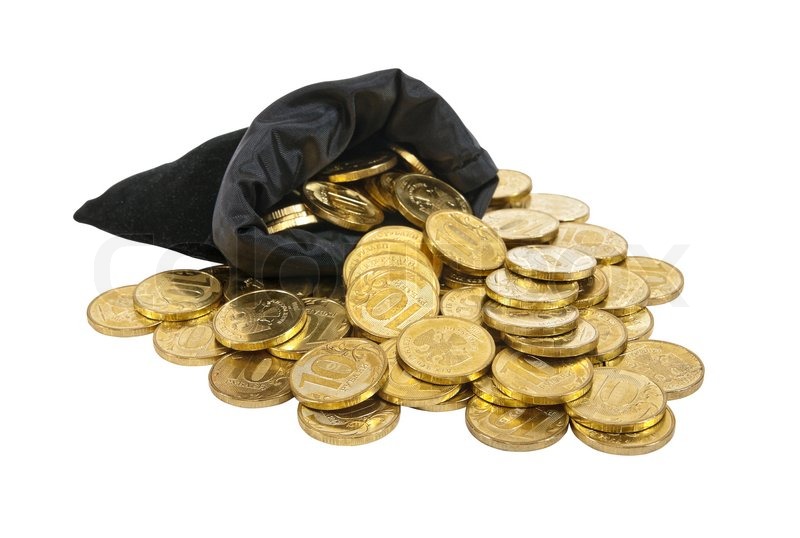
but coins of some sort.

But the question then arises, what kind of coins might these be?

Coins are mentioned a few times in The Lord of the Rings, including the price of Bill, the pony—“twelve silver pennies” (The Fellowship of the Ring, Book One, Chapter 11, “A Knife in the Dark”)—but I’m not aware that these coins are ever described in any detail—and whose coins are they and where do they come from? 

Because all such information is lacking, I imagine that the Nazgul, if telling the truth, has, somewhere, a sack of coins from Mordor itself—gold coins, at that.  Western Mordor, at least the part we see in Sam and Frodo’s travels, seems utterly barren,

but Sauron has armies to feed and the myriad horses and mules and oxen needed to carry such armies beyond his gates, and that food and those beasts have to come from somewhere.  Even if we presume that much can be produced from green lands beyond the Sea of Nurnen, Sauron has allies farther south in Harad, suggesting that he has commerce of some sort with them and, as we know from those twelve silver pennies, Middle-earth appears not to be based upon a barter-system.

So what would such coins look like?

The earliest Western coins came from Lydia in western Asian Minor in the 7th century BC and carried on the obverse (the front) the images of bulls and lions.

Alexander the Great’s father, Philip II, seems to have been the first to put his own profile on a coin,

but that appears to have set a precedent for later rulers, with Julius Caesar being perhaps the first Roman to stamp his profile on his currency.

(This is rather an ironic coin, showing Caesar on the obverse and describing him as “dictatore perpetuo”—“being dictator for life”, a position he held for only a couple of months before he was murdered.)

You’ll notice that Caesar, like Philip before him, doesn’t wear an elaborate crown of some sort, like Darius on this early Persian coin,

but, instead, has only a simple wreath (not so modest, in fact, since, because it was used in sporting events, it could suggest that Philip—and Caesar after him—was a champion at being a ruler).  When the Carolingians began their own currency, in the later years of the 8th century AD in what we might think of as “France+”, they adopted a Roman model and so here’s their greatest ruler, Charlemagne (748-814 AD), looking more like a Roman emperor than a Germanic king, which is exactly what he intended.

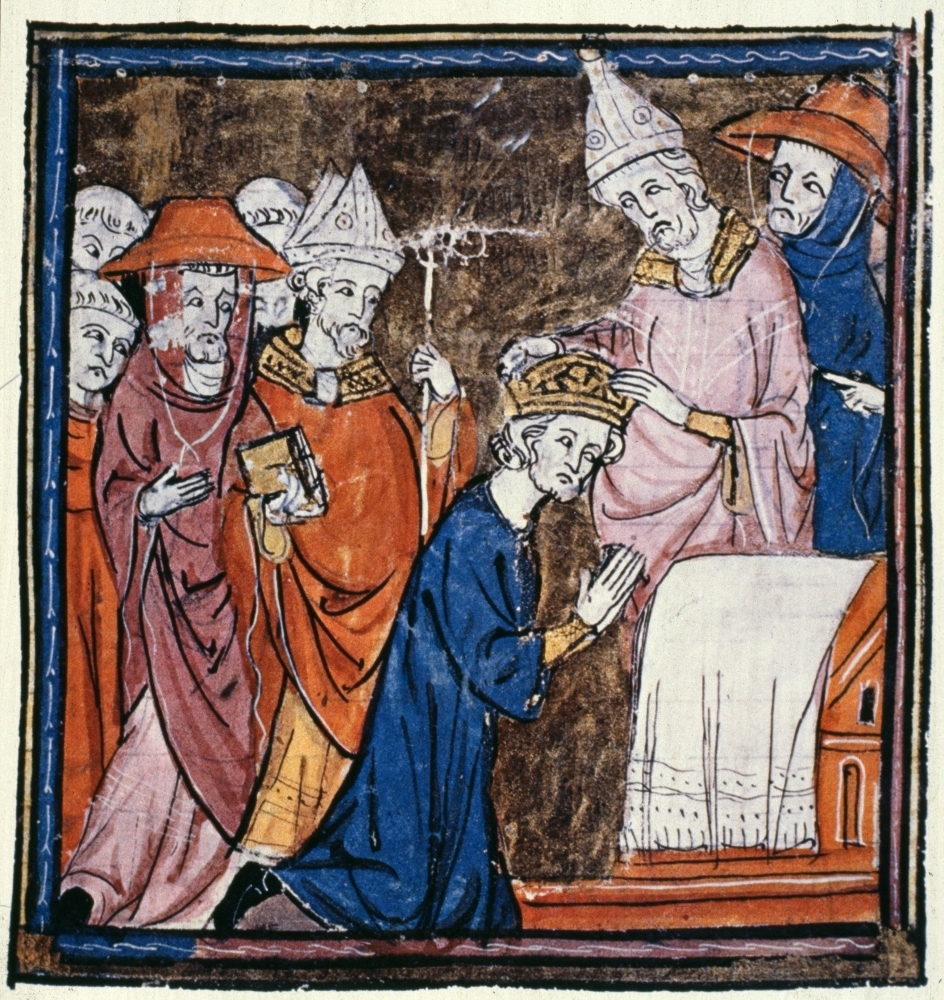
This is, by the way, a silver denarius—a silver penny, just like those paid to Bill Ferny–and it’s just packed with information.  First, of course, is the portrait itself, with the ruler in profile (a tradition still in force on coins today), wreath of office firmly on his head.  And, because virtually no one would ever see Charlemagne himself, there’s his name, in a kind of Germanic Latin spelling, “Karolus”.  (Karl/Carl was his actual name.  What we use is a kind of name + title—Charl-le-magne—Charles le Magne, “Charles the Great”, which dates from a later time.)  Beyond his name are two important abbreviations:  IMP “emperor” and AUG “augustus”.   When Pope Leo III had crowned Charlemagne in Rome on Christmas Day, 800 AD,

(This is from the 14th-century Grandes Chroniques de France, so the artist had no idea of the wreath, when it came to an accurate depiction of imperial headgear.)

he named him Imperator Romanorum, “Emperor of the Romans”, which, in fact, implied that Charlemagne was the successor to the last Byzantine emperor, Constantine VI, whom the Western world thought of as the “Roman emperor”, being the ruler of the surviving half of the old Roman empire.  Charlemagne never controlled that eastern empire, but it was a grand claim and Charlemagne was a grand (and very successful) ruler.  To Imperator, Charlemagne added Augustus, the most famous of Roman emperors (63 BC-14 AD),

and (according to Augustus himself), the restorer of Rome to former glories, implying that he, Charlemagne, was the new Augustus.  We might think that Charlemagne is also making a reference to the period after Diocletian (c.244-311 AD)

had divided the original Roman empire into two halves, each ruled by a co-emperor called an “Augustus”, suggesting that he is the actual monarch of the western half of the empire, even while claiming to be the emperor of the eastern half.  (The “M” under Charlemagne’s profile, by the way, stands for one of the government’s mints, that at Mainz.)

With such bold claims on the obverse, we see a different picture on the reverse (the back).  Here is depicted, it is now thought, the aediculum, the “little building” which the emperor Constantine had built over what he believed to be the tomb of Jesus in Jerusalem (c.326 AD) and, around it are placed the words religio xristiana, “Christian religion”.  Many of the peoples at the edges of Charlemagne’s empire were still worshippers of other, older gods and one of the goals of his imperial expansion was to expand Christianity, as well.  Depending upon your position, then, this might be a reassurance that Charlemagne was a firm supporter of your faith, or, should you be an older believer, that things were going to change under his rule.

With all of that behind us, what can we see as one of the Nazgul’s promised gold coins?

Let’s begin with a blank.

As we’ve seen, it’s a long tradition to place one’s kingly profile on the obverse, but what is Sauron’s profile?  As originally one of the Maiar (under the name Mairon), Sauron had no permanent form, being a spirit who could put on forms as needed, which Sauron did, over time.  After his defeat and loss of the Ring at the end of the Second Age, however, he doesn’t seem to have re-embodied himself as, for example, Gandalf and Saruman did, instead choosing a kind of symbolic form, which suggested eternal (menacing) vigilance, like Big Brother in Orwell’s 1984—

This image then turns up everywhere his subjects go, from shields

to graffiti on public monuments.

(At the Cross-roads, by Ted Nasmith–one of my favorite Tolkien artists, especially because he often chooses to illustrate scenes no one else has–and with a real sense of place.)

So, imagine that the obverse has, at its center, the Lidless Eye.

Coins like Charlemagne’s and Caesar’s and even Philip’s include the ruler’s name:   Karolus, Caesar, though Philip’s name has a genitive—possessive—ending, “Of Philip”.  We might assume that that simply means that the coin is his, but we might also see a more ambiguous message:   everything behind this coin—the metal mine, the mint, the power to control such things–all belongs to him—and maybe that’s true even of the holder of the coin, as well.

But Caesar is called “dictator for life” and Charlemagne “emperor” and “augustus”—what should Sauron’s title be? 

When the heralds of Gondor summon him at the Morannon, he is referred to as “the Lord of the Black Land” (The Return of the King, Book Six, Chapter 10, “The Black Gate Opens”), which seems a little meek.  When the Mouth of Sauron arrives for a parley, he refers to him as “Sauron the Great”, which is I’m sure how Sauron refers to himself, so this would give us two possibilities.  Around the Eye it might read:  SAURON LORD OF THE BLACK LAND or SAURON THE GREAT.

Philip gives his name in his native Greek and Caesar naturally uses his native tongue, Latin, for his inscription.  Although Charlemagne spells his name, as I’ve noted, somewhat Germanically, using a K for a Latin C (not surprising—his Frankish ancestors were Germanic tribesmen who invaded northern France—hence the name “France”), his inscription is an imitation of a Roman imperial coin, with his titles in Latin inscriptional shorthand.  In what language would the inscription on Sauron’s coin be in?  If he wanted it to be read in contemporary Middle-earth, we might think he would use the common tongue, written out in Tengwar.

If he wanted to suggest something more powerful—and mysterious?—he might use Tengwar, but the words might be in the Black Speech, rather like the inscription on the Ring.

With the eye and one of those two labels on the obverse, what would be on the reverse?

The center of Sauron’s power—his capital—is the Barad-dur, the Black Tower, so I could easily see it represented there, with no inscription, simply a single figure of menace (in John Howell’s image).

As always, thanks for reading and

So, replaying the scene where the Nazgul tries to tempt Farmer Maggot, perhaps we can see the Nazgul, rather than promising a future reward, tossing one such coin to land at the Farmer’s feet, hissing, “And more to come, if you will tell me.”

Stay well,

Remember that all that glisters is not gold,

And know that, as ever, there’s

MTCIDC

O

 ps

If you would like to read more about Middle-earth and currency, please see the postings for 19 April (“Spare Change?”) and 26 April (“Hoarders”), 2017.

Placing a Name, Naming a Place

28 Wednesday Jul 2021

Posted by Ollamh in Uncategorized

≈ Leave a comment

Welcome, dear readers, as ever.

For me, one of the many pleasures of The Lord of the Rings is its landscape—not just that map which caused Tolkien so many hours of worry, but all of the places on it with all of their names, each clearly made with care and attention to linguistic detail, beginning with the creation of the Shire and all it contains, but moving beyond it to encompass the whole of Middle-earth.  As he explained in a letter to Rayner Unwin:

“Yet actually in an imaginary country and period, as this one, coherently made, the nomenclature is a more important element than in an ‘historical’ novel.” (Letter to Rayner Unwin, 3 July, 1956, Letters, 250)

And yet, for all of that care, Tolkien the story-teller never draws attention to that naming.  As in any country, especially a very old one, as the Shire and, in turn, Middle-earth, are meant to be, the names are just that and, like the land itself, they have become worn-down natural features.  As JRRT himself writes in that same letter to Rayner Unwin:

“Actually the Shire Map plays a very small part in the narrative, and most of its purpose is a descriptive build-up.”

It’s always been a disappointment, then, to me that the main ancient telling of the story of Jason and the Golden Fleece

fell into the hands of a man who, unlike JRRT, was not the poet to tell such a romantic story, but was, instead, Apollonius of Rhodes (first half 3rd Century BC),

whose narrative, The Argonautica,

(This is a very early printed version, from 1521.)

is laid out in 4 books:  two to get Jason to his goal, Colchis,

one for a romance with Medea, the daughter of the nasty local king,

(shown here in a later murderous moment)

and one for grabbing the Fleece (and Medea)

and heading for home on a trip which includes, besides touring the Danube valley, carrying their ship, the Argo, across a desert.

This is a story with a typical folktale beginning:  Pelias, half-brother of Aeson, has overthrown Aeson and taken over the throne of Iolcus.  Now, Aeson’s son, Jason, is coming back to Iolcus, and uncle Pelias has been warned by an oracle to beware of a man wearing one sandal.  Jason, in fact, has just lost one of his, when he carried an old lady across a stream.

(Because there is an old folktale under this, that’s not really an old lady, it’s the goddess, Hera, in disguise, to test Jason—he obviously passes and she will help him throughout the rest of the story.)

Pelias, to get rid of Jason, gives him a quest:  bring back the Golden Fleece from the far side of the world.  (Without going into more detail, suffice it to say that the Fleece was on a flying escape ram piloted by Phrixus, along with his sister, Helle, who are—what else?  escaping the plots of an evil stepmother.)  This is meant to be an impossible task and Pelias has every expectation that Jason will not return, with or without the Fleece.

(This is the elaborate back of a 2nd century AD Roman mirror.)

What has always frustrated me about this telling is that, potentially, it’s packed with interesting adventures—harpies,

mobile cliffs,

Amazons,

not to mention the fact that the Fleece itself is guarded by a sleepless dragon.

But, although he writes about these things, what really seems to interest Apollonius aren’t such epic challenges, but the origins of place names along Jason’s route.  This toponymy—the study of which comes, appropriately, from two Greek words, topos, “place” and onoma, “name”—then turns the narrative at times into a kind of geographic/mythological check list and so we spend what sometimes feels like half the trip forced to listen not to another Homer, but to a rather pedantic tour guide.

There are those scholars who have, in recent years, argued that Apollonius never intends to be another Homer and, coming from a later age of Greek literature (the so-called Hellenistic Era), he has different goals and, while this could certainly be true, for me, an epic story like this should be epic, not microscopic.

Tolkien, in contrast, although he spent so much time creating those place names and attaching them to geographical features, still sees them as simply part of the “build-up”, that is, the physical context in which his characters move.

I want to emphasize, however, that, although Apollonius may overfocus on toponymy and sometimes weigh his story down with it, this isn’t to argue that toponymy in itself is a dull subject:  on the contrary, it’s a very interesting subject and Tolkien was certainly one of those interested, once writing to his son, Christopher, that “I like history, and am moved by it, but its finest moments for me are those in which it throws light on words and names!”  (letter to Christopher Tolkien, 21 February, 1958, Letters, 264)

This isn’t surprising as JRRT, with his keen ear and eye for language, lived in an England whose very  history could be traced in broad terms in the strata of its toponymy.  Traces of its Celtic settlers barely survive, but some place and river names, like the Avon, reflect the language of the pre-Roman inhabitants (afon meaning “river”).  Roman occupation in all its might appears in every place with “chester/cester/caster” as an ending, from Latin castra, “military camp”.  The Anglo-Saxons are everywhere with endings like -ton (old tun, “enclosure”) and -hurst (hurst, “clearing”).  Though there are many fewer Norman names, we can still see traces of their take-over in a compound like Ashby-de-la-Zouch, which I mentioned in my last as the scene of the great tournament in Scott’s Ivanhoe.  This name even adds a Viking element, by, “settlement”, to an Anglo-Saxon ash, “ash tree” together with the family name of the later Norman owners, the La Zouche family, who owned a nearby castle in the 13th century.  Putting all of these elements together gives us hundreds of years of medieval history, while also making a bold political statement:  “the settlement among the ash trees” it begins—and then, as if in large letters on a billboard on the way into the village—”NOW OWNED BY THE LA ZOUCHE FAMILY”.

(Just in case you don’t have an ash tree in your mental topography)

How little we would know about that place if it had simply been called “Ash” and I wonder what the Argonautica might have been like if, like Tolkien, Apollonius could have loved his toponymic trees, but let them stand as only a part of his narrative forest?

Thanks, as always, for reading,

Stay well,

Wherever you are, look at a place name and wonder,

And, as ever, know that there’s

MTCIDC

O

PS

With this, essay #363, doubtfulsea.com is now beginning its 7th year.  Years ago, a fortune teller (yes—a real one, a member of the really interesting Romani culture ), told me that my lucky number was 7, so I’m looking forward to another year full of essays about everything from epic to adventure to the occasional film review (I have the Jackson film of Mortal Engines first on my list) to whatever catches my interest and, if you’re a regular reader, you know that this means almost anything.

← Older posts
Newer posts →

The Doubtful Sea Series Facebook Page

The Doubtful Sea Series Facebook Page

  • Ollamh

Categories

  • Artists and Illustrators
  • Economics in Middle-earth
  • Fairy Tales and Myths
  • Films and Music
  • Games
  • Heroes
  • Imaginary History
  • J.R.R. Tolkien
  • Language
  • Literary History
  • Maps
  • Medieval Russia
  • Military History
  • Military History of Middle-earth
  • Narnia
  • Narrative Methods
  • Poetry
  • Research
  • Star Wars
  • Terra Australis
  • The Rohirrim
  • Theatre and Performance
  • Tolkien
  • Uncategorized
  • Villains
  • Writing as Collaborators
Follow doubtfulsea on WordPress.com

Across the Doubtful Sea

Recent Postings

  • The Damage of Dragons March 11, 2026
  • Encouragement March 4, 2026
  • Eavesdropping February 25, 2026
  • Do You Speak Villain? (Part 3) February 18, 2026
  • Do You Speak Villain? (2) February 11, 2026
  • Do You Speak Villain? (Part 1) February 4, 2026
  • Towering January 28, 2026
  • Tolkien Among the Indians January 21, 2026
  • Thin and Stretched January 14, 2026

Blog Statistics

  • 109,039 Views

Posting Archive

  • March 2026 (2)
  • February 2026 (4)
  • January 2026 (4)
  • December 2025 (5)
  • November 2025 (4)
  • October 2025 (5)
  • September 2025 (4)
  • August 2025 (4)
  • July 2025 (5)
  • June 2025 (4)
  • May 2025 (4)
  • April 2025 (5)
  • March 2025 (4)
  • February 2025 (4)
  • January 2025 (5)
  • December 2024 (4)
  • November 2024 (4)
  • October 2024 (5)
  • September 2024 (4)
  • August 2024 (4)
  • July 2024 (5)
  • June 2024 (4)
  • May 2024 (5)
  • April 2024 (4)
  • March 2024 (4)
  • February 2024 (4)
  • January 2024 (5)
  • December 2023 (4)
  • November 2023 (5)
  • October 2023 (4)
  • September 2023 (4)
  • August 2023 (5)
  • July 2023 (4)
  • June 2023 (4)
  • May 2023 (5)
  • April 2023 (4)
  • March 2023 (5)
  • February 2023 (4)
  • January 2023 (4)
  • December 2022 (4)
  • November 2022 (5)
  • October 2022 (4)
  • September 2022 (4)
  • August 2022 (5)
  • July 2022 (4)
  • June 2022 (5)
  • May 2022 (4)
  • April 2022 (4)
  • March 2022 (5)
  • February 2022 (4)
  • January 2022 (4)
  • December 2021 (5)
  • November 2021 (4)
  • October 2021 (4)
  • September 2021 (5)
  • August 2021 (4)
  • July 2021 (4)
  • June 2021 (5)
  • May 2021 (4)
  • April 2021 (4)
  • March 2021 (5)
  • February 2021 (4)
  • January 2021 (4)
  • December 2020 (5)
  • November 2020 (4)
  • October 2020 (4)
  • September 2020 (5)
  • August 2020 (4)
  • July 2020 (5)
  • June 2020 (4)
  • May 2020 (4)
  • April 2020 (5)
  • March 2020 (4)
  • February 2020 (4)
  • January 2020 (6)
  • December 2019 (4)
  • November 2019 (4)
  • October 2019 (5)
  • September 2019 (4)
  • August 2019 (4)
  • July 2019 (5)
  • June 2019 (4)
  • May 2019 (5)
  • April 2019 (4)
  • March 2019 (4)
  • February 2019 (4)
  • January 2019 (5)
  • December 2018 (4)
  • November 2018 (4)
  • October 2018 (5)
  • September 2018 (4)
  • August 2018 (5)
  • July 2018 (4)
  • June 2018 (4)
  • May 2018 (5)
  • April 2018 (4)
  • March 2018 (4)
  • February 2018 (4)
  • January 2018 (5)
  • December 2017 (4)
  • November 2017 (4)
  • October 2017 (4)
  • September 2017 (4)
  • August 2017 (5)
  • July 2017 (4)
  • June 2017 (4)
  • May 2017 (5)
  • April 2017 (4)
  • March 2017 (5)
  • February 2017 (4)
  • January 2017 (4)
  • December 2016 (4)
  • November 2016 (5)
  • October 2016 (6)
  • September 2016 (5)
  • August 2016 (5)
  • July 2016 (5)
  • June 2016 (5)
  • May 2016 (4)
  • April 2016 (4)
  • March 2016 (5)
  • February 2016 (4)
  • January 2016 (4)
  • December 2015 (5)
  • November 2015 (5)
  • October 2015 (4)
  • September 2015 (5)
  • August 2015 (4)
  • July 2015 (5)
  • June 2015 (5)
  • May 2015 (4)
  • April 2015 (3)
  • March 2015 (4)
  • February 2015 (4)
  • January 2015 (4)
  • December 2014 (5)
  • November 2014 (4)
  • October 2014 (6)
  • September 2014 (1)

Blog at WordPress.com.

  • Subscribe Subscribed
    • doubtfulsea
    • Join 78 other subscribers
    • Already have a WordPress.com account? Log in now.
    • doubtfulsea
    • Subscribe Subscribed
    • Sign up
    • Log in
    • Report this content
    • View site in Reader
    • Manage subscriptions
    • Collapse this bar
 

Loading Comments...