• About

doubtfulsea

~ adventure fantasy

Category Archives: Uncategorized

Staff/Staves

21 Wednesday Jun 2023

Posted by Ollamh in Uncategorized

≈ Leave a comment

“An aged man is but a paltry thing,

A tattered coat upon a stick, unless…”

(W.B. Yeats, “Sailing to Byzantium”)

As ever, welcome, dear readers.

“I dislike Allegory—the conscious and intentional allegory…” Tolkien once wrote in a letter to Milton Waldman of the publisher Collins (see letter to Milton Waldman, “late in 1951” in Letters, 145) so, although he was flattered by being included in the company of Spenser (see letter to Rayner Unwin, 13 May, 1954, Letters, 181), I wonder what he might have said about how this posting originated.  (I also wonder how he felt about his friend, C.S. Lewis’

1936 volume, The Allegory of Love.)

I have been slowly making my way through Edmund Spenser’s (1552-1599)

The Faerie Queene.
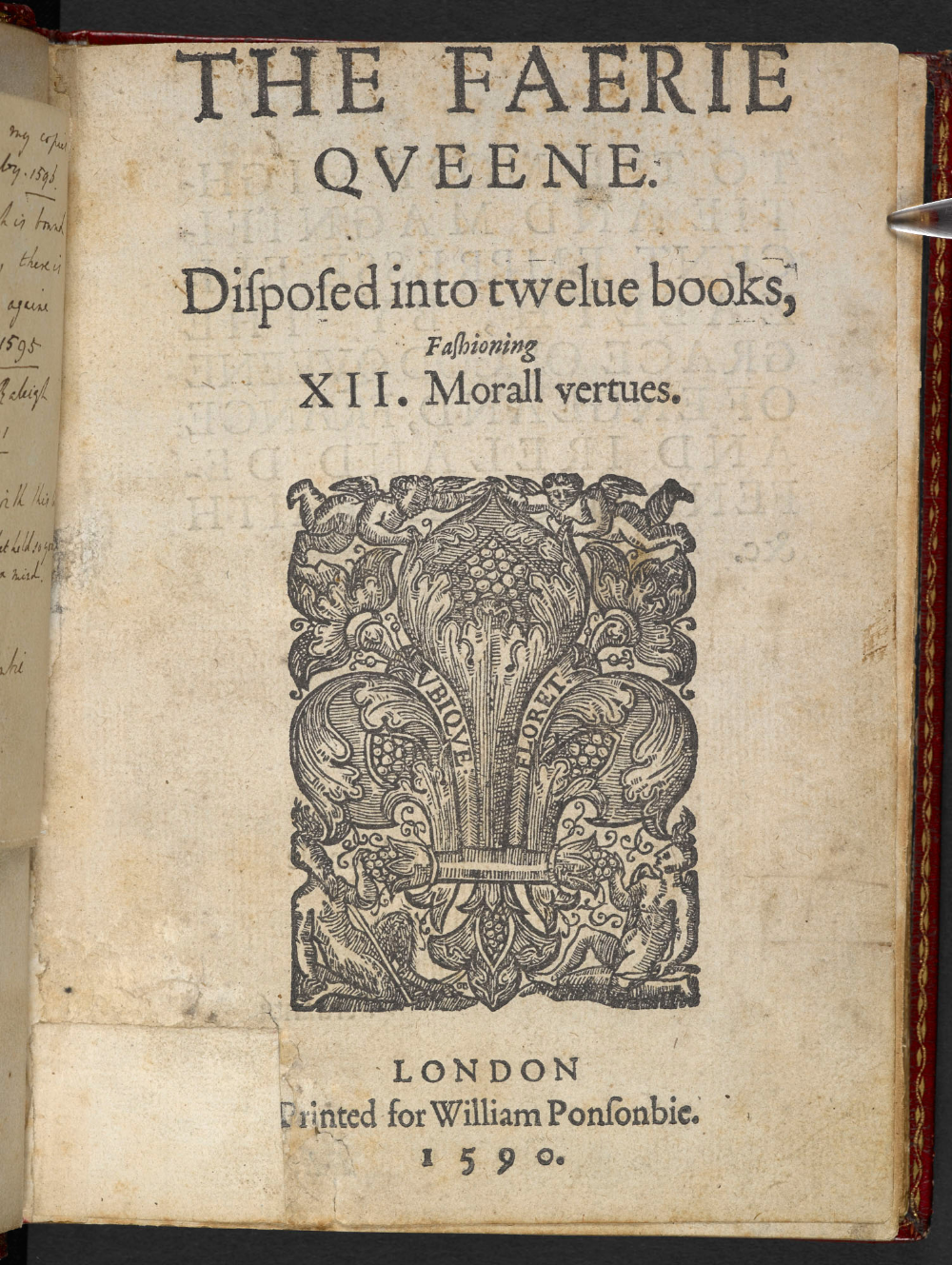
(This is the original 3-book publication of 1590—he then published a second 6-book edition in 1596, but never succeeded in completing his original 12-book plan.)

To say that it’s allegorical is about as understated as saying that Hamlet is about indecision or that Macbeth is about ambition gone wrong.  Spenser himself cheerfully described his work as “cloudily enwrapped in Allegoricall devises”, the whole purpose being “to fashion a gentleman or noble person in vertuous and gentle discipline” by embodying “the image of a brave knight, perfected in the twelve private morall vertues, as Aristotle hath devised…” (This is all extracted from his dedicatory letter to Sir Walter Raleigh).  His heroes are faced by figures with names like “Disdayne”, in books with subtitles like “The Legend of Sir Guyon.  Or Of Temperance”, suggesting that, whereas the volume as a whole is “cloudily enwrapped”, the episodes themselves are clearly all about testing various virtues.

I’ve just finished Book Two (that’s about 340 pages in—this is not a short work, even if only half-finished) and have followed the adventures of Sir Guyon and his adviser, called “the Palmer”

—that is, the pilgrim, as medieval pilgrims sometimes brought back souvenir palms from their arduous trip to the Holy Land.

Pilgrims could pick up other such souvenirs at various shrines, such as this badge, depicting the shrine of St Thomas a Becket, from Canterbury. 

Also characteristic of palmers/pilgrims was the staff, which could be used for everything from aiding in long hikes to chasing off potential robbers,

and it was this object which caught my attention.  At the end of Book Two, Sir Guyon finally defeats Acrasia (something like “Moralweakness”), an enchantress who embodies seduction and sensual pleasure and whose power turns men into beasts.  When Guyon destroys her bower, the Palmer uses his staff to turn such men back into themselves:

“Streight way he with his vertuous staffe them stroke,

And straight of beasts they comely men became…”

(The Faerie Queene, Book Two, Canto XII, Stanza 86—earlier in the Canto, the Palmer calmed the sea and its monsters with his staff)

This immediately reminded me, as I’m sure Spenser wanted me to be, of Odyssey, Book 10, where Circe had used a magical potion and her rhabdos, which commonly means a staff in Greek, like the staff which rhapsodes used to beat time when they recited epic, like the Odyssey,

to enchant Odysseus’ men.

(This appears to be an illustration from a late-Renaissance French illustration of the Odyssey and I love the caption:  “Companions of Ulysses in Piggly Form”.)

Odysseus himself was saved from this enchantment in part by the counsel of Hermes (his Roman name Mercury),
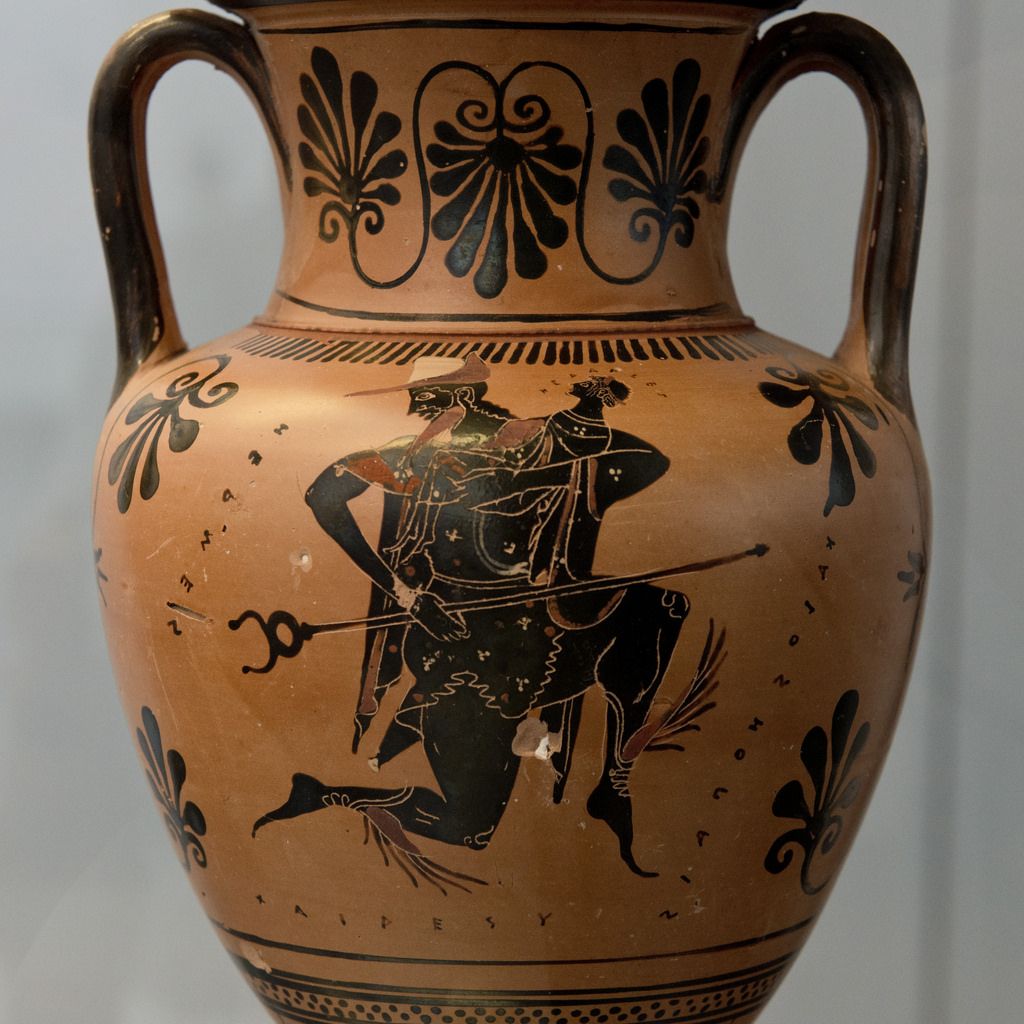
who carries his own staff, the kerykion (called by the Romans caduceus), and it’s surely no coincidence that Spenser tells us:

“Of that same wood it fram’d was cunningly,

Of which Caduceus whilome was made,

Caduceus the rod of Mercury,

With which he wonts the Stygian realms inuade,

Through ghastly horrour, and eternall shade;

Th’infernall feends with it he can asswage,

And Orcus tame, whom nothing can perswade,

And rule the Furyes, when they most do rage:

Such virtue in his staffe had eke this Palmer sage.”

(The Faerie Queene, Book Two, Canto XII, Stanza 41)

And these staves (the plural of staff) of power reminded me of another staff, of which its owner once said:

“I am old.  If I may not lean on my stick as I go, then I will sit out here, until it pleases Theoden to hobble out himself to speak with me.”

(The Two Towers, Book Three, Chapter 6, “The King of the Golden Hall”)

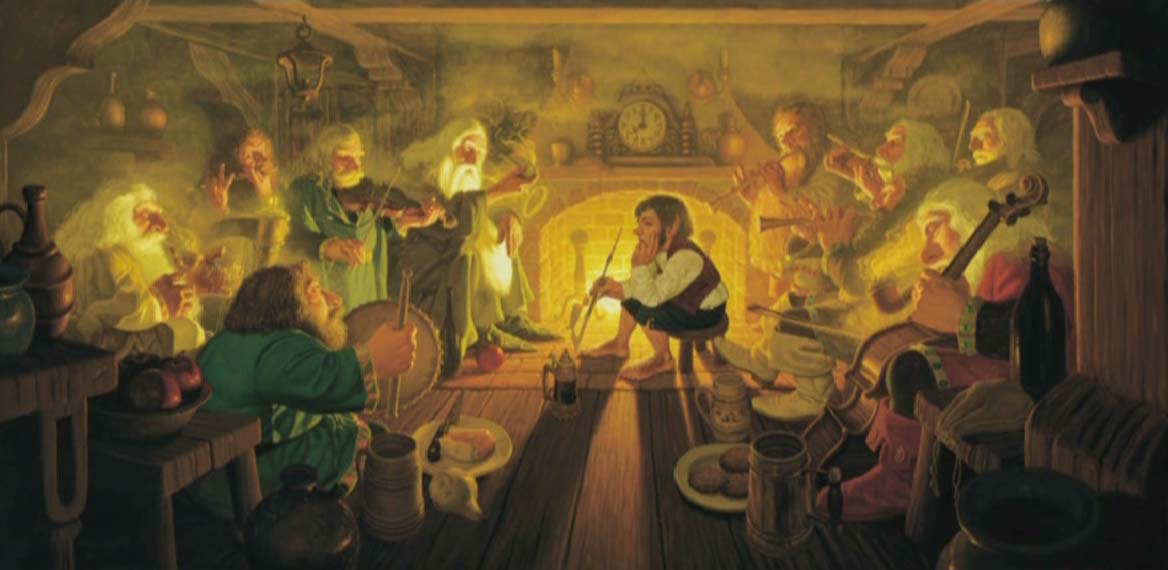
This is Gandalf, of course, who has been associated with that “stick” since we first saw him in Chapter One of The Hobbit.
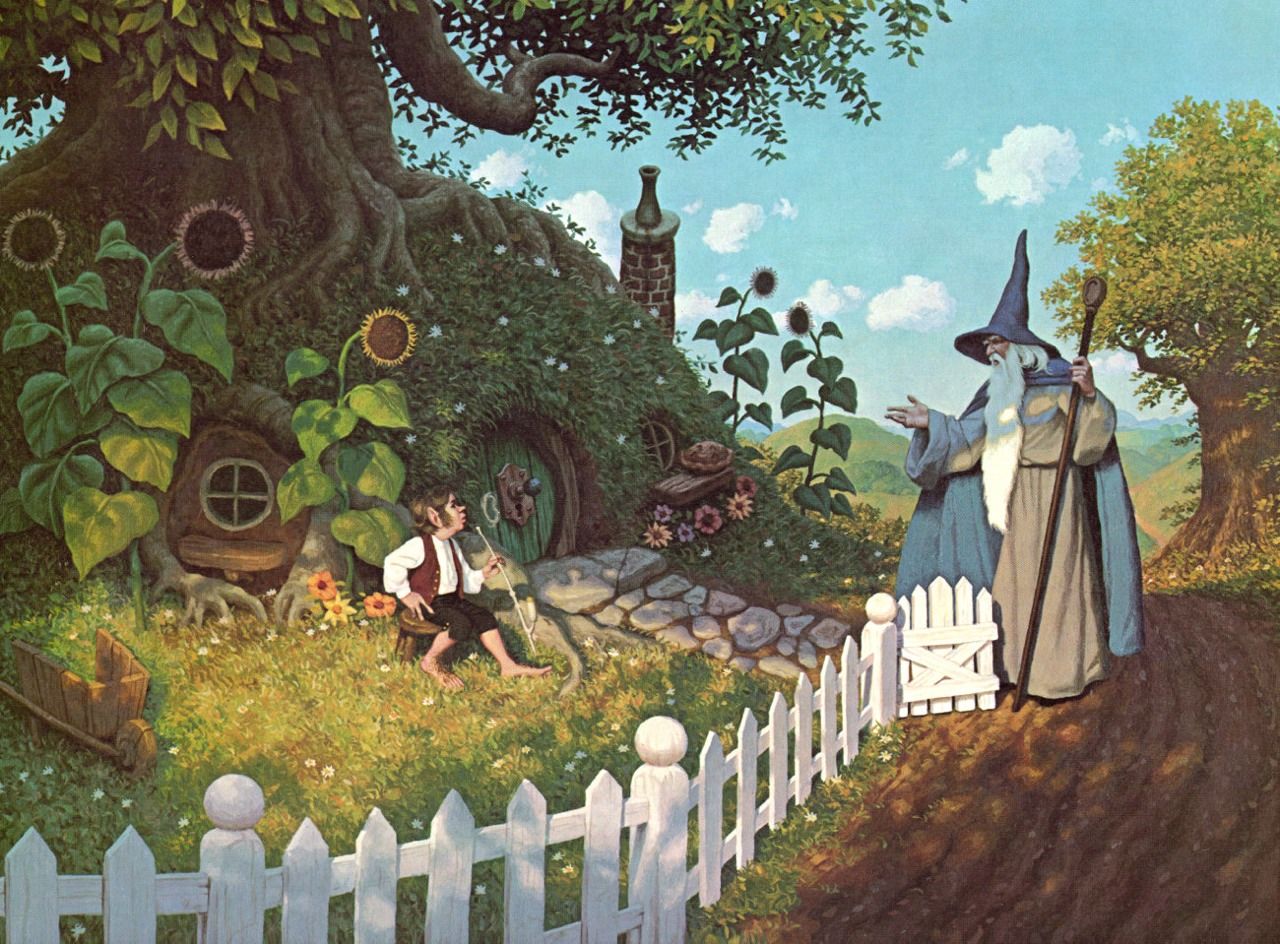
(the Hildebrandts)

Hama, the doorwarden, was, of course, correct in saying, “The staff in the hand of a wizard may be more than a prop for age…”  as Gandalf has previously broken the bridge of Khazan-dum in Moria with that very staff,
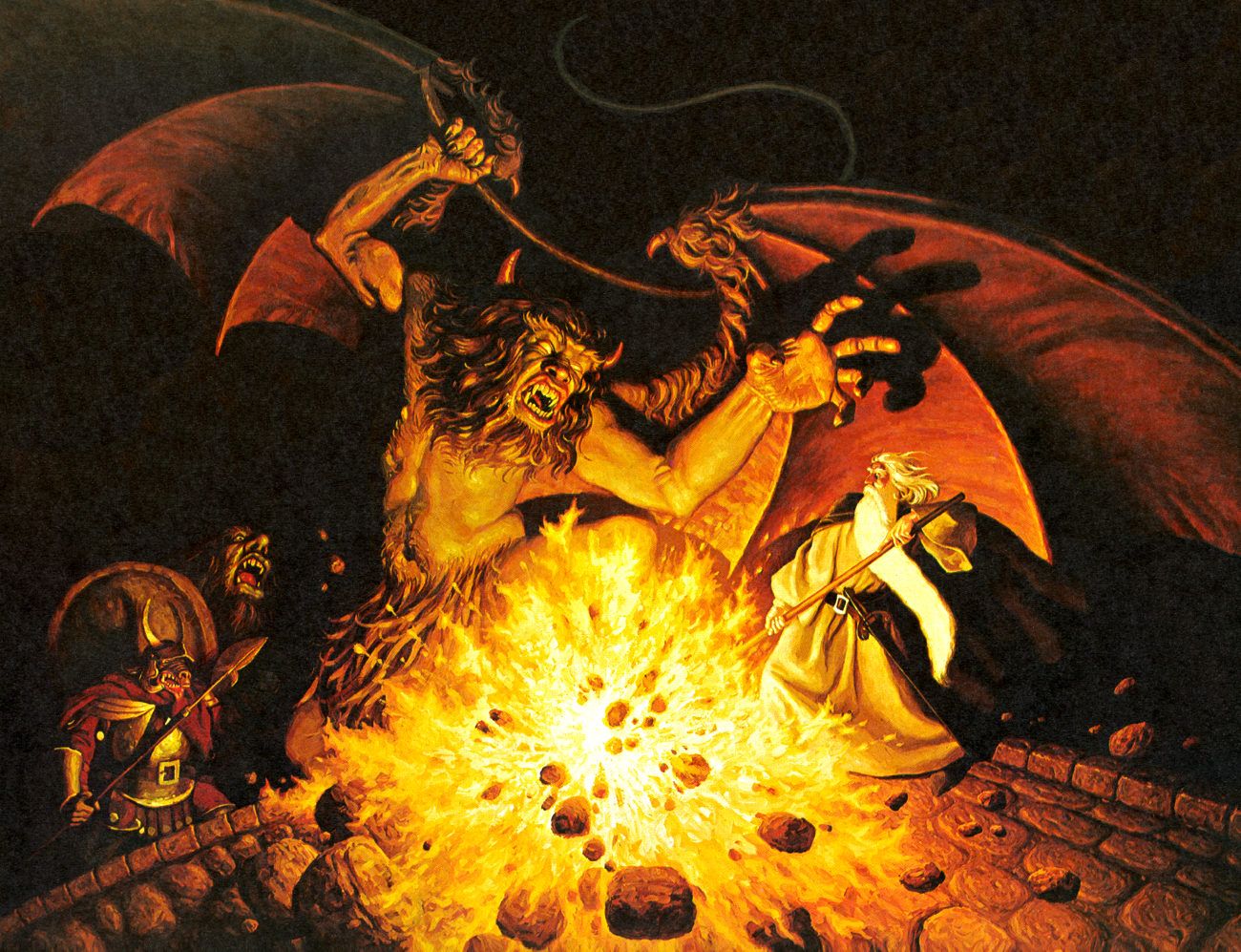
(the Hildebrandts)

and will knock Grima, Theoden’s treacherous counselor, flat with it.
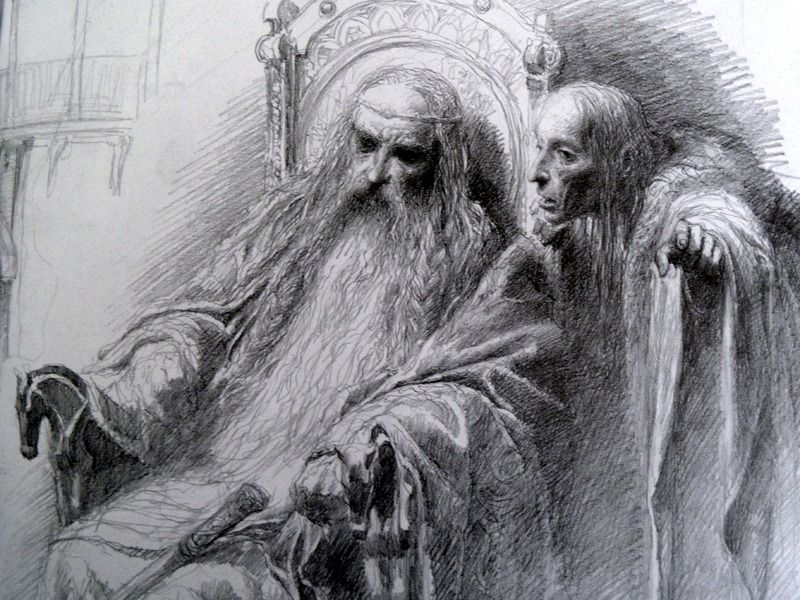
(Alan Lee)

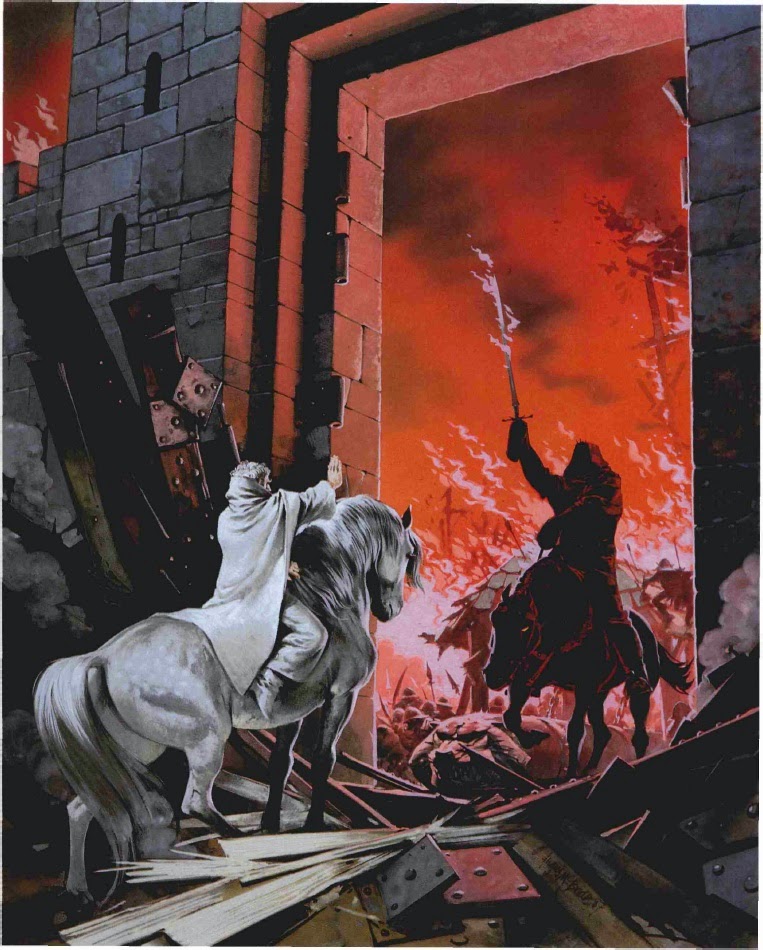
And, as Gandalf is aware of what lies in his staff, he knows the power and authority in Saruman’s staff, and so Gandalf will snap it, ruining Saruman’s ability to continue to work the evil he has planned.

(?  I don’t know the artist for this, alas!)

Seeing all of these staves, which are more than they appear at first, we might then complete Yeats’ lines like this:

“An aged man is but a paltry thing,

A ragged coat upon a stick, unless

That stick has something of a magic sting

Which only palmers—wizards, too—possess.”

Thanks, as ever, for reading.

Stay well,

If a palmer offers to guide you, stick with him,

And know that, as always, there’s

MTCIDC

O
On His Majesty’s (Dragon) Service

14 Wednesday Jun 2023

Posted by Ollamh in Uncategorized

≈ Leave a comment

As always, dear readers, welcome.

We know that Tolkien had an interest in dragons from an early age.  In a letter to W.H. Auden of 7 June, 1955, he explains:

“I first tried to write a story when I was about seven.  It was about a dragon.  I remember nothing about it except a philological fact.  My mother said nothing about the dragon, but pointed out that one could not say ‘a green great dragon’, but had to say ‘a great green dragon’.  I wondered why, and still do.” (letter to W.H. Auden, 7 June, 1955, Letters, 214).

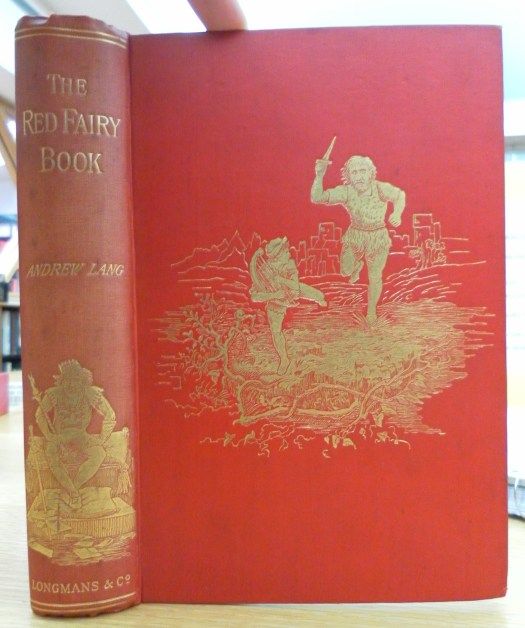
I suspect that this interest had been sparked by a book which we know was available to him in childhood:  Andrew Lang’s (1844-1912) The Red Fairy Book (1890),

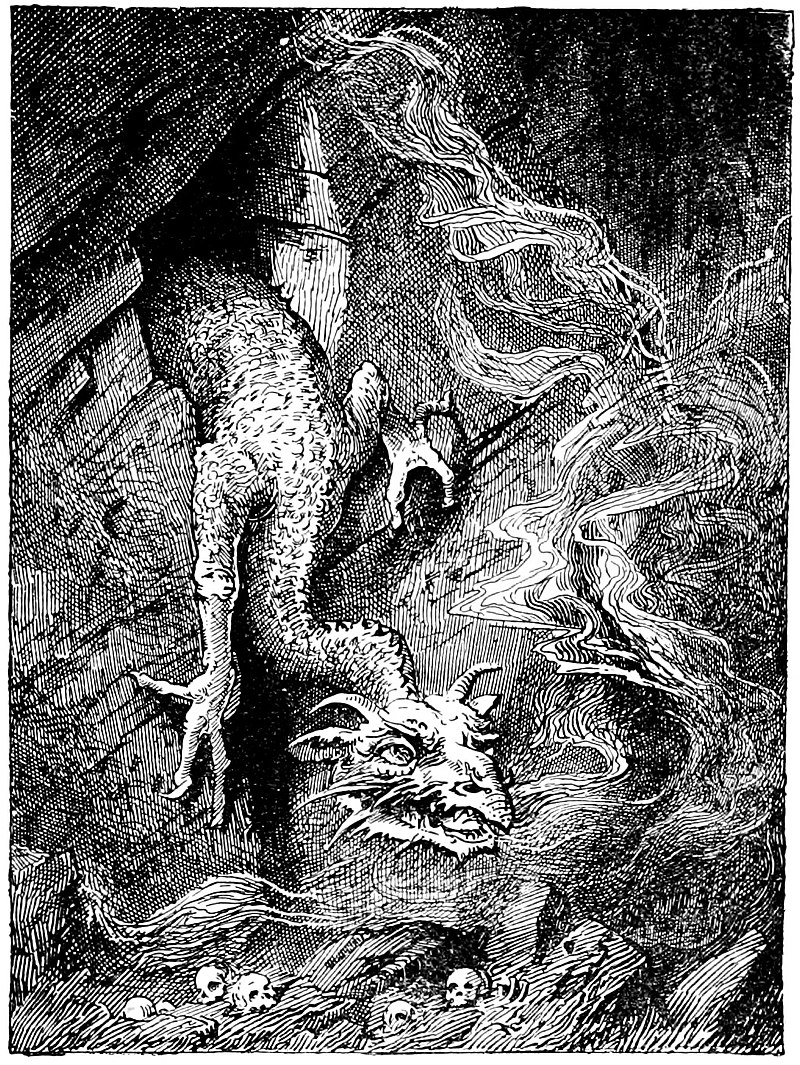
the last tale being “The Story of Sigurd”, in which the title character lies in ambush and kills a dragon, Fafnir.

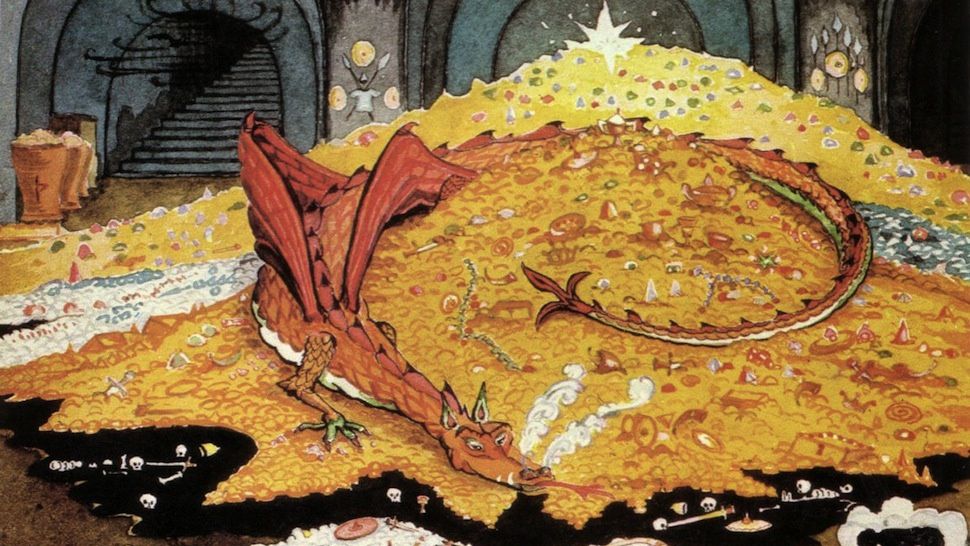
Fafnir has a trait which would be familiar to anyone who has read The Hobbit and remembers Smaug (could you forget him?):  he lies on a hoard.

This would also be familiar, of course, to anyone who knows Beowulf and, as JRRT tells us, that Old English poem was “among my most valued sources” for The Hobbit (see Letters,31).  It’s interesting to note, however, that Beowulf’s dragon, though fire-breathing  and covetous, like Smaug, is, in fact, mute, whereas Smaug is all-too-eloquent—as is, in fact, Fafnir, although his dialogue is limited to cursing his killer and putting a curse on his hoard, speech suggesting a further influence of The Red Fairy Book, perhaps.  (Here, by the way, is a copy of The Red Fairy Book for you:  https://en.wikisource.org/wiki/The_Red_Fairy_Book )

Unlike, JRRT, I’ve never had much interest in dragons and the reason may lie in my reaction to the statement I once read somewhere that “all kids love dinosaurs”.  I am constitutionally averse to any statement which says things like “all x loves—or hates—y” in general, but, in this case, it’s more personal:  I was one kid who never loved dinosaurs.

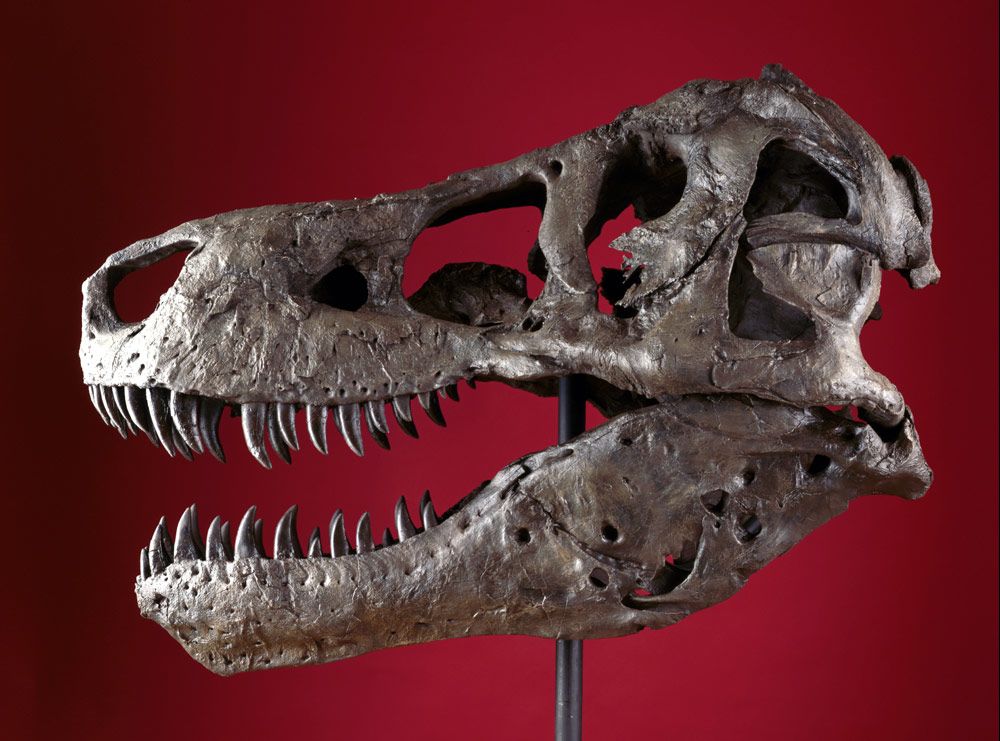
When small, I was taken to museums where very large and bony examples were on display

and yes, I would agree with whoever took me that they were very large.

(I love the original name of this one:  “Albertosaurus”, which makes me imagine an Irish member of the family—“Albert O’Saurus”)

At the same time, dinosaurs seemed to me to be pretty much just that:  large. 

(I’m aware that there were very small ones, too, but the ones I was being shown were pointed out for their size and potential fierceness—and just look at those teeth!)

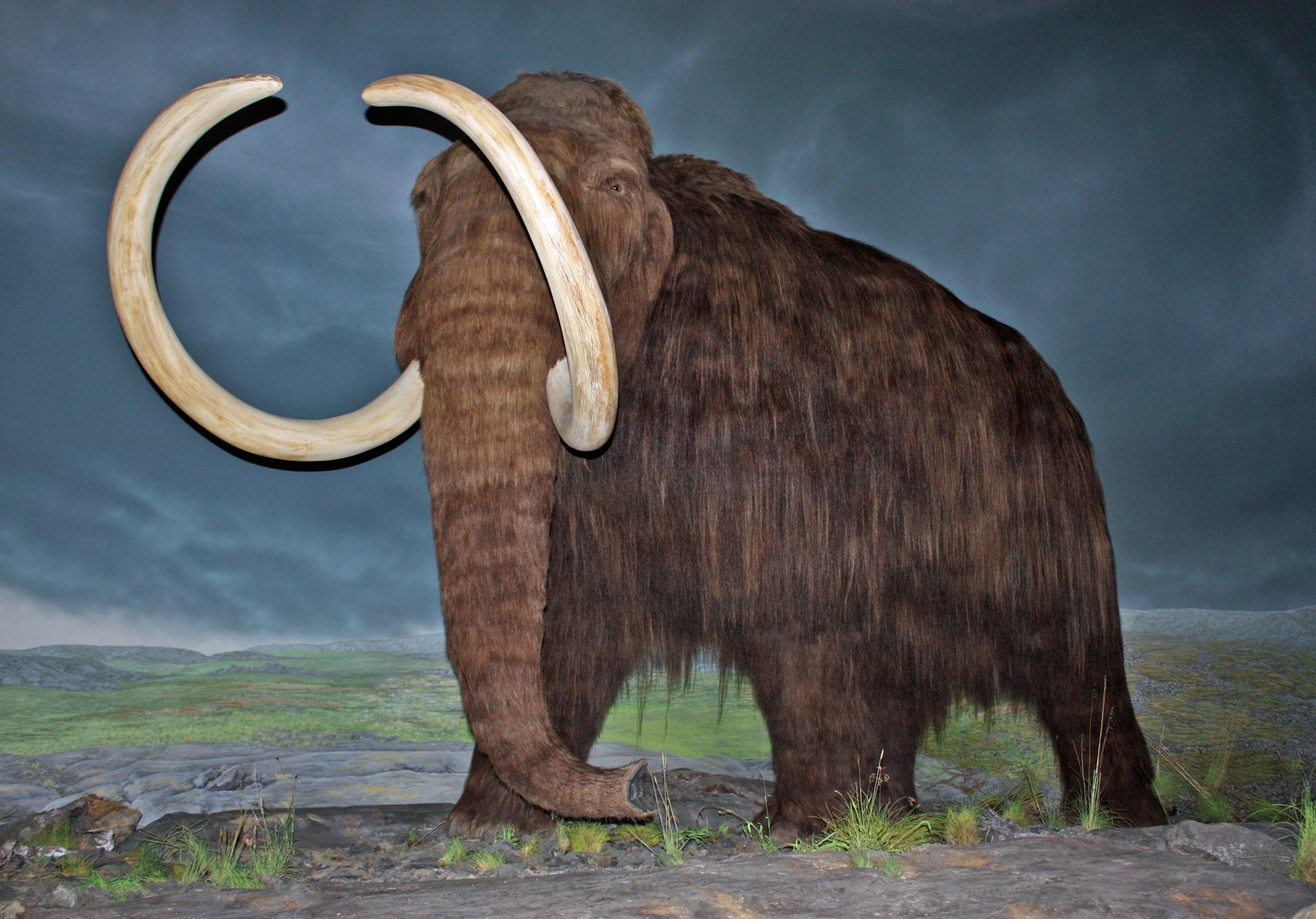
In fact, when it came to past beasts, my childhood favorite was the wooly mammoth

and once I even entered one in my school science fair, “frozen in ice” (it was an elephant model that I’d covered in glued-on hair and encased in a cardboard box covered in plastic sheeting—it didn’t win).

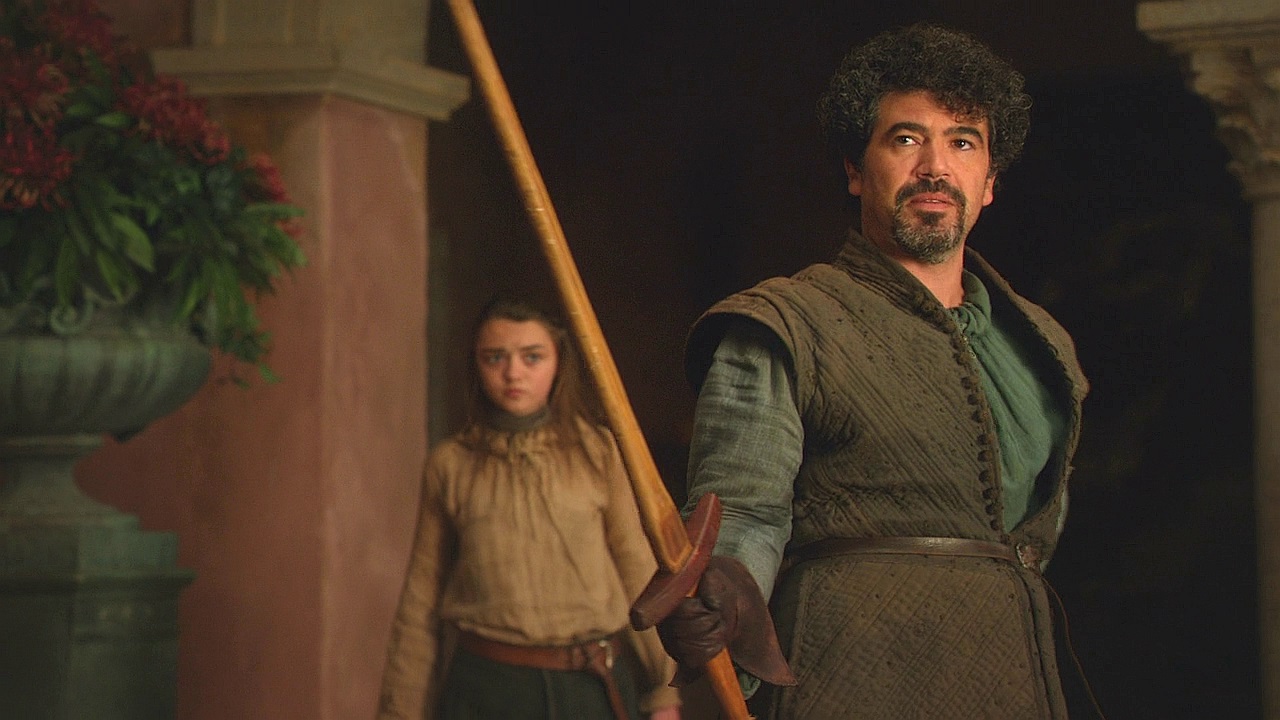
And maybe that’s why I’ve never been taken with dragons.  (I’m probably one of the few readers/viewers of A Game of Thrones, for example, who found Daenerys’ beasts less interesting than the fencing master, Syrio Forel—who was killed much too soon.)

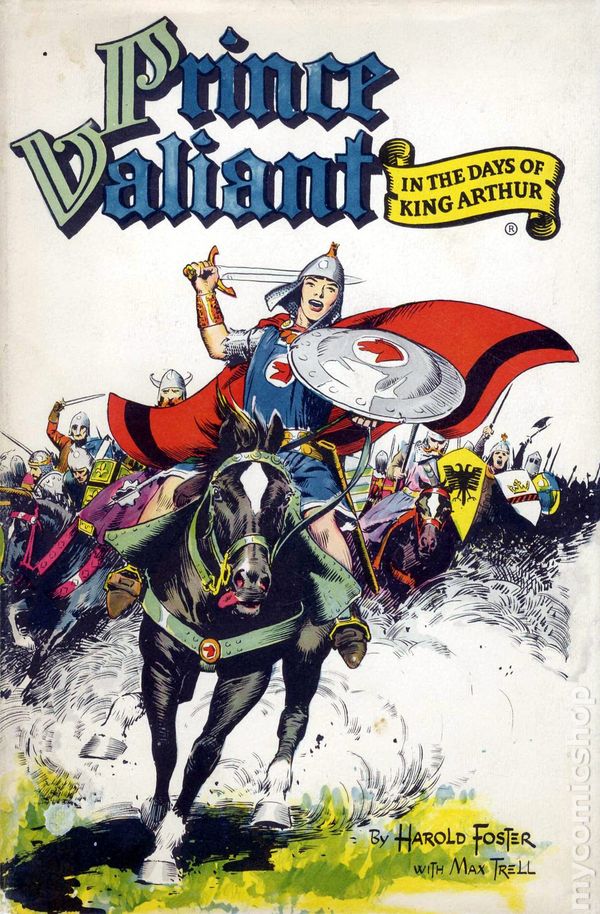
The first dragon I actually met was probably one which my childhood hero, Prince Valiant,

once fought

and, of course, this put him squarely into the St George and the dragon tradition,

(by Vittore Carpaccio, c.1465-1525)

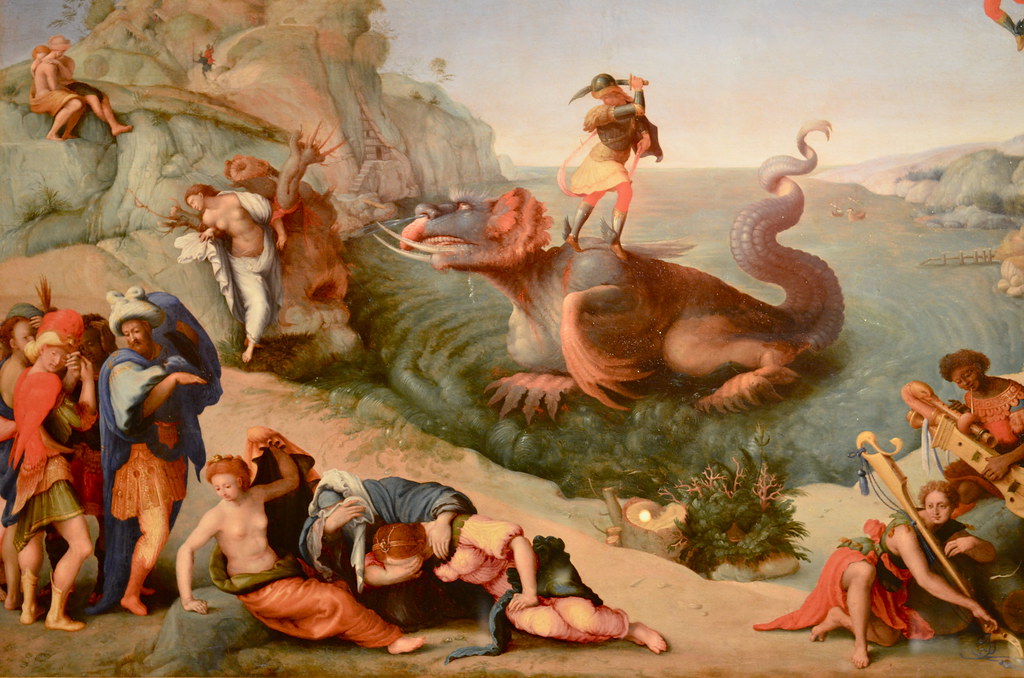
but which is, in fact a tradition which goes all the way back to Perseus rescuing Andromeda from a sea monster

(by Piero di Cosimo, 1462-1521)

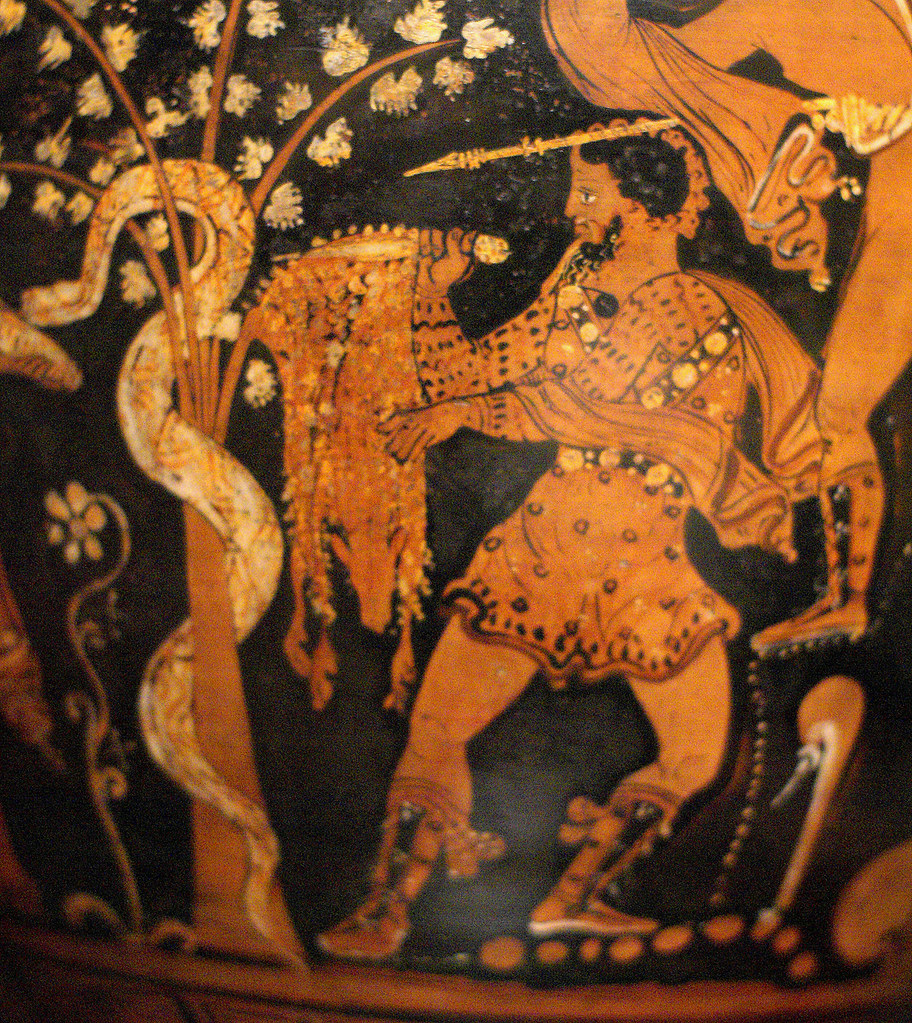
and Jason stealing the Golden Fleece from the Sleepless Dragon.

(from an Apulian krater—wine-mixing bowl—c.300BC)

All of which stories tended to make me think in terms of:

1. dragons hoard hoards and will fight to defend them

2. dragons may consume princesses or other unlucky damsels (a variant—or perhaps a commentary on a dragon’s regular diet?)

3. among their other jobs, heroes may be required to rescue princesses and exterminate said dragons, or at least steal something from them

And that was my view—or almost my view—with one exception, a short story by Kenneth Grahame (1859-1932), from his collection Dream Days (1898).

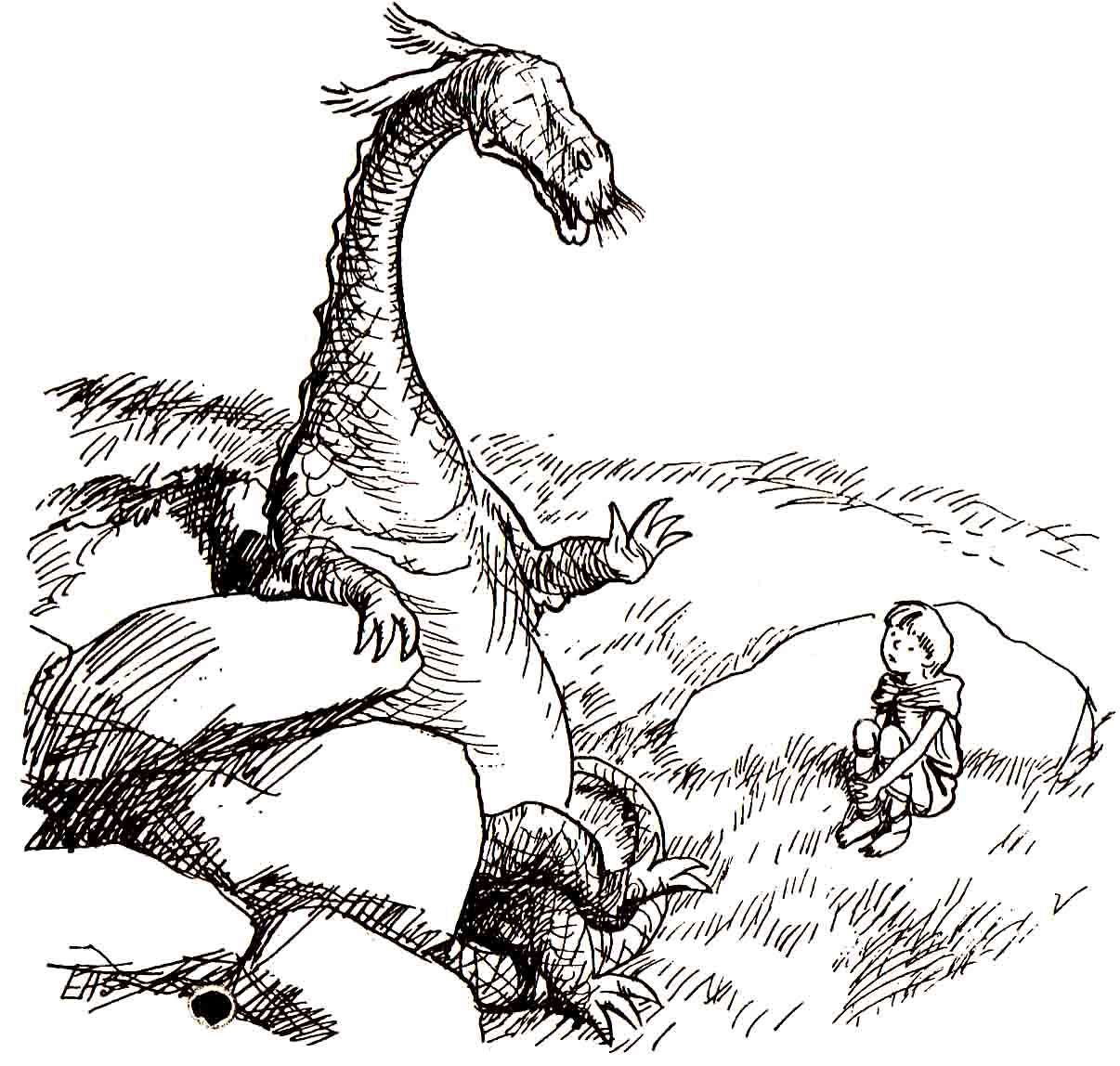
This is entitled “The Reluctant Dragon” and it concerns a boy, St. George, and a creature far from Greek mythology or Beowulf.  If, like Smaug, he talks, he has no hoard, shows no desire for fire-breathing or edible royalty and is, in fact, a peaceable poet, and not in the least interested in heroes or heroics.

(If you’re a reader of The Wind in the Willows or Pooh, you’ll recognize at once that this is an illustration by E.H. Shepard.  And here’s a copy of the book for you, although this is an earlier edition, with pictures by another wonderful illustrator, Maxfield Parrish:  https://www.gutenberg.org/files/35187/35187-h/35187-h.htm )

This creature (nameless, in the story, which would make his publishing his poetry rather difficult, unless he was willing to be “Anon.”) has always suggested to me that there was the possibility that my limited view of dragons might be modified, given the right dragon.

Then, a few weeks ago, I was given this by one of my graduate student teaching assistants—

If you read this blog regularly, you’ve probably picked up that, among other kinds of adventure stories I read, I enjoy those set in the Napoleonic era, like the novels of Bernard Cornwell, which follow the career of an infantryman, Richard Sharpe,

or those of C.S. Forester, whose hero is Horatio Hornblower, a British naval officer.

Like Hornblower, the hero of this series, Will Laurence, is a naval officer, but his life takes a sudden shift when his ship attacks and captures a French ship carrying a very large egg:  a dragon’s egg, in fact.  And suddenly, we’re in an alternate Napoleonic world in which Britain, as in our history, is at war with Bonaparte, and much of the fighting takes place at sea, but there is another element:  both sides have not only armies and fleets, but squadrons of dragons, and the series (there are 9 novels so far, along with a volume of short stories) follows Laurence and his dragon, Temeraire (named after a famous warship, HMS Temeraire) through a wide variety of adventures.

(A marvelous painting by Geoff Hunt—here’s his gallery—https://www.scrimshawgallery.com/product-category/prints/geoff-hunt/  )

I’ve just finished the first volume, which is mostly introductory in nature, but provides the reader with a sense of military dragons—how they’re trained, equipped, and how they’re used in aerial combat.  That’s a lot to cover in one book, but the author has thought out and carefully described everything in such a way as to make this alternate almost believable—including, at the book’s conclusion, an excerpt from a late-18th century naturalist’s treatise on dragons.

So here are different dragons:  non-hoarders, not hungry for the nobility, sentient and talkative, and involved in a global war between Napoleon and the nascent British Empire.  I may have to rethink my feelings about dragons—but not dinosaurs.

Thanks, as ever, for reading.

Stay well,

Keep away from tar pits,

And remember that there’s always

MTCIDC

O

Phoebe

07 Wednesday Jun 2023

Posted by Ollamh in Uncategorized

≈ Leave a comment

Welcome, dear readers, to what I suspect is going to be a rather odd posting—being a sort of footnote to one I uploaded two weeks ago.

That posting was called “Phobe”, but I’ve consistently misread it myself as “Phoebe”.  Phoebe?

Phoebes can be birds.  Here in eastern North America we have the Eastern Phoebe (Sayornis phoebe)

and, in western North America, there’s the Western Phoebe (Sayornis nigricans).

(For more on phoebes, see:

https://www.audubon.org/field-guide/bird/eastern-phoebe

https://www.audubon.org/field-guide/bird/black-phoebe )

If you hear the distinctive call of the phoebe, you’ll understand where the name came from: 

As you can hear, it’s like a little quiet moan:   “Phoe-be, Phoe-be”.

My first acquaintance with the name, in the masculine form, however, was not from ornithology, but from Victor Hugo (1802-1885),

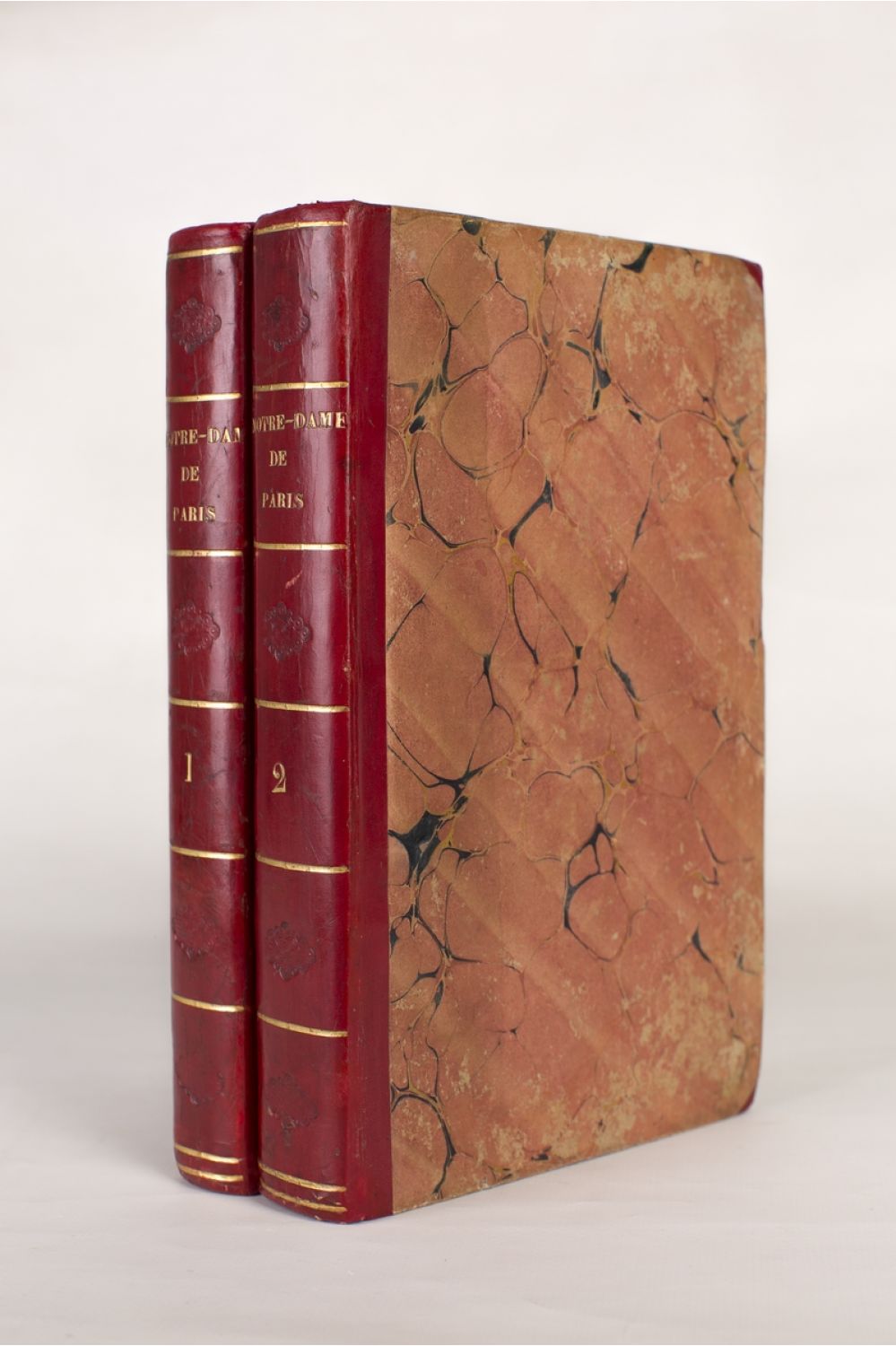
and his 1831 historical novel Notre Dame de Paris, 1482,

better known in English as The Hunchback of Notre Dame, probably after the title of its first English translation, by Frederick Shoberl (1775-1853) in 1833.

(And here’s what I suspect is the first American edition, from 1834:  https://archive.org/details/hunchbacknotred00shobgoog/page/n6/mode/2up  For a free, more modern translation, see the 1888 version by the remarkable Isabel Hapgood:  https://www.gutenberg.org/files/2610/2610-h/2610-h.htm )

If you’re familiar with the 1996 Disney film,

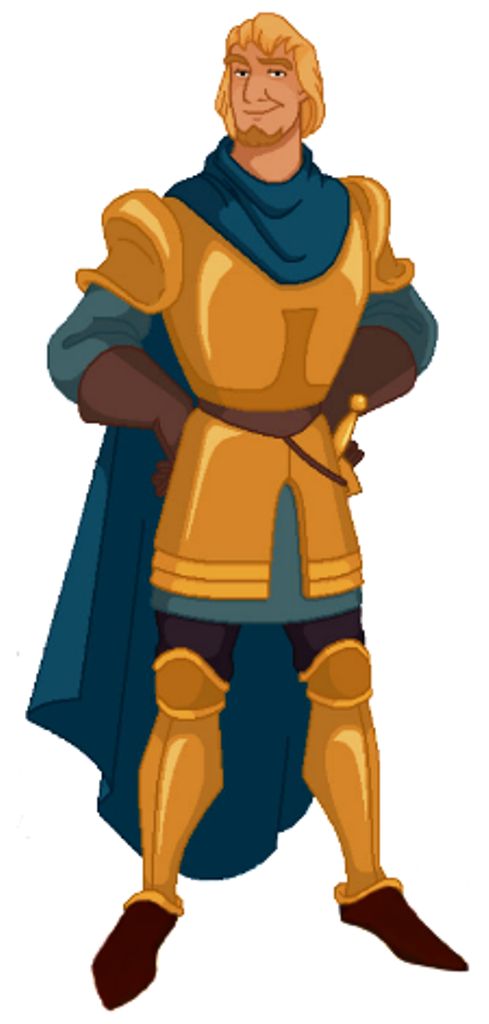
you’ll have very little idea of the dark and tragic novel which is Hugo’s work, but you will recognize Captain Phoebus–

although this Phoebus is not Hugo’s, Hugo’s being arrogant and self-centered and a social-climber, as well.

This is the first Phoebus I knew, however, from a Classics Illustrated I had as a child.

As I grew up and studied Classical literature, I soon learned that Phoebus was one of the Greco-Roman god, Apollo’s,

titles, “bright/shining”, which he shares with his twin sister, Artemis, as Phoebe,

perhaps because of their relationship with sun and moon.

Other than the divinities, however, it seems that I have rather a sad collection of Phoebus/Phoebe.

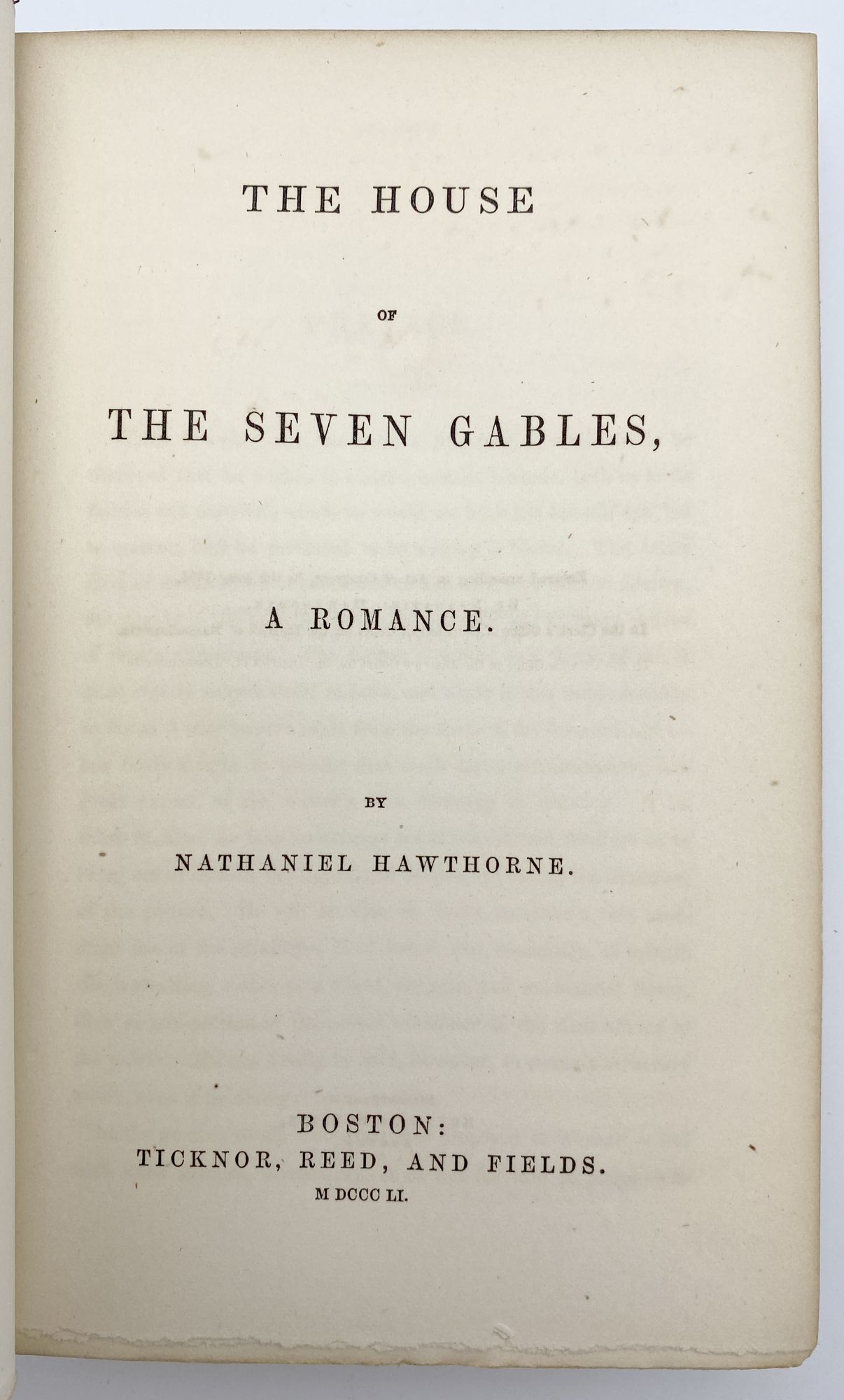
The first is “Cousin Phoebe”, a young relative of the last descendants of the ancient Salem Pyncheon family, who comes to live with them in that haunted place, the House of the Seven Gables,

scene of Nathaniel Hawthorne’s (1804-1864) 1851 novel of the same name.

The house was built on ground stolen from its original owner, who, accused of witchcraft by the very judge (an early Pyncheon) who coveted the ground, was hanged—but just before he died, pointed to the judge and declared “God will give him blood to drink”, cursing the judge and his descendants and, in the process, the house itself, in which the judge soon dies mysteriously, just after it’s built.  It’s my favorite Hawthorne novel and you can read the original 1851 publication here:  https://archive.org/details/housesevengable02hawtgoog/page/n10/mode/2up

Phoebe herself is rather a sunray in such a gloomy place, but the story with its curse and its haunted descendants is still a dark story for a sunbeam.

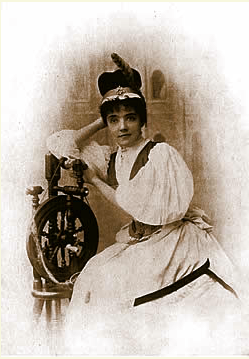
My second is Phoebe Meryll

(the original actress, Jessie Bond)

to be found in Gilbert (1836-1911) and Sullivan’s (1842-1900) 1888 operetta The Yeomen of the Guard.

(a rather grim poster from the 1897 revival)

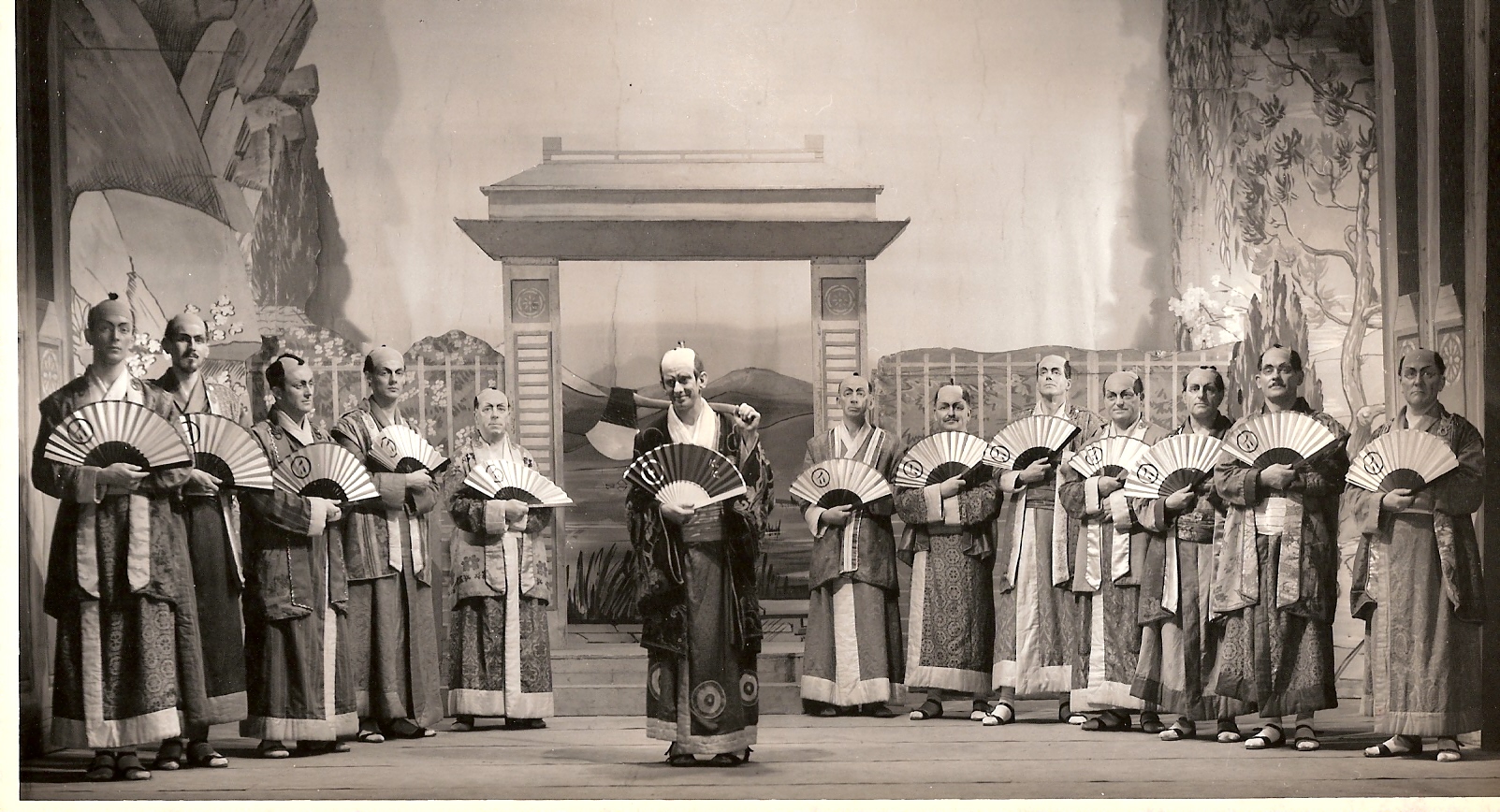
Gilbert and Sullivan operettas usually open with a jolly chorus of happy sailors

or even happier pirates (they’ve been passing around the sherry)

or even Japanese court gentlemen,

but the serious chord of Yeomen is struck in the very opening, where Phoebe appears by herself on stage, spinning like Gretchen, in Goethe’s Faust, and singing of the unhappiness of love.  (You can hear a beautifully-sung version of this by Abigail Coy of the Gilbert and Sullivan Society of Houston here:  https://www.youtube.com/watch?v=OE634hUVhwE&list=RDOE634hUVhwE&start_radio=1 )

This sets the scene where, eventually, to save the lives of her father and brother, and even her own life, she agrees to marry the loathsome Wilfred Shadbolt, the darkest character in the story.

But I have one more phoebe, which brings us back to the opening of this posting.  It’s a poem by Robert Frost (1874-1963), “The Need of Being Versed in Country Things”, the last poem in his 1923 collection, New Hampshire—

Image17:  frost

“The house had gone to bring again
To the midnight sky a sunset glow.
Now the chimney was all of the house that stood,
Like a pistil after the petals go.

The barn opposed across the way,
That would have joined the house in flame
Had it been the will of the wind, was left
To bear forsaken the place’s name.

No more it opened with all one end
For teams that came by the stony road
To drum on the floor with scurrying hoofs
And brush the mow with the summer load.

The birds that came to it through the air
At broken windows flew out and in,
Their murmur more like the sigh we sigh
From too much dwelling on what has been.

Yet for them the lilac renewed its leaf,
And the aged elm, though touched with fire;
And the dry pump flung up an awkward arm;
And the fence post carried a strand of wire.

For them there was really nothing sad.
But though they rejoiced in the nest they kept,
One had to be versed in country things
Not to believe the phoebes wept.”

Well, I said that this was going to be a rather odd posting, didn’t I?

Thanks for reading, as ever.

Stay well,

Remember to put lightning rods on your barn roof,

And know that, as always, there’s

MTCIDC

O
PS

If you enjoyed the Frost poem, here’s the whole volume for you—in a first edition:  https://www.gutenberg.org/files/58611/58611-h/58611-h.htm

Beato Te

31 Wednesday May 2023

Posted by Ollamh in Uncategorized

≈ Leave a comment

As ever, welcome, dear readers.

The Italian phrase which forms the title of this posting can have an ironic ring:  “Lucky old you!”  but beato in itself, can have a more positive meaning:  “extremely happy”—and it has another meaning yet, “blessed”.

As is the case with the majority of Italian words, this is based upon a Latin original, from the verb beo, which, like the modern Italian adjective derived from it, has several meanings:  “to make happy, to bless,” even “to enrich” (which means that the adjective can mean not only “blessed/happy”, but can also mean “well-off”).  The form from which the Italian adjective comes is the PPP—the perfect passive participle—meaning that the adjective really means something like “having been blessed/having been made happy/having been made rich”, suggesting an outside agent.

This idea of blessing/being blessed has been in my mind recently for two reasons.

First, we know that The Lord of the Rings appears empty of virtually all signs of religion:  no priests, worshippers, temples, shrines—all of the things which, for Tolkien the medievalist, would have been everywhere in the medieval English world upon which Middle-earth is loosely based.  Chaucer’s (c.1342-1400) Canterbury Tales

(from the beautiful early 15th century Ellesmere Manuscript—you can page through it here:  https://hdl.huntington.org/digital/collection/p15150coll7/id/2838 )

alone has 10 figures connected with the Church (the Prioress, the Second Nun, the Nun’s Priest, the Monk, the Friar, the Parson, the Summoner, the Pardoner, and the Canon—along with the Canon’s Yeoman).

And yet, at least twice, we find this:

“But you shall go now with my blessing upon you, and upon all your people…He embraced the hobbits then, after the manner of his people, stooping, and placing his hands upon their shoulders, and kissing their foreheads.”  (The Two Towers, Book Four, Chapters 6 and 7, “The Forbidden Pool”, “Journey to the Cross-roads”)

and:

“ ‘Gladly will I take it,’ said the king; and laying his long old hands upon the brown hair of the hobbit, he blessed him.”  (The Return of the King, Book Five, Chapter 2, “The Passing of the Grey Company”)

In the first of these, Faramir is speaking to Frodo and Sam before they set off on their journey into Mordor, and, in the second, Theoden is speaking to Merry, who has just offered him his service.

I imagine that JRRT got the idea of such behavior from his religious upbringing and adult faith, as well as from the medieval religious tradition he spent time in the midst of in his scholarly pursuits.

It’s interesting however, that, in a Middle-earth ostensibly without religion (except for the calling upon the Valar in The Two Towers, Book Four, Chapter 4, “Of Herbs and Stewed Rabbit”, and the custom of looking to the west at mealtimes, which Faramir and his men practice—The Two Towers, Book 4, Chapter 5, “The Window on the West”, and that moment in dealing with Shelob, when Sam calls upon Elbereth, The Two Towers, Book Four, Chapter 10, “The Choices of Master Samwise” ), this act, which still appears in most contemporary world religions, has survived.  In general, the idea is that, if a believer uses a gesture or words to convey a blessing,

he/she is conveying a wish that the person blessed will actually receive the fruits of that blessing from a divine figure.  I don’t see any evidence in the text that this is true for Faramir or Theoden, but Tolkien says of the people of Middle-earth:

“For help they may call on a Vala (as Elbereth), as a Catholic might call upon a Saint…But this is a ‘primitive age’:  and these folk may be said to view the Valar as children view their parents or immediate adult superiors, and though they know they are subjects of the King he does not live in their country nor have there any dwelling.”(draft of a letter to Peter Hastings, September, 1954, Letters, 193)

Is it possible, then, that, although they don’t mention such a figure, by the very act of blessing, Faramir and Theoden are implying that such a figure stands behind the words and gesture?

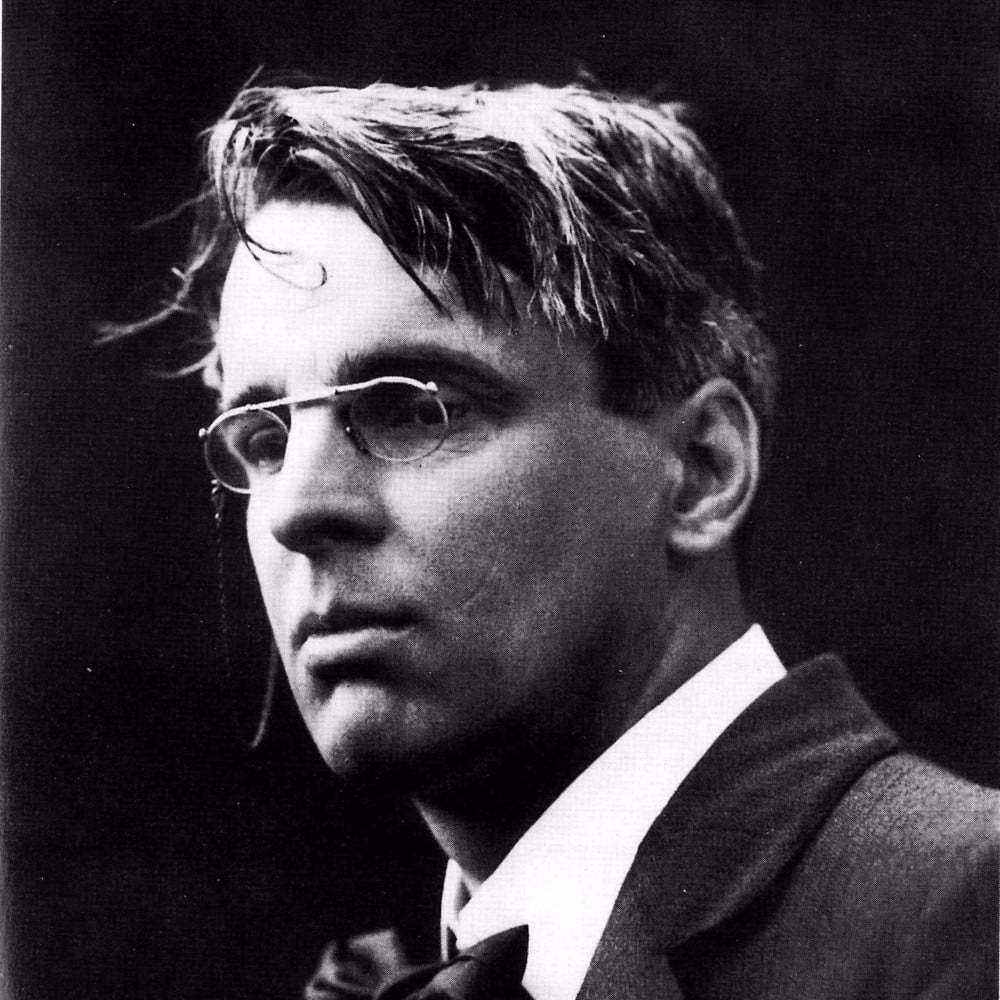
Something similar seems to be going on in Section IV of W.B. Yeats’ (1865-1939)

complex late poem, “Vacillation”, first published in 1932–

“IV

My fiftieth year had come and gone,

I sat, a solitary man,

In a crowded London shop,

An open book and empty cup

On the marble table-top.

While on the shop and street I gazed

My body of a sudden blazed;

And twenty minutes more or less

It seemed, so great my happiness,

That I was blessèd and could bless.”

Yeats mentions no divine figure behind his feelings, but we see him here in the roles both of Faramir and Theoden, those blessing, and of the various hobbits, those blessed.  

But I wrote that I had two reasons for thinking about blessing.  The one was my interest in The Lord of the Rings.  My second is more personal.  My beloved Bernese Mountain Dog, Bellerophon, died recently at 9 (old age for many Berners),

and, while I feel blessed at having had him as a companion for all of those years, I also feel that I should somehow bless him as a kind of thank-you for being the quiet and pleased with the world and everything in it friend he always was.  May the Valar be kind to him.

Thanks, as ever, for reading.

Stay well,

Love and bless whatever pet you may have, from goldfish to elephant,

And remember that, as always, there’s

MTCIDC

O
Phobe

24 Wednesday May 2023

Posted by Ollamh in Uncategorized

≈ Leave a comment

Welcome, as ever, dear readers.

“It’s an ill wind that bears nobody any good” sounds like it belongs right up there with “A third time pays for all” and other proverbs Bilbo quotes his father as saying in The Hobbit and, in my case, this one was true.  Covid-19 finally did away with my trypanophobia (fear of needles, based upon two Greek words, the obvious phobia, “fear” and the very graphic verb, tripao/tripo, “to puncture”!).

(how my vivid and terrified childhood imagination saw such things)

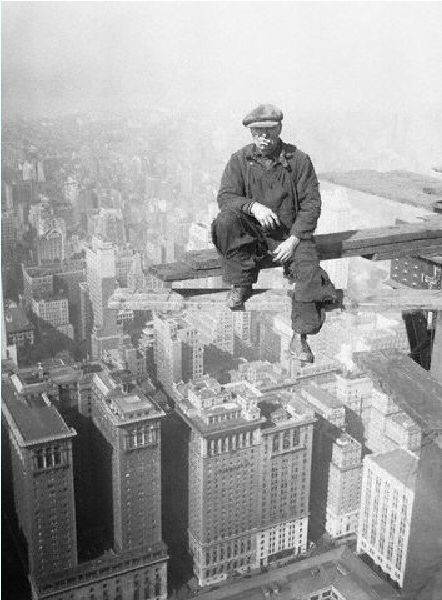
I begin my class on monsters asking my students about their fears and I get the usual, everything from heights (acrophobia)

to fear of enclosed places (claustrophobia)

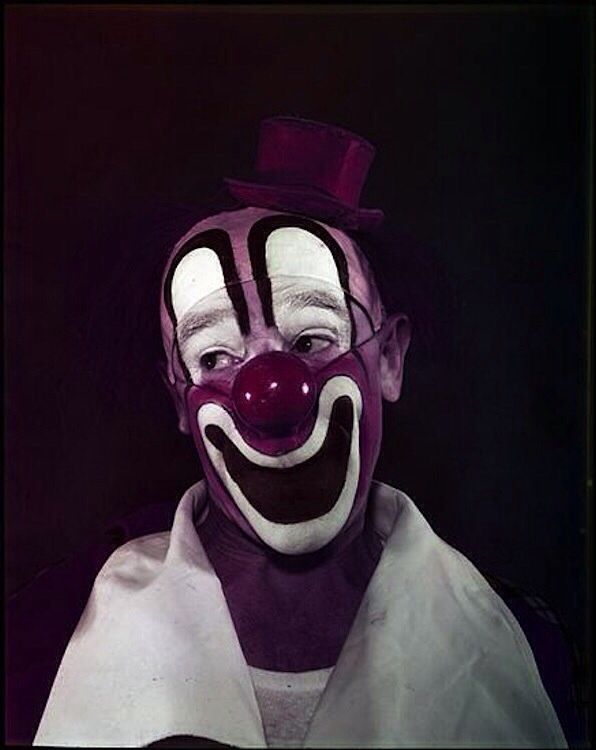
to a fear of clowns (coulrophobia—but a debated term—perhaps bozophobia would be better?)

and I wouldn’t be surprised if everyone suffered from this one, as I find clowns disturbing, too.  Perhaps it’s the often sad makeup but the attempt to be comic? Or the suggested distortion of facial features, like exaggerated mouths?

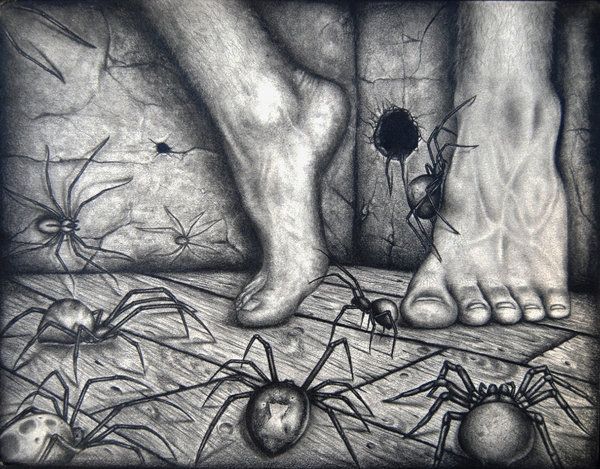
Also among the items on the list was arachnophobia:  the fear of spiders.

(by herrerabrandon60)

I never think of this particular phobia without remembering a song by Michael Flanders (1922-1975) and Donald Swann (1923-1994) on the subject:

“I have fought a Grizzly Bear,
Tracked a Cobra to its lair,
Killed a Crocodile who dared to cross my path,
But the thing I really dread
When I’ve just got out of bed
Is to find that there’s a Spider in the bath.

I’ve no fear of Wasps or Bees,
Mosquitoes only tease,
I rather like a Cricket on the hearth,
But my blood runs cold to meet
In pyjamas and bare feet,
With a great big hairy spider in the bath.

I have faced a charging Bull in Barcelona,
I have dragged a mountain Lioness from her cub,
I’ve restored a mad Gorilla to its owner,
But I don’t dare face that tub …

What a frightful looking beast –
Half an inch across at least –
It would frighten even Superman or Garth!
There’s contempt it can’t disguise,
In the little beady eyes,
Of the Spider sitting glowering in the bath.

It ignores my every lunge
With the backbrush and the sponge;
I have bombed it with ‘A present from Penarth’.
It just rolls into a ball,
Doesn’t seem to mind at all,
And simply goes on squatting in the bath.

For hours we have been locked in endless struggle,
I have lured it to the deep end by the drain.
At last I think I’ve washed it down the plughole,
But here it comes a-crawling up the chain!

Now it’s time for me to shave,
Though my nerves will not behave,
And there’s bound to be a fearful aftermath.
So before I cut my throat,
I shall leave this final note;
Driven to it – by the Spider in the bath!”

(Two glosses:

1. “Garth” a British superhero character, first appearing in The Daily Mirror in 1943—see:  https://en.wikipedia.org/wiki/Garth_(comic_strip)

2. “a present from Penarth” a Victorian seaside resort in southern Wales, so this would suggest a souvenir with an inscription—there is a very detailed account of the town here:  https://en.wikipedia.org/wiki/Penarth

You can hear Flanders and Swann singing it here:  https://www.youtube.com/watch?v=8z3D5Jutw1Q )

Arachnophobia gets its name from Arachne, a character from classical mythology, whose history is wonderfully described in Ovid’s (43BC-17/18AD) Metamorphoses, Book 6, Lines 1-145, where we see the human weaver who makes the huge mistake of claiming that her brilliant work is all her own and challenging the goddess Minerva, who clearly inspired her, being the patron of weaving, to do any better.  Minerva first appears as an elderly woman to warn her to remember who her patron is, but, upon receiving a boastful reply, appears as herself and the two settle down to a contest, Minerva depicting scenes of impious humans, Arachne scenes of male gods seducing human females.  At the end, Minerva can only admire the work(wo)manship, but is also so angry that she tears Arachne’s weaving apart and smacks her three times on the head with her shuttle.

Arachne is so humiliated that she attempts to hang herself, but Minerva saves her by turning her into a spider, with legs and abdomen

…de quo tamen illa remittit

Stamen et antiquas aranea telas.

“…from which that one, a spider, still sends out and back

Thread and [her] traditional weavings/webs.” (Book 6, Lines 144-145—if you’d like to read the whole story, or even the whole of the Metamorphoses, start here:  https://www.perseus.tufts.edu/hopper/text?doc=Perseus%3Atext%3A1999.02.0028%3Abook%3D6%3Acard%3D1 )

For all of Minerva’s anger and Arachne’s fate, this conclusion seems so gently domestic that it might be hard to see such as threatening—unless you have very large ones,

(By johntylerchristopher)

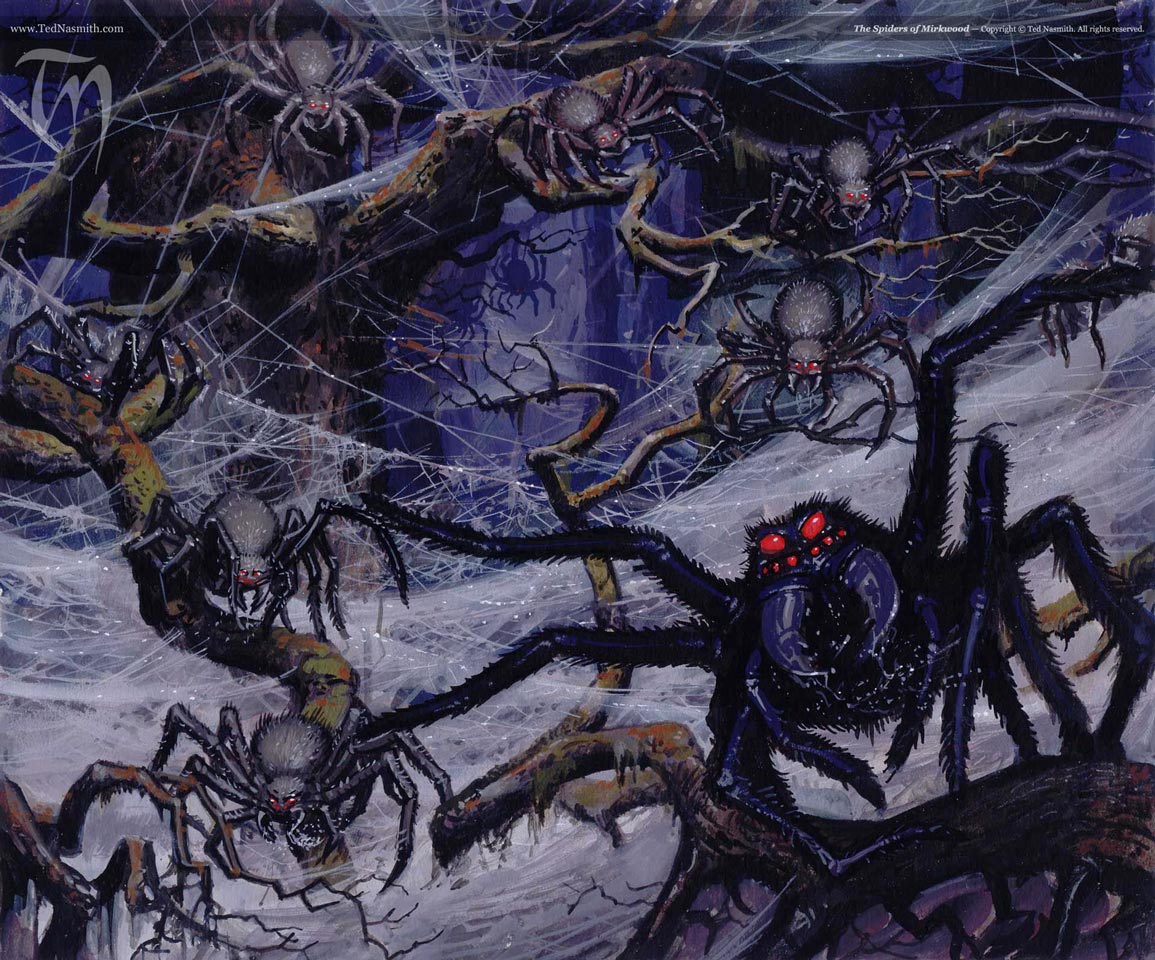
who wait in the trees to drop down and seize passing dwarves,

(a particularly disturbing illustration by Ted Nasmith)

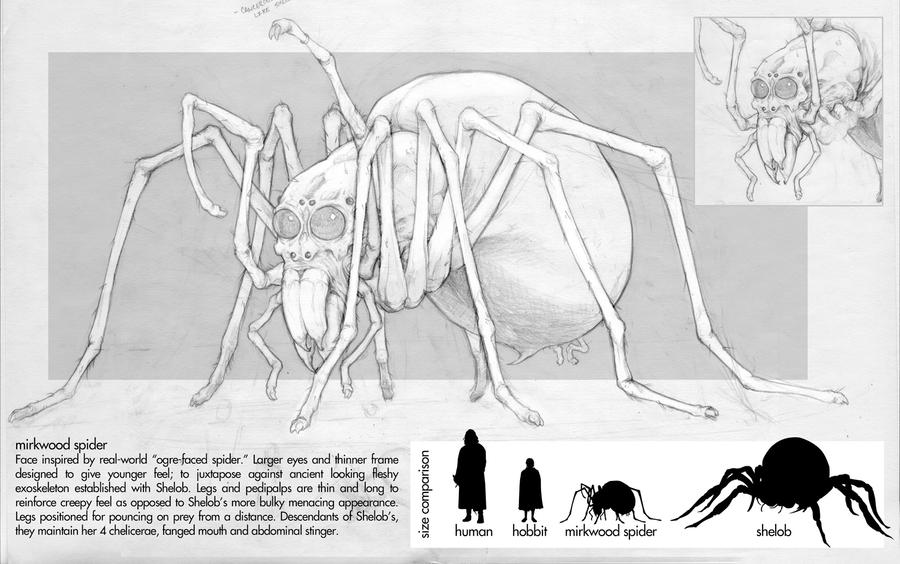
or are even larger ones who attack hobbits.

(by the Hildebrandts)

So, with such creatures in two of his major works, did their creator suffer from arachnophobia?  Let him tell us:

“…and I knew that the way was guarded by a Spider.  And if that has anything to do with my being stung by a tarantula when a small child, people are welcome to the notion (supposing the improbable, that any one is interested).  I can only say that I remember nothing about it, should not know if I had not been told; and I do not dislike spiders particularly, and have no urge to kill them.  I usually rescue those whom I find in the bath!”  (to W.H. Auden, 7 June, 1955, Letters, 217)

But, as Dante (1265-1321)

mentions Arachne twice in the Commedia, once in L’Inferno XVII(16-18) and then in Purgatorio XII (43-45), I wonder how he felt about spiders?

As ever, thanks for reading.

Stay well,

Be kind to things which fall into your tub,

And remember that, as always, there’s

MTCIDC

O
PS

It seems that the earliest recorded version of the proverb with which I began dates to John Heywood’s (1497—died post 1578) A Dialogue of the Effectual Proverbs in the English Tongue Concerning Marriage (1546)—you can find it on page 93 of this edition:  https://archive.org/details/dialogueofeffect00heywuoft  and this is a fun book just to browse through, with proverbs of all sorts done in a long coupleted form.  Bilbo’s father would have been pleased.

Vivant Reges—et Reginae

17 Wednesday May 2023

Posted by Ollamh in Uncategorized

≈ Leave a comment

Welcome, as always, dear readers.

Last Saturday morning, I was up very early to view pageantry.

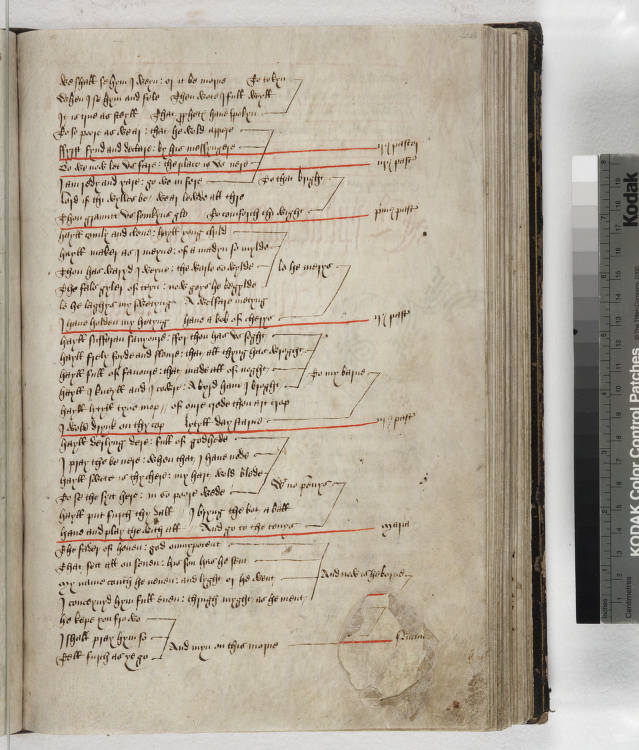
If I had written that c.1400AD, you would have understood it to mean one of the plays in a cycle of medieval mystery plays,

like the “Towneley Cycle”, of which this is a manuscript page, c.1500.

(This is from the collections of the Huntingdon Library, one of the many great treasures of the LA area. To see more, go to:  https://hdl.huntington.org/digital/collection/p15150coll7/id/52959/  )

And certainly what I was up to see had elements both of drama and religion, besides being some centuries older than that collection of ancient plays.

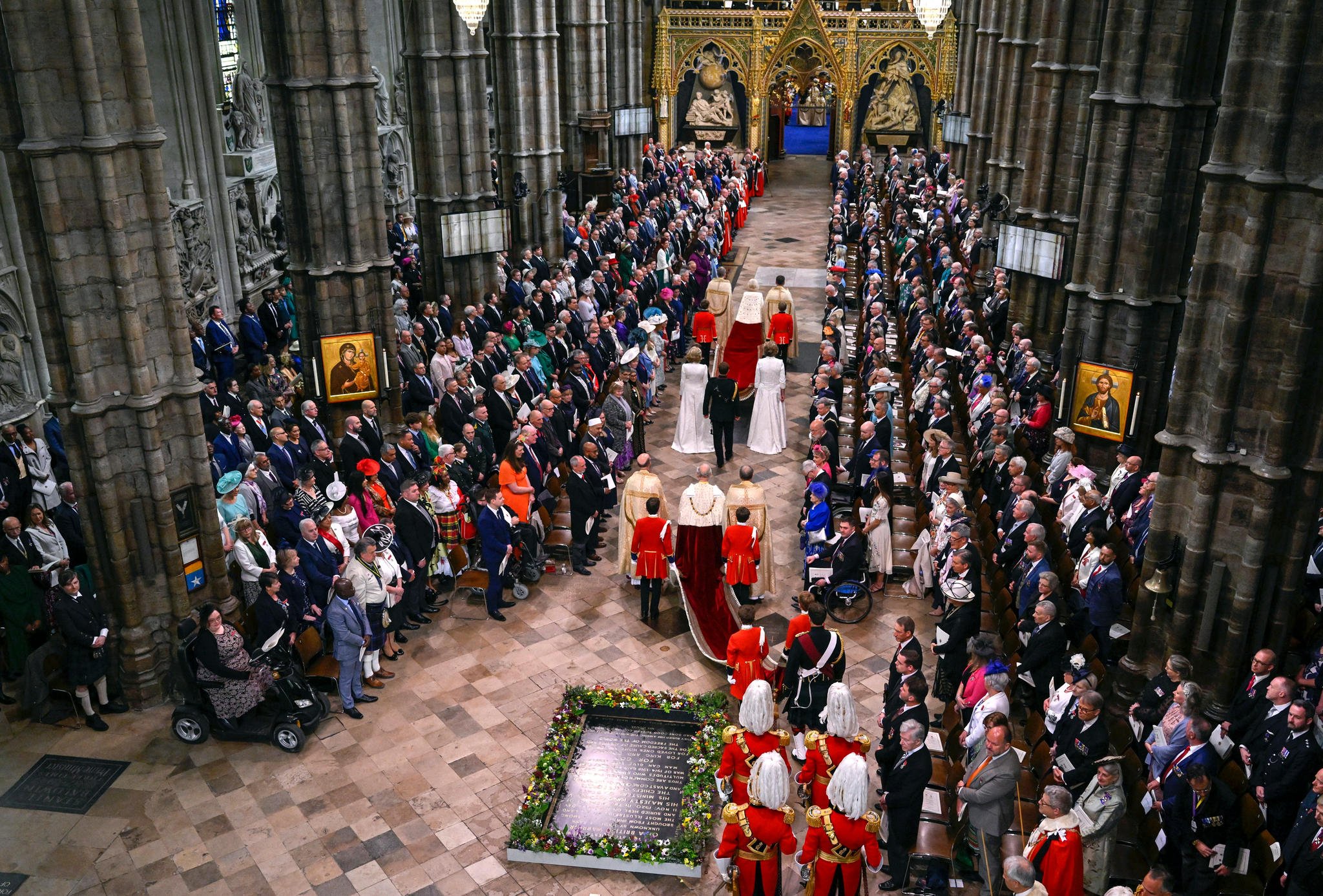
The main part of the ceremonies took place in a religious building, Westminster Abbey,

along with a certain amount of parading back and forth

and some final waving from Buckingham Palace at the end.

I have to say at the outset that I am neither monarchist nor anti-monarchist.  As I come from a country with a somewhat different governmental system (although directly descended from the British one), I can only be an interested—a very interested—spectator, taking pleasure in seeing such a grand spectacle:  this is a bright bit of ancient history reconstituted in a modern context and it can only help those of us interested in the drama of the past to better recreate in our own minds what that past might have been like, even if only in a small way. 

It therefore also reminded me of an earlier ceremony, not quite so religious as this, but definitely ancient—

“…A hush fell upon all as out from the host stepped the Dunedain in silver and grey; and before them came walking slow the Lord Aragorn.  He was clad in black mail girt with silver, and he wore a long mantle of pure white clasped at the throat with a great jewel of green that shone from afar; but his head was bare save for a star upon his forehead bound by a slender fillet of silver.  With him were Eomer of Rohan, and the Prince Imrahil, and Gandalf robed all in white, and four small figures that many men marvelled to see…

Then Frodo came forward and took the crown from Faramir and bore it to Gandalf; and Aragorn knelt, and Gandalf set the White Crown upon his head, and said:

‘Now come the days of the King, and may they be blessed while the thrones of the Valar endure!’

But when Aragorn arose all that beheld him gazed in silence, for it seemed to them that he was revealed to them now for the first time.  Tall as the sea-kings of old, he stood above all that were near; ancient of days he seemed and yet in the flower of manhood; and wisdom sat upon his brow, and strength and healing were in his hands, and a light was about him.  And then Faramir cried:

‘Behold the King!’ “  (The Return of the King, Book Six, Chapter 5, “The Steward and the King”)

Tolkien was born in the late years of Queen Victoria (1819-1901)

and therefore could only have heard or read about her coronation in 1838.

In his own lifetime, however, he could have witnessed (or at least read about—and even seen images of) the coronations of Edward VII (1902)

George V (1911)

Edward VIII (1937—which never happened, as he abdicated before the crowning)

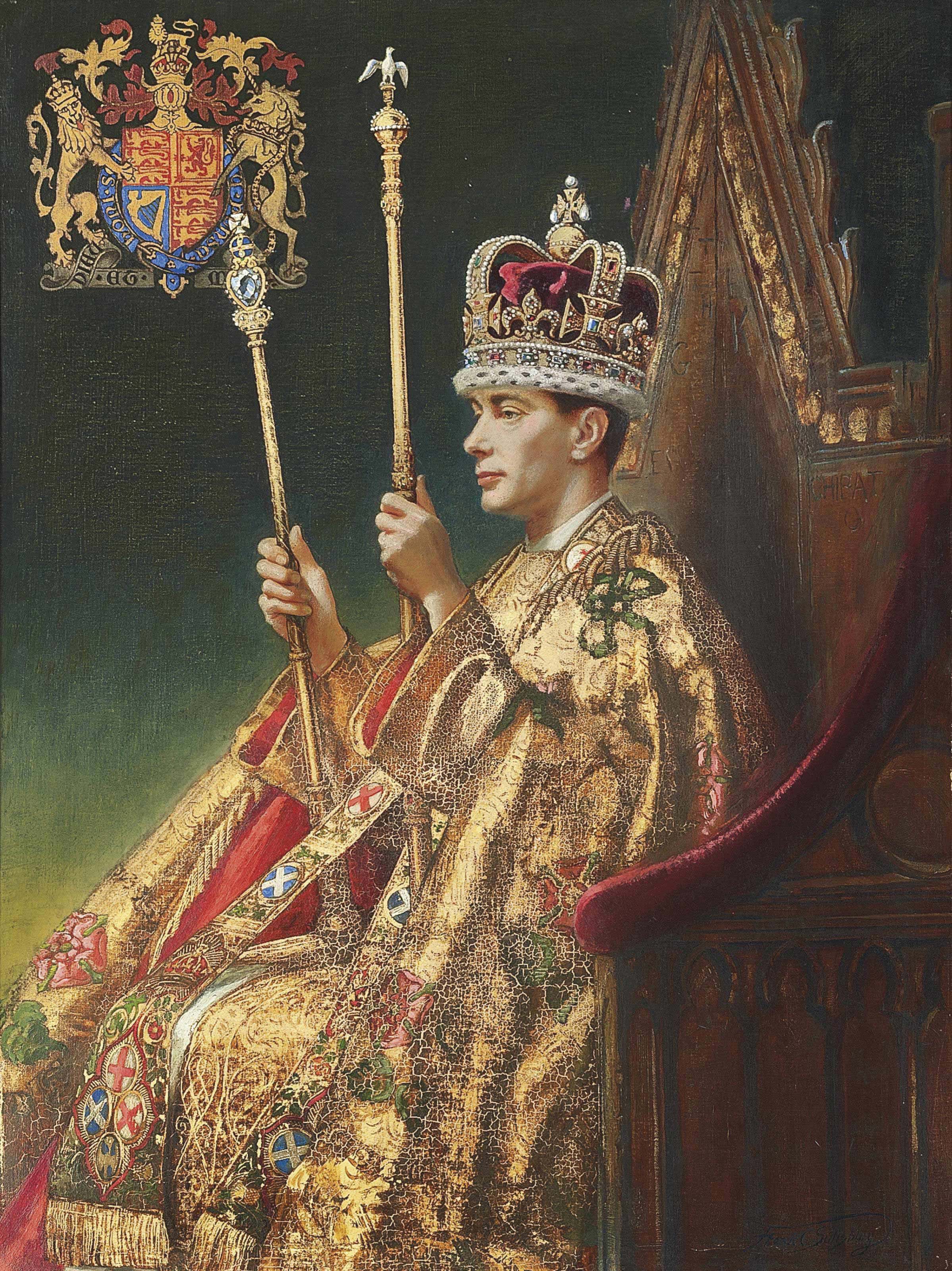
George VI (1937)

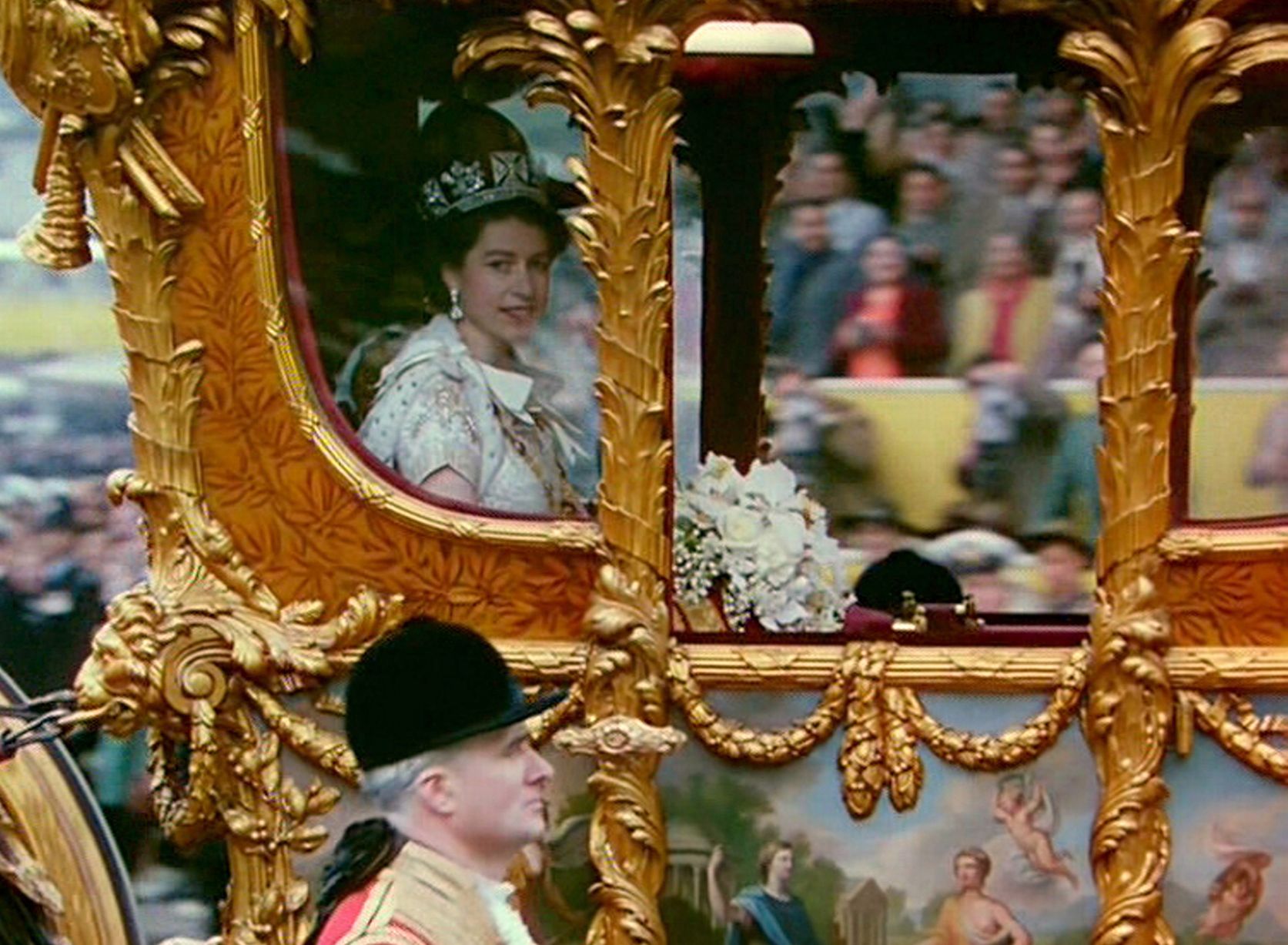
and Elizabeth II (1953)

In the case of Elizabeth II, he could even have watched her crowned on television and seen color photographs of everything in magazines of the period.

So, as I followed the elaborate ceremony which finally confirmed that Prince Charles was now King Charles III, I kept wondering, when Tolkien heard the Archbishop of Canterbury declare, “God save the King/Queen!”, was he also hearing Faramir shout out, “Behold the King!”?

As ever, thanks for reading.

Stay well,

Imagine what Minas Tirith looked like, even after the brutal attack by Sauron, when Aragorn was crowned and the King returned,

And remember that, as always, there’s

MTCIDC

O
Name of the Game, Game of the Name

10 Wednesday May 2023

Posted by Ollamh in Uncategorized

≈ Leave a comment

As ever, dear readers, welcome.

Songs always stick in my mind and sometimes pop up to ambush me.  Recently, I had this appear from nowhere:

“The name game. Shirley!

Shirley, Shirley

Bo-ber-ley, bo-na-na fanna,

Fo-fer-ley, fee fi mo-mer-ley, Shirley!

Lincoln!

Lincoln, Lincoln

bo-bin-coln, bo-na-na fanna,

fo-fin-coln, fee fi mo-min-coln, Lincoln!”

It has a tune—really a chant—and you can hear the original here:  https://www.youtube.com/watch?v=Ez8fEJ86hGI

This is by Shirley Ellis (1929-2005),

with her collaborator, Lincoln Chase (1926-1980),

and became a hit when recorded by Ellis.  It was said to be based, at least in part, on a game which Ellis had played as a child and it sounds to me like it might have been for a game which uses rhythm and rhyme, as in skipping rope–

“Teddy bear, teddy bear: turn around.              (* Jumper mimes actions *)
Teddy bear, teddy bear: touch the ground.
Teddy bear, teddy bear: tie your shoes.    (* Sometimes 'Ladybug, ladybug' *)
Teddy bear, teddy bear: read the news.
Teddy bear, teddy bear: go upstairs.
Teddy bear, teddy bear: say your prayers.
Teddy bear, teddy bear: turn out the lights.
Teddy bear, teddy bear: say good night.
G-O-O-D-N-I-G-H-T.                                 (* Spell on each jump *)”
(This illustration is from Der kleine Kinderfreund—“The Little Children’s Friend”—an children’s book from 1860.   There are many illustrations to see and—a gentle warning—the text appears to be just jampacked with morals—for instance, how little Ernestine, in a moment of anger, broke her dolls and lived to regret it, so, if you don’t want to be taught behavior lessons, stick to the pictures!  You can see the whole book with its very interesting illustrations here:    https://commons.wikimedia.org/wiki/Category:Der_kleine_Kinderfreund  The skip-rope/jump-rope rhyme is from  the wonderful Mudcat Café, a site for the preservation of traditional music:  https://mudcat.org/ )
As the song was all about playing with names, it brought the names of characters in the stories I taught this semester back, with the differences to be seen in the different texts
 The most recent book, in relative time as well as in the span of the semester, has been Dracula, set in England in 1897, where the protagonists have names like “Arthur Holmwood” and “John Seward”, indicating that, not only does everyone have a personal name, but that everyone has a family name, as well.  These can be derived from a number of different sources-- -for example, upon a place—“Holmwood” looks to combine “holm”, a raised piece of land in marshy ground/an island, and “wood”, a grove of trees—and Seward (there’s discussion about this) which may be from an occupation, like all of those people named “Smith”, only Seward may be from Old English su, “pig” and hierde, “herder”.  
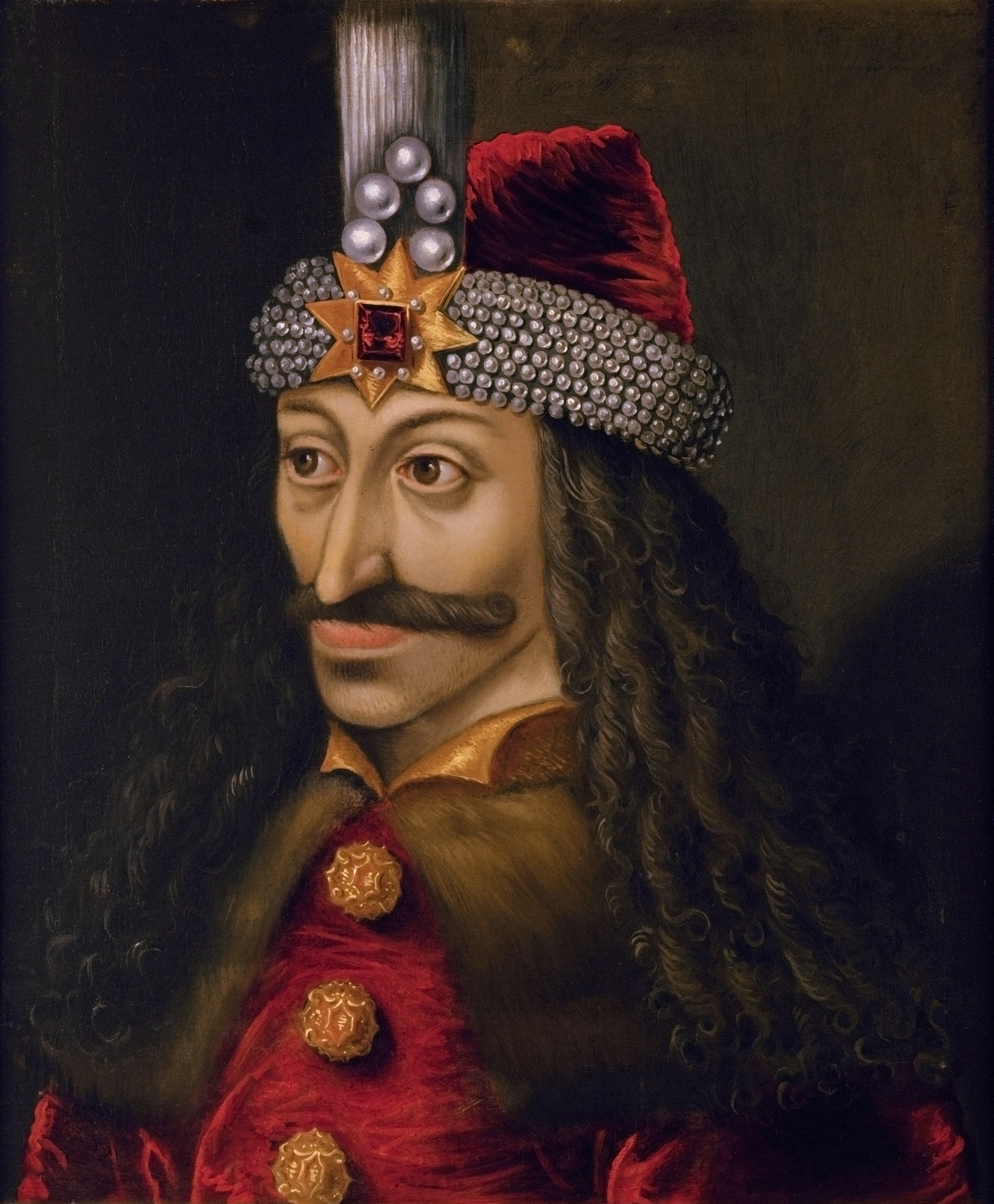
 The only character without a family name is the title character, Dracula, supposed to be modeled upon an actual historical person, Prince Vlad III of Wallachia (now part of Romania).  If he is, then we might see that “Dracula” as a family inheritance, as his father was Vlad II Dracula, where I would guess that that second name was originally a grim diminutive, from the root drag-, “serpent/dragon” and the diminutive ending –ula, “little”, so “Little Dragon/Little Serpent”, more like a nickname than a family name. 
 (For an extremely informative article about diminutives in many languages, see:   https://en.wikipedia.org/wiki/List_of_diminutives_by_language   We might also notice here that Vlad has another grim nickname, tepes (pronounced “TSAY-paysh”), “impaler” from his well-known propensity for treating captives and Ottoman ambassadors in a less than hospitable way.) 
 (Angus Mcbride)
Our earlier works included Beowulf, c.500-1000AD, in which characters had personal names but, for further identification, would be linked to their fathers, as Beowulf is the son of Ecgtheow (EDGE-thay-oh), giving us patronymics (literally “about/concerning the father’s name”). This would change with the generations, of course, and had Beowulf had sons, they would have been identified as “Beowulfson”, although, in formal situations, one might stretch back another generation, so that we might see “Aelfric the son of Beowulf the son of Ecgtheow”.
 Even in the smallest communities, it’s easy to see how the addition of last names begins:  have two or more people in a village with the same first name, like William, and, when referring to one of them in conversation, the speaker might add after “William”, “Richard’s son” just to keep the listener clear.  As villages grew, we may imagine that occupations could be employed to distinguish this William from other Williams, as he might be the owner of the local grain-processor, and could then be “William (the) Miller” vs, say “William the Smith”.  (You can see how this becomes complicated, when you come across a name like “Smithson”, which includes an occupation become part of a name which is then used in a patronymic!)
 As characters in Dracula have last names based upon things like places and occupations, we can see the same for patronymics, in which the use has hardened in modern western Germanic names, producing permanent last names like Madsen (Matthewson) in Danish, and Johnson, in English, just as, we have Mac- and Mc- in Scots and Irish names and Ap- in Welsh (which can lose that A- in names like P-rice or P-richard, once Ap-Rhys and Ap-Richard), where those initial syllable indicates “son of”). 
 Going back one step further in our reading, we’d find that patronymics are also the rule for the Odyssey (difficult to date—our text probably dates from the 3rd to 2nd BC, but story elements are clearly much older), where Odysseus is identified as “son of Laertes”, just as Agamemnon is the “son of Atreus”, while Telemachos, the offspring of Odysseus, would be known as “son of Odysseus”.  There is another significance to this, as well, and it’s all about kleos, a word which, appropriately enough, comes from a verb meaning “to call by name”.   Kleos means “reputation”, sort of, but it’s broader than that, as it’s almost a kind of physical possession, and definitely something which can be passed down in families.  In a warrior culture, it includes all of the warrior’s achievements:   plunder, enemy towns captured, monsters slain, famous ancestors, and certainly famous or at least formidable opponents beaten.  This last almost ruins Odysseus’ trip home as kleos makes him shout to the blinded Cyclops his name and address, which gives the monster a target at which to aim,
as well the identity of the person who harmed him, which he then uses in a prayer to his father, Poseidon, who thereafter causes no end of sea-going troubles for Odysseus.
 (?)
And finally we come to The Hobbit (date not available on our time-line—but “medieval-ish” in general).  The dwarves use patronymics—Thorin, son of Thrain, son of Thror (along with a nickname, “Oakenshield”),
(the Hildebrandts)
 but some characters, like the goblins and the spiders, have no names in the story at all.
(Alan Lee)
(?)
 Others, like the trolls—or the dragon--have only first names, like “Bill” or “Smaug”
 
(both by Tolkien)
 and then there’s “Gollum”.
(Inger Edelfeldt)
 Gollum, as we know, is a nickname, but, as we learn from The Lord of the Rings, Gollum has another name, “Smeagol”—and this is interesting because Smeagol is, in fact, a Stoor, a kind of proto-hobbit, but the hobbits of the Shire, as we learn from the few names we see in The Hobbit, and the many more in The Lord of the Rings, all have family names, as well as personal names—just think of the brief list given by Bilbo at his birthday party—
 “My dear Bagginses and Boffins…and my dear Tooks and Brandybucks, and Grubbs, and Chubbs, and Burrowses, and Hornblowers, and Bolgers, Bracegirdles, Goodbodies, Brockhouses and Proudfoots.”  (The Fellowship of the Ring, Book One, Chapter 1, “A Long-expected Party”)
 To which we could immediately add “Gamgees, Cottons, and Maggots” without digging any deeper.  Does the fact that Gollum/Smeagol has no last name suggest something about just how old he is, coming from a time before hobbits had grown to such numbers that they require more complex identification and therefore acquired family names?  (If we compare when Gollum first got the Ring—TA2460s with when Marcho and Blanco crossed the Baranduin—TA1601—perhaps we should imagine that those left behind when the first settlers crossed the Misty Mountains were few and never developed the same levels of society which their cousins/descendants did in the Shire?) 
 If we had to construct a chronology from all of this, perhaps we might say that naming began with single (first) names, then, as communities expanded, a further identifying mark was added—maybe a nickname, like “Oakenshield”—or a patronymic, then the name of a place from which you came (think of all of those “de/di and “von/van” prepositions in the Romance languages and German/Dutch), or occupation—“Hornblower”--and we shouldn’t leave out a physical attribute, as in “Proudfoot” (which might have begun as a nickname—but stuck).  
 But I began with the “Name Game”, so I’ll give a try to a verse from the Shire to end this posting.  The “Name Game” song includes a verse which explains how to play--
 
“Come on ev'rybody, I say now  let's play a game

I betcha I can make a rhyme out of anybody’s name

The first letter of the name

I treat it like it wasn’t there

But a “B” or an “F”  or an “M” will appear

And then I say “Bo” add a “B” then I say the name

Then “Bo-na-na fanna” and “fo”

And then I say the name again with an “”f” very plain

Then  “fee fi” and a “mo”

And then I say the name again with an “M” this time

And there isn’t any name that I can’t rhyme.”

So—

Bilbo! 

Bilbo, Bilbo, bo-bil-bo,

Bo-nan-na fanna, fo-bil-bo,

Fee fi mo-bil-bo, Bilbo!

As ever, thanks for reading.

Stay well,

Think about what the Name Game would do with your name,

And remember that, as always, there’s

MTCIDC

O
PS

I apologize for the weird type face shift. Two possibilities why this happened:

  1. it’s spring and my laptop has decided to go larking
  2. something happened when I copied “Teddy Bear” into the posting

For myself, I imagine that it’s #1.

Goth-ic

03 Wednesday May 2023

Posted by Ollamh in Uncategorized

≈ Leave a comment

As ever, dear readers, welcome.

I had just finished lunch last week when I was stopped by a student worker who asked if I minded answering a question.  As I love student questions, I said, “Absolutely!” and he said, “What was that book you were reading?”

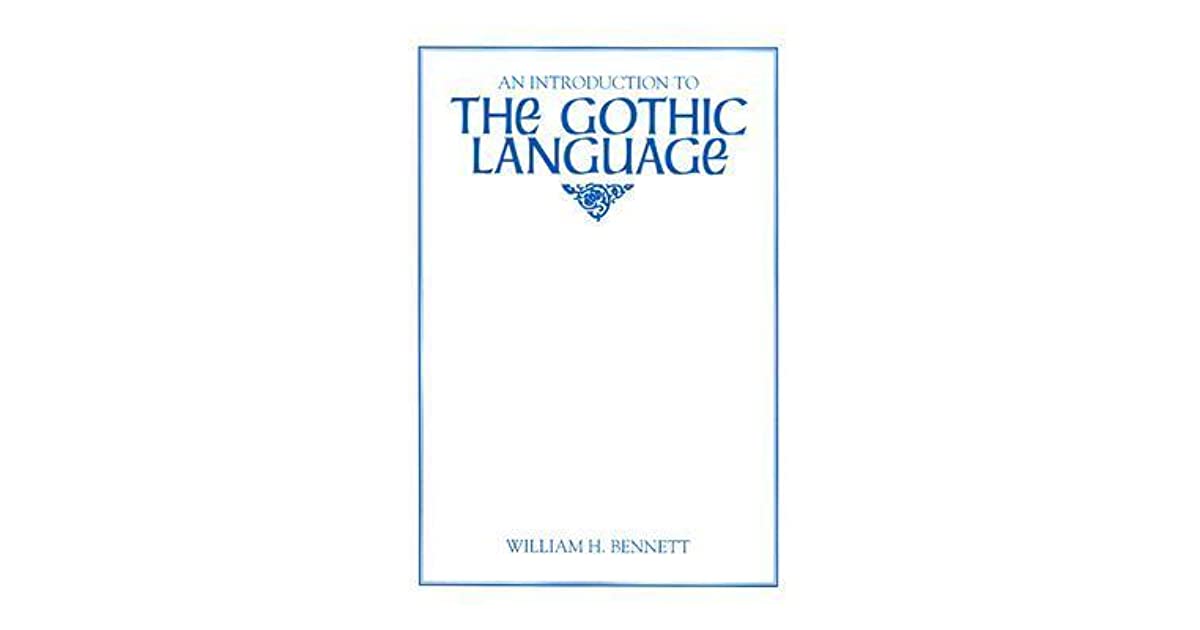
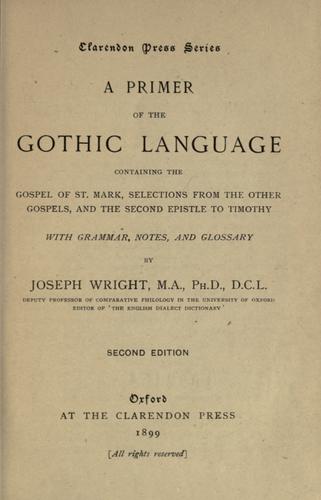
It was this book—

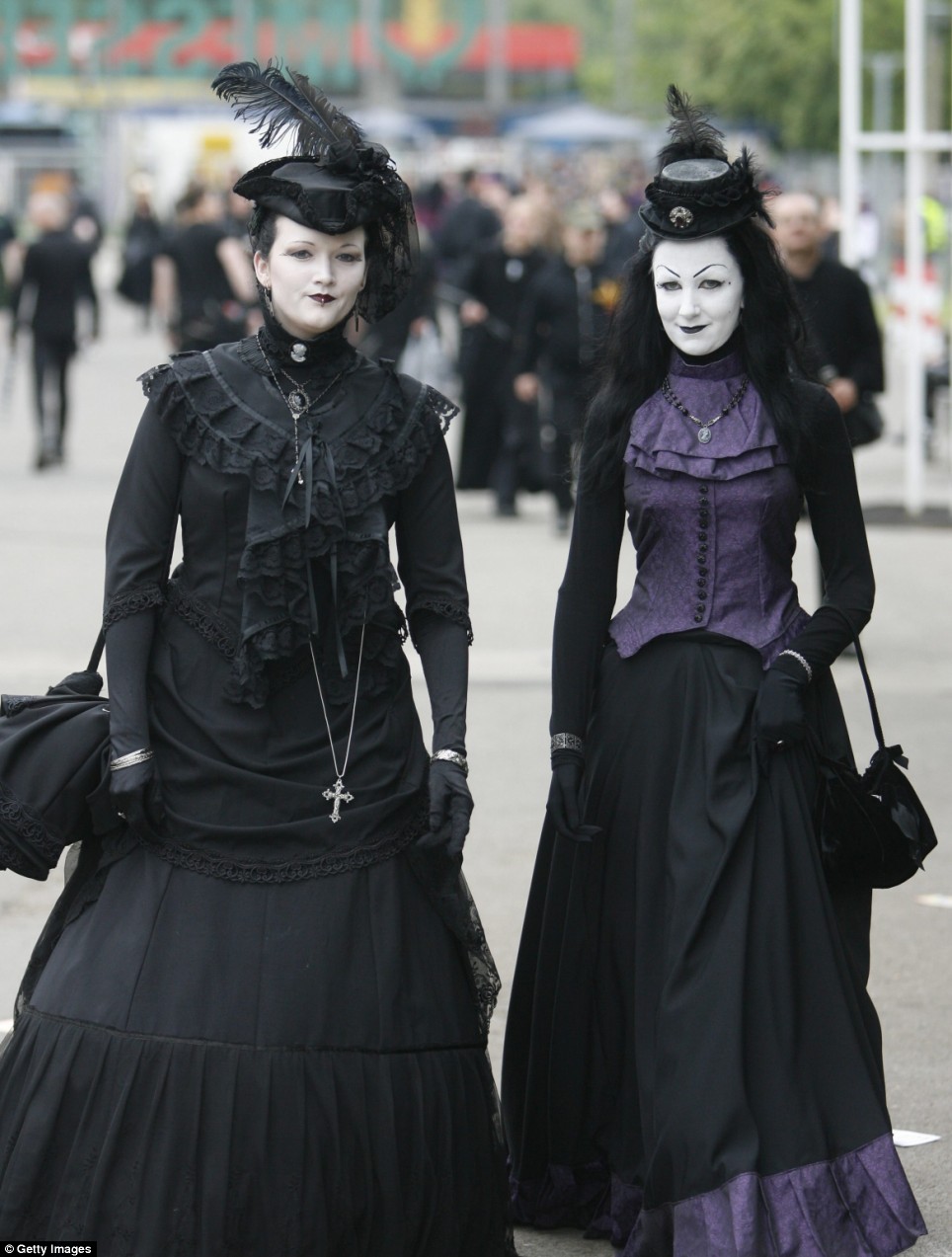
I had the sense that he was puzzled because, when we say “Goth” today, I imagine that most of us probably think this first—

But there’s a long, complicated history behind this, and the clothing may provide an immediate clue—

if we see this as a direct descendant not only of later Victorian clothing, but of a specific kind—mourning dress—

like the sort of thing Queen Victoria wore for the rest of her life,

after the death of Prince Albert, in 1861.

(There is another Victorian tradition, associated with Victorian ladies’ undergarments, here, as well, but we will allow others to pursue that.  If you’d like to know more on the subject of Goth culture, there’s a long, detailed article at: https://en.wikipedia.org/wiki/Goth_subculture  )

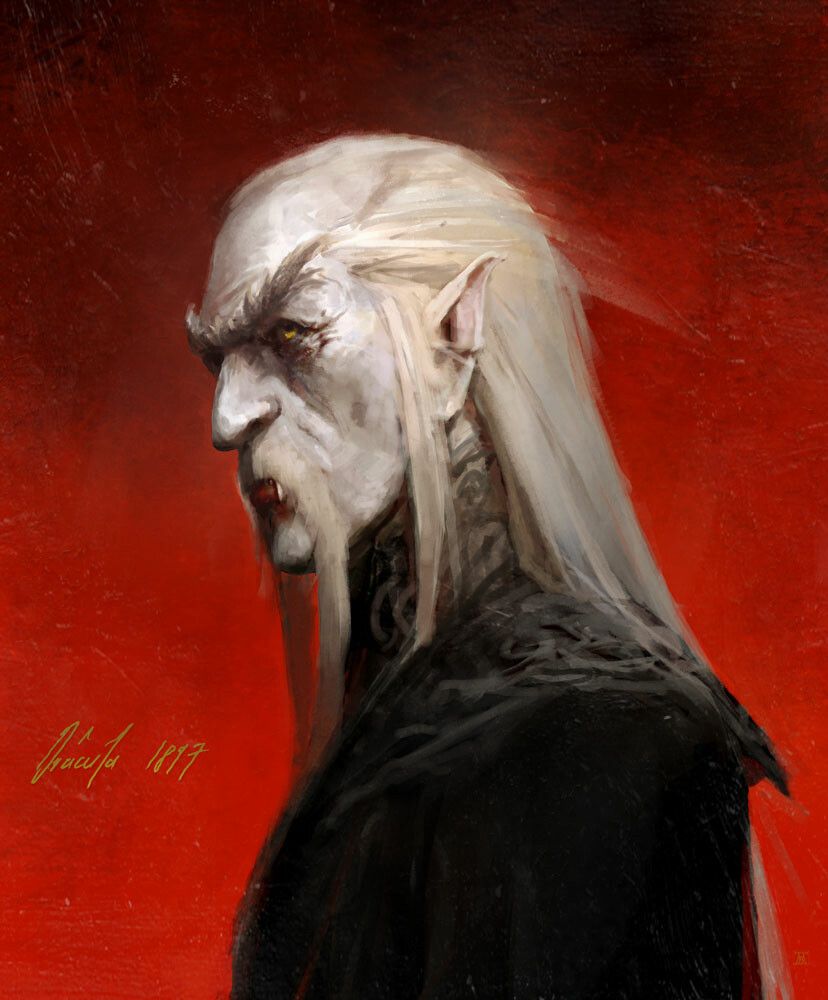
This, in turn, is linked to what is often called “Gothic horror” fiction—familiar to us from stories like Dracula (1897),

with its vampire villain

(by Andrew Baker—one of the few illustrations of Dracula which actually follows the description in the novel)

and especially its opening, full of foreboding as its first protagonist, Jonathan Harker, comes to the brooding, semi-ruined castle of Dracula in the wilds of the Carpathian mountains.

(This is Bran castle in Romania, which has been suggested as a model for Dracula’s stronghold.)

But why “Gothic” horror?

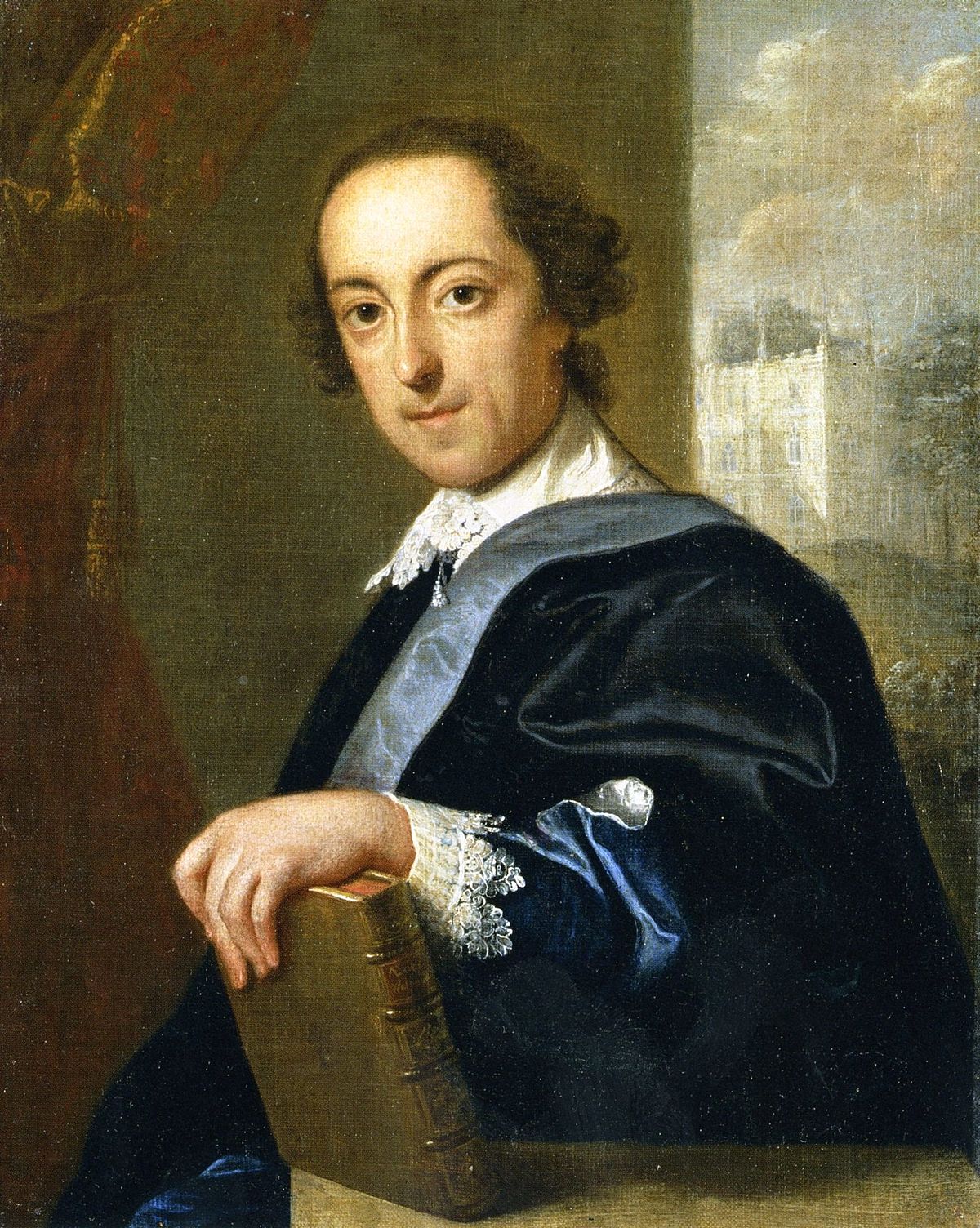
And answer to this may lie in Horace Walpole’s (1717-1797)

(with a bit of his own “gothique” castle, Strawberry Hill, in the background.)

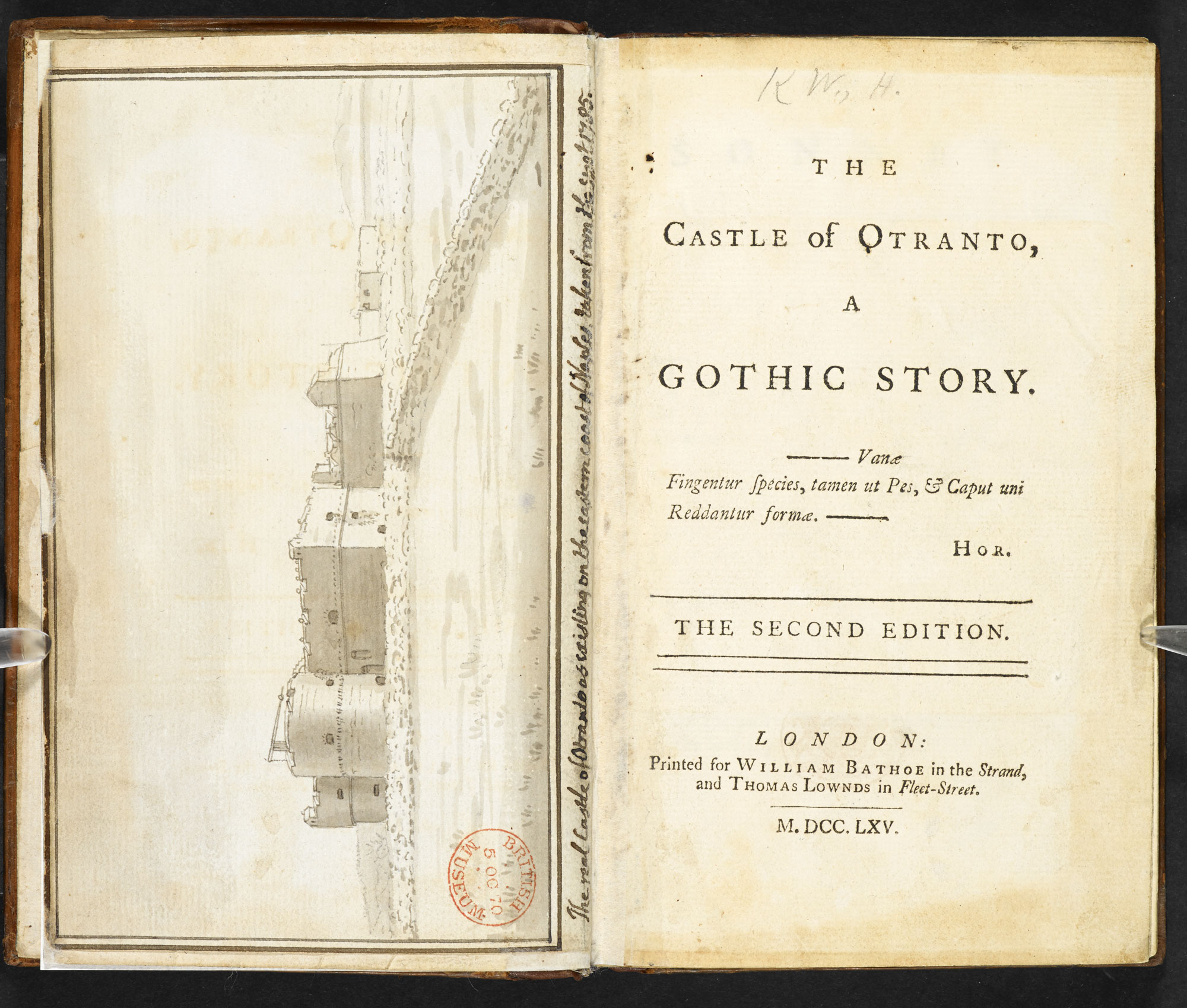
 1764 novel, The Castle of Otranto, the subtitle of the 1765 edition bearing the words “A Gothic Story”.

It’s clear that, when Walpole chose to add those words as a subtitle to the second edition, he was aware that the idea of “gothic” stories already existed, as the reviewer in The Monthly Review for February, 1765, says of the book:

“Those who can digest the absurdities of Gothic fiction, and bear with the machinery of ghosts and goblins, may hope, at least, for considerable entertainment from the performance before us…”  (The Monthly Review, February, 1765, page 97—you can read it here:  https://babel.hathitrust.org/cgi/pt?id=hvd.hxjfgr&view=1up&seq=111&q1=otranto )

This tale, which includes murders, haunting, and kidnapping, among other events, all set around an ancient castle in a remote area of southeastern Italy, however, became such a sensation in its own time that it’s usually cited as the ancestor of many such stories to come. 

Although this may link “Gothic” with fiction, we are then left with the question:  why the link?

In his preface to the Second Edition, Walpole has this to say about his work:

“It was an attempt to blend the two kinds of Romance, the ancient and the modern. In the former, all was imagination and improbability: in the latter, nature is always intended to be, and sometimes has been, copied with success. Invention has not been wanting; but the great resources of fancy have been dammed up, by a strict adherence to common life. But if in the latter species Nature has cramped imagination, she did but take her revenge, having been totally excluded from old Romances. The actions, sentiments, conversations, of the heroes and heroines of ancient days were as unnatural as the machines employed to put them in motion.

The author of the following pages thought it possible to reconcile the two kinds. Desirous of leaving the powers of fancy at liberty to expatiate through the boundless realms of invention, and thence of creating more interesting situations, he wished to conduct the mortal agents in his drama according to the rules of probability; in short, to make them think, speak and act, as it might be supposed mere men and women would do in extraordinary positions.”

That is to say, take a less-than-believable setting from “the ancient”—that is, medieval, world of story-telling, but place within it people from “the modern” with their current reactions.  In fact, the actual story is, to me, as unbelievable as any “ancient” romance, but Walpole’s intent can easily be seen in later novels, Dracula, in fact, being a perfect example, in which a character based upon a late 15th-century border warlord,

infected with vampirism, plans to invade the very realistically-depicted late-Victorian England, using its very modern 20,000 miles of railroads to conquer the country and faced by protagonists who use everything from modern science and medicine to modern firearms to oppose him. 

Attaching “Gothic” to the past appears to have originated in a Renaissance architectural criticism, in the works of Giorgio Vasari (1511-1574),

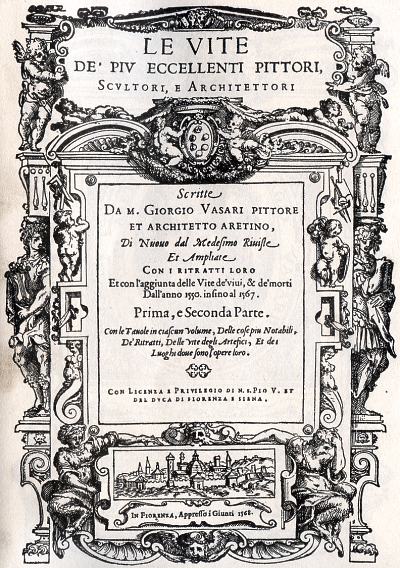
famous for his The Lives of the Most Excellent Painters, Sculptors, and Architects (1550; 1568),

(the 1568 edition)

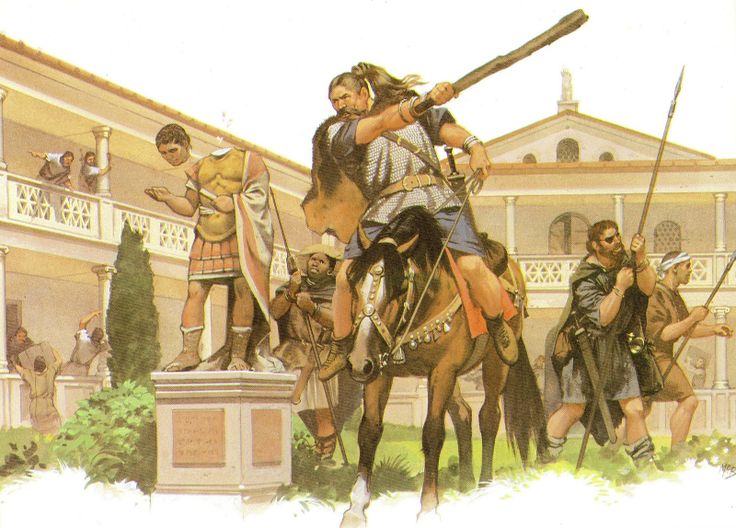
in which he suggests that earlier architects had created “buildings of a style which today have been called by us ‘Germanic’ (maniera di edifizi c’hoggi da noi son chiamati ‘Tedeschi’—my translation from the 1568 edition, which you can see here:  https://archive.org/details/levitedepiveccel01vasa/page/76/mode/2up).   He later calls this style barbaric and joins it with the Goths and this is where castles must come in, as, in fact, the “Gothic” style, as he understands it, doesn’t belong to the Goths, invaders and rulers of the later western Roman empire from the later 4th AD century on,

(Angus McBride)

but to the later medieval period, when castles first appeared and in which Walpole wanted to set his story.

Those Goths, in fact, spoke an early Germanic language and that’s the subject of the book about which the student was curious.  I feel like I’m always working on my German and my latest approach has been to seek out the earliest member of the family for which we have significant evidence and to study it to see if it will help to make my modern German stronger, just as Latin has certainly helped with my Romance languages (and English for that matter, as about 50% of English is directly or indirectly derived from Latin).  As someone with a certain amount of German and a lot of experience with ancient Indo-European languages (mainly Latin and Greek), 4th-6th century Gothic feels quite comfortable, as it shares many features.  There is the added bonus that the main surviving text is a large chunk of the Christian New Testament, so that, having grown up in that world, many of the stories told are already familiar.

And, in all of this, I’m following in the footsteps of someone about whom I often write.

As Humphrey Carpenter tells us:

“One of his school-friends had bought a book at a missionary sale, but found that he had no use for it and sold it to Tolkien.  It was Joseph Wright’s A Primer of the Gothic Language.

Tolkien opened it and immediately experienced ‘a sensation at least of full of delight as first looking into Chapman’s Homer.’ “ (Carpenter, Tolkien, 41)

While I am certainly enjoying the study of it, I doubt that I’ll ever have anything more than a general reading knowledge—Tolkien wrote book dedications in it (see Letters, 356-8) and even poems, which were published, along with other colleagues’ work, in a 1936 booklet, Songs for the Philologists—

but becoming a scholar of Gothic was never my goal. 

Now as to blue hair, piercings, and funeral dress…

Thanks for reading, as ever.

Stay well,

Refrain, while invading, from damaging the previous owner’s art collection,

(another Angus McBride)

And remember that, as always, there’s

MTCIDC

O

Coffee Break

26 Wednesday Apr 2023

Posted by Ollamh in Uncategorized

≈ Leave a comment

Welcome, dear readers, as always.

“At never may return he began to feel a shriek coming up inside, and very soon it burst out like the whistle of an engine coming out of a tunnel.” (The Hobbit, Chapter 1, “An Unexpected Party”)

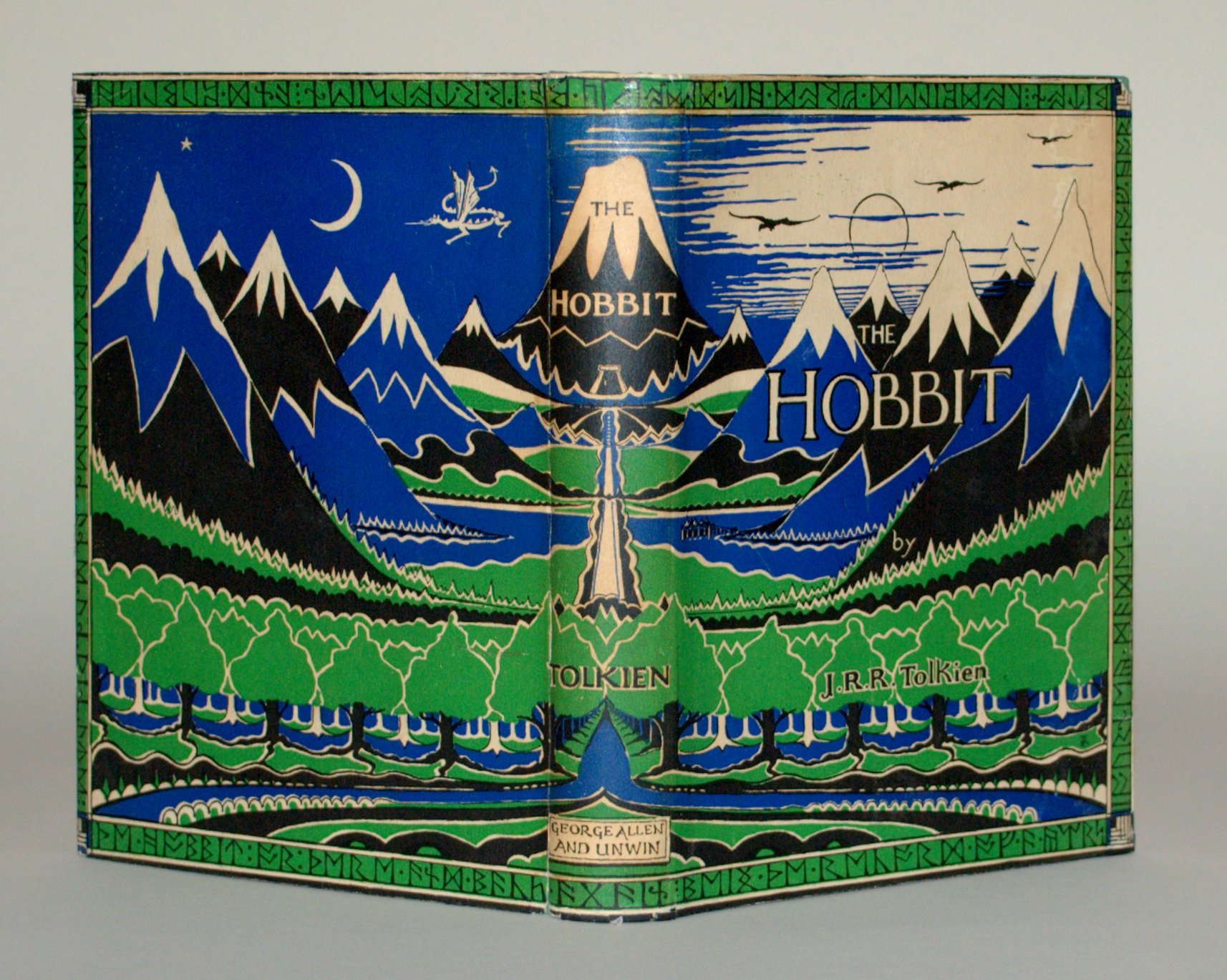
In later years, there were things in the first edition of The Hobbit, published in 1937,

which the author found less satisfying and wished to change, or actually changed.

The most striking change was the revision of Chapter 5, “Riddles in the Dark”, in which the Gollum of 1937 is moved towards the later Gollum of The Lord of the Rings, in order to synchronize the earlier story of the Ring with its reappearance in the later book. 

A smaller change occurred in Chapter 1, “An Unexpected Party”, where Gandalf’s “And just bring out the cold chicken and tomatoes!” became “the cold chicken and pickles!” 

In contrast to the need to revamp Gollum, such a change seems so minor.  Why make it?

In a typescript of 1955,Tolkien says:

“ ‘Middle-earth’, by the way, is not the name of a never-never land…And though I have not attempted to relate the shape of the mountains and land-masses to what geologists may say or surmise about the nearer past, imaginatively this ‘history’ is supposed to take place in a period of the actual Old World of this planet.”  (from the typescript of a letter written by Tolkien to the Houghton Mifflin Company, May? 1955, Letters, 220)

In which case, if, by “Old World” he is implying—and the general look of Middle-earth in both The Hobbit and The Lord of the Rings would appear to back this up—that this is a medieval world, then tomatoes would be an anachronism, as the tomato only appeared in Europe after the Spanish conquistadores brought them back from Mexico in the early 16th century, where it was first described in Pietro Andrea Mattioli’s (1501-1577) I Discorsi in 1544.

(This is the 1568 edition, where you can find a description at the very bottom of page 1136 under “pomi d’oro”, which differentiates between two sub-varieties, one being the color of blood, the other golden—hence that name “apples of gold”.  If you’d like to read it for yourself, here’s that edition:  https://archive.org/details/gri_33125014246561/page/1136/mode/2up )

Once the tomatoes go, there are several other New World plants which have somehow found their way to Middle-earth, all of which would also fall into that category of anachronism.

First, there is tobacco, which is mentioned in a number of early 16th-century Spanish documents, including Gonzalo Fernandez de Oviedo y Valdes’ (1478-1557) Historia general de las Indias (1535-), where he describes local Native Americans smoking an herb. (Here is the reference:  https://archive.org/details/gri_33125007267921/page/130/mode/2up  Oviedo’s work is apparently a bit of a mess and this version was a mid-19th-century attempt to straighten it out.)

(How could I resist the first known image of someone smoking?  This is from Anthony Chute’s 1595 pamphlet, Tabaco, a document so enthusiastic that it might have been produced by the advertising department of a tobacco company.  Because tobacco was initially an expensive import, early pipes were, in fact, relatively small.  This reproduction will give you an idea–)

It’s seems that JRRT was a little uncomfortable with tobacco, but not enough to remove all of the references to smoking in The Lord of the Rings, where he simply turned tobacco into “pipeweed” and everyone from the Shire to Gondor could then light up on a regular—often meditative—basis. 

(Michael Herring)

(And he even included a section on the subject in the Prologue—“2  Concerning Pipe-weed”.  Of course, when one thinks of how many images we have of him with a pipe in his mouth, are we surprised?)

Then there are Sam Gamgee’s “taters”.

As with tomatoes and tobacco, it seems that it was the Spanish, as they increasingly spread through and occupied the Caribbean and points south, who imported the potato to Europe, possibly as early as the 1570s.  Certainly by Thomas Johnson’s 1633 revision of John Gerard’s 1597 The Herball, or Generall Historie of Plantes

we find this toothsome recommendation:

“The temperature and virtues be referred unto the common Potatoes, being
likewise a food, as also a meat for pleasure, equal in goodness and wholesomeness
unto the same, being either roasted in the embers, or boiled and eaten with oil,
vinegar, and pepper, or dressed any other way by the hand of some cunning in
cookery.”  (This is from Book 4, Chapter 350, page 54, of a modernized text which you can find here:  https://www.exclassics.com/herbal/herbalv4.pdf )

L0064345 Illustration of Potato of Virginia Credit: Wellcome Library, London. Wellcome Images images@wellcome.ac.uk http://wellcomeimages.org Illustration of Potato of Virginia from The herball or, generall historie of plantes / Gathered by John Gerarde 1597 The herball or, generall historie of plantes / John Gerard Published: 1597. Copyrighted work available under Creative Commons Attribution only licence CC BY 4.0 http://creativecommons.org/licenses/by/4.0/

(as is this illustration)

To these, I add one more item, which, I admit, I only spotted while teaching The Hobbit this spring:

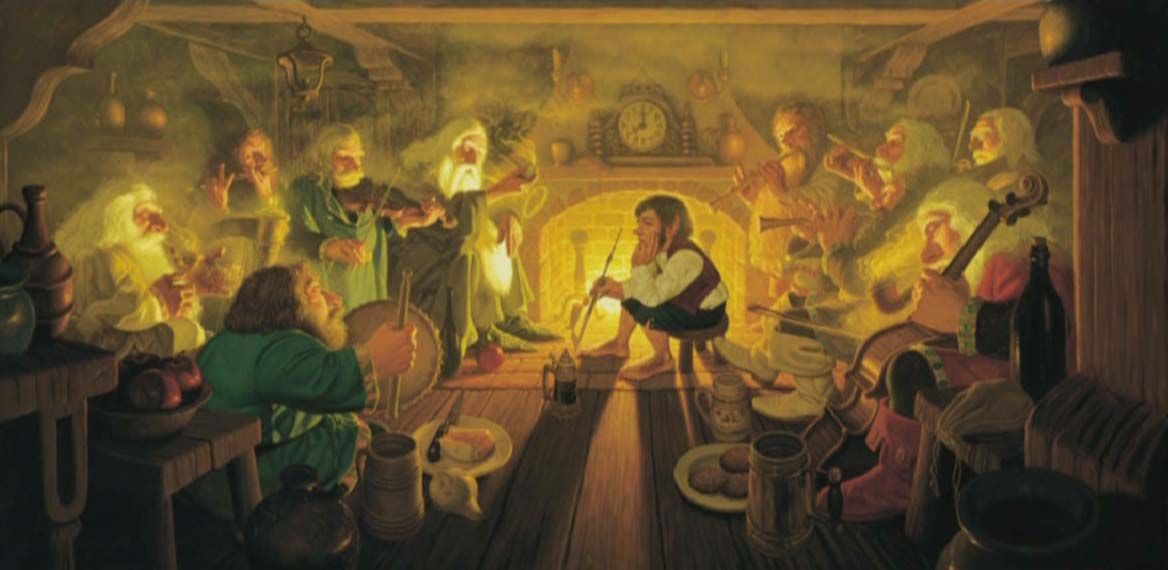
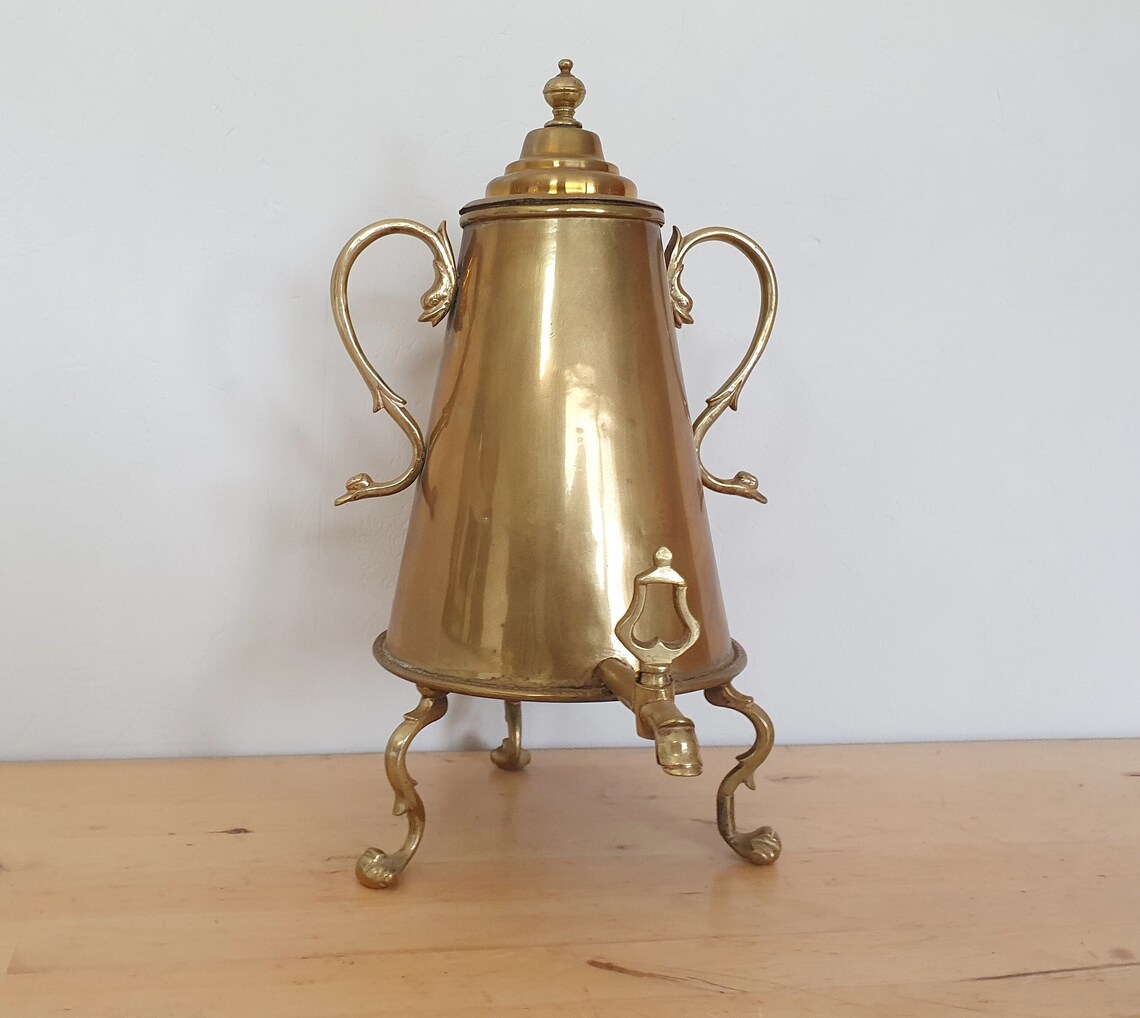
“A big jug of coffee had just been set in the hearth… (The Hobbit, Chapter 1, “An Unexpected Party”)

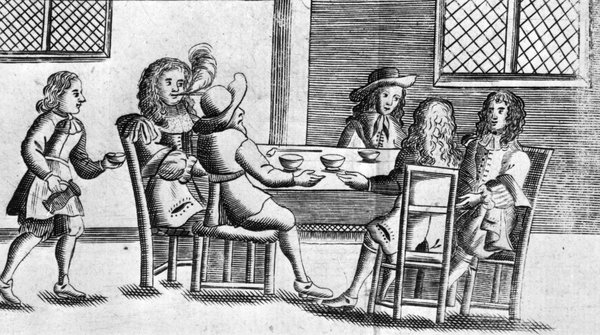
Coffee’s origins are a little murky, but one thing is clear:  this was not introduced from the New World by the Spanish.  Instead, the cultivated variety seems to come from Ethiopia and was introduced to eastern Europe in the 1520s by the Ottomans and to western Europe somewhat later, perhaps first by Dutch merchants.  The first coffeehouse in London dates from the early 1650s.  Here’s an advertisement from the owner of that first establishment, Pascua Rosee—

and here’s an early coffeehouse, although, by the dress of the drinkers, of perhaps a decade or so later.

From whomever and whenever it first appeared, it certainly was not available in our medieval world and, if we continue the reasoning that Tolkien’s Middle-earth as depicted in The Hobbit and The Lord of the Rings corresponds to that medieval world, then, along with removing tomatoes, tobacco, and potatoes, that jug of coffee should have been dumped out and its contents replaced with ale—which, in fact, Bilbo’s dwarvish guests request—along with cakes–and more of that non-existent beverage:

“ ‘And more cakes—and ale—and coffee, if you don’t mind,’ called the other dwarves through the door.”  

(the Hildebrandts)

But what about that steam engine with which this posting began?  If the replacement of tomatoes with pickles shows that Tolkien himself became aware of the dangers of anachronism, certainly steam engines should have joined them in being replaced.  In fact, we learn from Douglas Anderson’s The Annotated Hobbit that:

“For the 1966 revision of the text, Tolkien carefully considered the spacing of a possible replacement line here—‘like the whee of a rocket going up into the sky’—but in the end rejected it.”  (The Annotated Hobbit, 47, note 35)

But why?  Anderson offers the possibility that:

“This usage need not be viewed as an anachronism, for Tolkien as narrator was telling this story to his children in the early 1930s, and they lived in a world where railway trains were a very important feature of life.” (note 35)

And, as Tolkien didn’t change it, I suppose that we might accept this—but a small part of me still wonders, “Yes, but what about that coffee?”

Thanks, as ever, for reading,

Stay well,

I’ll take mine black,

And remember that there’s always

MTCIDC

O

PS

For a cheerful song about coffee from the time of the Great Depression, here’s Irving Berlin’s “Let’s Have Another Cup of Coffee” from the 1932 review “Face the Music”– https://www.youtube.com/watch?v=K8kGjrjAKt4

Changing Horses

19 Wednesday Apr 2023

Posted by Ollamh in Uncategorized

≈ Leave a comment

Welcome, dear readers, as always.

Two weeks ago or so, I was working on the posting which I called “Horsing Around”, all about white horses in The Lord of the Rings (uploaded 5 April).

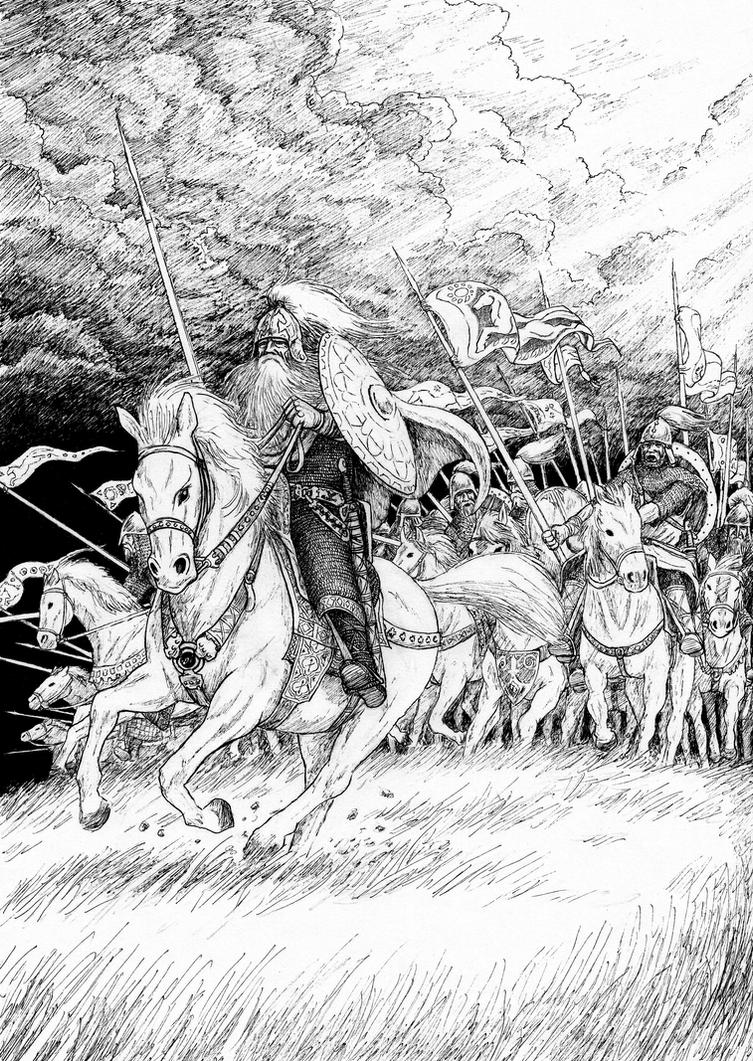
Among the horses which I mentioned was Theoden’s Snowmane.

(Joon Tulikoura)

The other horses, including Shadowfax,

(Angus McBride)

seem to have weathered the last tense moments of the War of the Ring and survived.  Snowmane, however, was a different matter:

“But Snowmane wild with terror stood up on high, fighting with the air, and then with a great scream he crashed upon his side:  a black dart had pierced him.  The King fell beneath him.”  (The Return of the King, Book Five, Chapter 6, “The Battle of the Pelennor Fields”)

(Craig J. Spearing)

Because he had fallen in battle, even though his fall had brought down Theoden, Snowmane was honored with a mound, like those of the Rohirric kings which lined the approach to Edoras,

adding to it

“a stone upon which was carved in the tongues of Gondor and the Mark:

Faithful servant yet master’s bane,

Lightfoot’s foal, swift Snowmane.”

And so the association of Rohan, white horse, and death, had stuck with me for the next week or two.  And then I came upon this:

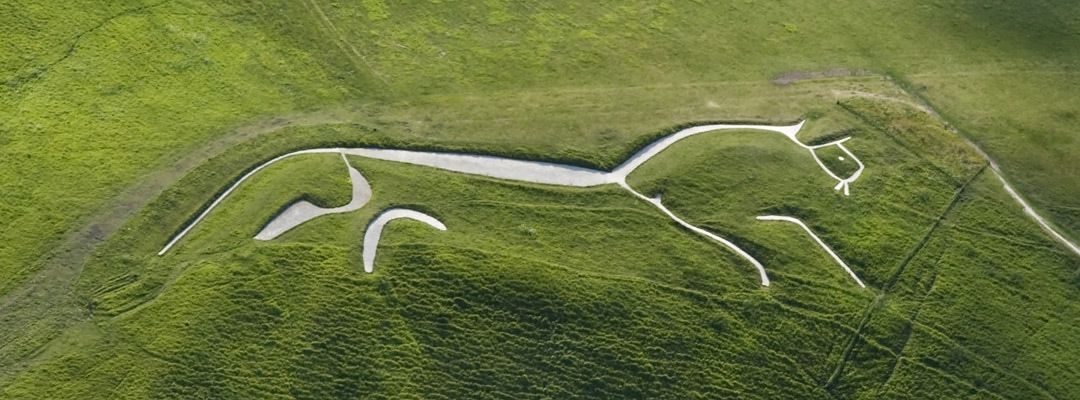
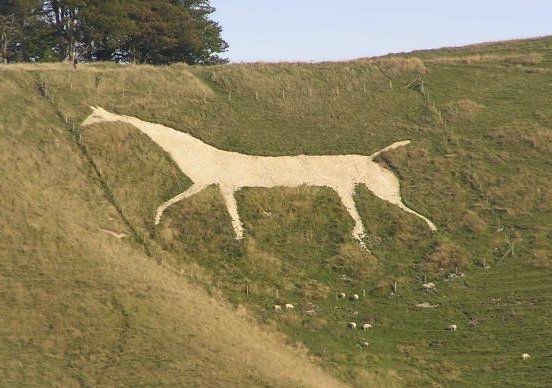
“In Anglo-Saxon times the natives of Worcestershire and Warwickshire and Oxfordshire, and many other counties, would have told anyone who asked that they lived in the Mark, and also their own particular Shire:  names and at once both ancient and modern, indeed unchanging.  As for the white horse this is the emblem of the Mark, like Bree and the Barrow-downs it lies less than a day’s walk from Tolkien’s study, and the White Horse of Uffington,

cut into the chalk a short stroll from the great Stone Age barrow of Wayland’s Smithy.”   


(Tom Shippey, J.R.R. Tolkien:  Author of the Century, 92)

(Shippey mentions the White Horse as the boundary marker for the Mark again in The Road to Middle-earth, 132.)

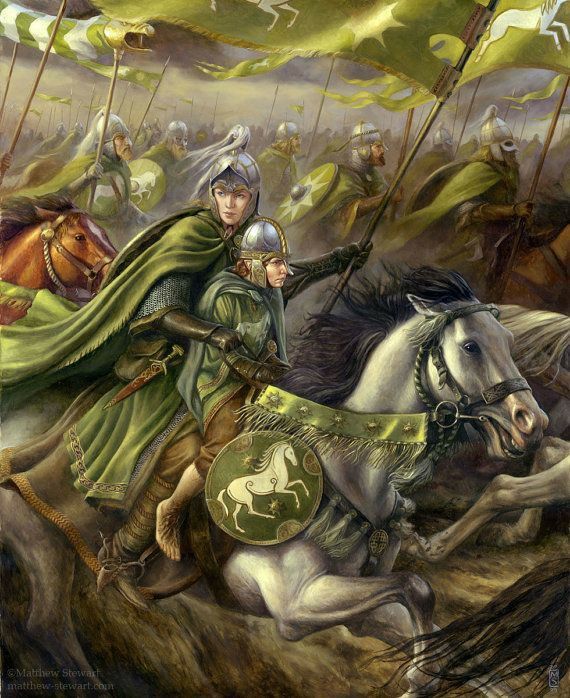
Although he doesn’t draw a direct parallel, I think that the suggestion here is that the Uffington White Horse might have been an inspiration for Tolkien for the emblem of the Rohirrim,

(Matthew Stewart)

as it is for the area of England which includes the counties Shippey mentions in his list (which would have also been included in what is known as Anglo-Saxon Mercia, itself a Latin form of Old English Marc.)

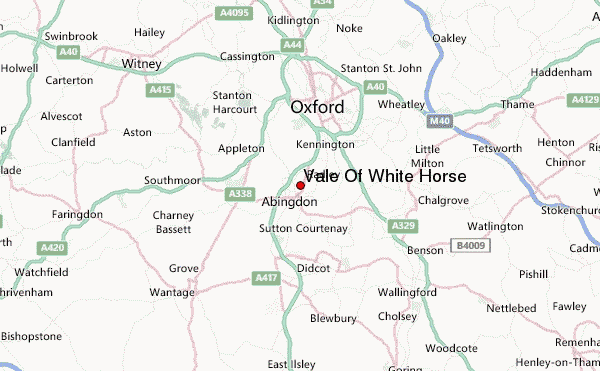
If  you’re not familiar with it, the White Horse is a huge (360 feet—110 metres–long) image cut into a chalky hillside about a 30-minute drive south from Oxford.

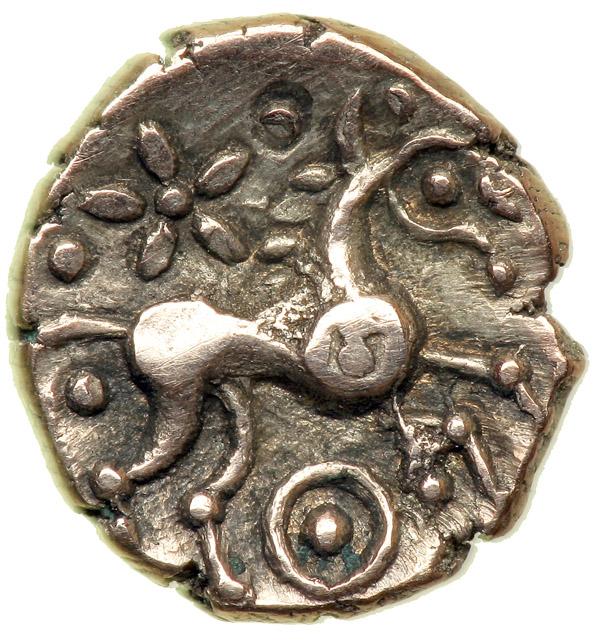
The latest dating of the site places it between 1380 and 550BC and it may be linked to the image on pre-Roman coins—

(for a cheerful brief article on the Horse, see:  https://www.smithsonianmag.com/history/3000-year-old-uffington-horse-looms-over-english-countryside-180963968/ )

This horse appears to have been an inspiration for other horses cut in hillsides, like the Cherhill horse, cut in 1780,

like that at Osmington, created in 1802,

or, at late as 1999, the Devizes White Horse, a celebration of the Millenium.

No one knows why the horse was originally cut into the hillside at Uffington—one theory is that it’s a tribute to the sun-chariot and its horse

(possibly a representation, possibly just a chariot warrior?  2nd century BC)

as seen in the so-called “Trundholm sun chariot” of c.1400BC—

(for a 360 degree view of this and more on the chariot, see:  https://en.wikipedia.org/wiki/Trundholm_sun_chariot )

One might also wonder about the description of a kingship ceremony celebrated in Celtic Ireland by Giraldus Cambrensis (Gerald of Wales) in his 12th-century Topographia Hibernica:

Est igitur in boreali et ulteriori Ultonite parte, scilicet

apud. Kenelcunuil, gens quaedam, quae barbaro

nimis et abominabili ritu sic sibi regem creare solet.

Collecto in unum universo terrae illius populo, in medium

producitur jumentum candidum. Ad quod sublimandus

ille non in principem sed in beluam, non in

regem sed exlegem, coram omnibus bestialiter accedens,

non minus – impudenter quam imprudenter se quoque

bestiam profitetur. Et statim jumento interfecto, et

frustatim in aqua decocto, in eadem aqua balneum ei

paratur. Cui insidens, de carnibus illis sibi allatis,

circumstante populo suo et convescente, comedit ipse.

De jure quoque quo lavatur, non vase aliquo, non manu,

sed ore tantum circumquaque haurit et bibit. Quibus

ita rite, non recte completis, regnum illius et dominium

est confirmatum.

“There is, therefore, a certain people in a northern and remote part of Ireland, that is at Kenelcunuil [glossed as Tirconnel, modern Donegal], which is accustomed to create a king for itself by a ceremony [which is] extremely barbarous and revolting.  When the whole people of that land has been gathered into one body, a shiny white mare is brought out into the midst.  To which [place] that one to be raised [to the throne] approaching like an animal [probably meaning “on all fours”] openly to all, not less shamelessly than rashly, he confesses himself [to be] a beast, as well.  And immediately, when the mare has been killed and, [cut into] pieces, has been cooked, a bath is prepared for him [the candidate] in the same water.  Sitting in which, with the populace standing around, and sharing with him, he himself eats some of the flesh brought to him.  By law, as well, he drains and drinks from which he is bathed not by any vessel nor with his hand, but only with his mouth from every side.  Thus, when these things have been completed by ritual, not by propriety, the kingship and lordship of that man has been confirmed.”

(Topographia Hibernica, Distinctio III, Capitulum XXV—my translation–if you would like to see the whole chapter in Latin, see:  https://archive.org/details/giraldicambrensi05gira/page/168/mode/2up ; in English:  https://ia800301.us.archive.org/5/items/historicalworkso00girauoft/historicalworkso00girauoft.pdf )

Could it be that that horse was placed there on that hillside to remind people of a similar British Iron Age ceremony?

(For more on horse sacrifice, see:  https://en.wikipedia.org/wiki/Horse_sacrifice If you love horses, as I do, this is not recommended reading!)

Then I picked up this, from a WIKI article on “White Horses in Mythology”:

“The white horse is a recurring motif in Ibsen’s play Rosmersholm, making use of the common Norse folklore that its appearance was a portent of death. The basis for the superstition may have been that the horse was a form of Church Grim, buried alive at the original consecration of the church building.” (https://en.wikipedia.org/wiki/White_horses_in_mythology )

A horse sacrifice is already grim—but what’s this? I wondered.  A “Church Grim”?  if it’s “common Norse folklore that its appearance was a portent of death”, then is that meaning of “Grim” related to the Old English word grima (2), “a spectre, goblin, nightmare”?  If so, where might we find something about “common Norse folklore”?  I went to Benjamin Thorpe’s Northern Mythology (3 volumes, London, 1851), where, in Volume II , we find:

“THE CHURCH-GRIM AND THE CHURCH-LAMB.

Heathen superstition did not fail to show itself in the construction of Christian churches. In laying the foundation, the people would retain something of their former religion, and sacrificed to their old deities, whom they could not forget, some animal, which they buried alive, either

under the foundation or without the wall. The spectre of this animal is said to wander about the churchyard by night, and is called the Kyrkogrim, or Church-grim. A tradition has also been preserved, that under the altar in the first Christian churches a lamb was usually buried, which imparted security and duration to the edifice. This is an emblem of the genuine Church-lamb, the Saviour of

the world, who is the sacred corner-stone of his church and congregation. When any one enters a church at a time when there is no service, he may chance to see a little lamb spring across the quire and vanish. That is the Church-lamb. When it appears to a person in the church yard, particularly to the gravediggers, it is said to forebode the death of a child that shall be next laid in the earth.” (page 102)

(if you’d like to read more, these three volumes are available at the wonderful Internet Archive.  Here’s the LINK for Volume II:  https://archive.org/details/northernmytholog02thor )

So, if we put all of this together, might we imagine that, for the Rohirrim, after Theoden’s death, that white horse on their banner may have taken on added meaning:  not only symbol of their land, but also of sacrifice, both of their king and his white horse, in order to protect that land from future invasion, as the Church Grim defends the church and its burying ground?

(Matthew Stewart)

Thanks for reading, as ever.

Stay well,

Churchyards at night?  Probably not.

And remember that, as always, there’s

MTCIDC

O

PS

Just a footnote—another meaning of grima in Old English is “mask”.  Perhaps this is why JRRT chose that as the name for Theoden’s traitorous counselor?

(Alan Lee)

← Older posts
Newer posts →

The Doubtful Sea Series Facebook Page

The Doubtful Sea Series Facebook Page

  • Ollamh

Categories

  • Artists and Illustrators
  • Economics in Middle-earth
  • Fairy Tales and Myths
  • Films and Music
  • Games
  • Heroes
  • Imaginary History
  • J.R.R. Tolkien
  • Language
  • Literary History
  • Maps
  • Medieval Russia
  • Military History
  • Military History of Middle-earth
  • Narnia
  • Narrative Methods
  • Poetry
  • Research
  • Star Wars
  • Terra Australis
  • The Rohirrim
  • Theatre and Performance
  • Tolkien
  • Uncategorized
  • Villains
  • Writing as Collaborators
Follow doubtfulsea on WordPress.com

Across the Doubtful Sea

Recent Postings

  • The Damage of Dragons March 11, 2026
  • Encouragement March 4, 2026
  • Eavesdropping February 25, 2026
  • Do You Speak Villain? (Part 3) February 18, 2026
  • Do You Speak Villain? (2) February 11, 2026
  • Do You Speak Villain? (Part 1) February 4, 2026
  • Towering January 28, 2026
  • Tolkien Among the Indians January 21, 2026
  • Thin and Stretched January 14, 2026

Blog Statistics

  • 109,004 Views

Posting Archive

  • March 2026 (2)
  • February 2026 (4)
  • January 2026 (4)
  • December 2025 (5)
  • November 2025 (4)
  • October 2025 (5)
  • September 2025 (4)
  • August 2025 (4)
  • July 2025 (5)
  • June 2025 (4)
  • May 2025 (4)
  • April 2025 (5)
  • March 2025 (4)
  • February 2025 (4)
  • January 2025 (5)
  • December 2024 (4)
  • November 2024 (4)
  • October 2024 (5)
  • September 2024 (4)
  • August 2024 (4)
  • July 2024 (5)
  • June 2024 (4)
  • May 2024 (5)
  • April 2024 (4)
  • March 2024 (4)
  • February 2024 (4)
  • January 2024 (5)
  • December 2023 (4)
  • November 2023 (5)
  • October 2023 (4)
  • September 2023 (4)
  • August 2023 (5)
  • July 2023 (4)
  • June 2023 (4)
  • May 2023 (5)
  • April 2023 (4)
  • March 2023 (5)
  • February 2023 (4)
  • January 2023 (4)
  • December 2022 (4)
  • November 2022 (5)
  • October 2022 (4)
  • September 2022 (4)
  • August 2022 (5)
  • July 2022 (4)
  • June 2022 (5)
  • May 2022 (4)
  • April 2022 (4)
  • March 2022 (5)
  • February 2022 (4)
  • January 2022 (4)
  • December 2021 (5)
  • November 2021 (4)
  • October 2021 (4)
  • September 2021 (5)
  • August 2021 (4)
  • July 2021 (4)
  • June 2021 (5)
  • May 2021 (4)
  • April 2021 (4)
  • March 2021 (5)
  • February 2021 (4)
  • January 2021 (4)
  • December 2020 (5)
  • November 2020 (4)
  • October 2020 (4)
  • September 2020 (5)
  • August 2020 (4)
  • July 2020 (5)
  • June 2020 (4)
  • May 2020 (4)
  • April 2020 (5)
  • March 2020 (4)
  • February 2020 (4)
  • January 2020 (6)
  • December 2019 (4)
  • November 2019 (4)
  • October 2019 (5)
  • September 2019 (4)
  • August 2019 (4)
  • July 2019 (5)
  • June 2019 (4)
  • May 2019 (5)
  • April 2019 (4)
  • March 2019 (4)
  • February 2019 (4)
  • January 2019 (5)
  • December 2018 (4)
  • November 2018 (4)
  • October 2018 (5)
  • September 2018 (4)
  • August 2018 (5)
  • July 2018 (4)
  • June 2018 (4)
  • May 2018 (5)
  • April 2018 (4)
  • March 2018 (4)
  • February 2018 (4)
  • January 2018 (5)
  • December 2017 (4)
  • November 2017 (4)
  • October 2017 (4)
  • September 2017 (4)
  • August 2017 (5)
  • July 2017 (4)
  • June 2017 (4)
  • May 2017 (5)
  • April 2017 (4)
  • March 2017 (5)
  • February 2017 (4)
  • January 2017 (4)
  • December 2016 (4)
  • November 2016 (5)
  • October 2016 (6)
  • September 2016 (5)
  • August 2016 (5)
  • July 2016 (5)
  • June 2016 (5)
  • May 2016 (4)
  • April 2016 (4)
  • March 2016 (5)
  • February 2016 (4)
  • January 2016 (4)
  • December 2015 (5)
  • November 2015 (5)
  • October 2015 (4)
  • September 2015 (5)
  • August 2015 (4)
  • July 2015 (5)
  • June 2015 (5)
  • May 2015 (4)
  • April 2015 (3)
  • March 2015 (4)
  • February 2015 (4)
  • January 2015 (4)
  • December 2014 (5)
  • November 2014 (4)
  • October 2014 (6)
  • September 2014 (1)

Blog at WordPress.com.

  • Subscribe Subscribed
    • doubtfulsea
    • Join 78 other subscribers
    • Already have a WordPress.com account? Log in now.
    • doubtfulsea
    • Subscribe Subscribed
    • Sign up
    • Log in
    • Report this content
    • View site in Reader
    • Manage subscriptions
    • Collapse this bar
 

Loading Comments...