• About

doubtfulsea

~ adventure fantasy

Author Archives: Ollamh

In Mint Condition

04 Wednesday Aug 2021

Posted by Ollamh in Uncategorized

≈ Leave a comment

Welcome, as ever, dear readers.

A Nazgul

(By Anato Finnstark—I very much like the misty effect of the rider)

is prowling the Shire, asking about “Baggins”.

 He has made the mistake not only of trying to get information out of Farmer Maggot, but of trying to bribe him, when told that he’s in the wrong part of the Shire:

“ ‘Baggins has left,’ he answered in a whisper.  ‘He is coming.  He is not far away.  I wish to find him.  If he passes will you tell me?  I will come back with gold.’ “ (The Fellowship of the Ring, Book One, Chapter 4, “A Short Cut to Mushrooms”)

Although Maggot rejects that offer of gold, I found it interesting.  Where will he go to obtain such gold?  And what gold will it be?

Unfortunately, there is no answer in the text to either question.  If he’s not simply lying (who would trust a Nazgul?), he is on horseback, not on one of those dragon/pterodactyl mounts the Nazgul are fond of.

A trip back to Mordor for cash would take too long, then, when he’s in hot pursuit of Frodo.  This would suggest, if he is telling the truth, that he has a local source.  It will later become clear that Saruman has agents in the Shire, so perhaps Sauron does, too?

As to the second question, the Nazgul says, “gold”, so I presume he means not ingots,

but coins of some sort.

But the question then arises, what kind of coins might these be?

Coins are mentioned a few times in The Lord of the Rings, including the price of Bill, the pony—“twelve silver pennies” (The Fellowship of the Ring, Book One, Chapter 11, “A Knife in the Dark”)—but I’m not aware that these coins are ever described in any detail—and whose coins are they and where do they come from? 

Because all such information is lacking, I imagine that the Nazgul, if telling the truth, has, somewhere, a sack of coins from Mordor itself—gold coins, at that.  Western Mordor, at least the part we see in Sam and Frodo’s travels, seems utterly barren,

but Sauron has armies to feed and the myriad horses and mules and oxen needed to carry such armies beyond his gates, and that food and those beasts have to come from somewhere.  Even if we presume that much can be produced from green lands beyond the Sea of Nurnen, Sauron has allies farther south in Harad, suggesting that he has commerce of some sort with them and, as we know from those twelve silver pennies, Middle-earth appears not to be based upon a barter-system.

So what would such coins look like?

The earliest Western coins came from Lydia in western Asian Minor in the 7th century BC and carried on the obverse (the front) the images of bulls and lions.

Alexander the Great’s father, Philip II, seems to have been the first to put his own profile on a coin,

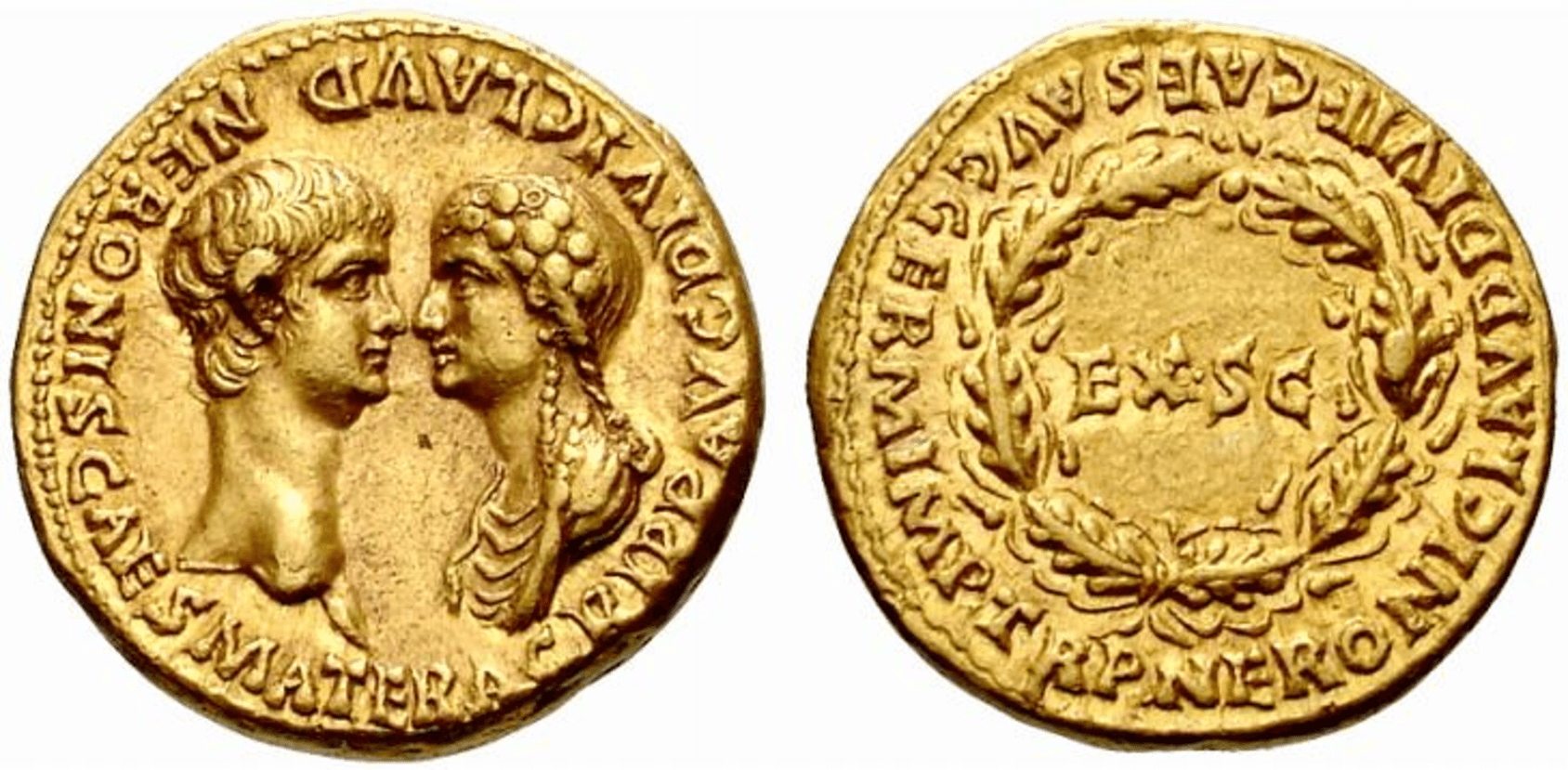
but that appears to have set a precedent for later rulers, with Julius Caesar being perhaps the first Roman to stamp his profile on his currency.

(This is rather an ironic coin, showing Caesar on the obverse and describing him as “dictatore perpetuo”—“being dictator for life”, a position he held for only a couple of months before he was murdered.)

You’ll notice that Caesar, like Philip before him, doesn’t wear an elaborate crown of some sort, like Darius on this early Persian coin,

but, instead, has only a simple wreath (not so modest, in fact, since, because it was used in sporting events, it could suggest that Philip—and Caesar after him—was a champion at being a ruler).  When the Carolingians began their own currency, in the later years of the 8th century AD in what we might think of as “France+”, they adopted a Roman model and so here’s their greatest ruler, Charlemagne (748-814 AD), looking more like a Roman emperor than a Germanic king, which is exactly what he intended.

This is, by the way, a silver denarius—a silver penny, just like those paid to Bill Ferny–and it’s just packed with information.  First, of course, is the portrait itself, with the ruler in profile (a tradition still in force on coins today), wreath of office firmly on his head.  And, because virtually no one would ever see Charlemagne himself, there’s his name, in a kind of Germanic Latin spelling, “Karolus”.  (Karl/Carl was his actual name.  What we use is a kind of name + title—Charl-le-magne—Charles le Magne, “Charles the Great”, which dates from a later time.)  Beyond his name are two important abbreviations:  IMP “emperor” and AUG “augustus”.   When Pope Leo III had crowned Charlemagne in Rome on Christmas Day, 800 AD,
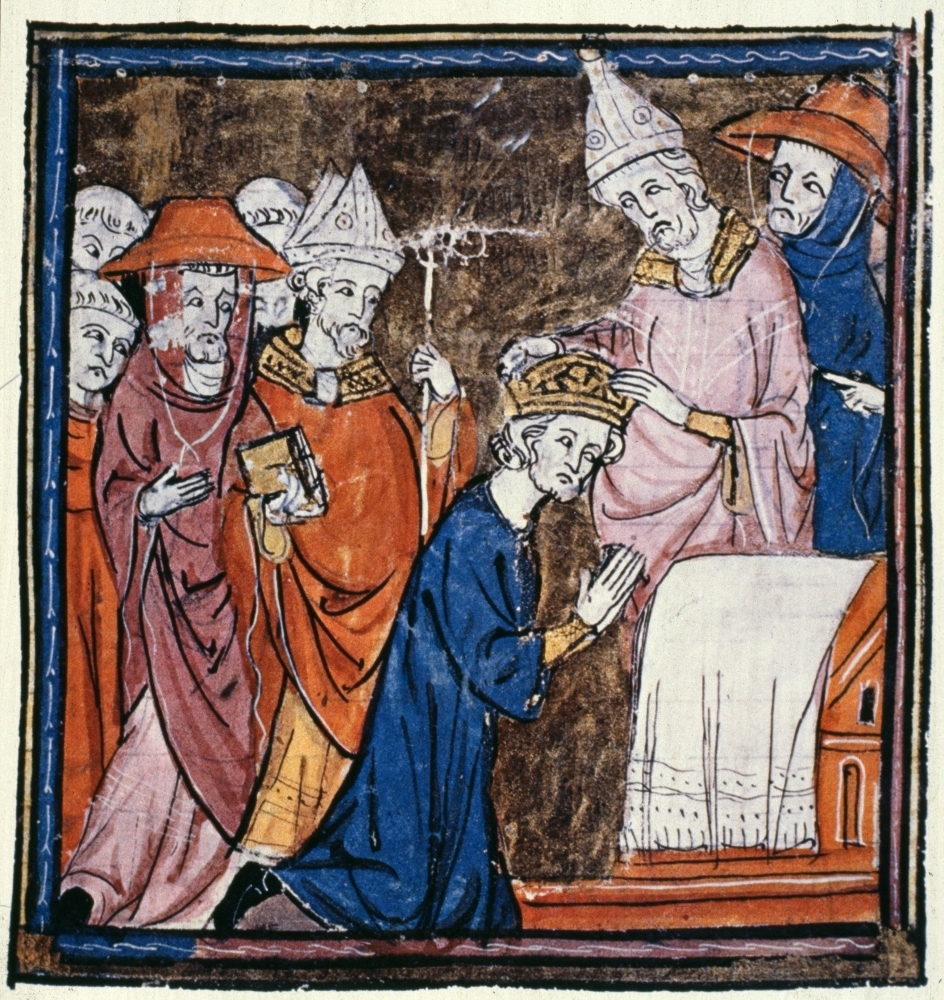
(This is from the 14th-century Grandes Chroniques de France, so the artist had no idea of the wreath, when it came to an accurate depiction of imperial headgear.)

he named him Imperator Romanorum, “Emperor of the Romans”, which, in fact, implied that Charlemagne was the successor to the last Byzantine emperor, Constantine VI, whom the Western world thought of as the “Roman emperor”, being the ruler of the surviving half of the old Roman empire.  Charlemagne never controlled that eastern empire, but it was a grand claim and Charlemagne was a grand (and very successful) ruler.  To Imperator, Charlemagne added Augustus, the most famous of Roman emperors (63 BC-14 AD),

and (according to Augustus himself), the restorer of Rome to former glories, implying that he, Charlemagne, was the new Augustus.  We might think that Charlemagne is also making a reference to the period after Diocletian (c.244-311 AD)

had divided the original Roman empire into two halves, each ruled by a co-emperor called an “Augustus”, suggesting that he is the actual monarch of the western half of the empire, even while claiming to be the emperor of the eastern half.  (The “M” under Charlemagne’s profile, by the way, stands for one of the government’s mints, that at Mainz.)

With such bold claims on the obverse, we see a different picture on the reverse (the back).  Here is depicted, it is now thought, the aediculum, the “little building” which the emperor Constantine had built over what he believed to be the tomb of Jesus in Jerusalem (c.326 AD) and, around it are placed the words religio xristiana, “Christian religion”.  Many of the peoples at the edges of Charlemagne’s empire were still worshippers of other, older gods and one of the goals of his imperial expansion was to expand Christianity, as well.  Depending upon your position, then, this might be a reassurance that Charlemagne was a firm supporter of your faith, or, should you be an older believer, that things were going to change under his rule.

With all of that behind us, what can we see as one of the Nazgul’s promised gold coins?

Let’s begin with a blank.

As we’ve seen, it’s a long tradition to place one’s kingly profile on the obverse, but what is Sauron’s profile?  As originally one of the Maiar (under the name Mairon), Sauron had no permanent form, being a spirit who could put on forms as needed, which Sauron did, over time.  After his defeat and loss of the Ring at the end of the Second Age, however, he doesn’t seem to have re-embodied himself as, for example, Gandalf and Saruman did, instead choosing a kind of symbolic form, which suggested eternal (menacing) vigilance, like Big Brother in Orwell’s 1984—

This image then turns up everywhere his subjects go, from shields
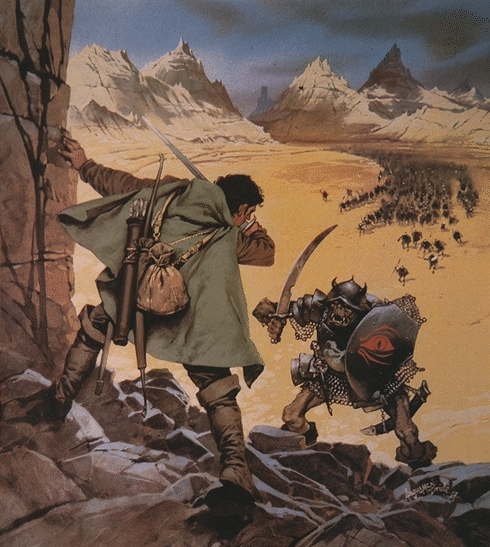
to graffiti on public monuments.
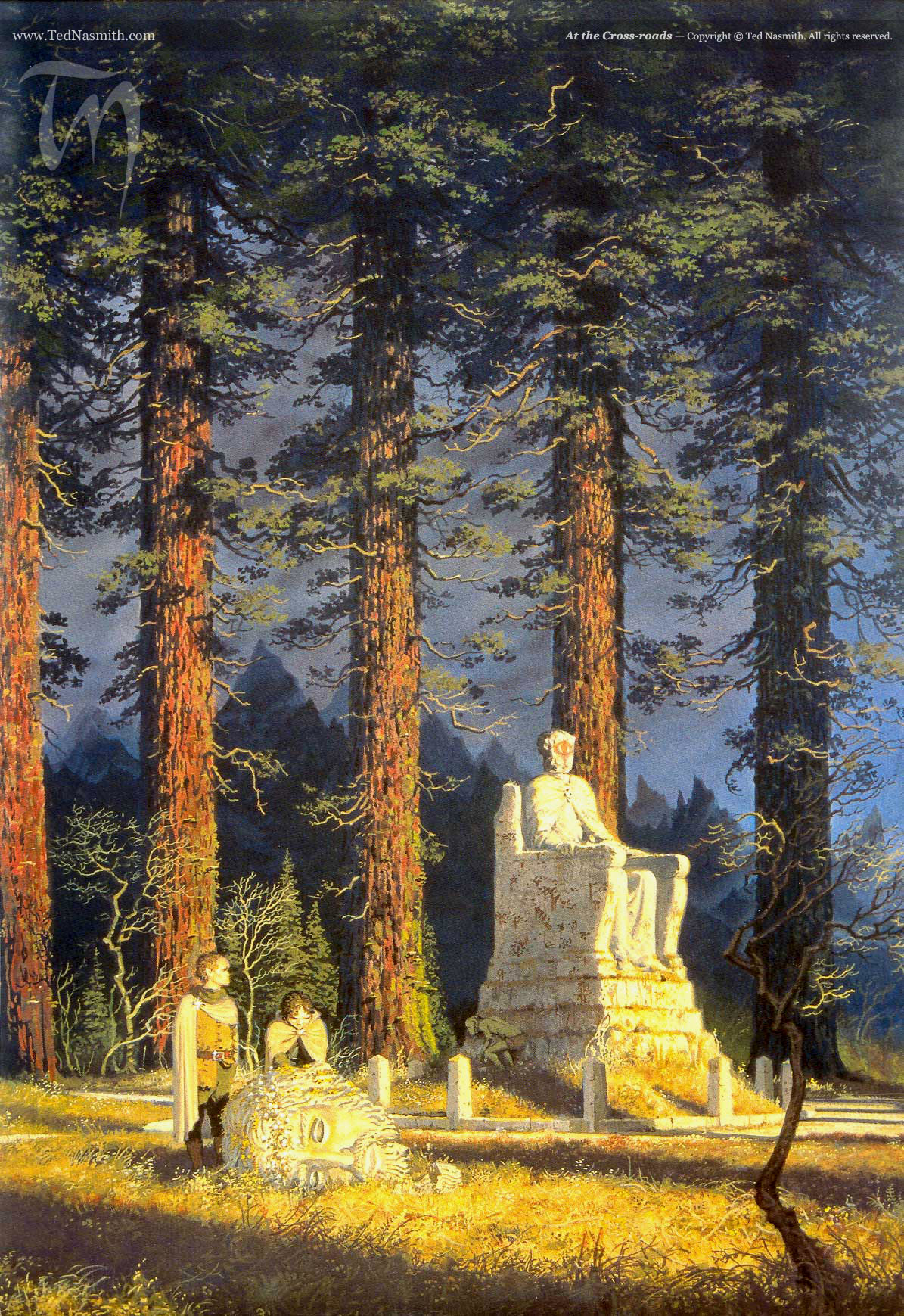
(At the Cross-roads, by Ted Nasmith–one of my favorite Tolkien artists, especially because he often chooses to illustrate scenes no one else has–and with a real sense of place.)

So, imagine that the obverse has, at its center, the Lidless Eye.

Coins like Charlemagne’s and Caesar’s and even Philip’s include the ruler’s name:   Karolus, Caesar, though Philip’s name has a genitive—possessive—ending, “Of Philip”.  We might assume that that simply means that the coin is his, but we might also see a more ambiguous message:   everything behind this coin—the metal mine, the mint, the power to control such things–all belongs to him—and maybe that’s true even of the holder of the coin, as well.

But Caesar is called “dictator for life” and Charlemagne “emperor” and “augustus”—what should Sauron’s title be? 

When the heralds of Gondor summon him at the Morannon, he is referred to as “the Lord of the Black Land” (The Return of the King, Book Six, Chapter 10, “The Black Gate Opens”), which seems a little meek.  When the Mouth of Sauron arrives for a parley, he refers to him as “Sauron the Great”, which is I’m sure how Sauron refers to himself, so this would give us two possibilities.  Around the Eye it might read:  SAURON LORD OF THE BLACK LAND or SAURON THE GREAT.

Philip gives his name in his native Greek and Caesar naturally uses his native tongue, Latin, for his inscription.  Although Charlemagne spells his name, as I’ve noted, somewhat Germanically, using a K for a Latin C (not surprising—his Frankish ancestors were Germanic tribesmen who invaded northern France—hence the name “France”), his inscription is an imitation of a Roman imperial coin, with his titles in Latin inscriptional shorthand.  In what language would the inscription on Sauron’s coin be in?  If he wanted it to be read in contemporary Middle-earth, we might think he would use the common tongue, written out in Tengwar.

If he wanted to suggest something more powerful—and mysterious?—he might use Tengwar, but the words might be in the Black Speech, rather like the inscription on the Ring.
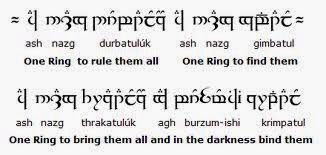
With the eye and one of those two labels on the obverse, what would be on the reverse?

The center of Sauron’s power—his capital—is the Barad-dur, the Black Tower, so I could easily see it represented there, with no inscription, simply a single figure of menace (in John Howell’s image).

As always, thanks for reading and

So, replaying the scene where the Nazgul tries to tempt Farmer Maggot, perhaps we can see the Nazgul, rather than promising a future reward, tossing one such coin to land at the Farmer’s feet, hissing, “And more to come, if you will tell me.”

Stay well,

Remember that all that glisters is not gold,

And know that, as ever, there’s

MTCIDC

O

 ps

If you would like to read more about Middle-earth and currency, please see the postings for 19 April (“Spare Change?”) and 26 April (“Hoarders”), 2017.
Placing a Name, Naming a Place

28 Wednesday Jul 2021

Posted by Ollamh in Uncategorized

≈ Leave a comment

Welcome, dear readers, as ever.
For me, one of the many pleasures of The Lord of the Rings is its landscape—not just that map which caused Tolkien so many hours of worry, but all of the places on it with all of their names, each clearly made with care and attention to linguistic detail, beginning with the creation of the Shire and all it contains, but moving beyond it to encompass the whole of Middle-earth.  As he explained in a letter to Rayner Unwin:
“Yet actually in an imaginary country and period, as this one, coherently made, the nomenclature is a more important element than in an ‘historical’ novel.” (Letter to Rayner Unwin, 3 July, 1956, Letters, 250)

And yet, for all of that care, Tolkien the story-teller never draws attention to that naming.  As in any country, especially a very old one, as the Shire and, in turn, Middle-earth, are meant to be, the names are just that and, like the land itself, they have become worn-down natural features.  As JRRT himself writes in that same letter to Rayner Unwin:

“Actually the Shire Map plays a very small part in the narrative, and most of its purpose is a descriptive build-up.”

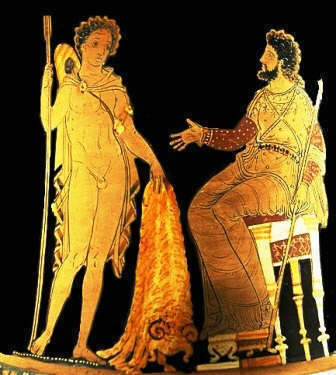
It’s always been a disappointment, then, to me that the main ancient telling of the story of Jason and the Golden Fleece

fell into the hands of a man who, unlike JRRT, was not the poet to tell such a romantic story, but was, instead, Apollonius of Rhodes (first half 3rd Century BC),

whose narrative, The Argonautica,

(This is a very early printed version, from 1521.)

is laid out in 4 books:  two to get Jason to his goal, Colchis,

one for a romance with Medea, the daughter of the nasty local king,

(shown here in a later murderous moment)

and one for grabbing the Fleece (and Medea)

and heading for home on a trip which includes, besides touring the Danube valley, carrying their ship, the Argo, across a desert.

This is a story with a typical folktale beginning:  Pelias, half-brother of Aeson, has overthrown Aeson and taken over the throne of Iolcus.  Now, Aeson’s son, Jason, is coming back to Iolcus, and uncle Pelias has been warned by an oracle to beware of a man wearing one sandal.  Jason, in fact, has just lost one of his, when he carried an old lady across a stream.

(Because there is an old folktale under this, that’s not really an old lady, it’s the goddess, Hera, in disguise, to test Jason—he obviously passes and she will help him throughout the rest of the story.)

Pelias, to get rid of Jason, gives him a quest:  bring back the Golden Fleece from the far side of the world.  (Without going into more detail, suffice it to say that the Fleece was on a flying escape ram piloted by Phrixus, along with his sister, Helle, who are—what else?  escaping the plots of an evil stepmother.)  This is meant to be an impossible task and Pelias has every expectation that Jason will not return, with or without the Fleece.

(This is the elaborate back of a 2nd century AD Roman mirror.)

What has always frustrated me about this telling is that, potentially, it’s packed with interesting adventures—harpies,

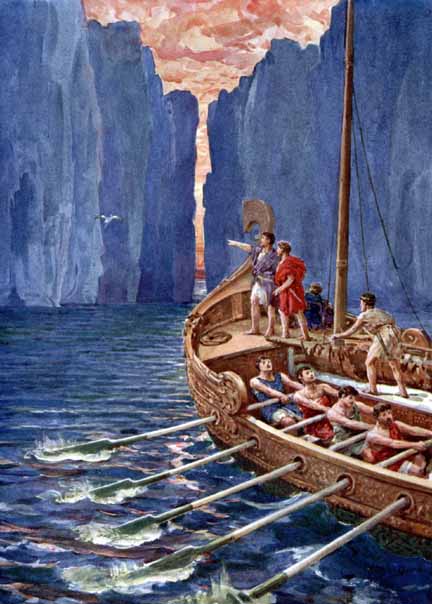
mobile cliffs,

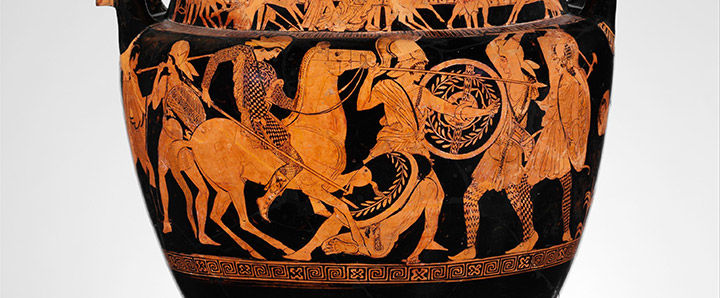
Amazons,

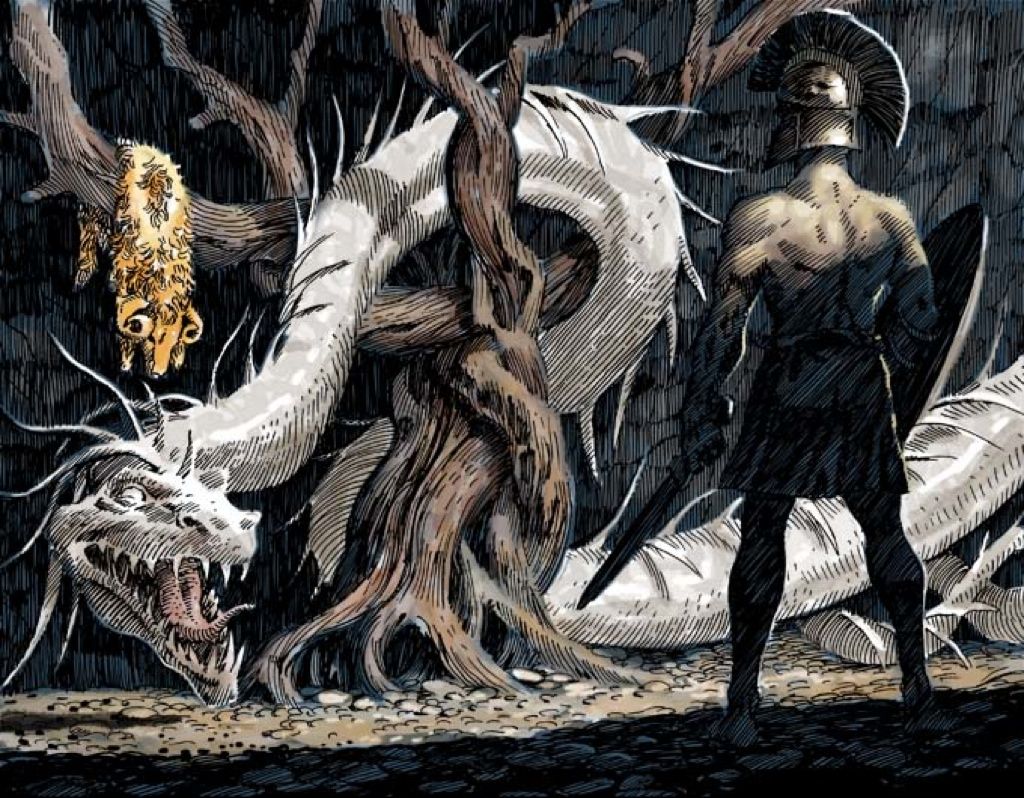
not to mention the fact that the Fleece itself is guarded by a sleepless dragon.

But, although he writes about these things, what really seems to interest Apollonius aren’t such epic challenges, but the origins of place names along Jason’s route.  This toponymy—the study of which comes, appropriately, from two Greek words, topos, “place” and onoma, “name”—then turns the narrative at times into a kind of geographic/mythological check list and so we spend what sometimes feels like half the trip forced to listen not to another Homer, but to a rather pedantic tour guide.

There are those scholars who have, in recent years, argued that Apollonius never intends to be another Homer and, coming from a later age of Greek literature (the so-called Hellenistic Era), he has different goals and, while this could certainly be true, for me, an epic story like this should be epic, not microscopic.

Tolkien, in contrast, although he spent so much time creating those place names and attaching them to geographical features, still sees them as simply part of the “build-up”, that is, the physical context in which his characters move.

I want to emphasize, however, that, although Apollonius may overfocus on toponymy and sometimes weigh his story down with it, this isn’t to argue that toponymy in itself is a dull subject:  on the contrary, it’s a very interesting subject and Tolkien was certainly one of those interested, once writing to his son, Christopher, that “I like history, and am moved by it, but its finest moments for me are those in which it throws light on words and names!”  (letter to Christopher Tolkien, 21 February, 1958, Letters, 264)

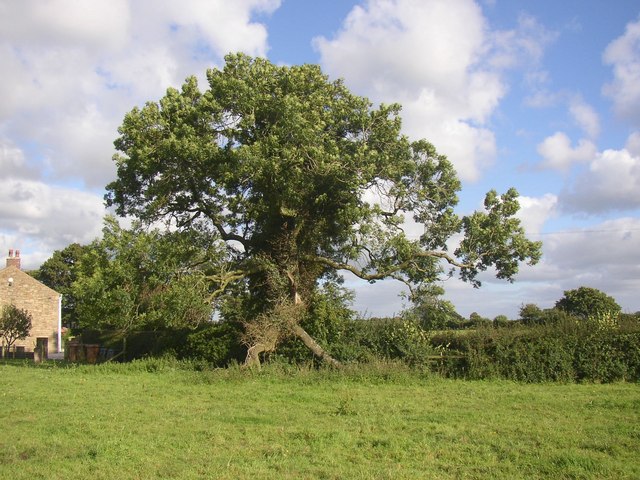
This isn’t surprising as JRRT, with his keen ear and eye for language, lived in an England whose very  history could be traced in broad terms in the strata of its toponymy.  Traces of its Celtic settlers barely survive, but some place and river names, like the Avon, reflect the language of the pre-Roman inhabitants (afon meaning “river”).  Roman occupation in all its might appears in every place with “chester/cester/caster” as an ending, from Latin castra, “military camp”.  The Anglo-Saxons are everywhere with endings like -ton (old tun, “enclosure”) and -hurst (hurst, “clearing”).  Though there are many fewer Norman names, we can still see traces of their take-over in a compound like Ashby-de-la-Zouch, which I mentioned in my last as the scene of the great tournament in Scott’s Ivanhoe.  This name even adds a Viking element, by, “settlement”, to an Anglo-Saxon ash, “ash tree” together with the family name of the later Norman owners, the La Zouche family, who owned a nearby castle in the 13th century.  Putting all of these elements together gives us hundreds of years of medieval history, while also making a bold political statement:  “the settlement among the ash trees” it begins—and then, as if in large letters on a billboard on the way into the village—”NOW OWNED BY THE LA ZOUCHE FAMILY”.

(Just in case you don’t have an ash tree in your mental topography)

How little we would know about that place if it had simply been called “Ash” and I wonder what the Argonautica might have been like if, like Tolkien, Apollonius could have loved his toponymic trees, but let them stand as only a part of his narrative forest?

Thanks, as always, for reading,

Stay well,

Wherever you are, look at a place name and wonder,

And, as ever, know that there’s

MTCIDC

O

PS

With this, essay #363, doubtfulsea.com is now beginning its 7th year.  Years ago, a fortune teller (yes—a real one, a member of the really interesting Romani culture ), told me that my lucky number was 7, so I’m looking forward to another year full of essays about everything from epic to adventure to the occasional film review (I have the Jackson film of Mortal Engines first on my list) to whatever catches my interest and, if you’re a regular reader, you know that this means almost anything.

La Belle Dame

22 Thursday Jul 2021

Posted by Ollamh in Uncategorized

≈ Leave a comment

Welcome, dear readers, as ever.

Unlike The Hobbit, which is written in a chatty modern style, much of The Lord of the Rings is written in what we now might see as an elevated tone, with lines like

“ ‘Nay, Gandalf!’ said the King.  ‘You do not know your own skill in healing.  It shall not be so.  I myself will go to war, to fall in the front of the battle, if it must be.  Thus shall I sleep better.’ “

 Such language in a novel published in the 1950s, could be called “Wardour Street English”, after an area of London known  in the 19th century for its antique dealers,

and, to some, it reeked of old-fashioned melodrama, with high emotions spoken in archaic language, full of “Thou villain!” and  “Seek ye to do scath?”

As one who weighed practically every word of the many drafts of the book, Tolkienreplied to criticism of the lines above by writing:

“For a king who spoke in a modern style would not really think in such terms at all, and any reference to sleeping quietly in the grave would be a deliberate archaism of expression on his part (however worded) far more bogus than the actual ‘archaic’ English that I have used.”  (draft of unsent letter to Hugh Brogan, September, 1955—Letters, 226)

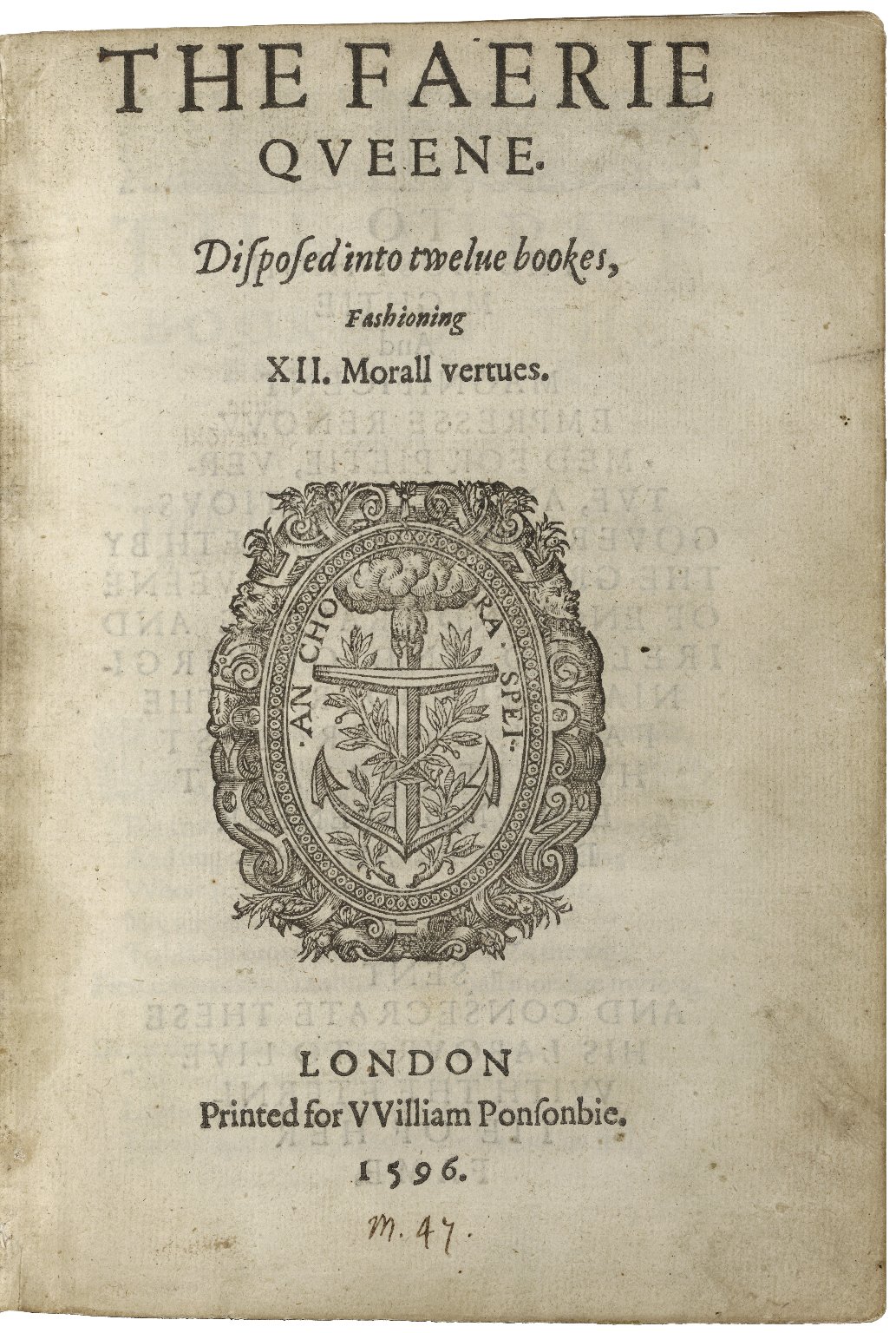
We can accept his reasoning or not, but JRRT’s literary medievalism already had a relatively long history.  Beyond the deliberate Elizabethan archaizing of Edmund Spencer’s ( 1552-1599)                

The Faerie Queene (1590-1596),

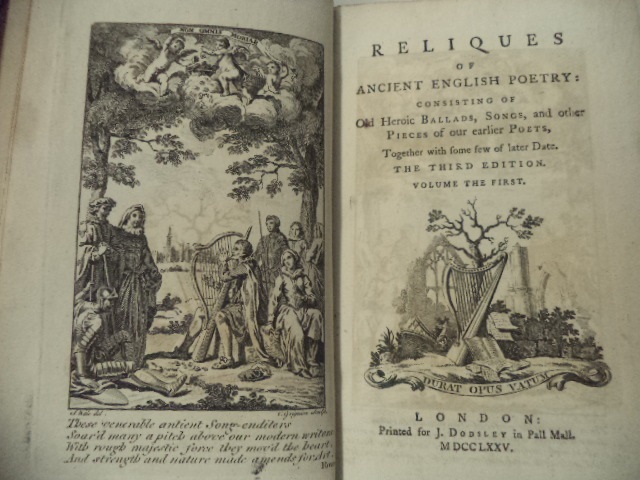
real  sustained interest in the medieval past—as people of the time understood it– began to appear in the 18th century with everything from Bishop Percy’s (1729-1811)

Reliques of Ancient English Poetry (1765)

(an early edition)

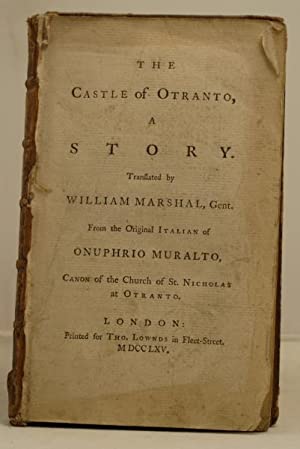
to  Horace Walpole’s (1717-1797)

“gothique” novel—the first of its kind—The Castle of Otranto (1765),

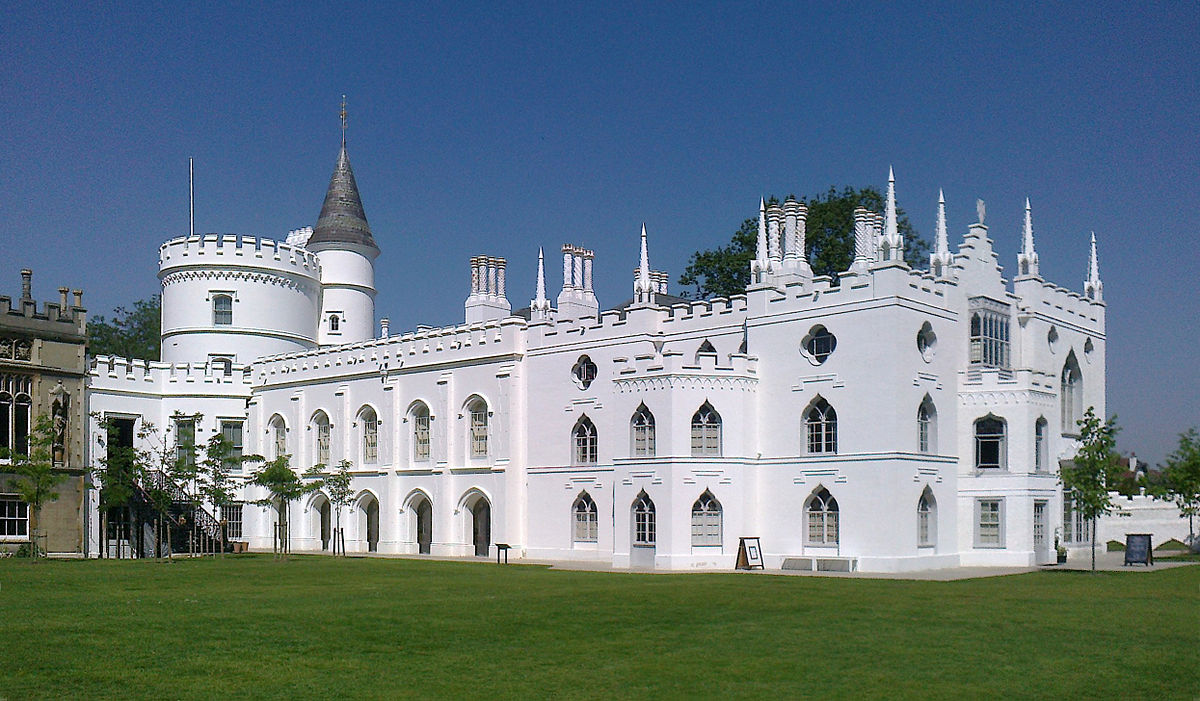
 to Walpole’s own “castle”, Strawberry Hill (seen in the background of his portrait),

which still survives (it’s a wonderfully wacky building, full of architectural surprises).

The “Middle Ages” became an abiding fascination in Britain, extending through the 19th century.  Here, not content to read those novels of Sir Walter Scott (1771-1832),

like Ivanhoe (1819) and The Talisman (1825), which were set in the medieval past, there were those who were imaginative enough (and wealthy enough) who wanted to relive a bit of that long-ago time by holding a joust, like the one described at Ashby-de-la-Zouch in Ivanhoe.  This was the famous Eglinton Tournament of 1839.

(This is a color plate from the 1843 commemorative book—you can have your own copy from the Internet Archive by going to:  https://archive.org/details/eglintontourname00rich/page/n41/mode/2up  –and don’t forget to contribute—many of the LINKS I’ve included in doubfulsea postings over the years have all come from this really important site.)

By mid-century, Alfred, Lord Tennyson  (1809-1892)

was producing, under the omnibus title Idylls of the King (1859-1885),

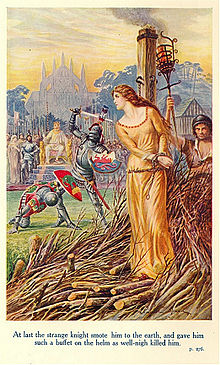
a long series of poems about King Arthur and his court.  For modern readers, I suspect that they would appear heavy and sometimes overly-moralistic—Guinevere, for example, instead of being nearly burnt at the stake, but rescued just in time by Lancelot, 

as she is in Mallory’s Morte d’Arthur, one of Tennyson’s main sources, repents her adultery, is forgiven by Arthur, and dies in a convent. 

There is a wealth of Arthurian illustration from this period and, should you want to see many examples, I recommend that you visit the University of Rochester (New York)’s Camelot Project at:  https://d.lib.rochester.edu/camelot-project  This is a comprehensive site for Arthurian subjects and full of things to read and look at.

There is an alternative view of that near-burning, however, by a very important source for medievalism in later-Victorian Britain, as well as a powerful influence upon Tolkien, William Morris (1834-1896).

In 1858, Morris published The Defence of Guinevere and Other Poems .

In the title poem, Guinevere’s defence isn’t an act of penitence, as she is, in fact, not in the least concerned with Tennyson’s Victorian morality, but a way of stalling her sentence until Lancelot appears to rescue her.   From its opening stanza, this is a very different approach to the Arthur story and, if you’d like to read it for yourself, here’s a LINK:  https://archive.org/details/in.ernet.dli.2015.45751

Morris takes us late into this medieval revival, but I want to conclude by going back to the beginning of the 19th century, to one of my favorite examples of such literature, Keats’ “La Belle Dame Sans Merci”, written, it seems, in a single draft in 1819. We have two different versions, however, one published in 1820, during the poet’s lifetime, and a second, which is, if you know the poem, more likely the version you are acquainted with.  Although this was published in 1848, long after Keats’ death in Rome in 1821,  it appears, in fact, to be the first version of the text.  (Here’s a LINK so that you can compare the versions:   https://en.wikipedia.org/wiki/La_Belle_Dame_sans_Merci  )

The poem itself belongs to a specific story type, that of someone who is taken by people from another world—perhaps, in contemporary terms, it would be “alien abduction”—

but, to earlier creators and their audiences, this would be “taken to Faerie”,  a theme as early as Irish and Welsh myth, and which appears in a number of later ballads—a major source for Keats—like “Tam Lin” (Child Ballad #39—here’s  a LINK to one—among a number of versions:  http://www.tam-lin.org/versions/39A.html )

and  “Thomas Rymer” (Child #37—and a LINK:  https://sacred-texts.com/neu/eng/child/ch037.htm  ).

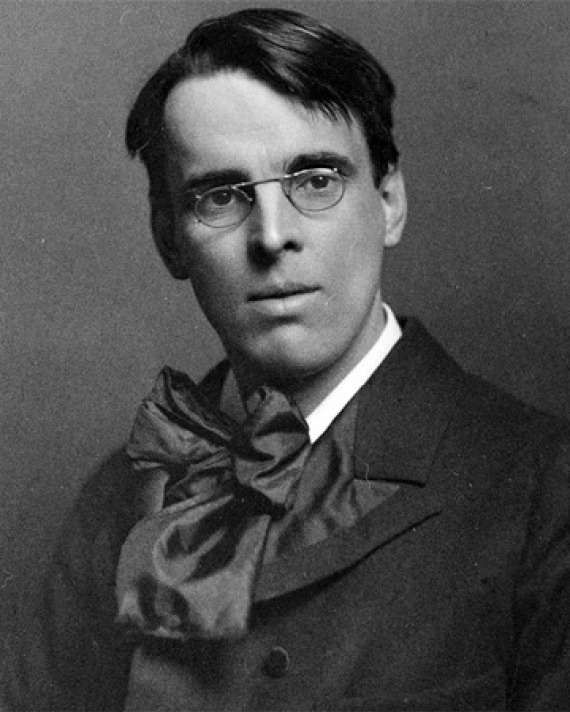
In such ballads—and in older stories—a mortal is either invited to, carried off to, or seduced to go to, another world, sometimes by an enchanting (literally) woman, as in the Keats poem.  Often, the mortal has either to be rescued, or returns to this world only to find that time, as in the case of Narnia, isn’t measured in the same way, and it’s hundreds of years later, as in WB Yeats’  (1865-1939) early long poem

“The Wanderings of Oisin” (1885) (OH-sheen).

Here’s the 1848 text of the Keats poem—

There’s a striking setting of this by Charles Villiers Stanford (1852-1924)

and here’s a LINK to a beautiful performance by the mezzo-soprano Kitty Whately:   https://www.youtube.com/watch?v=dNa-3zuSrY4

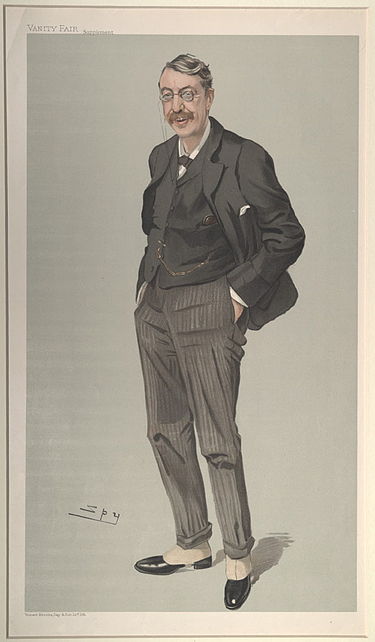
The English satirist, Michael Flanders (1922-1975),

once translated Keats’ title as “the beautiful lady who never says thank you” and, rereading the poem, perhaps you’d agree?

Thanks for reading, as always,

Stay well,

Decline invitations by unknown (but seductive) persons,

And know that there’s always

MTCIDC

O

U- and Dys-

14 Wednesday Jul 2021

Posted by Ollamh in Uncategorized

≈ Leave a comment

As always, dear readers, welcome.

In 1516, an English intellectual and sometime diplomat, Sir Thomas More (1477-1535),

published a book with the easy-to-remember title:  De Optimo Rei Publicae Statu Deque Nova Insula Utopia Libellus Vere Aureus, Nec Minus Salutaris Quam Festivus

(This is from the Basel publication of 1518.)

“Concerning the Best Situation of a State and About the New Island ‘Utopia’, A Little Book Not Only Golden [But] No Less Beneficial Than Witty”

which was, in time, not surprisingly shortened to Utopia.

(This is from the second English translation, by Bishop Burnet, in 1684.)

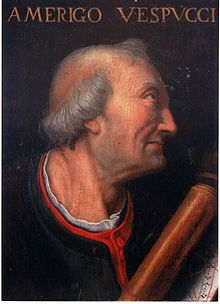
It claimed to be a kind of travel tale, in which More cleverly uses the background of the account of Amerigo Vespucci’s (1451-1512),

(from a posthumous portrait)

voyages to the New World, published in 1505,

(It says in Italian: “A Letter of Amerigo Vespucci about the islands new discovered in his four voyages”.)

to present a fictional participant, Raphael Hythlodaeus, who is not the “mariner” (nauclerus) More at first takes him to be, but someone “not unlearned in Latin and extremely adept in Greek” (linguae latinae non indoctus, et graecae doctissimus), being a philosopher, rather than a sailor.

In the text which follows, Hythlodaeus describes to More in great detail a newly-discovered island, Utopia, which has an idealized communal state.

The word “utopia” could be read two ways:

1. a Latinized version of Greek eutopia, “a fine place”

2. a Latinized version of Greek outopia, “no place”

In fact, as More’s original Latin name for it was Nusquama, from Latin nusquam, meaning, among other things “nowhere”, and adding to this Raphael’s last name, “Hythlodaeus”, from the Greek word [h]uthlos, “nonsense”, we can see that More intends us to see this place as something to be discussed, but not believed.

From the same ending, -topia, we can also find a much darker possibility, a dystopia, literally a “bad place” and this term, as the very useful Etymonline informs us, which began as a medical term for “internal organ out of place”, had become, by the 1860s, the opposite of the other possible meaning of utopia as “good place”. 

When I think about dystopias in terms of literary history, I immediately think first of the future world depicted by HG Wells (1866-1946)

in his 1895 short novel, The Time Machine.

Originally published as a series in The New Review, it describes, among other spots on his trip into the future, the unnamed protagonist’s time in the England of 802,701ad.  Here, the landscape is populated by the Eloi, who live above ground and seem like the ultimate ideal of Arcadians:  simple, childlike people, like Victorian aristocrats, who consume but don’t produce, and, as the time-traveler soon discovers, the Morlocks, who live below ground and are, it seems, the descendants of all the millions of lower-class people who were the actual workers and producers in Victorian times.  The Eloi, it turns out, only exist because of the Morlocks, but, in return, the Morlocks exist because they feed upon the Eloi.

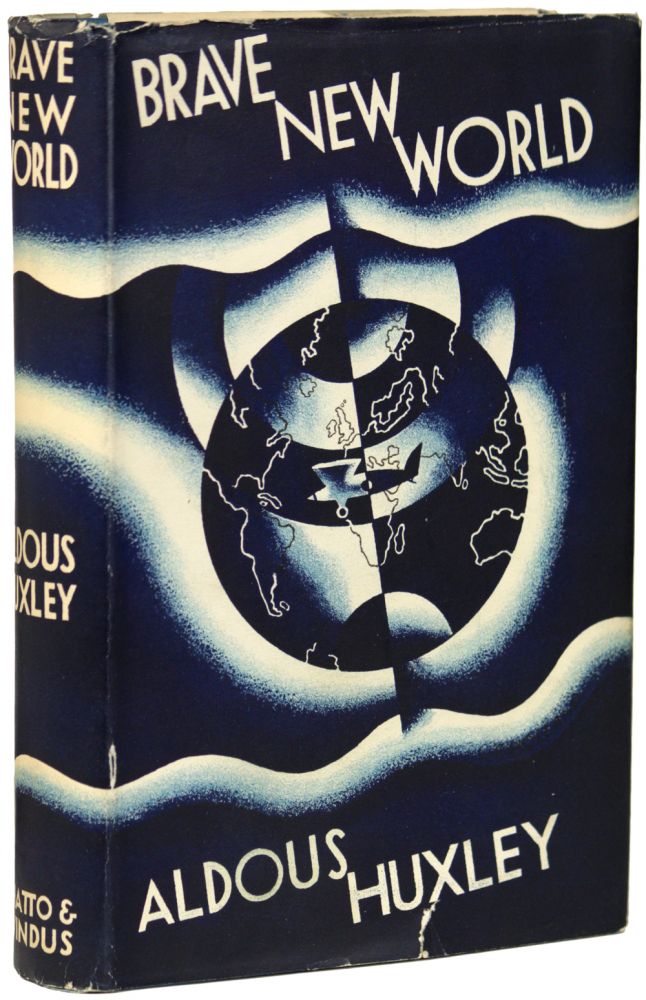
More’s Utopia was clearly meant as a commentary upon early 16th-century society and, in the stratification of the English population into only two groups, one idle, but harmless, the other diligent but malevolent (besides consuming the Eloi, they steal the time machine and attempt to capture the traveler), we can easily imagine that Wells is suggesting that all is not well in late-Victorian society.  Other, later dystopian works, like Aldous Huxley’s 1932 Brave New World,

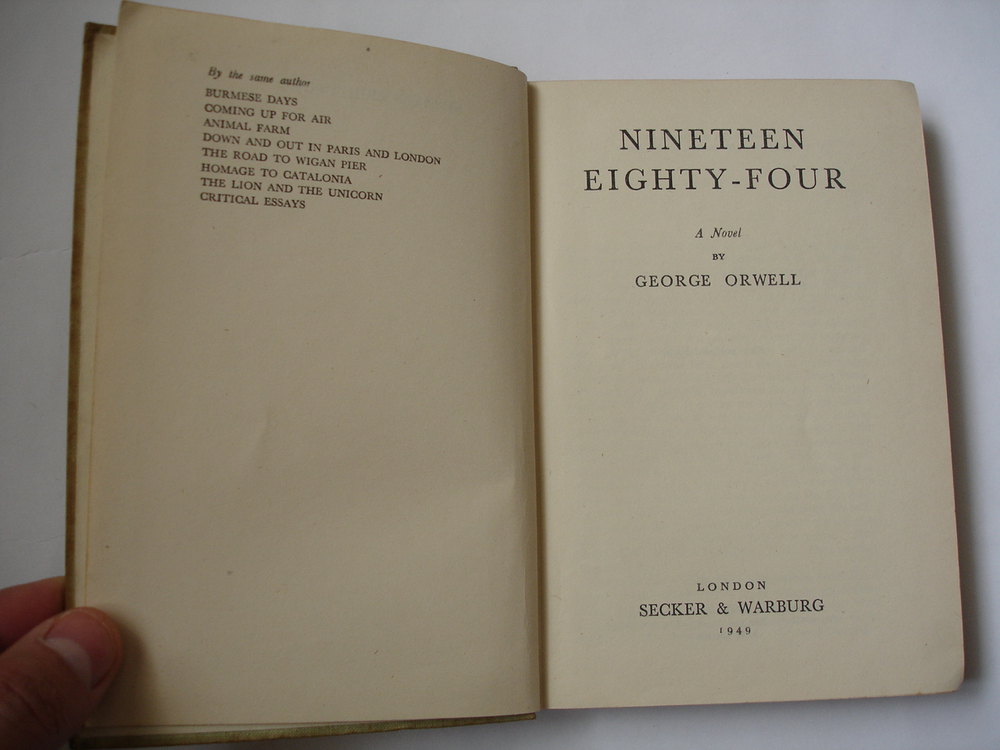
in which a society is ruled by those who control its genetics, and Orwell’s 1984

where we see what appears to be a worn-out post-WW2 Britain as a kind of regimented and fear-ridden Stalinist state, provide much more detailed versions of a grim future (but such fun to read about) and my most recent experience is clearly an even more elaborate version of such a future.

I’ve just finished the first volume of Philip Reeve’s

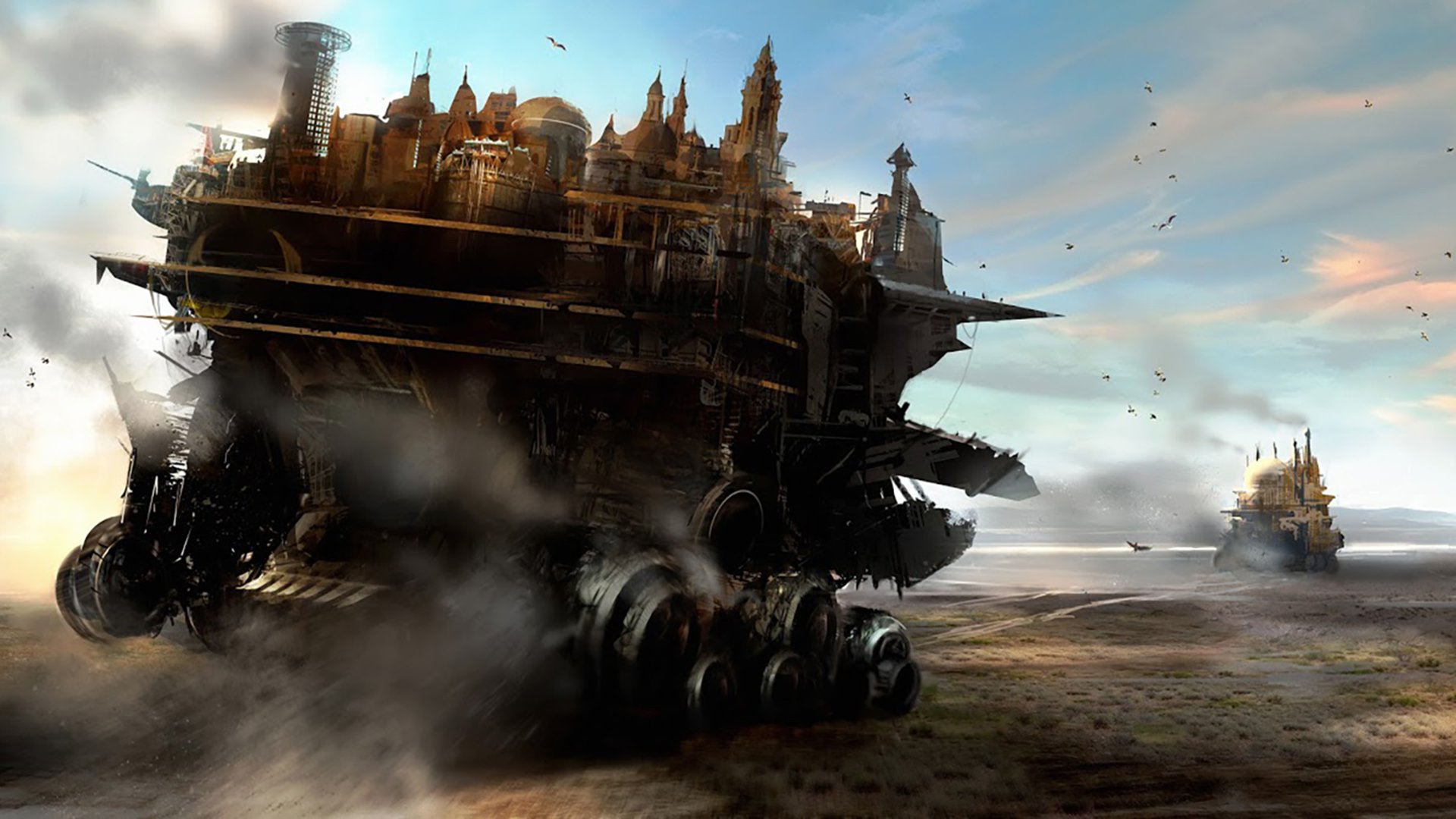
series, Mortal Engines,

and its setting—a bleak far future, in which many of the world’s cities, the initial focus being on London, are now mounted on huge treads and roam the empty countryside, gobbling up smaller cities.

The word “steampunk” has been attached to this future by some critics, and I can see why, it being a sort of alternate history in which elements of many centuries are all mixed together—electricity with airships,

(a wonderful image, by David Wyatt)

firearms with swords, but it’s also a dystopia, the London depicted

 in particular being a kind of monstrous exaggeration of current London, with the workers of the city being divided into guilds and social stratification being extreme, the richest and most powerful living at the top, the poor majority residing in the lowest tiers, and technology, in the form of the Engineering Guild, being the dominant.

It’s perhaps a sign of the present day, however, in that, for all that I can think of more dystopias in modern fiction, I’m stumped to think of utopias in the sense of “good places”—perhaps the best we can hope for, then, as that all of these dark places are and will remain utopias in Thomas More’s sense.

Stay well,

Learn Newspeak (just in case),

And know that there is always

MTCIDC,

O

ps

In 1909, E.M Forster (1879-1970), whom you might know as the author of A Room with a View, A Passage to India, and my favorite, Howards End, published a really creepy—because it’s so prescient—short science fiction story, “The Machine Stops”.  I won’t say anything more about it, except that it’s, for the present, an especially striking example of a dystopia:  http://www.visbox.com/prajlich/forster.html

Sticks and Stones

07 Wednesday Jul 2021

Posted by Ollamh in Uncategorized

≈ Leave a comment

As ever, welcome, dear readers.

I imagine that you, like me, read something, then have a bit of it pop up in your mind when you least expect it.  Here’s what recently popped up in mine:

“They shot well with the bow, for they were keen-eyed and sure at the mark.  Not only with bows and arrows.  If any Hobbit stooped for a stone, it was well to get quickly under cover, as all trespassing beasts knew very well.” (The Lord of the Rings, Prologue, I, “Concerning Hobbits”)

When I thought further about this, it seemed like an odd detail:  Hobbit archers turn up in the Prologue when it is said that:  “To the last battle at Fornost with the Witch-lord of Angmar they sent some bowmen to the aid of the king, or so they maintained…” and, in “The Scouring of the Shire”, there are definitely bows at work:  after Grima murders Saruman, “Before Frodo could recover or speak a word, three hobbit bows twanged and Wormtongue fell dead.” (The Return of the King, Book Six, Chapter 8, “The Scouring of the Shire”).  But does any Hobbit ever prove his prowess with a stone in the novel?  I thought not—until I was reminded by a friend that, if not a stone, someone expertly used the missile to hand—

“Sam turned quickly.  ‘And you, Ferny,’ he said, ‘put your ugly face out of sight, or it will get hurt.’  With a sudden flick, quick as lightning, an apple left his hand and hit Bill square on the nose.  He ducked too late, and curses came from behind the hedge.  ‘Waste of a good apple,’ said Sam regretfully, and strode on.” (The Fellowship of the Ring, Book One, Chapter 11, “A Knife in the Dark”)

This launching of missiles—other than arrows—at heads then brought back something from my last posting, which was about how to wear—or not to wear—helmets.  Among my images was one of Goliath, in which he was (literally) being cut down to size by David.

(This is from the “Huntingfield Psalter”, dated to 1212-1220ad.)

I grew up with Judeo-Christian Bible stories and the story of Goliath’s defeat was always a favorite, but, when I was little, I was a little unclear as to how David actually did it:  after all, did he have a slingshot like mine?  (Or a catapult, as my English friends call it.)

And Goliath was huge and covered in armor—wouldn’t a stone from a slingshot just bounce off?

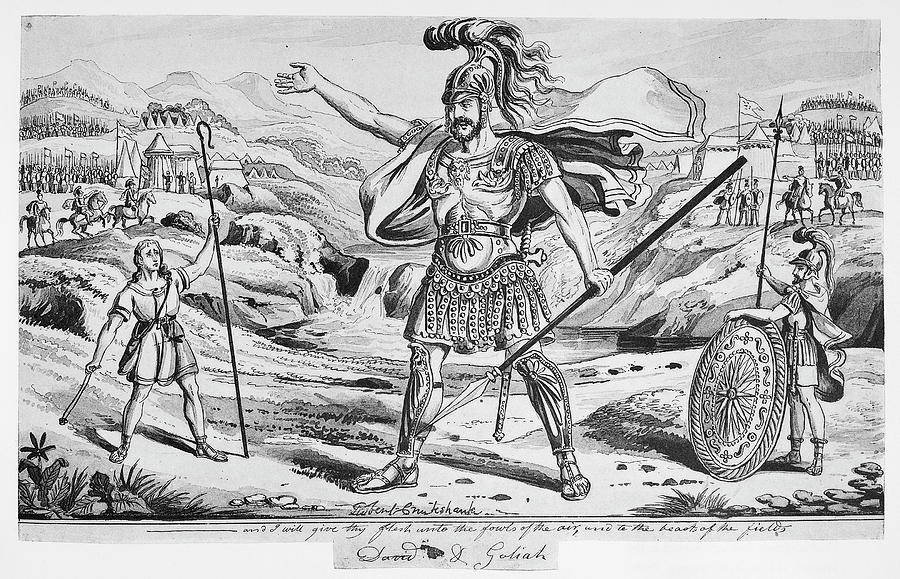
(This is an engraving by Robert Cruickshank, 1789-1856, which I include because, although Goliath looks like he’s dressed to play someone in an early-Victorian revival of a Greek tragedy, the artist had read his Bible carefully and included Goliath’s armiger, or armor-bearer, who is usually left out of other versions of the illustration.)

For a better understanding of just what happened, I turned to the late 4h-century AD Latin translation of the First Book of Samuel from the so-called “Vulgate” by St Jerome (c.342-420ad).  I chose this because it was the translation from which the medieval artist of the scene in the Huntingfield Psalter would have learned the story (all translations are mine).

So let’s start with Goliath.

4 Et egressus est vir spurius de castris Philisthinorum nomine Goliath, de Geth, altitudinis sex cubitorum et palmi:

5 et cassis ærea super caput ejus, et lorica squamata induebatur. Porro pondus loricæ ejus, quinque millia siclorum æris erat:

6 et ocreas æreas habebat in cruribus: et clypeus æreus tegebat humeros ejus.

7 Hastile autem hastæ ejus erat quasi liciatorium texentium: ipsum autem ferrum hastæ ejus sexcentos siclos habebat ferri: et armiger ejus antecedebat eum.

(First Samuel, Chapter 17)

“4 And there came out of the camp of the Philistines a bastard, by name Goliath from Geth, in height six cubits and a palm.  (Cubit is an ancient measurement with lots of possible variation, but, roughly, this makes him about 9 feet—about 2.75 metres—tall.)

5 And [there was) upon his head a bronze helmet and he was dressed in a breastplate of scale—moreover, the weight of his breastplate was 5000 bronze shekels.  (Shekel is a Biblical weight—5000 would equal about 125 pounds—about 57 kilograms.)

6 And bronze greaves he had on his shins and a bronze shield was covering his shoulders.

7 As well, the shaft of his spear was like a weaver’s beam—the iron [head] itself, moreover, of his spear  weighed 600 shekels of iron and his armor-bearer used to march in front of him.”  (A weaver’s beam was the top support of an upright loom, the sort used in the ancient world—here’s an illustration–

meaning that, like everything else about Goliath, it was much larger than normal.  600 shekels equals 15 pounds—that’s almost 7 kilograms—

and remember:  this is just the head of his spear.)

With all of this in mind, what is Goliath supposed to look like?  There is an immediate problem:  words like “cassis” and “clypeus” are more generic than technical, although “cassis” usually means a metal helmet and “clypeus” a round bronze shield.  There is a great deal of argument over the date—or dates—of the writing of Samuel, and armor and weapons change over time, so perhaps what we’re seeing here is a composite—or even a fantasy:  after all, Goliath is supposed to be 9 feet tall!

A quick inventory shows Goliath with:

1. a bronze helmet

2. bronze scale (lamellar) armor (in fact, the text uses the word lorica, which usually means a breastplate, but seems to be used here to mean a coat of scales)

3. bronze greaves

4. a bronze shield

5. an immense, iron-tipped spear

We’ll come back to that helmet, but lamellar armor is made up of layers of small, overlapping plates (lamellae) of leather, bronze, or, eventually, iron,sewn to a leather or cloth backing.  Here’s an Egyptian example from the 14th century BC, the lamellae being made of leather,

and here’s a section of Neo-Assyrian lamellae (900-600bc) from Nimrud.

As far as I can currently tell, greaves—metal shin guards—only appear with the Greeks, making them later perhaps than some other parts of this kit.  Here’s a pair from the 6th-2nd century BC (note the holes at the top of the left-hand one:  like helmets, greaves were lined to provide both an extra layer of protection and to prevent chafing of bronze on skin).

(From my experience in museums, by the way, it appears that, at least early Greek greaves were simply flexed to fit around the legs—no straps or buckles—and some of those I’ve seen show severe stress along the front, as if, with use, they began to wear out.)

We’re not told anything more about the clypeus, except that it’s bronze and covers the shoulders.  I’m presuming, by this, that the author/s mean that it was commonly carried on the back when out of combat—or not being lugged by Goliath’s armiger.

(This image comes from Hurstwic, which is a living-history group devoted to the Vikings.  There’s always something of interest to be found there at:  http://www.hurstwic.com/history/text/history.htm )

If we go by Greek examples, such shields weren’t just bronze, but were actually made of layers of wood, then covered with a sheet of bronze on the outer surface.  We are fortunate to have a late 5th-century BC example, from the Athenian Agora (a combination market/state buildings site)—

As for the spear, we are given nothing more than it’s large and has an iron head, but I want to return now to the helmet.  We know that it’s bronze, but a further detail gives us a little more.  In 17.49, it is said that David’s sling stone:

“percussit Philistheum in fronte et infixus est lapis in fronte eius et cecidit in faciem suam super terram”

“struck the Philistine in the forehead and the stone was stuck in his forehead and he fell onto his face on the ground”

From this, we can see that, although Goliath was wearing a bronze helmet, it was of an open-faced variety, which provided no protection for his forehead.

As I’ve said, taking all of this together, we may have only a fantasy figure, or a composite, but, to me, the closest I can imagine is perhaps an Assyrian, like this, reconstructed by Angus McBride—

Here, in both the left-hand and central figures, we see the open-faced helmet, the lamellar armor, the bronze-faced shield—there’s even a spear, if not a gigantic one.  The only items missing are the greaves.

 Reconstructing David is a much easier matter:  although King Saul attempts to arm him in somewhat of the same style as Goliath (17.38-39), after trying it on, David declines, saying that he’s a shepherd and most comfortable wearing his normal working clothes.  Thus, he takes with him to meet the giant Philistine only his staff (baculus—or baculum, since the noun seems to have both masculine and neuter genders) and his sling (funda—17.40)—and here was my childhood confusion.  A sling looks like this—

and is thus very different from my slingshot—

It’s not just the obvious difference in look.  What propelled the stone from my slingshot was a very large rubber band (“elastic”, if you’re in the UK) and such things didn’t come into being until the 19th century (AD).  What propelled the stone from David’s sling was the effect of his swinging the sling in several different possible ways (this is only one of them).

Although it looks like such a simple thing, a sling can be really deadly, the stones (or cast lead bullets, which both Greeks and Romans used) moving at anywhere from 60 to 100 miles per hour (97-160kmh).   Here’s a somewhat lurid but useful article from The Daily Mail on the subject: https://www.dailymail.co.uk/sciencetech/article-4541318/Roman-sling-bullets-deadly-44-Magnum.html

And here’s a very convincing demonstration of what a sling and its stone can do:  https://www.youtube.com/watch?v=0a_IHHcw6do

It’s no wonder that David’s stone stuck in Goliath’s forehead.

In Samuel, Goliath doesn’t seem to notice David’s sling, only his staff, shouting sarcastically:  “numquid ego canis sum quod tu venis ad me cum baculo?!” (17.43)

“You don’t think that I’m a dog that you come at me with a staff?”

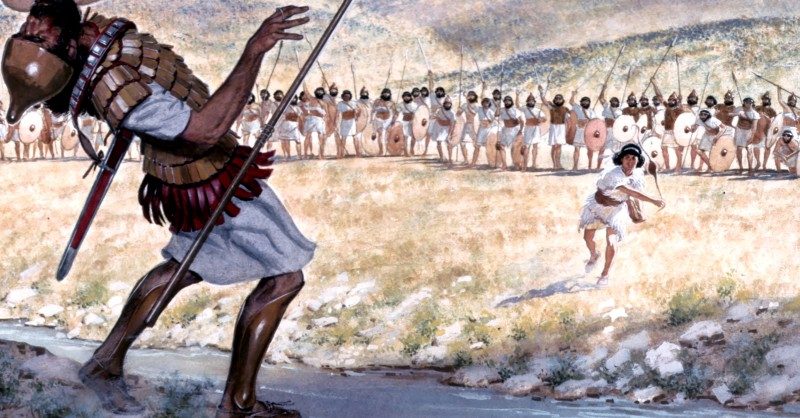
But, rather than attempting to mock his (to him) diminutive opponent, Goliath should, as in the case of trespassing beasts and Hobbits, have headed for cover when he saw that David “elegit sibi quinque limpidissimos lapides de torrente et misit eos in peram pastoralem quam habebat secum et fundam manu tulit et processit adversum Philistheum” (17.40)—

“[David] picked out for himself five of the smoothest stones from the stream and put them into the shepherd’s pouch which he used to have with him and took [his] sling in hand and made his way towards the Philistine…”

Thanks for reading, as always,

Stay well,

Stay low,

And remember that, as ever, there’s

MTCIDC

O

Being Hit on the Head Lessons

30 Wednesday Jun 2021

Posted by Ollamh in Uncategorized

≈ Leave a comment

Welcome, as ever, dear readers.

There is a moment, in a famous Monty Python sketch (“The Argument Clinic”) in which the main character, played by Michael Palin, walks into a room where he’s immediately hit on the head. 

He’s then informed that this is “Being Hit on the Head Lessons”, to which he replies “What a stupid concept!” and the sketch ends.  (If you don’t remember or don’t know this scene, here’s a LINK: https://www.youtube.com/watch?v=xpAvcGcEc0k )

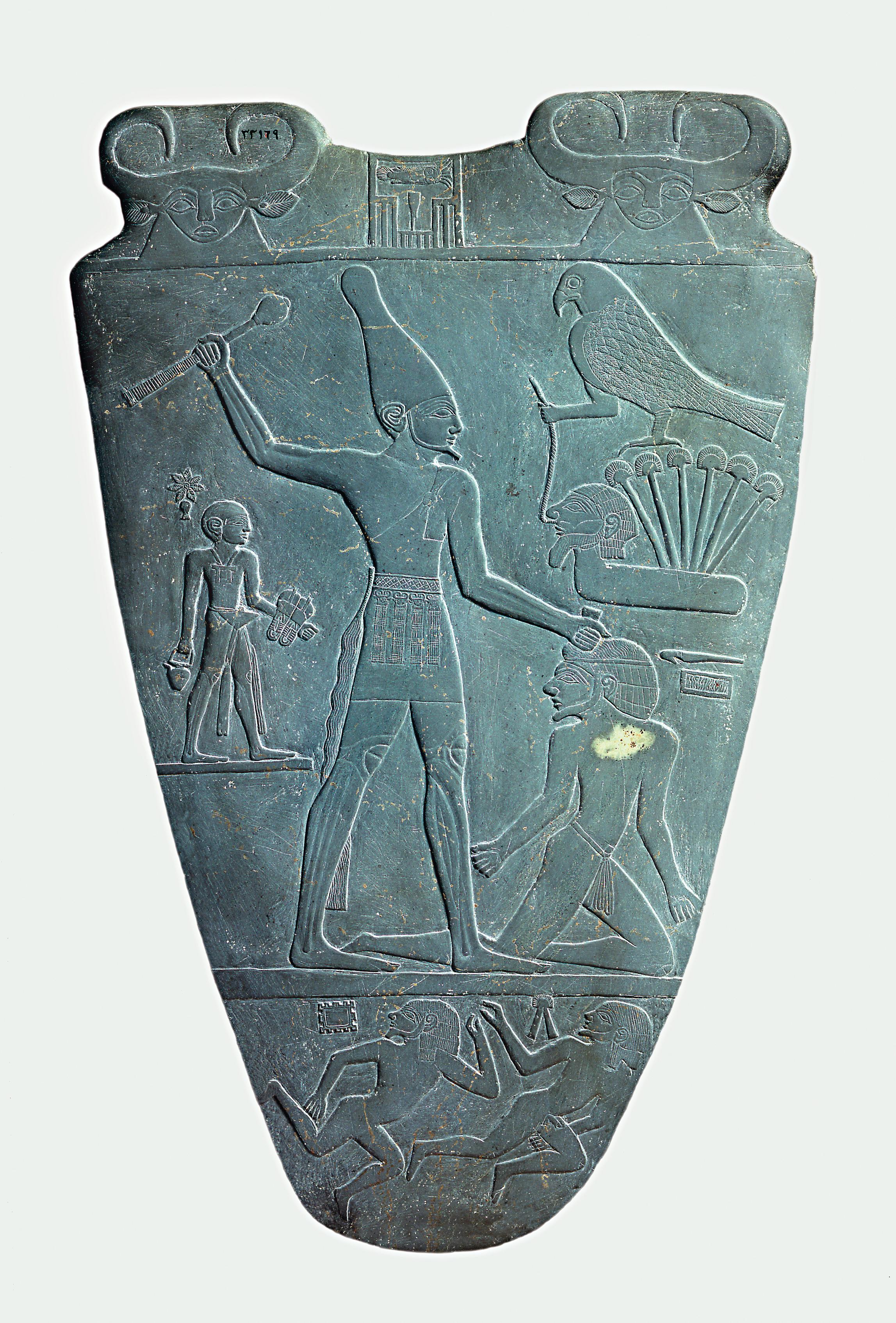
In early warfare, the lesson to be learned, however, was to how to shield your head, especially when your enemy carried a club in the form of a purpose-built mace or hand axe.

(from the so-called “Narmer Palette”, c.3000bc)

(from the victory stele of Naram-Sin, c.2250bc)

Egyptian soldiers don’t appear to have worn helmets, perhaps relying on their shields to fend off attacks to their heads,

but their early contemporaries, the Sumerians, produced bowl-shaped helmets of copper, as this skull, with its helmet (from the tomb of Queen Pu-abi, c.2600bc) still more-or-less intact, shows us,

as does this file of soldiers from the so-called “Vulture Stele” (c. 2460bc).

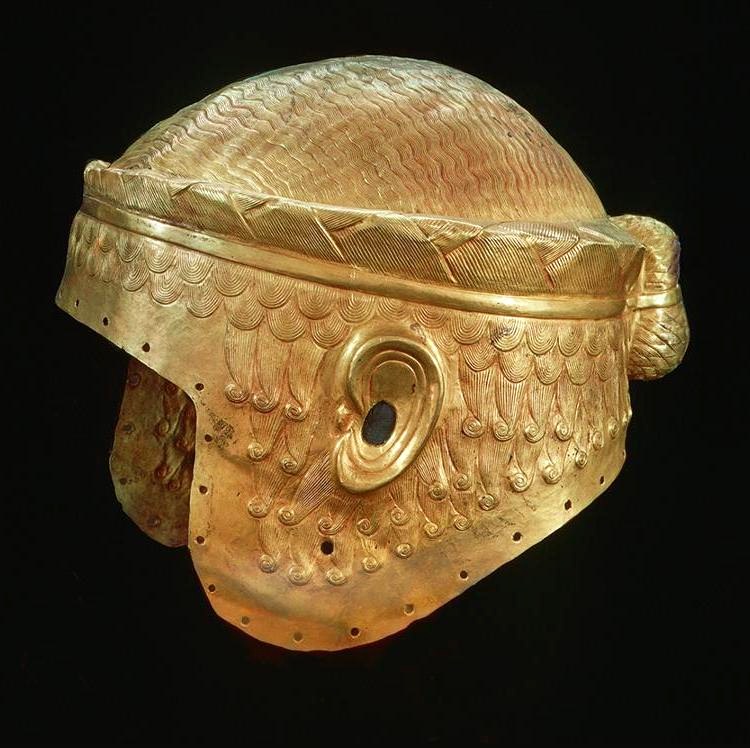
This is a simple protective covering, but a Sumerian king might wear something a bit more elaborate—

(first identified as the helmet of Mes-Kalam-Dug, 26th century BC—there is an interesting article on the subject here:  https://sumerianshakespeare.com/56701.html )

although it has been suggested that this, made from gold, might not have been worn in battle, as Angus McBride has pictured it here.

For the moment, note the perforations around its lower edges—I’ll come back to these shortly.

From such a basic beginning, helmets progressed to the more elaborate—though not necessarily more protective—cone-shapes of some Assyrian helmets,

(from the depiction of a siege from the palace of Tiglath-pileser III, at Nimrud, second half of the 8th c. BC)

although, as you may see depicted on the upper left-hand side of this relief, there were also helmets which were designed with the protection of some lower part of the head in mind.

(fragment of a relief from the palace of Ashurbanipal, second half of the 7th c. BC)

Without going into a lot of detail (like anything to do with armor, it’s a complex subject—just look at this table of the development of Greek helmets),

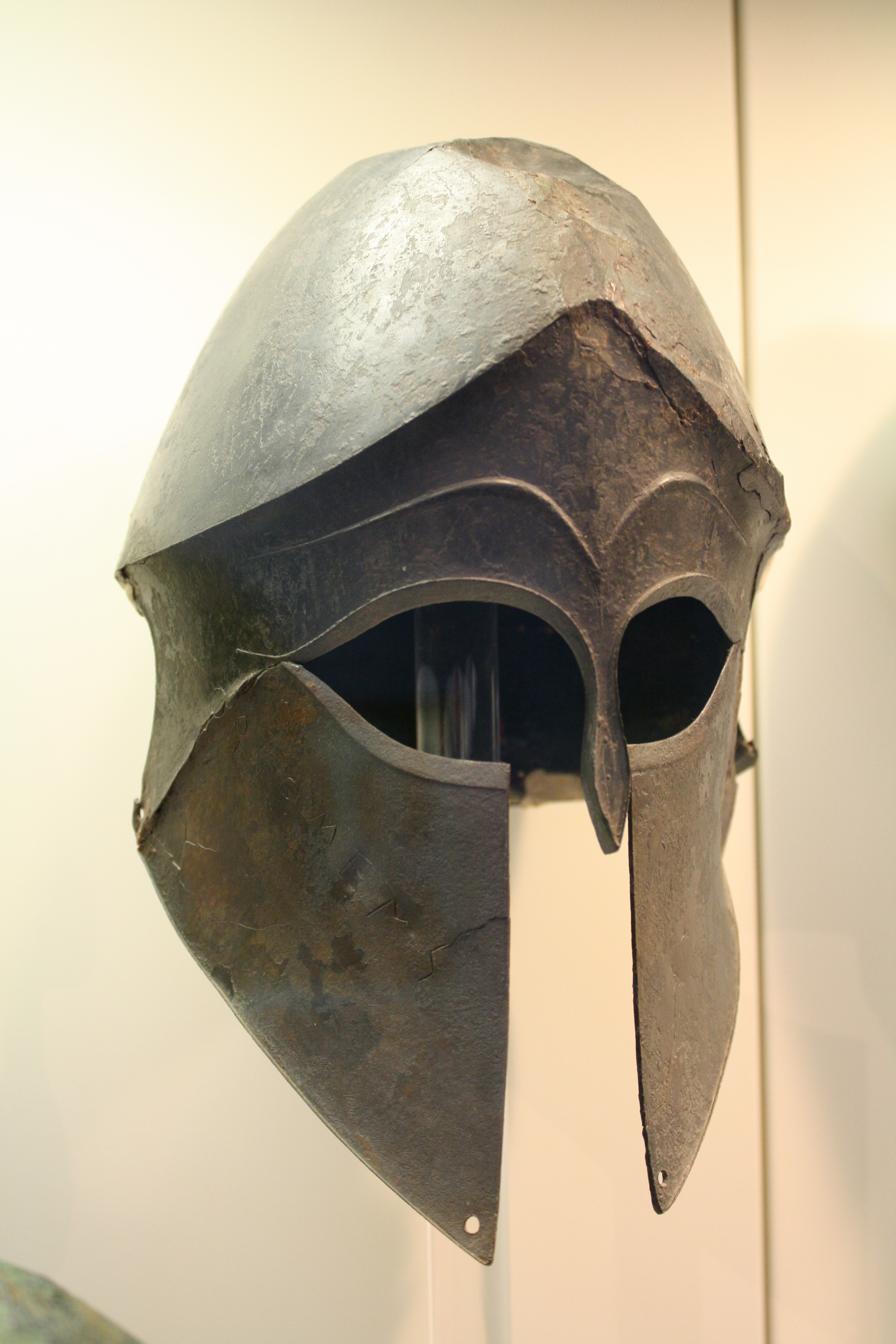
you can also see that helmets worn by the ancient Greeks were often constructed to protect the whole head—here’s a plain example–

(7th c. BC)

but here’s a grander one—

A difficulty with a helmet like this is easy to see:  it not only constricts your vision and hearing, but it would be really hot and stuffy in a Greek summer.  To gain some relief, it looks like it would be lifted and pushed back on the head when not in service, as we can see on numerous depictions of Athena, for example, like this, one of my favorite reliefs, which is sometimes called “The Mourning Athena” or “Athena Reading a Decree” (c460bc), but which I think may actually be Athena at a boundary stone, suggesting that the patron of Athens stands at the edge of its lands, ready to protect them.

The Romans, in turn, may first have learned about helmets from their “big brothers”, the Etruscans, who had originally lived to the north, but gradually colonized land south of the Romans, as well.  The Etruscans, in turn, had been powerfully influenced by the Greeks who, themselves colonized the far south of Italy, as well as Sicily. 

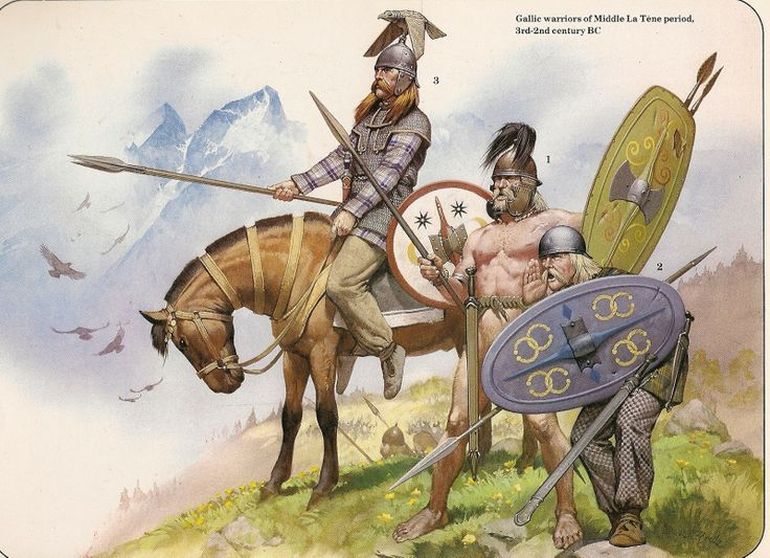
In time, the Romans combined this with what they learned from their contacts with the Celts, who moved into northern Italy and were famous metal-workers,

but developing their own styles over time.

If we continued our review, we would find that many generations of armorers, from the Romans all the way through the Middle Ages, were always seeking ways better to protect the head.

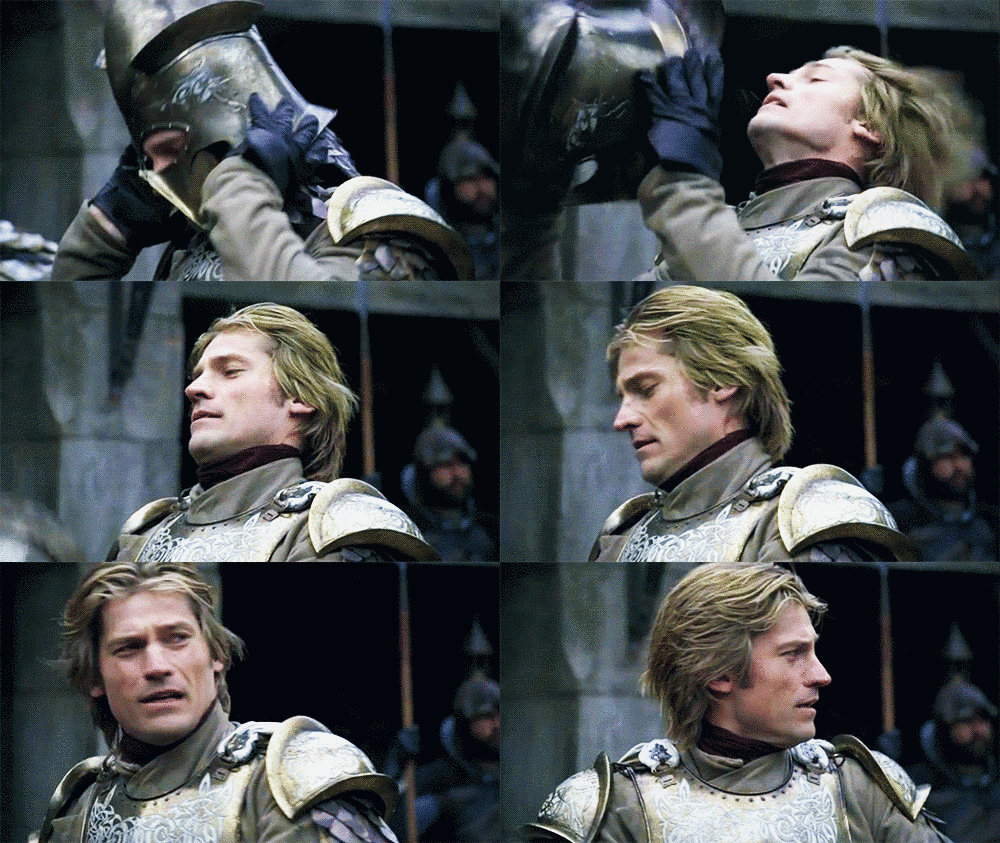
Two important details needed to be added to this, however, and they are commonly overlooked when you see someone put on a helmet, be it Greek, Roman, or medieval, in a film.  And, for the first of these, we need to return to that Sumerian king’s helmet.

You will notice, right away, that there is a hole just below the ear.  When we see people put on and take off helmets in film, they just plop them on and off, like a hat.  Here’s Jaime Lanister taking off his helmet in Game of Thrones.

In fact, real helmets don’t just stay on heads because the wearers want them to—they need to be tied  or buckled in place, like these, from the Great War.

(A footnote here:  soldiers might actually wear the strap on the back of the head during combat, as it was believed that the concussion from a shell burst in front would throw the brim of the helmet back and the strap might then snap a soldier’s neck.  Here’s a British soldier just behind the front with the strap in the rear.)

So, that hole below the ear would match another, on the other side, to which the king’s armorer would have attached a chin strap.

At the lower edge of the helmet, you can see a whole line of holes.  If you wore a helmet so that there was nothing more than bare metal above your skull, it would not only be very hot in summer, which was the main campaigning season throughout the centuries, but a blow to the helmet would, potentially, drive the metal directly into the wearer’s head.  Those lower holes, then, are for a liner—of just the sort you see in this Great War helmet, like those on the British soldiers in the images above.

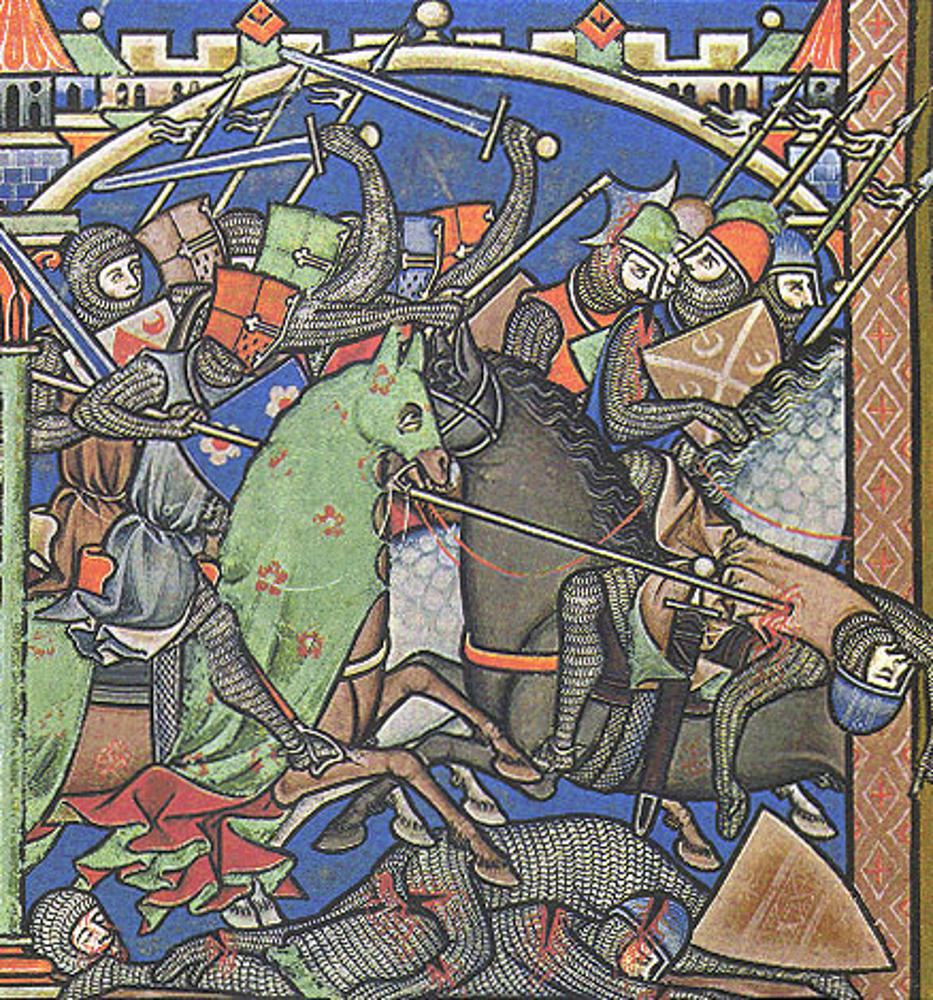
Besides the liner attached to the helmet itself, there was always the possibility of a liner attached to the wearer, called, in later times, an “arming cap”.  This was a padded cap which, when tied to the head, would provide some extra protection for the inside of the helmet in combat.  I’m not aware of any clear ancient images of one of these, but they do appear in medieval manuscript illustrations.  You can easily see one under this ancestor of the Model 1916 helmets which the British soldiers wear.  This earlier version is called a “kettle helm”.

(This is from the wonderful “Maciejowski Bible”, also called the “Morgan Bible”, c.1240ad—here’s a LINK to an article on its rather remarkable history:  https://en.wikipedia.org/wiki/Morgan_Bible )

And here’s David beheading Goliath because, with his helmet off (you can just see it to the right), his arming cap alone will not protect him.

(from an English psalter—book of psalms—dating from somewhere between 1212 and 1220AD)

So, what lessons about not being hit on the head have we learned from all this?

1. always wear a helmet, but, unlike in film,

a helmet needs to be securely attached to the wearer—notice that none of these three has a chin strap

2. it is useful either to have a lining—no holes for a liner here

3. or at least an arming cap to protect the head within the helmet—Jaime just took his helmet off

Although I’ve used Game of Thrones for my examples, it’s only because I’m in the middle of rewatching the series.  The lack of the necessary internals for helmets goes back far beyond television or even film.  Here, for example, is Sir Pellias from a book which formed many readers’ views of medieval knights in the early 20th century, Howard Pyle’s The Story of King Arthur and His Knights (1903).

Although he’s dressed for battle or a tournament, notice the lack of an arming cap, just like Jaime Lanister.   What might happen to his head if someone used an axe on that helmet?

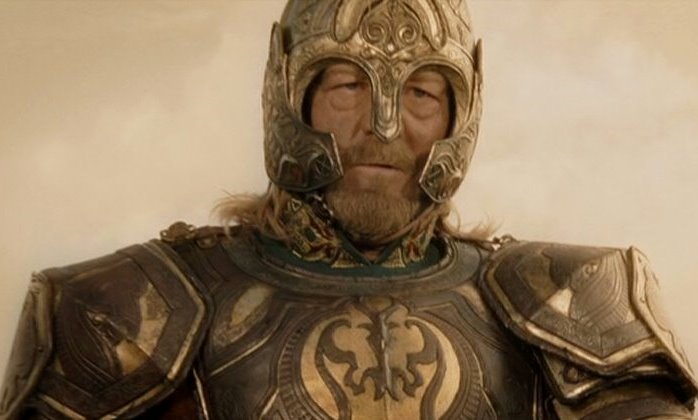
When you next watch an adventure film, filled with men (and hopefully some women, like Eowyn) in armor, ask yourself:  what’s under that helmet except hair and what’s keeping it in place?  Theoden, at least, can answer…

Thanks, as always, for reading,

Stay well,

Buckle up,

And know that, as always, there’s

MTCIDC

O

The Ruin of Susan

28 Monday Jun 2021

Posted by Ollamh in Uncategorized

≈ Leave a comment

Welcome, dear readers, as always.

I’ve just finished the Narnia books once more.  If you don’t know them, they are a series of 7 fantasy novels

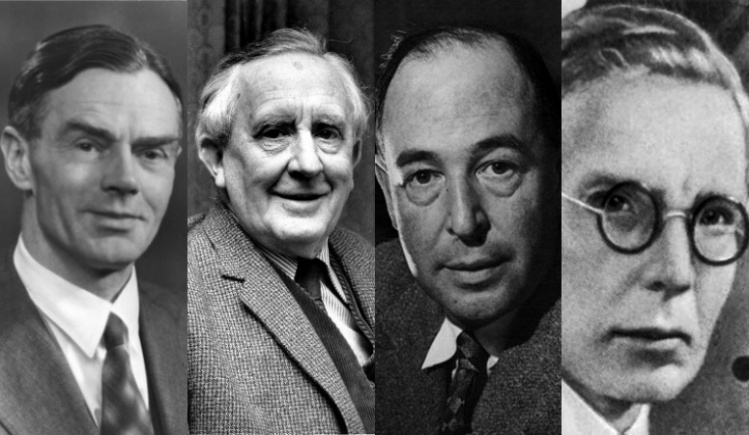
written and published in the early 1950s by C.S. Lewis (1898-1963),

an Oxford and then Cambridge professor, who was a close friend for years of JRR Tolkien

and a member of the combination literary club and drinking society called “The Inklings”,

which met in various Oxford settings—college rooms and pubs like The Eagle and Child

in the 1930s and 1940s.

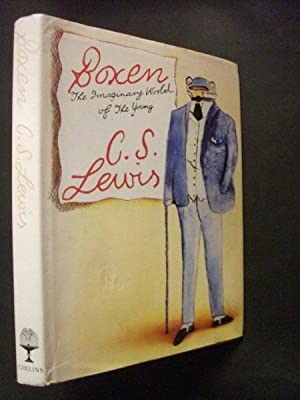
As a boy, Lewis and his brother had created an imaginary world, “Boxen”,

(This is a modern collection of the bits and pieces which the boys wrote—and illustrated.)

and, in later years, produced the lands of Narnia.

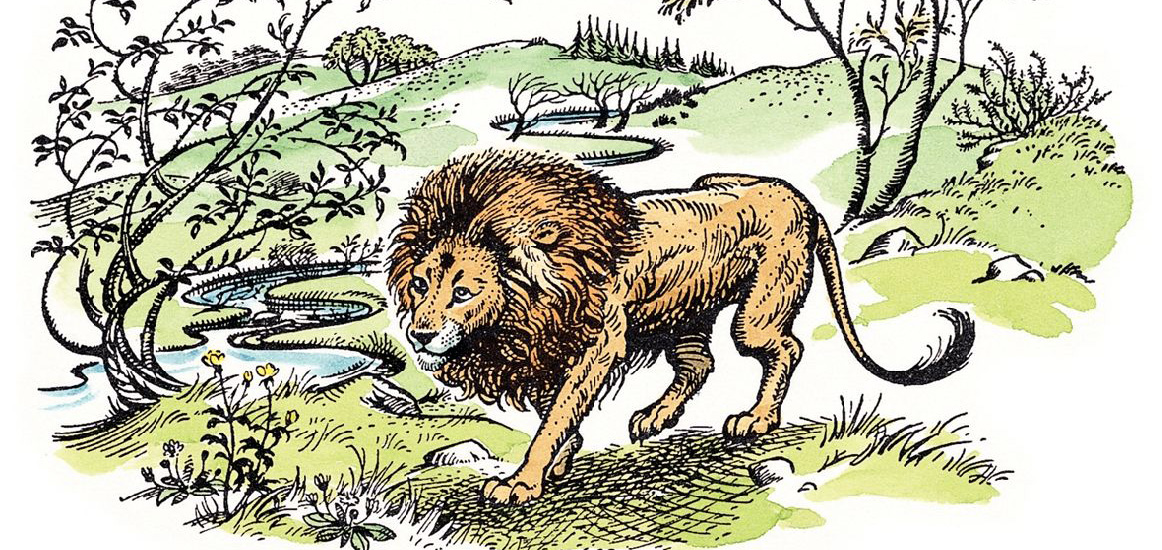
The books follow the adventures of a group of children—mostly related—and the group changes in time—as they are brought to Narnia to accomplish tasks set for them by a magical figure in the shape of a lion, called “Aslan” (which is Turkish for “lion”, as Lewis explained in a letter of 1952—C.S. Lewis Letters to Children, 29).                                               

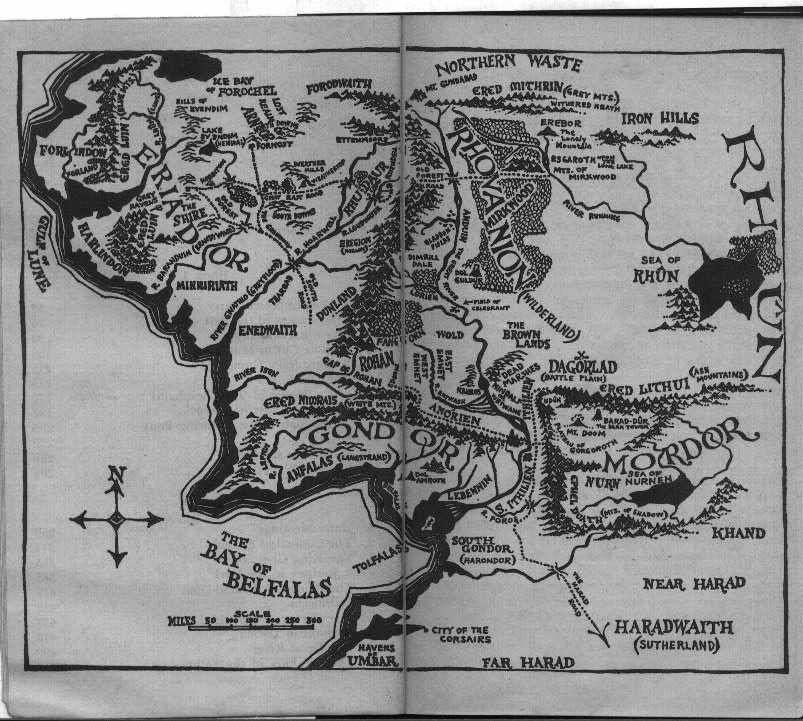
(This is by Pauline Baynes, 1922-2008, whom Lewis asked to illustrate the first edition of the Narnia books after being impressed by her work for Tolkien.  Baynes also did the map of Narnia seen above.)

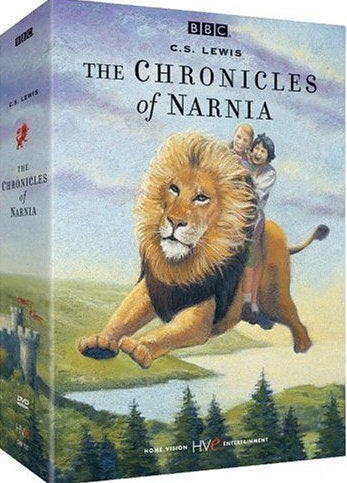
There are a number of films made from the books, a BBC series from 1988-1990, which included the first four books (The Lion, the Witch and the Wardrobe, Prince Caspian, The Voyage of the Dawn Treader, The Silver Chair)

and bigger commercial films of the first three, The Lion, the Witch and the Wardrobe (2005),

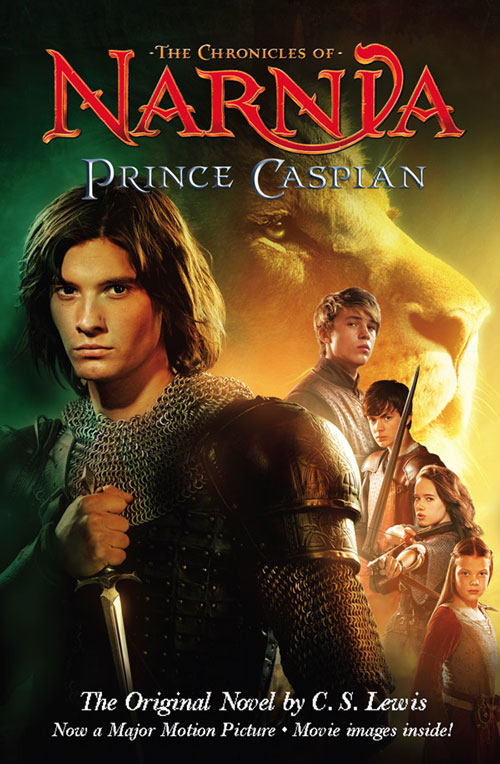
Prince Caspian (2008)

and The Voyage of the Dawn Treader (2010).

As these films have been made, they’ve gradually begun to split from the original books, and the older BBC versions tend to be closer to those originals, but I enjoy both—wonderful special effects in the newer films, but I feel that the characters are closer to the books in the older BBC adaptations—and the older series includes The Silver Chair.

One of the children in the first volume is Susan Pevensie,

as played by Sophie Cook, in the BBC version,

and by Anna Popplewell, in the later films.

And this time through the books I was really struck by Lewis’ gradual portrayal of Susan as a kind of moral failure, the cause of which Lewis explained in a letter to a child in 1955:

“Peter [the older boy in the first and second books] gets back to Narnia in it [“it” being the last book of the series, The Last Battle].  I am afraid that Susan does not.  Haven’t you noticed in the two you have read that she is rather fond of being too grownup.  I am sorry to say that side of her got stronger and she forgot about Narnia.” (C.S. Lewis Letters to Children, 51)

Susan’s slide begins in the second book, Prince Caspian, where she lies about not having seen Aslan when she has (Chapter 11, “The Lion Roars”), and the narrator of the third book, The Voyage of the Dawn Treader, further condemns her by saying, “Grown-ups had thought her the pretty one of the family and she was no good at school work (though otherwise very old for her age)…”

She makes no appearance in books 4-6 (The Silver Chair, The Horse and His Boy, and The Magician’s Nephew), but her full condemnation occurs in the final book, The Last Battle.  Basically, the plot is about the final destruction of Narnia and the transfer, at the close of the book, of most of the major characters to a kind of paradise (actually perhaps a form of Heaven, as it’s revealed that several of those characters had been killed earlier in a railway accident without knowing it).  The last king of Narnia, Tirian, asks Peter, someone from our world who is one of the first characters to visit Narnia, and became a king there, “Has not Your Majesty two sisters?  Where is Queen Susan?”  The replies—from Susan’s fellow Narnia visitors–explain in detail Lewis’ earlier remark in his 1955 letter.

“ ‘My sister Susan,’ answered Peter shortly and gravely, ‘is no longer a friend of Narnia.’

‘Yes,’ said Eustace [a major character from books 3 and 4], ‘and whenever you’ve tried to get her to come and talk about Narnia or do anything about Narnia, she says, ‘What wonderful memories you have!  Fancy your still thinking about all those funny games we used to play when we were children.’

‘Oh Susan!’ said Jill [one of the protagonists, along with Eustace, in book 4], ‘she’s interested in nothing now-a-days except nylons and lipstick and invitations.  She always was a jolly sight too keen on being grown-up.’

‘Grown-up indeed!’ said the Lady Polly [a main character in book 6, The Magician’s Nephew].  ‘I wish she would grow up.  She wasted all her school time wanting to be the age she is now, and she’ll waste all the rest of her life trying to stay that age.  Her whole idea is to race on to the silliest time of one’s life as quick as she can and then stop there as long as she can.’ “ (The Last Battle, Chapter XII, “Through the Stable Door”)

It’s never said, but, because all of the other major figures are together in some sort of paradise, Lewis, as a Christian, is clearly implying that Susan, by her absence, has been denied redemption and therefore condemned to the opposite of heaven, which seems surprisingly hard-hearted of him, considering that her crimes seem to consist of “forgetting Narnia” and being “grown-up”.

Narnia, however, isn’t just the place, it’s its ruler, Aslan, and, by Aslan, as Lewis tells a child, “I meant the Lion of Judah” (C.S. Lewis Letters to Children, 29), that is, Jesus.  No Narnia, then, meant no Jesus, and no Jesus, to Lewis the Christian, meant no happy afterlife. 

For me, however, that other charge, of being what Susan believes is “grown-up”, is equally sad, as I find it linked to Lewis’ own view of maturity, as he outlines in his wonderful essay, “Three Ways of Writing for Children”.  (Here’s a LINK so that you may enjoy it, too:  https://www.catholicculture.org/culture/library/view.cfm?recnum=9117 )

In one part of the essay, Lewis addresses what would seem to be Susan’s “grown-up” view of her fellow Narnians’ desire to keep Narnia alive in their memories—and his own response to such behavior:

“Critics who treat adult as a term of approval, instead of as a merely descriptive term, cannot be adult themselves. To be concerned about being grown up, to admire the grown up because it is grown up, to blush at the suspicion of being childish; these things are the marks of childhood and adolescence. And in childhood and adolescence they are, in moderation, healthy symptoms. Young things ought to want to grow. But on into middle life or even into early manhood this concern about being adult is a mark of really arrested development: When I was ten I read fairy tales in secret and would have been ashamed if I had been found doing so. Now that I am fifty I read them openly. When I became a man I put away childish things, including the fear of childishness and the desire to be very grown up.”

Thus, except for Susan, the others have shed this fear of being “childish”, as Lewis has in openly declaring his happy and unashamed adult consumption of fairy tales.  Lewis then goes on to define what he believes being grown-up means:

“2. The modern view seems to me to involve a false conception of growth. They accuse us of arrested development because we have not lost a taste we had in childhood. But surely arrested development consists not in refusing to lose old things but in failing to add new things? I now like hock, which I am sure I should not have liked as a child. But I still like lemon-squash. I call this growth or development because I have been enriched; where once I had one pleasure, I now have two. But if I had to lose the taste for lemon-squash before I acquired the taste for hock, that would not be growth but simple change. I now enjoy Tolstoy and Jane Austen and Trollope as well as fairy tales and I call that growth: if I had had to lose the fairy tales in order to acquire the novelists, I would not say that I had grown but only that I had changed. A tree grows because it adds rings: a train doesn’t grow by leaving one station behind and puffing on to the next. In reality, the case is stronger and more complicated than this. I think my growth is just as apparent when I now read the fairy tales as when I read the novelists, for I now enjoy the fairy tales better than I did in childhood: being now able to put more in, of course I get more out.”

(In case you’re not familiar with the terms, “hock” is a now rather old-fashioned word for German white wine and “lemon-squash” is, more or less, lemonade.)

Applying this to the other Narnians, we can understand that what Lewis implies is that:

1. Narnia = Aslan, and what Aslan stands for

2. by remembering Narnia, they remember Aslan

3. by including their experience of Narnia in their adult lives, they gain from the inclusivity which Lewis believes makes real “grown-ups”—and the easy entry into the paradise which appears near the end of The Last Battle

4. and, because Susan is unwilling or unable to do this, she must suffer the consequences.

I earlier wrote that, condemning Susan seems hard-hearted.  Lewis was a gentle and kind-hearted man, however, and, in another, later, letter, he offers one more thought about Susan:

“The books don’t tell us what happened to Susan.  She is left alive in this world at the end, having been turned into a rather silly, conceited young woman.  But there is plenty of time for her to mend, and perhaps she will get to Aslan’s country in the end—in her own way.”  (C.S. Lewis Letters to Children, 67.)

Thanks, as always, for reading.

Stay well,

Add rings,

And know that there’s always

MTCIDC

O

Umbar

16 Wednesday Jun 2021

Posted by Ollamh in Uncategorized

≈ Leave a comment

As always, dear readers, welcome.

Recently, I’ve been thinking about Gondor’s neighbors—not Mordor, with its hordes of orcs and even-more-unspeakable things, or heroic Rohan, but Harad, whose lands stretch far to the south, off the usual maps, and particularly about the city of Umbar.

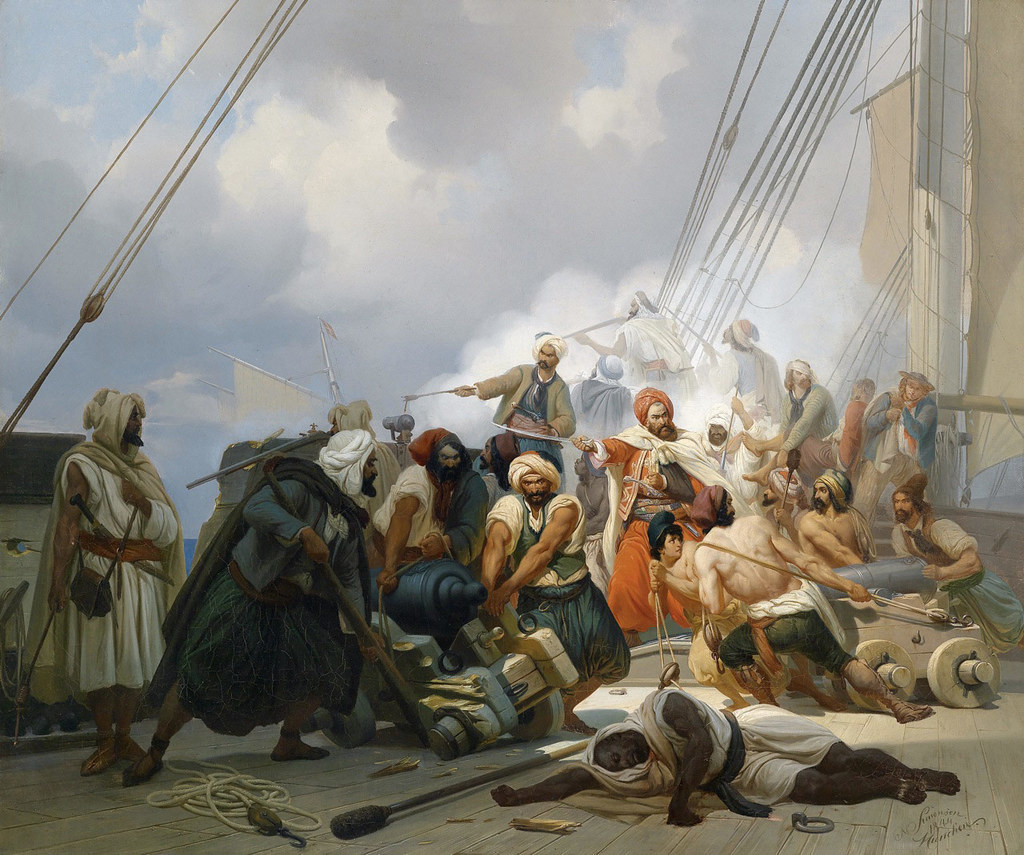
Umbar is usually associated with its pirates, or corsairs, which I, in turn, always associate with the Barbary Pirates

(A romanticized view by the Danish artist, Niels Simonsen, 1807-1885.) 

who made the western Mediterranean (and beyond), a dangerous place for merchants and travelers alike from the Middle Ages into the 19th century.

(I got my first taste of them from a children’s book written by, of all people, the author of the Hornblower novels, C.S. Forester.)

I wondered, however:  pirates tend to be parasites, not builders–had Umbar always been a refuge for corsairs, a place whose harbor was always packed with their ships?

Emperor Charles V’s attempt to capture Algiers, home of the Barbary Pirates, 1541. Hand-colored woodcut reproduction of an earlier illustration

A little research was clearly in order.

If we were looking to find out more about a real pirate den, of which there are historical records, we would have libraries with shelves full of books written by numerous authors over several centuries.  Because this is an imaginary place, the creation of a single man, our sources are much more limited, however, and, as I began to try to provide myself—and you, dear readers—with more on Umbar, I found that I really had only three main ones:  the obvious The Lord of the Rings,

but then The Peoples of Middle-earth,

and what I’ve always seen as a kind of odd-book-out, The Silmarillion.

One of the most remarkable elements in Tolkien’s work is the depth of Middle-earth’s history, although often recorded only in the form of either annalistic or chronicalistic entries.  Derived from the Latin word annus, “year”, annals are lists of events, year after year, rather like a kind of basic timeline.   Chronicles, ultimately from the Greek word, chronos, “time”, may be seen as a kind of more developed annal, in which the events can be described in greater detail. 

I find these definitions a bit fuzzy, and JRRT himself uses the word “annals” in the title of Section A of the Appendices to The Lord of the Rings, “Annals of the Kings and Rulers”, although there is so much description that “Chronicles” might be more appropriate.  Annals or Chronicles, the first entry for Umbar appears in Appendix B, “The Tale of Years” under The Second Age:

“[SA]2280 Umbar is made into a great fortress of Numenor”

It is clear, however, from a reference in Appendix F, I, “The Languages and Peoples of the Third Age”, that Umbar is, in fact, older than this fortifying:

(about place names) “A few were of forgotten origin, and descended doubtless from the days before the ships of the Numenoreans sailed the Sea; among these were Umbar, Arnach, and Erech…”

After this reference, things become a little hazy.  Sauron, who always seems to be lurking nearby, was aware that things were not well in Numenor.  Ar-Pharazon had forcibly married his first cousin and taken the throne, so:

“Now Sauron knowing of the dissension in Numenor thought how he might use it to achieve his revenge.  He began therefore to assail the havens and forts of the Numenoreans, and invaded the coast-lands under their dominion.” (The Peoples of Middle-earth, “The Tale of Years of the Second Age”)

Ar-Pharazon, in response:

“…prepared, and at last he himself set sail with a great navy and armament, the greatest that had yet appeared in the world.”

This was not what Sauron had expected:

“And Ar-Pharazon landed at Umbar, and so great was the splendour and might of the Numenoreans at the noon of their glory that at the rumour of them alone all men flocked to their summons and did obeisance; and Sauron’s own servants fled away.”

Slippery as ever, Sauron thinks that, if he can’t obtain what he wants by force, he can do it by trickery, and surrenders to Ar-Pharazon in SA3262. (“The Tale of Years”, The Second Age)

Things go out of focus again for a while as Numenor collapses, but it appears that a kind of subset of the Numenoreans, the Black Numenoreans, continued to hold the city, perhaps with the aid of the local people, the Haradrim.  (For an extended version of how Sauron ruins Numenor from within, see the “Akallabeth” in The Silmarillion.)

Things become clear again early in the Third Age, when the Gondorian king Earnil I, led an expedition to retake Umbar in TA933 (Appendix B, The Third Age).  Having done so, he and much of his fleet were then lost in a storm off the coast (Appendix A, “Gondor and the Heirs of Anarion”), but worse was to come as:

“…the Men of the Harad, led by the lords that had been driven from Umbar, came up with great power against that stronghold, and Ciryandil [Earnil’s son] fell in battle in Haradwaith.”

The subsequent siege of Umbar lasted for 35 years (“The Tale of Years”, The Third Age:  “1015 King Ciryandil slain in the siege of Umbar”; “1050 Hyarmendacil conquers the Harad”), but:

“could not be taken because of the sea-power of Gondor.” 

In TA1050, Ciryaher, Ciryandil’s son:

“…came down from the north by sea and by land, and crossing the River Harnen his armies utterly defeated the Men of the Harad, and their kings were compelled to acknowledge the overlordship of Gondor.” 

From that time, Umbar was part of Gondor, but, as history in Middle-earth so often seems to have a roller coaster effect,

in TA1432, there begins the civil war called “the Kin-strife”, which continues to TA1448, the losers

“…sailed away, and established themselves at Umbar.  There they made a refuge for all of the enemies of the king, and a lordship independent of his crown.  Umbar remained at war with Gondor for many lives of men, a threat to its coastlands and to all traffic on the sea.  It was never again completely subdued until the days of Elessar; and the region of South Gondor became a debatable land between the Corsairs and the Kings.”

And this answers my question:  the Corsairs of Umbar postdated the fortification, if not the founding, of Umbar by 2609 years.

As I was working on this, I found, as I often do, a suggestion of something which might have influenced JRRT.  Before he was drawn away by Germanic, Celtic, and Finno-Ugric, Tolkien had begun his academic life as a classicist, and those words referring to the 35-year siege of Umbar, that the city “could not be taken because of the sea-power of Gondor” immediately brought back another city and another long siege.

After the defeat of the invading Persians at the battle of Plataea, in 479BC,

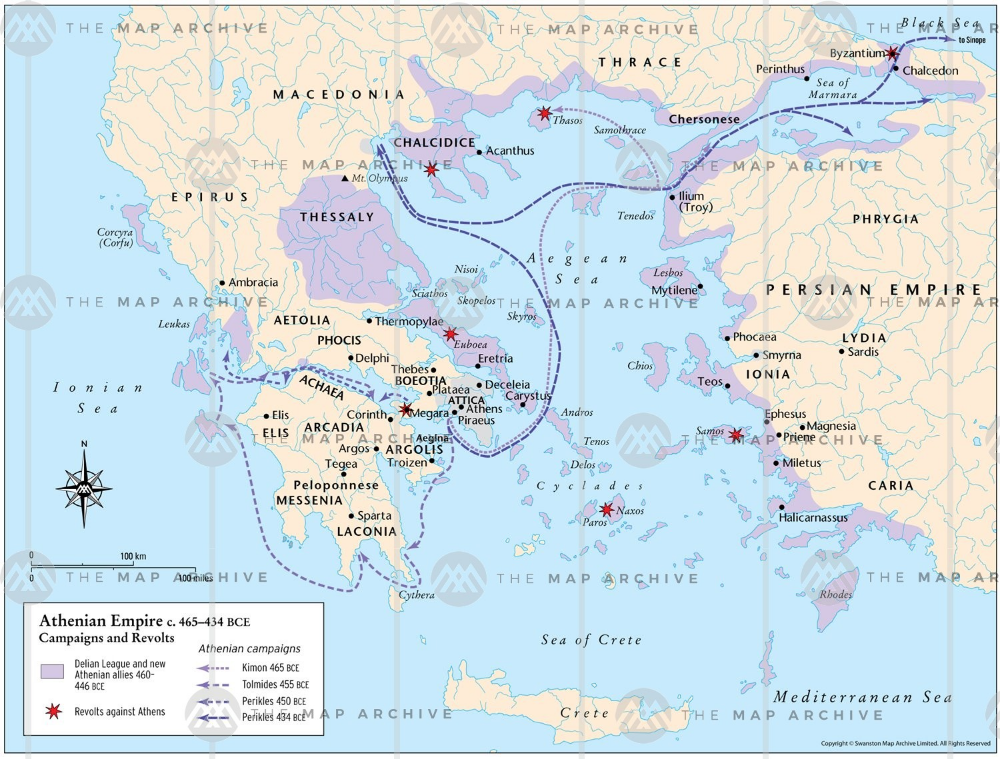
some of the victorious Greek cities, including Athens, wanted to continue the war by carrying it to the Persian-occupied Greek colonies of Asia Minor.  These cities formed a collective called the “Delian League”, from its headquarters on the island of Delos.  After some initial success, the League gradually seemed to lose its purpose and soon the leading state, Athens, had taken over the League, gradually turning it into the Athenian Empire.

There were some cities, however, which became increasingly anxious about Athens’ growing power, the leader among them being Sparta, a military state in southern Greece.  In time, this would lead to a long war, the so-called “Peloponnesian War”, 431-404BC, (named for the southern part of Greece, where some of the fighting took place), Sparta and its allies on one side, Athens and its empire on the other.

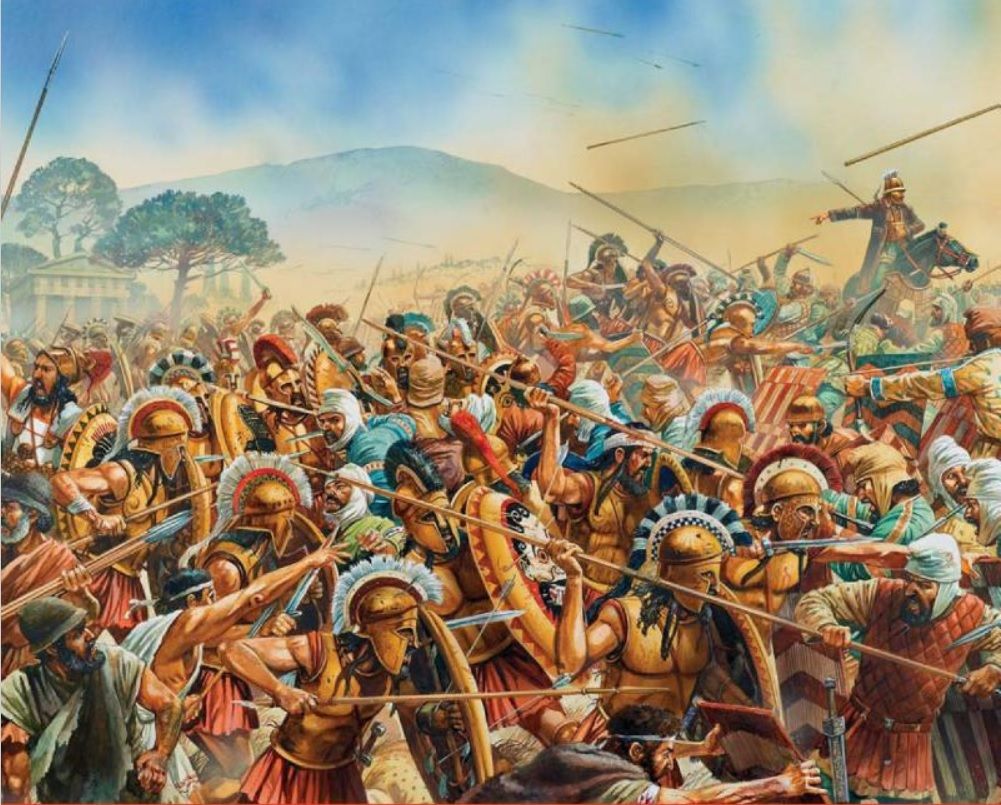
In this war, the two sides were both powerful, but their power lay in different directions:  the Spartans were heavy infantry, drilled intensively to fight in a massed formation called a phalanx.

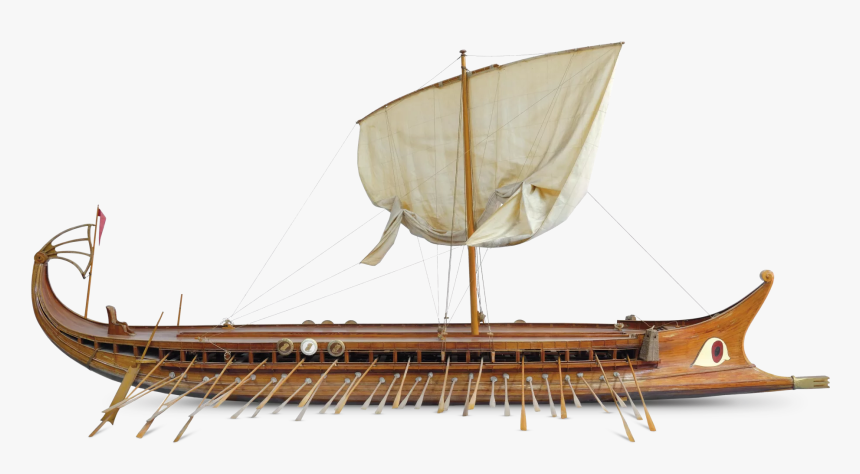
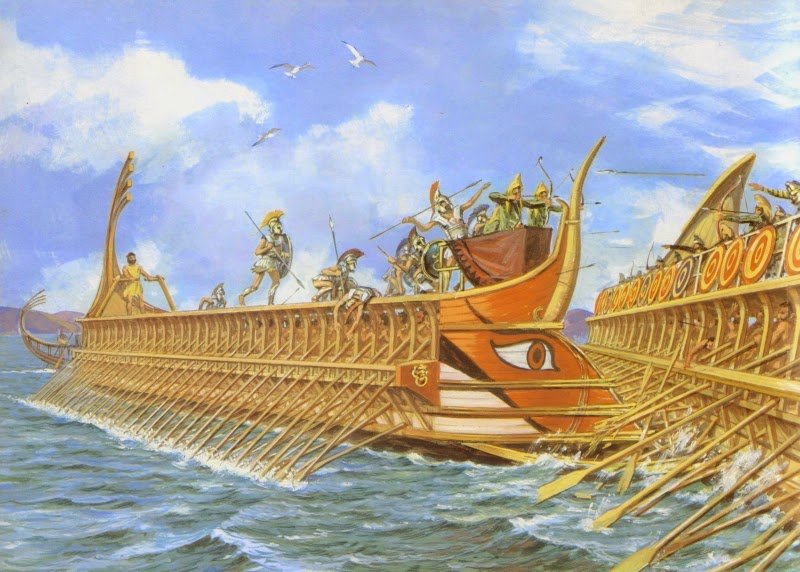
The Athenians, as a nation of merchant/seafarers, were a naval power, possessing a large professional fleet of warships called triremes (meaning having three banks of oars).

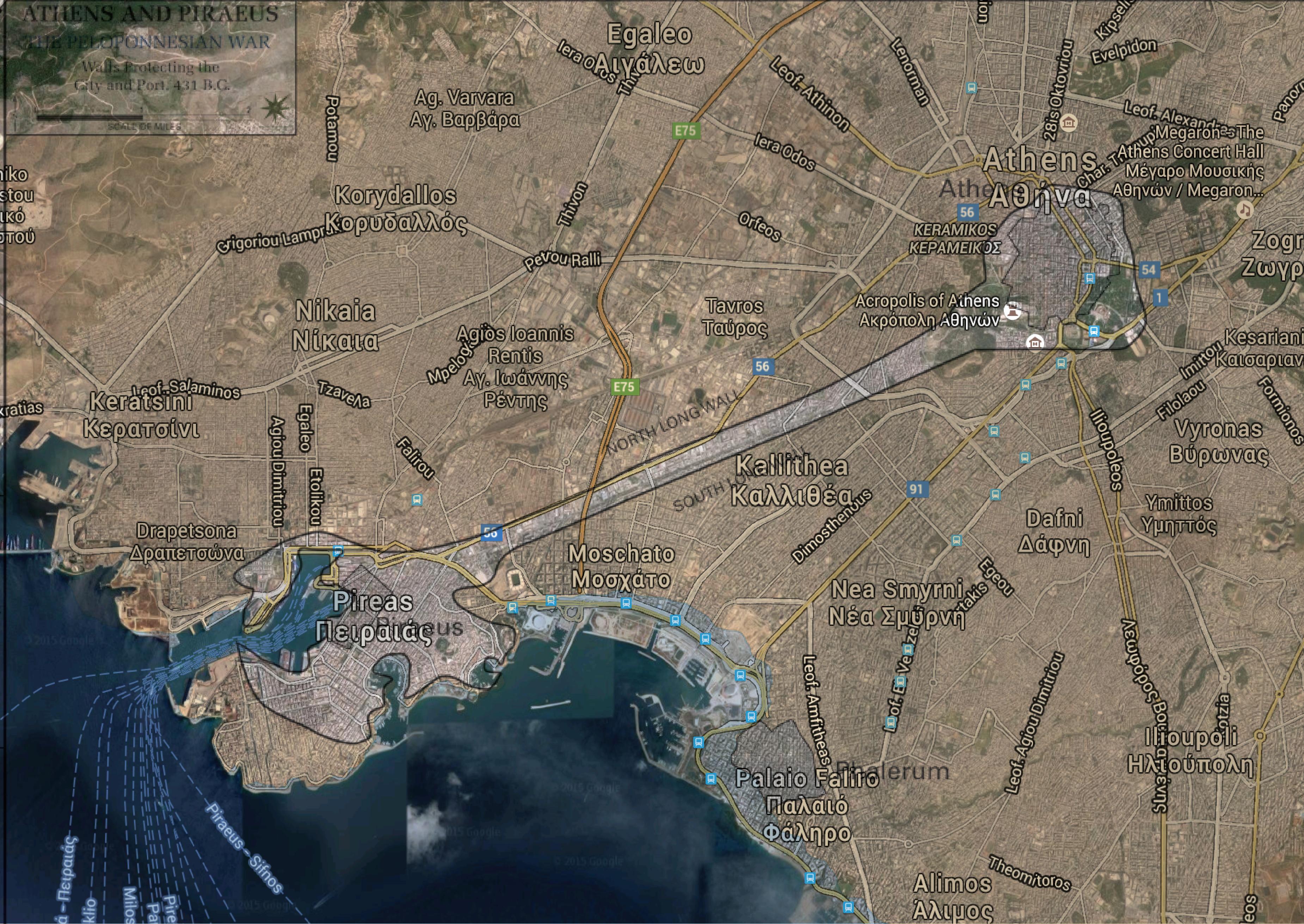
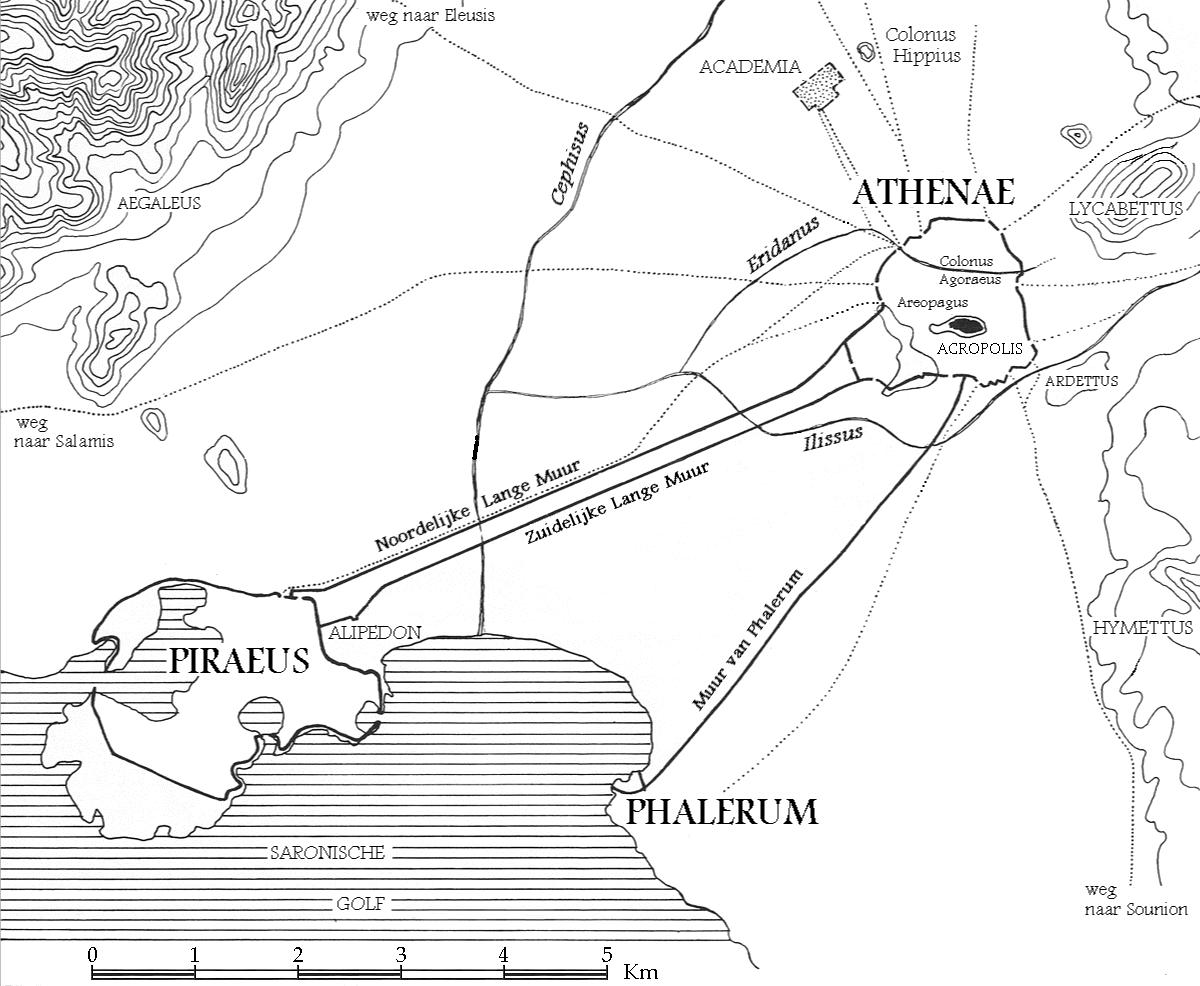
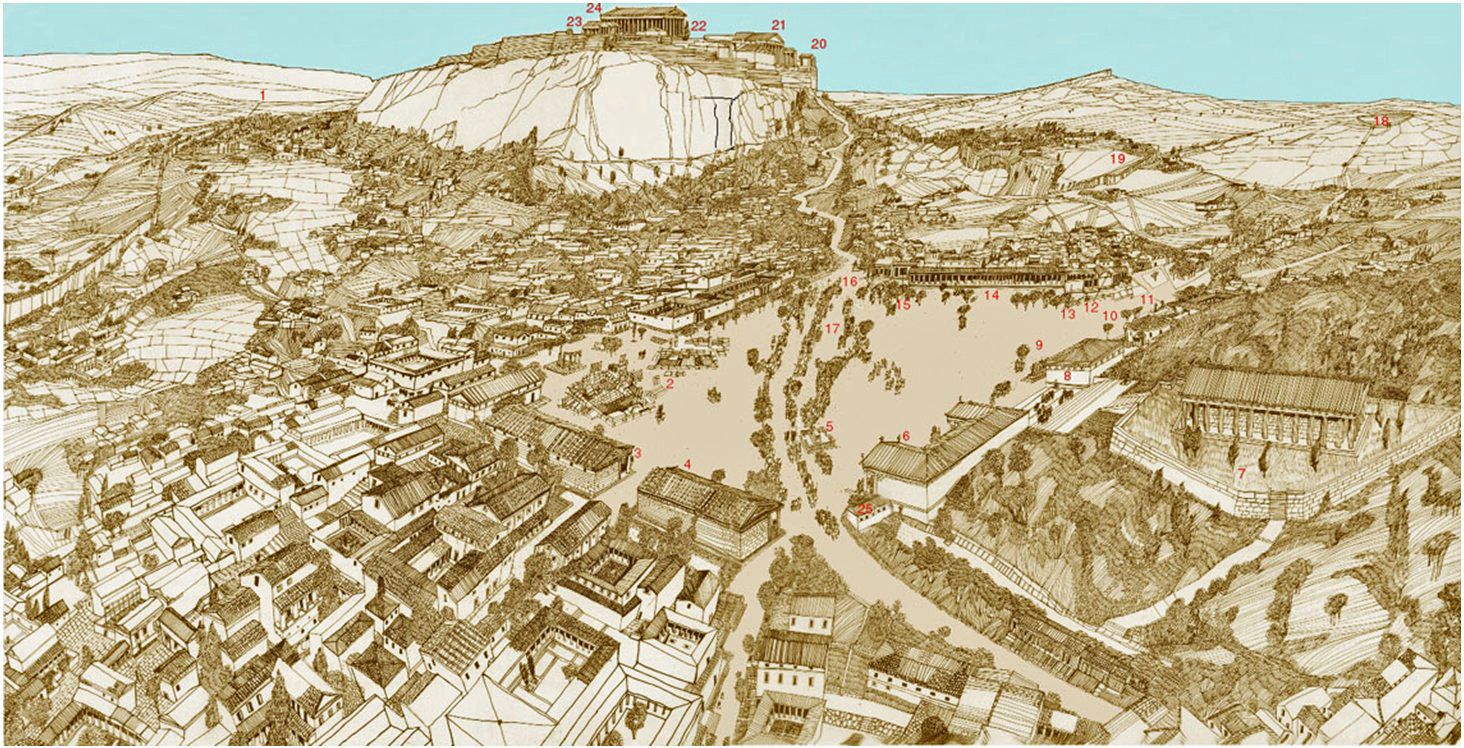
As well, although Athens, unlike Umbar, was not situated directly at its port, it had constructed solid fortifications which joined the city with its not one, but three ports.

Each year, in the early years of the long war, the Spartans would send an army to the countryside outside Athens, block entry to the city, and destroy farmlands.  To any other place, this might have been fatal, but Athens, like Umbar, “could not be taken because of the sea-power”, so, as long as that sea-power had no rival, then Sparta, like the Haradrim, could march outside Athens’ walls every summer, yet neither deter the defenders nor penetrate the walls.                            

Gondorian Umbar survived its 35-year siege, being rescued by a king and his armies.  Athens was not so fortunate.  Sparta gave in to Persian influence and Persian money, and built a fleet which destroyed the Athenian fleet at the battle of Aegospotami, in 405BC. 

The next year, Athens, no longer able to guarantee supply by sea with its naval power so reduced, surrendered and, as a token of that surrender, was forced to knock holes in her long walls.  She was allowed to survive, but never owned an empire again.

Stay well,

Lay in plenty of provisions (and arrows),

And remember that, as ever, there’s

MTCIDC

O

Sophistry

09 Wednesday Jun 2021

Posted by Ollamh in Uncategorized

≈ Leave a comment

Welcome, as ever, dear readers.

Saruman

Is trying to persuade Gandalf to join him in betraying their trust to the Valar:

“We can bide our time, we can keep our thoughts in our hearts, deploring maybe evils done by the way, but approving the high and ultimate purpose:  Knowledge, Rule, Order…”

(The Fellowship of the Ring, Book Two, Chapter 2, “The Council of Elrond”)

Gandalf doesn’t accept any of this, of course, saying:

“ ‘Saruman…I have heard speeches of this kind before, but only in the mouths of emissaries sent from Mordor to deceive the ignorant.  I cannot think that you brought me so far only to weary my ears.’ “

Saruman has not begun this conversation well.  Gandalf has actually come to Isengard at his urging, that urging being delivered by Radagast:

“ ‘And he told me to say that if you feel the need, he will help; but you must seek his aid at once, or it will be too late.’ “

When Gandalf arrives, however, Saruman is less than welcoming, replying to Gandalf’s explanation that he has come for the offered aid:

“ ‘Have you indeed, Gandalf the Grey! he scoffed.  ‘For aid?  It has seldom been heard of that Gandalf the Grey sought for aid, one so cunning and so wise, wandering about the lands, and concerning himself in every business, whether it belongs to him or not.’ “

Because I’m assuming that we’ve all read beyond this, we know what Saruman is up to, but, if, for a moment, we can forget what we know, let’s see if we can try to understand both his tactics—that is, his immediate actions—and his strategy—his overall plan.

First, Saruman begins by emphasizing part of Gandalf’s common title which, we know from Christopher Tolkien’s Unfinished Tales means more than just the plain color.  There is a hierarchy of the Istari, the so-called “wizards” (from the Old English adjective wis, “experienced/learned/knowledgeable).  Originally 5 in number, they were sent to Middle-earth by the Valar, something like the senior angels in Tolkien’s mythology:

“The first to come was of noble mien [appearance] and bearing, with raven hair, and a fair voice, and he was clad in white; great skill he had in works of hand, and he was regarded by well-nigh all, even by the Eldar, as the head of the Order.  Others there were also:  two clad in sea-blue, and one in earthen brown;  and last came one who seemed the least, less tall than the others, and in looks more aged, grey-haired and grey-clad, and leaning on a staff.” (Unfinished Tales, 406)

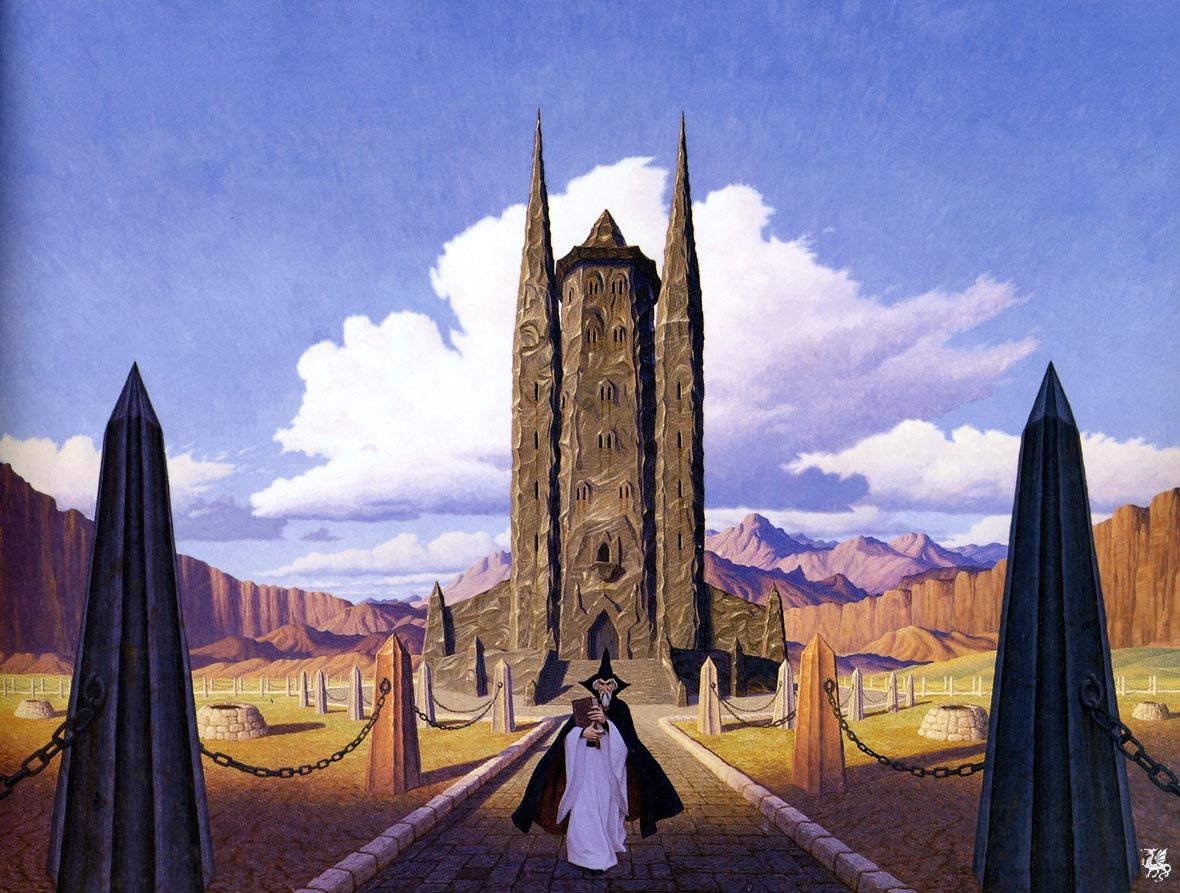
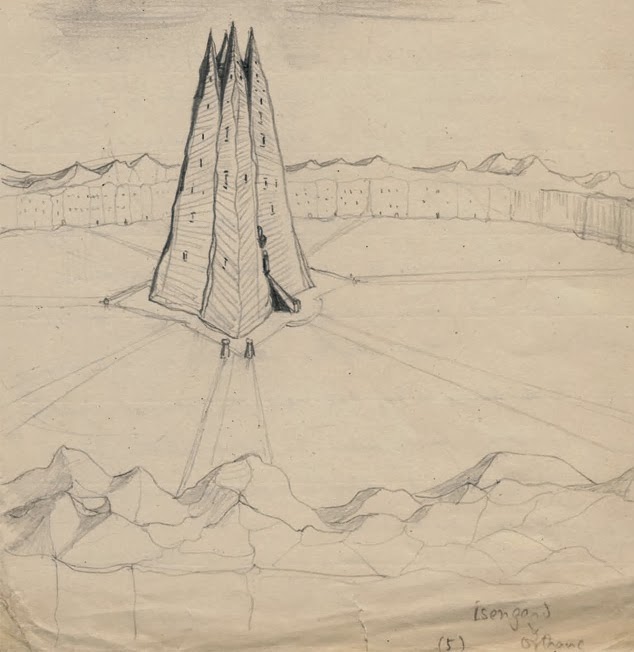
Thus, Saruman has begun by attempting to push Gandalf down the ranks, to the position of the least of the Istari.  Second, he contrasts himself with Gandalf in terms of location:  Saruman and Gandalf are in the tower of Orthanc,

(a rough sketch by JRRT)

in the middle of Isengard, which Saruman had taken possession of (originally in the name of Gondor) about 250 years before (for the date, see The Lord of the Rings, Appendix A, II, “The House of Eorl”), while Gandalf appears to have no permanent home.

Third, he suggests that there are matters about which Gandalf should not concern himself, implying that he, Saruman, is master of such things.

To emphasize this, he now makes a rather surprising declaration:

“ ‘For I am Saruman the Wise, Saruman Ring-maker, Saruman of Many Colours!’ ”

Although no one would doubt his past displays of wisdom, his other two claims definitely call for investigation. 

First, there’s that ring—Gandalf had noticed it when he first arrived at Isengard:

“But I rode to the foot of Orthanc, and came to the stair of Saruman; and there he met me and led me up to his high chamber.  We wore a ring on his finger.”

Gandalf doesn’t identify this, but I would suggest that we have a clue from Unfinished Tales, where we are told of an incident which occurred when Gandalf had first reached Middle-earth from the West and had met the master of the Grey Havens, Cirdan:

“But Cirdan from their first meeting at the Grey Havens divined in him the greatest spirit and the wisest; and he welcomed him with reverence, and he gave to his keeping the Third Ring, Narya the Red…and the Grey Messenger took the Ring, and kept it ever secret; yet the White Messenger (who was skilled to uncover all secrets) after a time became aware of this gift, and begrudged it, and it was the beginning of the hidden ill-will that he bore to the Grey, which afterwards became manifest.” (Unfinished Tales, 407)

If nothing else, then, we can imagine that Saruman’s ring is an imitation of Gandalf’s, just as he makes Isengard, with its workshops and orcs, a tiny imitation of Mordor.  And we can also better understand his tone:  although he is considered the head of the Istari, Gandalf, the last of the Order, has been given a symbol of power which Saruman has not—Saruman is jealous of Gandalf.

We might also imagine that, by styling himself “Ring-maker”, he is indirectly suggesting another rivalry, one with someone who is much greater than he—but we’ll come back to this and a certain Ring.  Before we do, let’s examine that third claim, “Saruman of Many Colours”.

Saruman, as we know, has been sent by the Valar to Middle-earth as Saruman the White, but, as Gandalf now sees:

“ ‘I looked then and saw that his robes, which had seemed white, were not so, but were woven of all colours, and if he moved they shimmered and changed hue so that the eye was bewildered.’ “

Gandalf, unimpressed by this display, says simply, “I liked white better” to which Saruman replies:

“ ‘White!…It serves as a beginning.  White cloth may be dyed.  The white page can be overwritten; and the white light can be broken.”

In these robes and with these words, Saruman reveals part of his strategy:  he has divorced himself from his original self, the one dispatched from Valinor, recreating himself in a new role, not White Messenger, but Rainbow-colored Other.  But, even in this new form, he appears unsure enough of himself that he attempts to bring the despised Gandalf over to him:

“…but our time is at hand:  the world of Men, which we must rule.  But we must have power, power to order all things as we will, for that good which only the Wise can see…And listen, Gandalf, my old friend and helper!…I said we, for we it may be, if you will join with me.”

So far, Saruman has addressed Gandalf as a lesser figure, suggesting that he is the least of the Order, homeless, and a busybody.  Now, however, he seems to be trying to enlist him:  why?

“A new Power is rising.  Against it the old allies and policies will not avail us at all.  There is no hope left in Elves or dying Numenor.  This then is one choice before you, before us.  We may join with that Power.  It would be wise, Gandalf.  There is hope that way.  Its victory is at hand; and there will be rich reward for those that aided it.”

So, Saruman may be wise, ring-making, many-colored, but he appears to be saying that there is something more powerful yet—but not so powerful that there won’t be ways, in time, to master it:

“ ‘As the Power grows, its proved friends will also grow, and the Wise, such as you and I, may with patience come at last to direct its courses, to control it.  We can bide our time, we can keep our thoughts in our hearts, deploring maybe evils done by the way, but approving the high and ultimate purpose:  Knowledge, Rule, Order; all the things that we have so far striven in vain to accomplish, hindered rather than helped by our weak or idle friends.  There need not be, there would not be, any real change in our designs, only in our means.’ “

And then, as we saw at the opening of this posting, Gandalf rejects this proposal, Saruman comes to his real point:

“ ‘Why not?…The Ruling Ring?  If we could command that, then the Power would pass to us.  That is in truth why I brought you here.  For I have many eyes in my service, and I believe that you know where this precious thing lies.”

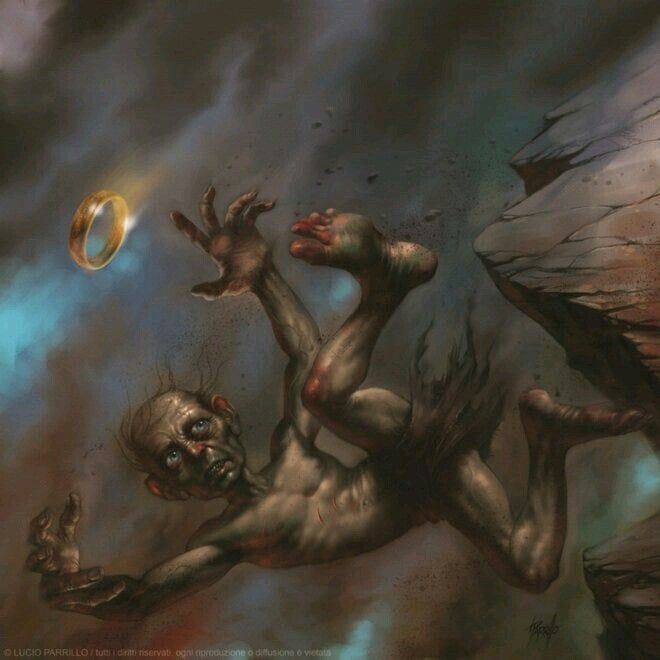
“Precious” is a frightening word in both The Hobbit and The Lord of the Rings, being Gollum’s term for the object he murdered his cousin to obtain and which will eventually bring about his own death.

That Saruman uses it tells us almost as much about him as all the rest of his words and Gandalf’s second rejection—which Saruman claims to have foreseen—sums up the truth under all of his words:  “ ‘Saruman…only one hand at a time can wield the One, and you know that well, so do not trouble to say we!”

And, with that, we can see Saruman’s tactics:  reduce Gandalf to a servant, then ask for his help; as well as his strategy:  having enlisted that help, use it to find the Ring and master its true master, Sauron.

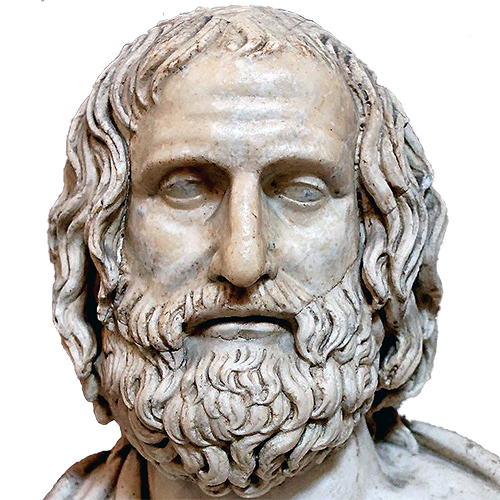
In the Athens of the 5th century BC,

there arose a new kind of teacher, who claimed to be able to instruct people in everything from how to understand the world to how to behave within the world.  What they taught was called sophia, coming from the adjective sophos, (so-FOSS) originally meaning “skilled”—and this could be skilled in anything, from carpentry to public speaking.  A teacher of this sort was then called a sophistes (so-fihs-TAYSE).  Among a number of early teachers, perhaps the most prominent was Protagoras (c.490-c.420bc).

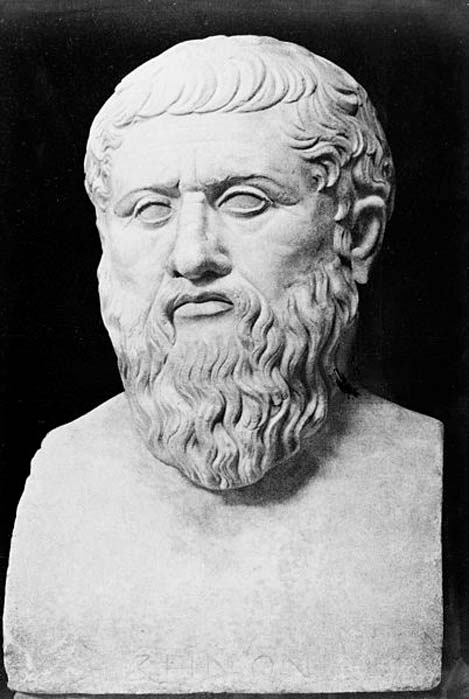
In part because they charged money, but also partly because some made big claims, they came to the negative—and influential—attention of Plato (428-348bc)

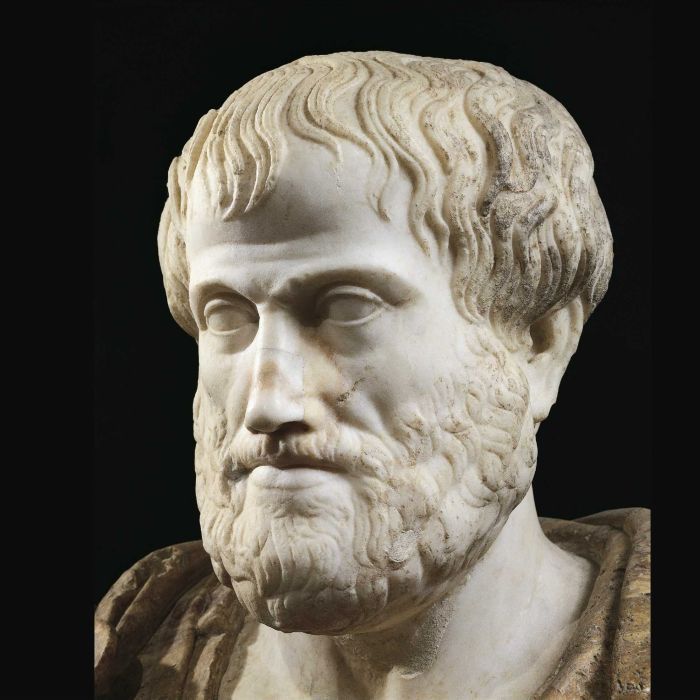
and then to his pupil, to Aristotle (384-322bc),

and, in time, their reputation had become so blackened that we now use the term “sophistry” to mean something like “an argument which looks convincing—but will be found to be based upon falsity”.

And this is exactly what Saruman is using and which Gandalf sees through.

In comparison with Saruman’s lies, let’s begin with the goals of the Valar in sending the Istari to Middle-earth:

“Emissaries they were from the Lords of the West, the Valar, who still took counsel for the governance of Middle-earth, and when the shadow of Sauron began first to stir again took this means of resisting him.”

Thus, we see immediately that, by proposing to ally himself and Gandalf with Sauron, Saruman is undercutting their original purpose:  as opposition.

Next, there is the method to be used by the Istari:

“…their emissaries were forbidden to reveal themselves in forms of majesty, or to seek to rule the wills of Elves or Men by open display of power, but coming in shapes weak and humble were bidden to advise and persuade Men and Elves to good…”

and their purpose:

“…and to seek to unite in love and understanding all those whom Sauron, should he come again, would endeavour to dominate and corrupt.” (Unfinished Tales, 406)

Set this against Saruman’s claim that the Istari “high and ultimate purpose” was “Knowledge, Rule, Order” and you can see that what Saruman really means by this is his knowledge, rule, and order—and add to that his real desire, as he admits to Gandalf:  the Ring and the power it holds, even over Sauron.  And you can see, as well, why Gandalf rejects both his reasoning and his offer, replying:

“ ‘You were head of the Council, but you have unmasked yourself at last.  Well, the choices are, it seems, to submit to Sauron, or to yourself?  I will take neither.  Have you others to offer?’ “

(The Fellowship of the Ring, Book Two, Chapter 2, “The Council of Elrond”)

But what has happened to the White Messenger?  Somewhere between his arrival at Isengard in TA 2759 and his encounter with Gandalf in TA3018, he has changed, drastically.  Along with the tower of Orthanc, he has also acquired its palantir:  has one charged to protect others from Sauron’s attempts to dominate and corrupt now himself become dominated and corrupted through it—and its connection with the owner of another? 

Perhaps there is a clue in Gandalf’s description of the opening of Saruman’s proposal:

“ ‘He drew himself up then and began to declaim, as if he were making a speech long rehearsed.’ “

Some sophists taught the art of persuasion—has someone else been instructing Saruman in sophistry?

Thanks, as always, for reading,

Be wary of people who sound too plausible,

And know that, as ever, there’s

MTCIDC

O

Messing About In Boats

02 Wednesday Jun 2021

Posted by Ollamh in Uncategorized

≈ Leave a comment

“Fear death by water.”

(TS Eliot, The Wasteland, 1922, Section I:  “The Burial of the Dead”)

As always, dear readers, welcome.

In 1908, Kenneth Grahame (1859-1932)

already known for The Golden Age (1895)

and Dream Days (1898),

published the book for which he is best remembered, The Wind in the Willows.

If you don’t know it, it’s the story of a group of animal friends, centered around Toad,

an eccentric, who causes no end of trouble to those friends.  The original 1908 edition wasn’t illustrated, but, in time, gained two who are still known for their work, Ernest H. Shepard (1879-1976), who brought Toad and his harassed friends to life in 1931,

and Arthur Rackham (1867-1939), whose work was published in 1940, not long after his death.

Two of Toad’s friends are Rat and Mole

and the title of this posting comes from their first adventure together, as Rat invites Mole to go boating:

“This has been a wonderful day!” said he, as the Rat shoved off and took to the sculls again. “Do you know, I’ve never been in a boat before in all my life.”

“What?” cried the Rat, open-mouthed: “Never been in a—you never—well I—what have you been doing, then?”

“Is it so nice as all that?” asked the Mole shyly, though he was quite prepared to believe it as he leant back in his seat and surveyed the cushions, the oars, the rowlocks, and all the fascinating fittings, and felt the boat sway lightly under him.

“Nice? It’s the only thing,” said the Water Rat solemnly, as he leant forward for his stroke. “Believe me, my young friend, there is nothing—absolute nothing—half so much worth doing as simply messing about in boats. Simply messing,” he went on dreamily: “messing—about—in—boats; messing——”

“Look ahead, Rat!” cried the Mole suddenly.

It was too late. The boat struck the bank full tilt. The dreamer, the joyous oarsman, lay on his back at the bottom of the boat, his heels in the air.

“—about in boats—or with boats,” the Rat went on composedly, picking himself up with a pleasant laugh. “In or out of ’em, it doesn’t matter. Nothing seems really to matter, that’s the charm of it. Whether you get away, or whether you don’t; whether you arrive at your destination or whether you reach somewhere else, or whether you never get anywhere at all, you’re always busy, and you never do anything in particular; and when you’ve done it there’s always something else to do, and you can do it if you like, but you’d much better not. Look here! If you’ve really nothing else on hand this morning, supposing we drop down the river together, and have a long day of it?”

(Grahame, The Wind in the Willows, 1908, Chapter 1,”The River Bank”)

This, for all that Rat absentmindedly rams them into the riverbank, is a happy time, but it reminded me of another, less happy, event, as described at 2nd—or 3rd—or 4th-hand in a pub in the Shire—

“ ‘A decent respectable hobbit was Mr. Drogo Baggins; there was never much to tell of him, till he was drownded.’

‘Drownded?’ said several voices. They had heard this and other darker rumours before, of course; but hobbits have a passion for family history, and they were ready to hear it again.

‘Well, so they say,’ said the Gaffer.  ‘You see:  Mr. Drogo, he married poor Miss Primula Brandybuck…And Mr. Drogo was staying at Brandy Hall with his father-in-law, old Master Gorbadoc, as he often did after his marriage…and he went out boating on the Brandywine River; and he and his wife were drownded, and poor Mr. Frodo only a child and all.’

‘I’ve heard they went on the river after dinner in the moonlight,’ said Old Noakes; ‘and it was Drogo’s weight as sunk the boat.’

‘And I heard she pushed him in, and he pulled her in after him,’ said Sandyman, the Hobbiton miller.”

(The Fellowship of the Ring, Book One, Chapter 1, “A Long-expected Party”)

If Rat and Mole’s adventure in the river reminded me of the gossip about Frodo’s parents, the gossip about Frodo’s parents reminded me of a very famous early attempted boat murder—or at least Roman gossip about one.

In 54AD, the emperor Claudius (10BC-54AD)

died (gossip had it that he was poisoned by his fourth wife, Agrippina the Younger, 23-59AD), leaving Agrippina’s son, Nero (37-68AD), adopted by Claudius,

to succeed him.  For the first couple of years, mother and son seemed to rule jointly, even appearing on coins together,

but then things went wrong and, soon, Nero was trying to think how he might remove his mother—permanently.  Our sources for this—Tacitus, Suetonius, and Cassius Dio—provide rather different pictures of his methods, including Nero attempting to poison her on three separate occasions, Agrippina being saved by the fact that she had regularly dosed herself with them to make herself immune, but my favorite is the story of the collapsible boat.

In this version, Nero offers his mother the use of a pleasure boat

perhaps a little less grand than this, but with a terrible secret:  it had been constructed in such a way that, when the time was right, it would come apart and drown Agrippina.

Like his earlier plans, however, this failed, as Agrippina swam safely to shore—only to be later murdered by Nero’s assassins—but she would have been wise, before she accepted the offer of that boat, to listen to the words of the Gaffer in reply to Ted Sandyman:

“ ‘You shouldn’t listen to all you hear, Sandyman,’ said the Gaffer… ‘There isn’t no call to go talking of pushing and pulling.  Boats are quite tricky enough for those that sit still without looking for the cause of trouble.’ “

Thanks, as ever, for reading.

Stay well,

Point out the approaching bank early to Ratty,

And know that, as always, there’s

MTCIDC

O

ps

If you don’t have your own copy of The Wind in the Willows, here’s the 1913 Scribner edition:  https://archive.org/details/windinwillows00grah

← Older posts
Newer posts →

The Doubtful Sea Series Facebook Page

The Doubtful Sea Series Facebook Page

  • Ollamh

Categories

  • Artists and Illustrators
  • Economics in Middle-earth
  • Fairy Tales and Myths
  • Films and Music
  • Games
  • Heroes
  • Imaginary History
  • J.R.R. Tolkien
  • Language
  • Literary History
  • Maps
  • Medieval Russia
  • Military History
  • Military History of Middle-earth
  • Narnia
  • Narrative Methods
  • Poetry
  • Research
  • Star Wars
  • Terra Australis
  • The Rohirrim
  • Theatre and Performance
  • Tolkien
  • Uncategorized
  • Villains
  • Writing as Collaborators
Follow doubtfulsea on WordPress.com

Across the Doubtful Sea

Recent Postings

  • The Damage of Dragons March 11, 2026
  • Encouragement March 4, 2026
  • Eavesdropping February 25, 2026
  • Do You Speak Villain? (Part 3) February 18, 2026
  • Do You Speak Villain? (2) February 11, 2026
  • Do You Speak Villain? (Part 1) February 4, 2026
  • Towering January 28, 2026
  • Tolkien Among the Indians January 21, 2026
  • Thin and Stretched January 14, 2026

Blog Statistics

  • 109,013 Views

Posting Archive

  • March 2026 (2)
  • February 2026 (4)
  • January 2026 (4)
  • December 2025 (5)
  • November 2025 (4)
  • October 2025 (5)
  • September 2025 (4)
  • August 2025 (4)
  • July 2025 (5)
  • June 2025 (4)
  • May 2025 (4)
  • April 2025 (5)
  • March 2025 (4)
  • February 2025 (4)
  • January 2025 (5)
  • December 2024 (4)
  • November 2024 (4)
  • October 2024 (5)
  • September 2024 (4)
  • August 2024 (4)
  • July 2024 (5)
  • June 2024 (4)
  • May 2024 (5)
  • April 2024 (4)
  • March 2024 (4)
  • February 2024 (4)
  • January 2024 (5)
  • December 2023 (4)
  • November 2023 (5)
  • October 2023 (4)
  • September 2023 (4)
  • August 2023 (5)
  • July 2023 (4)
  • June 2023 (4)
  • May 2023 (5)
  • April 2023 (4)
  • March 2023 (5)
  • February 2023 (4)
  • January 2023 (4)
  • December 2022 (4)
  • November 2022 (5)
  • October 2022 (4)
  • September 2022 (4)
  • August 2022 (5)
  • July 2022 (4)
  • June 2022 (5)
  • May 2022 (4)
  • April 2022 (4)
  • March 2022 (5)
  • February 2022 (4)
  • January 2022 (4)
  • December 2021 (5)
  • November 2021 (4)
  • October 2021 (4)
  • September 2021 (5)
  • August 2021 (4)
  • July 2021 (4)
  • June 2021 (5)
  • May 2021 (4)
  • April 2021 (4)
  • March 2021 (5)
  • February 2021 (4)
  • January 2021 (4)
  • December 2020 (5)
  • November 2020 (4)
  • October 2020 (4)
  • September 2020 (5)
  • August 2020 (4)
  • July 2020 (5)
  • June 2020 (4)
  • May 2020 (4)
  • April 2020 (5)
  • March 2020 (4)
  • February 2020 (4)
  • January 2020 (6)
  • December 2019 (4)
  • November 2019 (4)
  • October 2019 (5)
  • September 2019 (4)
  • August 2019 (4)
  • July 2019 (5)
  • June 2019 (4)
  • May 2019 (5)
  • April 2019 (4)
  • March 2019 (4)
  • February 2019 (4)
  • January 2019 (5)
  • December 2018 (4)
  • November 2018 (4)
  • October 2018 (5)
  • September 2018 (4)
  • August 2018 (5)
  • July 2018 (4)
  • June 2018 (4)
  • May 2018 (5)
  • April 2018 (4)
  • March 2018 (4)
  • February 2018 (4)
  • January 2018 (5)
  • December 2017 (4)
  • November 2017 (4)
  • October 2017 (4)
  • September 2017 (4)
  • August 2017 (5)
  • July 2017 (4)
  • June 2017 (4)
  • May 2017 (5)
  • April 2017 (4)
  • March 2017 (5)
  • February 2017 (4)
  • January 2017 (4)
  • December 2016 (4)
  • November 2016 (5)
  • October 2016 (6)
  • September 2016 (5)
  • August 2016 (5)
  • July 2016 (5)
  • June 2016 (5)
  • May 2016 (4)
  • April 2016 (4)
  • March 2016 (5)
  • February 2016 (4)
  • January 2016 (4)
  • December 2015 (5)
  • November 2015 (5)
  • October 2015 (4)
  • September 2015 (5)
  • August 2015 (4)
  • July 2015 (5)
  • June 2015 (5)
  • May 2015 (4)
  • April 2015 (3)
  • March 2015 (4)
  • February 2015 (4)
  • January 2015 (4)
  • December 2014 (5)
  • November 2014 (4)
  • October 2014 (6)
  • September 2014 (1)

Blog at WordPress.com.

  • Subscribe Subscribed
    • doubtfulsea
    • Join 78 other subscribers
    • Already have a WordPress.com account? Log in now.
    • doubtfulsea
    • Subscribe Subscribed
    • Sign up
    • Log in
    • Report this content
    • View site in Reader
    • Manage subscriptions
    • Collapse this bar
 

Loading Comments...