• About

doubtfulsea

~ adventure fantasy

Author Archives: Ollamh

Coffee Break

26 Wednesday Apr 2023

Posted by Ollamh in Uncategorized

≈ Leave a comment

Welcome, dear readers, as always.

“At never may return he began to feel a shriek coming up inside, and very soon it burst out like the whistle of an engine coming out of a tunnel.” (The Hobbit, Chapter 1, “An Unexpected Party”)

In later years, there were things in the first edition of The Hobbit, published in 1937,
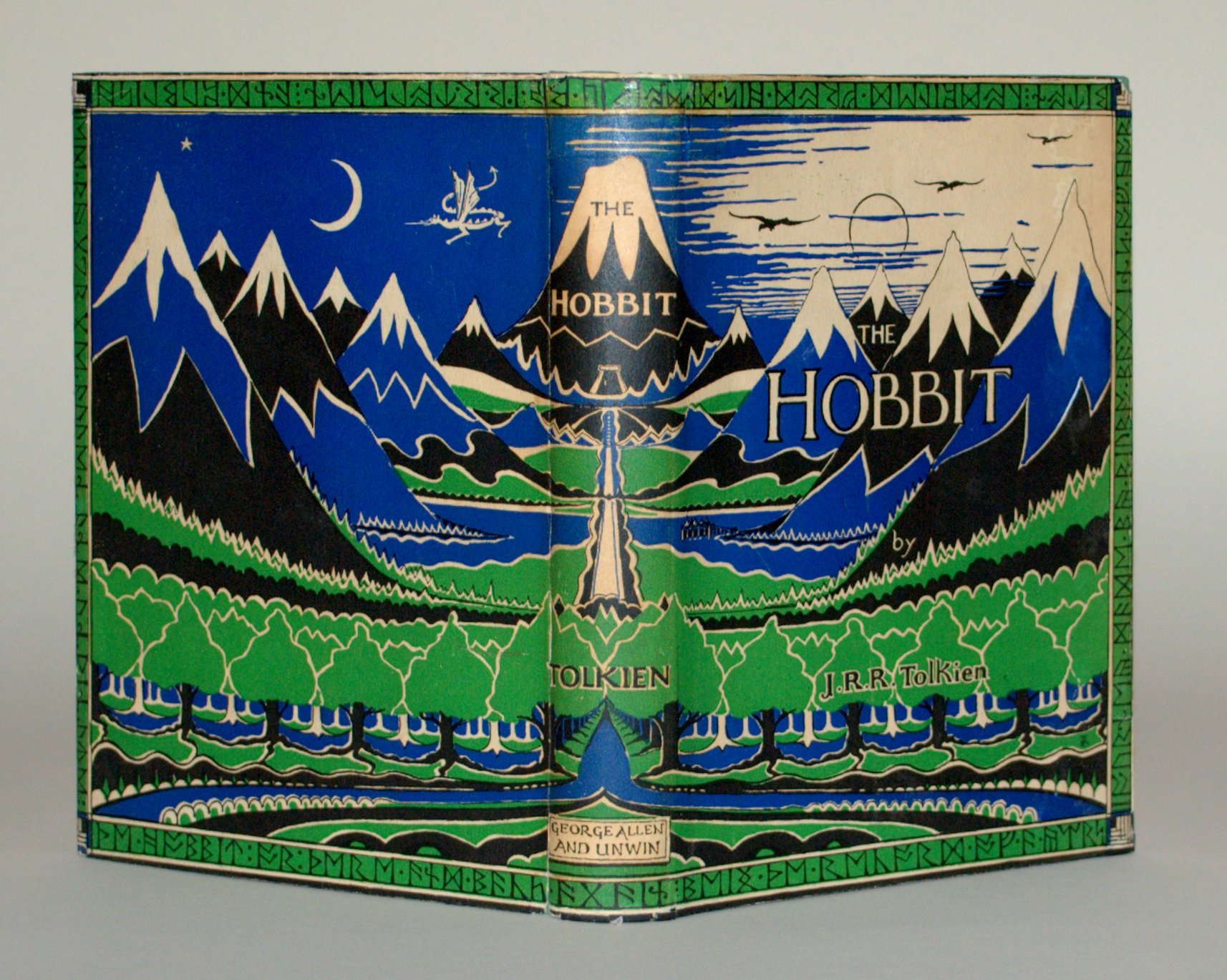
which the author found less satisfying and wished to change, or actually changed.

The most striking change was the revision of Chapter 5, “Riddles in the Dark”, in which the Gollum of 1937 is moved towards the later Gollum of The Lord of the Rings, in order to synchronize the earlier story of the Ring with its reappearance in the later book. 

A smaller change occurred in Chapter 1, “An Unexpected Party”, where Gandalf’s “And just bring out the cold chicken and tomatoes!” became “the cold chicken and pickles!” 

In contrast to the need to revamp Gollum, such a change seems so minor.  Why make it?

In a typescript of 1955,Tolkien says:

“ ‘Middle-earth’, by the way, is not the name of a never-never land…And though I have not attempted to relate the shape of the mountains and land-masses to what geologists may say or surmise about the nearer past, imaginatively this ‘history’ is supposed to take place in a period of the actual Old World of this planet.”  (from the typescript of a letter written by Tolkien to the Houghton Mifflin Company, May? 1955, Letters, 220)

In which case, if, by “Old World” he is implying—and the general look of Middle-earth in both The Hobbit and The Lord of the Rings would appear to back this up—that this is a medieval world, then tomatoes would be an anachronism, as the tomato only appeared in Europe after the Spanish conquistadores brought them back from Mexico in the early 16th century, where it was first described in Pietro Andrea Mattioli’s (1501-1577) I Discorsi in 1544.

(This is the 1568 edition, where you can find a description at the very bottom of page 1136 under “pomi d’oro”, which differentiates between two sub-varieties, one being the color of blood, the other golden—hence that name “apples of gold”.  If you’d like to read it for yourself, here’s that edition:  https://archive.org/details/gri_33125014246561/page/1136/mode/2up )

Once the tomatoes go, there are several other New World plants which have somehow found their way to Middle-earth, all of which would also fall into that category of anachronism.

First, there is tobacco, which is mentioned in a number of early 16th-century Spanish documents, including Gonzalo Fernandez de Oviedo y Valdes’ (1478-1557) Historia general de las Indias (1535-), where he describes local Native Americans smoking an herb. (Here is the reference:  https://archive.org/details/gri_33125007267921/page/130/mode/2up  Oviedo’s work is apparently a bit of a mess and this version was a mid-19th-century attempt to straighten it out.)

(How could I resist the first known image of someone smoking?  This is from Anthony Chute’s 1595 pamphlet, Tabaco, a document so enthusiastic that it might have been produced by the advertising department of a tobacco company.  Because tobacco was initially an expensive import, early pipes were, in fact, relatively small.  This reproduction will give you an idea–)

It’s seems that JRRT was a little uncomfortable with tobacco, but not enough to remove all of the references to smoking in The Lord of the Rings, where he simply turned tobacco into “pipeweed” and everyone from the Shire to Gondor could then light up on a regular—often meditative—basis. 

(Michael Herring)

(And he even included a section on the subject in the Prologue—“2  Concerning Pipe-weed”.  Of course, when one thinks of how many images we have of him with a pipe in his mouth, are we surprised?)

Then there are Sam Gamgee’s “taters”.

As with tomatoes and tobacco, it seems that it was the Spanish, as they increasingly spread through and occupied the Caribbean and points south, who imported the potato to Europe, possibly as early as the 1570s.  Certainly by Thomas Johnson’s 1633 revision of John Gerard’s 1597 The Herball, or Generall Historie of Plantes

we find this toothsome recommendation:

“The temperature and virtues be referred unto the common Potatoes, being
likewise a food, as also a meat for pleasure, equal in goodness and wholesomeness
unto the same, being either roasted in the embers, or boiled and eaten with oil,
vinegar, and pepper, or dressed any other way by the hand of some cunning in
cookery.”  (This is from Book 4, Chapter 350, page 54, of a modernized text which you can find here:  https://www.exclassics.com/herbal/herbalv4.pdf )

L0064345 Illustration of Potato of Virginia Credit: Wellcome Library, London. Wellcome Images images@wellcome.ac.uk http://wellcomeimages.org Illustration of Potato of Virginia from The herball or, generall historie of plantes / Gathered by John Gerarde 1597 The herball or, generall historie of plantes / John Gerard Published: 1597. Copyrighted work available under Creative Commons Attribution only licence CC BY 4.0 http://creativecommons.org/licenses/by/4.0/

(as is this illustration)

To these, I add one more item, which, I admit, I only spotted while teaching The Hobbit this spring:

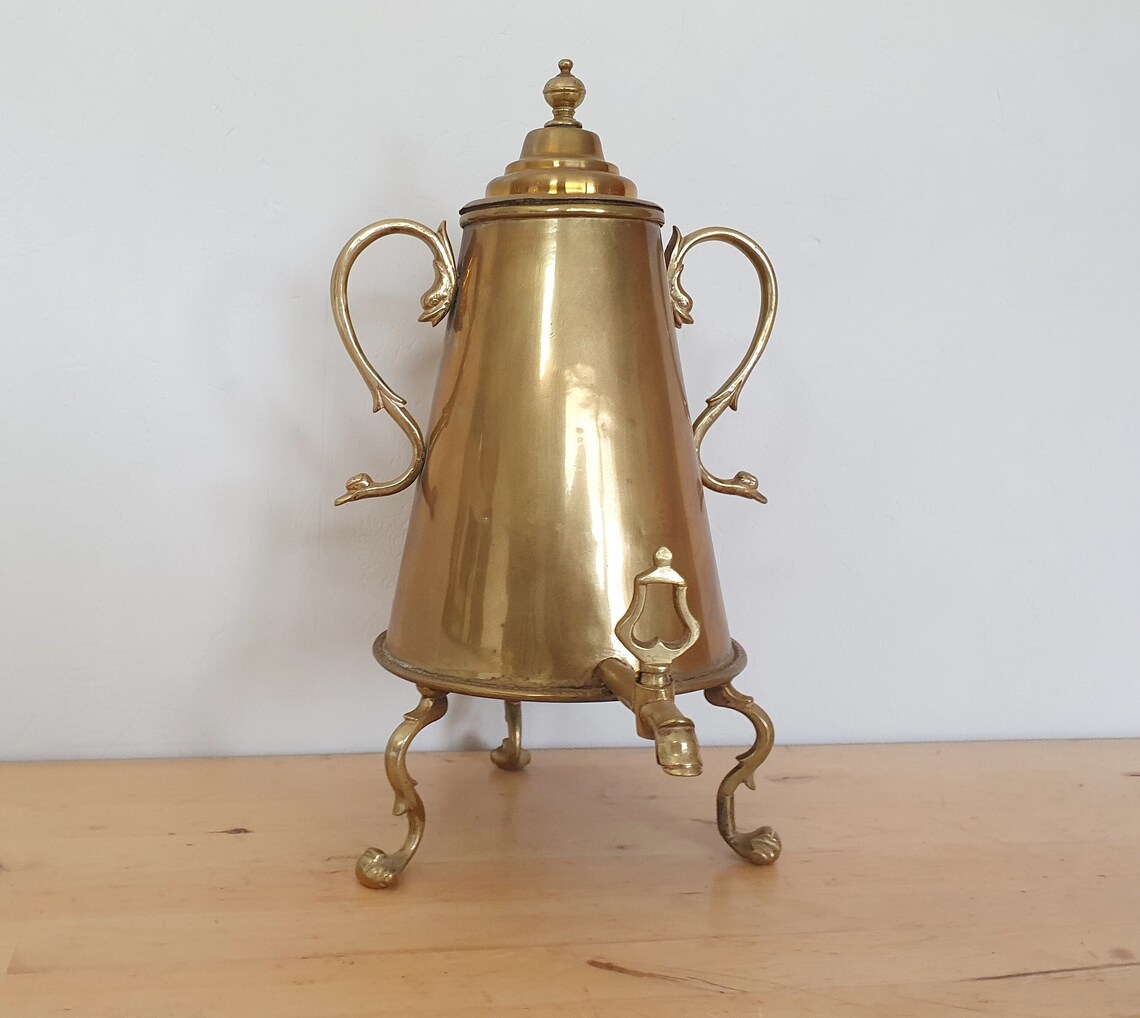
“A big jug of coffee had just been set in the hearth… (The Hobbit, Chapter 1, “An Unexpected Party”)

Coffee’s origins are a little murky, but one thing is clear:  this was not introduced from the New World by the Spanish.  Instead, the cultivated variety seems to come from Ethiopia and was introduced to eastern Europe in the 1520s by the Ottomans and to western Europe somewhat later, perhaps first by Dutch merchants.  The first coffeehouse in London dates from the early 1650s.  Here’s an advertisement from the owner of that first establishment, Pascua Rosee—

and here’s an early coffeehouse, although, by the dress of the drinkers, of perhaps a decade or so later.
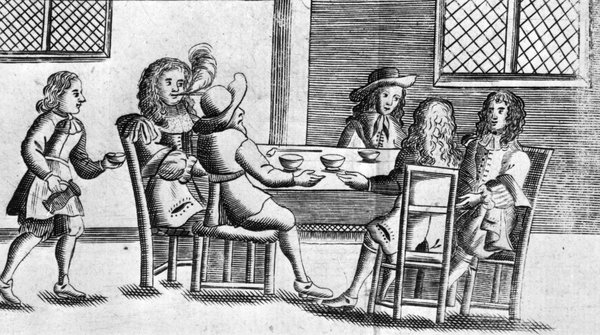
From whomever and whenever it first appeared, it certainly was not available in our medieval world and, if we continue the reasoning that Tolkien’s Middle-earth as depicted in The Hobbit and The Lord of the Rings corresponds to that medieval world, then, along with removing tomatoes, tobacco, and potatoes, that jug of coffee should have been dumped out and its contents replaced with ale—which, in fact, Bilbo’s dwarvish guests request—along with cakes–and more of that non-existent beverage:

“ ‘And more cakes—and ale—and coffee, if you don’t mind,’ called the other dwarves through the door.”  
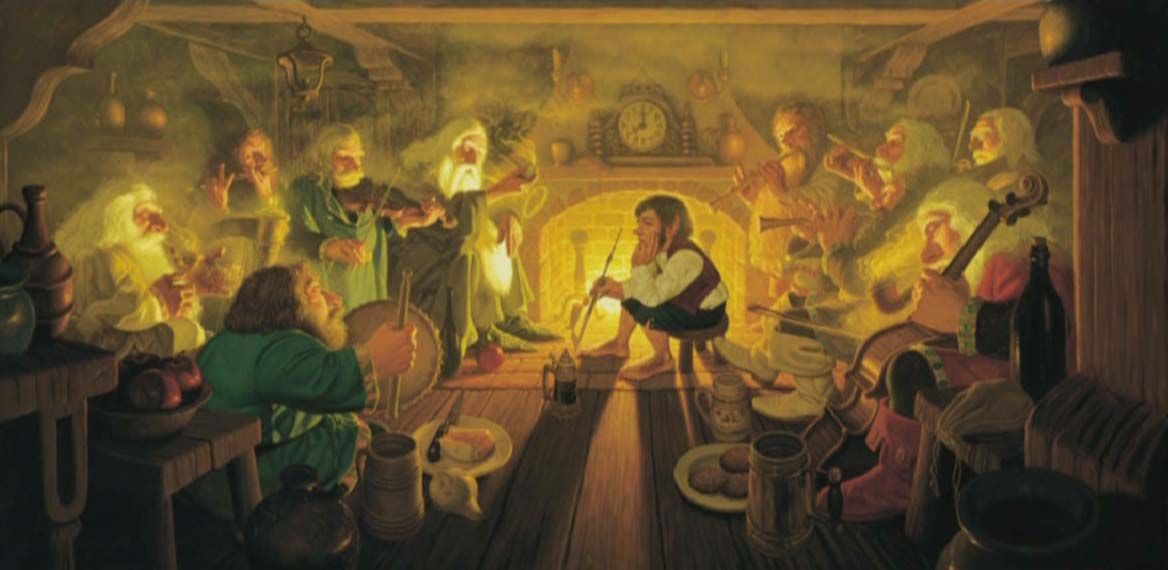
(the Hildebrandts)

But what about that steam engine with which this posting began?  If the replacement of tomatoes with pickles shows that Tolkien himself became aware of the dangers of anachronism, certainly steam engines should have joined them in being replaced.  In fact, we learn from Douglas Anderson’s The Annotated Hobbit that:

“For the 1966 revision of the text, Tolkien carefully considered the spacing of a possible replacement line here—‘like the whee of a rocket going up into the sky’—but in the end rejected it.”  (The Annotated Hobbit, 47, note 35)

But why?  Anderson offers the possibility that:

“This usage need not be viewed as an anachronism, for Tolkien as narrator was telling this story to his children in the early 1930s, and they lived in a world where railway trains were a very important feature of life.” (note 35)

And, as Tolkien didn’t change it, I suppose that we might accept this—but a small part of me still wonders, “Yes, but what about that coffee?”
Thanks, as ever, for reading,

Stay well,

I’ll take mine black,

And remember that there’s always

MTCIDC

O

PS

For a cheerful song about coffee from the time of the Great Depression, here’s Irving Berlin’s “Let’s Have Another Cup of Coffee” from the 1932 review “Face the Music”– https://www.youtube.com/watch?v=K8kGjrjAKt4
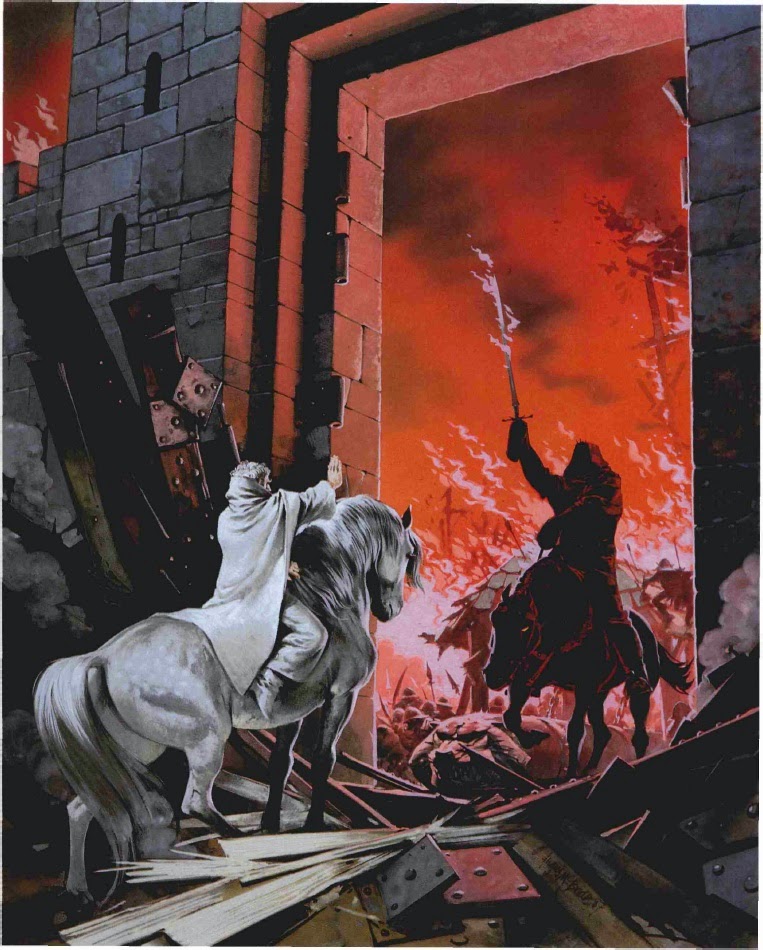
Changing Horses

19 Wednesday Apr 2023

Posted by Ollamh in Uncategorized

≈ Leave a comment

Welcome, dear readers, as always.

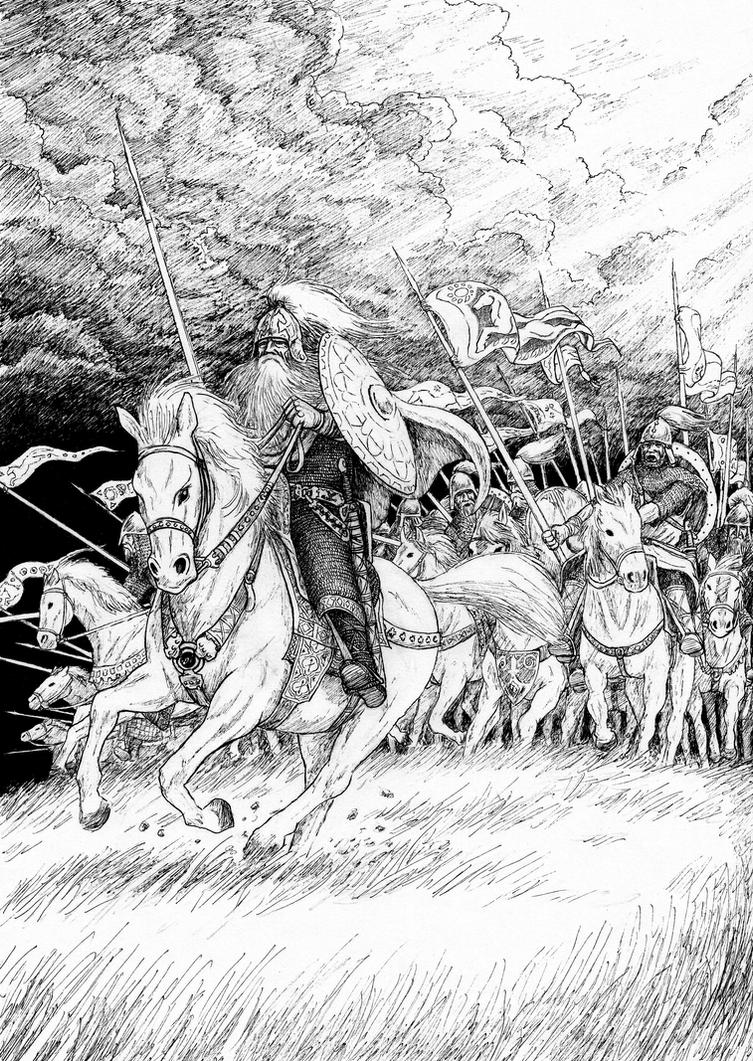
Two weeks ago or so, I was working on the posting which I called “Horsing Around”, all about white horses in The Lord of the Rings (uploaded 5 April).

Among the horses which I mentioned was Theoden’s Snowmane.

(Joon Tulikoura)

The other horses, including Shadowfax,

(Angus McBride)

seem to have weathered the last tense moments of the War of the Ring and survived.  Snowmane, however, was a different matter:

“But Snowmane wild with terror stood up on high, fighting with the air, and then with a great scream he crashed upon his side:  a black dart had pierced him.  The King fell beneath him.”  (The Return of the King, Book Five, Chapter 6, “The Battle of the Pelennor Fields”)

(Craig J. Spearing)

Because he had fallen in battle, even though his fall had brought down Theoden, Snowmane was honored with a mound, like those of the Rohirric kings which lined the approach to Edoras,

adding to it

“a stone upon which was carved in the tongues of Gondor and the Mark:

Faithful servant yet master’s bane,

Lightfoot’s foal, swift Snowmane.”

And so the association of Rohan, white horse, and death, had stuck with me for the next week or two.  And then I came upon this:

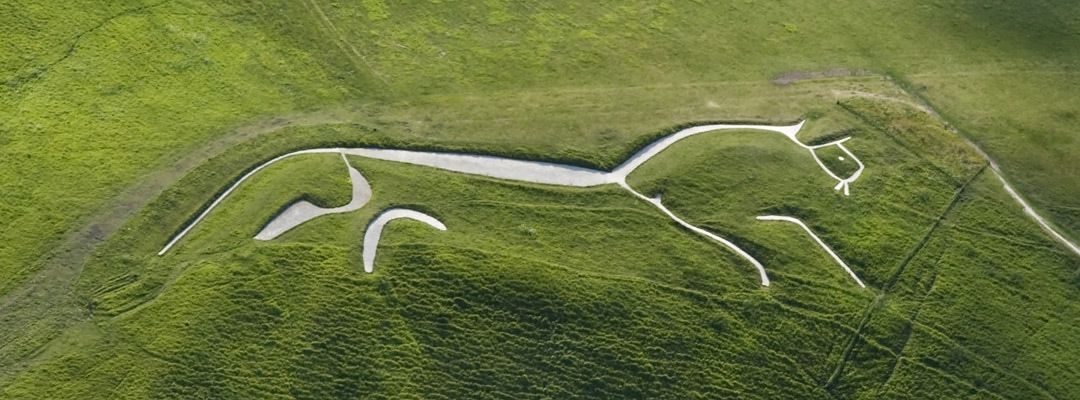
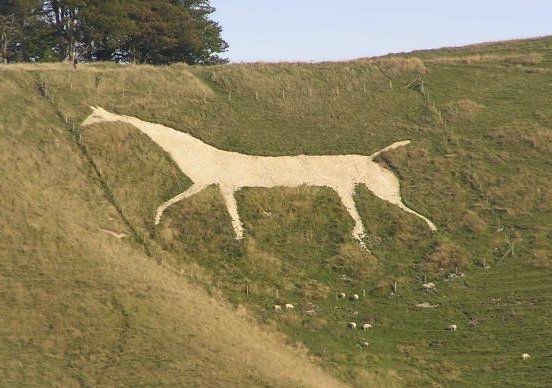
“In Anglo-Saxon times the natives of Worcestershire and Warwickshire and Oxfordshire, and many other counties, would have told anyone who asked that they lived in the Mark, and also their own particular Shire:  names and at once both ancient and modern, indeed unchanging.  As for the white horse this is the emblem of the Mark, like Bree and the Barrow-downs it lies less than a day’s walk from Tolkien’s study, and the White Horse of Uffington,

cut into the chalk a short stroll from the great Stone Age barrow of Wayland’s Smithy.”   


(Tom Shippey, J.R.R. Tolkien:  Author of the Century, 92)

(Shippey mentions the White Horse as the boundary marker for the Mark again in The Road to Middle-earth, 132.)

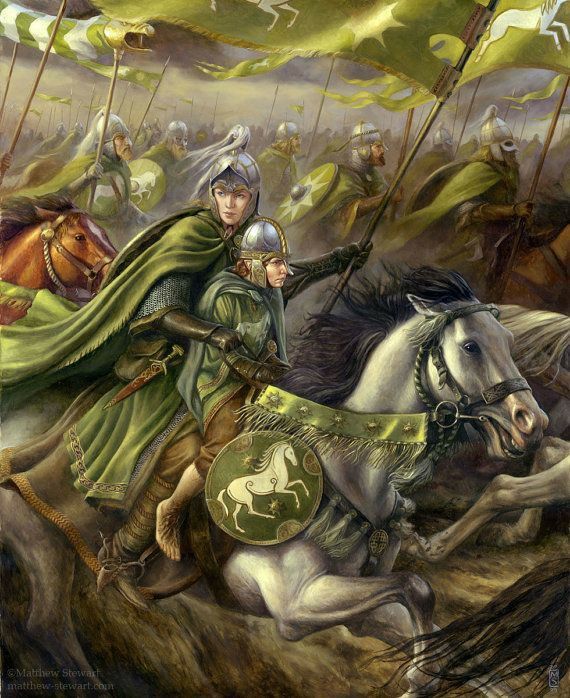
Although he doesn’t draw a direct parallel, I think that the suggestion here is that the Uffington White Horse might have been an inspiration for Tolkien for the emblem of the Rohirrim,

(Matthew Stewart)

as it is for the area of England which includes the counties Shippey mentions in his list (which would have also been included in what is known as Anglo-Saxon Mercia, itself a Latin form of Old English Marc.)

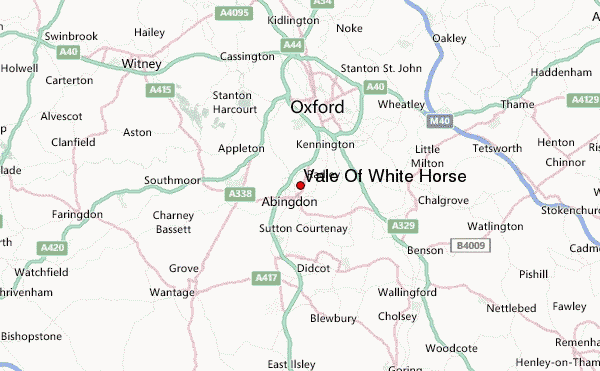
If  you’re not familiar with it, the White Horse is a huge (360 feet—110 metres–long) image cut into a chalky hillside about a 30-minute drive south from Oxford.

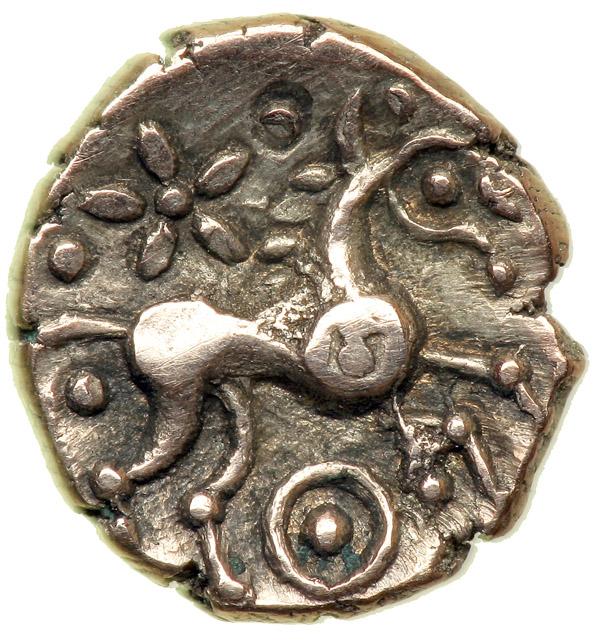
The latest dating of the site places it between 1380 and 550BC and it may be linked to the image on pre-Roman coins—

(for a cheerful brief article on the Horse, see:  https://www.smithsonianmag.com/history/3000-year-old-uffington-horse-looms-over-english-countryside-180963968/ )

This horse appears to have been an inspiration for other horses cut in hillsides, like the Cherhill horse, cut in 1780,

like that at Osmington, created in 1802,

or, at late as 1999, the Devizes White Horse, a celebration of the Millenium.

No one knows why the horse was originally cut into the hillside at Uffington—one theory is that it’s a tribute to the sun-chariot and its horse

(possibly a representation, possibly just a chariot warrior?  2nd century BC)

as seen in the so-called “Trundholm sun chariot” of c.1400BC—

(for a 360 degree view of this and more on the chariot, see:  https://en.wikipedia.org/wiki/Trundholm_sun_chariot )

One might also wonder about the description of a kingship ceremony celebrated in Celtic Ireland by Giraldus Cambrensis (Gerald of Wales) in his 12th-century Topographia Hibernica:

Est igitur in boreali et ulteriori Ultonite parte, scilicet

apud. Kenelcunuil, gens quaedam, quae barbaro

nimis et abominabili ritu sic sibi regem creare solet.

Collecto in unum universo terrae illius populo, in medium

producitur jumentum candidum. Ad quod sublimandus

ille non in principem sed in beluam, non in

regem sed exlegem, coram omnibus bestialiter accedens,

non minus – impudenter quam imprudenter se quoque

bestiam profitetur. Et statim jumento interfecto, et

frustatim in aqua decocto, in eadem aqua balneum ei

paratur. Cui insidens, de carnibus illis sibi allatis,

circumstante populo suo et convescente, comedit ipse.

De jure quoque quo lavatur, non vase aliquo, non manu,

sed ore tantum circumquaque haurit et bibit. Quibus

ita rite, non recte completis, regnum illius et dominium

est confirmatum.

“There is, therefore, a certain people in a northern and remote part of Ireland, that is at Kenelcunuil [glossed as Tirconnel, modern Donegal], which is accustomed to create a king for itself by a ceremony [which is] extremely barbarous and revolting.  When the whole people of that land has been gathered into one body, a shiny white mare is brought out into the midst.  To which [place] that one to be raised [to the throne] approaching like an animal [probably meaning “on all fours”] openly to all, not less shamelessly than rashly, he confesses himself [to be] a beast, as well.  And immediately, when the mare has been killed and, [cut into] pieces, has been cooked, a bath is prepared for him [the candidate] in the same water.  Sitting in which, with the populace standing around, and sharing with him, he himself eats some of the flesh brought to him.  By law, as well, he drains and drinks from which he is bathed not by any vessel nor with his hand, but only with his mouth from every side.  Thus, when these things have been completed by ritual, not by propriety, the kingship and lordship of that man has been confirmed.”

(Topographia Hibernica, Distinctio III, Capitulum XXV—my translation–if you would like to see the whole chapter in Latin, see:  https://archive.org/details/giraldicambrensi05gira/page/168/mode/2up ; in English:  https://ia800301.us.archive.org/5/items/historicalworkso00girauoft/historicalworkso00girauoft.pdf )

Could it be that that horse was placed there on that hillside to remind people of a similar British Iron Age ceremony?

(For more on horse sacrifice, see:  https://en.wikipedia.org/wiki/Horse_sacrifice If you love horses, as I do, this is not recommended reading!)

Then I picked up this, from a WIKI article on “White Horses in Mythology”:

“The white horse is a recurring motif in Ibsen’s play Rosmersholm, making use of the common Norse folklore that its appearance was a portent of death. The basis for the superstition may have been that the horse was a form of Church Grim, buried alive at the original consecration of the church building.” (https://en.wikipedia.org/wiki/White_horses_in_mythology )

A horse sacrifice is already grim—but what’s this? I wondered.  A “Church Grim”?  if it’s “common Norse folklore that its appearance was a portent of death”, then is that meaning of “Grim” related to the Old English word grima (2), “a spectre, goblin, nightmare”?  If so, where might we find something about “common Norse folklore”?  I went to Benjamin Thorpe’s Northern Mythology (3 volumes, London, 1851), where, in Volume II , we find:

“THE CHURCH-GRIM AND THE CHURCH-LAMB.

Heathen superstition did not fail to show itself in the construction of Christian churches. In laying the foundation, the people would retain something of their former religion, and sacrificed to their old deities, whom they could not forget, some animal, which they buried alive, either

under the foundation or without the wall. The spectre of this animal is said to wander about the churchyard by night, and is called the Kyrkogrim, or Church-grim. A tradition has also been preserved, that under the altar in the first Christian churches a lamb was usually buried, which imparted security and duration to the edifice. This is an emblem of the genuine Church-lamb, the Saviour of

the world, who is the sacred corner-stone of his church and congregation. When any one enters a church at a time when there is no service, he may chance to see a little lamb spring across the quire and vanish. That is the Church-lamb. When it appears to a person in the church yard, particularly to the gravediggers, it is said to forebode the death of a child that shall be next laid in the earth.” (page 102)

(if you’d like to read more, these three volumes are available at the wonderful Internet Archive.  Here’s the LINK for Volume II:  https://archive.org/details/northernmytholog02thor )

So, if we put all of this together, might we imagine that, for the Rohirrim, after Theoden’s death, that white horse on their banner may have taken on added meaning:  not only symbol of their land, but also of sacrifice, both of their king and his white horse, in order to protect that land from future invasion, as the Church Grim defends the church and its burying ground?

(Matthew Stewart)

Thanks for reading, as ever.

Stay well,

Churchyards at night?  Probably not.

And remember that, as always, there’s

MTCIDC

O

PS

Just a footnote—another meaning of grima in Old English is “mask”.  Perhaps this is why JRRT chose that as the name for Theoden’s traitorous counselor?

(Alan Lee)

Sigilry

12 Wednesday Apr 2023

Posted by Ollamh in Uncategorized

≈ Leave a comment

Sigilry

As always, dear readers, welcome.

When I first read Tolkien’s poem “Errantry” (originally published in The Oxford Magazine, 9 November, 1933), as an undergraduate, I loved the slipperiness of it, the way it danced from rhyme to rhyme (something JRRT later confessed that he couldn’t do twice—see the letter to Rayner Unwin of 22 June, 1952 in Letters, 162-3).

Some of the words took looking up, but, as someone who had some Latin and who read a lot of medieval literature, I thought I knew, from these lines:

“So long he studied wizardry
And sigaldry and smithying”

that “sigaldry” had to do with sigils, that is, with little seals, or maybe with the bigger idea of standards  (the word is a diminutive of Latin signum, among the meanings of which is both “seal” and “military standard”—as in the common military expression signum ferre “to advance”—literally “to carry the standard”) and so I thought that it probably had to do with heraldry.

But it turns out that I was completely misled.  In fact, it is listed in the OED (Oxford English Dictionary) as “obs. rare” with the meaning “Enchantment, sorcery” and is certainly rare as it has a bare minimum of sources cited, including a circa-1300 poem about Alexander the Great (Kyng Alisaunder) and the 14th-century (?) mystery play, Crucifixion, from the Chester Cycle of Mysteries.   (Appropriately, I looked the word up in the 1933 edition, which is available for free on-line at the wonderful Internet Archive:  https://archive.org/details/the-oxford-english-dictionary-1933-all-volumes/The%20Oxford%20English%20Dictionary%20Volume%209%20-%20Variant/page/26/mode/2up )

This meaning of the word certainly fits better with the plot at this point in the poem—the protagonist is attempting to woo a butterfly (for the whole poem see:  https://genius.com/J-r-r-tolkien-errantry-lyrics  ) and perhaps sorcery might help—but I think that I assumed that it was related to heraldry not only by the “medieval” quality of the poem’s plot, but also because heraldry turns up so often in The Lord of the Rings.

Heraldry comes from the medieval military world, from a time when, fully covered in chain mail, it would be impossible to identify one warrior from another.

(by Gerry Embleton)

In fact, at the Battle of Hastings, in October, 1066, the Norman leader, Duke William, when there was a rumor that he had been killed, was forced to ride across his forces lifting his helmet so that his men could see that he was still with them.

A system was gradually devised by which combinations of patterns and colors could be put upon armor and clothing and even horses to indicate who was inside that armor.

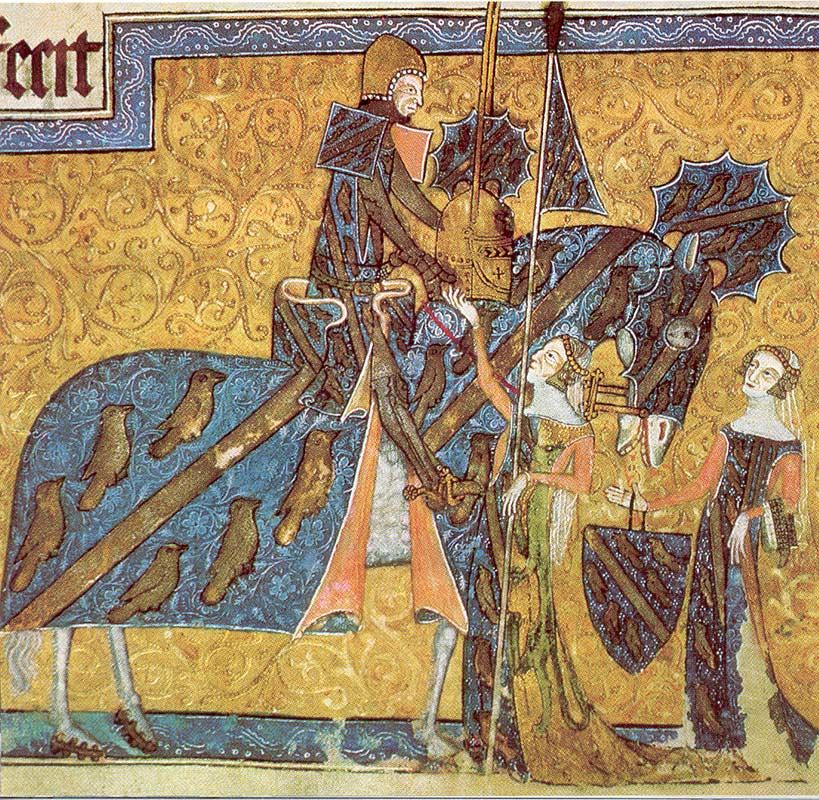
This is from the early 14th  century psaltery—psalm book–of Sir Geoffrey Luttrell, one of my favorite medieval manuscripts.  (For more on this particular marvelous example of a manuscript, see:  https://en.wikipedia.org/wiki/Luttrell_Psalter If you would like to see the manuscript itself, see:  https://www.bl.uk/manuscripts/Viewer.aspx?ref=add_ms_42130_fs001ar )

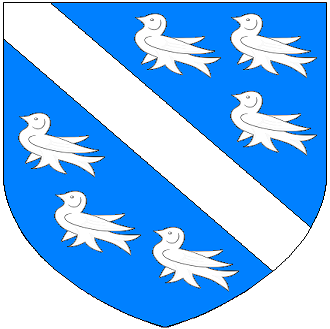
Depicted is Sir Geoffrey Luttrell (1276-1345) himself, with his wife, Agnes de Sutton, and his daughter-in-law, Beatrice le Scrope.  His arms—that is, the pattern you see on his horse’s trapper (that big drape of cloth which covers the horse) are “azure, a bend between six martlets argent”, which means “on a blue field, six martlets in silver divided by a band”—like this

Marlets were supposed, at this time, to be tireless birds who are born in flight and never stopped till they died, suggesting to the knowing who saw Sir Geoffrey that he was just as tireless as this imaginary creature.  He might also have wanted to avoid the meaning of his own name, which appears to be a diminutive of the French loutre, “otter”, suggesting that the founder of his family was a pelt-hunter.

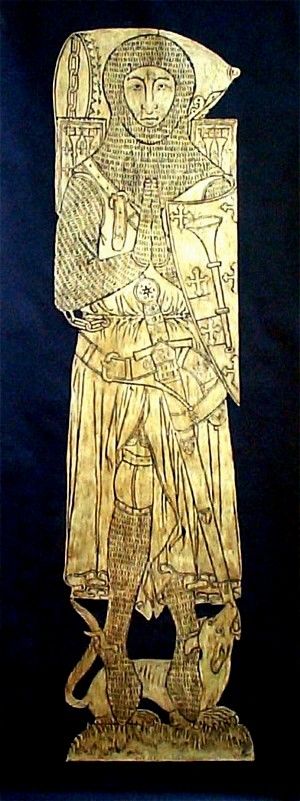
Patterns could be taken from current mythology—as in the case of Sir Geoffrey—or could even be rather like visual puns—here’s Sir Roger de Trumpington (died 1289)—

where you can see that his emblem is a trumpet—or Robert de Septvans (c.1250-1306)

whose emblem was 7 winnowing baskets (“van” being related to “fan”, as such baskets were used in dividing the grain from its covering, called “chaff”).

In time, there was so much of this that specialists began to appear, called heralds.

As with many old words, there is discussion over where the word comes from, but, in the later medieval military world, he was an important figure, whose jobs included things like identifying noble dead on battlefields, determining captives for ransom, and acting as messengers, because they were held to be neutrals.  You may remember the French herald, Montjoy, in Shakespeare’s Henry V.

If you’re a fan of Game of Thrones, you’ll certainly have heard “sigils” being mentioned here and there—emblems like the Stark family wolf

or the ghastly flayed man of the Bolton family.

In The Lord of the Rings, we see a number of these emblems—

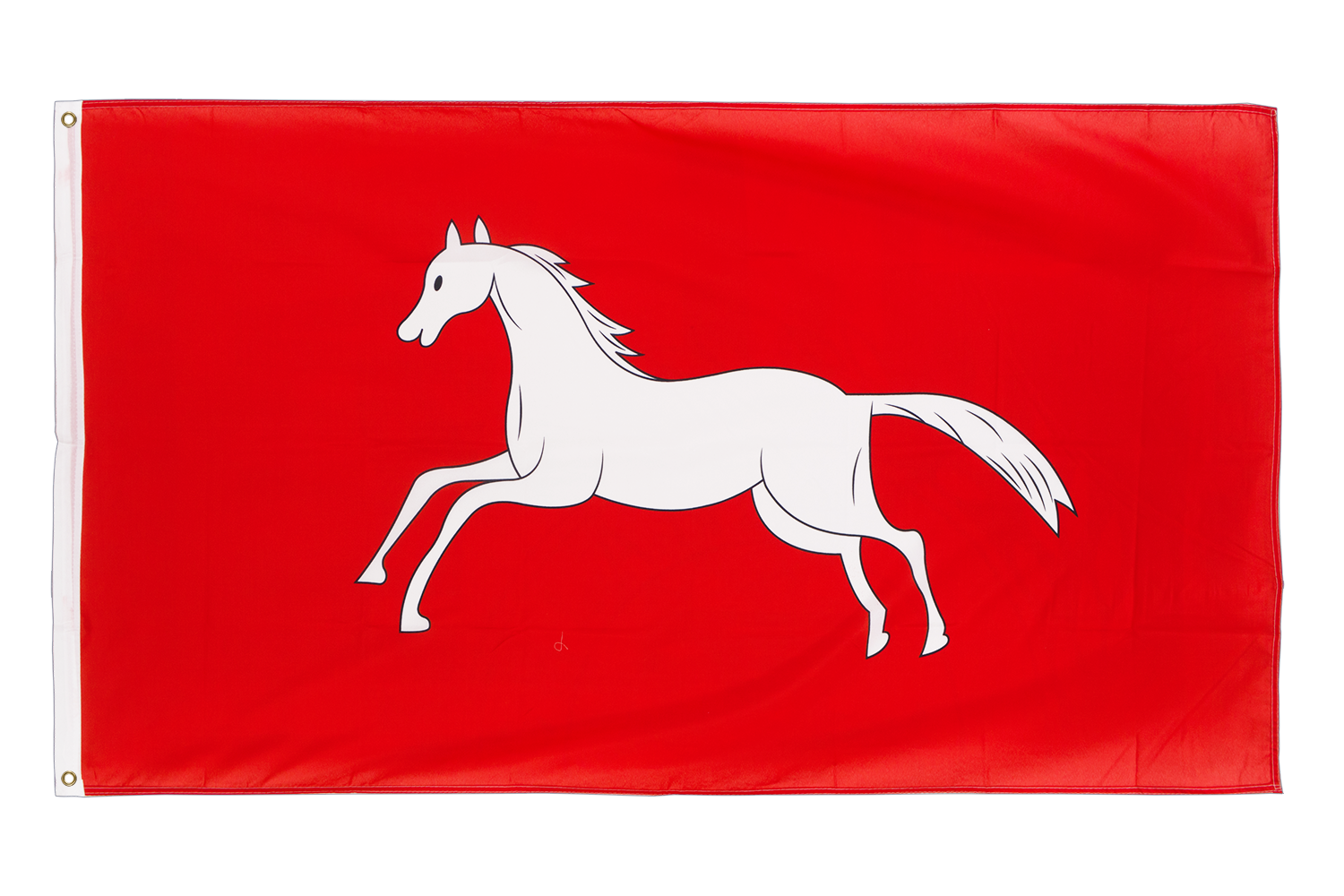
the running white horse of the Rohirrim–

(Ted Nasmith)

which reminds me of the emblem of the old Electorate/Kingdom of Hannover—

the silver swan-ship of the Prince of Dol Amroth–

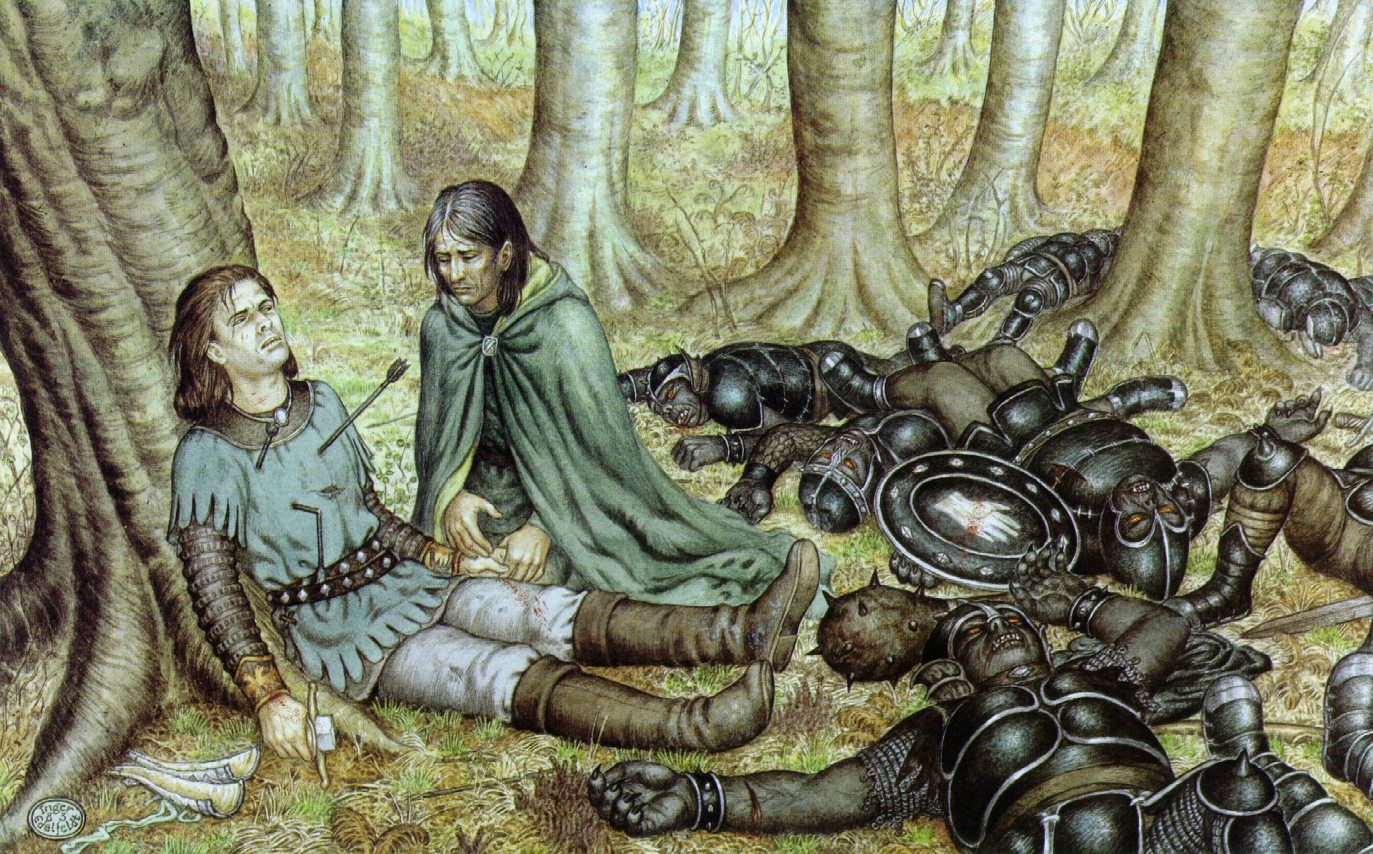
and, of course, the White Hand of Saruman—

(Inger Edelfeldt)

and the Red Eye of Sauron–

(Angus McBride)

and, triumphant over all, the seven stars and white tree of Gondor.

All of the above came from a misunderstanding of an obscure word in a dancy little poem by JRRT—perhaps sometimes “creative misreading” can lead in interesting directions. In which case, if someone proposed a sigil for me, it would be something “azure, mark of interrogation argent”—

As ever, thanks for reading.

Stay well,

Question everything,

And remember that there’s always

MTCIDC

O

PS

In 1967, “Errantry” was set to music by the English composer, Donald Swan (1923-1994), and you can hear it here:  https://www.youtube.com/watch?v=M6jVR6pF_0E Swan actually set a small series of Tolkien’s poems—with Tolkien’s permission and help—in a volume—and LP– called The Road Goes Ever On.

You can hear the whole LP at:  https://www.youtube.com/watch?v=M6jVR6pF_0E  The series begins at 27:15—but the previous 26 minutes are JRRT himself reading/reciting. I grew up hearing and singing these settings–see if they stick in your memory as well.

Horsing Around

05 Wednesday Apr 2023

Posted by Ollamh in Uncategorized

≈ Leave a comment

Welcome, as ever, dear readers.

As I was thinking and writing about Icelandic horses, a couple of postings ago, Gandalf popped into my mind—rather like William Morris of that posting—bearded and on horseback,

(a caricature by his friend, Edward Burne-Jones)

(the Hildebrandts?)

although a bit more imposing.

In this illustration, as in many, he’s mounted on Shadowfax, whose name appears to be based upon two Old English words, scead, “shade/shadow” and feax, “hair/mane”, suggesting “Shadowmane” in English, just as Theoden’s fatal horse is “Snowmane” (combining Old English snaw/snawa with feax?).

(by Joon Tulikoura)

Although his mane may be shadowy, Shadowfax appears to be white, with a silvery sheen, as Gandalf describes him:

“The horses of the Nine cannot vie with him; tireless, swift as the flowing wind.  Shadowfax they called him.  By day his coat glistens like silver; and by night it is like a shade, and he passes unseen.”  (The Fellowship of the Ring, Book Two, Chapter 2, “The Council of Elrond”)

These are not the only white horses in The Lord of the Rings.  When Glorfindel appears, his horse, Asfaloth, is also white and, astride it, on the far side of the Ford of Bruinen, as the river begins to rise, Frodo thinks he sees:

“…a plumed cavalry of waves.  White flames seemed to Frodo to flicker on their crests, and he half fancied that he saw amid the water white riders upon white horses with frothing manes.”  (The Fellowship of the Ring, Book One, Chapter 12, “Flight to the Ford”)

(Ted Nasmith)

(We later find out that, although Elrond commanded the waters of the river to rise, Gandalf “…added a few touches of my own:  you may not have noticed, but some of the waves took the form of great white horses with shining white riders.”  The Fellowship of the Ring, Book Two, Chapter 1, “Many Meetings”)

I’ve always imagined that Shadowfax is white because

1. he’s the descendant of the horse ridden by Eorl the Young, as we see him in the tapestry in Meduseld—

“Many woven cloths were hung upon the walls, and over the wide spaces marched figures of ancient legend, some dim with years, some darkling in the shade.  But upon one form the sunlight fell:  a young man upon a white horse.  He was blowing a great horn, and his yellow hair was flying in the wind.  The horse’s head was lifted, and its nostrils were wide and red as it neighed, smelling battle afar.  Foaming water, green and white, rushed and curled about its knees.

‘Behold Eorl the Young!’ said Aragorn.  ‘Thus he rode out of the North to the Battle of the Field of Celebrant.’ “ (The Two Towers, Book Three, Chapter 6, “The King of the Golden Hall”)

(Alan Lee)

2. he now matches Gandalf, who has become Gandalf the White,

(the Hildebrandts)

as Aragorn hails him:

“Then suddenly [Gandalf] threw back his grey cloak, and cast aside his hat, and leaped to horseback.  He wore no helm nor mail.  His snowy hair flew free in the wind, his white robes shone dazzling in the sun.

‘Behold the White Rider!’ cried Aragorn, and all took up the words.”  (The Two Towers, Book Three, Chapter 5, “The White Rider”)

3. the whiteness of the two is a strong contrast to the blackness of the chief of the Nazgul when Gandalf encounters him at the gate of Minas Tirith—

“In rode the Lord of the Nazgul.  A great black shape against the fires beyond he loomed up, grown to a vast menace of despair.  In rode the Lord of the Nazgul, under the archway which no enemy ever yet had passed, and all fled before his face.

All save one.  There waiting, silent and still in the space before the Gate, sat Gandalf upon Shadowfax.  Shadowfax, who alone among the free horses of the earth endured the terror, unmoving, steadfast as a graven image in Rath Dinen.” (The Return of the King, Book Five, Chapter 4, “The Siege of Gondor”)

Of course, important people on white horses appear all the time in history.

Here, for instance, is Napoleon, painted on his white Arabian horse, “Marengo”—

(Baron Gros)

and George Washington, on an unnamed horse.

(John Faed—for an interesting article on Washington’s horses, see:  https://www.mountvernon.org/george-washington/farming/the-animals-on-george-washingtons-farm/horses/ )

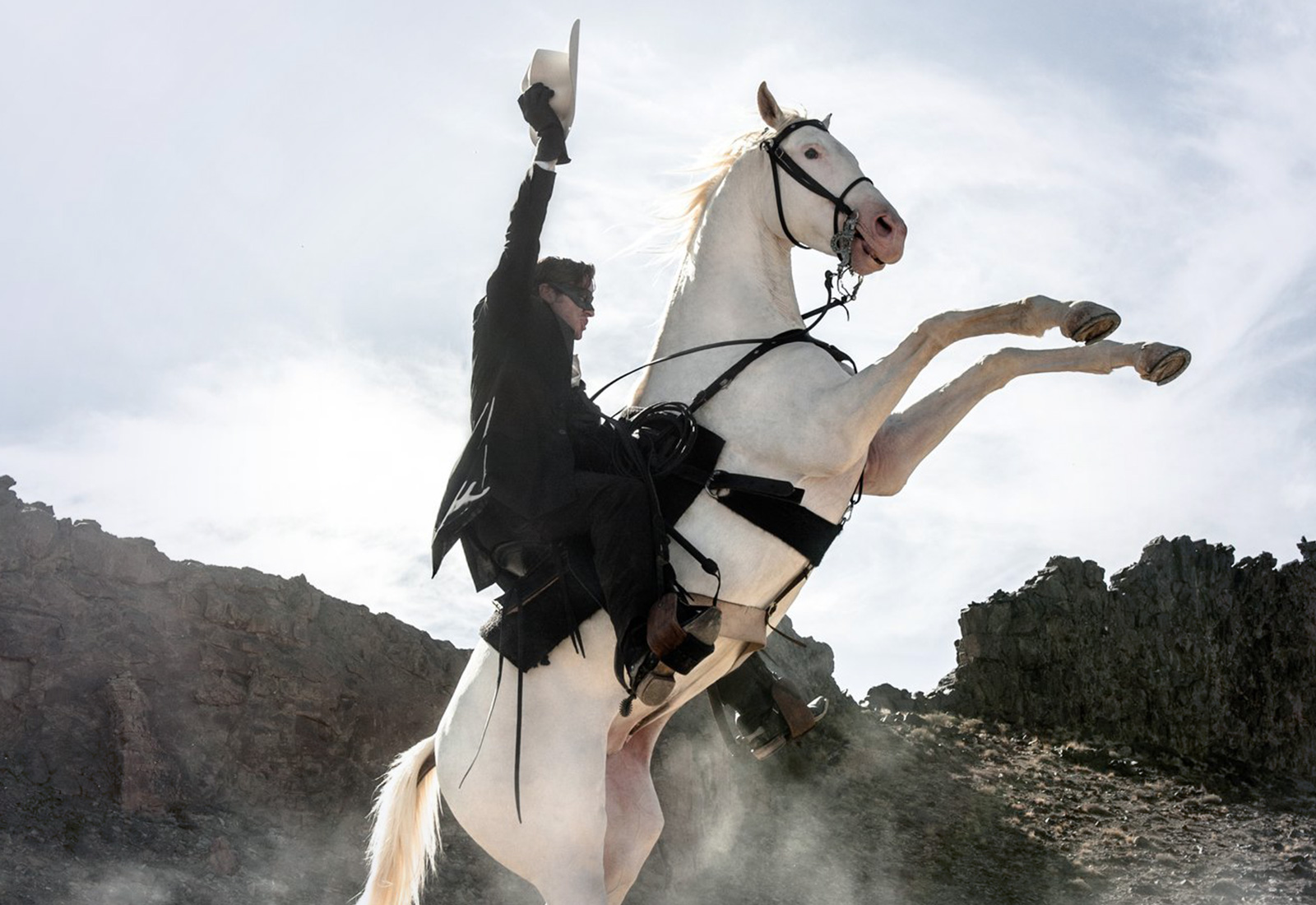
And how could we forget the Lone Ranger’s horse, “Silver”, both in his 1950s form

and his 2013 reincarnation?

But there’s a more sinister white horse which might also have been in the back of Tolkien’s mind as a long-time Bible reader:

“6 And I saw when the Lamb opened one of the seals, and I heard, as it were the noise of thunder, one of the four beasts saying, Come and see.

2 And I saw, and behold a white horse: and he that sat on him had a bow; and a crown was given unto him: and he went forth conquering, and to conquer.” (The Book of Revelation, Chapter 6, Verses 1-2)

(V.M.Vasnetsov)

There has been much discussion for centuries as to what this figure signifies, but, at his confrontation with the Nazgul, Gandalf says:

“ ‘You cannot enter here…Go back to the abyss prepared for you!  Go back!  Fall into the nothingness that awaits you and your master.  Go!’ “(The Return of the King, Book Five, Chapter 4, “The Siege of Gondor”)

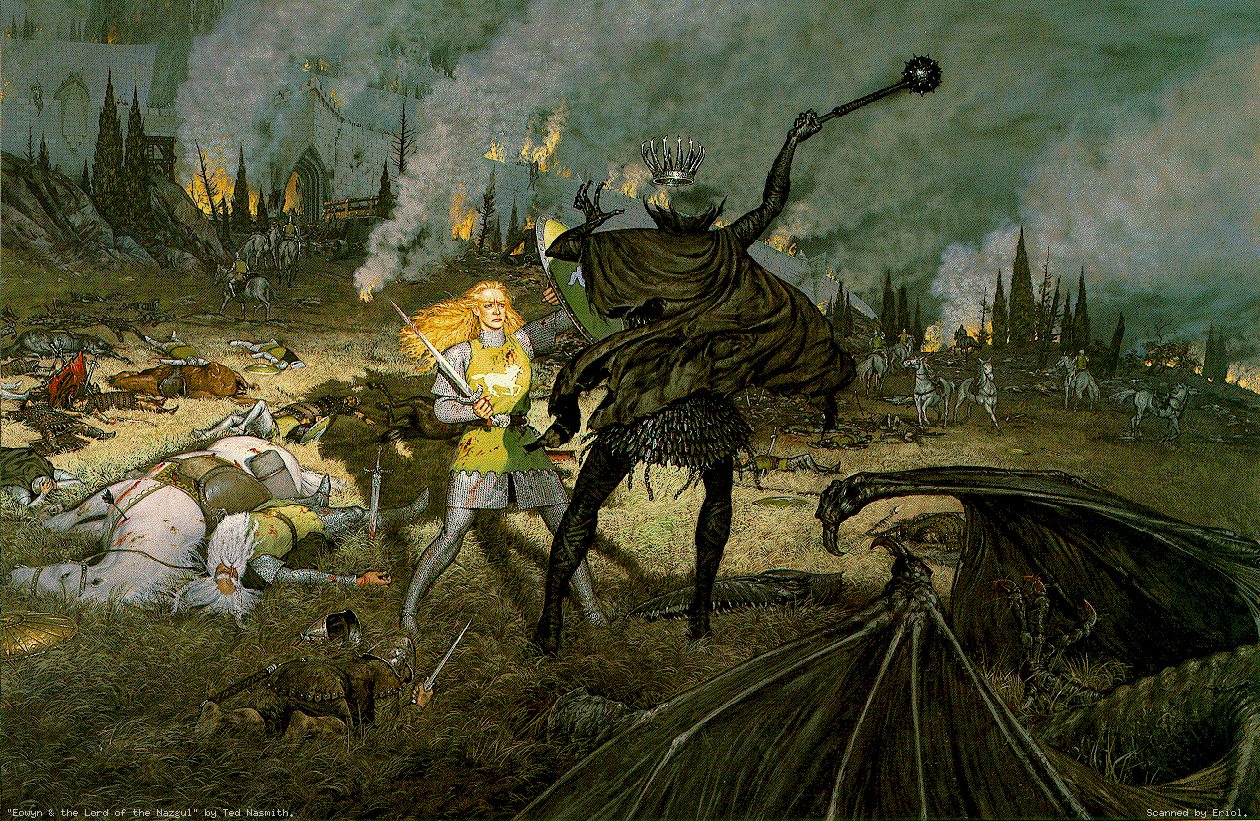
The Lord of the Nazgul laughs at this, but, soon after, over the body of Theoden and his fallen white horse, Gandalf’s words come true and he who thinks to conquer is himself conquered.

(This is from an older site called “Shadowcore”, where the artist, Craig J. Spearing, presents a very informative picture of himself at work:  https://shadowcoreillustration.blogspot.com/2011/10/eowyn-nazgul-process.html )

As ever, thanks for reading.

Stay well,

Plan to bluff a Nazgul,

And remember that there’s always

MTCIDC

O

The Scottish Play

29 Wednesday Mar 2023

Posted by Ollamh in Uncategorized

≈ Leave a comment

As ever, dear readers, welcome.

Although Tolkien taught in the field of English literature, he was not generally enthusiastic about much of anything in it beyond about the 14th century.  In a 1953 letter to Robert Murray, SJ, he wrote:

“Certainly I have not been nourished by English Literature, in which I do not suppose I am better read than you; for the simple reason that I have never found much there in which to rest my heart (or heart and head together).  I was brought up in the Classics, and first discovered the sensation of literary pleasure in Homer.”  (letter to Robert Murray, 2 December, 1953, Letters, 172)

He further explains this in a letter to W.H. Auden, where he says:

“I went to King Edward’s School and spent most of my time learning Latin and Greek; but I also learned English.  Not English Literature!  Except Shakespeare (which I disliked cordially), the chief contacts with poetry were when one was made to try and translate it into Latin.”  (letter to W.H. Auden, 7 June, 1955, Letters, 213)

This dislike made a rather violent appearance at a meeting of the Debating Society while he was at King Edward’s School when

“…in a debate on the authorship of Shakespeare’s plays he ‘poured a sudden flood of unqualified abuse upon Shakespeare, upon his filthy birthplace, his squalid surroundings, and his sordid character’. “ (Carpenter, Tolkien, 45)

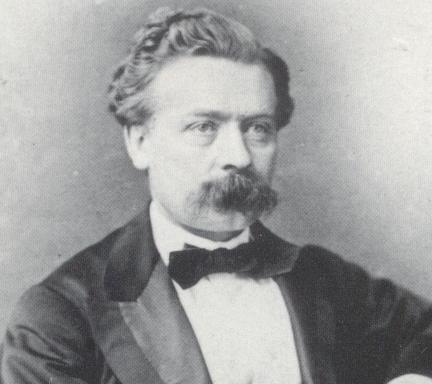
This is, of course, what in rhetoric is called an argumentum ad hominem—that is, an attack upon the person, rather than addressing the issue of the debate directly and, what we see here is a combination of the adolescent Tolkien’s personal resentment and that strange Shakespeare-denial which seems to date back to the 1850s, a major proponent being Delia Bacon (1811-1859),

who first published her doubts about Shakespeare’s authorship in an anonymous article in the January, 1856 issue of Putnam’s Monthly Magazine (pages 1-19), which she expanded into a large volume in 1857, The Philosophy of the Plays of Shakespeare (which you can find here:  https://www.gutenberg.org/cache/epub/8207/pg8207.html –and you can find more about doubts here:  https://shakespeareanauthorshiptrust.org/  For what it’s worth, I’ve never believed that the man from Stratford wasn’t the author.  See Caroline Spurgeon’s 1935 book, Shakespeare’s Imagery here for what would have long ago convinced me, had I had any doubts:  https://archive.org/details/lccn_051092582  I would also be very wary when reading about Ms Bacon, that she ended her life in an asylum, put there by her brother, who had interfered in her life earlier and, as a Victorian minister and a male, had power over her which, in our century, might have been seriously questioned.)

In time, the grownup Tolkien somewhat changed his mind about Shakespeare, praising a performance of Hamlet to his son, Christopher:

“Plain news is on the airgraph; but the only event worth of talk was the performance of Hamlet which I had been to just before I wrote last.  I was full of it then, but the cares of the world have soon wiped away the impression.”

He then adds an interesting qualification:

“But it emphasised more strongly than anything I have ever seen the folly of reading Shakespeare (and annotating him in the study), except as a concomitant of seeing his plays acted.  It was a very good performance with a young rather fierce Hamlet; it was played fast without cuts; and came out as a very exciting play.  Could one only have seen it without ever having read it or knowing the plot, it would have been terrific.”  (letter to Christopher, 28 July, 1944, Letters, 88—if you’re curious about that word “airgraph”, see:  https://en.wikipedia.org/wiki/V-mail )

Even though he may have enjoyed Hamlet, a play which had early vexed JRRT was Macbeth, and one element in particular:

“And I like Ents now because they do not seem to have anything to do with me…Their part in the story is due, I think, to my bitter disappointment and disgust from schooldays with the shabby use made in Shakespeare of the coming of ‘Great Birnam wood to high Dunsinane hill’:  I longed to devise a setting in which the trees might really march to war.”  (letter to W.H. Auden, 7 June, 1955, Letters, 212—a footnote) 

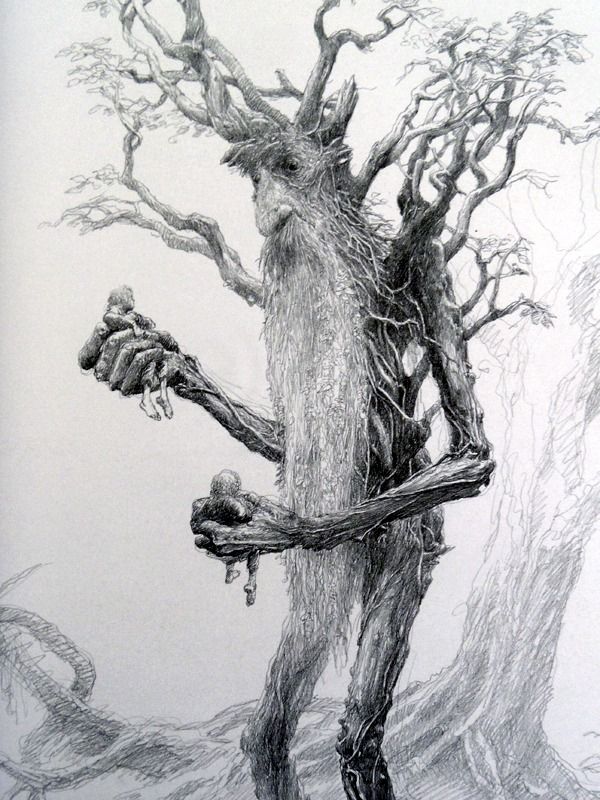
Ents are now a familiar part of our landscape, from Treebeard’s meeting with Merry and Pippin

(Alan Lee)

to the complete destruction of Isengard under his direction.

(Ted Nasmith)

The line which Tolkien quotes occurs in Act IV, Scene I, of the play, when Macbeth, who has gained his throne by a series of murders which have come to trouble him, has returned to the witches who had originally prophesied that he would become king and is told:

“Macbeth shall never vanquish’d be, until

Great Byrnam Wood, to high Dunsmane Hill

Shall come against him. (Actus Quartus, Scena Prima in the “First Folio”,lines 1635-38 in modern lineation—I like period texts, as cranky as they can be to a modern eye, and you can find this of the play at:  https://internetshakespeare.uvic.ca/doc/Mac_F1/  )

Tolkien may have been annoyed at Shakespeare’s “shabby use”, but he himself was inspired to create his own walking wood from that annoyance.  Just before these lines, however, there’s another bit of witchy prophesy and I wonder if this inspired JRRT, at least subconsciously, as well:

“Be bloody, bold, & resolute:

Laugh to scorne

The powre of Man:  for none of woman borne

Shall harme Macbeth.” (lines 1619-22)

This sounds like a comfort, but, just like the lines which suggest the impossibility of a forest coming to Macbeth’s castle—and which then come true, as Macduff’s men camouflage themselves with it, so these words are also truer than Macbeth realizes, when it turns out that Macduff was born by Caesarean section (Actus Quintus, Scena Septima, 2453-2456) and Macbeth’s head is soon in Macduff’s hands.

And this reminds me of another scene:

“ ‘Hinder me?  Thou fool.  No living man may hinder me!’

Then Merry heard of all sounds in that hour the strangest.  It seemed that Dernhelm laughed, and the clear voice was like the ring of steel.  ‘But no living man am I!  You look upon a woman.  Eowyn I am, Eomund’s daughter.  You stand between me and my lord and kin.  Begone, if you be not deathless!  For living or dark undead, I will smite you, if you touch him.’ “  (The Return of the King, Book Five, Chapter 6, “The Battle of the Pelennor Fields”)

(a second Ted Nasmith)

Thanks for reading, as ever.

Stay well,

Never trust people who collect eye of newt,

And know that, as always, there’s

MTCIDC

O

PS

There is an old theatrical tradition that actors naming Macbeth jinx themselves and performances.  Considering what happens to most of the major and some of the minor characters in the play, it’s not surprising!  See:  https://en.wikipedia.org/wiki/The_Scottish_play for more.

Name-changer, But Not Game-changer

22 Wednesday Mar 2023

Posted by Ollamh in Uncategorized

≈ Leave a comment

As ever, welcome, dear readers.

The Odyssey is full of omens, usually involving birds and one of them a raptor,

(eagle, symbol of Zeus)

(hawk, symbol of Apollo)

the other a victim, usually domestic.

Each time that combination appears, it’s interpreted as meaning that Odysseus is on the way home and bringing vengeance, which, of course, eventually, he does.

In these cases, the future is being graphically—if symbolically—offered.  On one occasion, however, Odysseus seeks out information about the future by visiting the Otherworld and hearing the words of the seer Tireisias.

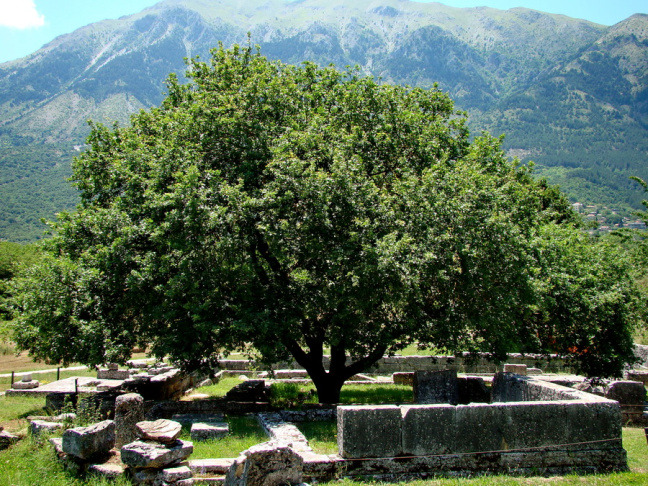
And this visit symbolizes for me something which was a standard practice in the Classical world:  the pilgrimage to what was believed to be a sacred spot to learn something of what was to come.  Odysseus, in the Odyssey, lying about himself and his arrival on Ithaka, even mentions that he has gone to such a spot—Dodona, where he would have been to the little sanctuary where an oak grove grew.

(eventually whittled down to one tree)

This was an ancient site, frequented as early as the 14th century BC, but which came to a sad end at the end of the 4th century AD, when it has been traditionally said to have been closed by the order of the emperor Theodosius (347-395AD),

along with religious sites all over the Greco-Roman world.  (In recent years, this view of Theodosius and his actions towards paganism have been contested, both by historians and archaeologists.  If this interests you, there are a couple of useful WIKI articles here:  https://en.wikipedia.org/wiki/Theodosius_I ; https://en.wikipedia.org/wiki/Persecution_of_pagans_under_Theodosius_I )

The main reason for closing such places as Dodona and the more prominent Delphi, shrine of Apollo,

whenever it happened and by the order of whom, was to remove competition from what was, increasingly, a Christian empire, but another, lesser reason, I suspect, was that the future was believed to be a closed book, its events known only to the incoming deity, and attempts to find such events out were to be considered blasphemous, at best. 

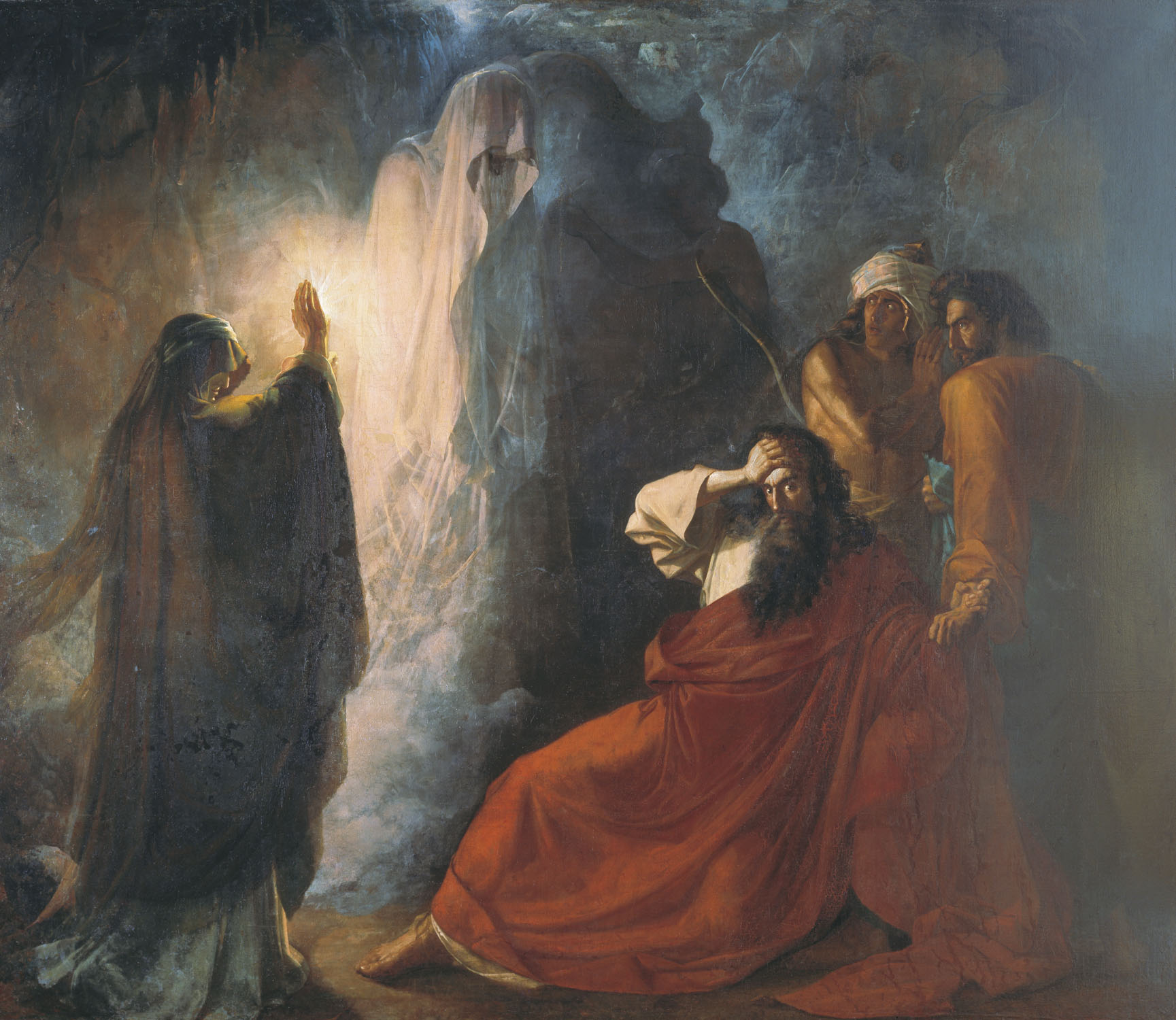
Certainly the most famous Judeo-Christian attempt, that of King Saul of Israel, who tricks the Witch of Endor (even after Saul had exiled wizards and “those that had familiar spirits” from Israel) into bringing up the spirit of the prophet Samuel, ends very badly, with Saul being told by Samuel that his army will be defeated and that he himself will be dead (he kills himself after the defeat—see 1 Samuel, Chapters 28, Verses 7-20 here:  https://www.kingjamesbibleonline.org/1-Samuel-Chapter-28/ )

This attempting to learn the future from the dead came to be called necromancy, from a combination of two Greek words, nekros, “corpse” and manteia, “the art of prophecy” and therefore its practitioners were necromancers (in the Middle Ages this necro- root became confused with Latin nigro-, “black”, creating nigromancy, “prophesying from dark things”, which, considering what happened to Saul, is not surprising).

Necromancer brings us to The Hobbit, which I’m about to teach again this spring. 

Gandalf is initially very vague about leaving the dwarves and Bilbo, finally saying only “I have, as I told you, some pressing business away south…”  (The Hobbit, Chapter 7, “Queer Lodgings”).  In fact, it’s only by accident that Bilbo ever finds out what this business was:

“…but every now and again he would open one eye, and listen, when a part of the story which he did not yet know came in.

It was in this way that he learned where Gandalf had been to; for he overheard the words of the wizard to Elrond.  It appeared that Gandalf had been to a great council of the white wizards, masters of lore and good magic; and that they had at last driven the Necromancer from his dark hold in the south of Mirkwood.”  (Chapter 19, “The Last Stage”)

As he himself confessed, JRRT was at first unclear as to the identity of this figure, as he wrote to W.H. Auden, explaining the genesis of The Lord of the Rings:

“That of course does not mean that the main idea of the story was a war-product.  That was arrived at in one of the earliest chapters still surviving (Book I, 2).  It is really given, and present in the germ, from the beginning, though I had no conscious notion of what the Necromancer stood for (except ever-recurrent evil) in The Hobbit, nor of his connexion with the Ring.” (letter to W.H. Auden, 7 June, 1955, Letters, 216)

It was quickly clear, however, that readers were intrigued by the mention of such a figure.  As early as October, 1937, not a month after the date of the original publication of The Hobbit, Tolkien can write to Stanley Unwin:  “One reader wants fuller details about Gandalf and the Necromancer.”  (letter to Stanley Unwin, 15 October, 1937, Letters, 24)  And, in 1939, he is still commenting about “the readers young and old who clamoured for ‘more about the Necromancer’” (letter to C.A. Furth, 2 February, 1939, Letters, 42)

Although much about who this character might turn out to be may have been vague to JRRT in 1937, it’s also clear that he early made a connection between him and Sauron, as he says in this letter to Stanley Unwin:

“Mr. Baggins began as a comic tale among conventional and inconsistent Grimm’s [sic] fairy-tale dwarves, got drawn into the edge of it—so that even Sauron the terrible peeped over the edge.”  (letter to Stanley Unwin, 16 December, 1937, Letters, 26)

But this still leaves us with a bit of a puzzle:  if a necromancer is one who obtains knowledge of the future from the dead, when do we ever find out that Sauron does this?  The simple answer is that we don’t—but, this earlier incarnation (his last, in fact, once he loses the power of the Ring), is not his first. 

The long structure and chronology of his creation is far beyond the scope of this posting, but, working backwards from what Christopher Tolkien called “The Second Version of The Fall of Numenor” (I’m guessing post-1936—see CT’s introduction, “The Early History of the Legend” in The Lost Road and Other Writings, 7-10), we find this passage, where refugees from the ruined Numenor have migrated to Beleriand (“…that land in the West of the North of the Old World, where Morgoth had been overthrown…” 31):

“And they came at last even to Mordor the Black Country, where Sauron, that is in the Gnomish tongue named Thu, had rebuilt his fortresses.” (31)

Now, taking that name “Thu”, we can move back to 1928, when Tolkien was working on a long poem, “The Lay of Leithian” (to be found in The Lays of Beleriand, 183-392).  In Canto VII, we find this stanza:

“Men called him Thu, and as a god

In after days beneath his rod

Bewildered bowed to him, and made

His ghastly temples in the shade.

Not yet by men enthralled adored,

Now was he Morgoth’s mightiest lord,

Master of Wolves, whose shivering howl

Forever echoed in the hills, and foul

Enchantments and dark sigaldry

Did weave and wield.  In glamoury

That necromancer held his hosts

Of phantoms and of wandering ghosts,

Of misbegotten or spell-wronged

Monsters that about him thronged,

Working his bidding dark and vile:

The werewolves of the Wizard’s Isle.” (Canto VII, lines 2064-2079)

As Christopher Tolkien comments in his notes to this canto, Tolkien kept shifting the name of Thu, replacing it with “Gorthu”, but also with “Sauron”, suggesting that, even 8 years before the appearance of the name in the second draft of The Fall of Numenor, he had the name available as a substitute for Thu.  (278)  And here we see not only the name, but that word, “necromancer” (line 2074). 

Sauron in The Lord of the Rings is frighteningly powerful, but one power he doesn’t seem to employ is the ability to raise the dead to learn the future from them.  Could it be, however, that, in 1937, although Sauron can call upon no ghosts, the ghost of an earlier power haunted his creator, even as his creation’s name remained the same?

Thanks, as always, for reading.

Stay well,

Avoid those with unstable nomenclatures,

And, as ever, remember that there’s

MTCIDC

O

PS

I’ve been thinking about the rhythm and rhyme scheme of this “Lay” and I wonder if JRRT had been required to memorize S.T. Coleridge’s (1772-1834) “Christabel” at an earlier time in his life?  Take for example, this stanza—although you’d have to add the next to get one of Tolkien’s length:

“The lovely lady, Christabel,

Whom her father loves so well,

What makes her in the wood so late,

A furlong from the castle gate?

She had dreams all yesternight

Of her own betrothèd knight;

And she in the midnight wood will pray

For the weal of her lover that’s far away.”

(In that same letter to Auden, mentioned above, JRRT claimed that he hadn’t learned English literature at

school, but this was such a well-known poem by the time of his childhood and memorizing poetry for

public performance was so common—you can see the ghost of it when Sam produces his “party piece” on

the Oliphaunt—that I would suggest that Coleridge might have been an unconscious influence.)

Remembering the North

15 Wednesday Mar 2023

Posted by Ollamh in Uncategorized

≈ Leave a comment

As ever, dear readers, welcome.

Tolkien was clearly very annoyed at a certain dictator in June, 1941.  As he wrote to his son, Michael, currently a cadet at the Royal Military College, Sandhurst:

“I have spent most of my life, since I was your age, studying Germanic matters (in the general sense that includes England and Scandinavia).  There is a great deal more force (and truth) than ignorant people imagine in the ‘Germanic’ ideal.  I was much attracted by it as a undergraduate…in reaction against the ‘Classics’…I suppose I know better than most what is the truth about this ‘Nordic’ nonsense.  Anyway, I have in this War a burning private grudge—which would probably make me a better soldier at 49 than I was at 22:  against that ruddy little ignoramus Adolf Hitler…Ruining, perverting, misapplying, and making for ever accursed, that noble northern spirit, a supreme contribution to Europe, which I have ever loved, and tried to present in its true light.” (letter to Michael Tolkien, 9 June, 1941, Letters, 55-56)

As others have commented, much of this “northern spirit” came to Tolkien from the work of a writer of the previous generation, William Morris (1834-1896),

a creative whirlwind of a man, who did everything from designing wallpaper to being an active advocate for socialism to creating a number of long works in poetry and prose which encompassed much of the West’s older tale-telling tradition, including the voyage of Jason for the Golden Fleece (1867),

Beowulf (1895),

and part of the Arthurian tradition in the early The Defence of Guenevere, and Other Poems (1858),

my personal favorite, with a tricky, defiant queen so different from the mournful figure of Tennyson’s (1809-1892) poem, published in the first version of his Idylls of the King (1858).

(If you’d like to read how Morris saw Guenevere, here’s a LINK:  https://d.lib.rochester.edu/camelot/text/morris-defence-of-guenevere This is from the wonderful University of Rochester (US) Camelot Project.  If you’re interested in any aspect of King Arthur, and don’t know this site, you should:  https://d.lib.rochester.edu/camelot-project )

According to Carpenter’s biography, Tolkien first came to know Morris’ works as an Oxford undergraduate, having spent money from an English prize on books, including Morris’ The Life and Death of Jason, The House of the Wolfings, and his translation of the Voelsungasaga (Carpenter, 77-78).  This clearly inspired JRRT, as he was soon at work on a sort of imitation-Morris, as he wrote to his fiancée, Edith:

“Amongst other work I am trying to turn one of the stories [from another favorite work, Elias Loennrot’s compilation of Finnish folk material, Kalevala]—which is really a very great story and most tragic—into a short story somewhat on the lines of Morris’ romances with chunks of poetry in between…”  (letter to Edith Bratt, October, 1914, Letters, 7)

And the influence of Morris will turn up again, even as late as The Lord of the Rings.  In a 1960 letter to Professor L.W. Foster, Tolkien says:

“The Dead Marshes and the approaches to the Morannon owe something to Northern France after the Battle of the Somme.  They owe more to William Morris and his Huns and Romans, as in The House of the Wolfings and The Roots of the Mountains.”  (letter to L.W. Foster, 31 December, 1960, Letters, 303)

Morris had himself come to that same northern spirit via the literature of Old Norse, which he acquired originally through translations like George W. Dasent’s (1817-1896)  Popular Tales from the Norse (1859—a translation of the first great collection of Norwegian folktales, Asbjornsen and Moe’s Norske Folkeeventyr) and his 1861 translation of “The Story of Burnt Njal”.  (You can read the 1888 edition of Popular Tales here:  https://archive.org/details/3edpopulartalesf00daseuoft  and the original 1861 Burnt Njal—in 2 volumes—here https://archive.org/details/storyofburntnjal01daseuoft/page/n11/mode/2up ; https://archive.org/details/storyofburntnjal02daseuoft/page/n9/mode/2up )  In 1868, he began a regular study of the modern form of Old Norse, Icelandic, with Eirikur Magnusson (1833-1913),

himself from Iceland and a translator of its literature.  With Magnusson’s tutoring, Morris began producing his own English versions of Icelandic texts, their first collaboration being The Story of Grettir the Strong, 1869, which you can read here:  https://www.sacred-texts.com/neu/gre/index.htm

By 1871, Morris was on his way to Iceland.

In fact, Morris visited Iceland twice, keeping journals of both trips, which you can read here:  https://www.marxists.org/archive/morris/collected/The_collected_works_of_William_Morris_vol08.pdf His initial visit was so striking that he set down his first impressions in verse—here’s the opening stanza–

“Iceland First Seen


Lo from our loitering ship a new land at last to be seen;
Toothed rocks down the side of the firth on the east guard a weary wide lea,
And black slope the hill-sides above, striped adown with their desolate green:
And a peak rises up on the west from the meeting of cloud and of sea,
Foursquare from base unto point like the building of Gods that have been, 5
The last of that waste of the mountains all cloud-wreathed and snow-flecked and grey,
And bright with the dawn that began just now at the ending of day.”  (published in Poems by the Way, 1891—you can read the whole poem here:  https://www.marxists.org/archive/morris/collected/The_collected_works_of_William_Morris_vol09.pdf on pages 125-126.  This and the previous volume are from the posthumously published collected works, with introductions to the volumes by Morris’ daughter, May (1862-1938), a talented and engaging writer in her own right, as well as a great craftswoman.

You can find the whole set at:  https://www.marxists.org/archive/morris/collected/index.htm  )

Morris’ mode of travel while in Iceland was on the back of one of the sturdy little Icelandic horses—

(This is a joking caricature by Morris’ one-time friend, D.G. Rossetti, 1828-1882—not a portrait from the life, as it’s dated “1870”—before Morris’ trip—but perhaps a foreshadowing?)

He hoped to bring one home with him, but his first choice, “Falki” went lame and so his second choice, whom he named “Mouse”, returned to England with Morris and spent many years living with the family.  There’s a lovely description of him in May’s introduction to her father’s Iceland journals, pages xxviii-xxix. 

And Mouse is the real reason for this posting.  New books sometimes seem to fall out of the air as, about two weeks ago, this one did—

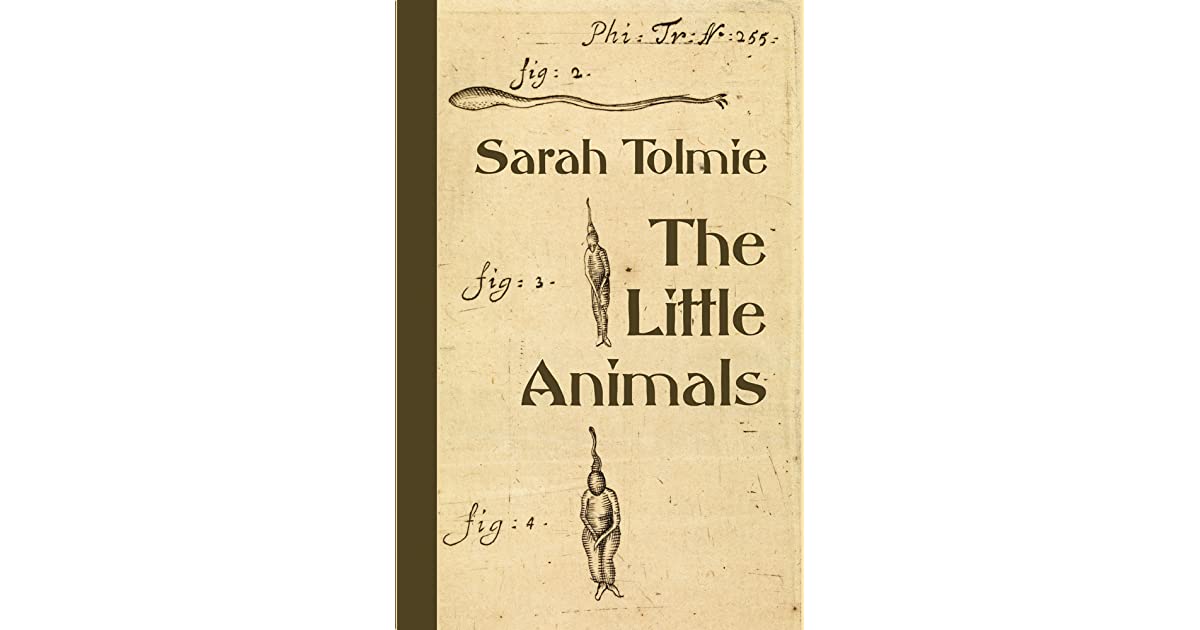
Although its title is All the Horses of Iceland, almost none of it takes place there, in fact, but the hero, Eyvind, a medieval Icelandic trader, brings back a spirit horse from his travels across Central Asia and—but I’m not one for spoilers, as I hate them myself.  This is a quiet little book (just over 100 pages), but thoughtful and beautifully written and I’ve already bought two other books by the author, Sarah Tolmie,

because I enjoyed the first so much. 

But what about Tolkien and that “northern spirit”?  Well, here’s a last quotation and the writing of it must have given JRRT great satisfaction:

“I am very pleased to know that an Icelandic translation of The Hobbit is in preparation.  I had long hoped that some of my work might be translated into Icelandic, a language which I think would fit it better than any other I have any adequate knowedge of.”  (letter to the wonderfully-named Ungfru Adalsteinsdottir, 5 June, 1973, Letters, 430)

Thanks, as ever, for reading,

Stay well,

Stay spirited (but not haunted),

And remember that there’s always

MTCIDC

O

PS

J.W. Mackail (1859-1945) was Morris’ first biographer and, in my opinion, even after over a century of Morris scholarship, still illuminating and a pleasure to read.  The two volumes of his biography are available for you here:  https://archive.org/details/lifeofwilliammor01mack/page/n9/mode/2up ; https://archive.org/details/lifeofwilliammor0002mack/page/n11/mode/2up )

On the Other Foot…

08 Wednesday Mar 2023

Posted by Ollamh in Uncategorized

≈ Leave a comment

Welcome, as ever, dear readers.

In my last, I was concerned about the hairy feet of hobbits

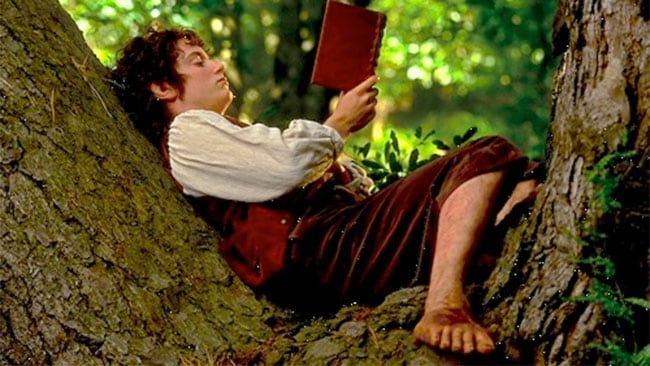
as described both in The Hobbit

“They…wear no shoes, because their feet grow natural leathery soles and thick warm brown hair like the stuff on their heads (which is curly)…”  The Hobbit, Chapter 1, “An Unexpected Party”)

and The Lord of the Rings

“…but they seldom wore shoes, since their feet had tough leather soles and were clad in a thick, curling hair, much like the hair on their heads, which was commonly brown…”   (The Lord of the Rings, Prologue 1 “Concerning Hobbits”)

As, as far as I can currently determine, Tolkien never explained why he chose to give characters he saw as human—

“The Hobbits are, of course, really meant to be a branch of the specifically human race (not Elves or Dwarves)—hence the two kinds can dwell together (as at Bree), and are called just the Big Folk and the Little Folk.” (to Milton Waldman, “…not dated, but was probably written late in 1951”, Letters, 158)

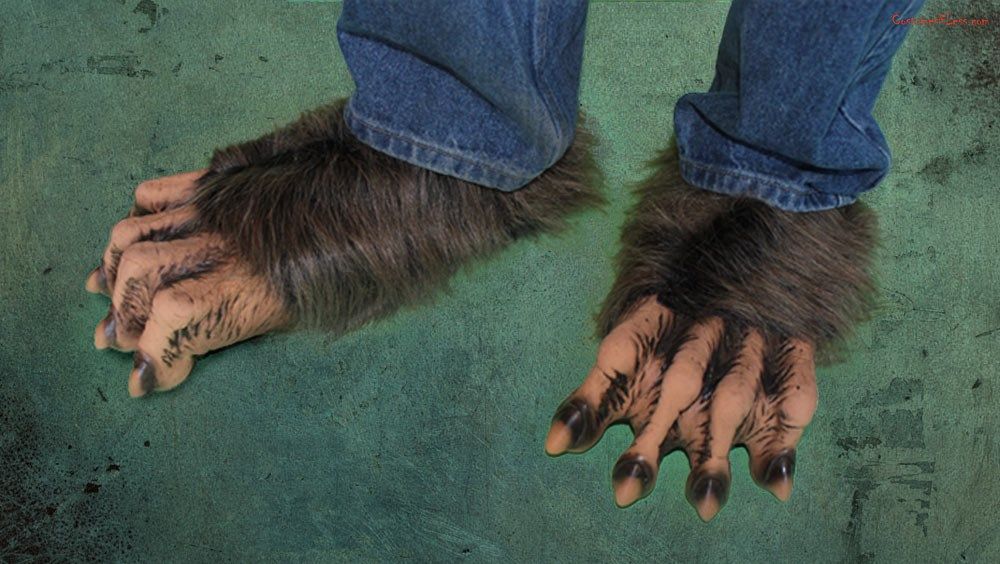
appendages more fitting for werewolves,

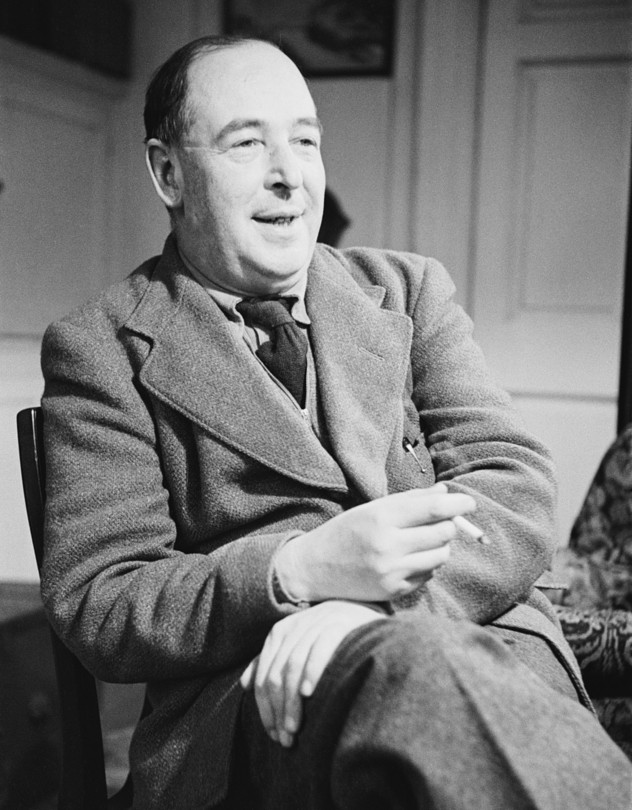
all we can really do is theorize, as I did, but thinking of weird feet made me think about creatures from the work of JRRT’s long-time friend and friendly critic, C.S. Lewis (1898-1963),

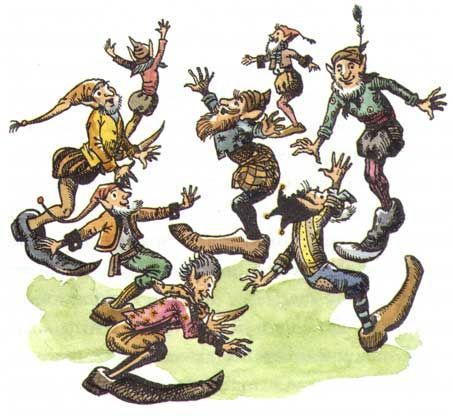
the “Dufflepuds”,

(by the original illustrator, Pauline Baynes)

to be found in Lewis’ The Voyage of the Dawn Treader (1952).

They are probably my favorite characters in the novel, depicted as a kind of rustic committee, speaking something which would sounds like what in Britain is called “Mummershire”, based upon West Country dialects.  (Here’s a short useful video so that you can hear what I mean—it’s what Sam in the Jackson movies has been coached to imitate:  https://www.youtube.com/watch?v=ahznvtDunEw )

They first appear (although that’s not quite accurate as, initially, they’re invisible) after a number of the crew, including the junior member of the Pevensie family, Lucy, have come ashore on an unknown island–

“Almost as soon as they entered this path Lucy noticed that she had a little stone in her shoe. In that unknown place it might have been wiser for her to ask the others to wait while she took it out. But she didn’t; she just dropped quietly behind and sat down to take off her shoe. Her lace had got into a knot.

Before she had undone the knot the others were a fair distance ahead. By the time she had got the stone out and was putting the shoe on again she could no longer hear them. But almost at once she heard something else. It was not coming from the direction of the house.

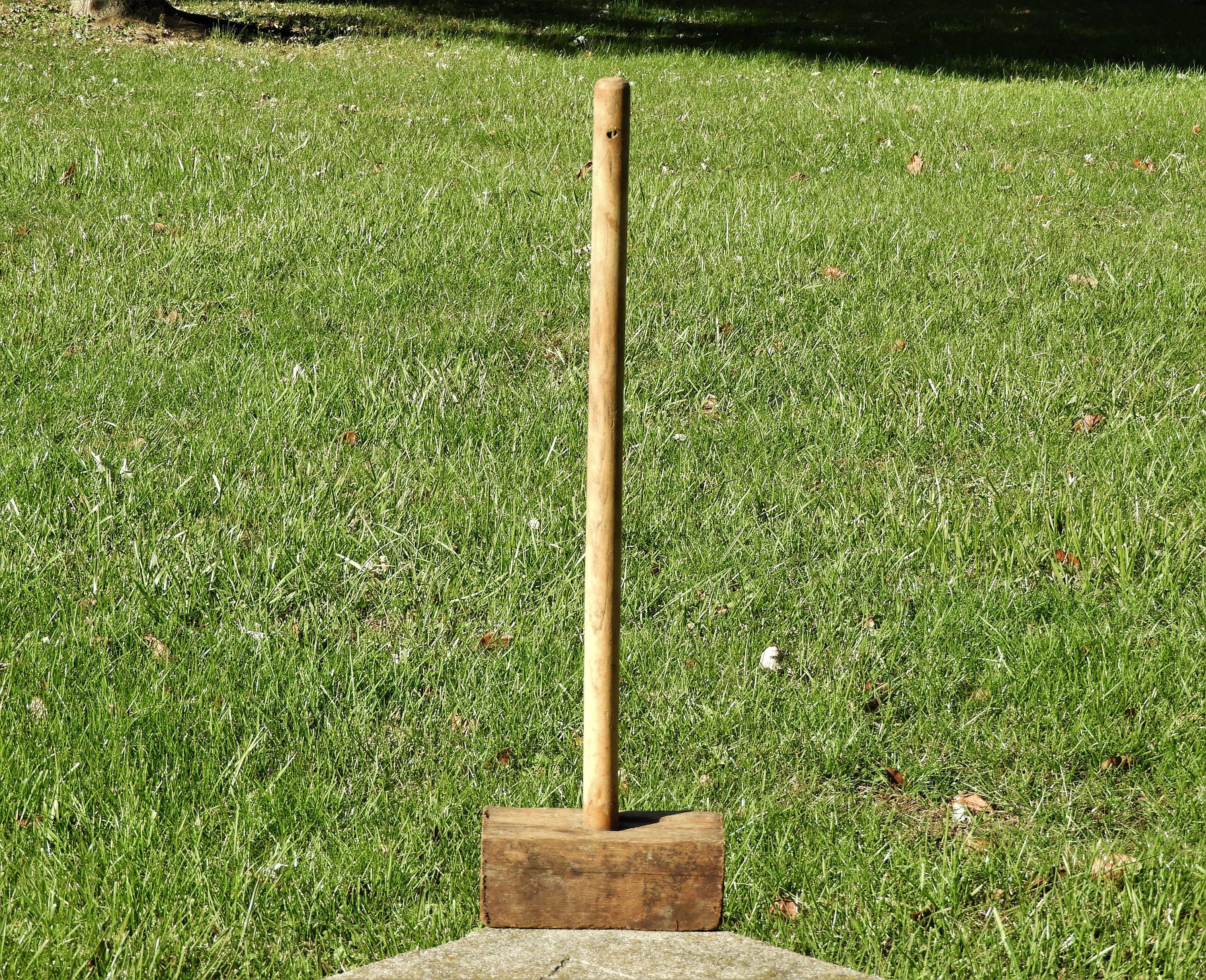
What she heard was a thumping. It sounded as if dozens of strong workmen were hitting the ground as hard as they could with great wooden mallets.

And it was very quickly coming nearer. She was already sitting with her back to a tree, and as the tree was not one she could climb, there was really nothing to do but to sit dead still and press herself against the tree and hope she wouldn’t be seen.

Thump, thump, thump … and whatever it was must be very close now for she could feel the ground shaking. But she could see nothing. She thought the thing—or things—must be just behind her. But then there came a thump on the path right in front of her. She knew it was on the path not only by the sound but because she saw the sand scatter as if it had been struck a heavy blow. But she could see nothing that had struck it. Then all the thumping noises drew together about twenty feet away from her and suddenly ceased. Then came the Voice.

It was really very dreadful because she could still see nobody at all. The whole of that park-like country still looked as quiet and empty as it had looked when they first landed. Nevertheless, only a few feet away from her, a voice spoke. And what it said was:

‘Mates, now’s our chance.’

Instantly a whole chorus of other voices replied, ‘Hear him. Hear him. Now’s our chance, he said. Well done, Chief. You never said a truer word.’

‘What I say,’ continued the first voice, ‘is, get down to the shore between them and their boat, and let every mother’s son look to his weapons. Catch ’em when they try to put to sea.’

‘Eh, that’s the way,’ shouted all the other voices. ‘You never made a better plan, Chief. Keep it up, Chief. You couldn’t have a better plan than that.’

‘Lively, then, mates, lively,’ said the first voice. ‘Off we go.’

‘Right again, Chief,’ said the others. ‘Couldn’t have a better order. Just what we were going to say ourselves. Off we go.’

Immediately the thumping began again—very loud at first but soon fainter and fainter, till it died out in the direction of the sea.”  (The Voyage of the Dawn Treader, Chapter IX, “The Island of Voices”)

What in the world are these things and where is that thumping coming from?

 It seems that these are the subjects of a rather philosophical wizard, whom he has enchanted into their present form to teach them to appreciate themselves and who, in ignorant rebellion, have used one of his spells to make themselves invisible.  Lucy is recruited to reverse the spell, and, when she has done so–

“The things she pointed at were dotted all over the level grass. They were certainly very like mushrooms, but far too big—the stalks about three feet high and the umbrellas about the same length from edge to edge. When she looked carefully she noticed too that the stalks joined the umbrellas not in the middle but at one side which gave an unbalanced look to them. And there was something—a sort of little bundle—lying on the grass at the foot of each stalk. In fact the longer she gazed at them the less like mushrooms they appeared. The umbrella part was not really round as she had thought at first. It was longer than it was broad, and it widened at one end. There were a great many of them, fifty or more.

The clock struck three.

Instantly a most extraordinary thing happened. Each of the “mushrooms” suddenly turned upside-down. The little bundles which had lain at the bottom of the stalks were heads and bodies. The stalks themselves were legs. But not two legs to each body. Each body had a single thick leg right under it (not to one side like the leg of a one-legged man) and at the end of it, a single enormous foot—a broad-toed foot with the toes curling up a little so that it looked rather like a small canoe. She saw in a moment why they had looked like mushrooms. They had been lying flat on their backs each with its single leg straight up in the air and its enormous foot spread out above it. She learned afterwards that this was their ordinary way of resting; for the foot kept off both rain and sun and for a Monopod to lie under its own foot is almost as good as being in a tent.” (The Voyage of the Dawn Treader, Chapter XI, “The Dufflepuds Made Happy”)

Lewis was a medievalist, with a strong grounding in Classical Studies, and a very well-read man, and, like classical and medieval authors, he was perfectly willing to borrow from older sources to tell his story.  The most distant ancestor of the Dufflepuds would seem to be a reference—just a passing one—in Aristophanes’ comedy of 414BC, Birds, where the Chorus sings:

“Near the land of the Skiapodes

There is a marsh…”  (Birds, 1553, my translation)

Skiapodes is a compound, from skia, “shadow/shade” and pous, “foot”(in the plural, podes, “feet”), and here we see that ancestral form of the umbrella-like appendage of the Dufflepuds.  From there, we can  trace the idea to the Natural History of Pliny the Elder (23-79AD), who writes of a certain tribe in India:

“…idem hominum genus, qui monocoli vocarentur, singulis cruribus, mirae pernicitatis ad saltum; eosdem sciapodas vocari, quod in maiore aestu humi iacentes resupini umbra se pedum protegant.” 

“Likewise there is a race of men who are called “Onelegged”, with a single leg, with a leap of wonderful agility/speed.  These same people are to be called “Shade/shadowfeet” because in rather great heat, lying on their backs on the ground, they cover/protect themselves with the shadow/shade of [their] feet.”  (Naturalis Historia, Book VII, Chapter 2—my translation)

This interesting description is, in fact, older than Pliny’s work (which was nearly completed in 77AD, but left unfinished at its author’s death in the eruption of Vesuvius in 79), being based, as Pliny tells us, on the text of Indica, by the Ionian Greek physician, Ctesias, who lived and wrote in the early 4th century BC, thus making him a rough contemporary of Aristophanes (c.446-c.386BC).

Lewis could have read Pliny, but not Ctesias, of which only a summary survives in the 9th century anthologizer, Photius (c.810-893AD), and which doesn’t mention the Skiapodes, or he could have found a reference in a number of other, later sources, including everything from Augustine’s (354-430AD) Civitas Dei, Book XVI, Chapter 8, where Augustine appears to be using Pliny’s material but adds an extra detail—the Skiapodes’ leg doesn’t appear to bend at the knee (“…nec poplitem flectunt”…)–to the Etymologiae of Isadore of Seville (c.560-636AD) which, in Book XI, Chapter 3, Section 23, more or less simply echoes Pliny (although he emphasizes that the shade is provided because of the size of the Skiapodes’ feet (“pedem suorum magnitudine adumbrentur”).

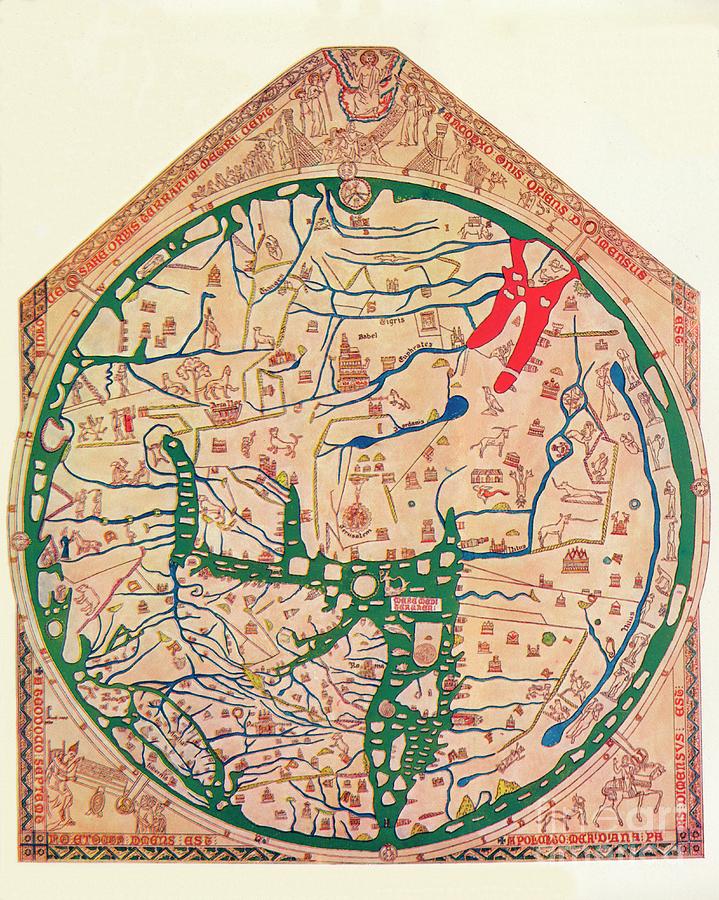
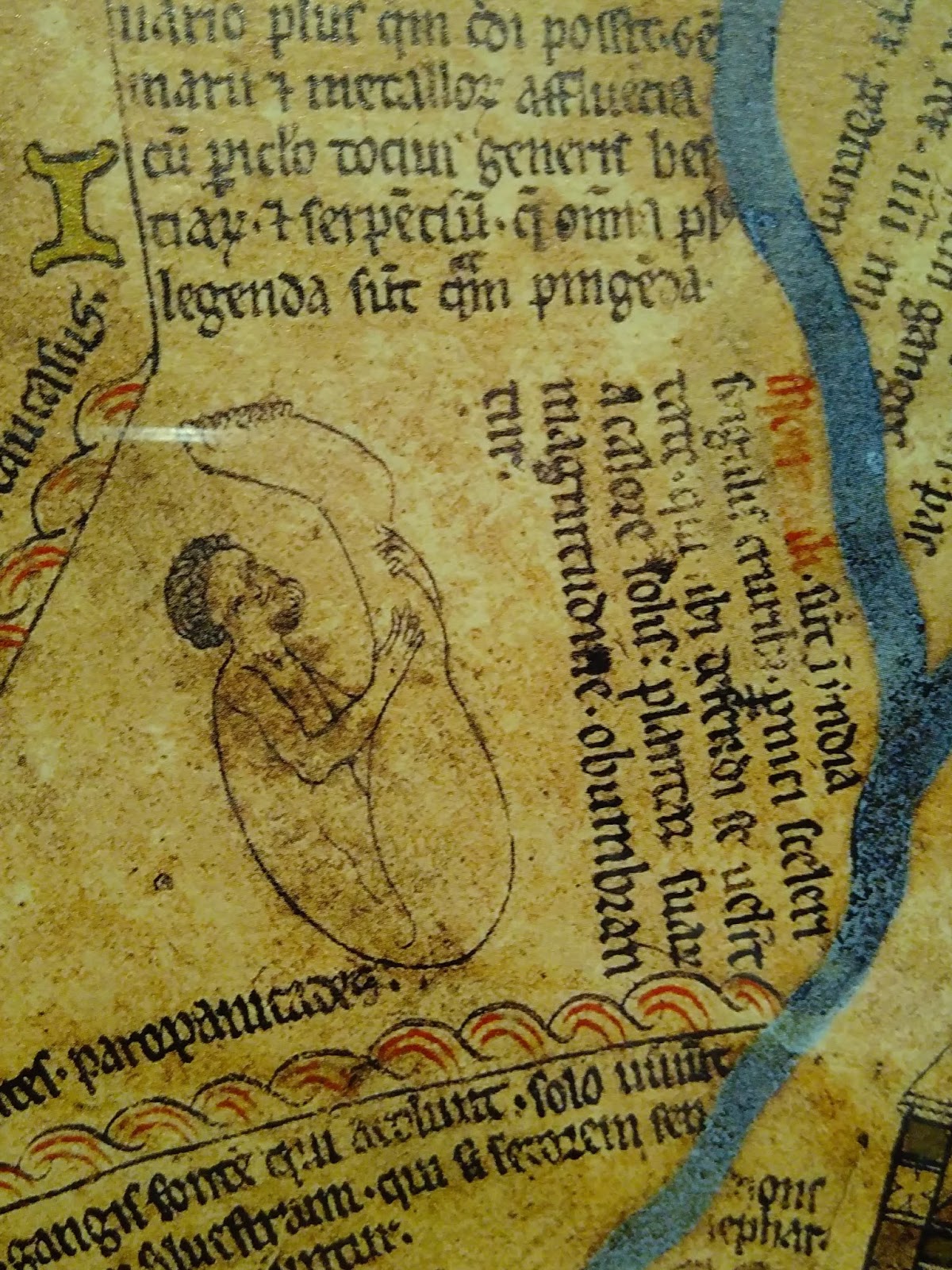
And then there are the visual sources, from the Hereford Mappa Mundi of about 1300AD,

where you can spot this

at the top, just left of center,

(and if you want to know more about this marvelous chart, see this—old, but still interesting:  https://archive.org/details/cu31924029955428 )

to the remarkable Nuremberg Chronicle of 1493.

(If you don’t know this work, see this intro:  https://en.wikipedia.org/wiki/Nuremberg_Chronicle )

In the previous posting, I expressed my puzzlement at Tolkien’s creation of those hairy, horny feet, where they came from (other than from George Macdonald’s goblins), and what they were doing in his work.  For Lewis’ work, certainly we can see sources and, judging by their behavior, I can see that the Dufflepuds have at least two potential functions:

1. they suggest the foolishness of vanity (not only are they currently odd-looking, but they had earlier decided that they had once been handsome, and, changed by the wizard, they claimed to be so ashamed of their looks that they sought invisibility—only to want visibility back, once they’d felt the opposite).

2. they are there to lighten the mood—the Dawn Treader had just been attacked by a sea monster, which had strained and shaken all of the characters, and so this dim, countrified committee with its pretensions to good looks could provide a comedy which is certainly a form of relief before the story turns once more to the serious in the next chapter, “The Dark Island”.

Thanks, as ever, for reading.

Stay well,

Beware of loud thumps behind you,

And know that, as always, there’s

MTCIDC

O

PS

 If you are a reader who lives in Canada, where copyright laws differ from those in the US, you can find a copy of The Voyage of the Dawn Treader for free  at: https://www.fadedpage.com/books/201410B3/html.php  Unfortunately, for copyright reasons, Pauline Baynes’ illustrations are not included.  You can also see the 1989 BBC version of this part of the novel at:  https://www.youtube.com/watch?v=S8LW9Zi6IFs )

Afoot

01 Wednesday Mar 2023

Posted by Ollamh in Uncategorized

≈ Leave a comment

Welcome, dear readers, as ever.

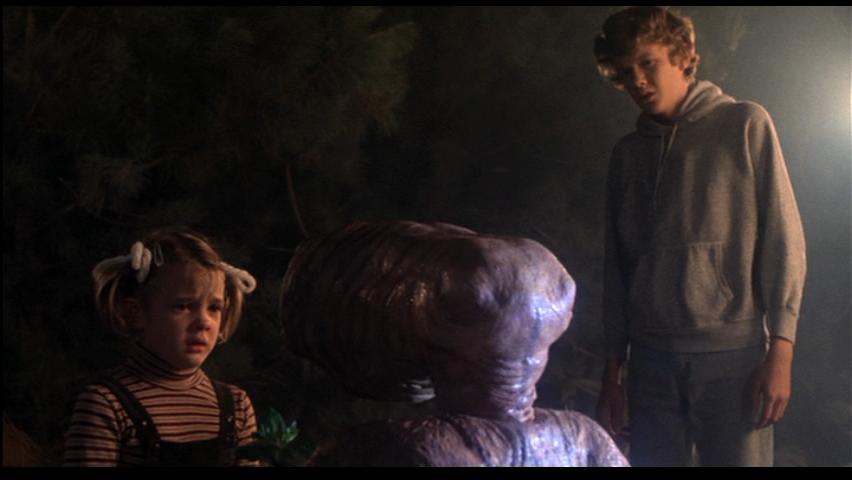
In the 1982 film E.T.,

Gertie,

a little girl, who is the younger sister of the hero, looks down the extraterrestrial and announces, “I don’t like his feet.”

I never had that particular reaction to E.T.’s anatomy and I admit that I haven’t canvassed a lot of other Tolkien readers about this, but I’ve never been happy with what is at the end of hobbits’ legs either.

We first read about them in Chapter One of The Hobbit:

“They…wear no shoes, because their feet grow natural leathery soles and thick warm brown hair like the stuff on their heads (which is curly)…”  The Hobbit, Chapter 1, “An Unexpected Party”)

And I suppose that, for consistency’s sake, this detail is included in the subsequent The Lord of the Rings:

“…but they seldom wore shoes, since their feet had tough leather soles and were clad in a thick, curling hair, much like the hair on their heads, which was commonly brown…”   (The Lord of the Rings, Prologue 1 “Concerning Hobbits”)

But, once this has been revealed, I don’t have the sense that anything more is made of it in either work.

I haven’t combed the text (sorry), of The Hobbit, but, glancing through it and consulting my memory (in the last few years, I’ve taught it half-a-dozen times), I don’t have the impression that the subject of hirsute extremities is brought up again.  As for The Lord of the Rings, when the Fellowship begins its journey and runs into a snowstorm, at the moment when such equipment might be mentioned, it isn’t.  Although Gandalf hopes for warmer feet (“For myself I should like a pipe to smoke in comfort, and warmer feet.”  The Fellowship of the Ring, Book Two, Chapter 3, “The Ring Goes South”), the mentions of hobbit feet are:

1. Frodo’s feet “felt like lead” before

2.  “He thought a fire was heating his toes…”

3. (Legolas scouting ahead reports about the snow) “..while further down it is no more than a coverlet to cool a hobbit’s toes.”

Even when crossing stony ground and then almost lost in a blizzard, neither the advantage of the thick hair nor the leathery soles is brought up.

So why are we told about their feet?

As far as I can tell, JRRT himself never explains, but I wonder about his own earlier associations with lower extremities. 

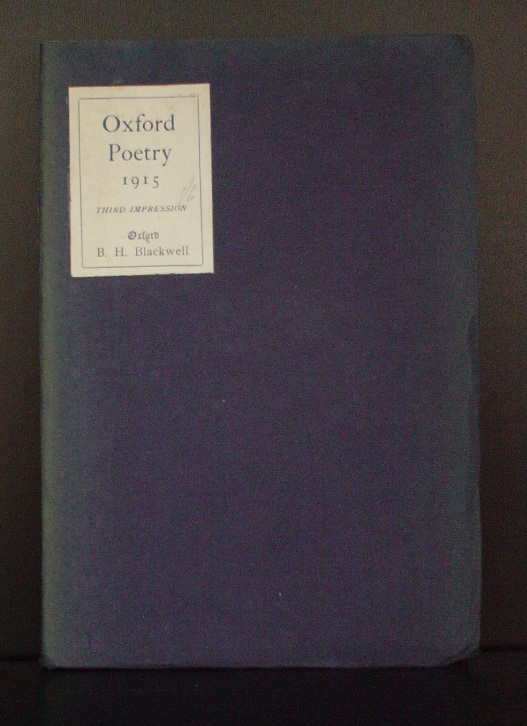
We might begin with something which may seem obvious, his poem, “Goblin Feet”, first published in Oxford Poetry 1915–

(the cut-and-paste has evened out the lines—for the original see:   https://ia800205.us.archive.org/16/items/oxfordpoetry1915oxfouoft/oxfordpoetry1915oxfouoft.pdf  page 64)–

“J.R. R. TOLKIEN
(EXETER)
GOBLIN FEET

I AM off down the road
Where the fairy lanterns glowed
And the little pretty flittermice are flying :
A slender band of grey
It runs creepily away
And the hedges and the grasses are a-sighing.
The air is full of wings,
And of blundering beetle- things
That warn you with their whirring and their humming.
O ! I hear the tiny horns
Of enchanted leprechauns
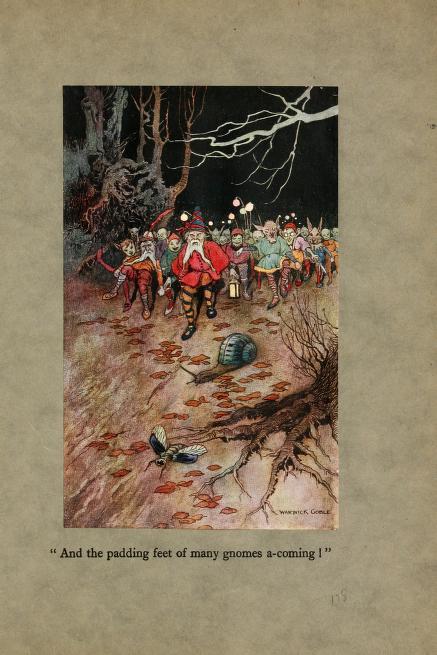
And the padding feet of many gnomes a-coming !

O ! the lights : O ! the gleams : O ! the little tinkly sound
O ! the rustle of their noiseless little robes :
O ! the echo of their feet—of their little happy feet :
O ! their swinging lamps in little starlit globes.

I must follow in their train
Down the crooked fairy lane
Where the coney-rabbits long ago have gone,
And where silverly they sing
In a moving moonlit ring
All a-twinkle with the jewels they have on.
They are fading round the turn
Where the glow-worms palely burn
And the echo of their padding feet is dying !
O ! it’s knocking at my heart–
Let me go ! O ! let me start !
For the little magic hours are all a-flying.

O ! the warmth ! O! the hum ! O ! the colours in the dark !
O ! the gauzy wings of golden honey-flies !
O ! the music of their feet—of their dancing goblin feet !
O ! the magic ! O !  the sorrow when it dies.”

(In 1920, the poem was first republished in A Book of Fairy Poetry, where we see the first illustration of Tolkien’s work—

and, if you’d like to see it in situ, here’s the volume:  https://archive.org/details/bookfairypoetry00libg   page177 )

Here there is no mention of shoes or boots, reminding us of Tolkien’s remark about the hobbits:

“Thus, the only craft not practiced among them was shoe-making.” (The Lord of the Rings, Prologue I “Concerning Hobbits”

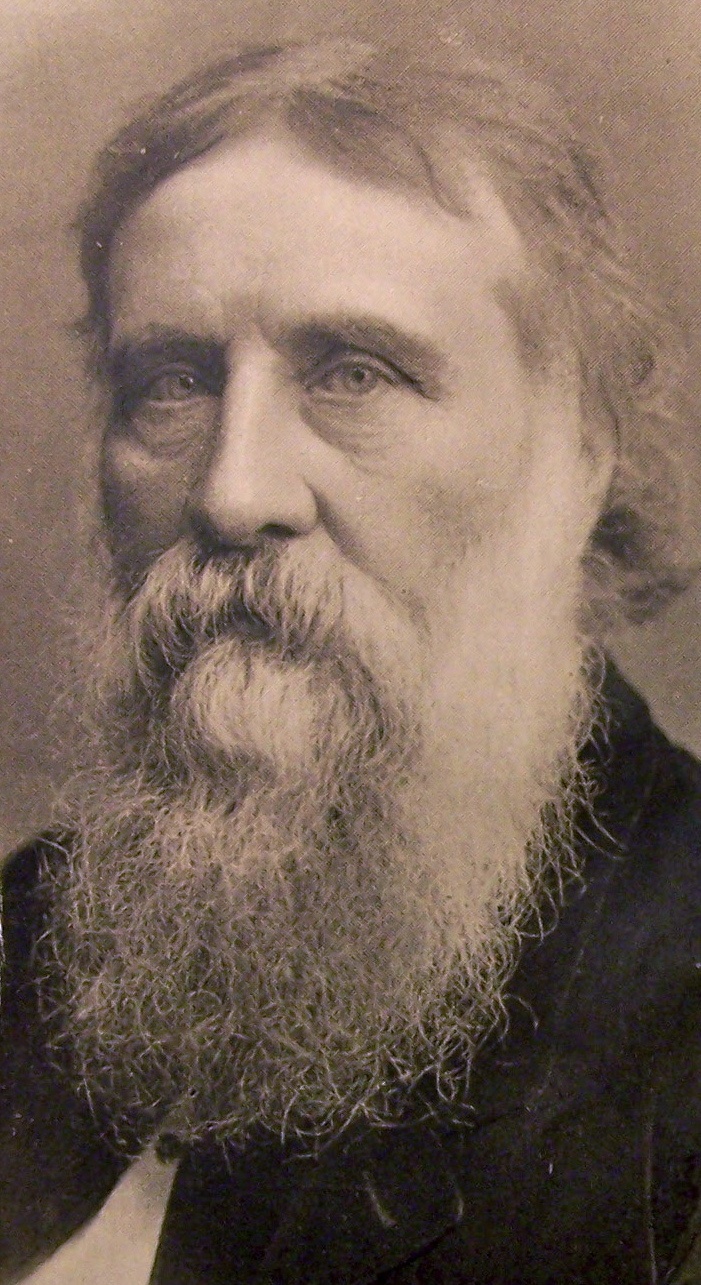
and their tread is “padding”, suggesting a softness which would not be provided by footwear.   This, in turn, takes us back to an early Tolkien favorite author, George Macdonald (1824-1905—see Carpenter, Tolkien,  24, for his early enthusiasm),

and his two goblin books, The Princess and the Goblin (1872)

and The Princess and Curdie (1883).

(And here they are, if you haven’t read them:  https://archive.org/details/princessgoblin00macd

https://archive.org/details/princesscurdie00macdiala  )

In The Princess and the Goblin, we are told about these goblin feet (a father and son goblin are overheard talking):

“ ‘But I could carry ten times as much if it wasn’t for my feet.’

‘That is your weakpoint, I confess, my boy.’

‘Ain’t it yours too, father?’

‘Well, to be honest, it is a goblin-weakness.  Why they come so soft, I declare I haven’t an idea.’ “

(It’s later explained that humans must wear shoes because they’re ashamed of having toes.)

(The Princess and the Goblin, Chapter VIII, “The Goblins”—one of my favorite other facts about the goblins is that you can drive them off by reciting verse, which they can’t stand.)

In a letter to Naomi Mitchison from 1954, Tolkien admits that Macdonald’s work might provide a source for orcs:

“…but I owe, I suppose, a good deal to the goblin tradition…especially as it appears in George MacDonald…”

but then he continues:

“except for the soft feet which I never believed in.”  (letter of 25 April, 1954, to Naomi Mitchison, Letters, 178)

So, in the matter of feet, Tolkien was influenced by goblins, but, as those feet’s vulnerability was not believable, perhaps we could imagine that he made hobbit feet tougher so that he could believe in them?

But as to why they’re hairy…

Thanks for reading, as ever,

Stay well,

Avoid anything described as “footling”,

And remember that, as always, there’s

MTCIDC

O

On the March

22 Wednesday Feb 2023

Posted by Ollamh in Uncategorized

≈ Leave a comment

As ever, dear readers, welcome.

I’m always interested in Tolkien’s sources, as much for the fun of looking for them and learning new things as I go as for actually locating definite—or at least possible—ones.  The following is from one of my latest forays.

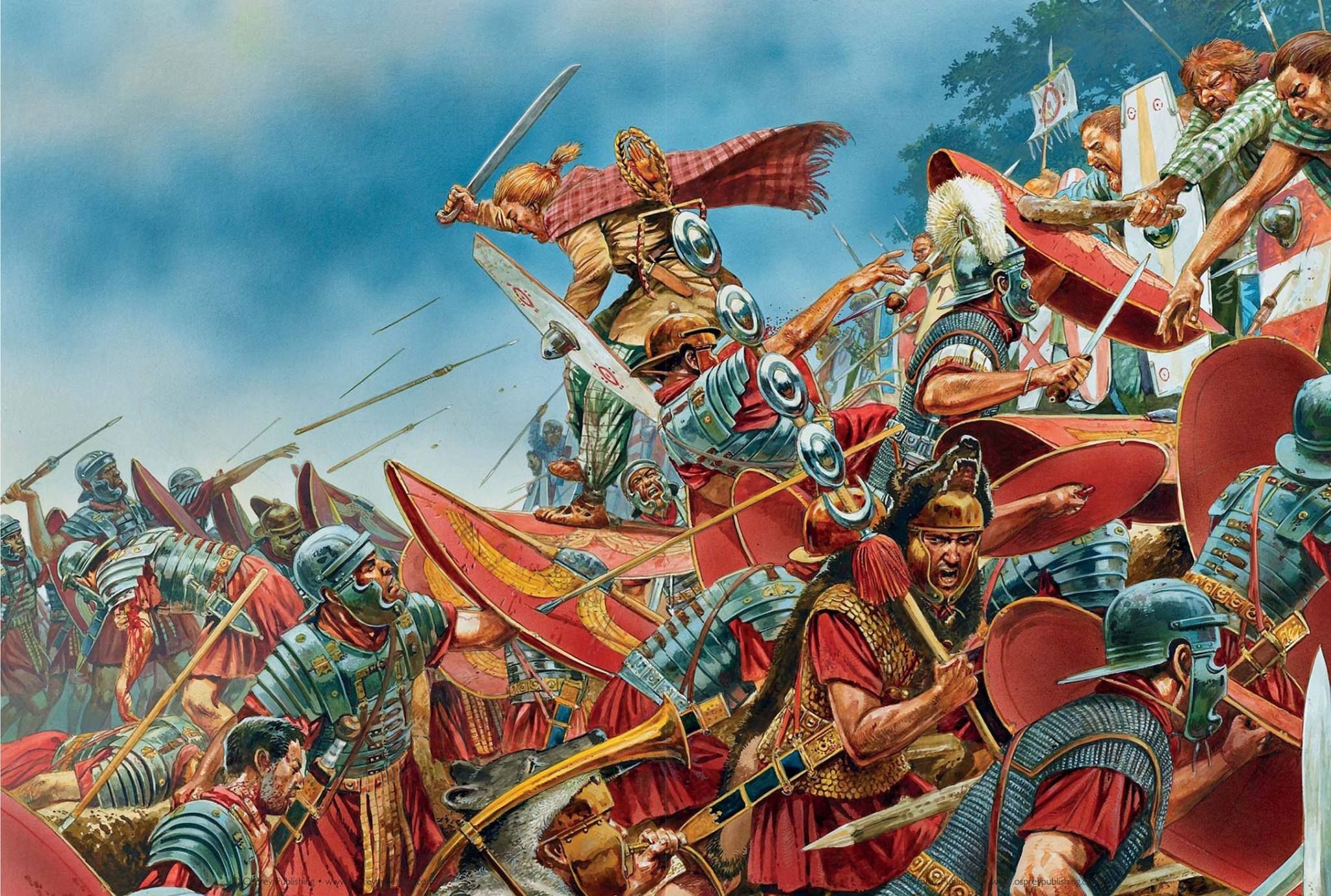
September, 9AD:  things were going very badly for Publius Quinctilius Varus (46BC-9AD), governor of the new Roman province of Germania.  Trusting an officer of Germanic auxiliary cavalry, Arminius (19/18BC-21AD), who had grown up in Rome as a hostage, and seemed more Roman than the Romans, Varus had marched three of his legions into the depths of the German forests

and into a nightmarish series of ambushes

(by Peter Dennis)

in which he had seen as many as 20,000 soldiers and civilians killed before Varus himself committed suicide, probably convinced that, if taken prisoner, he would have met a much slower and more painful end.

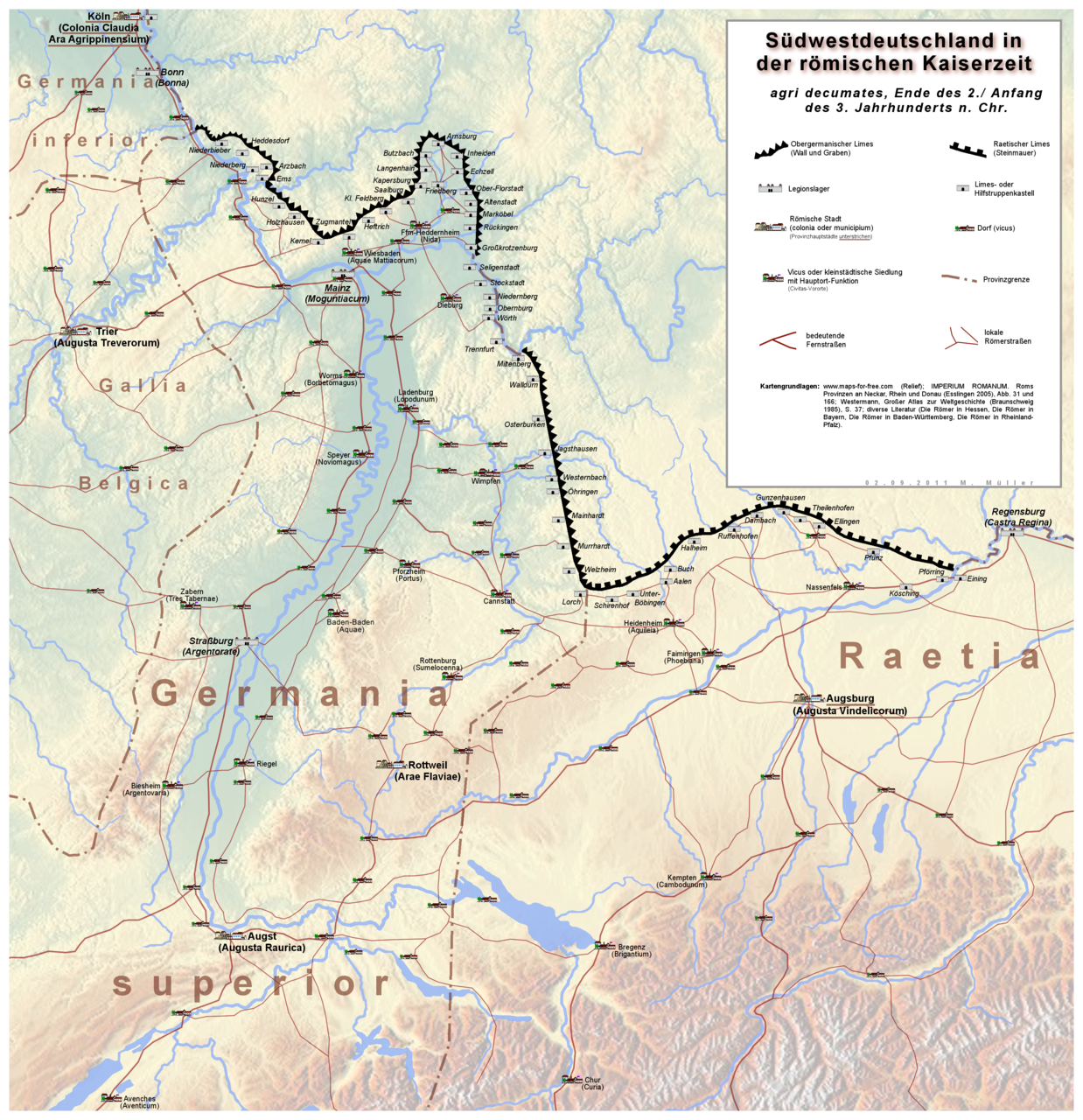
Although the Romans, over the next years, had mounted a number of punitive campaigns into Germania, ultimately, it was decided that the region was best left to itself, but, to try to keep an eye on the tribes and to prevent possible raids, if not outright invasions, the Roman government established what was called the Limes Germanicus, the “German boundary”.

This wasn’t just a striped road barrier and a customs station,

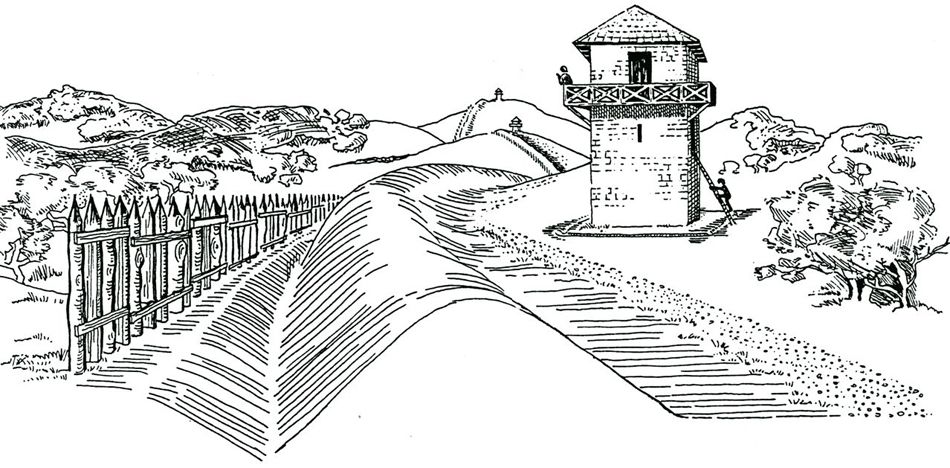
but hundreds of miles of ditch with a palisade and earth wall behind it,

watch towers with beacons ready to be lit,

and Roman military camps behind it.

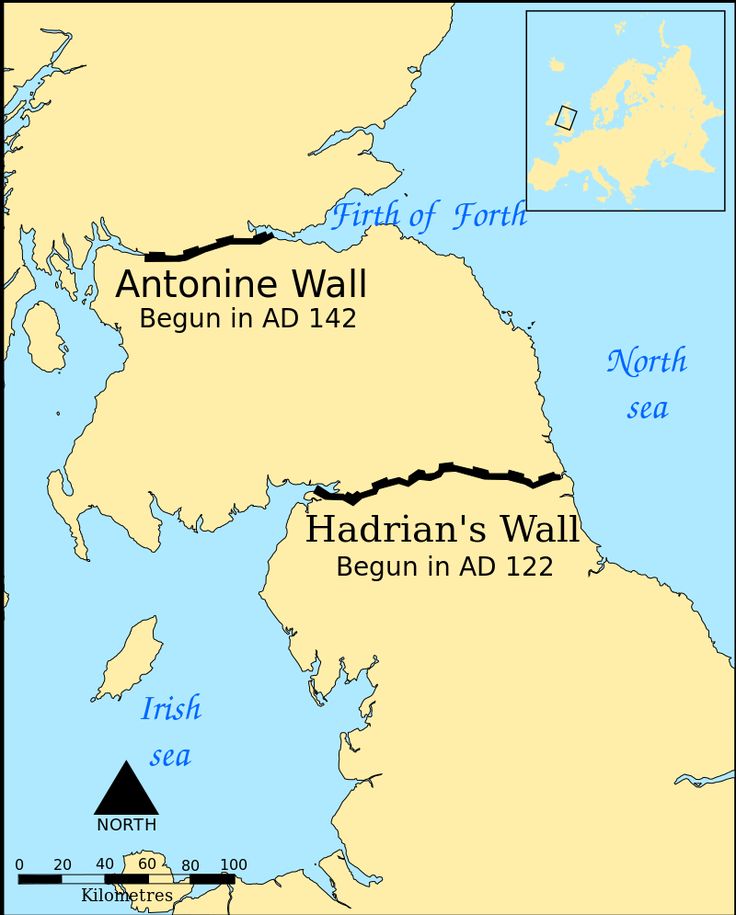
And this became a pattern for Roman conquest.  In Britain, troubled by Pictish tribes to the north, the army set up two walls,

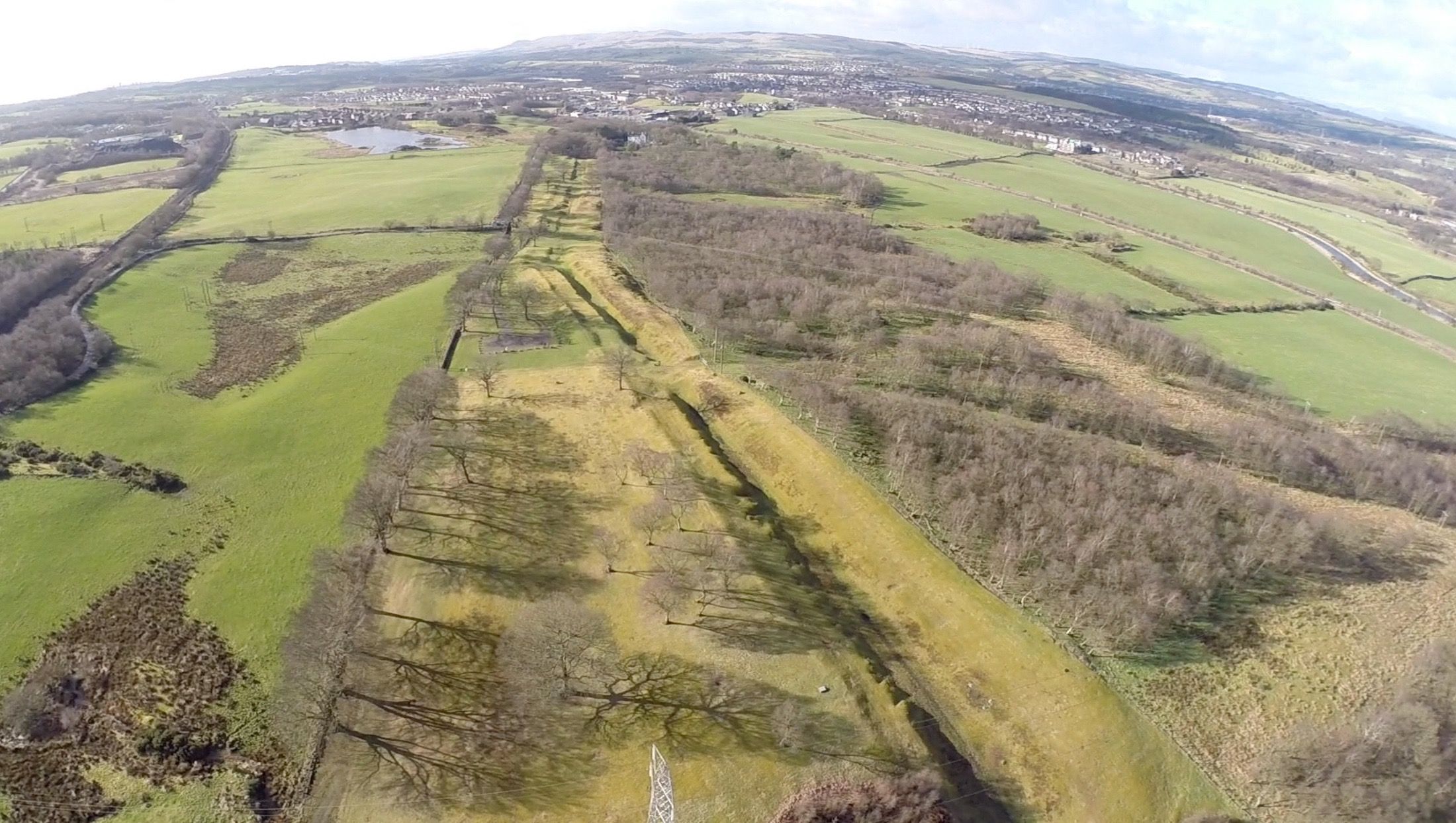
one, the so-called “Antonine Wall”, in Scotland, subsequently abandoned,

which was constructed much like the Limes,

and then the so-called “Hadrian’s Wall”,

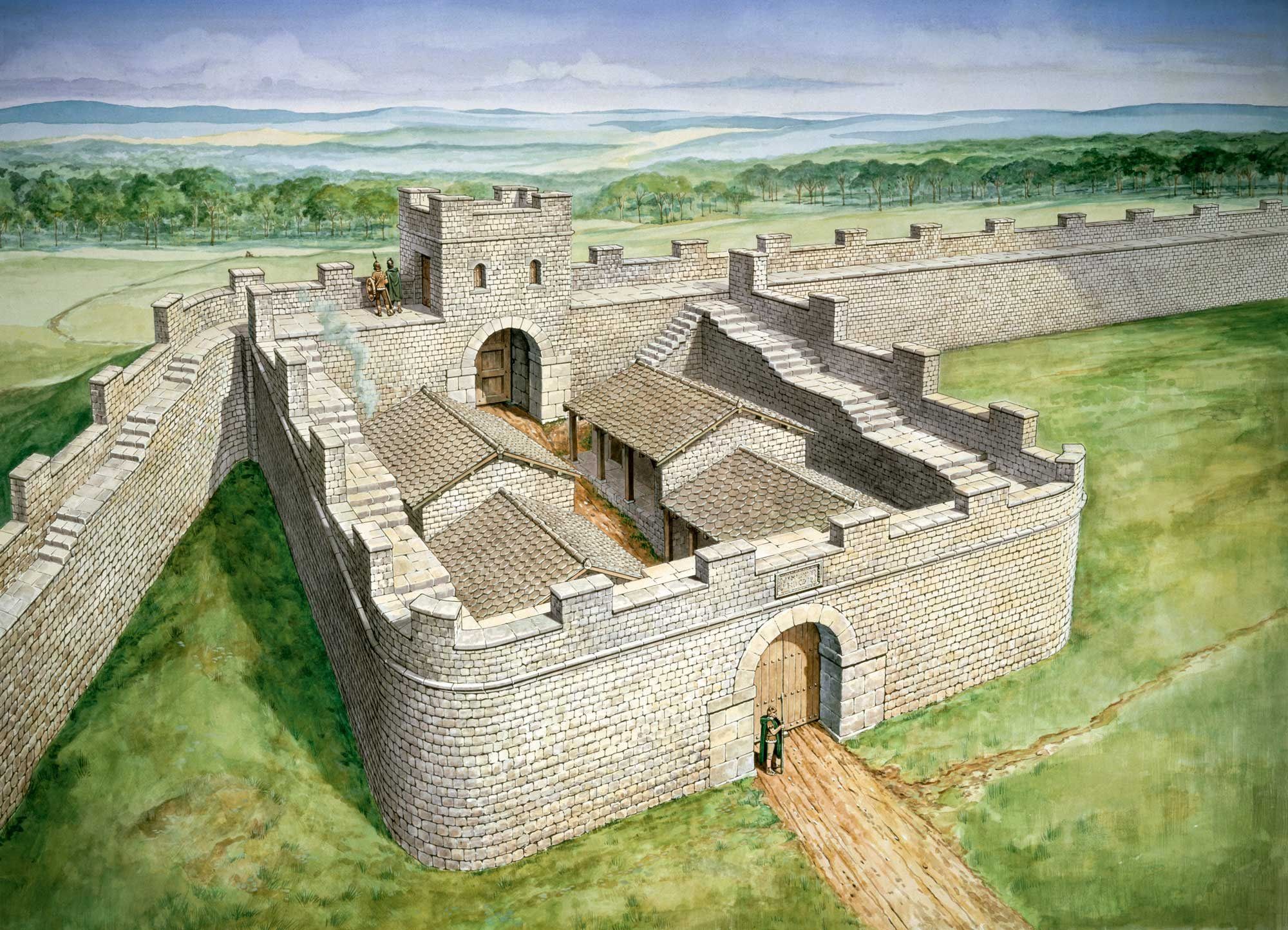
more substantially built, to the south, with towers,

“mile castles” at intervals,

and extensive camps, just like the Limes.

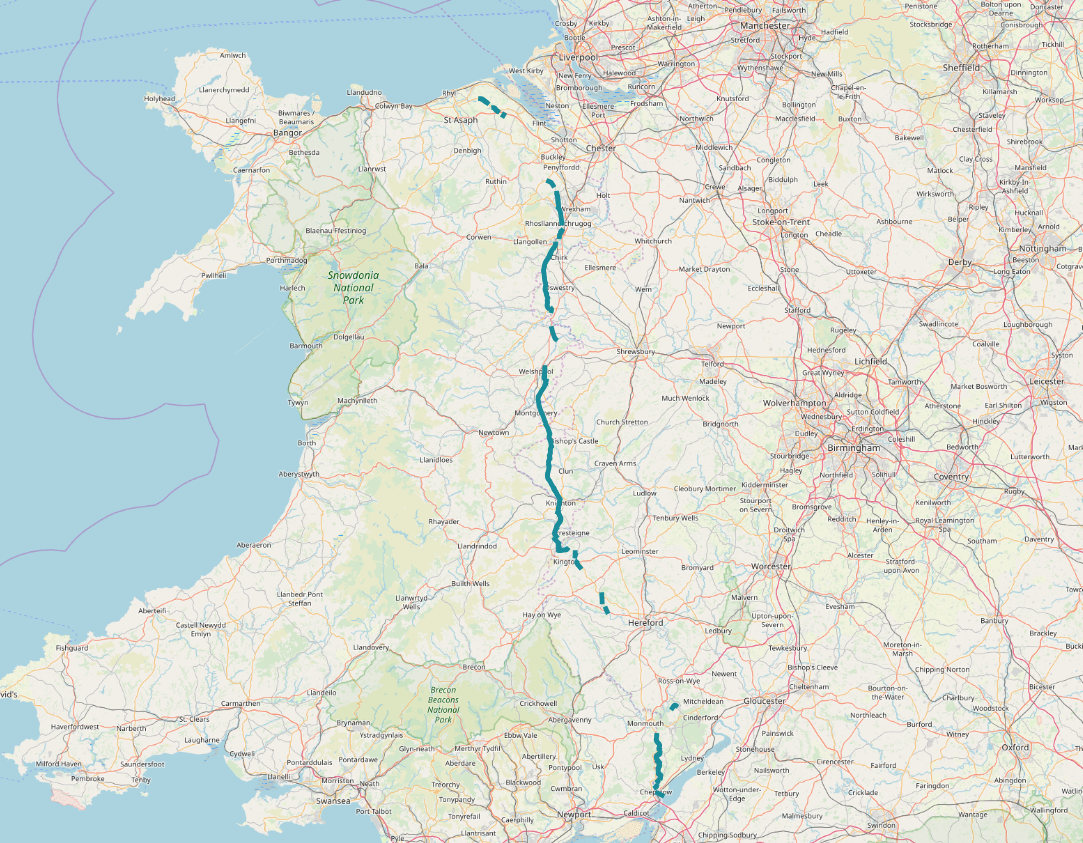
Later post-Roman Britain saw other attempts to indicate boundaries, like Offa’s Dyke,

which may have originally resembled a rather rudimentary version of the Limes and which (roughly) marked the separation of England from Wales.

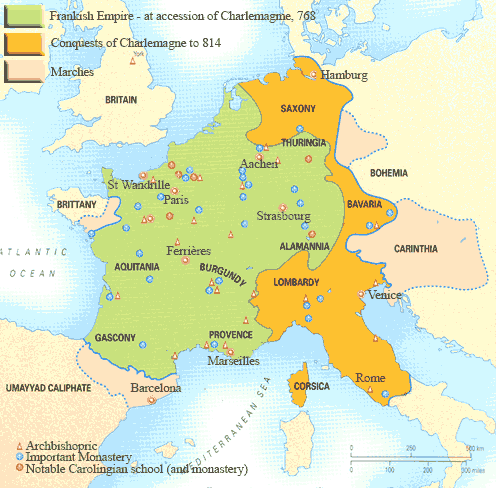
The Carolingian emperor, Charlemagne,

developed this boundary idea farther, establishing a whole series of what were called markas (marcae),which, in English, we called “marches”, and which

colonized, but also militarized, regions along his empire’s borders (when you read “Denmark”, for example, you can think that this was one such zone—the “border region with the Danes”).

As the Normans and their heirs spread westward across Britain and began the conquest of Wales, certain lords—who came to be called “marcher lords”–controlled similar areas throughout the early Middle Ages,

and the troubled border between Scotland and England was, on both sides, divided into East, Middle, and West Marches,

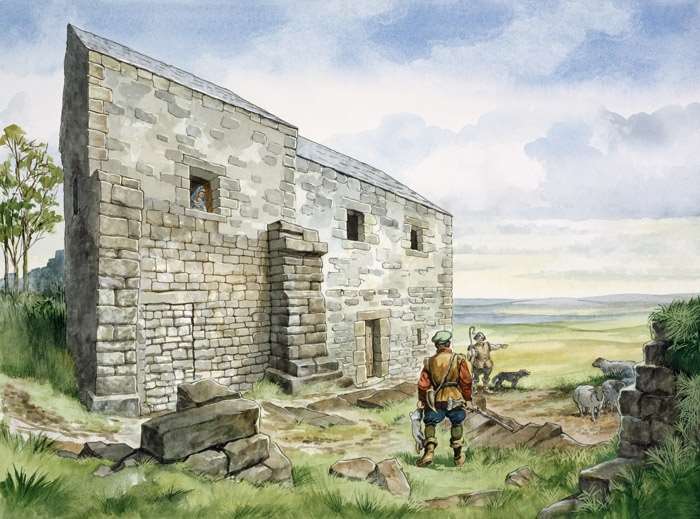
each March supervised by a  Warden.  This is an area particularly full of romance/adventure for me, not only for its spare landscape, with its fortified houses, called “bastles”,

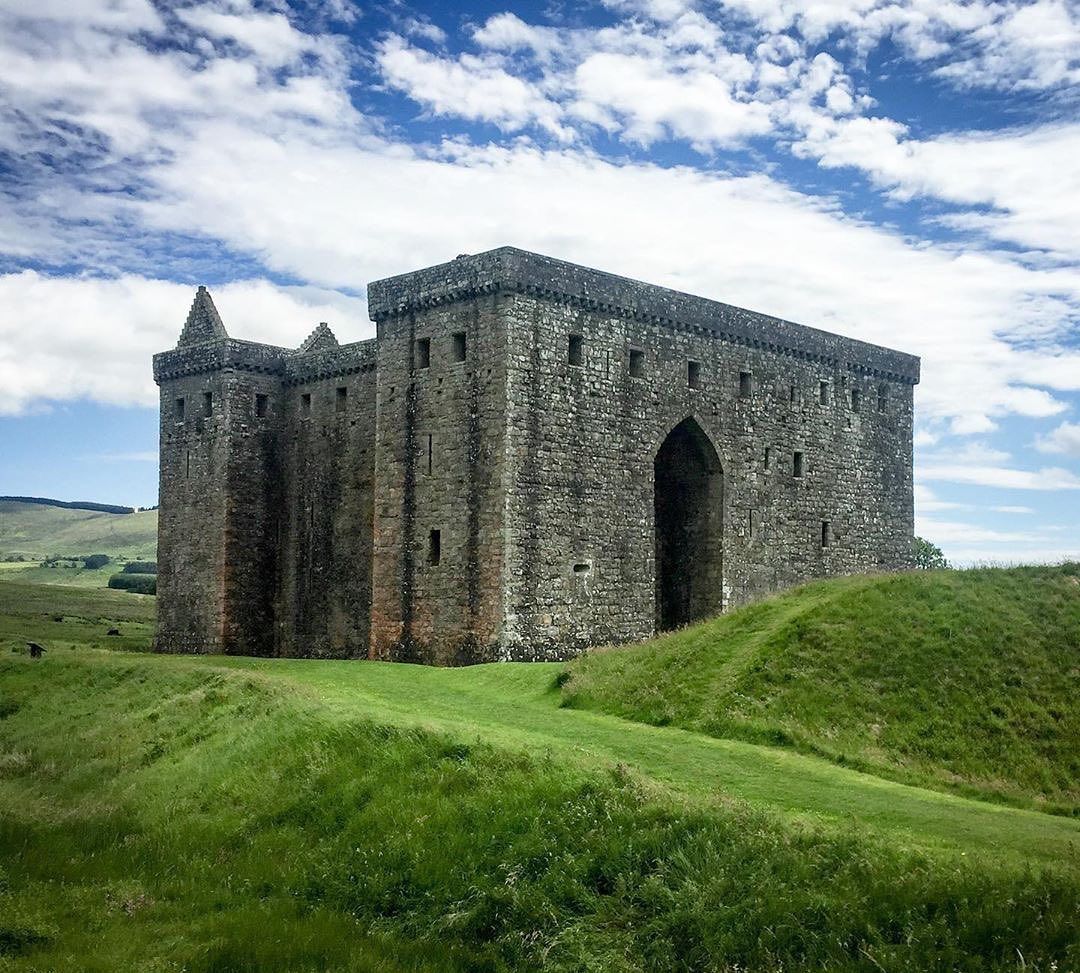
and scattered castles, like Hermitage,

 its Reivers—raiders who lived on the edge, both of the Border and of the law–

(Angus McBride)

and the bold men who enforced the law—or tried to.

(another McBride—this is the “hot trod”, where the Warden summoned all those to help him in pursuit of raiders by raising a burning turf on a spear)

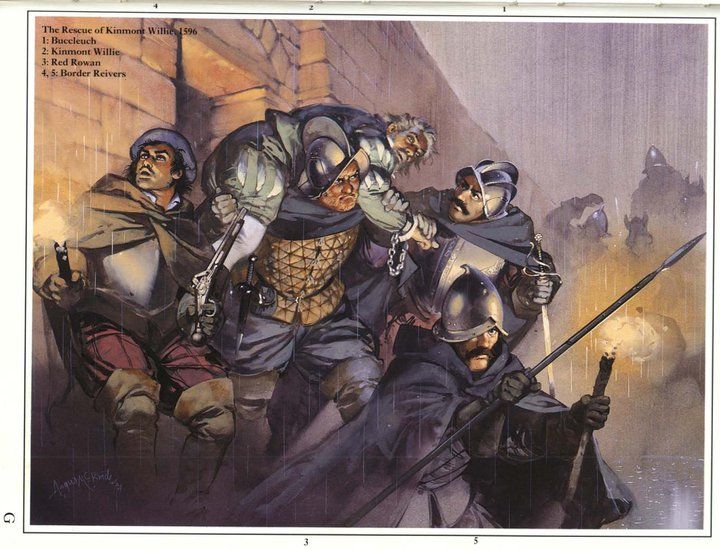
Many of the ballads collected from this region are stories about these people, like that of the rescue of Kinmont Willie from Carlisle castle.

(a third McBride)

(If you’d like to know more, I recommend George Macdonald Fraser’s The Steel Bonnets, as a beginning.)

This brings us to the “Riddermark”, that is, Rohan.

It seems pretty clear,, where Tolkien, first as a classicist, then as a medievalist, got the concept and thus the term from.

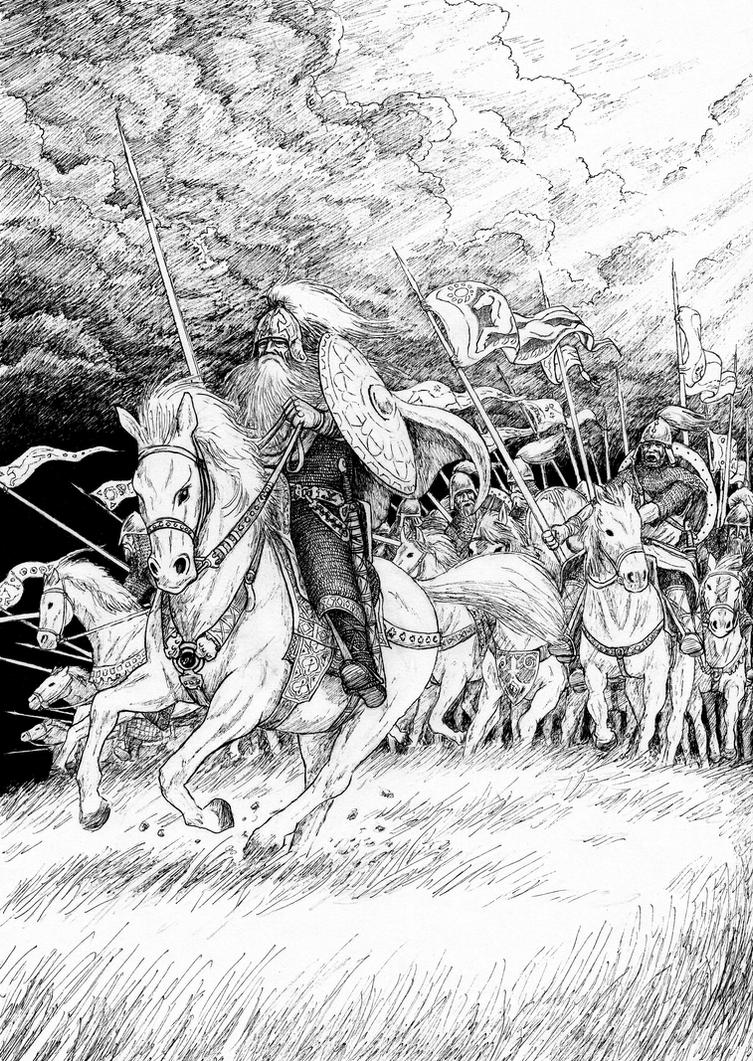
After Eorl the Young,

(I’ve always liked this image, which suggests the tapestry identified by Aragorn in Edoras:  “ ‘Behold Eorl the Young!…Thus he rode out of the North to the Battle of the Field of Celebrant.’ “  The  Two Towers, Book Three, Chapter 6, “The King of the Golden Hall” )

had led his men in helping the Gondorians  to deal with “a great host of wild men from the North-east”, Cirion, the Steward of Gondor:

“…in reward for his aid, gave Calendardhon between Anduin and Isen to Eorl and his people; and they sent north for their wives and children and their goods and settled in that land.  They named it anew the Mark of the Riders [Riddermark}…but in Gondor their land was called Rohan, and its people the Rohirrim…There the Rohirrim lived afterwards as free men under their own kings and laws, but in perpetual alliance with Gondor.”  (The Lord of the Rings, Appendix A, II, “The House of Eorl”)

And in this, we see the ghosts of all those historical border-watchers, from the Romans to the Carolingians to the marcher lords of Wales and the turbulent border of England and Scotland.

Thanks, as always, for reading.

Stay well,

Listen always for the sound of distant horns,

And remember that, as ever, there’s

MTCIDC

O

← Older posts
Newer posts →

The Doubtful Sea Series Facebook Page

The Doubtful Sea Series Facebook Page

  • Ollamh

Categories

  • Artists and Illustrators
  • Economics in Middle-earth
  • Fairy Tales and Myths
  • Films and Music
  • Games
  • Heroes
  • Imaginary History
  • J.R.R. Tolkien
  • Language
  • Literary History
  • Maps
  • Medieval Russia
  • Military History
  • Military History of Middle-earth
  • Narnia
  • Narrative Methods
  • Poetry
  • Research
  • Star Wars
  • Terra Australis
  • The Rohirrim
  • Theatre and Performance
  • Tolkien
  • Uncategorized
  • Villains
  • Writing as Collaborators
Follow doubtfulsea on WordPress.com

Across the Doubtful Sea

Recent Postings

  • The Damage of Dragons March 11, 2026
  • Encouragement March 4, 2026
  • Eavesdropping February 25, 2026
  • Do You Speak Villain? (Part 3) February 18, 2026
  • Do You Speak Villain? (2) February 11, 2026
  • Do You Speak Villain? (Part 1) February 4, 2026
  • Towering January 28, 2026
  • Tolkien Among the Indians January 21, 2026
  • Thin and Stretched January 14, 2026

Blog Statistics

  • 108,959 Views

Posting Archive

  • March 2026 (2)
  • February 2026 (4)
  • January 2026 (4)
  • December 2025 (5)
  • November 2025 (4)
  • October 2025 (5)
  • September 2025 (4)
  • August 2025 (4)
  • July 2025 (5)
  • June 2025 (4)
  • May 2025 (4)
  • April 2025 (5)
  • March 2025 (4)
  • February 2025 (4)
  • January 2025 (5)
  • December 2024 (4)
  • November 2024 (4)
  • October 2024 (5)
  • September 2024 (4)
  • August 2024 (4)
  • July 2024 (5)
  • June 2024 (4)
  • May 2024 (5)
  • April 2024 (4)
  • March 2024 (4)
  • February 2024 (4)
  • January 2024 (5)
  • December 2023 (4)
  • November 2023 (5)
  • October 2023 (4)
  • September 2023 (4)
  • August 2023 (5)
  • July 2023 (4)
  • June 2023 (4)
  • May 2023 (5)
  • April 2023 (4)
  • March 2023 (5)
  • February 2023 (4)
  • January 2023 (4)
  • December 2022 (4)
  • November 2022 (5)
  • October 2022 (4)
  • September 2022 (4)
  • August 2022 (5)
  • July 2022 (4)
  • June 2022 (5)
  • May 2022 (4)
  • April 2022 (4)
  • March 2022 (5)
  • February 2022 (4)
  • January 2022 (4)
  • December 2021 (5)
  • November 2021 (4)
  • October 2021 (4)
  • September 2021 (5)
  • August 2021 (4)
  • July 2021 (4)
  • June 2021 (5)
  • May 2021 (4)
  • April 2021 (4)
  • March 2021 (5)
  • February 2021 (4)
  • January 2021 (4)
  • December 2020 (5)
  • November 2020 (4)
  • October 2020 (4)
  • September 2020 (5)
  • August 2020 (4)
  • July 2020 (5)
  • June 2020 (4)
  • May 2020 (4)
  • April 2020 (5)
  • March 2020 (4)
  • February 2020 (4)
  • January 2020 (6)
  • December 2019 (4)
  • November 2019 (4)
  • October 2019 (5)
  • September 2019 (4)
  • August 2019 (4)
  • July 2019 (5)
  • June 2019 (4)
  • May 2019 (5)
  • April 2019 (4)
  • March 2019 (4)
  • February 2019 (4)
  • January 2019 (5)
  • December 2018 (4)
  • November 2018 (4)
  • October 2018 (5)
  • September 2018 (4)
  • August 2018 (5)
  • July 2018 (4)
  • June 2018 (4)
  • May 2018 (5)
  • April 2018 (4)
  • March 2018 (4)
  • February 2018 (4)
  • January 2018 (5)
  • December 2017 (4)
  • November 2017 (4)
  • October 2017 (4)
  • September 2017 (4)
  • August 2017 (5)
  • July 2017 (4)
  • June 2017 (4)
  • May 2017 (5)
  • April 2017 (4)
  • March 2017 (5)
  • February 2017 (4)
  • January 2017 (4)
  • December 2016 (4)
  • November 2016 (5)
  • October 2016 (6)
  • September 2016 (5)
  • August 2016 (5)
  • July 2016 (5)
  • June 2016 (5)
  • May 2016 (4)
  • April 2016 (4)
  • March 2016 (5)
  • February 2016 (4)
  • January 2016 (4)
  • December 2015 (5)
  • November 2015 (5)
  • October 2015 (4)
  • September 2015 (5)
  • August 2015 (4)
  • July 2015 (5)
  • June 2015 (5)
  • May 2015 (4)
  • April 2015 (3)
  • March 2015 (4)
  • February 2015 (4)
  • January 2015 (4)
  • December 2014 (5)
  • November 2014 (4)
  • October 2014 (6)
  • September 2014 (1)

Blog at WordPress.com.

  • Subscribe Subscribed
    • doubtfulsea
    • Join 78 other subscribers
    • Already have a WordPress.com account? Log in now.
    • doubtfulsea
    • Subscribe Subscribed
    • Sign up
    • Log in
    • Report this content
    • View site in Reader
    • Manage subscriptions
    • Collapse this bar
 

Loading Comments...