• About

doubtfulsea

~ adventure fantasy

Author Archives: Ollamh

Tea and Tyranny

22 Wednesday Nov 2023

Posted by Ollamh in Uncategorized

≈ Leave a comment

As always, welcome, dear readers.

Boston, in the late 1760s, was a turbulent place.

It shouldn’t have been surprising, as its founders had been dissenters from Charles the First’s absolutist ideas of religion

who, forming a corporation, had come to New England to found their own state, which they had run independently from 1630 to 1686, when a royal governor, Sir Edmond Andros,

was sent to rule, but lasted only three years before politics in England changed things until 1692, when Massachusetts became a royal colony for good—or at least until 1775.

A major difficulty was what seemed to be an endless quarrel between Massachusetts merchants and the government in London about the regulation of trade, which began as early as 1651, when Parliament instituted the first of four Navigation Acts.

The title you see here says it all:  “An Act for Increasing of Shipping,  And Encouragement of the NAVIGATION of this NATION”, the nation here being Britain—and only Britain, its colonies in North America, then really Masschusetts Bay, Plymouth, Rhode Island, Connecticut, and Virginia, being viewed only as sources of revenue, not as part of Britain—the original cash cows—

By law, exports and imports were to be strictly limited to English ports, dealing directly with other countries being prohibited.

Smuggling, of course, immediately commenced,

but never could replace legitimate trade—and things got worse after the British victory in the Seven Years War (1756-1763—here in the US 1754-1763), when Britain, having plunged deeply into debt to defeat its enemies, was faced with the need to pay back the huge loans it had taken out.

It undoubtedly sounded logical to those in the government that, as part of the war had been waged to defend the North American colonies from the French and their Native American allies,

(Eugene Leliepvre, one of my favorite French military artists)

those colonies should help with that enormous debt.  From the other side of the Atlantic, Massachusetts, along with others of the English colonies, long resenting earlier attempts to control colonial trade, and having a tradition of their own elective assemblies,

felt that such an expectation should come with some formal influence in Parliament—the well-known complaint of “taxation without representation”. 

Foolishly, this complaint was ignored by those at the top, who, instead, began to issue, from 1763 on, a whole series of Acts designed to extract funds from the colonies, usually involving either domestic imports or even, in the Stamp Act of 1765, colonial documents (all legal papers had to bear a government tax stamp to be legal—and not only legal papers, even newspapers and playing cards came under this Act).
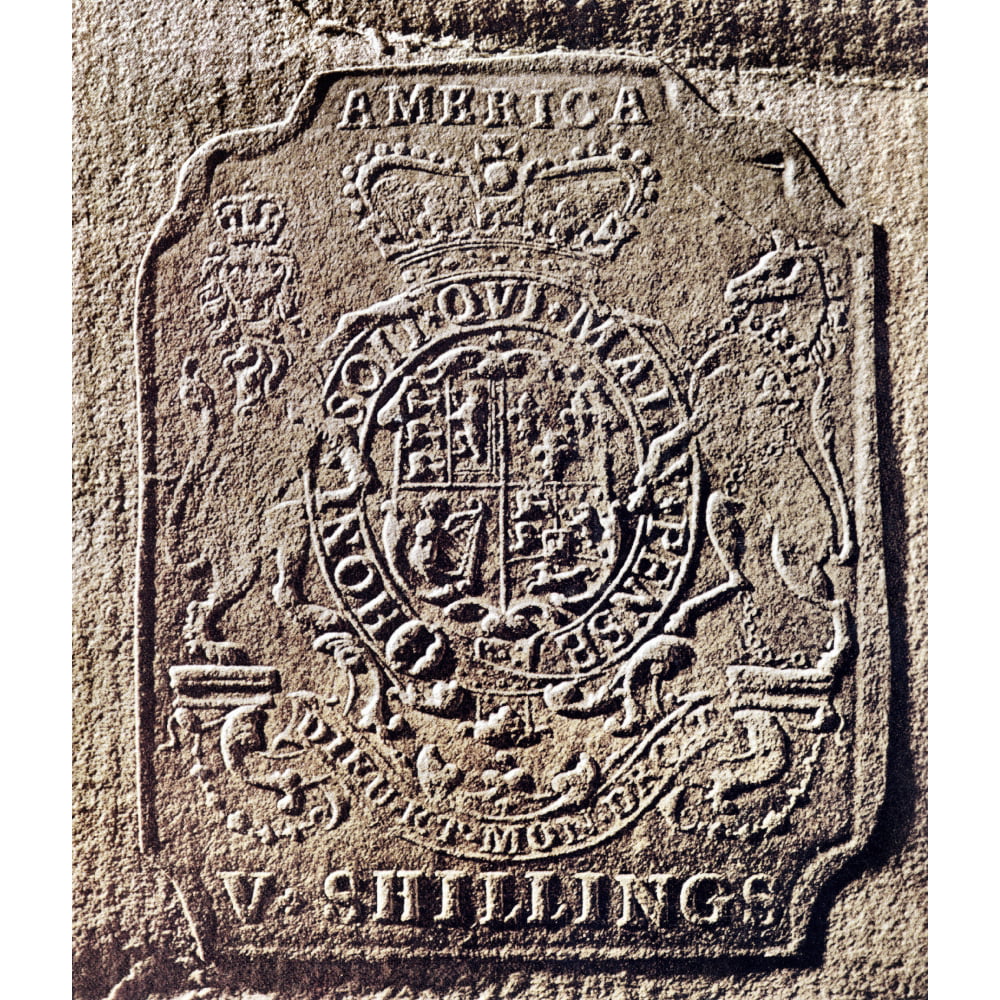
Needless to say, the tension could only grow and, in 1768, the government in London felt that it was necessary, to enforce its acts and to protect its officers, to send troops to Boston.
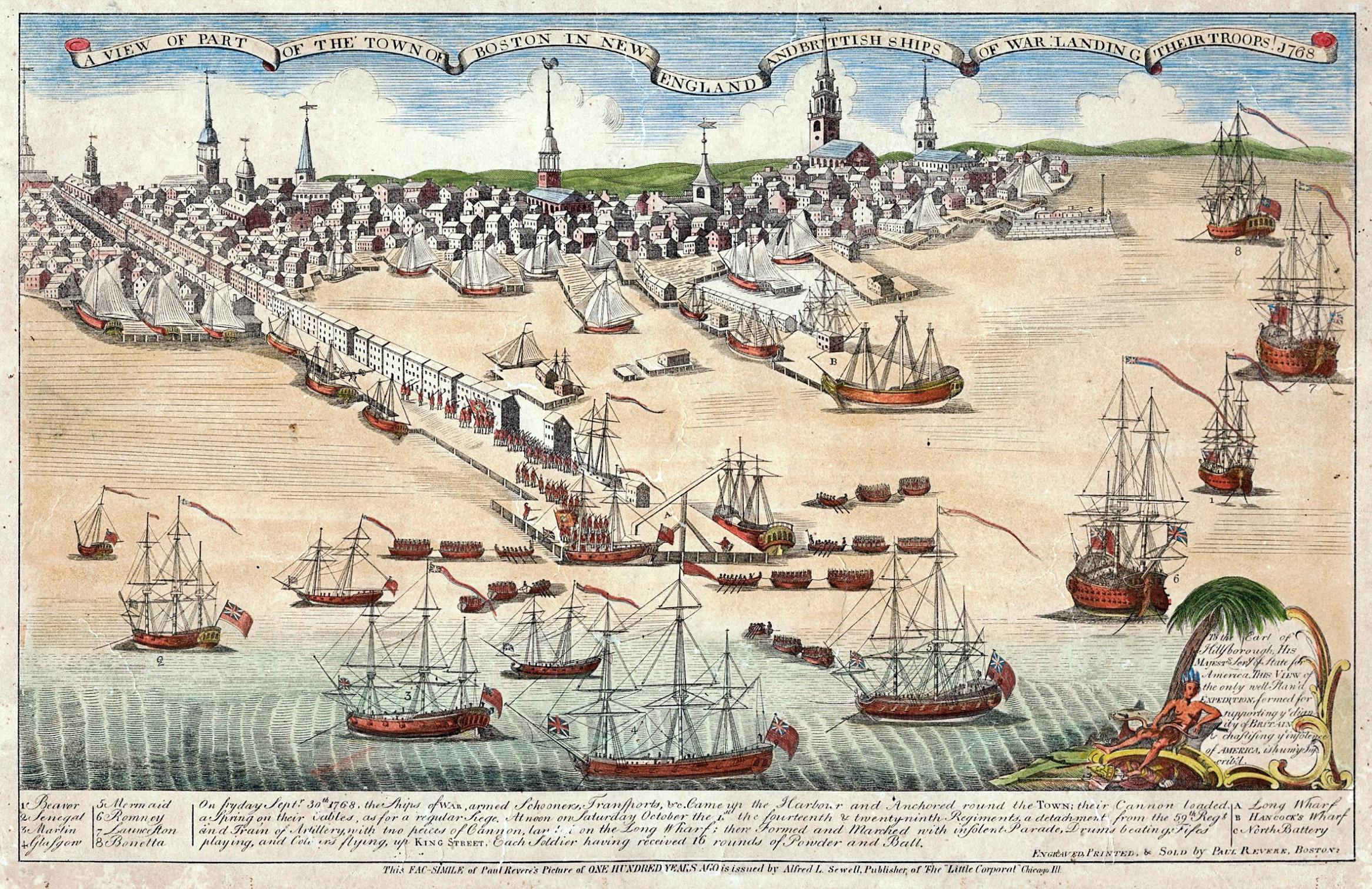
As the caption tells us, when the troops landed, they did so as if they were conquerors come to occupy enemy territory:  “there Formed and Marched with insolent Parade, Drums beating, Fifes playing, with Colours flying, up KING STREET…”—with the most ominous addition:  “Each Soldier having received 16 rounds of Powder and Ball”—that is, these men were ready for a fight, if necessary.

The population of Boston in 1768 was about 16,000, with no barracks and few public spaces besides its churches, so the addition of, eventually, 4 regiments of infantry—perhaps as many as 2,000 men, all told–would have put a strain on the town even if these had been welcome new inhabitants.  The soldiers were quartered in taverns, barns, stables, and whatever empty buildings might be found, but soon, as might have been expected, began to tussle with the locals, which led to open bloodshed in March, 1770, when a panicked squad of soldiers fired into a mob which seemed to be threatening them—the so-called “Boston Massacre”, as depicted in Paul Revere’s propaganda print, with its “Butcher’s Hall” over the doorway behind the troops—in case you might have missed the point.

(a more accurate, but no less bloody, depiction by the famous contemporary American military artist, Don Troiani)

Such violence on the part of what locals viewed not as their own government’s soldiers, but as occupiers, only made things worse and, although there was no second “massacre”, more attempts by the London government to squeeze profit from the colonies finally led to the destruction by locals of a large shipment of taxable tea, dumped into Boston harbor in December, 1773—the “Boston Tea Party”.

This was too much for London and the decision was made to send more soldiers, remove civilian control, and set a military governor, Thomas Gage, already commander of British troops in North America, over the town.

In an even bigger blow, the government officially closed the port of Boston, setting warships to block the harbor.

Gage would then be pressured, both by government in London and by those loyal to the Crown in Boston, to do more to deal with what appeared, increasingly, to be a movement towards armed rebellion, leading to the British troops’ disastrous expedition to seize military supplies and local leaders west of Boston at Concord in April, 1775, leading to an estimated 300 British casualties and about 100 locals
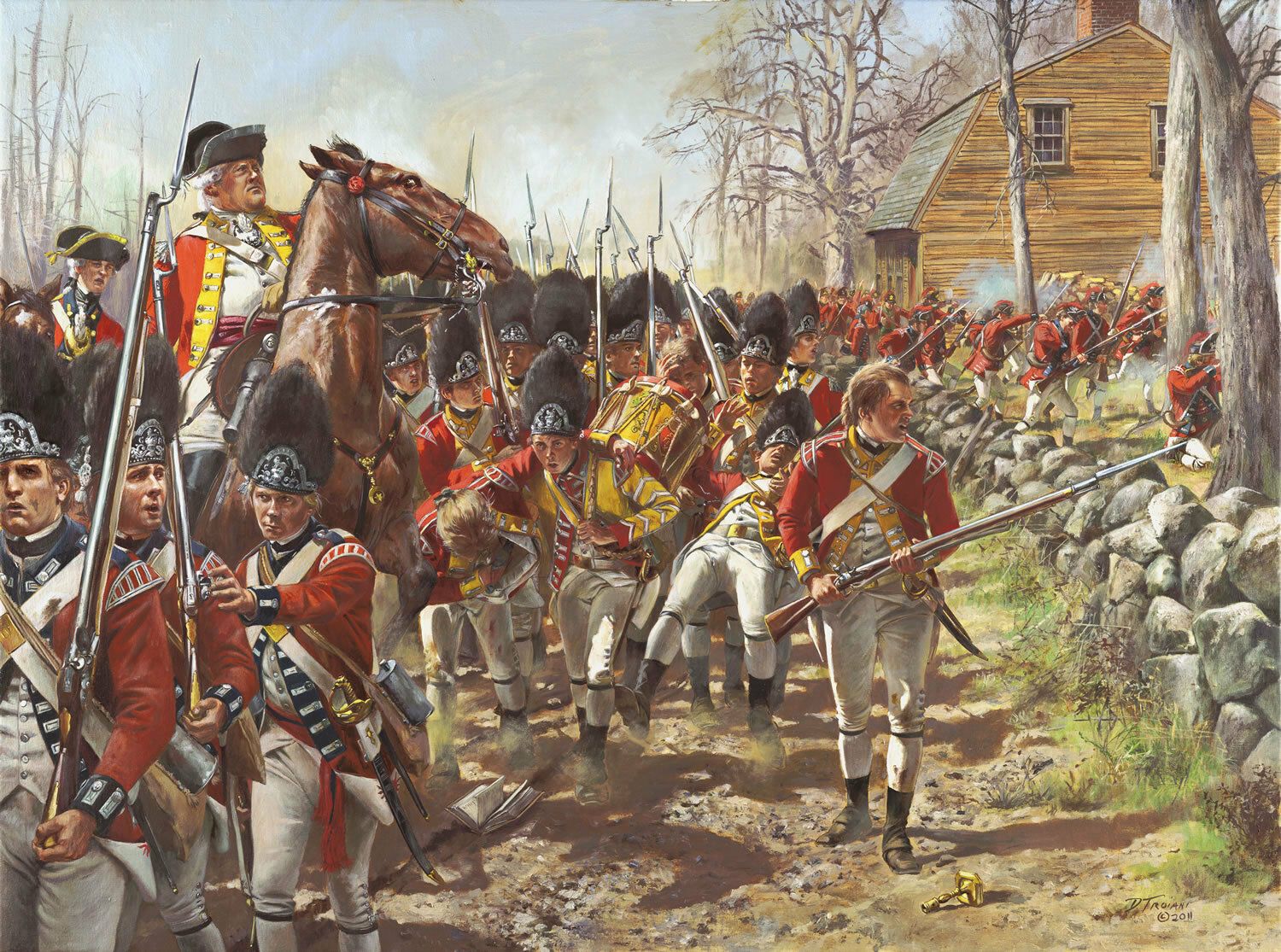
(another Don Troiani)

 and a siege of Boston so intense that the British were forced to evacuate the city the following March.
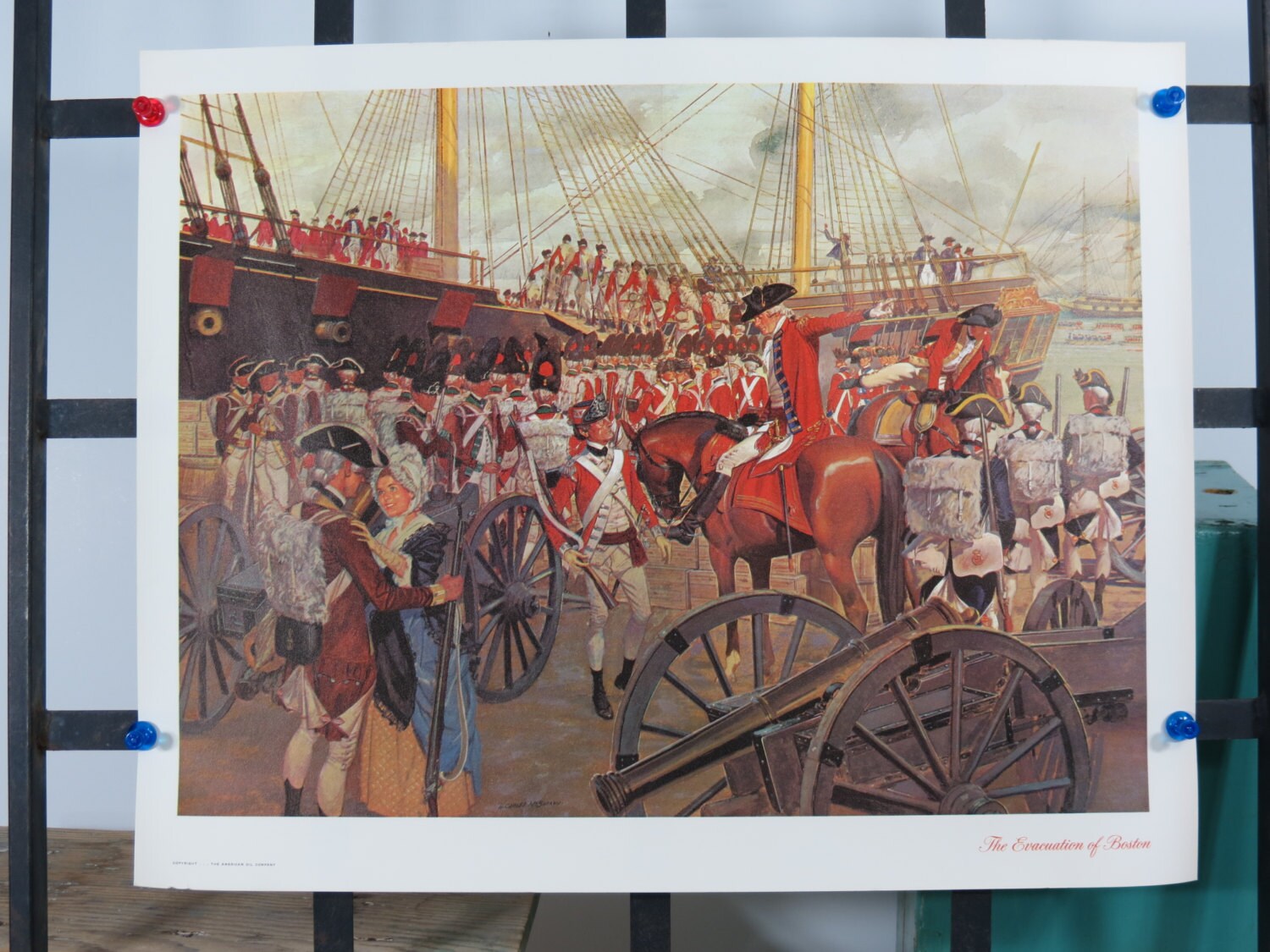
(H. Charles McBarron—America’s first great military historical artist of the 20th century)

All of this forms the background to a YA novel I’ve just been rereading, Esther Forbes’ (1891-1967) 1943
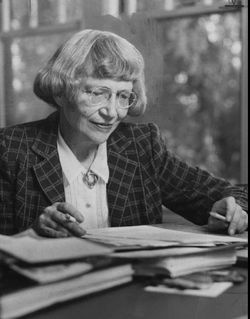
Johnny Tremain.

Johnny is an orphaned young Bostonian apprenticed to an elderly silversmith during the early 1770s and the book follows both the course of history in which he’s involved, as well as his own rather difficult personal life.  I very much recommend this book, but I don’t want to do a SPOILER ALERT, so I’ll just say that what makes it stand out for me is that the author is at great pains to depict Johnny’s development, from an arrogant boy with ambitions to a virtual outcast to someone who combines humility with a moving understanding of the people around him, including some of those who had given him difficulties in his growing up. 

Forbes herself wrote other historical novels set in early New England, as well as Paul Revere and the World He Lived In, 1942, which won her the Pulitzer Prize for History in 1943, and which clearly explains the authentic feel of Johnny Tremain.

As the book has so many dramatic elements—from 1770s Boston and its tensions to Johnny’s personal struggles—it’s not surprising that Walt Disney studios made a film of the novel in 1957.

As the book is complex, this is a very simplified version, stripping away many of the characters, but keeping most of the major moments, although, for the sake of colorful action, where Forbes had kept Johnny in Boston during the events of April, 1775, the film sends him to Lexington and Concord and follows the action there through him, including the British retreat to Boston through intensifying sniper fire from the locals.

(from a set of four engravings made after the events by Amos Doolittle, oddly, like Johnny—and Paul Revere–a silversmith who had taught  himself engraving—see this article about him for more:  https://newenglandhistoricalsociety.com/amos-doolittle-connecticuts-paul-revere/ )

Although not so mature as the book—and pretty sloppy on things like British uniforms and clothing of the period in general, though with very good sets—it’s a fun movie, which does capture some of the spirit of Forbes’ novel and, along with that novel, I would recommend it.  For more on events of this period, particularly military, I would also recommend the American Battlefield Trust website—you can read it here:  https://www.battlefields.org/learn/revolutionary-war/battles/lexington-and-concord

Thanks, as ever, for reading.

Stay well,

Always demand representation,

And remember that, also as always, there’s

MTCIDC

O

Bullseye

15 Wednesday Nov 2023

Posted by Ollamh in Uncategorized

≈ Leave a comment

Welcome, as ever, dear readers.

Last night, I rewatched Pixar/Disney’s Brave.

I hadn’t seen it in some years and, as I’ve been in the midst of archery recently, it fell off the DVD shelf into my hands.

If it’s not a film you’ve seen, I want to recommend it immediately, for the story of a young woman trying find her way in a rigid medieval world which sees her more as a pawn than a person.

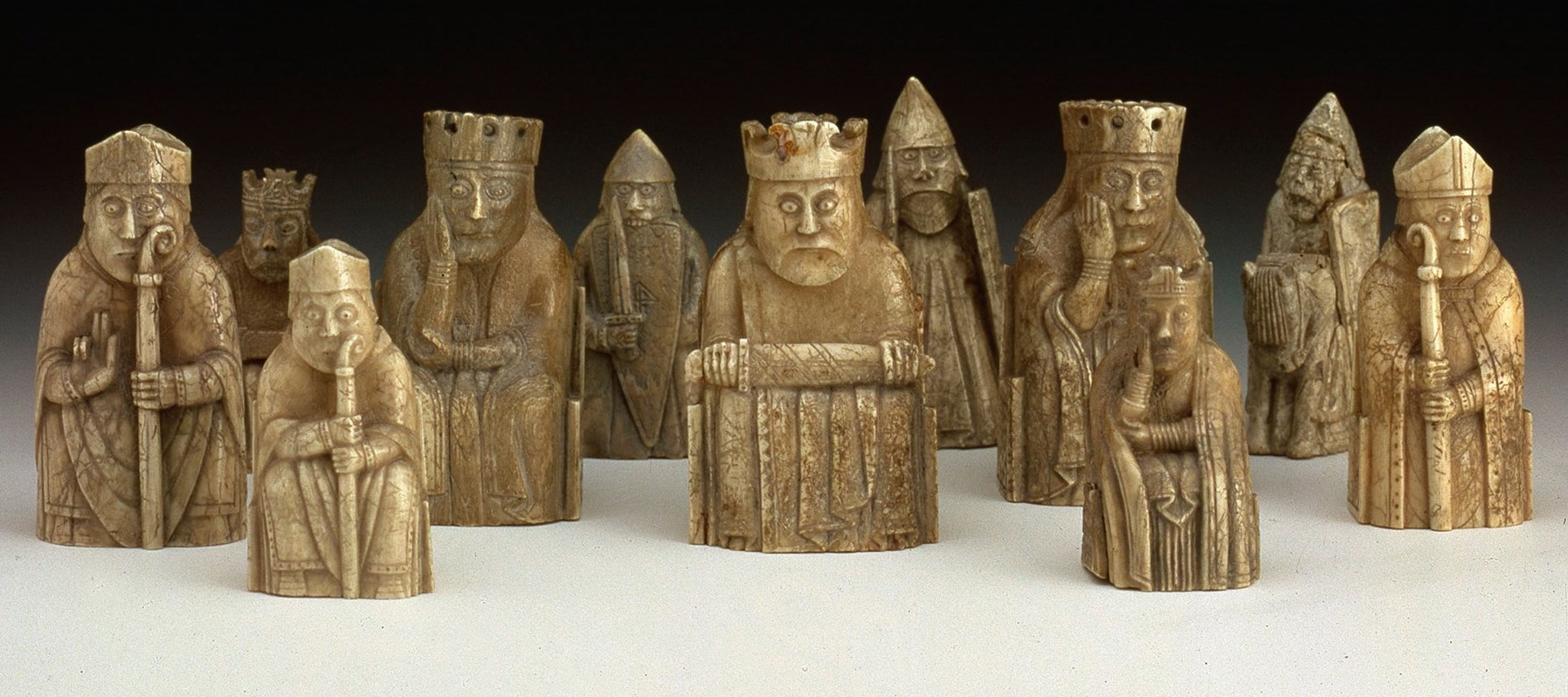
(The famous “Lewis Chessmen”, 12th-century walrus ivory and whale teeth carvings found in a kist (stone box) at Uig—Oo-ig–on the island of Lewis off the west coast of Scotland.  To read more, here’s a site actually devoted to them:  https://www.isleoflewischessset.co.uk/  From what culture we’re shown in Brave, these might be roughly contemporary with the story.  In 2010, there appeared the theory that they were carved in Iceland by Margret en Haga—Margaret the Handy/Dexterous—she is mentioned as a skilled worker in ivories in the 13th century “Pols Saga” which you can read here on page 528 of Vigfusson and Powell, Origines Islandicae, 1905, where her name is translated “Margaret the Skilfull”:  https://ia904602.us.archive.org/4/items/originesislandic01guiala/originesislandic01guiala.pdf  )

It’s also funny and just absolutely pictorially beautiful, in the way a Miyazaki film can be.

Early in the film, the heroine, Merida, who is to be the pawn in a marriage alliance, alters things with a demand for a bride-contest in her specialty, archery, and

when one of her hapless suitors accidentally hits the bullseye, she promptly splits his arrow—and suddenly I’m in another story.  It’s 1938

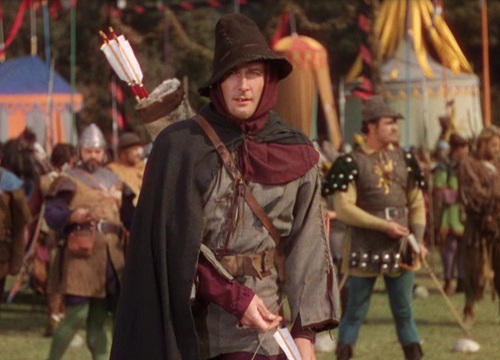
and Robin Hood, played by Errol Flynn, disguised as a tinker, is about to win a golden arrow in an archery contest—and to be captured by a collection of villains.

He wins by—yes, you guessed it—splitting his final opponent’s arrow in two.

(This is from a useful article on the subject of arrow-splitting, which you can find here:  https://www.goldengatejoad.com/2012/07/how-hard-split-arrow-longbow/ and you can see the contest here:  https://www.youtube.com/watch?v=y4gnNwVftp4  )

The idea for this may have come from the early 16th-century “A Gest of Robyn Hode”, the “Fyfth Fytte”, in which Robin, in a contest at Nottingham, splits a series of wands with his shots—see F.J. Child, The English and Scottish Popular Ballads, Volume III, page 70 here:   https://archive.org/details/englishandscotti03chiluoft/page/70/mode/2up  (Robin, in Howard Pyle’s 1883 The Merry Adventures of Robin Hood, trims the fletching off one side of his opponent’s shaft—see:  https://archive.org/details/merryadventureso00pylerich/page/30/mode/2up )

This wonderful shot, however, also reminded me of another kind of contest, rather like that which Merida sets up, this time in a much earlier era.

A few weeks ago, I finished teaching the Odyssey and I was reminded of a scene late in the story where Penelope, pestered for nearly 4 years by a gang of obnoxious suitors,

(J.W. Waterhouse)

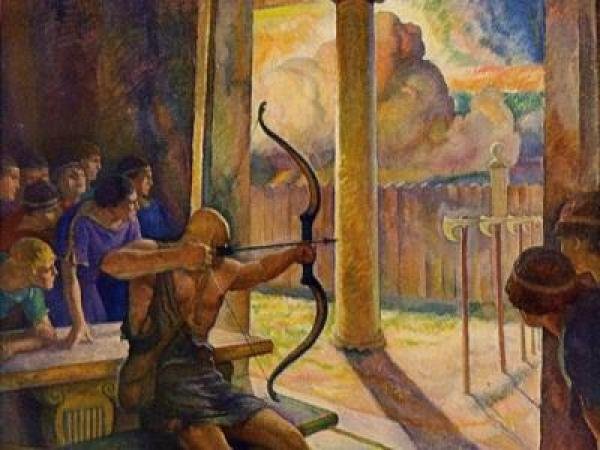
sets up a rather peculiar sort of tournament, first telling Odysseus (in disguise as an old beggar), that she intends to reenact something her husband used to do for fun.  He would set up a dozen axe heads and fire an arrow through them.

(N.C. Wyeth)

It’s unclear in the text what’s really happening:  does he shoot through the axe blades?  Some have suggested (but it’s not in the text) that there were rings on the axes and he shot through them.

The real point, I suspect, isn’t the axes at all, but Odysseus’ bow.

(Alan Lee)

Penelope announces that the one who can string it—then do whatever it is with the axes, can have her hand.  And, although Telemachus (probably a sign that he’s Odysseus’ son, something he was very worried about at the beginning of the Odyssey) almost strings it—until Odysseus signals him not to—none of the suitors comes even close, which is humiliating for them, since it demonstrates quite graphically that, whatever their pretensions to be Penelope’s second husband, they will never come close to rivaling her first one.

At the same time, this contest has another outcome.  Odysseus easily strings the bow

(Peter Connolly)

and shoots (through?) the axes, but then begins picking off the suitors, beginning with one of the principal ones, Antinoos.

Thus, he is the successful participant in the contest for Penelope’s hand in three ways:

1. he strings the bow

2. he does whatever with the axes

3. he begins the elimination of any possible rivals

But I said at the opening that I was in the midst of archery these days—not only in the Odyssey, but, having just finished The Hobbit, I would add one more string to my bow—Bard the archer.

(Michael Hague from his beautiful illustrations)

Although it’s not a contest in the same sense, like Merida’s, Robin’s, and Odysseus’, his one shot is a tricky one, and the prize isn’t a bride, a golden arrow, or a wife, but life for him and much of the population of Lake-town, which he wins when his arrow (perhaps a magic one?) hits the one exposed spot on his enemy’s hide.

(JRRT)

Thanks for reading, as always.

Stay well,

Don’t let yourself be strung along,

And remember that, as always, there’s

MTCIDC

O

PS

If you’d like a comprehensive collection of early Robin Hood material, try this 1885 edition of the antiquarian Joseph Ritson’s 1795 Robin Hood:  https://www.gutenberg.org/files/56926/56926-h/56926-h.htm   If you’d like to see what I think are the best Robin Hood book illustrations see Paul Creswick’s Robin Hood, 1917, for which the artist was N.C. Wyeth:  https://ia801603.us.archive.org/15/items/robinhood00cresrich/robinhood00cresrich.pdf  The Howard Pyle cited above has the most wonderfully elaborate illustrations and was, I suspect, an inspiration for the 1938 film.

Hat—and Anachronism?

08 Wednesday Nov 2023

Posted by Ollamh in Uncategorized

≈ Leave a comment

Welcome, dear readers, as always.

When I was a child, I loved nursery rhymes, but sometimes the words puzzled me.

“Ride a cock horse

To Banbury Cross…”

What was a “cock horse”?

As a grownup, I can gather a great deal of information to try to explain, but it’s complex, including a possible first appearance of the rhyme in Tommy Thumb’s Pretty Song Book, 1744, although this is from a reconstruction from later texts of Volume 1, as what survives is only Volume 2.

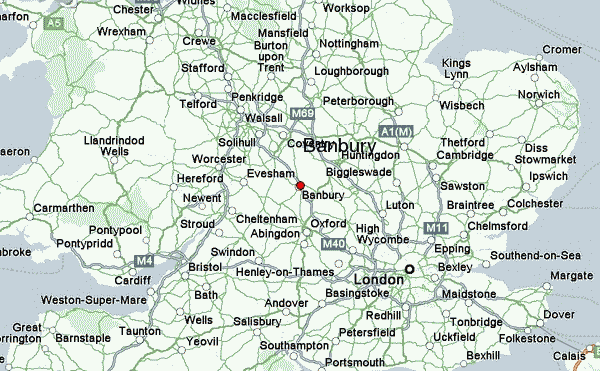
Banbury is a town northwest of London.

A cock horse?  I checked the earliest mono-lingual English dictionary, Robert Cawdrey’s Table Alphabeticall, 1604, and found nothing (if you would like to see this early work, look here:   https://extra.shu.ac.uk/emls/iemls/work/etexts/caw1604w_removed.htm )

(As you can see, this was clearly a popular book, this being the 3rd edition, of 1613.)

Consulting dictionaries near-contemporary to Tommy Thumb, we find:

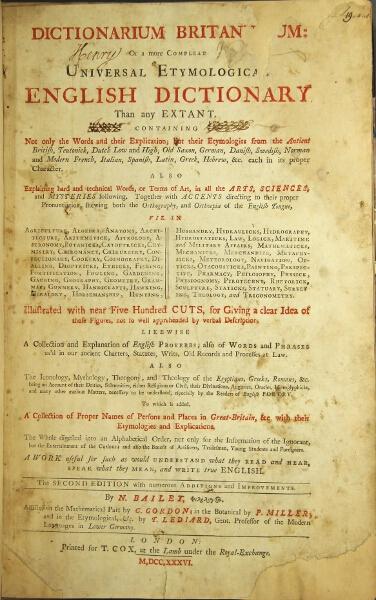
1. Nathan Bailey’s ( ?-1742) Dictionarium Britannicum, 1730-36, defines “cock-horse” as “a high horse” ;

(You can consult Bailey here:  https://archive.org/details/b30449698/page/n185/mode/2up )

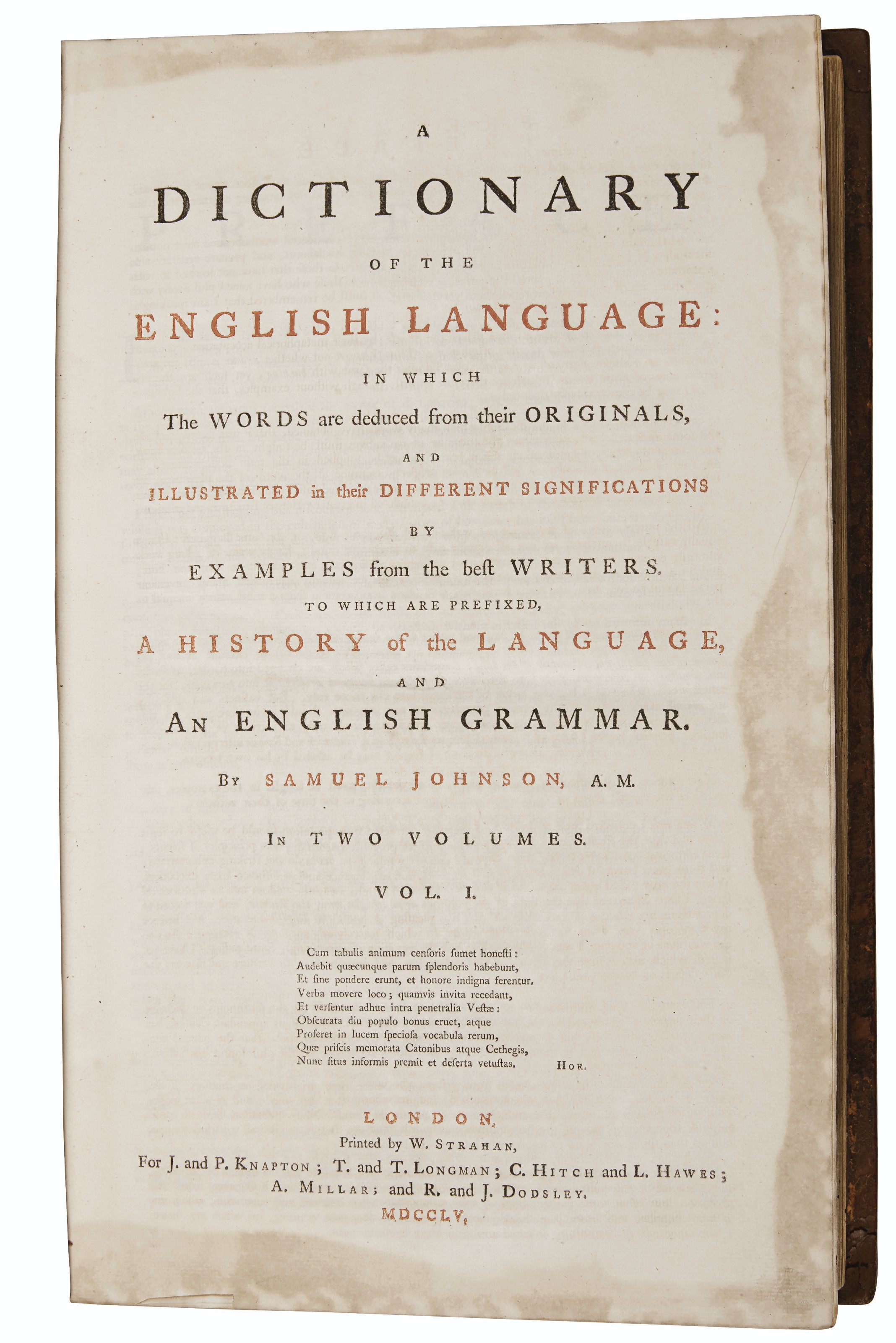
2. Dr. Samuel Johnson’s  (1709-1784)  A Dictionary of the English Language, 1755,

defines “cockhorse” (which he indicates is to be accented on the first syllable) as “on horseback; triumphant; exulting” (you can see this definition here:  https://johnsonsdictionaryonline.com/views/search.php?term=cock  This site contains the several early editions of the dictionary, including both in modern type and as they appear in those editions—if you enjoy such things, this is simply lots of fun to browse.)

If you do a quick WIKI search, you discover:  https://en.wikipedia.org/wiki/Ride_a_cock_horse_to_Banbury_Cross , which presents several other possibilities, including, “a high-spirited horse, and the additional horse to assist pulling a cart or carriage up a hill. It can also mean an entire or uncastrated horse”.  None of these struck me as quite the appropriate definition, but this one:  “From the mid-sixteenth century it also meant a pretend hobby horse or an adult’s knee.” seemed more like it.  I know this as a “dandling song”, a game played with babies and small children.  There are a good number of them, usually with rhythmic but sometimes nonsensical lyrics, like

“To market, to market,

To buy a fat pig.

Home again, home again,

Jiggety, jig.

To market, to market,

To buy a fat hog.

Home again, home again,

Jiggety jog.”

And you can see what happens:  bouncing a small person on your knee to the rhythm.  Unfortunately, the WIKI only cites Iona and Peter Opie’s 1951 The Oxford Dictionary of Nursery Rhymes for this definition, and, for the moment, I can’t trace that meaning back any farther, as I don’t have a copy of the Opies’ book readily available.

But this leads me to another mysterious nursery rhyme:

“Bat, bat,

Come under my hat

And I’ll give you a slice of bacon.

And when I bake,

I’ll give you a cake,

If I am not mistaken.”

Although I have an ecologist friend, whose main work is on bats and loves, them, I’m afraid that I don’t share this affection.  And here’s why—

(If you, dear reader, like my friend, are fond of flittermice, I apologize.  Too much Dracula in childhood, I suspect!)

But, as a child, I wondered:  why would you want a bat under your hat?  And do bats actually eat bacon?  And cake?

The Baring-Goulds, in The Annotated Mother Goose, 1962, seem to think that this is a part of a children’s game, their only note being “Here the child who was hunting bats would clap hands.”  Children hunting bats? 

My hunting an early source for this nursery rhyme would seem to need more than hand-clapping.  After a little survey of early collections, here’s what I found so far.

It’s not in the 1744 Tom Thumb’s Pretty Song Book,

or in

Mother Goose’s Melody, 1781  https://ia804703.us.archive.org/3/items/mothergoosesmelo00pridiala/mothergoosesmelo00pridiala.pdf  (This is a 1904 reprint of the 1791 edition)

or in

Gammer Gurton’s Garland, 1784,    https://archive.org/details/gammergurtonsgar00ritsiala/page/62/mode/2up  (This is an 1866 reprint of the 1810 edition.)

but it does appear in the first edition of James Orchard Halliwell, The Nursery Rhymes of England, 1842, https://ia800301.us.archive.org/27/items/nurseryrhymesofe00hall/nurseryrhymesofe00hall.pdf (This is the 5th edition, of 1886.  He also identifies it as a children’s game, and the Baring-Goulds are actually simply quoting him.)

(In case you’d like to serenade the bat, this has, in a version sung once upon a time in south Florida, a little tune.  The recording, from 1940, is a little hard to make out, but it sounds like a close cousin of “Yankee Doodle”:  https://www.loc.gov/item/flwpa000062/?loclr=blogflt  )

This flurry of research began in a completely different place, however, with a possible anachronism in The Hobbit, which I’m currently teaching.  JRRT himself was aware that there were a number of these in the 1937 edition of the text, and, in the 1966 edition, changed or considered changing a number of them, so that what was once “cold chicken and tomatoes” in 1937, then became “cold chicken and pickles”, for example.  Some things remained, however, such as Bilbo’s scream, “like the whistle of an engine coming out of a tunnel”, and Douglas Anderson, in his invaluable The Annotated Hobbit, suggests that:

“This usage need not be viewed as an anachronism, for Tolkien as narrator was telling this story to his children in the early 1930s, and they lived in a world where railway trains were a very important feature of life.”  (The Annotated Hobbit, Chapter One, “An Unexpected Party”, 47-48, note 35)

It’s clear that Tolkien himself must have had rather mixed feelings about this, however, allowing tobacco (although called “pipe-weed” in The Lord of the Rings) and potatoes (“taters” in The Lord of the Rings) to remain, but removing those tomatoes.  He also considered replacing that engine with “like the whee of a rocket going up into the sky”, but, ultimately retained the railway image.  (see Chapter One, “An Unexpected Party”, note 35)

What caught my attention was a simile in Chapter 8, where Bilbo and the dwarves, marching into Mirkwood, were assailed by night creatures, moths “nearly as big as your hand, flapping and whirring round their ears”—

“They could not stand that, nor the huge bats, black as a top-hat, either…”  (The Hobbit, Chapter Eight, “Flies and Spiders”)

Was this Tolkien the 1930s narrator?  Or was this allowed to stand, like potatoes and tobacco and the train, because he felt that it somehow fit the story?  Or was this simply something he missed?  I suppose that we’ll never know, as this is something that JRRT, unlike a bat, kept under his hat.

As ever, thanks for reading.

Stay well,

Ponder what recipe one might need for a bat cake,

And know that, as always, there’s

MTCIDC

O

PS

There is a very interesting article on Dr. Johnson, early English dictionaries, and his dictionary at:  https://johnsonsdictionaryonline.com/blog/about-johnsons-dictionary/

PPS

For more on hobby horses, see:  https://en.wikipedia.org/wiki/Hobby_horse_(toy)

Creeped Out

01 Wednesday Nov 2023

Posted by Ollamh in Uncategorized

≈ Leave a comment

As ever, dear readers, welcome.

The English language has many challenges for those learning it—pronunciation vs spelling is a big one, but another is caused by a linguistic feature called ablaut.  You see it in some nouns, where a change in spelling can cause a change in meaning, as in foot/feet and woman/women, where even the pronunciation changes.  It also occurs in verbs and, sometimes, it can seem pretty spectacular, as in some old verbs, like smite/smote/smitten and slay/slew/slain.

This brings me to creep.  Is it creep/creeped/creeped?  No—it’s creep/crept/crept.  But then there’s the expression which forms the title of this posting.

If you go browsing the various etymological sites, like Etymonline (https://www.etymonline.com/word/creep) or the now defunct (isn’t that a great word?  from Latin defungor, “to finish/have done with something”, used euphemistically of the dead) The Word Detective (http://word-detective.com/2011/09/the-creeps/ ), you find that the basic idea is that, if you’re spooked (another great word, seemingly in English from Dutch spook, “ghost”—and there’s the Swedish spoeke, “scarecrow”, which can really spook you out—for how this is said in Swedish, see:   https://en.glosbe.com/en/sv/scarecrow )

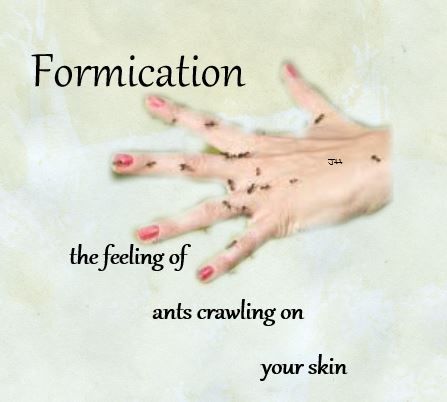
it’s as if you can feel something crawling across your skin.  (A medical term for this is formication, from Latin formica, “ant” and a very vivid term it is, too!)

It’s Halloween time again (not “Holloween”, although I hear that all the time—see the posting “Holloween”, 5 February, 2020, for more) and, although things can spook us during the year, this season, when according to ancient Western belief, the doors between the worlds lie open and the dead may return, is particularly rich in weirdiosity (from Old English wyrd, meaning, among other things, “fate” plus Latin –osus, “full of” plus Latin –itas, which creates an abstract noun).  In other words, more creeps us out.

For me, it’s usually not the obvious—

although, given a darkened movie theatre or living room late at night, I wouldn’t say that I felt completely safe in the parking lot afterwards or going to the kitchen for a snack—but it’s more the implied which makes me look over my shoulder in dim places.

For an example, take M.R. James’ (1862-1936) 

(Dr. Montague Rhodes James was actually a prominent member of the English academic community, hence the gown.)

short story, “Oh, Whistle and I’ll Come to You, My Lad” from his 1904 collection, Ghost Stories of an Antiquary.

The title comes from a lyric by Robert Burns to a slightly older tune, the lyric beginning with the chorus:

 “O, whistle, and I’ll come to you, my lad;
  O, whistle, and I’ll come to you, my lad;
  Tho’ father, and mother, and a’ should gae mad,
  O, whistle, and I’ll come to you, my lad.”

(You can read the rest here:  https://en.wikipedia.org/wiki/Oh,_whistle_and_I%27ll_come_to_you,_my_lad and hear a lovely performance by the Canadian mezzo, Patricia Hammond, here:   https://www.youtube.com/watch?v=542RhM5K9mI )

This seems like the opening of something rather gentle, but that title is typical of a James story, just as he describes:

“Two ingredients most valuable in the concocting of a ghost story are, to me, the atmosphere and the nicely managed crescendo. … Let us, then, be introduced to the actors in a placid way; let us see them going about their ordinary business, undisturbed by forebodings, pleased with their surroundings; and into this calm environment let the ominous thing put out its head, unobtrusively at first, and then more insistently, until it holds the stage.” (originally in V.H. Collins, Ghosts and Marvels, 1924, quoted in the M.R. James Wiki article:  https://en.wikipedia.org/wiki/M._R._James )

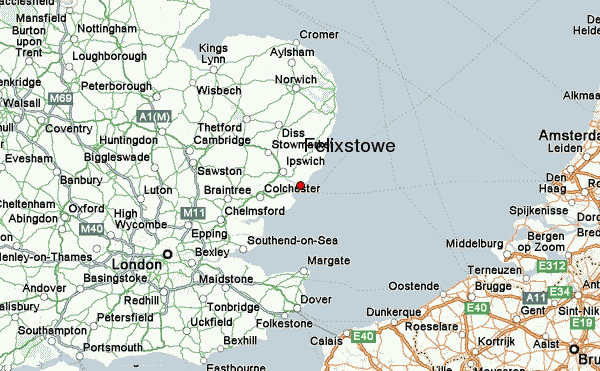
This story begins at dinner in a Cambridge University college.  Professor Parkins announces that he’s going to the seaside to work and to play golf at a local course.  (It’s called “Burnstow” in the story, but is actually Felixstowe—

which does have a golf course, the Felixstowe Ferry Golf Club being the fifth oldest in England.)

Another (unnamed) faculty member casually asks him to check the site of the “Templars’ preceptory” there to see if it’s worth excavating the following summer.

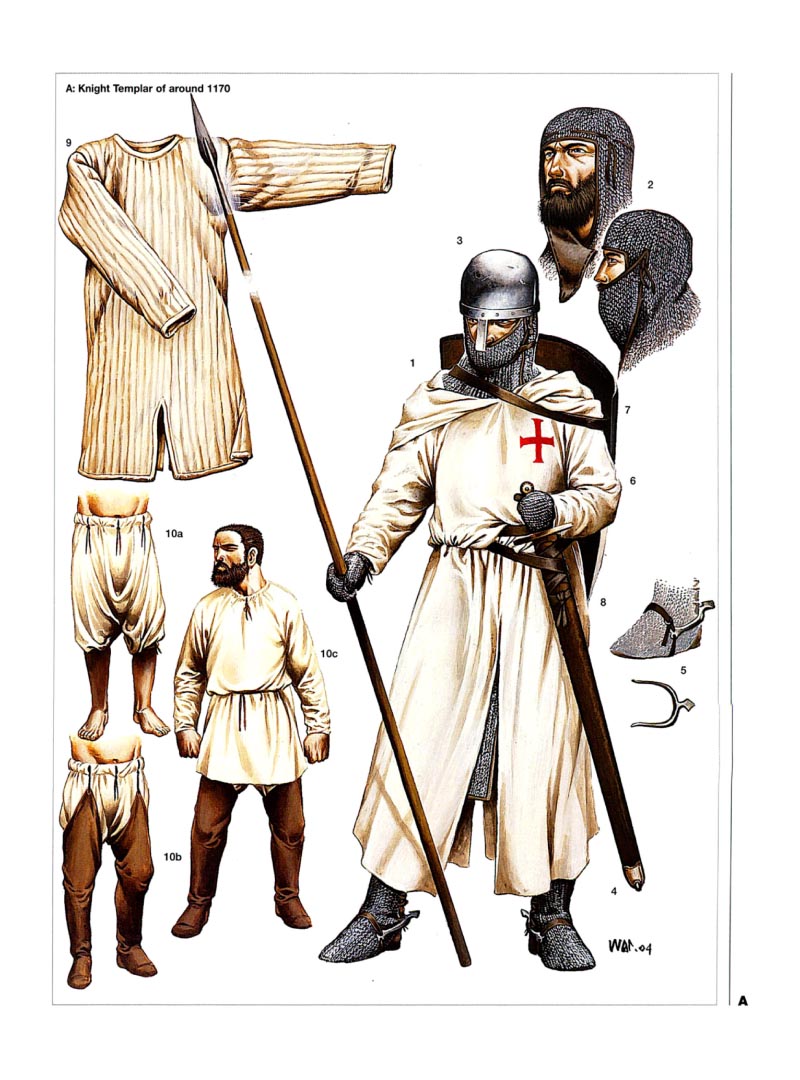
The Templars were a medieval military order much involved with the Holy Land and the Crusades,

and built nearly a thousand foundations and fortresses in their two centuries of existence.  Here’s an actual preceptory (a kind of administrative center) at Balantrodoch, in Scotland, south of Edinburgh.

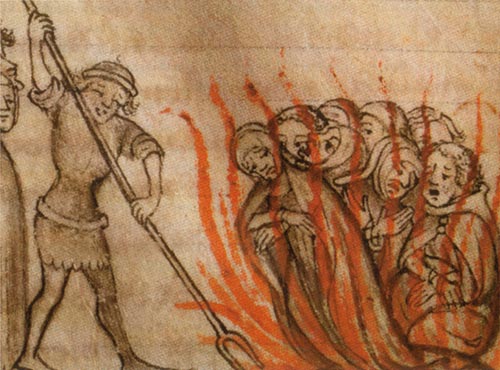
The order ran into trouble in the early 14th century and was disbanded by Pope Clement V in 1312, but not before state violence against some of its members, including some burned at the stake.

Because of this trouble, the “Templars” (they take that name from their capitol in Jerusalem, which they claimed was perched on  top of Solomon’s temple—for more about them, see this very detailed WIKI article:  https://en.wikipedia.org/wiki/Knights_Templar ) gained a certain dark reputation and we might imagine that the anonymous scholar’s request to Parkins already suggests something different for him on his vacation than he had planned.

Off he goes, however, to academic work and golf, but (literally) stumbles on the remains of the preceptory and discovers a little bronze whistle at the site

with two inscriptions on it in Latin.  He appears unable to translate the first, but the second says:  “Quis est iste qui venit”—“Who is that one who comes (or “has come”, depending upon the sound of the e in venit).”  As he turns to go back to his hotel, he notices a odd figure behind him, “in the shape of a rather indistinct personage in the distance, who seemed to be making great efforts to catch up with him, but made little, if any, progress.”  This makes Parkins vaguely uneasy, but he proceeds to the hotel and dinner. 

In fact, he should have paid more attention to the first inscription, which reads, almost in the form of a puzzle:

                              fla

                        fur      bis

                             fle

“Thief—you will blow, you will weep”.

I don’t want to spoil the story for you, but, needless to say, Parkins cleans and blows the whistle and things begin to happen, things particularly unexpected by a man who has declared that he doesn’t believe in the supernatural.  I’ll add the two original illustrations from the 1904 publication to give you a hint—

And I’ll add one caution:  don’t expect obvious violence (although others of James’ stories have such an element)—what happens is, to my mind, not shocking, but eerie, a word which comes to us probably through Scots and has this, among other definitions, in The Scottish National Dictionary:  “an undefined sense of fear; dread” (see:  https://dsl.ac.uk/entry/snd/eerie ).  This undefined dread makes this one of my favorite stories of this sort (though I don’t read it too often, remembering the first time I did, and the two days of such dread I felt afterwards).   Read it here:   https://archive.org/details/ghoststoriesana00jamegoog  and see if you agree with what James wrote in his preface:

“The stories themselves do not make any very exalted claim.  If any of them succeed in causing their readers to feel pleasantly uncomfortable when walking along a solitary road at nightfall, or sitting over a dying fire in the small hours, my purpose in writing them will have been attained.”

Will you, too, be creeped out?

Stay well,

Remember that fiends of any sort can’t cross running water,

(this is from a series of wood carvings of Robert Burns’ “Tam O’Shanter”, c.1860 from a great website:  https://monsterbrains.blogspot.com/2015/10/thomas-hall-tweedy-tam-oshanter-wood.html  )

And remember, as well, that there’s always

MTCIDC

O

PS

Does it also suggest something vaguely sinister that James’ preface is dated “Allhallows’ Eve”?

Several  (at least temporarily) Unhappy Returns (2)

25 Wednesday Oct 2023

Posted by Ollamh in Uncategorized

≈ Leave a comment

As ever, dear readers, welcome.

In my last, in contrast to the previous two postings (on happy returns, or at least the expectation of them), I began discussing returns which were not quite as expected.

In that posting, I began with Agamemnon, who came home victorious from the Trojan War only to be murdered by his wife, Clytemnestra, and her BF and Agamemnon’s cousin, Aegisthus.

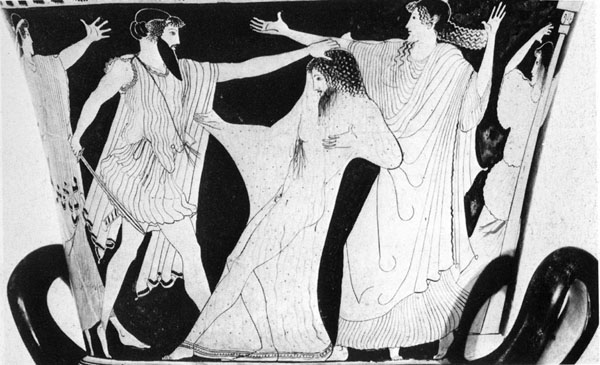
(In one version of the story, as seen here, killed when stepping out of his bath)

This is a fate which haunts the text I went on to next, the Odyssey, which I have just finished teaching.  Over and over, Agamemnon’s betrayal and death are mentioned, each time seeming to point to what could be Odysseus’ fate, if his wife, Penelope,

pestered by over a hundred suitors, should prove as faithless as Clytemnestra.  In the end, of course, she is faithful, those suitors meet a bloody end, and Odysseus and Penelope are happily reunited.

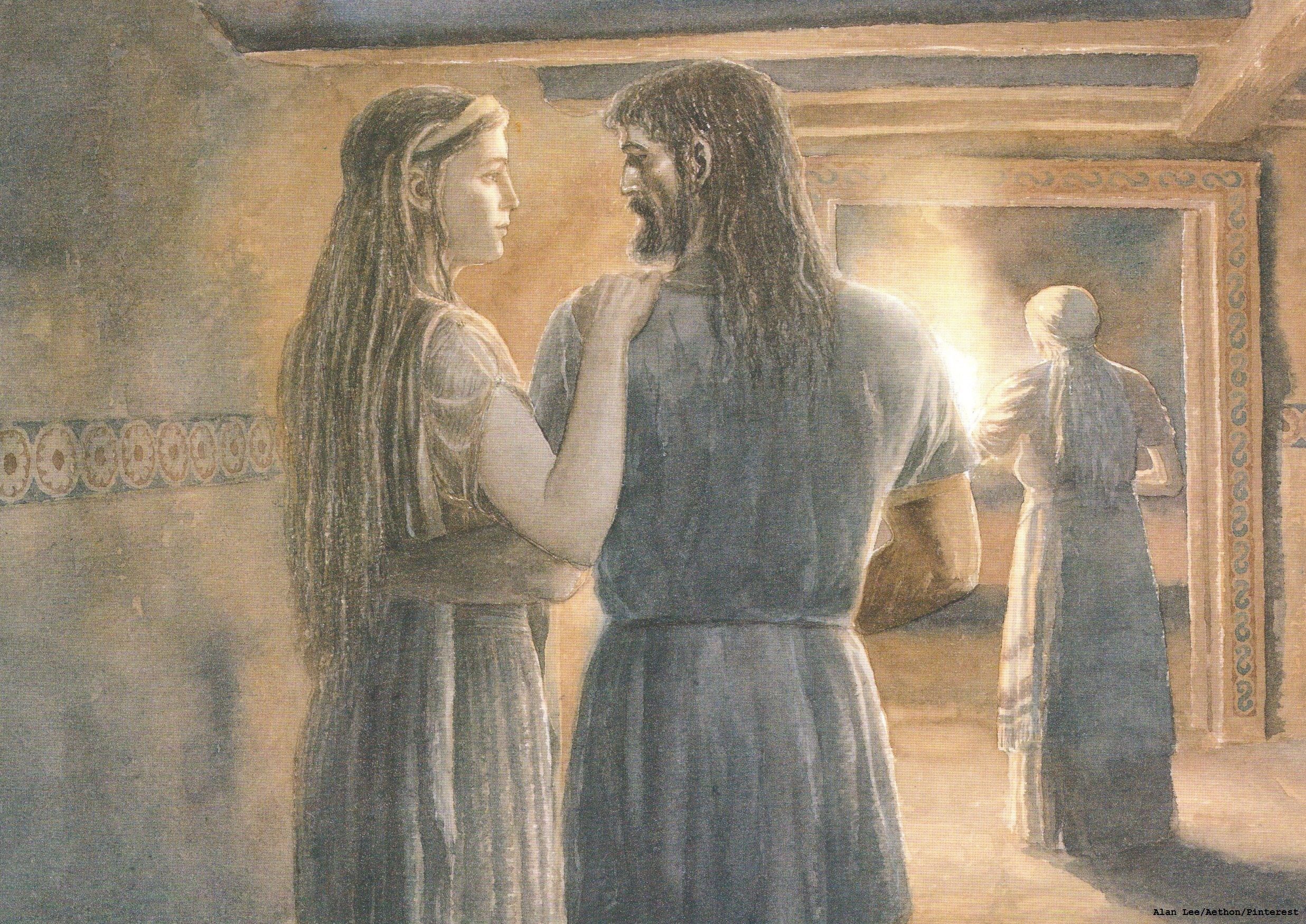
(Alan Lee—as good at Homer as he is at Tolkien!)

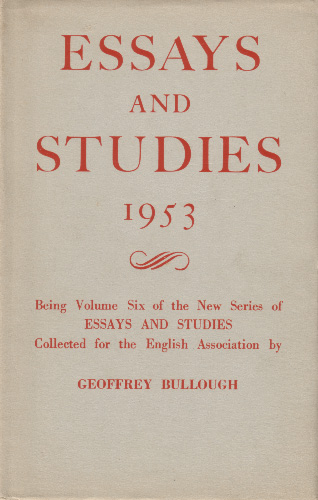
I had said, in that last posting, that I would move on in the next to what I’ll be teaching in the near future, The Hobbit, but, before that, I wanted to pause at another JRRT work, the title of which immediately suggests why:  “The Homecoming of Beorhtnoth Beorhthelm’s Son”, first published in 1953 in Volume 6 of Essays and Studies by Members of the English Association (New Series)—

which you can check out from the Internet Archive here:  https://archive.org/details/essaysstudies1950000geof

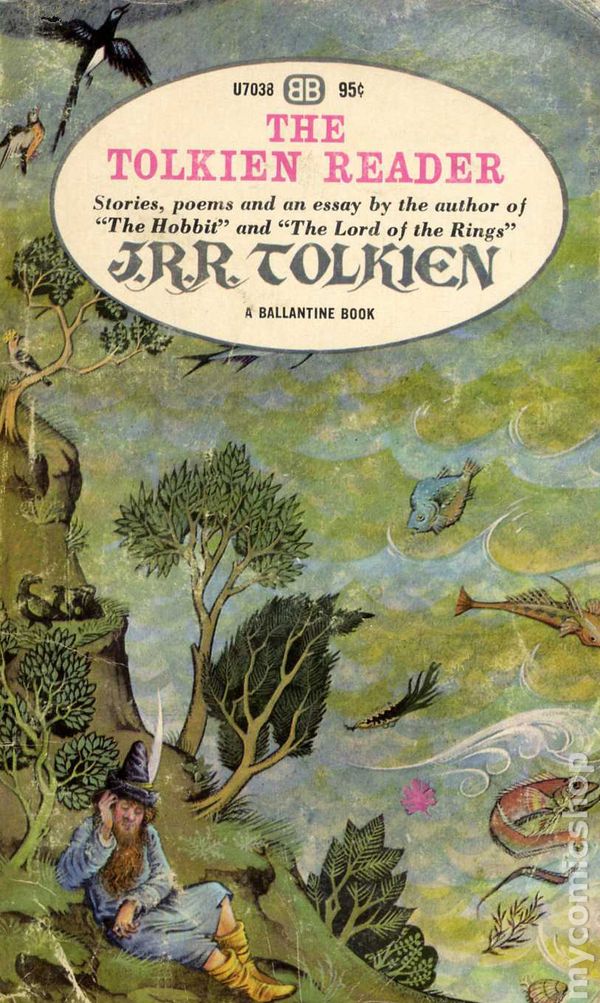
This was republished in 1966 in The Tolkien Reader

and, in the 1975 edition of Tree and Leaf,

as well as in the 2023 The Battle of Maldon.

That title immediately links Tolkien’s work with an actual historical event, as well as an Old English poem about it.

In 991AD, a Viking raiding force, which had been moving along the English coast, had paused on Northey Island, poised to attack the local town of Maldon.

Our main source for what happened next comes from that (fragmentary) Old English poem, “The Battle of Maldon”, a translation by Tolkien being included in that recent volume, along with “The Homecoming…”.

The Vikings were opposed by the local Anglo-Saxon leader, or ealdorman, Byrhtnoth (Beerht-nawth, approximately, where the “h” is like the “ch” in Bach—Tolkien uses an alternative spelling,).  There was a landbridge between the island and the mainland at low tide

and, if we can believe the poem, the Vikings, initially repelled by the Anglo-Saxons under Byrhtnoth, then suggested that they be allowed to cross that landbridge to fight it out with their opponents on the mainland.  Byrhtnoth accepts this proposal (there is a lot of scholarly discussion on why, including byTolkien, in an afterpiece called “Ofermod”), the Vikings cross, and, although the poem doesn’t tell us this, it appears , from other sources, that the ensuing battle ends with Byrhtnoth dead and his men driven from the battlefield, although the Vikings suffered heavily for their victory.

(by Peter Dennis, one of my favorite contemporary military artists)

Tolkien’s “The Homecoming…” is a short verse play (the text suggests even a radio play) which is a dialogue between two characters,  Tidwald (Tida) and  Torhthelm (Tota), Anglo-Saxon servants of Byrhtnoth, who have come to the battlefield to collect his body.  The verse is mostly of a loose alliterative kind, approximating Old English verse and, upon occasion, even using real Old English verse, as well as a number of mentions of its subjects.  The themes of the play include a traditional one—searching a battlefield for a lost loved one—as well as a potential criticism of the ealdorman for agreeing to the Viking proposal and its consequences:

“Tidwald:  …Alas, my friend, our lord was at fault…

                     Too proud!  Too princely!”

(You can read about the poem “tThe Battle of Maldon”  here:   https://en.wikipedia.org/wiki/The_Battle_of_Maldon  and read a translation here:  https://oldenglishpoetry.camden.rutgers.edu/battle-of-maldon/    For the Old English, see:   https://www.youtube.com/watch?v=ToAu_tyafp4    For a modern historical view of the battle see:   https://www.youtube.com/watch?v=x6Nqp-I1BIY    For a Lego reenactment, which uses the poem itself as the narrative, see:  https://www.youtube.com/watch?v=Cbpc3nsJ3ec  )

Byrhtnoth’s return was not a happy one, his body recovered, but headless, was taken to the religious establishment at Ely for burial—and reburial and reburial, as Ely became a major cathedral.

Here’s his latest tomb—

Bilbo’s anticipated return also had its darker moment.

From the beginning of the story, Bilbo had been pulled between the traits of his paternal and maternal inheritance.  His father’s side (the Bagginses)—well, I’ll let JRRT tell you:

“The Bagginses had lived in the neighbourhood of The Hill for time out of mind, and people considered them very respectable, not only because most of them were rich, but also because they never had any adventures or did anything unexpected:  you could tell what a Baggins would say on any question without the bother of asking him.”

His mother’s side (the Tooks) were of a very different order indeed:

“It was said (in other families) that long ago one of the Took ancestors must have taken a fairy wife.  That was, of course, absurd, but certainly there was still something not entirely hobbitlike about them, and once in a while members of the Took-clan would go and have adventures.  They discreetly disappeared, and the family hushed it up; but the fact remained that the Tooks were not as respectable as the Bagginses, though they were undoubtedly richer.”  (The Hobbit, Chapter 1, “An Unexpected Party”)

Throughout the novel, we see these two sides struggle for dominance, although, by the latter part of the book, t he Took side is clearly in control.  After the Battle of the Five Armies, the death of Thorin, and return of the dwarves to the Lonely Mountain, however, he begins his journey home at last as

“The Tookish part was getting very tired, and the Baggins was daily getting stronger.” (The Hobbit, Chapter 18, “The Return Journey”)

But when Bilbo and Gandalf

”…came right back to Bilbo’s own door…There was a great commotion, and people of all sorts, respectable and unrespectable, were thick round the door, and many were going in and out—not even wiping their feet on the mat, as Bilbo noticed with annoyance.

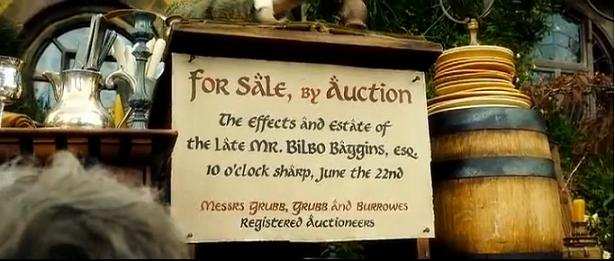
If he was surprised, they were more surprised still.  He had arrived back in the middle of an auction!  There was a large notice in black and red hung on the gate, stating that on June the Twenty-second Messrs Grubb, Grubb, and Burrowes would sell by auction the effects of the late Bilbo Baggins Esquire, of Bag-End, Underhill, Hobbiton.” 

Bilbo is put to some trouble in reestablishing himself in the Shire:

“It was quite a long time before Mr. Baggins was in fact admitted to be alive again…and in the end to save time Bilbo had to buy back quite a lot of his own furniture.”

This is, on the one hand, mildly comic—after so many death-defying adventures—trolls, goblins, wargs, Smaug—Bilbo has to prove to people who had known and seen him all his life that he was really himself and still alive?  On the other hand, why might people be so ready to believe him dead after a single year?  (The number of years differs significantly around the world—in Italy, it appears that 20 years must pass.  See this for more:   https://en.wikipedia.org/wiki/Legal_death   )

Students always ask me about this.  It’s an excellent question and the best answer I can offer at the moment is that Bilbo, on his return, has become a kind of Castor and Pollux.

In a complex ancient myth, these are twin brothers who share one immortality and one death, each alternating between the two, and perhaps we can see Bilbo, both Baggins and Took, as someone similar.  As a Took, he was dead to his Baggins side, but, as a Baggins, it was the Took who died.  In his return to the Shire, that transition might be signified by the question of his mortal status and also by the fact that, although

“…he was quite content; and the sound of the kettle on his hearth was ever after more musical than it had been even in the quiet days before the Unexpected Party…”

yet

“He took to writing poetry and visiting the elves…”

As Gandalf said, “My dear Bilbo!…Something is the matter with you!  You are not the hobbit that you were.”

I want to conclude, however, with one more return and, from our viewpoint, one of the happiest, although, on a personal  level , it began with misery.  JRRT had been on the Western Front in time for the Battle of the Somme, in which one of his friends was killed on the first day, 1 July, 1916 (among nearly 60,000 other British casualties on that day alone), when Second Lieutenant J.R.R. Tolkien

became a casualty, on 27 October, 1916.  It was not from a German bullet or shell, however, but from the bite of this–Pediculus humanus humanus—in plain terms, a louse–

This led to an intermittent fever, with all sorts of pains and complications for which a common name was “trench fever”  (for more, see:    https://en.wikipedia.org/wiki/Trench_fever )   and, effectively, it removed him from France and active participation in the Great War till its end, so that, although Tolkien was promoted to temporary Lt. 6 Jan 1918—see London Gazette (under 21 March, 1918 here:    https://www.thegazette.co.uk/London/issue/30588/supplement/3561  ), he spent the rest of the war in England, happily resigning his commission  in 1920 as this entry from the Gazette for 2 November, 1920 tells us:

“The undermentioned temp. Lts. relinquish their commissions on completion of service, 3 Nov. 1920, and retain the rank of Lt.: — J. R. .R. Tolkien…”

(for the complete entry, see:    Page 10711 | Supplement 32110, 2 November 1920 | London Gazette | The Gazette )

And I would imagine that, even after his brief experience on the Western Front, Tolkien would agree with his Tidwald from “The Homecoming…”:

“Bitter taste has iron, and the bite of swords

Is cruel and cold, when you come to it.”

and be glad to be done with it and home.

Thanks, as ever, for reading.

Stay well,

May your returns always be happy ones,

And remember that, as always, there’s

MTCIDC

O

And, next week, HALLOWEEN!

Several  (at least temporarily) Unhappy Returns (I)

18 Wednesday Oct 2023

Posted by Ollamh in Uncategorized

≈ Leave a comment

As always, dear readers, welcome.

My last two postings have discussed the idea of the mythic/folkloric figure sometimes referred to as “the king under the mountain”, who, the story goes, instead of dying, seems either to take himself off or is carried off to another place, where he stays, usually sleeping, until some need awakens him (often his native land is in danger) and he will return to the world of the living to save the day.

In my latest teaching, however, which includes both the Odyssey and The Hobbit, people definitely return, but the day does not quite go as planned.

Although Odysseus is the main character of the Odyssey, a figure who haunts the text is Agamemnon, the Greek high king, who organizes the expedition to Troy.  While he is gone, his wife, Clytemnestra, is seduced by Agamemnon’s cousin, Aegisthus, and, upon Agamemnon’s return, he and his men are lulled into a false sense of security by Aegisthus at a banquet and then murdered.

(This is a depiction—on the right—of an alternate version of Agamemnon’s death, just after leaving a bath—and, on the left, the death of Aegisthus some years later by Agamemnon’s son, Orestes.  It’s on a red figure krater, a wine-mixing bowl, at the Boston Museum of Fine Arts.  You can learn more about it here:  https://collections.mfa.org/objects/153661 )

Why should this man, now long dead and far from Odysseus’ home on Ithaka, be such a dominant figure in the story? 

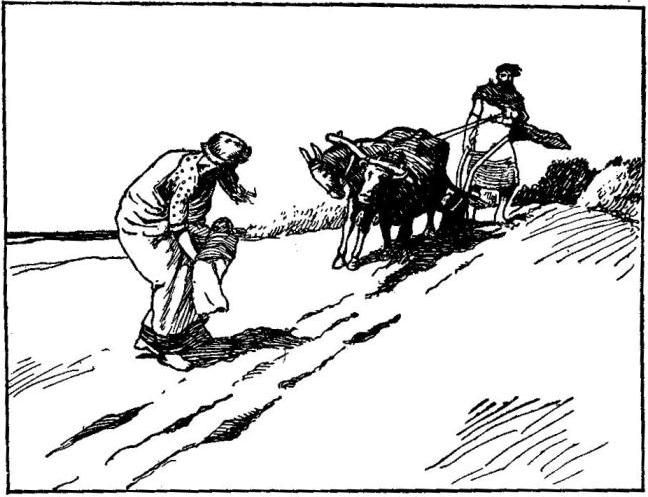
Odysseus was reluctant to go off to the Trojan War.  To escape, he pretended to be mad, plowing the beach of his home island, Ithaka, as if it were real arable land—and doing so with the combination of a mule and an ox–

The Greeks might have believed in his insanity if another Greek, Palamedes, hadn’t intervened, snatching up Odysseus new-born son, Telemachus, and putting him directly in Odysseus’ path.  Odysseus swerved, of course, but this suggested that he wasn’t so mad as he looked and soon he was off on a boat for Asia Minor.  (In several later stories, Odysseus gets his revenge by planting evidence that Palamedes was actually in the pay of the Trojans and he dies in several unpleasant ways:  stoning and drowning.  As the ancient Greek travel writer, Pausanias, c.110-c.180AD, tells us that Palamedes had invented dice, we might think that he would have been a bit more careful about chance!  This is in Pausanias’ tour of Argos—The Description of Greece 2.20.3—which you can read in an English translation here:   https://www.theoi.com/Text/Pausanias2B.html )

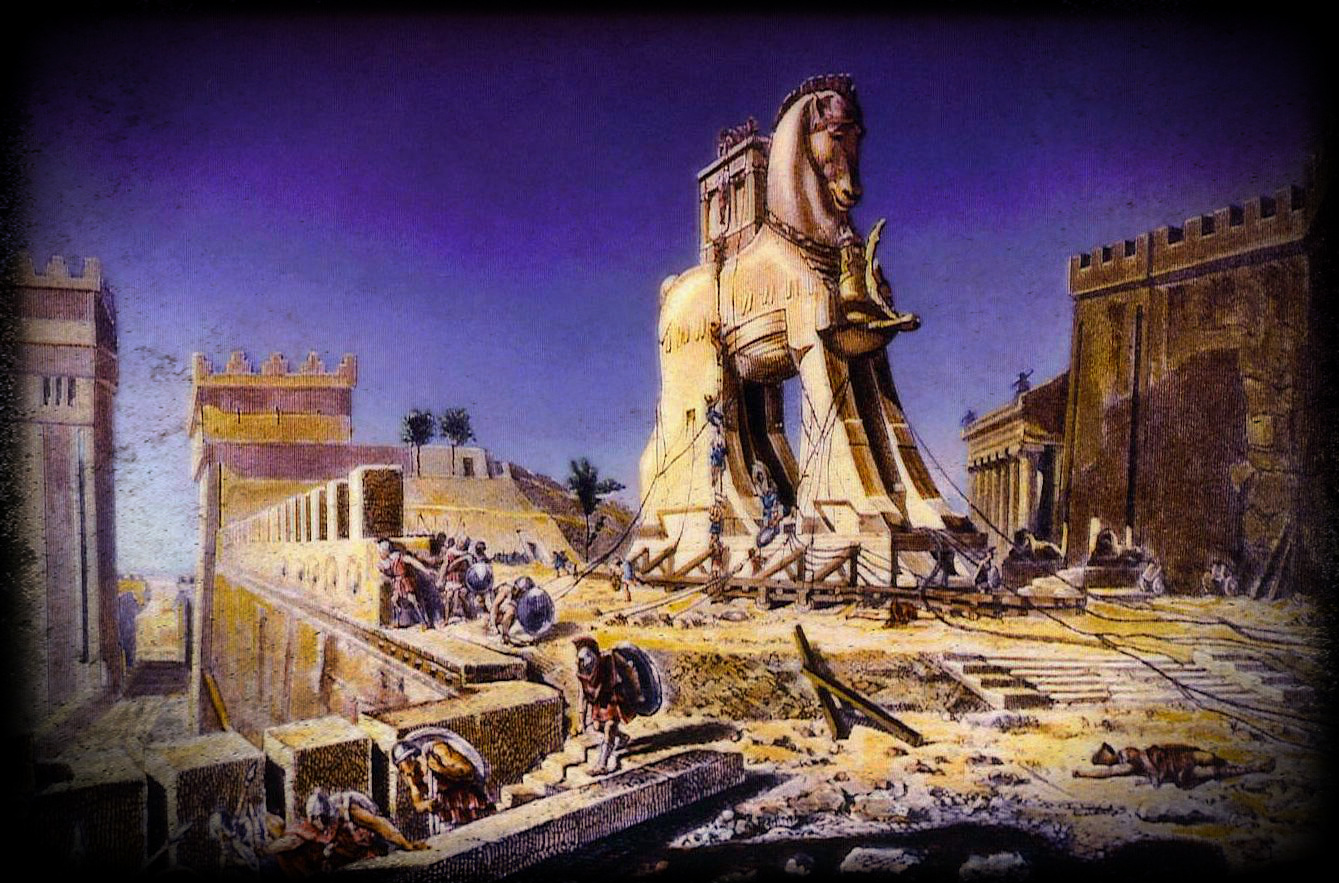
10 years go by, Troy falls, thanks to a trick which might have been invented by Odysseus himself,

but, for the Odyssey, that’s only backstory.  Now Odysseus will spend another 9 years struggling to get home, slowed on his way by

1. eaters of a substance which makes people forget about going home,

2. a large hominid with one eye and a taste for human flesh,

3. a group of giants who eat most of Odysseus’ fleet,

4. a sorceress who amuses herself with animal transformations,

5. not to mention a trip to the Land of the Dead,

6. Sirens,

7. clashing rocks

(James Gurney—and what a beauty!  Here’s his website for more:  https://jamesgurney.com/ )

8. a thing with six barking heads across from a whirlpool,

(Stephen Somers—about as frightful as they come—here’s his website:  https://stephen_somers.artstation.com/store/art_posters/Mokp/scylla-and-charybdis   He’s the art director for Fantasy Flight Games, which might interest you, if you don’t know their work:   https://www.fantasyflightgames.com/en/index/ )

9. as well as a minor goddess, who keeps Odysseus as a prisoner on her island for 7 years.

Meanwhile, for the past 4 years, Odysseus’ home on Ithaka has been invaded by over 100 young local men who are in hot pursuit of Odysseus’ wife, Penelope.

(by John William Waterhouse, 1849-1917)

They are convinced—or at least pretend—that Odysseus is long dead and that Penelope, a widow, should marry one of them—which brings us back to the ghost of Agamemnon, which, as I said, haunts the Odyssey.  Agamemnon left his wife to go off to Troy and, coming home, found himself betrayed and murdered.  And, in the Troy tradition, he’s not the only one:   another major Greek, often paired at Troy with Odysseus, is Diomedes—we  see him here as he appears in Book 10 of the Iliad, when he and Odysseus make off with the horses of the Thracian prince, Rhesus, having killed the horses’ owner in the process.

Within the tradition of the Nostoi—that is the “homecomings” of the Greeks from Troy—there exists a version of the homecoming of Diomedes, which almost mirrors that of Agamemnon and might foreshadow that of Odysseus.  While he was away at Troy, his wife, Aegialia, takes one of several possible lovers—or several at once—and, when he returns, Diomedes barely escapes with his life.

And so, through Agamemnon’s fate, the theme is set:  what will happen to you when you come home after so many years away?  Is your wife still faithful?   Or will you suffer as Agamemnon did and Diomedes might have?

In fact, Penelope has been faithful these 19 years, even, when the suitors arrived nearly 4 years before, putting them off by explaining that, until she had finished weaving a shroud (burial garment) for her father-in-law, Laertes, (still quite alive) she can’t even think about remarrying.  So she says.  During the day, she weaves, but, during the night, she unweaves,

(This is the fragment of a needlework by Dora Wheeler Keith, 1856-1940, showing Penelope doing her un-doing.  It’s in the Metropolitan Museum of Art in New York City and you can read about it here:   https://www.metmuseum.org/art/collection/search/16951  Dora and her mother, Candace, were remarkable craftspeople and you can read about them here:   https://en.wikipedia.org/wiki/Candace_Wheeler  and https://en.wikipedia.org/wiki/Dora_Wheeler_Keith  There’s also the American impressionist William Merritt Chase’s beautiful portrait of Dora at the Dora Wheeler Keith wiki site)

continuing (literally) to string the suitors along for several years before one of her maids tells the suitors what’s really going on and they force her to finish.  Thus, when Odysseus returns, although Agamemnon’s ghost makes a final reappearance near the very end of the story (Book 24) to discuss his own death, Odysseus is at least safe from his wife.  The suitors, however, are another matter, but, with the inadvertent aid of Penelope, he—with his son, Telemachus, two loyal slaves, and Athena—defeats and kills all 100+.  It’s a fairly complicated process, including what looks a bit like the archery contest in the Robin Hood story

(this is by NC Wyeth, 1882-1945—you can find my favorite edition of the Robin Hood story—illustrated by Wyeth here:   https://archive.org/details/robinhood00cresrich  )

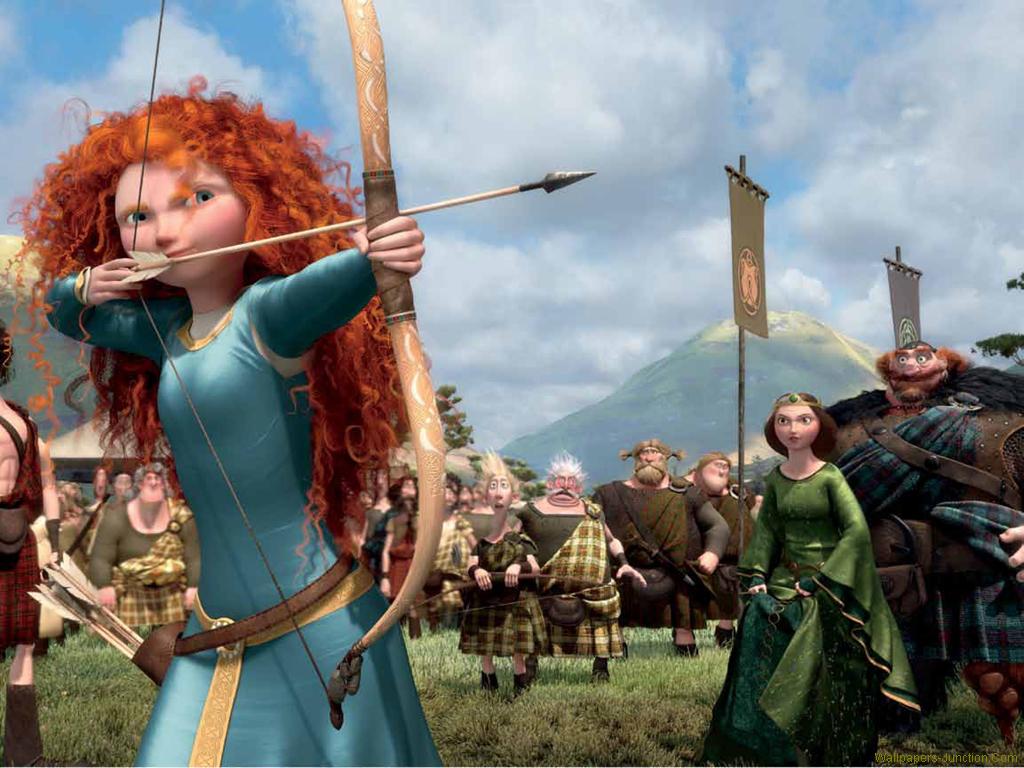
or the Pixar movie Brave (2012),

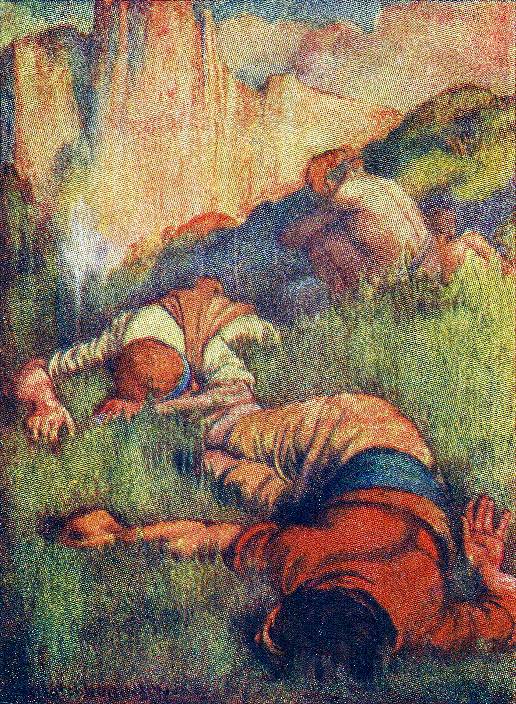
but the story (nearly) concludes with a heap of dead suitors

(by Fyodor Petrovich Tolstoy, 1783-1873)

and the happy reunion of Penelope and Odysseus (which Athena thoughtfully prolongs by extending the night).

(by Alan Lee, who clearly does Homer just as well as he does JRRT)

But what about JRRT and his returns, happy or otherwise?

That’s for the second part of this posting.

Thanks, as ever, for reading.

Stay well,

Listen to ghosts—they may have good advice,

And remember, as well, that there’s

MTCIDC

O

Many Happy Returns (II)

11 Wednesday Oct 2023

Posted by Ollamh in Uncategorized

≈ Leave a comment

Welcome, dear readers, as always.

In the previous posting, I began to discuss a common folktale motif, called “The Kyffhaeuser  motif” or “the king under the mountain”, “the king asleep in the mountain” and several more titles as well.   The basic idea is that a culture hero, rather than die, either naturally, or after battle, say, disappears to a distant place and remains there, usually asleep, until awakened by the need of his people or country, when he will reappear as a savior.  (For more on this, see:   https://en.wikipedia.org/wiki/King_asleep_in_mountain )

Western heroes include everyone from Charlemagne to the Irish hero Finn Mac Cool to King Arthur, who, although seemingly mortally wounded, was carried off to the Isle of Avalon to be restored, with the possible suggestion that he will return, like the others in the pattern, if needed.

We know that Tolkien came to have rather mixed feelings about Arthurian material.  Humphrey Carpenter says that, as a child, “The Arthurian legends also excited him”, Carpenter, Tolkien,24), but Tolkien himself later wrote:  “Of course there was and is all the Arthurian world, but powerful as it is, it is imperfectly naturalized, associated with the soil of Britain, but not with English…for one thing its ‘faerie’ is too lavish, and fantastical, incoherent and repetitive.”  (letter to Milton Waldman, “probably written late in 1951”, Letters, 144).  Even saying so, he embarked, in the 1930s, on his own Arthurian poem “The Fall of Arthur”, eventually abandoned.  Christopher Tolkien published the manuscript with commentary in 1985 (you can read about it here:  https://en.wikipedia.org/wiki/The_Fall_of_Arthur ).

This is one Tolkien work which I have yet to read, but, judging from summaries, it appears that it breaks off before Arthur’s end.  That JRRT was aware of the folkloric tradition of Arthur can be seen, however, in a letter  to Naomi Mitchison, in which he discusses the ultimate fate of mortals like Frodo and Sam, who are allowed to travel to Valinor, he mentions that other possibility for Arthur:

“…this is strictly only a temporary reward:  a healing and redress of suffering.  They cannot abide for ever, and though they cannot return to mortal earth, they can and will ‘die’—of free will, and leave the world.  (In this setting the return of Arthur would be quite impossible, a vain imagining.”  (letter to Naomi Mitchison, 25 September, 1954, Letters,, 198-199)

And there is another way in which, perhaps, we can see a small Arthurian/folklore influence upon Tolkien, even to one other name for Thompson’s  Kyffhaeuser  motif, “The King Under the Mountain”. 

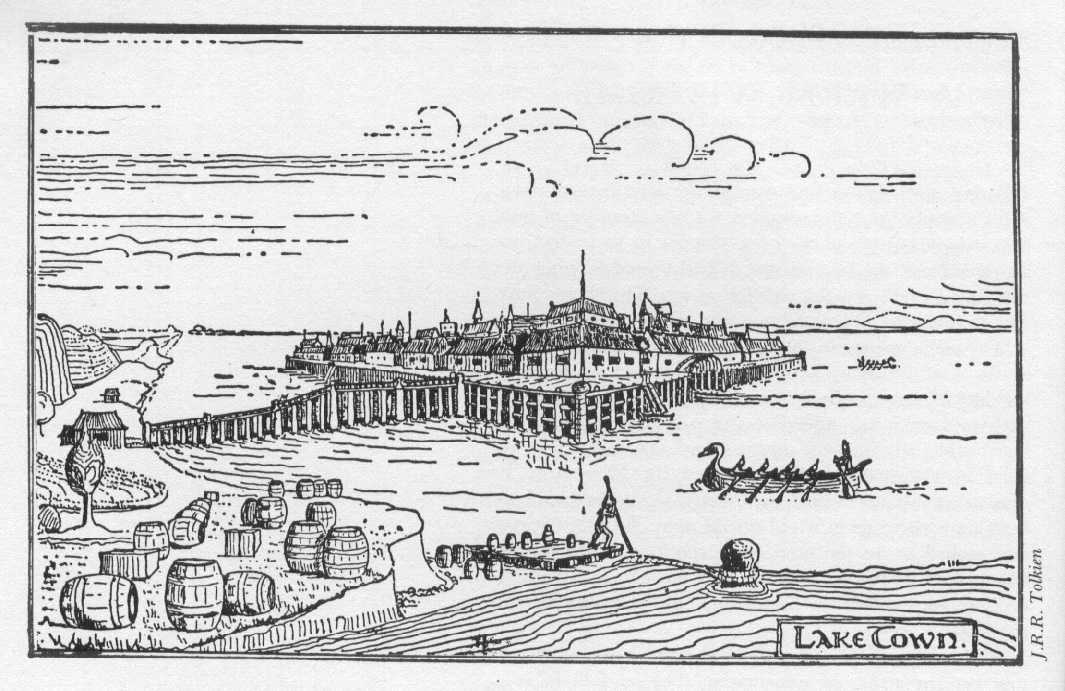
When Bilbo and the much-battered dwarves seek to gain admittance to Lake-town,

(JRRT)

Thorin announces to the startled guards at the gate that he is “Thorin son of Thrain son of Thror King under the Mountain. ..I have come back.”

He subsequently repeats this to the Master and his court:  “I am Thorin son of Thrain son of Thror King under the Mountain!   I return!”  (The Hobbit, Chapter 10, “A Warm Welcome”)

And here we can see JRRT slip right into the second part of the motif, the return of the hero:

“Some began to sing snatches of old songs concerning the return of the King under the Mountain; that it was Thror’s grandson not Thror himself that had come back did not bother them at all.  Others took up the song and it rolled loud and high over the lake:

The King beneath the mountains,

The King of Carven stone,

The Lord of silver fountains

Shall come into his own!

His crown shall be upholden,

His harp shall be restrung,

His halls shall echo golden

To songs of yore re-sung.

The woods shall wave on mountains

And grass beneath the sun;

His wealth shall flow in fountains

And the rivers golden run.

The streams shall run in gladness,

The lakes shall shine and burn,

All sorrow fail and sadness

At the Mountain-king’s return!”

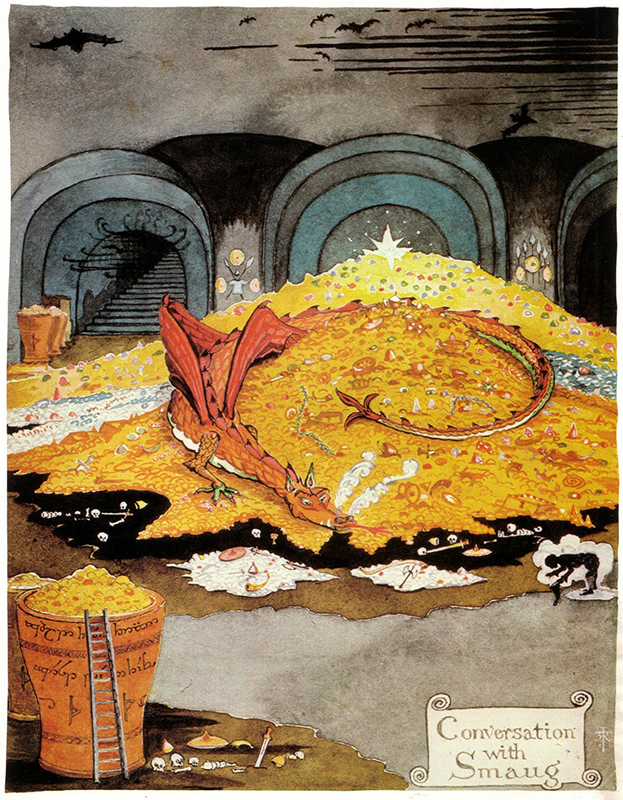
As for the savior part of this motif, something is implied, rather than stated:  the reason that there is no current king is that the last one was driven out by Smaug, after killing (and presumably eating) many of his people.

(JRRT)

If the king is really to return,  then, he must deal with the current occupant.   The Master of Lake-town, who, at first, cynically welcomed the dwarves, “but believed they were frauds who would sooner or later be discovered and be turned out”  then appears to change his mind and “…wondered if Thorin was after all really a descendant of the old kings”.  Still cynical, however, he tells Thorin “What help we can offer shall be yours…” even while thinking, “Let them go and bother Smaug, and see how he welcomes them!” 

Although the return of the king does not turn out quite as the Master—or the dwarves—expected, Smaug dying after destroying Lake-town,

(JRRT)

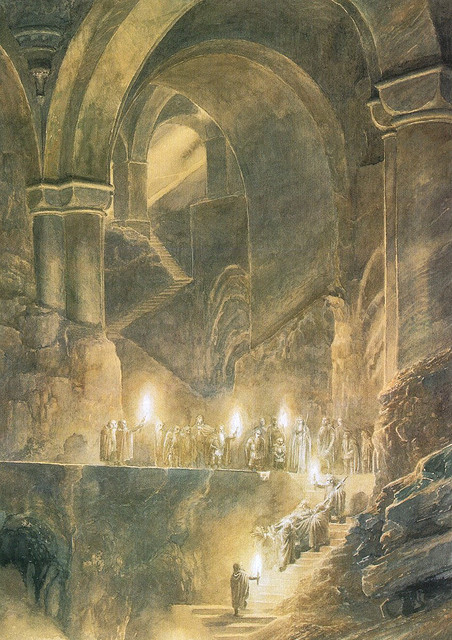
still, even after Thorin’s death in the Battle of the Five Armies, he remains what he claimed to have been as”  They buried Thorin deep beneath the Mountain, and Bard laid the Arkenstone upon his breast.” (The Hobbit, Chapter 18, “The Return Journey”)

(Alan Lee)

But, in the previous posting, I mentioned ravens.

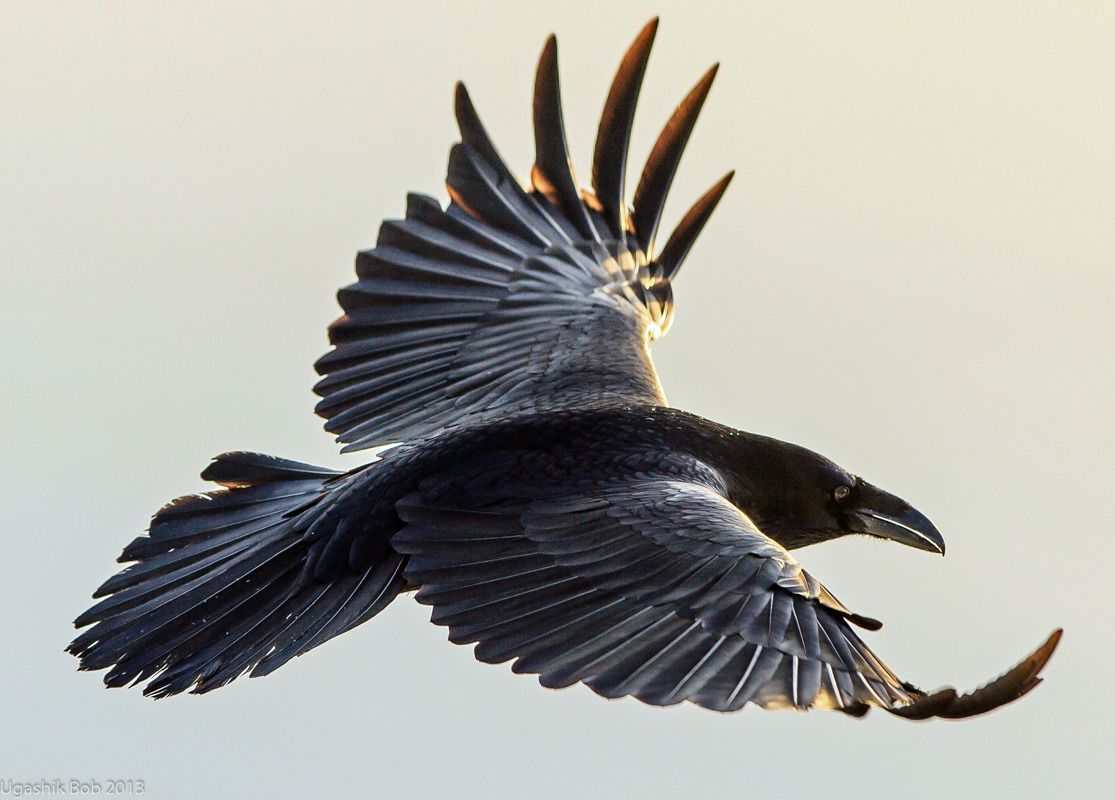
(I include this just as much because it’s such a beautiful image as it’s relevant…)

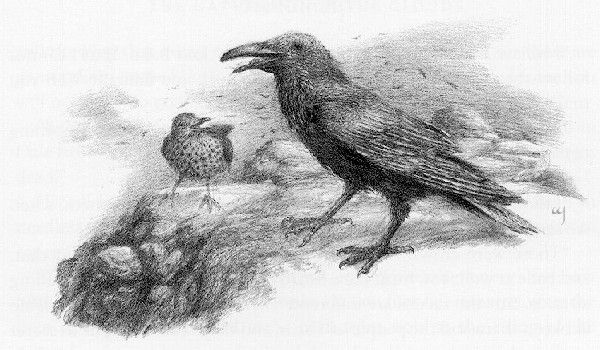
The Holy Roman Emperor, Frederick I, called “Barbarossa”, is one of the many heroes who appear in a  version of “the king under the mountain” and, among the variants told of him is this one, to be found in the Grimm brothers Deutsche Sagen,  (“German Legends”) where it’s reported that  when a dwarf led a shepherd under the mountain, Barbarossa stood up and asked, “Are the ravens still flying around the mountain?”   At the shepherd’s affirmation, he cried, “Now must I sleep yet a hundred years longer!” 

(Brothers Grimm, Deutsche Sagen, Number 23, Vol.1, page 30, my translation.  You can find the text here:  https://books.google.com/books?id=SRcFAAAAQAAJ&pg=PR1#v=onepage&q&f=false   ) 

After Smaug has flown off to Lake-town and his doom, the dwarves and Bilbo emerge from the Lonely Mountain, where they are met by the same thrush which had helped in finding and opening the back door, as prescribed in the moon letters on Thror’s map.

He twitters excitedly at them, but they can’t understand him and Balin exclaims, “I only wish he was a raven!”

When Bilbo replies, “I thought you did not like them!  You seemed very shy of them, when we came this way before.”

To which Balin responds: 

“Those were crows!  And nasty suspicious-looking creatures at that, and rude as well.  You must have heard the ugly names they were calling after us.  But the ravens are different.  There used to be great friendship between them and the people of Thror; and they often brought us secret news, and were rewarded with such bright things as they coveted to hide in their dwellings.” (The Hobbit, Chapter 15, “The Gathering of the Clouds”)

The thrush flies off and an ancient raven appears, Roac, son of Carc, who says to Thorin:

“Now I am chief of the great ravens of the Mountain.  We are few, but we remember still the king that was of old.”

Did Tolkien know this legend?  If you consult indices to both Carpenter’s biography and  his edition of Tolkien’s letters, there is no trace to be found there under everything from “Barbarossa” to “raven” and yet the confluence of “king under the mountain” and that mountain hosting ravens would seem suggestive, I think.  Or perhaps a little bird told him…

(Alan Lee)

As ever, thanks for reading.

Stay well,

When a raven speaks, it’s wise to listen,

And remember that, as always, there’s

MTCIDC

O

PS

Which reminds me of a famous old ballad, “The Three Ravens” (Child Ballad #26) which you can read about here:   https://en.wikipedia.org/wiki/The_Three_Ravens  and listen to here:   https://www.youtube.com/watch?v=T8ZASCwSRN0

Many Happy Returns (I)

04 Wednesday Oct 2023

Posted by Ollamh in Uncategorized

≈ Leave a comment

As ever, dear readers, welcome.

It’s a sad fact, perhaps, but, sometimes, even authors we really enjoy don’t quite succeed and, with the best will in the world, it’s hard not to think, “I was following along and enjoying the book and then came the conclusion and…”

For me, in the latest read of my science fiction project, such was the case with Fletcher Pratt and  L. Sprague de Camp’s The Land of Unreason (first published in Unknown Worlds, October, 1941,

then expanded into book form in 1942).

It began with an interesting premise:  an American in early wartime Britain, makes the mistake of violating the custom of leaving out food and drink for “the Good People” (that is, the “Fee”).  This causes him to fall into a world in which “reason” has laws of its own and much of the fun, for me, was in watching the protagonist attempt to figure out how to deal with this.  (You can read a full summary here:  https://en.wikipedia.org/wiki/Land_of_Unreason )  It was a bit uneven here and there, but not enough to trouble, so long as it kept moving, but then came that ending, where the protagonist, “Fred Barber”, is revealed to be the Holy Roman Emperor, Frederick I (also known as “Barbarossa”, 1122-1190)

(This is a reliquary—a place to store a sacred relic or two–and was supposedly modeled on old Fred himself—for more see:  https://en.wikipedia.org/wiki/Frederick_Barbarossa  )

and there the story rather abruptly ends.

If you only knew that Frederick was the Holy Roman Emperor, this would be puzzling—why should that matter in resolving the plot?–but perhaps what the authors wanted the readers to remember is that Fred, as Frederick, belonged to a folklore tradition, called by the folklorist, Stith Thompson, “the Kyffhaeuser type” or “the king under the mountain” (also known as “the king asleep in the mountain” , No.1960.2 in Thompson’s motif index)

In this tradition, a once-famous culture hero, like Frederick, is said not to be dead, but, instead, away somewhere else, often sleeping, but, given the right moment—usually when his country is in danger–he will awaken, or be awakened, and then come to the rescue. Perhaps the authors were suggesting a sequel?

Legend has it, for example, that Frederick is drowsing under a German mountain, either the Untersberg, between Austria and Germany,

or the central German hill range of the Kyffhaeuser (hence Thompson’s name for the motif type).

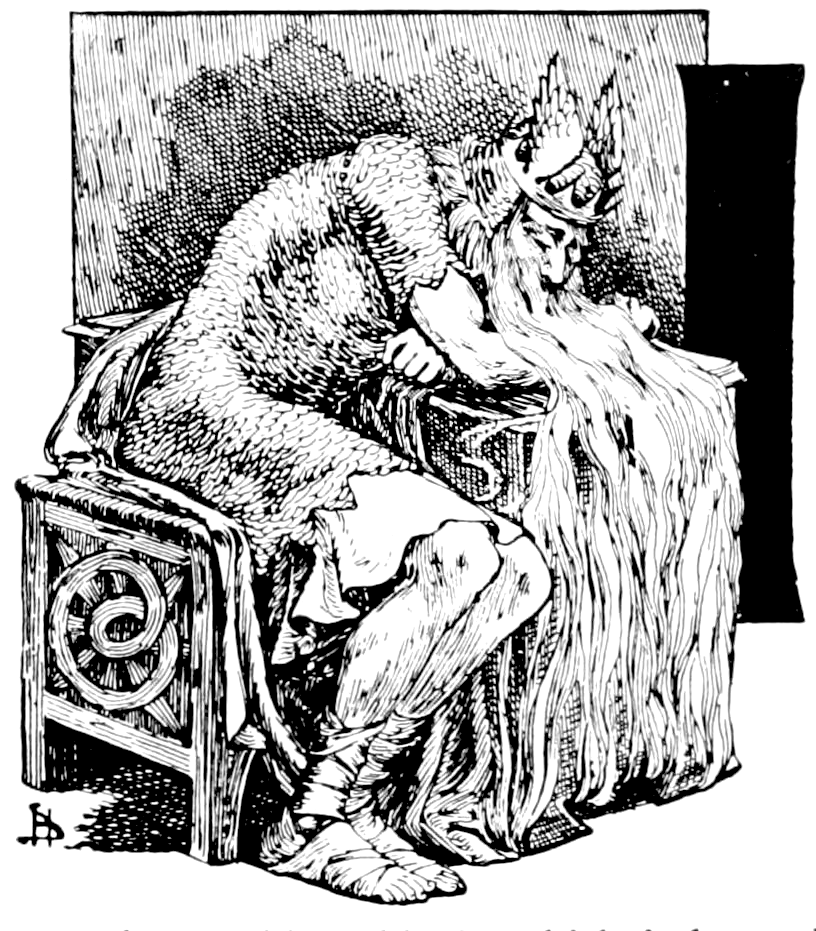
The latter has been decorated—or marred, depending upon your taste—with a gigantic monument, dedicated in 1896, combining an image of Frederick, deep in slumber still, with an equestrian statue of Kaiser Wilhelm I (1797-1888) posed above him (the idea being that now there’s a German empire—ruled by Wilhelm I’s grandson, the erratic and trouble-making Wilhelm II—Barbarossa can continue to doze).

An interesting side detail about the Barbarossa story can be found in the Grimm brothers Deutsche Sagen,  (“German Legends”) where it’s reported that  when a dwarf led a shepherd under the mountain, Barbarossa stood up and asked, “Are the ravens still flying around the mountain?”   At the shepherd’s affirmation, he cried, “Now must I sleep yet a hundred years longer!” 

(Brothers Grimm, Deutsche Sagen, Number 23, Vol.1, page 30, my translation.  You can find the text here:  https://books.google.com/books?id=SRcFAAAAQAAJ&pg=PR1#v=onepage&q&f=false   )  Those ravens will return in Part II.

This motif is surprisingly common (there’s a whole WIKI article devoted to it here:   https://en.wikipedia.org/wiki/King_asleep_in_mountain ), including , in the West, everyone from Ogier the Dane, who is involved in the medieval Charlemagne stories

(and who even turns up the in a fairy tale of Hans Christian Andersen, from an 1899 translation of which this illustration appears—you can read it here: https://ia800505.us.archive.org/26/items/fairytalesofhans00ande/fairytalesofhans00ande.pdf  )

to the early Irish hero, Fionn mac Cumhaill (who, in English, becomes ”Finn mac Cool”—if you’d like to read more about him, you might begin with Lady Gregory’s fiercely-named Gods and Fighting Men, 1913, available for you here:   https://archive.org/details/godsfightingmens00greg  )

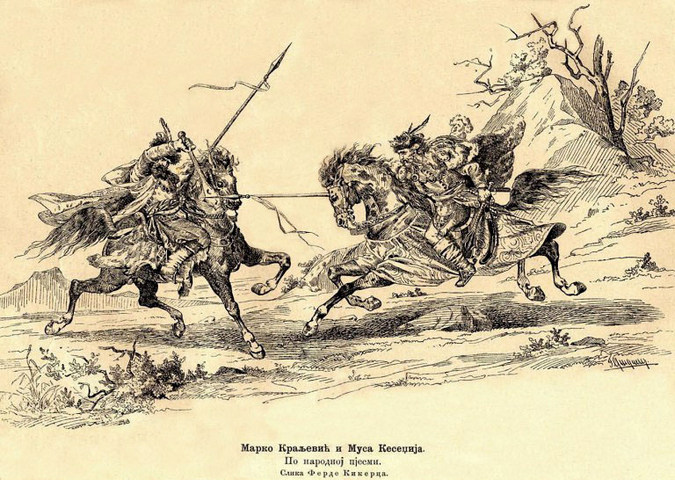
to the South Slavic Marko Kraljevic (KRAL-jeh-vitch—“Kingson”, so, “Prince Marko” )

who has the most wonderful horse, Sarac (SHA-rats—in English “roan”, a sort of reddish-brown—although the word has a fairly wide meaning, and illustrations, like the one here, depict him as what appears to be what we’d call a “piebald”), with whom he shares his wine—you can read about them here:  https://archive.org/details/BalladsOfMarkoKraljevic/page/n3/mode/2up  Although, in this translation of ballads about Marko, he dies, after killing Sarac so that he can’t be turned into a beast of burden by Marko’s enemies.  See this article for his sleeping, as well as the good news that Sarac isn’t killed:  https://en.wikipedia.org/wiki/Prince_Marko )

to a very familiar figure, King Arthur.

Our earliest-known reference to Arthur’s disappearance, Geoffrey of Monmouth’s (c.1095-c.1155)  Historia Regum Britanniae (“History of the Kings of Britain”, c.1130s), has only this to say:

Sed et inclytus ille Arturus rex letaliter vulneratus est, qui illine ad sananda vulnera sua in insulam Avallonis advectus,

“But  that famous king Arthur was mortally wounded, too, and who was carried from there [Cornwall]  for the healing of his wound to the island of Avalon…”

 (Geoffrey of Monmouth, Historia Regum BritanniaeHistoria Regum Britanniae, Book XI, Chapter II, my translation—and you can read a very useful English summary/translation of the Arthurian bits of Geoffrey here:   https://d.lib.rochester.edu/camelot/text/geoffrey  This comes from the University of Rochester (NY, not UK), “Camelot Project”, which is invaluable if you’re interested in things Arthurian.)

By the late 15th century, it appears that this tradition has been extended and that it begins to have more the look of the “king under the mountain”:

“Yet somme men say in many partyes of Englond that  kyng Arthur is not deed / But had by the wylle of our lord Ihefu in to another place / and men say that he shal come ageyn & he shal wynne the holy croffe . I wyl not say that it shal be so / but rather I wyl say here in thys world he chaunged his lyf / but many men say that there is wryton vpon his tombe this vers  Hic iacet Arthurus Rex quondam Rex que futurus /”

(Sir Thomas Malory (?  There is much discussion about who he was and when he lived, but a manuscript says that the text was completed by 1470),  Le Morte d’Arthur,  Book XXI, Chapter VII—this is from the 1889 edition of Oskar Sommer, which reprints the first printed edition of 1485 of William Caxton—and here it is for you:  https://archive.org/details/lemortedarthuror00malouoft/page/n5/mode/2up   If you read this blog regularly, you know that I always prefer the earliest edition of a work which I can find, as I believe that earlier English, both the language and the printing, is so much more interesting and memorable. )

(one of the only two copies of that first printing—it’s in the Morgan Library in New York)

That cross, with its inscription, is a monkish fake from 1190/1, (See a chatty but useful article here:  https://arstechnica.com/science/2016/03/medieval-monks-used-king-arthurs-grave-as-an-attraction-to-raise-money/  as well as an article about all sorts of possibilities for Arthur’s burial here:  http://www.badarchaeology.com/controversies/looking-for-king-arthur/the-archaeology-of-arthur/ ) but there seem to be two versions of it, one, reported by Gerald of Wales, c.1146-c.1223, in his Speculum Ecclesiae—“The Mirror of the Church”—Part II, Sections VIII-X , and presumably the earlier version, says nothing about “quondam” or “futurus”, that is, “one-time” and “to be” , quoting the inscription to say (my translation):

“Hic jacet sepultus inclytus rex Arturius in insula Avallonia  cum Wennevereia uxore sua secunda”

“Here lies buried the famous king Arthur in the island of Avalon with Guinevere his second wife”

(You can find the full text in Latin here:   https://ia902902.us.archive.org/10/items/giraldicambrensi04gira/giraldicambrensi04gira.pdf  and an English translation of the relevant parts here:   https://www.earlybritishkingdoms.com/sources/gerald02.html  )

As you can see, no “quondam” (“one-time”) and no “futurus” (“to be”).  So where did they come from?  As far as we know, this appears only in Malory, although Malory cites “his tombe”.  When the supposed Arthur was reburied, in the presence of Edward I and Eleanor of Aquitaine, in 1278, he was given what must have been a rather showy tomb—

The royal visit to Glastonbury Abbey in 1331. © Dominic Andrews http://www.archaeoart.co.uk

(This is a reconstruction by the Department of Archeology at Reading, which has done major work for the study of Glastonbury from its ancient roots at least to the end of the ecclesiastical period.  See:   https://research.reading.ac.uk/glastonburyabbeyarchaeology/digital/arthurs-tomb-c-1331/arthurs-tomb/ )

Although, with the dissolution by Henry VIII of Glastonbury Abbey in  1539, the tomb was lost, but  the early antiquary, John Leland (c,1503-1552), has left us a partial description in his Itineraries (notebooks of his travels around England—really remarkable stuff for the 1530s, when his extensive journeying would have been extremely difficult, and sometimes perhaps even dangerous).  He says of it that it had: 

1. a crucifix at the head

2. an image of Arthur at the foot

3. a cross on the tomb

4. lions at the head and foot

5. two inscriptions, at least the first of which was written by Henry Swansey an abbot of Glastonbury

The first inscription reads:

“Hic jacet Arturus flos regum gloria regni

Quem mores probitas commendant laude perenni”

“Here lies Arthur the flower of kings, the glory of the kingdom,

Whom his character and uprightness commend for eternal praise.”

and the second, at the foot of the tomb says:

Arturi  jacet hic conju[n]x tumulata secunda

Quae meruit coelos virtutum prole secunda”

“Here lies buried the second wife of Arthur,

Who has deserved Heaven from the fortunate offspring of [her] virtues.” (a wordplay—“secunda” can mean both “second” and “lucky”)

(my translations from John Leland, The Itinerary of John Leland, Parts I to III, edited by Lucy Toulmin Smith, 1907, page 288 and it’s right here for you:  https://archive.org/details/itineraryjohnle02lelagoog/page/n11/mode/2up )

No “quondam” and no “futurus” here, either, and, presumably, this is the “tombe” which Mallory mentions.  Did he make that inscription up?  Certainly Mallory assembled a large body of previous work and not all of his sources are traceable.  Perhaps this will remain a mystery, along with the reported disappearance and subsequent non-reappearance of Arthur?

But the influence of Arthur, or, at least of his motif type, will appear in the second (and I hope fortunate) part of this posting.  I’ll provide a hint here—someone once lived under another mountain before a new and destructive tenant arrived…

Thanks, as ever, for reading.

Stay well,

May you be both quondam and futurus/a,

And remember that, as always, there’s

MTCIDC

O
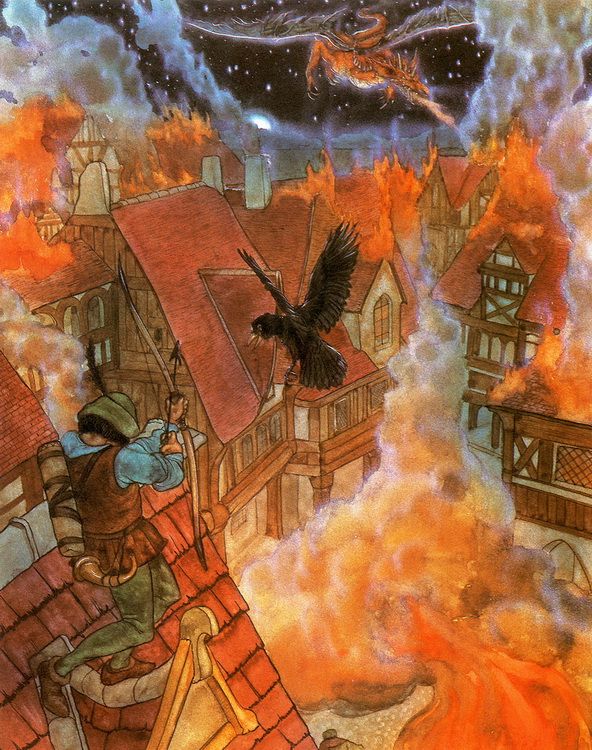
Busting Into Mars

27 Wednesday Sep 2023

Posted by Ollamh in Uncategorized

≈ Leave a comment

Welcome, as always, dear readers.

I was reminded of my last posting by seeing this on the back bumper of a car—

Mars to me is this—

and this—

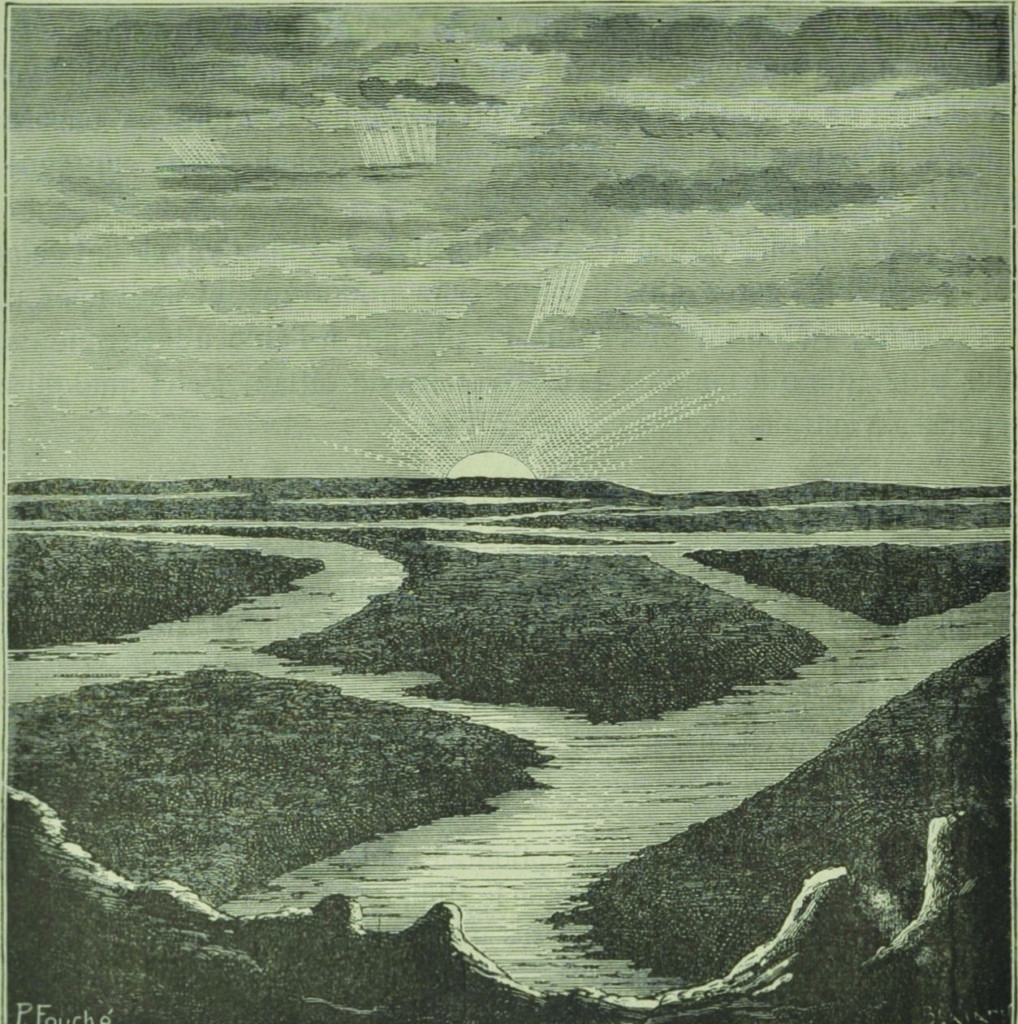
which hardly makes it look worth busting for, or even visiting, for all of the scientific curiosity about it which could be satisfied by extensive exploration, if not colonization.

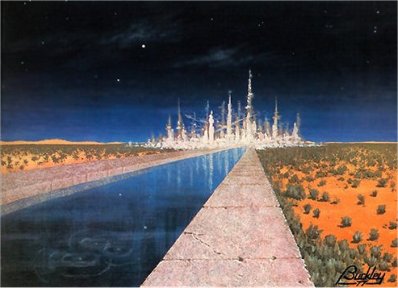
Suppose, however, it looked like this—

or this—

(This is from https://www.erbzine.com/mag33/3387.html  a fan magazine devoted to the works of Edgar Rice Burroughs—about whom more shortly!)

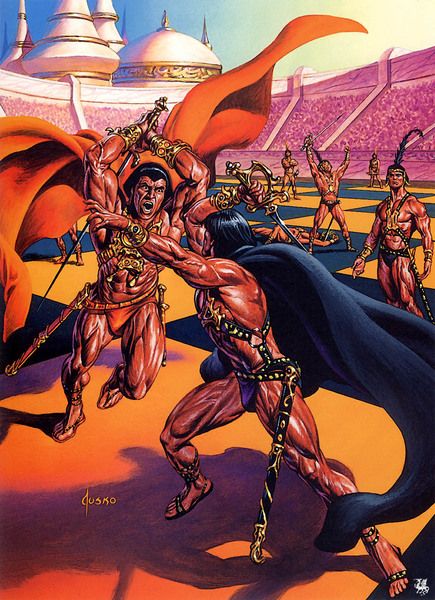
 or this—

(Joe Jusko—you can visit his website here:  http://www.joejusko.com/default.asp )

Beginning in the 1870s, these latter views were the basis of science—and science fiction.

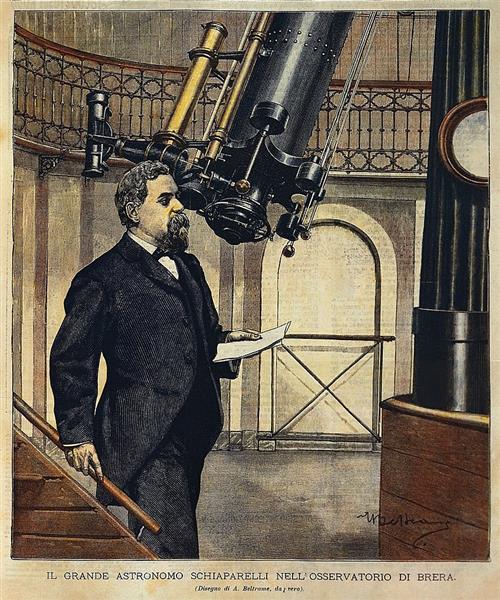
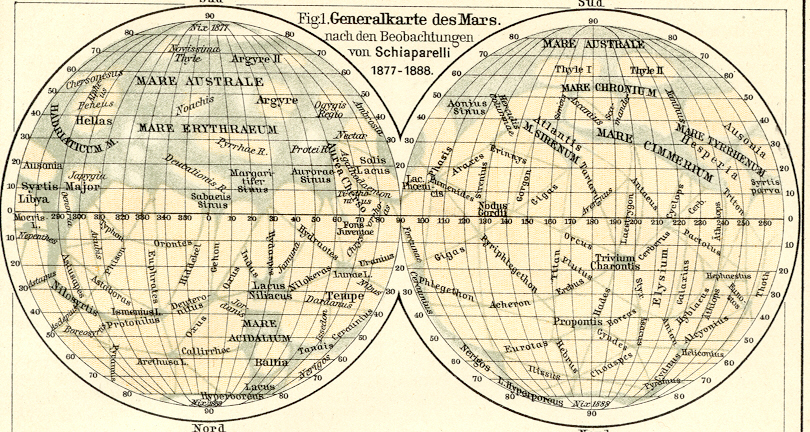
The first figure to put forward such a view of Mars was Giovanni Schiaparelli (1835-1910),

who, turning his telescope towards the Red Planet, believed that he saw patterns of crisscross lines across its surface, which he called canali, in Italian, and which can mean everything from the anatomical  “duct” to (now) a television channel, to “canal” (as in i canali di Venezia),in an 1877 publication.

It’s important here to note that Schiaparelli was no crackpot, but a well-known and well-respected astronomer, and this will be true for the prominent men who furthered the idea that Mars was inhabited by sentient beings with engineering and architectural skills.  The texts which such men wrote are carefully-reasoned, based on the latest science known to them.  The basic problem was that Schiaparelli hadn’t seen canals at all, even as he produced maps of Mars’ surface which included them

and wrote articles about the potential inhabitants (see https://www.gutenberg.org/cache/epub/7781/pg7781.html  La Vita sul Pianeta Marte, extracts from the journal “Natura ed Arte” from 1893, 1895, 1909 ) in scientific journals.

He was followed by the splendidly-named Camille Flammarion (1842-1925),

another prominent astronomer and the author of numerous books on the subject, including

La planete Mars et ses conditions d’habitabilite (1892)  and which is available here: https://archive.org/details/laplantemarset01flam   For a complete translation into English of this work, log in to the Internet Archive and take out the Patrick Moore version here:  https://archive.org/details/camilleflammario0000flam  For a brief review of Flammarion’s ideas in English, see:    https://ia903207.us.archive.org/33/items/jstor-25118640/25118640.pdf   The North American Review, 1 May, 1896, 546-557, “Mars and Its Inhabitants” .

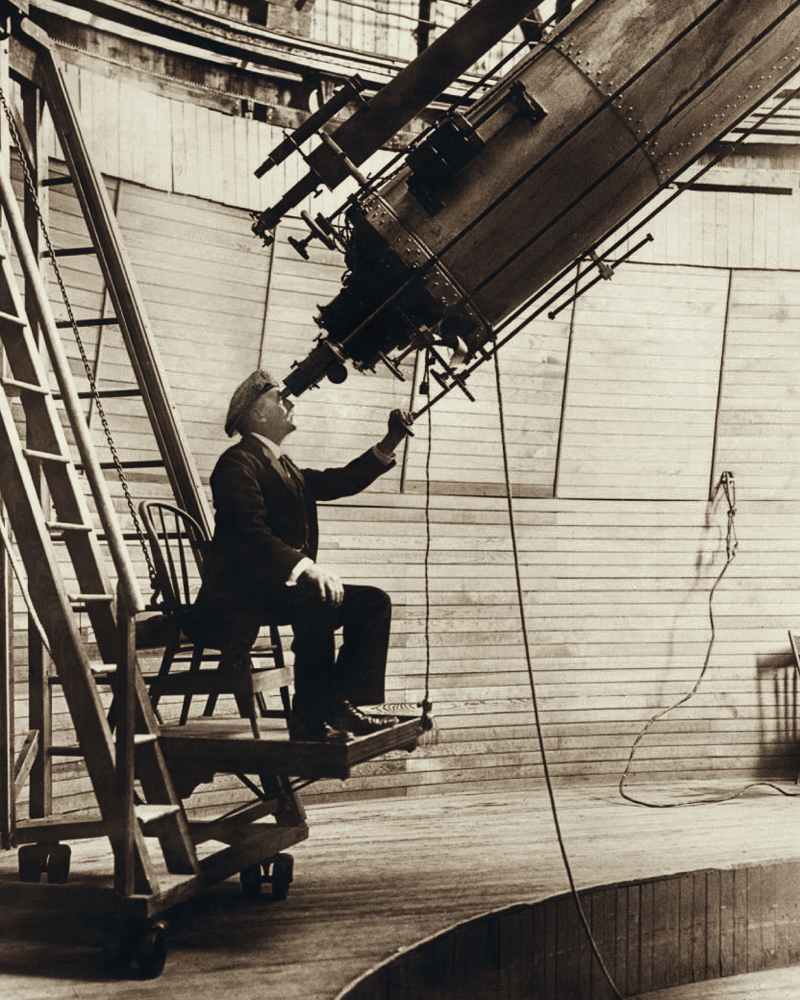
For English-speakers, the scientist who probably had the greatest effect upon popular views of Mars was Percival Lowell (1855-1916),

who, besides lectures and scholarly articles, produced three extensive works on the subject:  Mars (1895—available here:   https://archive.org/details/mars01lowegoog/page/n12/mode/2up  ), Mars and Its Canals (1906—dedicated to Schiaparelli and available here:   https://archive.org/details/marsanditscanals00loweiala/mode/2up  ), and  Mars As the Abode of Life (1908 and available here:   https://archive.org/details/marsasabodelife03lowegoog/mode/2up    ).

What I find particularly interesting about the approach over time to the subject of Mars, its inhabitants, and its architecture is that this was believed to be an archaic civilization and may even be in serious decline, a fact which was picked up—among other details–by a man who was about to make his name by basing a series of fictional works upon the scientific research and publications of such scientists, Edgar Rice Burroughs (1875-1950).

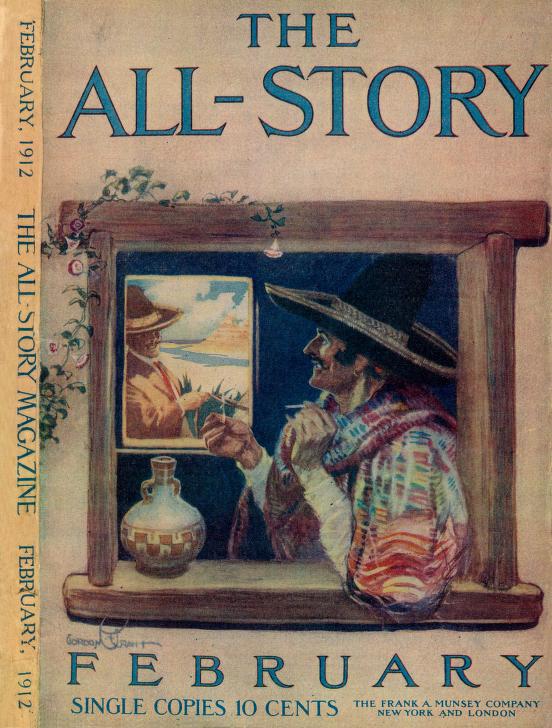
In February, 1912, Burroughs published the first of six installments of a series entitled “Under the Moons of Mars” in The All-Story (and which you can read here:   https://archive.org/details/all-story-v-022n-02-1912-02-ifc-ibc-ufikus-dpp )

It concerns the adventures of John Carter, an ex-Confederate, who after the war, turns prospector in the American Southwest, only to be mysteriously whisked to what he in time discovers is called “Barsoom”, but is based upon the Mars of the Victorian/Edwardian astronomers, dying civilization, canals, and all.

It has two main races, a more human one, who were the city-builders, and a larger and more barbaric humanoid  green-skinned race, who are nomads, but who inhabit the deserted human cities during their wanderings.

(by Adam C. Moore, a wonderfully-talented artist who can seemingly draw anything and who goes by LAEMEUR—visit his website at:  https://laemeur.com/illustration/ )

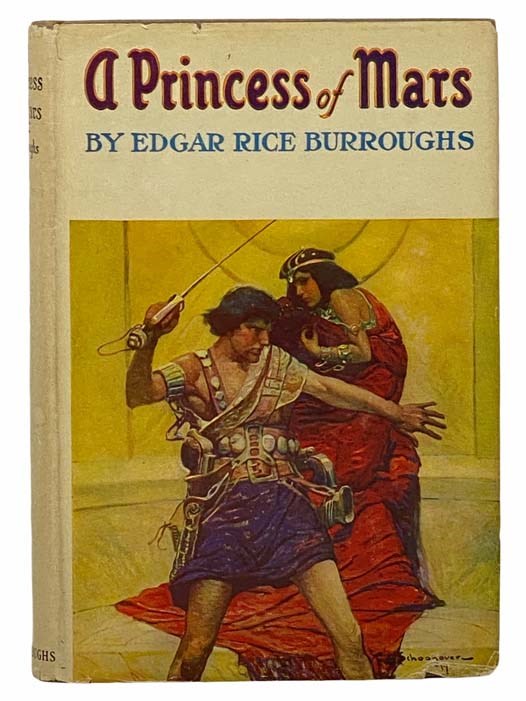
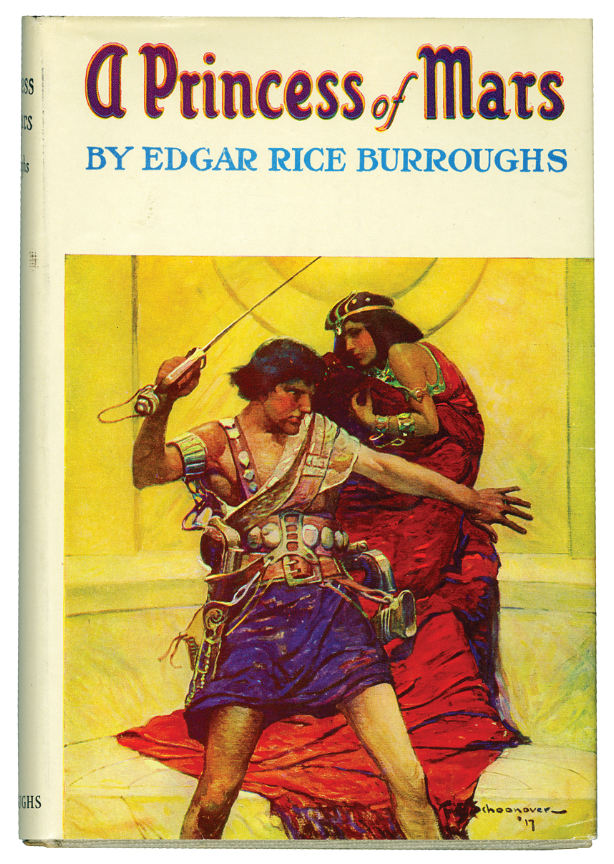
Although I’ve always known that Burroughs was an early science fiction, fantasy writer, I hadn’t read a word of his work until, in my current slow study of science fiction, I added “Under the Moons of Mars” in its 1917 novel form, A Princess of Mars, to my reading list (and you can add it to your list here:   https://archive.org/details/aprincessmars00burrgoog/page/n9/mode/2up  ) 

It didn’t take more than a chapter or two before I found myself with a page-turner.  Although the characters are familiar from any high adventure novel—the man of his hands dropped into a new and strange situation, the proud princess in need of rescue, etc—Burroughs, for me, had set these against a backdrop which, though based upon period popular scientific thought, he made his own by taking what he’d found and expanding it into something more dynamic, both in setting and in the politics and conflicts of what might be a dying world. 

So far, I’ve only read the first book, but there are 9 more stories in novel form to come, from 1918 (The Gods of Mars) to 1948 (Llana of Gathol—for a listing, see:  https://en.wikipedia.org/wiki/Barsoom ) to look forward to and Burroughs wrote other series, including one which he began publishing in the same year and in the same magazine as “Under the Moons of Mars” and which probably brought him more fame and wealth than the adventures of John Carter—

(This is also from the Burroughs website which, if Burrough’s work interests you, and you don’t know the site, I encourage you to visit and browse its extensive archive.)

As ever, thanks for reading.

Stay well,

If dropped onto another planet, hope that its gravity is lighter,

And remember that, as always, there’s

MTCIDC

O

(In)Compleat

20 Wednesday Sep 2023

Posted by Ollamh in Uncategorized

≈ Leave a comment

As always, welcome, dear readers.

Spelling, in English, which can cause non-native English-speakers to wonder just how crazy we are, began to become standardized only in the 18th century.  Before this, one might, for example, see two competing spellings of the main word in the title of this piece:  “Compleat” and “Complete”, both considered valid, at least by the spellers.

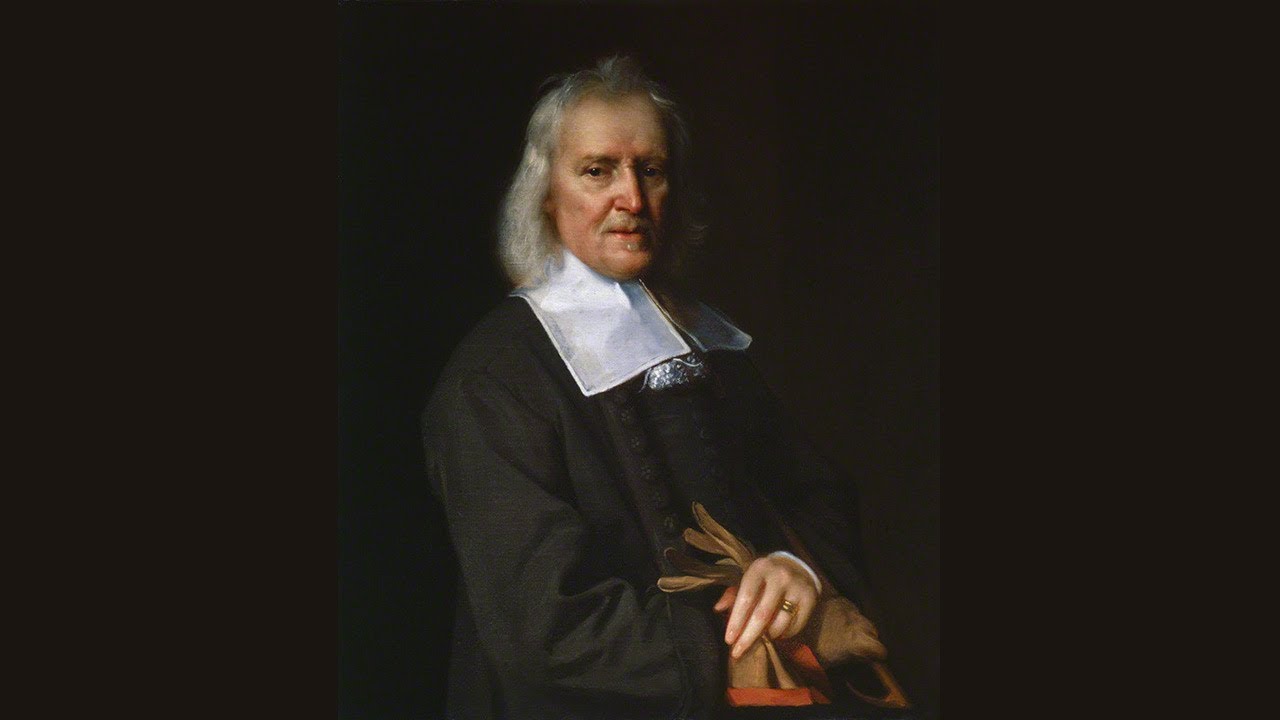
Although the spelling “compleat” might have been commonly acceptable in the 17th century, it is one work, in particular, which has continued to provide us with that competing spelling, Izaak Walton’s (1593-1683)

well-known fishing manual, The Compleat Angler,

first published in 1653, with various later editions, including one with an extensive addition, in 1676, by Walton’s friend, and fellow-angler, Charles Cotton (1630-1687),

to whom was attributed, in the 18th century, another “Compleat”, The Compleat Gamester (1674).

(This is the 1680 edition.  If you’d like to learn how to play such card games as “Lanterloo” and “Bragg”, here’s the 1725 edtiion to show you the way:   https://ia902708.us.archive.org/6/items/bim_eighteenth-century_the-compleat-gamester-o_cotton-charles_1725/bim_eighteenth-century_the-compleat-gamester-o_cotton-charles_1725.pdf  For myself, the cockfighting is distasteful and I’d avoid it. For the Walton/Cotton, here’s a wonderfully leisurely 1897 edition, heavily illustrated with handsome engravings, and based upon that 1676 edition:  https://archive.org/details/compleatangler00gallgoog/page/24/mode/2up   One of my favorite illustrators, Arthur Rackham, made an illustrated edition, but, as it’s from 1931, it’s still locked in copyright, but you can see images from it if you write in:  “Compleat Angler Rackham”.)

I most recently happened upon this spelling in a completely/compleatly different context:

This is a collection of short novels or novellas jointly written by L(yon) Sprague de Camp (1907-2000)

and Fletcher Pratt (1897-1956),

2 prolific fantasy/science fiction authors of the mid-to later 20th century.  (For a very partial list of de Camp’s works, see:   https://en.wikipedia.org/wiki/L._Sprague_de_Camp ;  for the same for Pratt—who also wrote a number of historical works—see:   https://en.wikipedia.org/wiki/Fletcher_Pratt )

Although there are three novellas in this collection, “The Roaring Trumpet”, “The Mathematics of Magic”, and “The Castle of Iron”, there is a fourth, published as “Wall of Serpents”.   And these were not their original publication—or forms—as  all had been previously published in fantasy/science fiction magazines of the 1940s and early 1950s, like Unknown (about which you can read a wonderfully detailed account here:   https://en.wikipedia.org/wiki/Unknown_(magazine) ).

In these stories, the main character, Harold Shea, a psychologist by training, travels, with various colleagues, to a series of worlds based upon mythology and literary sources, “The Roaring Trumpet” upon Norse legends,

(the original cover of Unknown where the story first appeared)

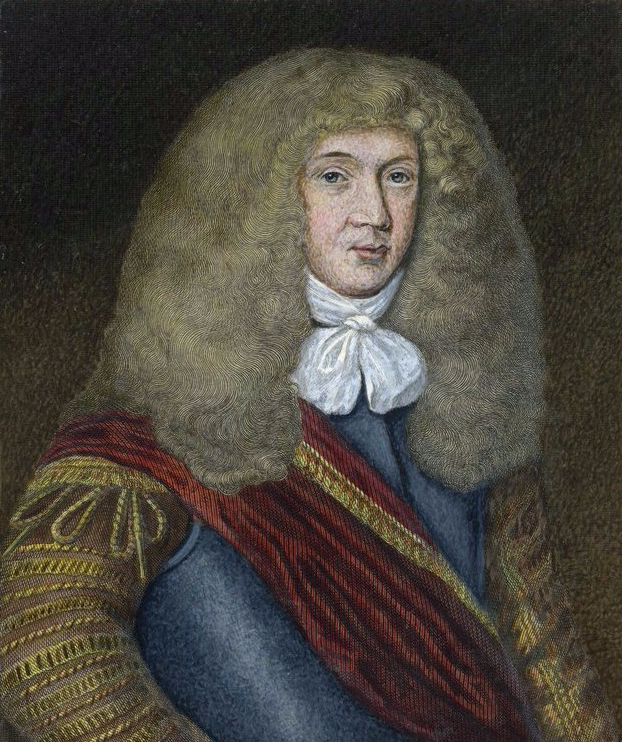
“The Mathematics of Magic”, in which the characters fall into the world of Edmund Spenser’s (1552-1599)

The Fairy Queen,

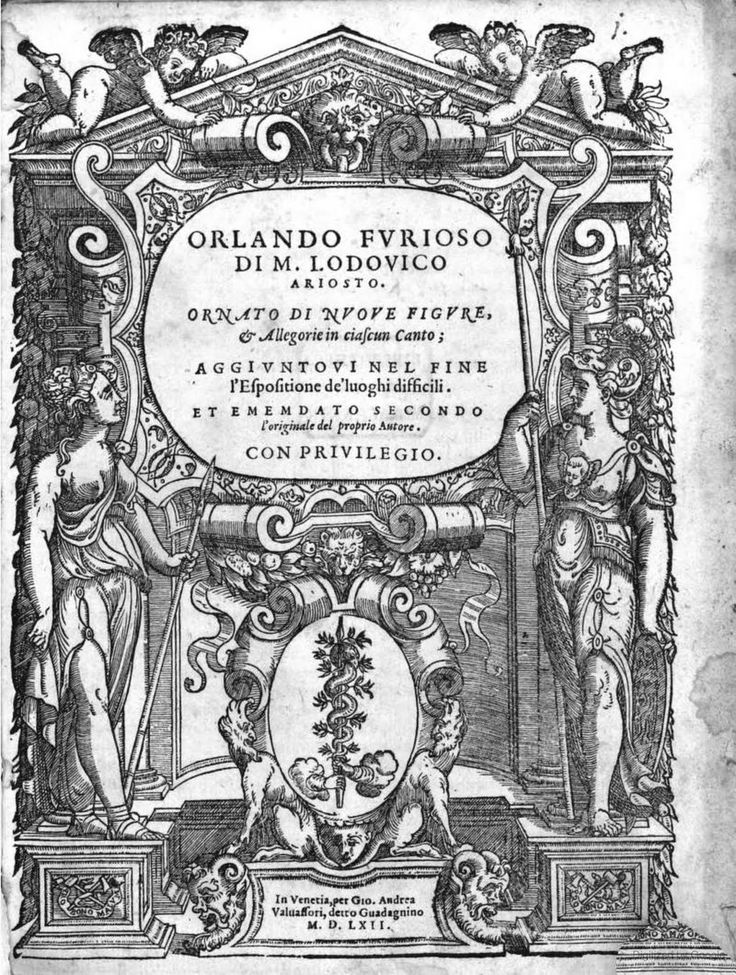
“The Castle of Iron” into the world of Ludovico Ariosto’s (1474-1533)

Orlando Furioso

(originally published in 1532, this is an early edition from 1562)

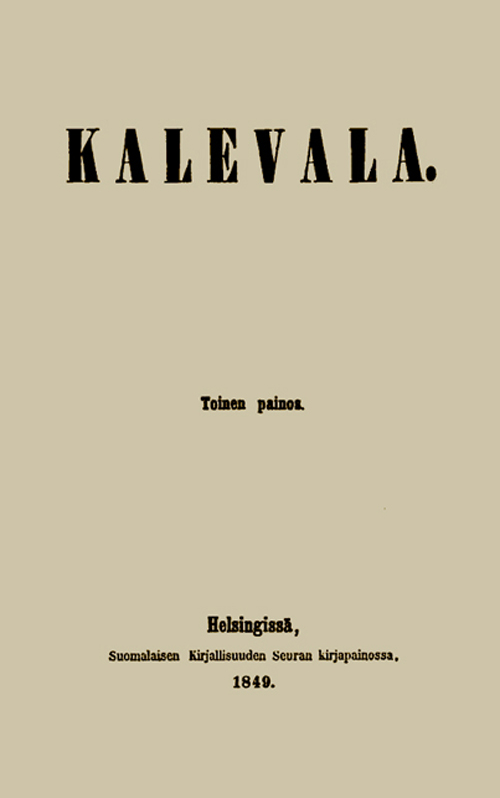
and Wall of Serpents, into the land of Finnish myth from Elias Loenrot’s (1802-1884)

Kalevala,

(This is the more complete edition of 1849, Loenrot had published an earlier version in 1835.)

but, in mid-book, the main characters are suddenly transported from ancient Finland to ancient Ireland, where they spend time with characters out of the Ulster Cycle, the main charmer being the hero Cu Chulainn.

(This is actually a rather subdued portrait of “the Hound of Ulster”, most of those I’ve seen have absolutely no relation to the figure we know from Old Irish Literature.  If you’re interested, you might try Lady Gregory’s  Cuchulain of Muirthemne, 1903, here:  https://archive.org/details/cuchulainofmuirt00greg_0  bearing in the mind that Lady G was a late-Victorian and the original stories can be a bit raunchier than she will translate them. )

Although the original editor, John W. Campbell, as we learn from the article on Unknown cited above, wanted  “the fantasy elements in a story to be developed logically”, I confess that I have no idea as to how the characters are transferred to these places.  The theory behind the transference is discussed in “The Roaring Trumpet” , but my eyes crossed when I tried to follow it.  The method is really quite beside the point, however, as, once the characters are dropped into each world, the narrative roars by, and, although there are in-jokes, if you know the originals (parts of Wall of Serpents, for example, are written in the same metre as the original Finnish text), the stories are solid enough in themselves to be enjoyable without doing anything more than following along. (If you’d like to read them—and I would encourage you to—you can read the first three by joining the Internet Archive and borrowing a copy of The Compleat Enchanter here:  https://archive.org/details/compleatenchante00deca  )

The title of this piece is “Incompleat”, however, and refers, in fact, to a larger project I’ve set myself.  Although I’ve read a certain amount of fantasy and science fiction, I’ve never done this systematically.  Consequently, I decided to give myself a better education, beginning with science fiction, compiling a list of books, novellas, and short stories in chronological order which I intend to read.  I admit to doing a bit of skipping around as I fill things in, so I still have to read Jules Verne’s De la Terre a la Lune (“From the Earth to the Moon”, 1865, first English translation, 1867), for example, but I’d gotten caught by de Camp/Pratt after reading earlier things like Edgar Rice Burrough’s (1875-1950) A Princess of Mars (1912/17, which you can read here:  https://archive.org/details/aprincessmars00burrgoog/page/n9/mode/2up ),

about which I’m definitely going to write in the future.  The field is vast (and fantasy is just as large—go to any decent bookstore and look at the shelves and shelves of the stuff), so I want to be selective, trying to find what’s most representative of different eras and trends.  This will mean that I’ll definitely wind up with some less than masterpieces, but it’s important, to understand the field, to see just what has been considered noteworthy in the past.

I doubt that I’ll ever write a posting with the title “Compleat”, but I’m sure to find much that’s worth the read and, when I do, I’ll be glad to pass it on to you.

Stay well,

Beware any enchanter who claims compleatness,

And remember that there’s always

MTCIDC

O

PS

And, if you read this blog for Tolkien, not to worry—he’s always there and always will be.  After all, he himself was a fan of the work of Isaac Asimov.

← Older posts
Newer posts →

The Doubtful Sea Series Facebook Page

The Doubtful Sea Series Facebook Page

  • Ollamh

Categories

  • Artists and Illustrators
  • Economics in Middle-earth
  • Fairy Tales and Myths
  • Films and Music
  • Games
  • Heroes
  • Imaginary History
  • J.R.R. Tolkien
  • Language
  • Literary History
  • Maps
  • Medieval Russia
  • Military History
  • Military History of Middle-earth
  • Narnia
  • Narrative Methods
  • Poetry
  • Research
  • Star Wars
  • Terra Australis
  • The Rohirrim
  • Theatre and Performance
  • Tolkien
  • Uncategorized
  • Villains
  • Writing as Collaborators
Follow doubtfulsea on WordPress.com

Across the Doubtful Sea

Recent Postings

  • The Damage of Dragons March 11, 2026
  • Encouragement March 4, 2026
  • Eavesdropping February 25, 2026
  • Do You Speak Villain? (Part 3) February 18, 2026
  • Do You Speak Villain? (2) February 11, 2026
  • Do You Speak Villain? (Part 1) February 4, 2026
  • Towering January 28, 2026
  • Tolkien Among the Indians January 21, 2026
  • Thin and Stretched January 14, 2026

Blog Statistics

  • 108,942 Views

Posting Archive

  • March 2026 (2)
  • February 2026 (4)
  • January 2026 (4)
  • December 2025 (5)
  • November 2025 (4)
  • October 2025 (5)
  • September 2025 (4)
  • August 2025 (4)
  • July 2025 (5)
  • June 2025 (4)
  • May 2025 (4)
  • April 2025 (5)
  • March 2025 (4)
  • February 2025 (4)
  • January 2025 (5)
  • December 2024 (4)
  • November 2024 (4)
  • October 2024 (5)
  • September 2024 (4)
  • August 2024 (4)
  • July 2024 (5)
  • June 2024 (4)
  • May 2024 (5)
  • April 2024 (4)
  • March 2024 (4)
  • February 2024 (4)
  • January 2024 (5)
  • December 2023 (4)
  • November 2023 (5)
  • October 2023 (4)
  • September 2023 (4)
  • August 2023 (5)
  • July 2023 (4)
  • June 2023 (4)
  • May 2023 (5)
  • April 2023 (4)
  • March 2023 (5)
  • February 2023 (4)
  • January 2023 (4)
  • December 2022 (4)
  • November 2022 (5)
  • October 2022 (4)
  • September 2022 (4)
  • August 2022 (5)
  • July 2022 (4)
  • June 2022 (5)
  • May 2022 (4)
  • April 2022 (4)
  • March 2022 (5)
  • February 2022 (4)
  • January 2022 (4)
  • December 2021 (5)
  • November 2021 (4)
  • October 2021 (4)
  • September 2021 (5)
  • August 2021 (4)
  • July 2021 (4)
  • June 2021 (5)
  • May 2021 (4)
  • April 2021 (4)
  • March 2021 (5)
  • February 2021 (4)
  • January 2021 (4)
  • December 2020 (5)
  • November 2020 (4)
  • October 2020 (4)
  • September 2020 (5)
  • August 2020 (4)
  • July 2020 (5)
  • June 2020 (4)
  • May 2020 (4)
  • April 2020 (5)
  • March 2020 (4)
  • February 2020 (4)
  • January 2020 (6)
  • December 2019 (4)
  • November 2019 (4)
  • October 2019 (5)
  • September 2019 (4)
  • August 2019 (4)
  • July 2019 (5)
  • June 2019 (4)
  • May 2019 (5)
  • April 2019 (4)
  • March 2019 (4)
  • February 2019 (4)
  • January 2019 (5)
  • December 2018 (4)
  • November 2018 (4)
  • October 2018 (5)
  • September 2018 (4)
  • August 2018 (5)
  • July 2018 (4)
  • June 2018 (4)
  • May 2018 (5)
  • April 2018 (4)
  • March 2018 (4)
  • February 2018 (4)
  • January 2018 (5)
  • December 2017 (4)
  • November 2017 (4)
  • October 2017 (4)
  • September 2017 (4)
  • August 2017 (5)
  • July 2017 (4)
  • June 2017 (4)
  • May 2017 (5)
  • April 2017 (4)
  • March 2017 (5)
  • February 2017 (4)
  • January 2017 (4)
  • December 2016 (4)
  • November 2016 (5)
  • October 2016 (6)
  • September 2016 (5)
  • August 2016 (5)
  • July 2016 (5)
  • June 2016 (5)
  • May 2016 (4)
  • April 2016 (4)
  • March 2016 (5)
  • February 2016 (4)
  • January 2016 (4)
  • December 2015 (5)
  • November 2015 (5)
  • October 2015 (4)
  • September 2015 (5)
  • August 2015 (4)
  • July 2015 (5)
  • June 2015 (5)
  • May 2015 (4)
  • April 2015 (3)
  • March 2015 (4)
  • February 2015 (4)
  • January 2015 (4)
  • December 2014 (5)
  • November 2014 (4)
  • October 2014 (6)
  • September 2014 (1)

Blog at WordPress.com.

  • Subscribe Subscribed
    • doubtfulsea
    • Join 78 other subscribers
    • Already have a WordPress.com account? Log in now.
    • doubtfulsea
    • Subscribe Subscribed
    • Sign up
    • Log in
    • Report this content
    • View site in Reader
    • Manage subscriptions
    • Collapse this bar
 

Loading Comments...