Welcome, dear readers, as always.
I don’t know if you have it in your memory, but I have this little song (which could be accompanied by finger motions):
“The Hinky Dinky spider
Went up the water spout.
Down came the rain
And washed the spider out.
Out came the sun
And dried up all the rain
And the Hinky Dinky spider
Went up the spout again.”
I’m perfectly blank as to when I first heard it and it stuck, but it must have been pretty early—so early that I never asked myself “what’s a ‘Hinky Dinky spider’ contrasted with any others?”
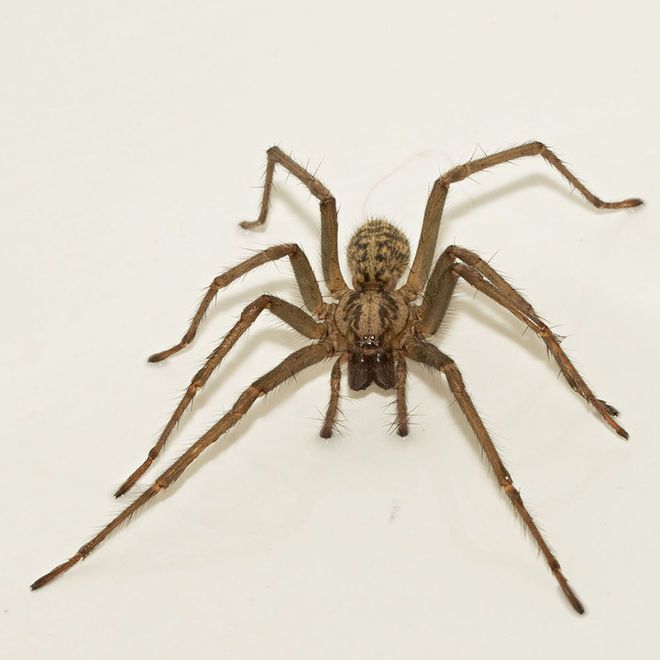
A little research turned this into “The Itsy Bitsy Spider” (a little more comprehensible than “Hinky Dinky”, certainly), but also showed that it had lots more variants and had originally appeared at least before 1910 (see this WIKI article for more: https://en.wikipedia.org/wiki/Itsy_Bitsy_Spider –no explanation of “Hinky Dinky”, however, unless one wants to associate it with the chorus to the Great War song, “Mademoiselle from Armentieres”—that is, “Hinky dinky parlez-vous”–as someone has suggested).
Unlike snakes, which can easily give me the willies—
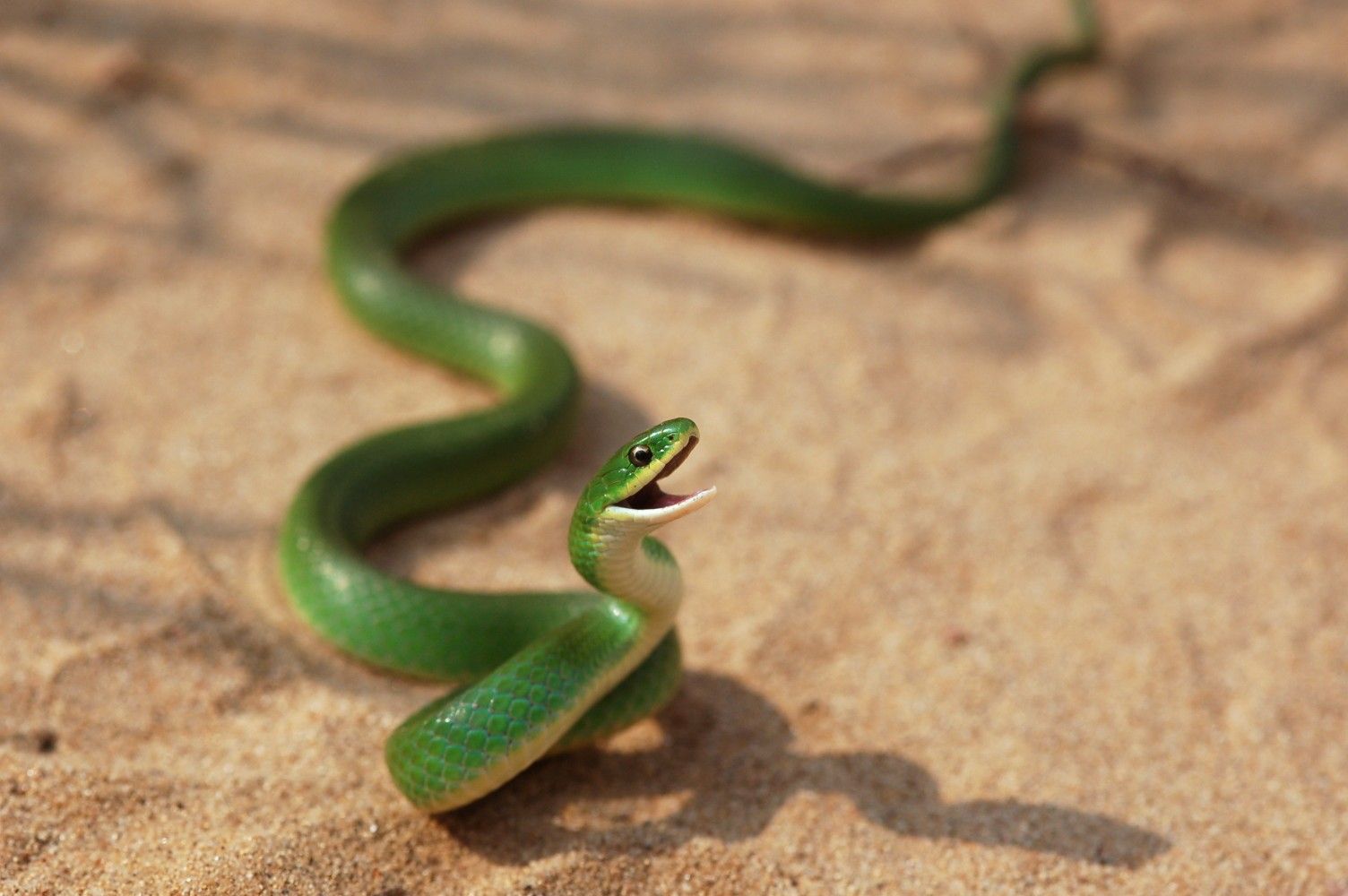
(I respect them, however, seeing them, as the Romans did, as good luck signs—)

I’ve never seen spiders as anything more than those quiet people who live and work in the dim corners of the house and, if you’re lucky, polish off nasty mosquitoes. I certainly don’t have the same feeling as the English comic duo of Michael Flanders (1922-1975) and Donald Swann (1923-1994)
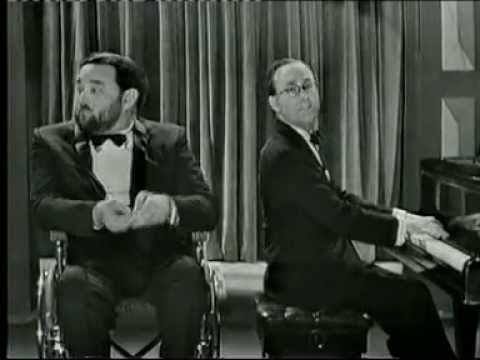
expressed in their song “The Spider”–
“I have fought a Grizzly Bear,
Tracked a Cobra to its lair,
Killed a Crocodile who dared to cross my path,
But the thing I really dread
When I’ve just got out of bed
Is to find that there’s a Spider in the bath.
I’ve no fear of Wasps or Bees,
Mosquitoes only tease,
I rather like a Cricket on the hearth,
But my blood runs cold to meet
In pyjamas and bare feet,
With a great big hairy spider in the bath.
I have faced a charging Bull in Barcelona,
I have dragged a mountain Lioness from her cubs,
I’ve restored a mad Gorilla to its owner,
But I don’t dare face that tub …
What a frightful looking beast –
Half an inch across at least –
It would frighten even Superman or Garth!
There’s contempt it can’t disguise,
In the little beady eyes,
Of the Spider sitting glowering in the bath.
It ignores my every lunge
With the backbrush and the sponge;
I have bombed it with ‘A present from Penarth’.
It just rolls into a ball,
Doesn’t seem to mind at all,
And simply goes on squatting in the bath.
For hours we have been locked in endless struggle,
I have lured it to the deep end by the drain.
At last I think I’ve washed it down the plughole,
Here it comes a-crawling up the chain!
Now it’s time for me to shave,
Though my nerves will not behave,
And there’s bound to be a fearful aftermath.
So before I cut my throat,
I shall leave this final note;
Driven to it – by the Spider in the bath!”
(a couple of glosses—Garth—pronounced “Goth” in southern standard British English—was a British comic strip superhero—read about him here: https://en.wikipedia.org/wiki/Garth_(comic_strip) and Penarth—pronounced “Penahth”—again, no r—is a seaside resort in southern Wales—you can visit it here: https://en.wikipedia.org/wiki/Penarth And you can hear Flanders and Swann sing this here: https://www.youtube.com/watch?v=8z3D5Jutw1Q )
And then there’s Tolkien.
First, of course, we have the gang of predatory spiders in Mirkwood in The Hobbit:
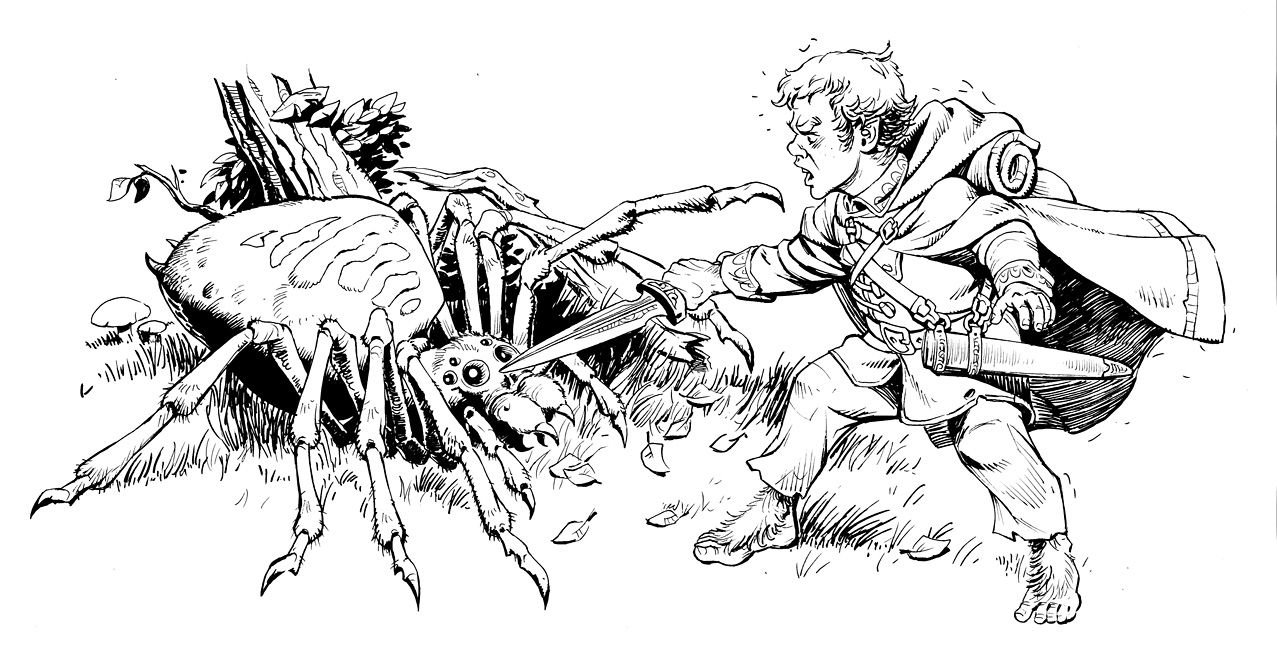
(Oleksiy Lipatov)
“He had picked his way stealthily for some distance, when he noticed a place of dense black shadow ahead of him, black even for that forest, like a patch of midnight that had never been cleared away. As he drew nearer, he saw that it was made by spider-webs one behind and over and tangled with another. Suddenly he saw, too, that there were spiders huge and horrible sitting in the branches above him, and ring or no ring he trembled with fear lest they should discover him. Standing behind a tree he watched a group of them for some time, and then in the silence and stillness of the wood he realized that these loathsome creatures were speaking one to another. Their voices were a sort of thin creaking and hissing…” (Chapter 8, “Flies and Spiders”)
and then there’s
“Most like a spider she was, but huger than the great hunting beasts, and more terrible than they because of the evil purpose in her remorseless eyes. Those same eyes that he had thought daunted and defeated, there they were lit with a fell light again, clustering in her out-thrust head. Great horns she had, and behind her short stalk-like neck was her huge swollen body, a vast bloated bag, swaying and sagging between her legs; its great bulk was black, blotched with livid marks, but the belly underneath was pale and luminous and gave forth a stench. Her legs were bent, with great knobbed joints high above her back, and hairs that stuck out like steel spines, and at each leg’s end there was a claw.” (The Two Towers, Book Four, Chapter 9, “Shelob’s Lair”)
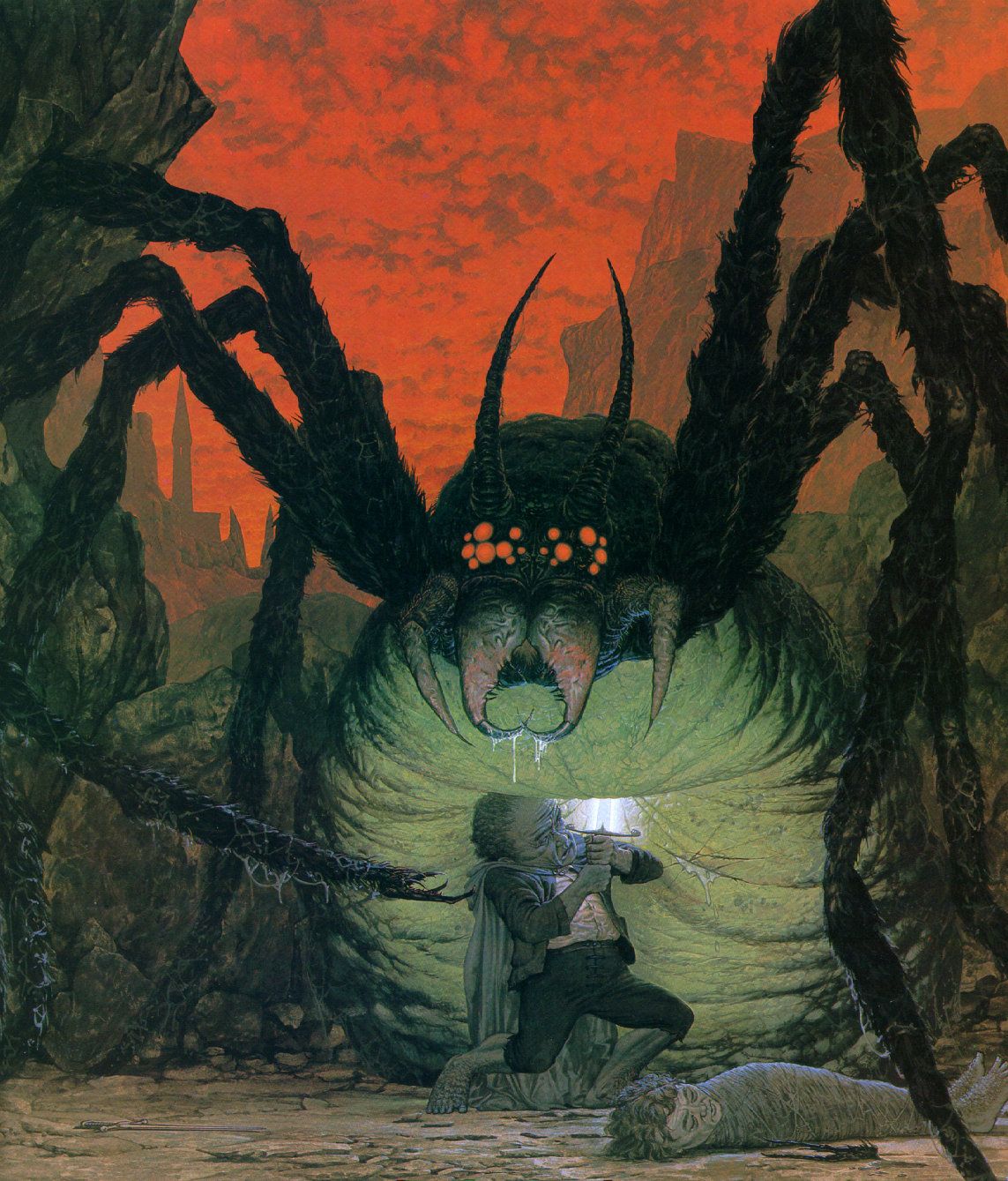
(Ted Nasmith)
In a letter to W.H. Auden, Tolkien had expressed himself this way on the subject of spiders:
“But I did know more or less all about Gollum and his part, and Sam, and I knew that the way was guarded by a Spider. And if that has anything to do with my being stung by a tarantula as a small child, people are welcome to the notion (supposing the improbable, that any one is interested). I can only say that I remember nothing about it, should not know it if I had not been told; and I do not dislike spiders particularly, and have no urge to kill them. I usually rescue those whom I find in the bath!” (letter to W.H. Auden, 7 June, 1955, Letters, 316)
The innocent Mr. T, arachnophile? And yet there’s this, from a later interview:
“Spiders,” observed Professor JRR Tolkien, cradling the word with the same affection that he cradled the pipe in his hand, “are the particular terror of northern imaginations.”… Discussing one of his own monsters, a man-devouring, spider-like female, he said, “The female monster is certainly no deadlier than the male, but she is different. She is a sucking, strangling, trapping creature.” (The Telegraph magazine, 22 March, 1968)
Perhaps JRRT had more of a memory of that tarantula than he admitted?

As ever, thanks for reading.
Stay well,
When attempting to be friendly with spiders, remember that “attercop” is an insult,
And also remember that, as always, there’s
MTCIDC
O
 doubtfulsea