Welcome, as ever, dear readers.
The title of this posting is actually only part of a quotation—here’s the full line—

It’s Indiana Jones, of course, in The Last Crusade (1989),

who has just come upon a German operations center in an Austrian castle.

In my two-part review of the final Indiana Jones movie, The Dial of Destiny,

(“Jonesing for Indiana”, 24 July, 2023, 3 August, 2023)
I summed up the series’ villains, in which, out of five films in all, one (The Temple of Doom) has an evil prime minister,

one (Crystal Skull), has a Soviet agent,

(with that very odd sword—although she actually uses it at one point, it has always struck me as more of an obvious plot device than something natural to the character and particularly to the story)
one (The Dial of Destiny) has an ex-Nazi (really, a kind of Nazi in semi-retirement, with plans),

and two (Raiders of the Lost Ark)

and (The Last Crusade)

with active Nazis in uniform.
And yet, the more I’ve thought about it, the more it seemed that the Nazis weren’t really the villains at all, only the muscle for the real antagonists.
The basic premise for all three Nazi films was that Hitler was a collector of what he believed to be sources of power from the ancient world, including
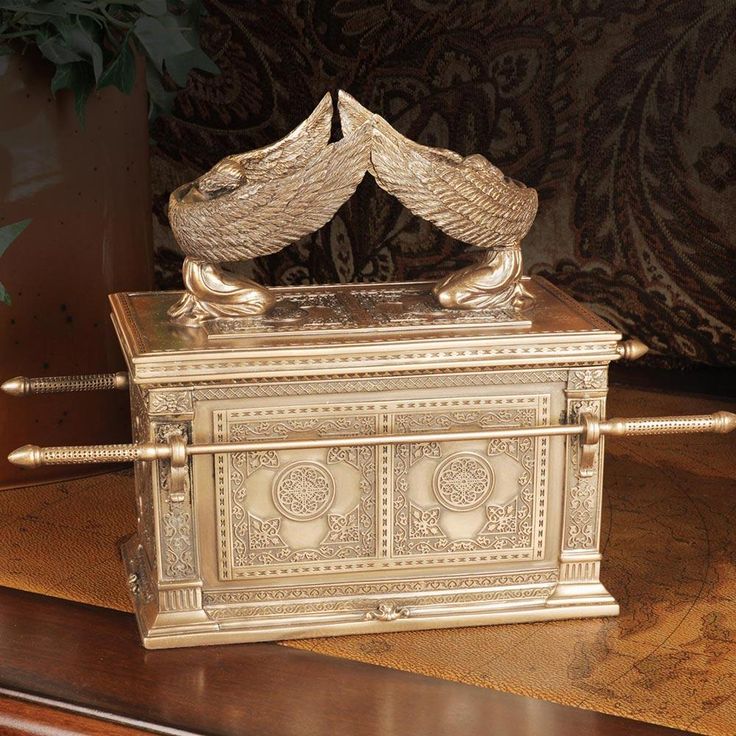
the Ark of the Covenant from the Judeo-Christian tradition (Raiders),
the Holy Grail, from the Christian tradition (Crusade),

and the Lance of Longinus, also from the Christian tradition.

(If we can believe Mein Kampf, where Hitler refers to the Lance—and a nail attached to it—as “magical relics”, perhaps this is the basis for the idea in the films as to why he’s a collector? I’m sorry that I’m relying upon an early translation here, rather than, as I normally do, making my own translation of the German text, but, so far, I haven’t been able to locate the original German passage—perhaps “magische Relikte ”? It’s interesting, by the way, that both the villain of Dial and Indiana determine that the Lance which is being carried off in a train full of loot is a fake. The history of various objects claimed to be the actual “Lance of Longinus” is long and complicated, but at least one of the leading candidates has been determined, by the latest scientific tests, to be inauthentic, something the two film characters seem to be able to do by eyesight alone. For more, see: https://en.wikipedia.org/wiki/Holy_Lance )
It’s never said what Hitler intends to do with these objects, but here’s where, I suggest, these real villains appear.
The first is Rene Belloque, a rather dodgy French archaeologist, who appears in the initial episode of Raiders, where, backed by “Hovitos” Native Americans, he takes the golden idol from Jones which Jones, in a memorable scene, has managed to extract from its deposit site.

He then reappears later in the film as director of a German (it’s 1936, which means Nazi) archaeological project in Egypt, employed to oversee the excavation of the “lost city of Tanis”—and to discover the whereabouts of the Ark. (For more on the real city of Tanis, which was actually rediscovered in the 1860s, see: https://en.wikipedia.org/wiki/Tanis )
When the Ark is in his hands, however, his behavior is hardly that of an archaeologist. Instead of making drawings and taking photographs at each stage (unfortunately, archaeology, even as it discovers, is forced to destroy, so careful records are crucial to the understanding of a site or an object), he dresses up as a high priest

and recites what sound like prayers in Hebrew. (In fact, it is a prayer—see this website for an explanation: https://www.jta.org/jewniverse/2016/why-indiana-joness-nazi-loving-enemy-said-a-torah-prayer. ) To me, this allows for the possibility that, at this stage, he’s abandoned his obligations to his sinister employers

and looks to be attempting to tap into what he believes to be the power of the Ark, or its contents, for himself, and, as we know, this leads to an unexpected consequence—

This, in turn, foreshadows the behavior—and fate–of Walter Donovan

in The Last Crusade.
He, too, although appearing to work for the Nazis, has his own agenda: immortal life from drinking from the Holy Grail,

which goes awry, just as Rene’s attempt to use the Ark has been less than successful.

This leaves us with our retired Nazi in Dial of Destiny, “Juergen Voller”.

As I discussed in my two-part review, although Voller was once a Nazi,

or at least was surrounded by them, his ultimate goal is somewhat murky: it appears that he’s going to use the “Dial” to cross time, arrive in Berlin just in time to assassinate Hitler and take his place, winning a war which, through his mistakes, Hitler lost. He assumes—we’re never told why—that the “Dial” (aka “the antikythera”)

is a time-traveling device (and how it works is also never clearly explained, but it seems to have something to do with the weather) and it will transport him and his entourage to his chosen site at the moment of his choosing (and how this is supposed to happen is also not clear—and, at this point, I think that Indiana Jones’ remark in the first film—

is true for the writers of what I’m afraid is a pretty shaky script).
If you haven’t read my review, and are interested, turn back to “Jonesing for Indiana”, 24 July, 2023, 3 August, 2023, for more, but here, I would say that, as in the case of Belloque and Donovan, his villainy is more about him than about the cause of his employers. It’s never mentioned directly, but, once he’s dealt with Hitler, doesn’t this assume that Voller will then be the new Fuehrer? After all, he could use his time traveling, if it were real, to tweak history here and there wherever he wished, taking a backseat, but, controlling, role. Instead, he will be front and center, suggesting less a German patriot than a would-be megalomaniac, rather like the man he intends to replace and this certainly fits in with the idea that these films aren’t about confronting the Nazis, but rather about foiling the massive egos of three men for whom the Nazis are nothing more than employers and enforcers.
Thanks, as ever, for reading.
Stay well,
As I’ve cautioned before, always choose wisely,

And know that, as always, there’s
MTCIDC
O
PS
While I always try to be as fair as I can be in reviews—after all, the majority of those creating films really do believe in their projects and aren’t simply trying to cheat the viewers—this last Indiana Jones film seems, for all the time and money spent, compromised by what is really very sloppy writing. I’ve mentioned some things, both here and in my review, but, as I was writing this, another example occurred to me. Unlike Belloque and Donovan’s ends, Voller’s death is treated almost as an afterthought, as if the villain was nothing more than a plot device picked up, used, then discarded, as we simply see his body sprawled next to the ruined aircraft. Archimedes goes over to the body and removes Voller’s wristwatch, putting it on his own wrist. Possibly he thinks that this is just a nice addition to his jewelry collection, but, beyond that:
1. after such a crash, it would probably have been broken and therefore would no longer register time (although it seems to be in perfect condition—not even rusted—when it’s discovered by Jones in Archimedes’ tomb over 2000 years later) and how would Archimedes even understand that that was its function as
2. Archimedes, like other Greeks, used the letters of his alphabet for numbers—if the dial had Roman numerals, they would probably have meant nothing to him and, if it had Arabic numerals, not only would they have meant nothing, but they would also have been an anachronism, as Arabic numerals—which were, in fact, invented in India—only appeared in western Europe in the 10th century AD—see this useful article: https://en.wikipedia.org/wiki/Arabic_numerals
All of which makes me sad: I’ve always looked forward to the next Indiana Jones film, ever since the first one and, although I’ve been disappointed by 2 and 4, I had real hopes for 5 and, given better writers, who knows what we might have seen at the end of his long, adventurous career?
 doubtfulsea