• About

doubtfulsea

~ adventure fantasy

Monthly Archives: September 2023

Busting Into Mars

27 Wednesday Sep 2023

Posted by Ollamh in Uncategorized

≈ Leave a comment

Welcome, as always, dear readers.

I was reminded of my last posting by seeing this on the back bumper of a car—

Mars to me is this—

and this—

which hardly makes it look worth busting for, or even visiting, for all of the scientific curiosity about it which could be satisfied by extensive exploration, if not colonization.

Suppose, however, it looked like this—

or this—

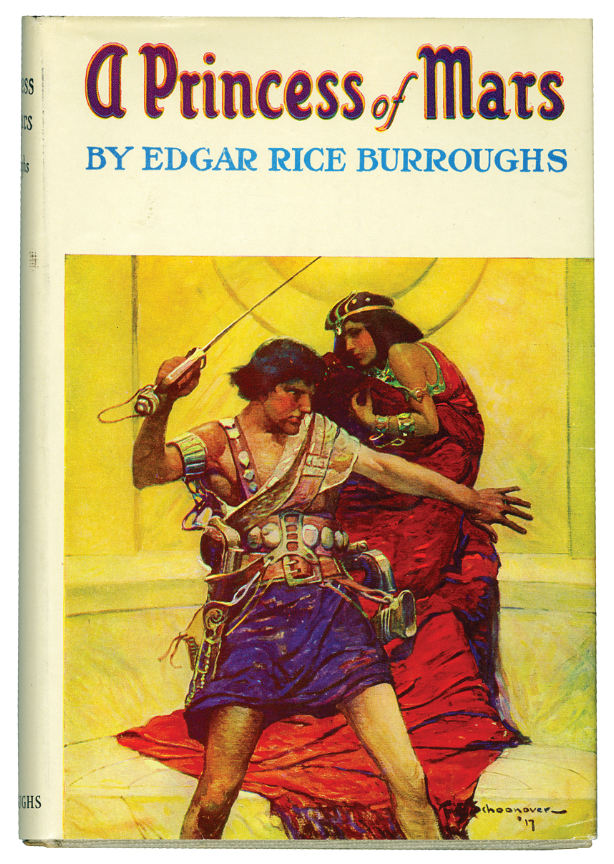
(This is from https://www.erbzine.com/mag33/3387.html  a fan magazine devoted to the works of Edgar Rice Burroughs—about whom more shortly!)

 or this—
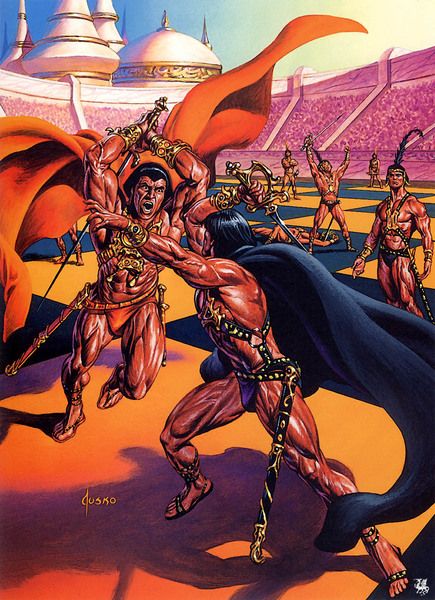
(Joe Jusko—you can visit his website here:  http://www.joejusko.com/default.asp )

Beginning in the 1870s, these latter views were the basis of science—and science fiction.

The first figure to put forward such a view of Mars was Giovanni Schiaparelli (1835-1910),
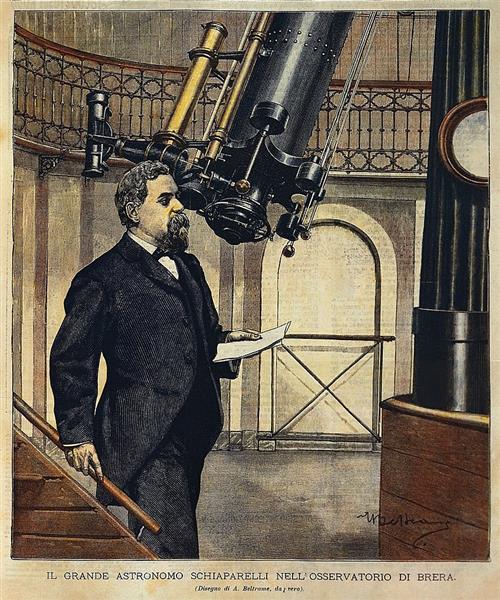
who, turning his telescope towards the Red Planet, believed that he saw patterns of crisscross lines across its surface, which he called canali, in Italian, and which can mean everything from the anatomical  “duct” to (now) a television channel, to “canal” (as in i canali di Venezia),in an 1877 publication.

It’s important here to note that Schiaparelli was no crackpot, but a well-known and well-respected astronomer, and this will be true for the prominent men who furthered the idea that Mars was inhabited by sentient beings with engineering and architectural skills.  The texts which such men wrote are carefully-reasoned, based on the latest science known to them.  The basic problem was that Schiaparelli hadn’t seen canals at all, even as he produced maps of Mars’ surface which included them
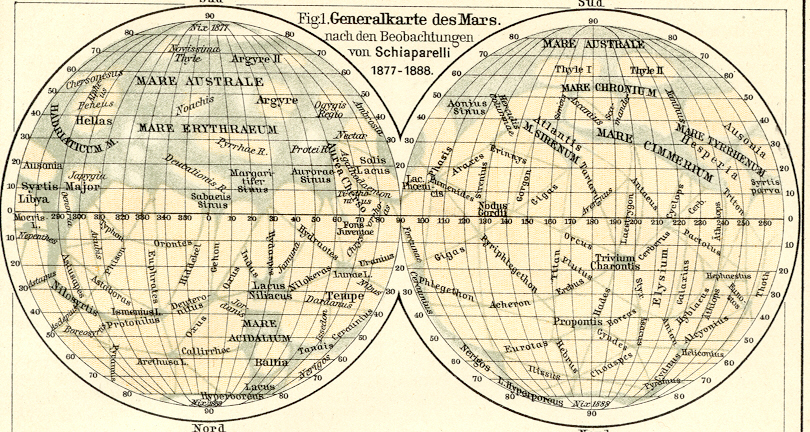
and wrote articles about the potential inhabitants (see https://www.gutenberg.org/cache/epub/7781/pg7781.html  La Vita sul Pianeta Marte, extracts from the journal “Natura ed Arte” from 1893, 1895, 1909 ) in scientific journals.

He was followed by the splendidly-named Camille Flammarion (1842-1925),

another prominent astronomer and the author of numerous books on the subject, including

La planete Mars et ses conditions d’habitabilite (1892)  and which is available here: https://archive.org/details/laplantemarset01flam   For a complete translation into English of this work, log in to the Internet Archive and take out the Patrick Moore version here:  https://archive.org/details/camilleflammario0000flam  For a brief review of Flammarion’s ideas in English, see:    https://ia903207.us.archive.org/33/items/jstor-25118640/25118640.pdf   The North American Review, 1 May, 1896, 546-557, “Mars and Its Inhabitants” .

For English-speakers, the scientist who probably had the greatest effect upon popular views of Mars was Percival Lowell (1855-1916),
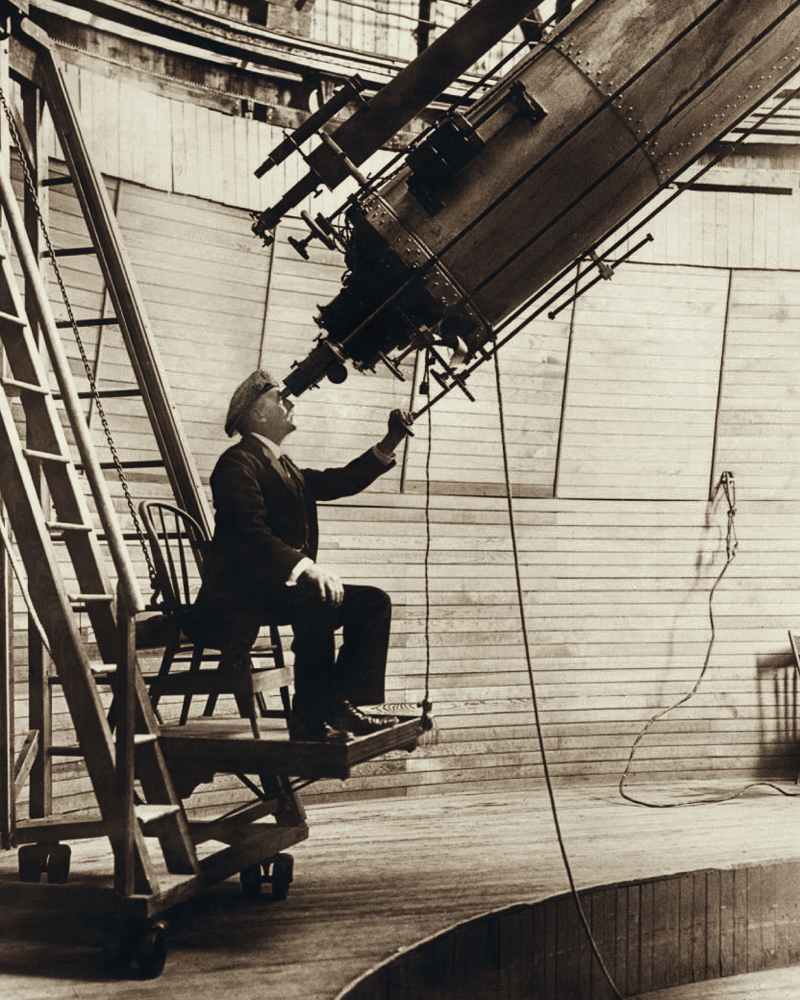
who, besides lectures and scholarly articles, produced three extensive works on the subject:  Mars (1895—available here:   https://archive.org/details/mars01lowegoog/page/n12/mode/2up  ), Mars and Its Canals (1906—dedicated to Schiaparelli and available here:   https://archive.org/details/marsanditscanals00loweiala/mode/2up  ), and  Mars As the Abode of Life (1908 and available here:   https://archive.org/details/marsasabodelife03lowegoog/mode/2up    ).

What I find particularly interesting about the approach over time to the subject of Mars, its inhabitants, and its architecture is that this was believed to be an archaic civilization and may even be in serious decline, a fact which was picked up—among other details–by a man who was about to make his name by basing a series of fictional works upon the scientific research and publications of such scientists, Edgar Rice Burroughs (1875-1950).

In February, 1912, Burroughs published the first of six installments of a series entitled “Under the Moons of Mars” in The All-Story (and which you can read here:   https://archive.org/details/all-story-v-022n-02-1912-02-ifc-ibc-ufikus-dpp )

It concerns the adventures of John Carter, an ex-Confederate, who after the war, turns prospector in the American Southwest, only to be mysteriously whisked to what he in time discovers is called “Barsoom”, but is based upon the Mars of the Victorian/Edwardian astronomers, dying civilization, canals, and all.

It has two main races, a more human one, who were the city-builders, and a larger and more barbaric humanoid  green-skinned race, who are nomads, but who inhabit the deserted human cities during their wanderings.

(by Adam C. Moore, a wonderfully-talented artist who can seemingly draw anything and who goes by LAEMEUR—visit his website at:  https://laemeur.com/illustration/ )

Although I’ve always known that Burroughs was an early science fiction, fantasy writer, I hadn’t read a word of his work until, in my current slow study of science fiction, I added “Under the Moons of Mars” in its 1917 novel form, A Princess of Mars, to my reading list (and you can add it to your list here:   https://archive.org/details/aprincessmars00burrgoog/page/n9/mode/2up  ) 
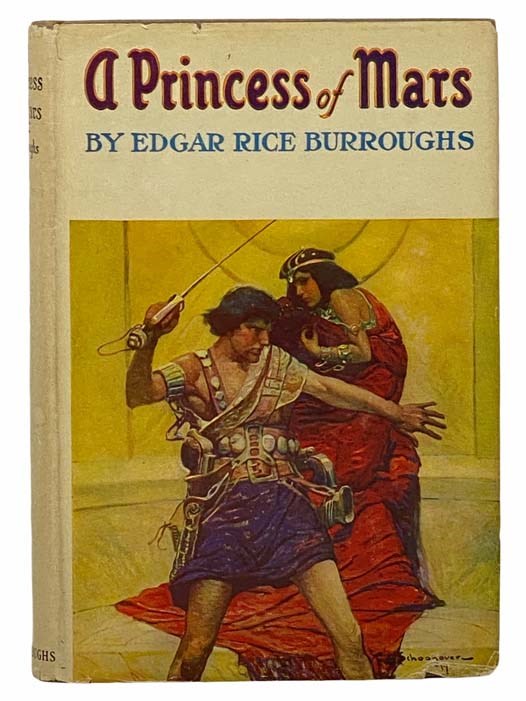
It didn’t take more than a chapter or two before I found myself with a page-turner.  Although the characters are familiar from any high adventure novel—the man of his hands dropped into a new and strange situation, the proud princess in need of rescue, etc—Burroughs, for me, had set these against a backdrop which, though based upon period popular scientific thought, he made his own by taking what he’d found and expanding it into something more dynamic, both in setting and in the politics and conflicts of what might be a dying world. 

So far, I’ve only read the first book, but there are 9 more stories in novel form to come, from 1918 (The Gods of Mars) to 1948 (Llana of Gathol—for a listing, see:  https://en.wikipedia.org/wiki/Barsoom ) to look forward to and Burroughs wrote other series, including one which he began publishing in the same year and in the same magazine as “Under the Moons of Mars” and which probably brought him more fame and wealth than the adventures of John Carter—

(This is also from the Burroughs website which, if Burrough’s work interests you, and you don’t know the site, I encourage you to visit and browse its extensive archive.)

As ever, thanks for reading.

Stay well,

If dropped onto another planet, hope that its gravity is lighter,

And remember that, as always, there’s

MTCIDC

O

(In)Compleat

20 Wednesday Sep 2023

Posted by Ollamh in Uncategorized

≈ Leave a comment

As always, welcome, dear readers.

Spelling, in English, which can cause non-native English-speakers to wonder just how crazy we are, began to become standardized only in the 18th century.  Before this, one might, for example, see two competing spellings of the main word in the title of this piece:  “Compleat” and “Complete”, both considered valid, at least by the spellers.

Although the spelling “compleat” might have been commonly acceptable in the 17th century, it is one work, in particular, which has continued to provide us with that competing spelling, Izaak Walton’s (1593-1683)

well-known fishing manual, The Compleat Angler,

first published in 1653, with various later editions, including one with an extensive addition, in 1676, by Walton’s friend, and fellow-angler, Charles Cotton (1630-1687),

to whom was attributed, in the 18th century, another “Compleat”, The Compleat Gamester (1674).

(This is the 1680 edition.  If you’d like to learn how to play such card games as “Lanterloo” and “Bragg”, here’s the 1725 edtiion to show you the way:   https://ia902708.us.archive.org/6/items/bim_eighteenth-century_the-compleat-gamester-o_cotton-charles_1725/bim_eighteenth-century_the-compleat-gamester-o_cotton-charles_1725.pdf  For myself, the cockfighting is distasteful and I’d avoid it. For the Walton/Cotton, here’s a wonderfully leisurely 1897 edition, heavily illustrated with handsome engravings, and based upon that 1676 edition:  https://archive.org/details/compleatangler00gallgoog/page/24/mode/2up   One of my favorite illustrators, Arthur Rackham, made an illustrated edition, but, as it’s from 1931, it’s still locked in copyright, but you can see images from it if you write in:  “Compleat Angler Rackham”.)

I most recently happened upon this spelling in a completely/compleatly different context:

This is a collection of short novels or novellas jointly written by L(yon) Sprague de Camp (1907-2000)

and Fletcher Pratt (1897-1956),

2 prolific fantasy/science fiction authors of the mid-to later 20th century.  (For a very partial list of de Camp’s works, see:   https://en.wikipedia.org/wiki/L._Sprague_de_Camp ;  for the same for Pratt—who also wrote a number of historical works—see:   https://en.wikipedia.org/wiki/Fletcher_Pratt )

Although there are three novellas in this collection, “The Roaring Trumpet”, “The Mathematics of Magic”, and “The Castle of Iron”, there is a fourth, published as “Wall of Serpents”.   And these were not their original publication—or forms—as  all had been previously published in fantasy/science fiction magazines of the 1940s and early 1950s, like Unknown (about which you can read a wonderfully detailed account here:   https://en.wikipedia.org/wiki/Unknown_(magazine) ).

In these stories, the main character, Harold Shea, a psychologist by training, travels, with various colleagues, to a series of worlds based upon mythology and literary sources, “The Roaring Trumpet” upon Norse legends,

(the original cover of Unknown where the story first appeared)

“The Mathematics of Magic”, in which the characters fall into the world of Edmund Spenser’s (1552-1599)

The Fairy Queen,

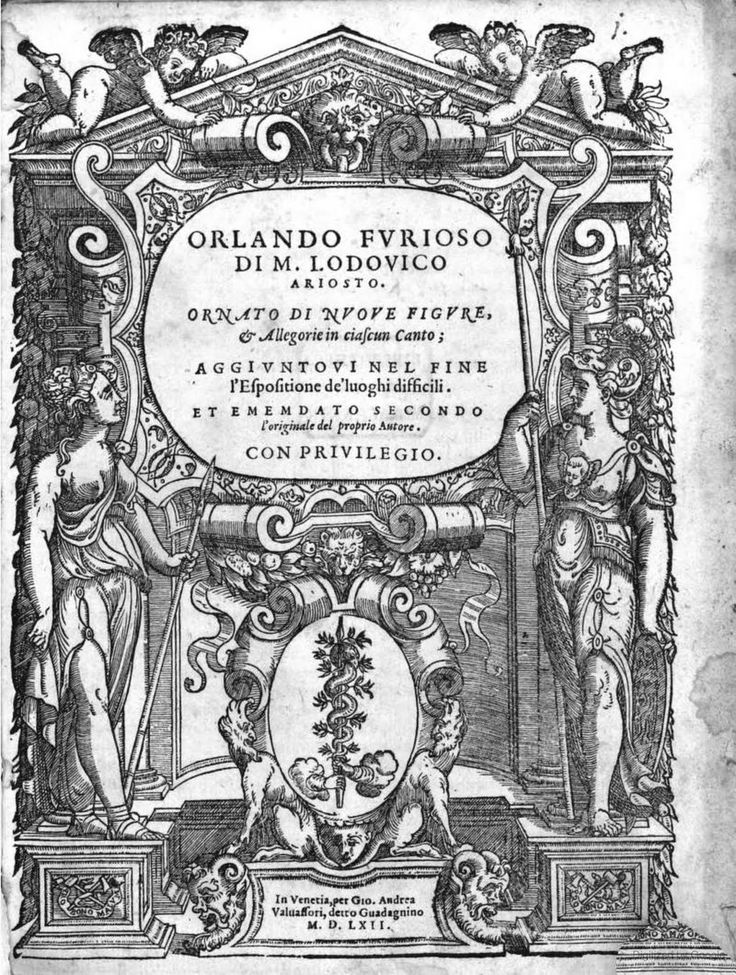
“The Castle of Iron” into the world of Ludovico Ariosto’s (1474-1533)

Orlando Furioso

(originally published in 1532, this is an early edition from 1562)

and Wall of Serpents, into the land of Finnish myth from Elias Loenrot’s (1802-1884)

Kalevala,

(This is the more complete edition of 1849, Loenrot had published an earlier version in 1835.)

but, in mid-book, the main characters are suddenly transported from ancient Finland to ancient Ireland, where they spend time with characters out of the Ulster Cycle, the main charmer being the hero Cu Chulainn.

(This is actually a rather subdued portrait of “the Hound of Ulster”, most of those I’ve seen have absolutely no relation to the figure we know from Old Irish Literature.  If you’re interested, you might try Lady Gregory’s  Cuchulain of Muirthemne, 1903, here:  https://archive.org/details/cuchulainofmuirt00greg_0  bearing in the mind that Lady G was a late-Victorian and the original stories can be a bit raunchier than she will translate them. )

Although the original editor, John W. Campbell, as we learn from the article on Unknown cited above, wanted  “the fantasy elements in a story to be developed logically”, I confess that I have no idea as to how the characters are transferred to these places.  The theory behind the transference is discussed in “The Roaring Trumpet” , but my eyes crossed when I tried to follow it.  The method is really quite beside the point, however, as, once the characters are dropped into each world, the narrative roars by, and, although there are in-jokes, if you know the originals (parts of Wall of Serpents, for example, are written in the same metre as the original Finnish text), the stories are solid enough in themselves to be enjoyable without doing anything more than following along. (If you’d like to read them—and I would encourage you to—you can read the first three by joining the Internet Archive and borrowing a copy of The Compleat Enchanter here:  https://archive.org/details/compleatenchante00deca  )

The title of this piece is “Incompleat”, however, and refers, in fact, to a larger project I’ve set myself.  Although I’ve read a certain amount of fantasy and science fiction, I’ve never done this systematically.  Consequently, I decided to give myself a better education, beginning with science fiction, compiling a list of books, novellas, and short stories in chronological order which I intend to read.  I admit to doing a bit of skipping around as I fill things in, so I still have to read Jules Verne’s De la Terre a la Lune (“From the Earth to the Moon”, 1865, first English translation, 1867), for example, but I’d gotten caught by de Camp/Pratt after reading earlier things like Edgar Rice Burrough’s (1875-1950) A Princess of Mars (1912/17, which you can read here:  https://archive.org/details/aprincessmars00burrgoog/page/n9/mode/2up ),

about which I’m definitely going to write in the future.  The field is vast (and fantasy is just as large—go to any decent bookstore and look at the shelves and shelves of the stuff), so I want to be selective, trying to find what’s most representative of different eras and trends.  This will mean that I’ll definitely wind up with some less than masterpieces, but it’s important, to understand the field, to see just what has been considered noteworthy in the past.

I doubt that I’ll ever write a posting with the title “Compleat”, but I’m sure to find much that’s worth the read and, when I do, I’ll be glad to pass it on to you.

Stay well,

Beware any enchanter who claims compleatness,

And remember that there’s always

MTCIDC

O

PS

And, if you read this blog for Tolkien, not to worry—he’s always there and always will be.  After all, he himself was a fan of the work of Isaac Asimov.

(Old) Guys

13 Wednesday Sep 2023

Posted by Ollamh in Uncategorized

≈ Leave a comment

As always, welcome, dear readers.

When I saw the new Indiana Jones film the first time,

I was a bit concerned that the actor’s actual age—80—might be an impediment to the action and certain remarks, mainly made early in the film–the character called “Teddy” initially addresses him as “old timer” and his co-star, “Helena”, remarks to him, “I like the hat, by the way.  Makes you look at least two years younger.”  as well as later calling him “an aging grave robber”—made me wary, but, once the action set in, age was mostly ignored, even though Jones’ character in the film was supposedly 70.

At the same time, I was disappointed that, when his old friend, Sallah, appeared,

after a brief scene, he was told, “This is not an adventure, Sallah.  Those days have come and gone.” and he was dismissed from the film, only to reappear briefly as a grandfatherly figure at the end.

To me, this seemed like the waste of an interesting character, who had twice helped Jones against Nazis,  and, as Jones was on his way to Tangier, it would seem that Sallah, a native Arabic-speaker, might have been of real use there, as well.  Was the actor (John Rhys Davies’) actual age (79) against him, especially if Jones is supposed to be older, as well?

This set me thinking about the ages of heroes in adventure.  Are there more like Indiana Jones?  And would that mean a second chance for Sallah?

Adventure is obviously a giant subject, and growing larger all the time, so I’ll restrict my questions for the moment to what I’m teaching this fall:  the Odyssey, Beowulf, and The Hobbit.

Beginning with the hero of the first of these, how old is Odysseus, for instance?  Athena, to protect him from being initially overwhelmed by the 100+ suitors and their minions,

 turns him into an old beggar

(This may be an Alan Lee?)

when he arrives on Ithaka, which presumably suggests he will be at least somewhat different from his  actual age.  (Odyssey, Book 13.397-403)  Although the text never provides a definite answer, we might do a little creative arithmetic, using the few facts we have about Odysseus’ early life.

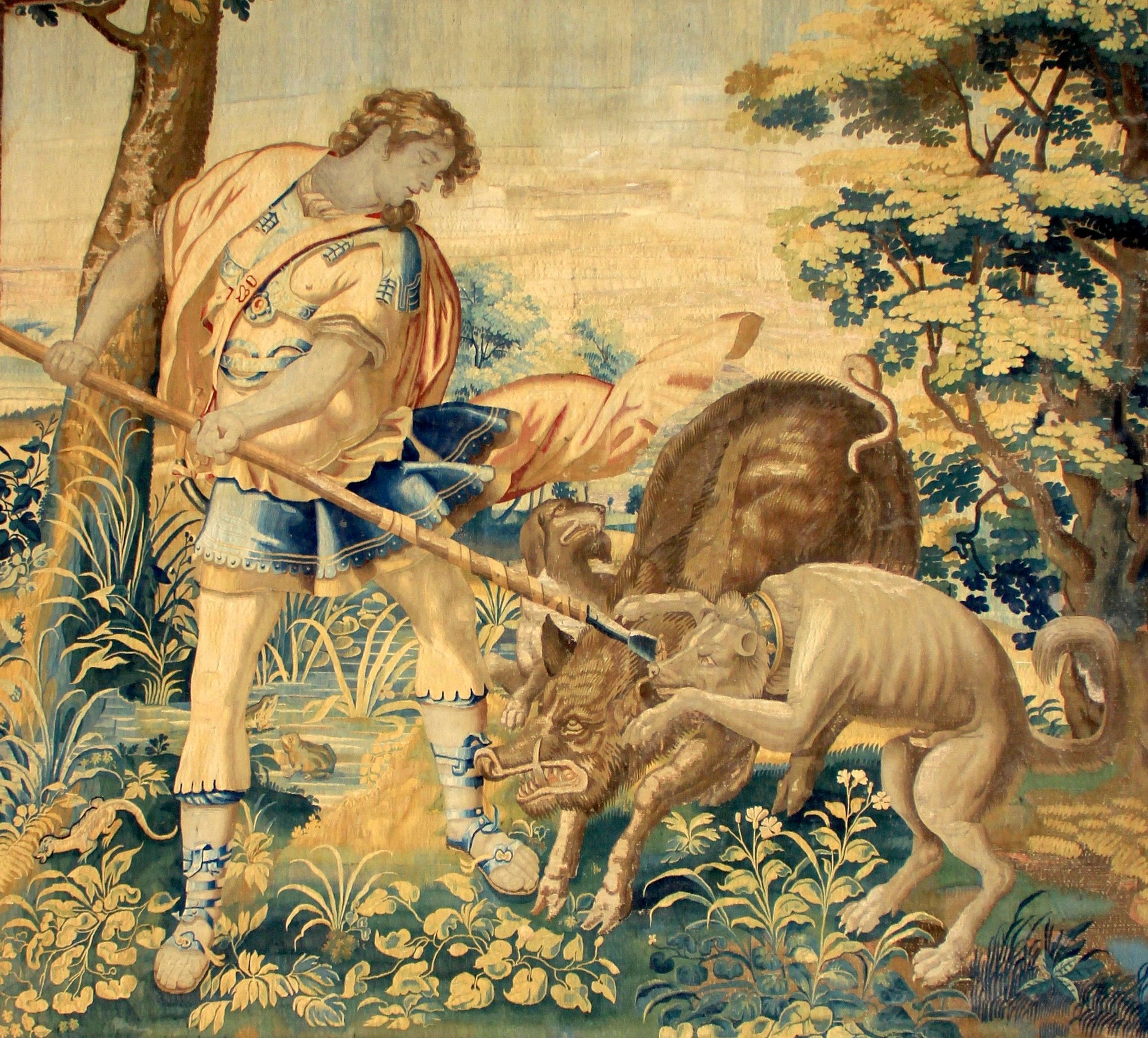
1. His first adventure appears to be recorded in the Odyssey.  His grandfather had instructed his parents to send the boy to him when he first entered adulthood, so might we guess 18 to 20?  While staying with his grandfather, Odysseus was wounded during a boar hunt

and carried the scar with him into his later adult life, as its recognition, many years later, by his old nurse, Eurykleia,

almost gives away his disguise.  (Odyssey, Book 19, 386-490)

Of other early events, we learn of Odysseus winning Penelope in a footrace (Pausanias, Description of Greece, 3.12.2, 3.12.4—which you can read at:  https://www.theoi.com/Text/Pausanias3A.html ), although we have no idea of how old either Odysseus or Penelope was at that time.  There has been, as you can imagine, lots of scholarly discourse on when people in ancient Greece married, but there may be some consensus that girls would marry after about the age of 14 or 15—although the age of men is much less firm.  One ancient source suggests that girls should be about 19 and men about 30 (Hesiod, Works and Days, 695-699—for one view of the question, see:  https://talesoftimesforgotten.com/2023/02/28/at-what-age-did-ancient-greek-women-typically-marry/ )

Beyond this event, we see Odysseus acquiring a bow from Iphitos, which he receives on a trip upon which his father, Laertes, and the elders of Ithaka had sent him (Odyssey, Book 21, 1-41), suggesting that he is still young enough to be under his father’s authority.  (This is the bow with which he later deals with the suitors.)

And we learn that his son, Telemakhos, was a baby when Odysseus left for the Trojan War.  (Apollodorus, Epitome, E 3.7, see:  https://www.theoi.com/Text/ApollodorusE.html  and Hyginus, Fabulae, 95, see:  https://topostext.org/work/206 )

Odysseus goes off to the War for ten years and spends a further 9 years coming home, adding 20 years to whatever total we can imagine.  He might have been about 40, then, or, considering the passage from Hesiod above, maybe fifty—although this would go against the idea that Athena has turned him into an old beggar.  Even if we settle upon 40, Odysseus, in a world where life expectancy may have been relatively short (lots of scholarly argument on this—just read through the Wiki article on “Life Expectancy” here:  https://en.wikipedia.org/wiki/Life_expectancy ), was rather far along in his life and, though vigorous (with Athena’s help), perhaps about the equivalent of Indiana Jones in Dial.  (For a long, detailed look at Odysseus, see:  https://mythopedia.com/topics/odysseus )

We don’t know very accurately the ages of the title character in Beowulf when he’s involved in his major conflicts, but we do know that, when he finally faces the dragon, near the poem’s end,

he’s been king of his people for “fifty winters” (fiftig wintra, Beowulf, 2208—for a very useful translation, with the original Old English text placed parallel and lots of notes, see:  https://heorot.dk/beowulf-rede-text.html ).  Presuming that he was a young man when he fought Grendel and his mother earlier in the poem, I think that it’s safe to assume that he’s at least in his very late 60s or early 70s.

In the case of Bilbo, in The Hobbit, we are on firmer ground.  When Gandalf in April, TA2941, arrives to recruit Bilbo for the adventure Bilbo initially says he wants no part of,

(the Hildebrandts—and one of my all-time favorite illustrations by them)

Bilbo was 50, having been born in TA2890 (Bilbo’s birthday, as we know, is in September—for the date of Gandalf’s arrival, see “The Quest for Erebor”in Douglas Anderson’s The Annotated Hobbit, 375).

Hobbits, however, seem to have a longer life expectancy than humans, so that Bilbo’s 50 is probably not our 50—after all, hobbits only came of age at 33—although Bilbo’s state of preservation at 99 did cause remark in the Shire (see The Fellowship of the Ring, Book One, Chapter 1, “A Long-expected Party”).

Odysseus, in his 40s or even 50s, is able, with the aid of his son, Telemachus, and two slaves and a little help from Athena, to slaughter over a hundred suitors.  Beowulf, perhaps in his 70s, with the assistance of a single young warrior, Wiglaf, kills a fearsome dragon.  Even if Bilbo is a young fifty, he still manages to survive trolls, goblins, spiders, hostile elves, and a dragon and live another 80 years (we don’t know how much the Ring may have had to do with that longevity—after all, the Old Took manages 130 without it).  That being the case, perhaps the writers of The Dial of Destiny were a little premature in relegating Sallah to the sidelines?

Thanks for reading, as always.

Stay well,

Remember:  “It’s not the years, it’s the mileage”,

And remember, as well, that there’s always

MTCIDC

O

These Guys

06 Wednesday Sep 2023

Posted by Ollamh in Uncategorized

≈ Leave a comment

Welcome, as ever, dear readers.

The title of this posting is actually only part of a quotation—here’s the full line—

It’s Indiana Jones, of course, in The Last Crusade (1989),

who has just come upon a German operations center in an Austrian castle.

In my two-part review of the final Indiana Jones movie, The Dial of Destiny,

(“Jonesing for Indiana”, 24 July, 2023, 3 August, 2023)

I summed up the series’ villains, in which, out of five films in all, one (The Temple of Doom) has an evil prime minister,

one (Crystal Skull), has a Soviet agent,

(with that very odd sword—although she actually uses it at one point, it has always struck me as more of an obvious plot device than something natural to the character and particularly to the story)

one (The Dial of Destiny) has an ex-Nazi (really, a kind of Nazi in semi-retirement, with plans),

and two (Raiders of the Lost Ark)

and (The Last Crusade)

with active Nazis in uniform.

And yet, the more I’ve thought about it, the more it seemed that the Nazis weren’t really the villains at all, only the muscle for the real antagonists.

The basic premise for all three Nazi films was that Hitler was a collector of what he believed to be sources of power from the ancient world, including

the Ark of the Covenant from the Judeo-Christian tradition (Raiders),

the Holy Grail, from the Christian tradition (Crusade),

and the Lance of Longinus, also from the Christian tradition.

(If we can believe Mein Kampf, where Hitler refers to the Lance—and a nail attached to it—as “magical relics”, perhaps this is the basis for the idea in the films as to why he’s a collector?  I’m sorry that I’m relying upon an early translation here, rather than, as I normally do, making my own translation of the German text, but, so far, I haven’t been able to locate the original German passage—perhaps “magische Relikte ”?  It’s interesting, by the way, that both the villain of Dial and Indiana determine that the Lance which is being carried off in a train full of loot is a fake.  The history of various objects claimed to be the actual “Lance of Longinus” is long and complicated, but at least one of the leading candidates has been determined, by the latest scientific tests, to be inauthentic, something the two film characters seem to be able to do by eyesight alone.  For more, see:  https://en.wikipedia.org/wiki/Holy_Lance )

It’s never said what Hitler intends to do with these objects, but here’s where, I suggest, these real villains appear.

The first is Rene Belloque, a rather dodgy French archaeologist, who appears in the initial episode of Raiders, where, backed by “Hovitos” Native Americans, he takes the golden idol from Jones which Jones, in a memorable scene, has managed to extract from its deposit site.

He then reappears later in the film as director of a German (it’s 1936, which means Nazi) archaeological project in Egypt, employed to oversee the excavation of the “lost city of Tanis”—and to discover the whereabouts of the Ark.  (For more on the real city of Tanis, which was actually rediscovered in the 1860s, see:  https://en.wikipedia.org/wiki/Tanis )

When the Ark is in his hands, however, his behavior is hardly that of an archaeologist.  Instead of making drawings and taking photographs at each stage (unfortunately, archaeology, even as it discovers, is forced to destroy, so careful records are crucial to the understanding of a site or an object), he dresses up as a high priest

and recites what sound like prayers in Hebrew.  (In fact, it is a prayer—see this website for an explanation:  https://www.jta.org/jewniverse/2016/why-indiana-joness-nazi-loving-enemy-said-a-torah-prayer.  )  To me, this allows for the possibility that, at this stage, he’s abandoned his obligations to his sinister employers

and looks to be attempting to tap into what he believes to be the power of the Ark, or its contents, for himself, and, as we know, this leads to an unexpected consequence—

This, in turn, foreshadows the behavior—and fate–of Walter Donovan

in The Last Crusade.

He, too, although appearing to work for the Nazis, has his own agenda:  immortal life from drinking from the Holy Grail,

which goes awry, just as Rene’s attempt to use the Ark has been less than successful.

This leaves us with our retired Nazi in Dial of Destiny, “Juergen Voller”.

As I discussed in my two-part review, although Voller was once a Nazi,

or at least was surrounded by them, his ultimate goal is somewhat murky:  it appears that he’s going to use the “Dial” to cross time, arrive in Berlin just in time to assassinate Hitler and take his place, winning a war which, through his mistakes, Hitler lost.  He assumes—we’re never told why—that the “Dial” (aka “the antikythera”)

is a time-traveling device (and how it works is also never clearly explained, but it seems to have something to do with the weather) and it will transport him and his entourage to his chosen site at the moment of his choosing (and how this is supposed to happen is also not clear—and, at this point, I think that Indiana Jones’ remark in the first film—

is true for the writers of what I’m afraid is a pretty shaky script).

If you haven’t read my review, and are interested, turn back to “Jonesing for Indiana”, 24 July, 2023, 3 August, 2023, for more, but here, I would say that, as in the case of Belloque and Donovan, his villainy is more about him than about the cause of his employers.  It’s never mentioned directly, but, once he’s dealt with Hitler, doesn’t this assume that Voller will then be the new Fuehrer?  After all, he could use his time traveling, if it were real, to tweak history here and there wherever he wished, taking a backseat, but, controlling, role.  Instead, he will be front and center, suggesting less a German patriot than a would-be megalomaniac, rather like the man he intends to replace and this certainly fits in with the idea that these films aren’t about confronting the Nazis, but rather about foiling the massive egos of three men for whom the Nazis are nothing more than employers and enforcers.

Thanks, as ever, for reading.

Stay well,

As I’ve cautioned before, always choose wisely,

And know that, as always, there’s

MTCIDC

O

PS

While I always try to be as fair as I can be in reviews—after all, the majority of those creating films really do believe in their projects and aren’t simply trying to cheat the viewers—this last Indiana Jones film seems, for all the time and money spent, compromised by what is really very sloppy writing. I’ve mentioned some things, both here and in my review, but, as I was writing this, another example occurred to me.   Unlike Belloque and Donovan’s ends, Voller’s death is treated almost as an afterthought, as if the villain was nothing more than a plot device picked up, used, then discarded, as we simply see his body sprawled next to the ruined aircraft.  Archimedes goes over to the body and removes Voller’s wristwatch, putting it on his own wrist.  Possibly he thinks that this is just a nice addition to his jewelry collection, but, beyond that:

1. after such a crash, it would probably have been broken and therefore would no longer register time (although it seems to be in perfect condition—not even rusted—when it’s discovered by Jones in Archimedes’ tomb over 2000 years later) and how would Archimedes even understand that that was its function as

2. Archimedes, like other Greeks, used the letters of his alphabet for numbers—if the dial had Roman numerals, they would probably have meant nothing to him and, if it had Arabic numerals, not only would they have meant nothing, but they would also have been an anachronism, as Arabic numerals—which were, in fact, invented in India—only appeared in western Europe in the 10th century AD—see this useful article:  https://en.wikipedia.org/wiki/Arabic_numerals

All of which makes me sad:  I’ve always looked forward to the next Indiana Jones film, ever since the first one and, although I’ve been disappointed by 2 and 4, I had real hopes for 5 and, given better writers, who knows what we might have seen at the end of his long, adventurous career?

The Doubtful Sea Series Facebook Page

The Doubtful Sea Series Facebook Page

  • Ollamh

Categories

  • Artists and Illustrators
  • Economics in Middle-earth
  • Fairy Tales and Myths
  • Films and Music
  • Games
  • Heroes
  • Imaginary History
  • J.R.R. Tolkien
  • Language
  • Literary History
  • Maps
  • Medieval Russia
  • Military History
  • Military History of Middle-earth
  • Narnia
  • Narrative Methods
  • Poetry
  • Research
  • Star Wars
  • Terra Australis
  • The Rohirrim
  • Theatre and Performance
  • Tolkien
  • Uncategorized
  • Villains
  • Writing as Collaborators
Follow doubtfulsea on WordPress.com

Across the Doubtful Sea

Recent Postings

  • On the Road(s) Again—Again November 26, 2025
  • On the Road(s) Again November 19, 2025
  • To Bree (Part 2) November 12, 2025
  • To Bree (Part 1) November 5, 2025
  • A Plague o’ Both—No, o’ All Your Houses! October 29, 2025
  • It’s in Writing (2:  I’st a Prologue, or a Poesie for a Ring?) October 22, 2025
  • It’s in Writing (1) October 15, 2025
  • King Trotter? October 8, 2025
  • The Voices in His Head  October 2, 2025

Blog Statistics

  • 102,408 Views

Posting Archive

  • November 2025 (4)
  • October 2025 (5)
  • September 2025 (4)
  • August 2025 (4)
  • July 2025 (5)
  • June 2025 (4)
  • May 2025 (4)
  • April 2025 (5)
  • March 2025 (4)
  • February 2025 (4)
  • January 2025 (5)
  • December 2024 (4)
  • November 2024 (4)
  • October 2024 (5)
  • September 2024 (4)
  • August 2024 (4)
  • July 2024 (5)
  • June 2024 (4)
  • May 2024 (5)
  • April 2024 (4)
  • March 2024 (4)
  • February 2024 (4)
  • January 2024 (5)
  • December 2023 (4)
  • November 2023 (5)
  • October 2023 (4)
  • September 2023 (4)
  • August 2023 (5)
  • July 2023 (4)
  • June 2023 (4)
  • May 2023 (5)
  • April 2023 (4)
  • March 2023 (5)
  • February 2023 (4)
  • January 2023 (4)
  • December 2022 (4)
  • November 2022 (5)
  • October 2022 (4)
  • September 2022 (4)
  • August 2022 (5)
  • July 2022 (4)
  • June 2022 (5)
  • May 2022 (4)
  • April 2022 (4)
  • March 2022 (5)
  • February 2022 (4)
  • January 2022 (4)
  • December 2021 (5)
  • November 2021 (4)
  • October 2021 (4)
  • September 2021 (5)
  • August 2021 (4)
  • July 2021 (4)
  • June 2021 (5)
  • May 2021 (4)
  • April 2021 (4)
  • March 2021 (5)
  • February 2021 (4)
  • January 2021 (4)
  • December 2020 (5)
  • November 2020 (4)
  • October 2020 (4)
  • September 2020 (5)
  • August 2020 (4)
  • July 2020 (5)
  • June 2020 (4)
  • May 2020 (4)
  • April 2020 (5)
  • March 2020 (4)
  • February 2020 (4)
  • January 2020 (6)
  • December 2019 (4)
  • November 2019 (4)
  • October 2019 (5)
  • September 2019 (4)
  • August 2019 (4)
  • July 2019 (5)
  • June 2019 (4)
  • May 2019 (5)
  • April 2019 (4)
  • March 2019 (4)
  • February 2019 (4)
  • January 2019 (5)
  • December 2018 (4)
  • November 2018 (4)
  • October 2018 (5)
  • September 2018 (4)
  • August 2018 (5)
  • July 2018 (4)
  • June 2018 (4)
  • May 2018 (5)
  • April 2018 (4)
  • March 2018 (4)
  • February 2018 (4)
  • January 2018 (5)
  • December 2017 (4)
  • November 2017 (4)
  • October 2017 (4)
  • September 2017 (4)
  • August 2017 (5)
  • July 2017 (4)
  • June 2017 (4)
  • May 2017 (5)
  • April 2017 (4)
  • March 2017 (5)
  • February 2017 (4)
  • January 2017 (4)
  • December 2016 (4)
  • November 2016 (5)
  • October 2016 (6)
  • September 2016 (5)
  • August 2016 (5)
  • July 2016 (5)
  • June 2016 (5)
  • May 2016 (4)
  • April 2016 (4)
  • March 2016 (5)
  • February 2016 (4)
  • January 2016 (4)
  • December 2015 (5)
  • November 2015 (5)
  • October 2015 (4)
  • September 2015 (5)
  • August 2015 (4)
  • July 2015 (5)
  • June 2015 (5)
  • May 2015 (4)
  • April 2015 (3)
  • March 2015 (4)
  • February 2015 (4)
  • January 2015 (4)
  • December 2014 (5)
  • November 2014 (4)
  • October 2014 (6)
  • September 2014 (1)

Blog at WordPress.com.

  • Subscribe Subscribed
    • doubtfulsea
    • Join 78 other subscribers
    • Already have a WordPress.com account? Log in now.
    • doubtfulsea
    • Subscribe Subscribed
    • Sign up
    • Log in
    • Report this content
    • View site in Reader
    • Manage subscriptions
    • Collapse this bar
 

Loading Comments...