• About

doubtfulsea

~ adventure fantasy

Monthly Archives: November 2023

Proverbial

29 Wednesday Nov 2023

Posted by Ollamh in Uncategorized

≈ Leave a comment

Dear readers, welcome, as always.

Aquila muscas non capit, una hirundo ver non facit, ignis aurum probat, festina lente!
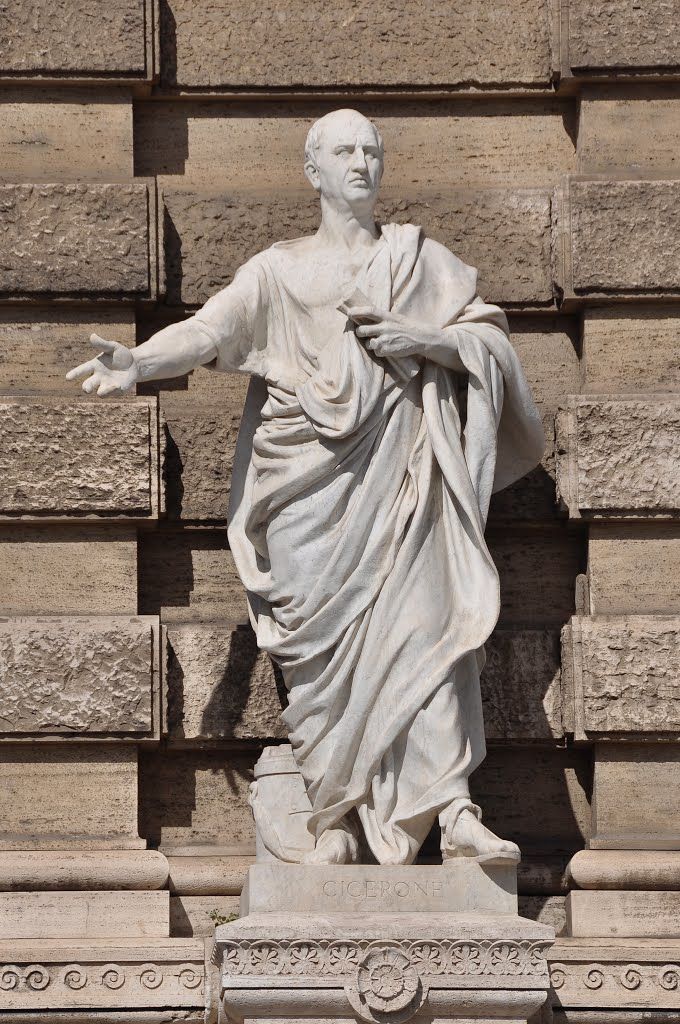
Or, “an eagle doesn’t catch flies, one swallow doesn’t make spring, fire tests [the] gold, make haste—slowly!”

It might be easy to wonder whether this was going to be a posting on riddles, but, in fact, as the title suggests, it’s about much knowledge packed into a few words—which is, in fact, like Bilbo’s riddle:

“A box without hinges, key, or lid,

Yet golden treasure inside is hid.”

(The Hobbit, Chapter Five, “Riddles in the Dark”)

and which appears to be a bit of a poser for his sinister fellow player–

(Alan Lee)

“This [Bilbo] thought a dreadfully easy chestnut, though he had not asked it in the usual words.  But it proved a nasty poser for Gollum.  He hissed to himself, and still he did not answer; he whispered and spluttered.”

Gollum was, in fact, only saved by Tolkien’s joking allusion to a proverb which Douglas Anderson in The Annotated Hobbit quotes from Francis Grose’s (1731-1791) A Classical Dictionary of the Vulgar Tongue, 1785, as, “Go teach your granny to suck eggs; said to such as would instruct anyone in a matter he knows better than themselves.”

 (You can read it for yourself here:  https://archive.org/details/aclassicaldicti01grosgoog/page/n114/mode/2up  in the 3rd, 1796, edition.  If you’re a dictionary reader, this is simply a fun book, “learned”—hence “A Classical Dictionary”—and occasionally witty—see “Grave Digger” just below.  The advertisements at the front are also very tempting, being things like The Scoundrel’s Dictionary.  Grose’s A Provincial Glossary, 1787, available in the 1790 edition here:  https://archive.org/details/provincialglossa00gros/page/n5/mode/2up is subtitled, with a COLLECTION of LOCAL PROVERBS and POPULAR SUPERSTITIONS and is full of interesting bits and pieces on language and belief.  Grose himself is a wonderful example of the 18th-century English Antiquarian and you can read something about his adventures and collecting here, including his friendship with Robert Burns:  https://en.wikipedia.org/wiki/Francis_Grose  Much of Grose’s antiquarian work is available at the Internet Archive—an institution of which Grose himself would have been fascinated, I think.  Charles Dickens’ had his own opinion of such early sometime-archeologists/scholars of the past, which you can read here in Chapter XI of the 1868 edition of The Posthumous Papers of the Pickwick Club, 1836-37:   https://archive.org/details/pickwickpapers02dickgoog/page/n216/mode/2up  )

Tolkien was having fun with that proverbial expression (like his explanation of the creation of the game of golf in Chapter One), yet it gave Gollum the answer:

“But suddenly Gollum remembered thieving from nests long ago, and sitting under the river bank teaching his grandmother, teaching his grandmother to suck—‘Eggses!’ he hissed.  ‘Eggses it is.’ “

The subject of proverbs is enormous–the Latin proverbs (even the word is Latin, through Old French—pro—“before/in front/forward” and verbium—“speech act”, so “a speech put forth”, to use another old word) at the beginning of this posting are just a tiny fraction of such verbal wisdom preserved from all over the world, in the West surviving first in The Maxims of Ptahhotep

of the 12th Dynasty (basically 2000 to 1800BC—you can read about them here:  https://en.wikipedia.org/wiki/The_Maxims_of_Ptahhotep ) and passing through the book of Proverbs in the Hebrew/Christian Bible (much scholarly argument about dating—900-300BC?) through lines in Greek tragedies, often as end-tags like “Look upon no man as fortunate until his life has come to its full circle” (Sophocles, Oidipous, 1528-30—my—very loose—translation), up to Old English works which Tolkien would have known well, like the 11th-century Durham Proverbs and the 12th-century Dicts of Cato, and it’s clear that his creation, Bilbo, has a knowledge of such things, seeming to apply them commonly when something unpleasant is to be done, and often attributing them to his father.

As Thorin attempts to push Bilbo into exploring down the tunnel from the back door towards Sauron’s lair, Bilbo replies:

“ ‘If you mean you think it is my job to go into the secret passage first…say so at once and have done!  I might refuse.  I have got you out of two messes already, which hardly were in the original bargain, so that I am, I think, already owed some reward.  But ‘third time pays for all’ as my father used to say…” (The Hobbit, Chapter 12, “Inside Information”)

and he repeats this in the next chapter, prefacing it with a second proverb:

“ ‘Come, come!’ he said.  While there’s life there’s hope!’ as my father used to say, and ‘Third time pays for all.’ “  (The Hobbit, Chapter 13, “Not At Home”)

To which he has already added a third: 

“ ‘Every worm has his weak spot,’ as my father used to say, although I am sure it was not from personal experience.’ “ (The Hobbit, Chapter 12, “Inside Information”)

Not only does Bilbo know a proverb or two, however, but he even, inadvertently, creates two.

In Chapter Five (with its own proverbial title, “Out of the Frying-pan Into the Fire”), we find Gandalf, the dwarves, and Bilbo trapped in trees with Wargs about to keep them there and Bilbo shouts:

“ ‘What shall we do, what shall we do!’ he cried.  ‘Escaping goblins to be caught by wolves!’ he said—“

to which the narrator adds:

“…and it became a proverb, though we now say ‘out of the frying-pan into the fire’ in the same sort of uncomfortable situations. “  (The Hobbit, Chapter Five, “Out of the Frying-pan Into the Fire”)

In Chapter 13, Bilbo, barely escaping from Smaug’s flames, says to himself:

“ ‘Never laugh at live dragons, Bilbo you fool!’ he said to himself…”

and the narrator, commenting, says:

“…and it became a favorite saying of his later, and passed into a proverb.”

(The Hobbit, Chapter 12, “Inside Information”)

To which we might imagine the hint of two more, both within a sentence of each other in the last chapter of the book.  Gandalf and Bilbo have left Rivendell, their faces to the west:

“Even as they left the valley the sky darkened in the West before them, and wind and rain came upon them.

‘Merry is May-time!’ said Bilbo, as the rain beat into his face, ‘But our back is to legends and we are coming home.”  (The Hobbit, Chapter 19, “The Last Stage”)

Many proverbs rhyme, as does Bilbo, in fact, surprising Gandalf, so could that first remark become something like,

“Even when sky is nothing but grey,

Still we may say, merry is May”?

and the second,

“Legends and heroes go and may come,

But now at the end, nothing’s better than home.”

Thanks, as always, for reading.

Stay well,

Strive to become legendary,

And remember that there’s always

MTCIDC

O

ps

For a quick history of collections of English proverbial literature, see:   W. Carew Hazlitt, English Proverbs and Proverbial Phrases, 1882, at  https://archive.org/details/englishproverbs00hazlgoog/page/400/mode/2up (this is the 1907 edition) and, on the page at the link—400—you’ll also find:

“Teach your grandame to grope her ducks/to spin/to suck eggs/or to sup sour milk” as well as a Latin equivalent, Aquilam volare, delphinum notare doce—“teach [the] eagle to fly, [the] dolphin to swim”

Tea and Tyranny

22 Wednesday Nov 2023

Posted by Ollamh in Uncategorized

≈ Leave a comment

As always, welcome, dear readers.

Boston, in the late 1760s, was a turbulent place.

It shouldn’t have been surprising, as its founders had been dissenters from Charles the First’s absolutist ideas of religion

who, forming a corporation, had come to New England to found their own state, which they had run independently from 1630 to 1686, when a royal governor, Sir Edmond Andros,

was sent to rule, but lasted only three years before politics in England changed things until 1692, when Massachusetts became a royal colony for good—or at least until 1775.

A major difficulty was what seemed to be an endless quarrel between Massachusetts merchants and the government in London about the regulation of trade, which began as early as 1651, when Parliament instituted the first of four Navigation Acts.

The title you see here says it all:  “An Act for Increasing of Shipping,  And Encouragement of the NAVIGATION of this NATION”, the nation here being Britain—and only Britain, its colonies in North America, then really Masschusetts Bay, Plymouth, Rhode Island, Connecticut, and Virginia, being viewed only as sources of revenue, not as part of Britain—the original cash cows—

By law, exports and imports were to be strictly limited to English ports, dealing directly with other countries being prohibited.

Smuggling, of course, immediately commenced,

but never could replace legitimate trade—and things got worse after the British victory in the Seven Years War (1756-1763—here in the US 1754-1763), when Britain, having plunged deeply into debt to defeat its enemies, was faced with the need to pay back the huge loans it had taken out.

It undoubtedly sounded logical to those in the government that, as part of the war had been waged to defend the North American colonies from the French and their Native American allies,

(Eugene Leliepvre, one of my favorite French military artists)

those colonies should help with that enormous debt.  From the other side of the Atlantic, Massachusetts, along with others of the English colonies, long resenting earlier attempts to control colonial trade, and having a tradition of their own elective assemblies,

felt that such an expectation should come with some formal influence in Parliament—the well-known complaint of “taxation without representation”. 

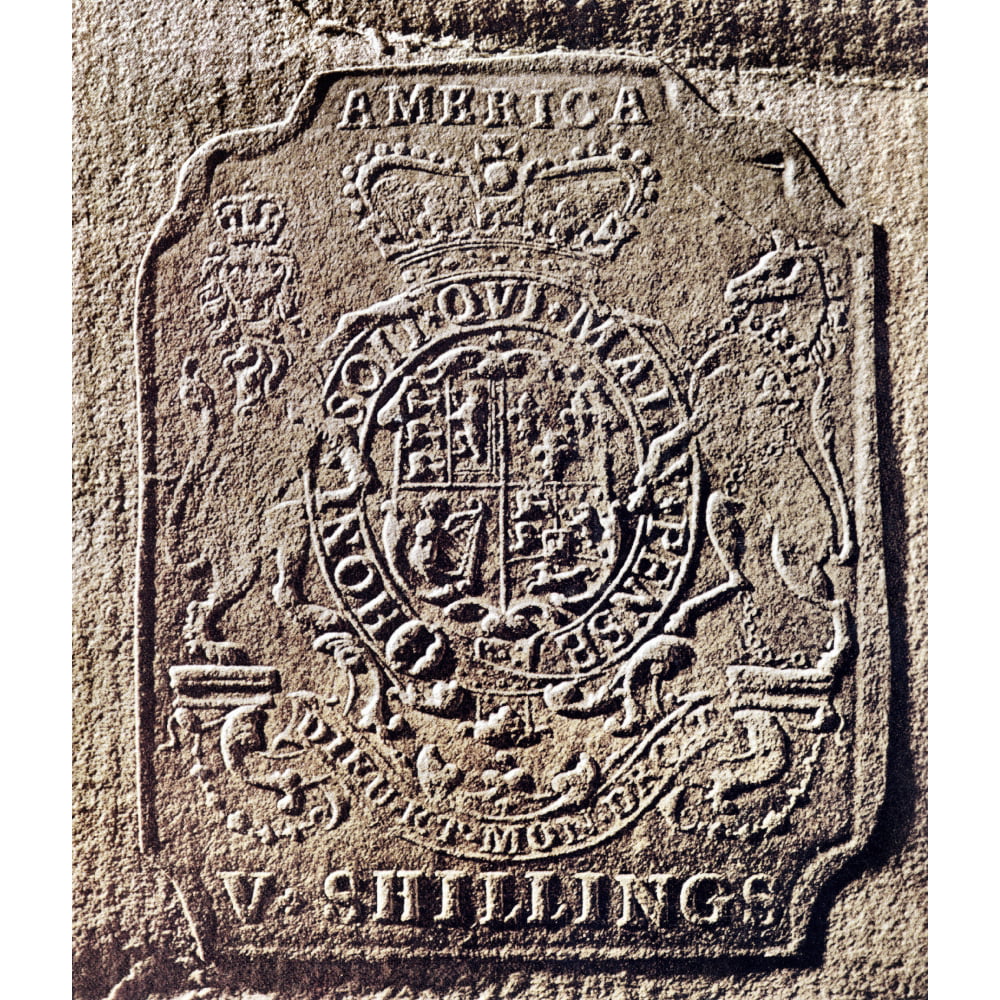
Foolishly, this complaint was ignored by those at the top, who, instead, began to issue, from 1763 on, a whole series of Acts designed to extract funds from the colonies, usually involving either domestic imports or even, in the Stamp Act of 1765, colonial documents (all legal papers had to bear a government tax stamp to be legal—and not only legal papers, even newspapers and playing cards came under this Act).

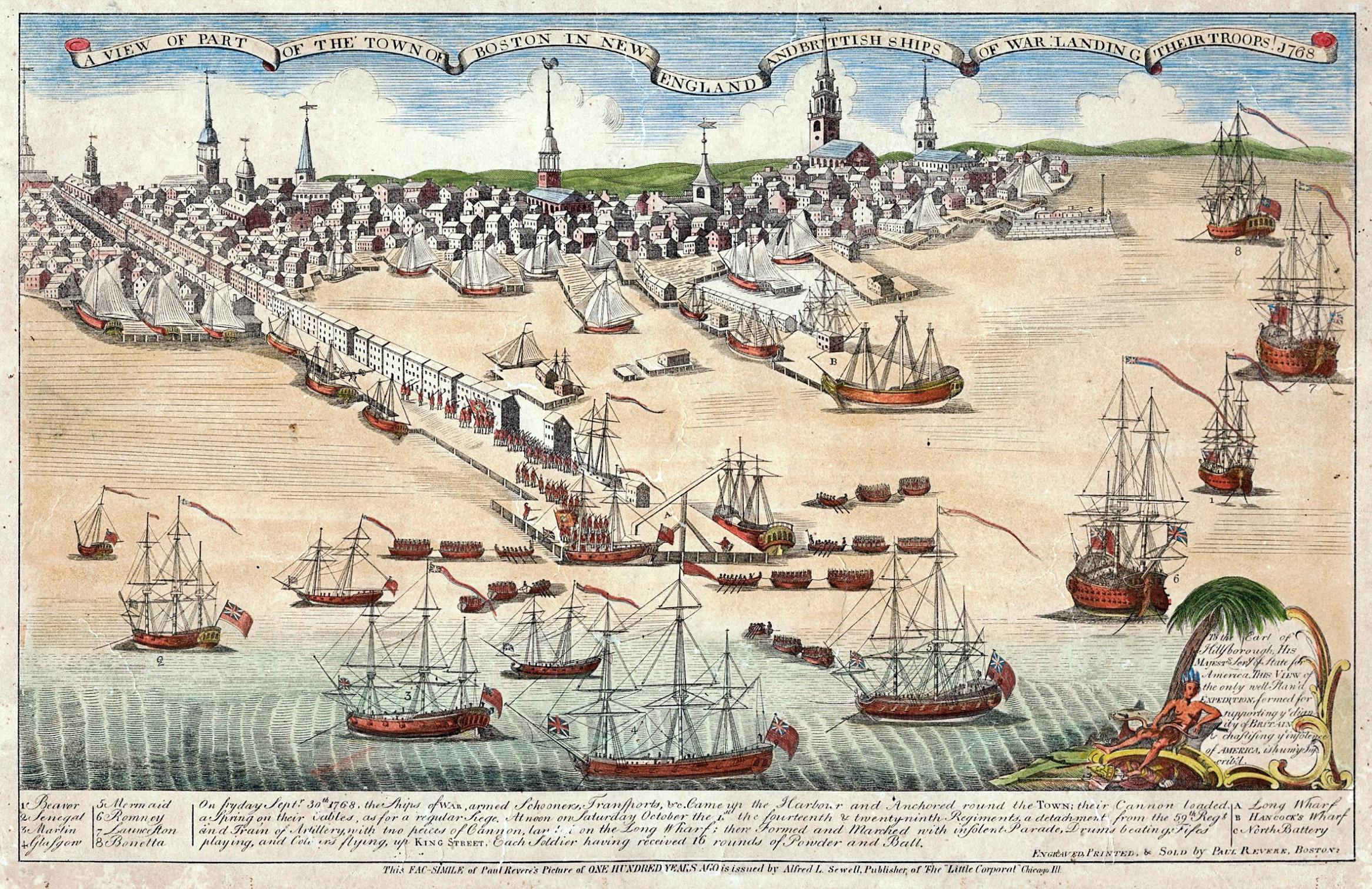
Needless to say, the tension could only grow and, in 1768, the government in London felt that it was necessary, to enforce its acts and to protect its officers, to send troops to Boston.

As the caption tells us, when the troops landed, they did so as if they were conquerors come to occupy enemy territory:  “there Formed and Marched with insolent Parade, Drums beating, Fifes playing, with Colours flying, up KING STREET…”—with the most ominous addition:  “Each Soldier having received 16 rounds of Powder and Ball”—that is, these men were ready for a fight, if necessary.

The population of Boston in 1768 was about 16,000, with no barracks and few public spaces besides its churches, so the addition of, eventually, 4 regiments of infantry—perhaps as many as 2,000 men, all told–would have put a strain on the town even if these had been welcome new inhabitants.  The soldiers were quartered in taverns, barns, stables, and whatever empty buildings might be found, but soon, as might have been expected, began to tussle with the locals, which led to open bloodshed in March, 1770, when a panicked squad of soldiers fired into a mob which seemed to be threatening them—the so-called “Boston Massacre”, as depicted in Paul Revere’s propaganda print, with its “Butcher’s Hall” over the doorway behind the troops—in case you might have missed the point.

(a more accurate, but no less bloody, depiction by the famous contemporary American military artist, Don Troiani)

Such violence on the part of what locals viewed not as their own government’s soldiers, but as occupiers, only made things worse and, although there was no second “massacre”, more attempts by the London government to squeeze profit from the colonies finally led to the destruction by locals of a large shipment of taxable tea, dumped into Boston harbor in December, 1773—the “Boston Tea Party”.

This was too much for London and the decision was made to send more soldiers, remove civilian control, and set a military governor, Thomas Gage, already commander of British troops in North America, over the town.

In an even bigger blow, the government officially closed the port of Boston, setting warships to block the harbor.

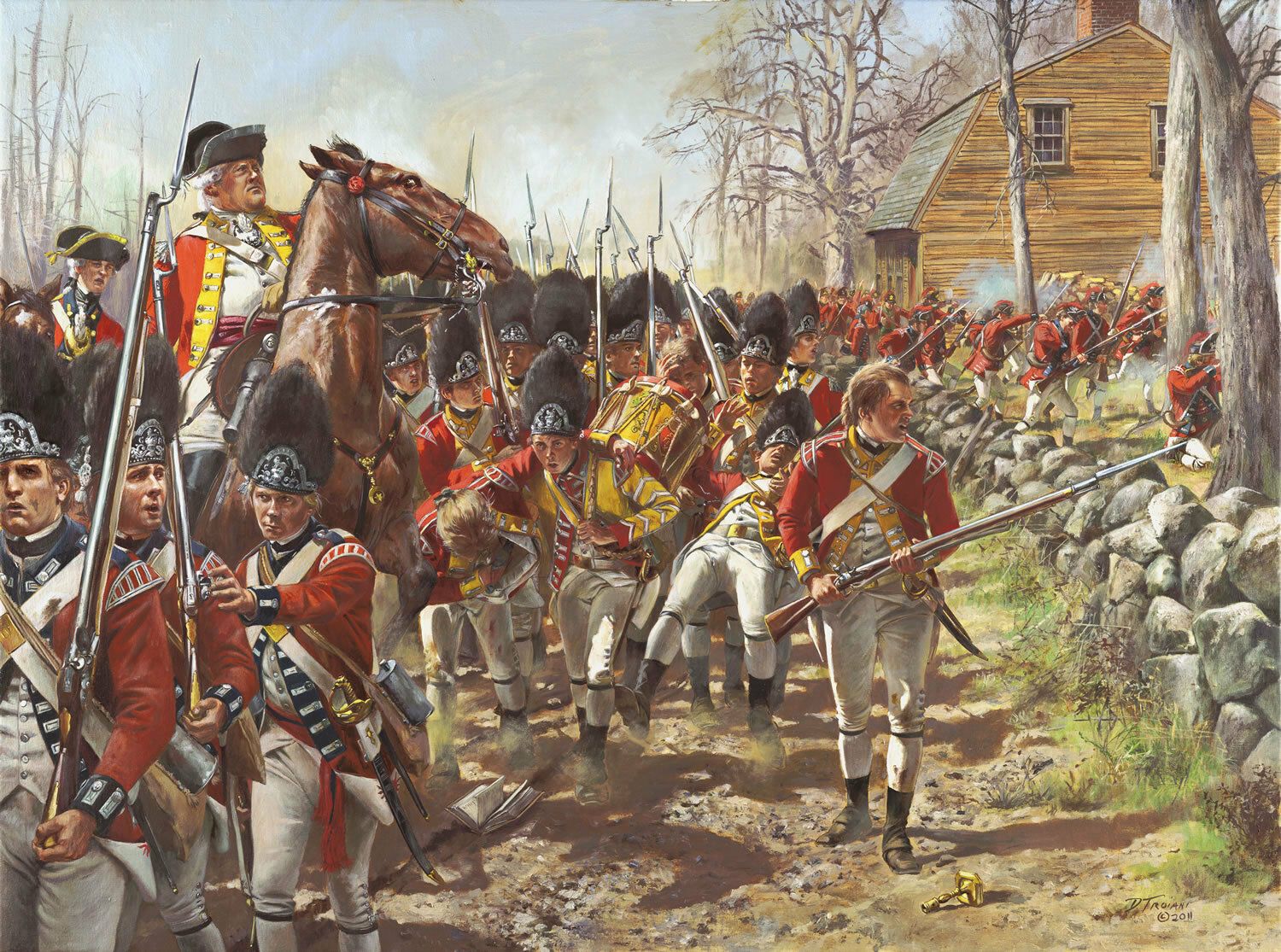
Gage would then be pressured, both by government in London and by those loyal to the Crown in Boston, to do more to deal with what appeared, increasingly, to be a movement towards armed rebellion, leading to the British troops’ disastrous expedition to seize military supplies and local leaders west of Boston at Concord in April, 1775, leading to an estimated 300 British casualties and about 100 locals

(another Don Troiani)

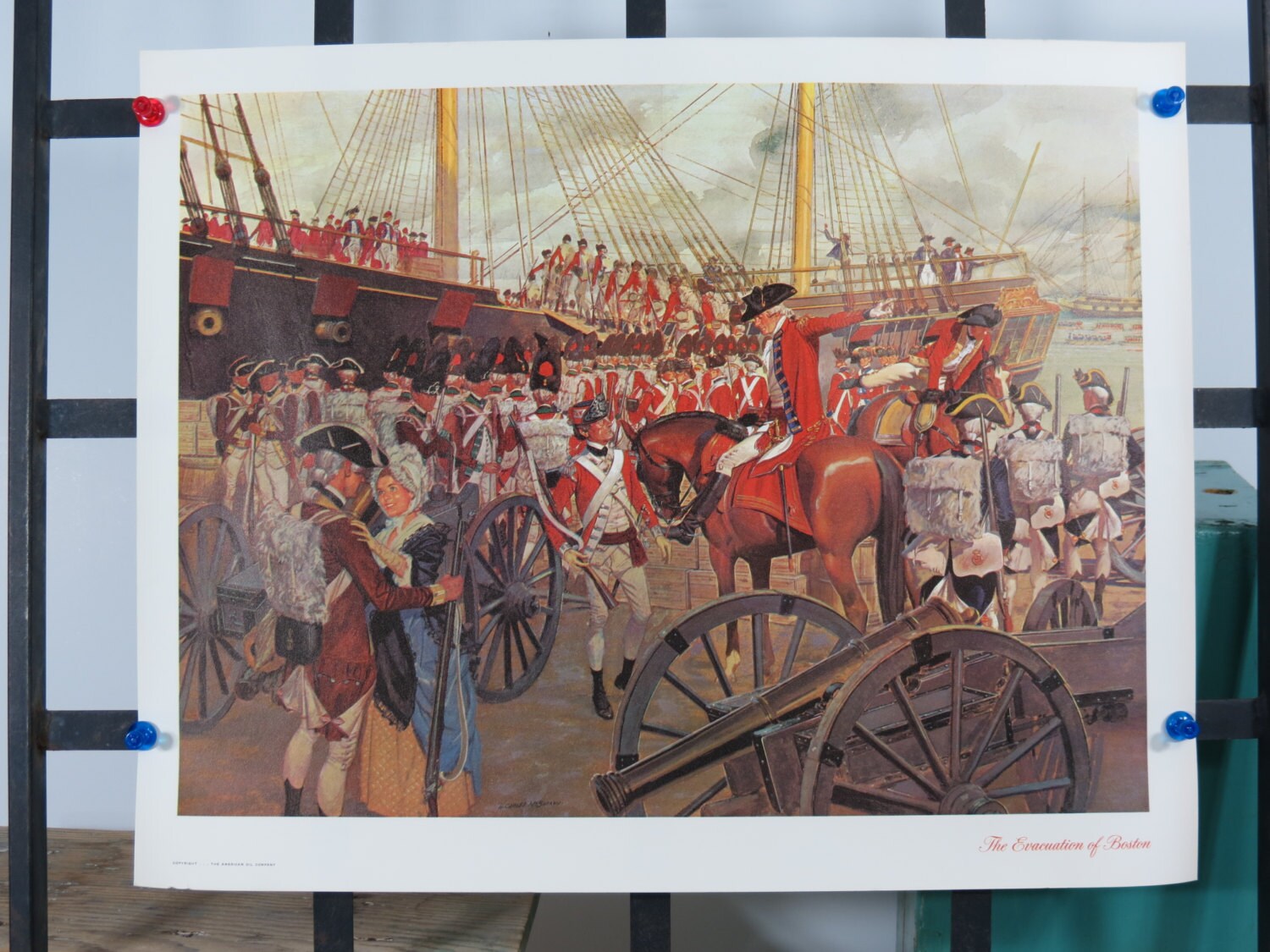
 and a siege of Boston so intense that the British were forced to evacuate the city the following March.

(H. Charles McBarron—America’s first great military historical artist of the 20th century)

All of this forms the background to a YA novel I’ve just been rereading, Esther Forbes’ (1891-1967) 1943

Johnny Tremain.

Johnny is an orphaned young Bostonian apprenticed to an elderly silversmith during the early 1770s and the book follows both the course of history in which he’s involved, as well as his own rather difficult personal life.  I very much recommend this book, but I don’t want to do a SPOILER ALERT, so I’ll just say that what makes it stand out for me is that the author is at great pains to depict Johnny’s development, from an arrogant boy with ambitions to a virtual outcast to someone who combines humility with a moving understanding of the people around him, including some of those who had given him difficulties in his growing up. 

Forbes herself wrote other historical novels set in early New England, as well as Paul Revere and the World He Lived In, 1942, which won her the Pulitzer Prize for History in 1943, and which clearly explains the authentic feel of Johnny Tremain.

As the book has so many dramatic elements—from 1770s Boston and its tensions to Johnny’s personal struggles—it’s not surprising that Walt Disney studios made a film of the novel in 1957.

As the book is complex, this is a very simplified version, stripping away many of the characters, but keeping most of the major moments, although, for the sake of colorful action, where Forbes had kept Johnny in Boston during the events of April, 1775, the film sends him to Lexington and Concord and follows the action there through him, including the British retreat to Boston through intensifying sniper fire from the locals.

(from a set of four engravings made after the events by Amos Doolittle, oddly, like Johnny—and Paul Revere–a silversmith who had taught  himself engraving—see this article about him for more:  https://newenglandhistoricalsociety.com/amos-doolittle-connecticuts-paul-revere/ )

Although not so mature as the book—and pretty sloppy on things like British uniforms and clothing of the period in general, though with very good sets—it’s a fun movie, which does capture some of the spirit of Forbes’ novel and, along with that novel, I would recommend it.  For more on events of this period, particularly military, I would also recommend the American Battlefield Trust website—you can read it here:  https://www.battlefields.org/learn/revolutionary-war/battles/lexington-and-concord

Thanks, as ever, for reading.

Stay well,

Always demand representation,

And remember that, also as always, there’s

MTCIDC

O

Bullseye

15 Wednesday Nov 2023

Posted by Ollamh in Uncategorized

≈ Leave a comment

Welcome, as ever, dear readers.

Last night, I rewatched Pixar/Disney’s Brave.

I hadn’t seen it in some years and, as I’ve been in the midst of archery recently, it fell off the DVD shelf into my hands.

If it’s not a film you’ve seen, I want to recommend it immediately, for the story of a young woman trying find her way in a rigid medieval world which sees her more as a pawn than a person.

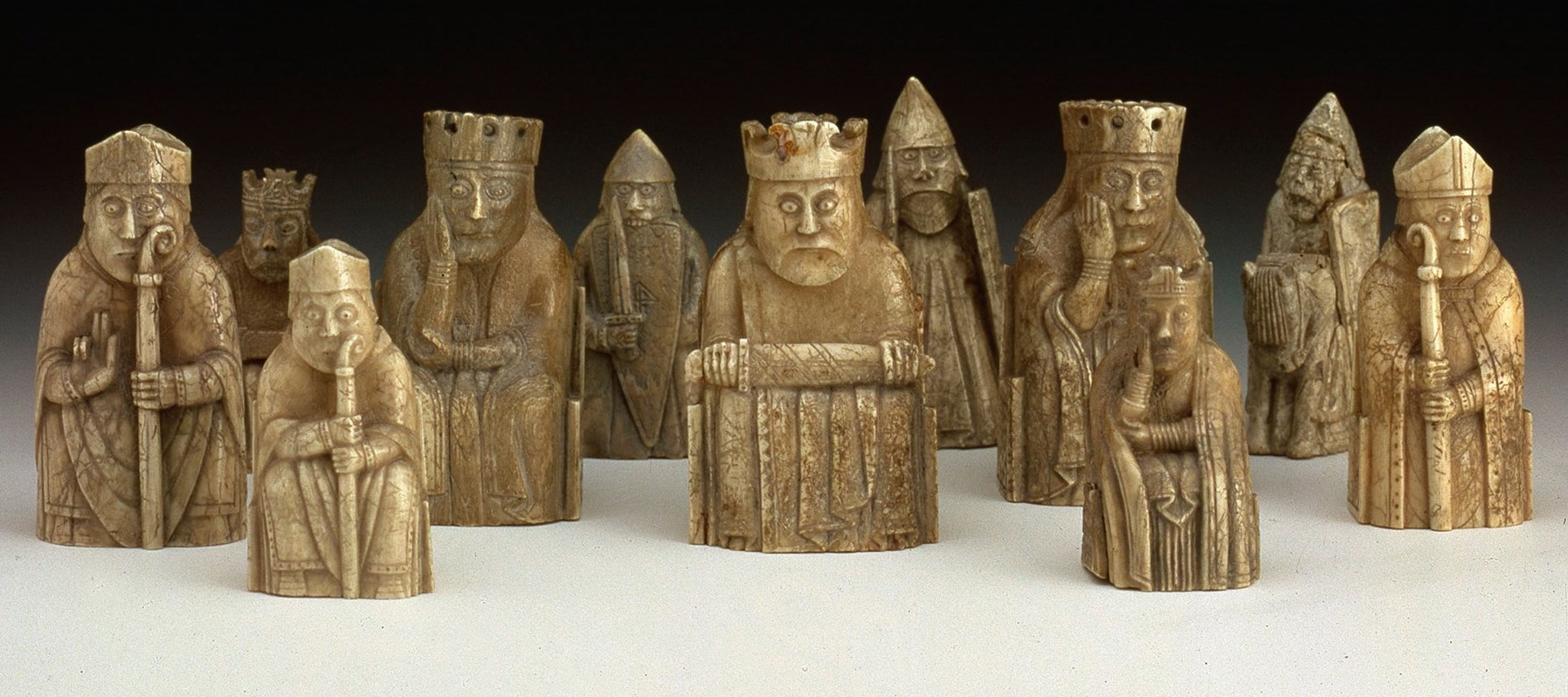
(The famous “Lewis Chessmen”, 12th-century walrus ivory and whale teeth carvings found in a kist (stone box) at Uig—Oo-ig–on the island of Lewis off the west coast of Scotland.  To read more, here’s a site actually devoted to them:  https://www.isleoflewischessset.co.uk/  From what culture we’re shown in Brave, these might be roughly contemporary with the story.  In 2010, there appeared the theory that they were carved in Iceland by Margret en Haga—Margaret the Handy/Dexterous—she is mentioned as a skilled worker in ivories in the 13th century “Pols Saga” which you can read here on page 528 of Vigfusson and Powell, Origines Islandicae, 1905, where her name is translated “Margaret the Skilfull”:  https://ia904602.us.archive.org/4/items/originesislandic01guiala/originesislandic01guiala.pdf  )

It’s also funny and just absolutely pictorially beautiful, in the way a Miyazaki film can be.

Early in the film, the heroine, Merida, who is to be the pawn in a marriage alliance, alters things with a demand for a bride-contest in her specialty, archery, and

when one of her hapless suitors accidentally hits the bullseye, she promptly splits his arrow—and suddenly I’m in another story.  It’s 1938

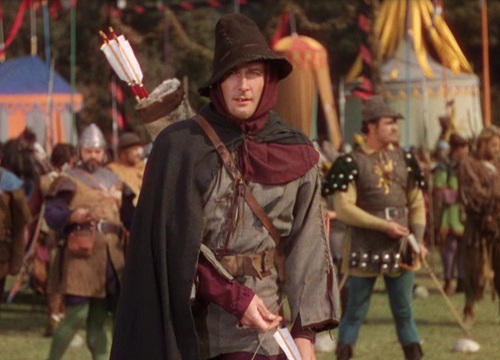
and Robin Hood, played by Errol Flynn, disguised as a tinker, is about to win a golden arrow in an archery contest—and to be captured by a collection of villains.

He wins by—yes, you guessed it—splitting his final opponent’s arrow in two.

(This is from a useful article on the subject of arrow-splitting, which you can find here:  https://www.goldengatejoad.com/2012/07/how-hard-split-arrow-longbow/ and you can see the contest here:  https://www.youtube.com/watch?v=y4gnNwVftp4  )

The idea for this may have come from the early 16th-century “A Gest of Robyn Hode”, the “Fyfth Fytte”, in which Robin, in a contest at Nottingham, splits a series of wands with his shots—see F.J. Child, The English and Scottish Popular Ballads, Volume III, page 70 here:   https://archive.org/details/englishandscotti03chiluoft/page/70/mode/2up  (Robin, in Howard Pyle’s 1883 The Merry Adventures of Robin Hood, trims the fletching off one side of his opponent’s shaft—see:  https://archive.org/details/merryadventureso00pylerich/page/30/mode/2up )

This wonderful shot, however, also reminded me of another kind of contest, rather like that which Merida sets up, this time in a much earlier era.

A few weeks ago, I finished teaching the Odyssey and I was reminded of a scene late in the story where Penelope, pestered for nearly 4 years by a gang of obnoxious suitors,

(J.W. Waterhouse)

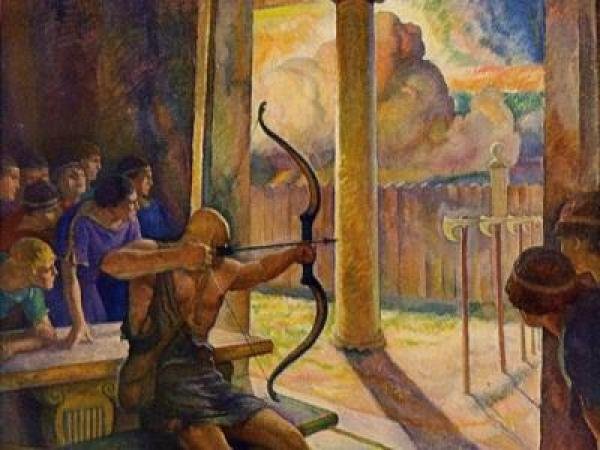
sets up a rather peculiar sort of tournament, first telling Odysseus (in disguise as an old beggar), that she intends to reenact something her husband used to do for fun.  He would set up a dozen axe heads and fire an arrow through them.

(N.C. Wyeth)

It’s unclear in the text what’s really happening:  does he shoot through the axe blades?  Some have suggested (but it’s not in the text) that there were rings on the axes and he shot through them.

The real point, I suspect, isn’t the axes at all, but Odysseus’ bow.

(Alan Lee)

Penelope announces that the one who can string it—then do whatever it is with the axes, can have her hand.  And, although Telemachus (probably a sign that he’s Odysseus’ son, something he was very worried about at the beginning of the Odyssey) almost strings it—until Odysseus signals him not to—none of the suitors comes even close, which is humiliating for them, since it demonstrates quite graphically that, whatever their pretensions to be Penelope’s second husband, they will never come close to rivaling her first one.

At the same time, this contest has another outcome.  Odysseus easily strings the bow

(Peter Connolly)

and shoots (through?) the axes, but then begins picking off the suitors, beginning with one of the principal ones, Antinoos.

Thus, he is the successful participant in the contest for Penelope’s hand in three ways:

1. he strings the bow

2. he does whatever with the axes

3. he begins the elimination of any possible rivals

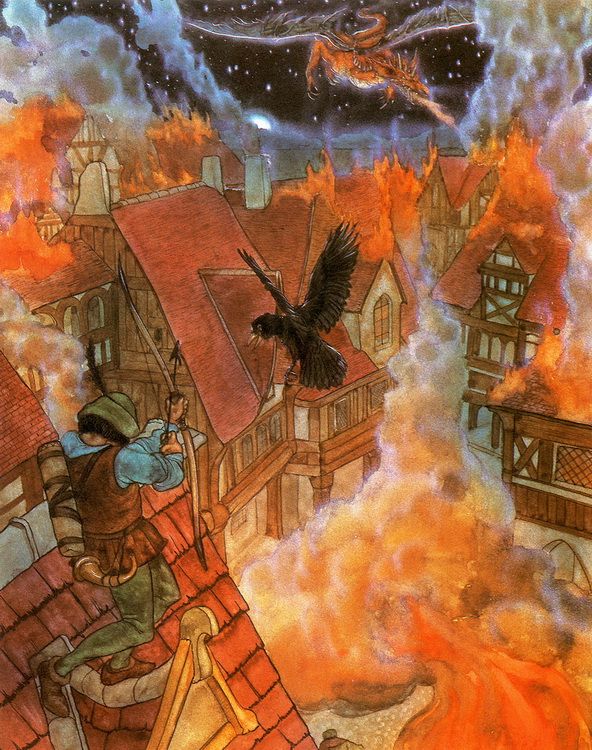
But I said at the opening that I was in the midst of archery these days—not only in the Odyssey, but, having just finished The Hobbit, I would add one more string to my bow—Bard the archer.

(Michael Hague from his beautiful illustrations)

Although it’s not a contest in the same sense, like Merida’s, Robin’s, and Odysseus’, his one shot is a tricky one, and the prize isn’t a bride, a golden arrow, or a wife, but life for him and much of the population of Lake-town, which he wins when his arrow (perhaps a magic one?) hits the one exposed spot on his enemy’s hide.

(JRRT)

Thanks for reading, as always.

Stay well,

Don’t let yourself be strung along,

And remember that, as always, there’s

MTCIDC

O

PS

If you’d like a comprehensive collection of early Robin Hood material, try this 1885 edition of the antiquarian Joseph Ritson’s 1795 Robin Hood:  https://www.gutenberg.org/files/56926/56926-h/56926-h.htm   If you’d like to see what I think are the best Robin Hood book illustrations see Paul Creswick’s Robin Hood, 1917, for which the artist was N.C. Wyeth:  https://ia801603.us.archive.org/15/items/robinhood00cresrich/robinhood00cresrich.pdf  The Howard Pyle cited above has the most wonderfully elaborate illustrations and was, I suspect, an inspiration for the 1938 film.

Hat—and Anachronism?

08 Wednesday Nov 2023

Posted by Ollamh in Uncategorized

≈ Leave a comment

Welcome, dear readers, as always.

When I was a child, I loved nursery rhymes, but sometimes the words puzzled me.

“Ride a cock horse

To Banbury Cross…”

What was a “cock horse”?

As a grownup, I can gather a great deal of information to try to explain, but it’s complex, including a possible first appearance of the rhyme in Tommy Thumb’s Pretty Song Book, 1744, although this is from a reconstruction from later texts of Volume 1, as what survives is only Volume 2.

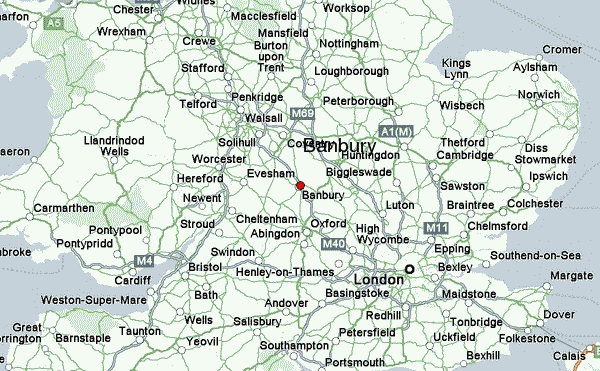
Banbury is a town northwest of London.

A cock horse?  I checked the earliest mono-lingual English dictionary, Robert Cawdrey’s Table Alphabeticall, 1604, and found nothing (if you would like to see this early work, look here:   https://extra.shu.ac.uk/emls/iemls/work/etexts/caw1604w_removed.htm )

(As you can see, this was clearly a popular book, this being the 3rd edition, of 1613.)

Consulting dictionaries near-contemporary to Tommy Thumb, we find:

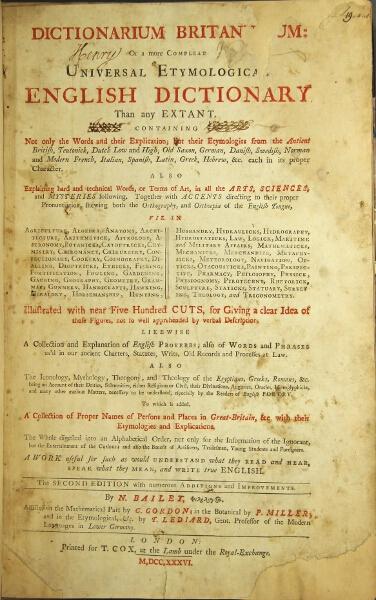
1. Nathan Bailey’s ( ?-1742) Dictionarium Britannicum, 1730-36, defines “cock-horse” as “a high horse” ;

(You can consult Bailey here:  https://archive.org/details/b30449698/page/n185/mode/2up )

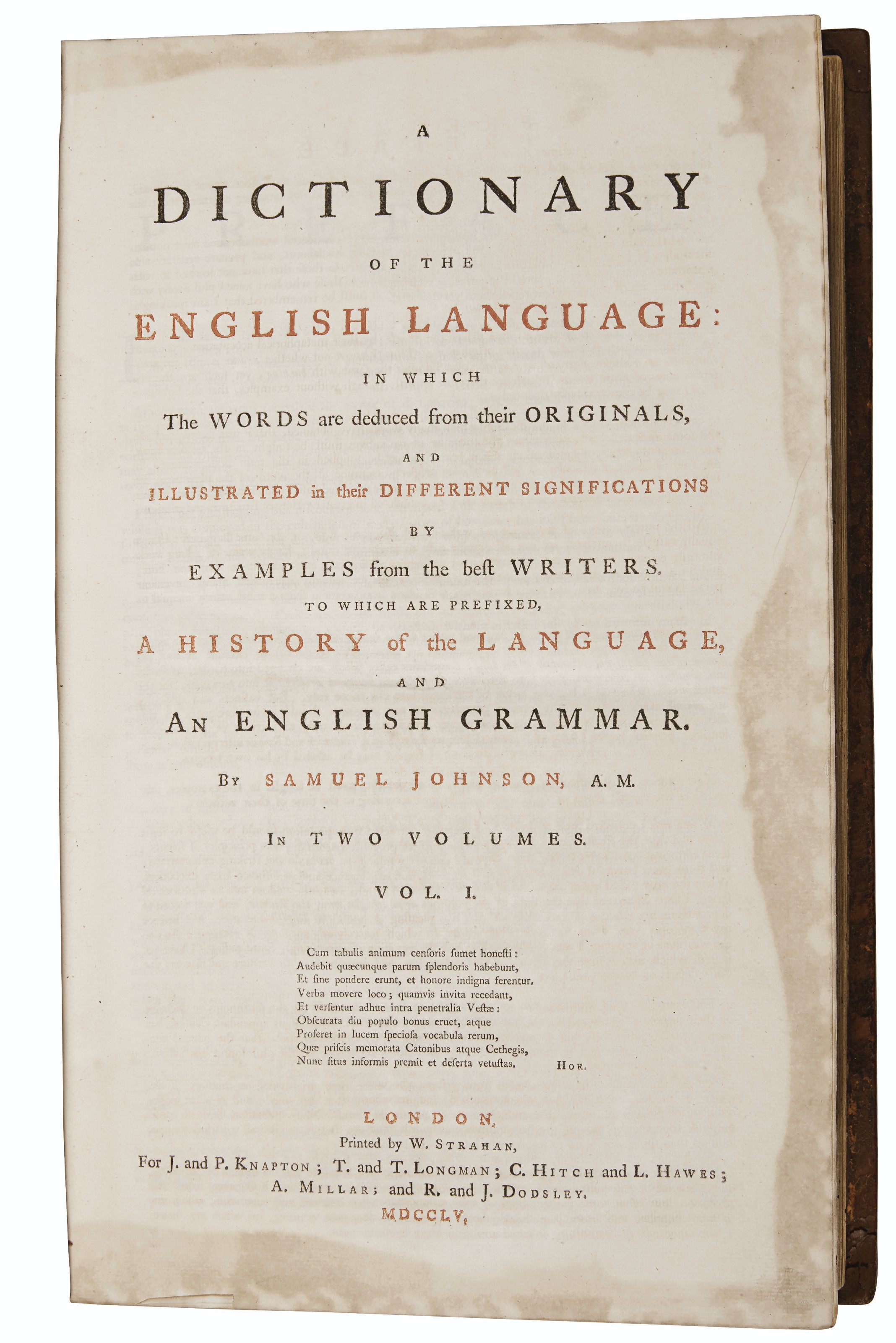
2. Dr. Samuel Johnson’s  (1709-1784)  A Dictionary of the English Language, 1755,

defines “cockhorse” (which he indicates is to be accented on the first syllable) as “on horseback; triumphant; exulting” (you can see this definition here:  https://johnsonsdictionaryonline.com/views/search.php?term=cock  This site contains the several early editions of the dictionary, including both in modern type and as they appear in those editions—if you enjoy such things, this is simply lots of fun to browse.)

If you do a quick WIKI search, you discover:  https://en.wikipedia.org/wiki/Ride_a_cock_horse_to_Banbury_Cross , which presents several other possibilities, including, “a high-spirited horse, and the additional horse to assist pulling a cart or carriage up a hill. It can also mean an entire or uncastrated horse”.  None of these struck me as quite the appropriate definition, but this one:  “From the mid-sixteenth century it also meant a pretend hobby horse or an adult’s knee.” seemed more like it.  I know this as a “dandling song”, a game played with babies and small children.  There are a good number of them, usually with rhythmic but sometimes nonsensical lyrics, like

“To market, to market,

To buy a fat pig.

Home again, home again,

Jiggety, jig.

To market, to market,

To buy a fat hog.

Home again, home again,

Jiggety jog.”

And you can see what happens:  bouncing a small person on your knee to the rhythm.  Unfortunately, the WIKI only cites Iona and Peter Opie’s 1951 The Oxford Dictionary of Nursery Rhymes for this definition, and, for the moment, I can’t trace that meaning back any farther, as I don’t have a copy of the Opies’ book readily available.

But this leads me to another mysterious nursery rhyme:

“Bat, bat,

Come under my hat

And I’ll give you a slice of bacon.

And when I bake,

I’ll give you a cake,

If I am not mistaken.”

Although I have an ecologist friend, whose main work is on bats and loves, them, I’m afraid that I don’t share this affection.  And here’s why—

(If you, dear reader, like my friend, are fond of flittermice, I apologize.  Too much Dracula in childhood, I suspect!)

But, as a child, I wondered:  why would you want a bat under your hat?  And do bats actually eat bacon?  And cake?

The Baring-Goulds, in The Annotated Mother Goose, 1962, seem to think that this is a part of a children’s game, their only note being “Here the child who was hunting bats would clap hands.”  Children hunting bats? 

My hunting an early source for this nursery rhyme would seem to need more than hand-clapping.  After a little survey of early collections, here’s what I found so far.

It’s not in the 1744 Tom Thumb’s Pretty Song Book,

or in

Mother Goose’s Melody, 1781  https://ia804703.us.archive.org/3/items/mothergoosesmelo00pridiala/mothergoosesmelo00pridiala.pdf  (This is a 1904 reprint of the 1791 edition)

or in

Gammer Gurton’s Garland, 1784,    https://archive.org/details/gammergurtonsgar00ritsiala/page/62/mode/2up  (This is an 1866 reprint of the 1810 edition.)

but it does appear in the first edition of James Orchard Halliwell, The Nursery Rhymes of England, 1842, https://ia800301.us.archive.org/27/items/nurseryrhymesofe00hall/nurseryrhymesofe00hall.pdf (This is the 5th edition, of 1886.  He also identifies it as a children’s game, and the Baring-Goulds are actually simply quoting him.)

(In case you’d like to serenade the bat, this has, in a version sung once upon a time in south Florida, a little tune.  The recording, from 1940, is a little hard to make out, but it sounds like a close cousin of “Yankee Doodle”:  https://www.loc.gov/item/flwpa000062/?loclr=blogflt  )

This flurry of research began in a completely different place, however, with a possible anachronism in The Hobbit, which I’m currently teaching.  JRRT himself was aware that there were a number of these in the 1937 edition of the text, and, in the 1966 edition, changed or considered changing a number of them, so that what was once “cold chicken and tomatoes” in 1937, then became “cold chicken and pickles”, for example.  Some things remained, however, such as Bilbo’s scream, “like the whistle of an engine coming out of a tunnel”, and Douglas Anderson, in his invaluable The Annotated Hobbit, suggests that:

“This usage need not be viewed as an anachronism, for Tolkien as narrator was telling this story to his children in the early 1930s, and they lived in a world where railway trains were a very important feature of life.”  (The Annotated Hobbit, Chapter One, “An Unexpected Party”, 47-48, note 35)

It’s clear that Tolkien himself must have had rather mixed feelings about this, however, allowing tobacco (although called “pipe-weed” in The Lord of the Rings) and potatoes (“taters” in The Lord of the Rings) to remain, but removing those tomatoes.  He also considered replacing that engine with “like the whee of a rocket going up into the sky”, but, ultimately retained the railway image.  (see Chapter One, “An Unexpected Party”, note 35)

What caught my attention was a simile in Chapter 8, where Bilbo and the dwarves, marching into Mirkwood, were assailed by night creatures, moths “nearly as big as your hand, flapping and whirring round their ears”—

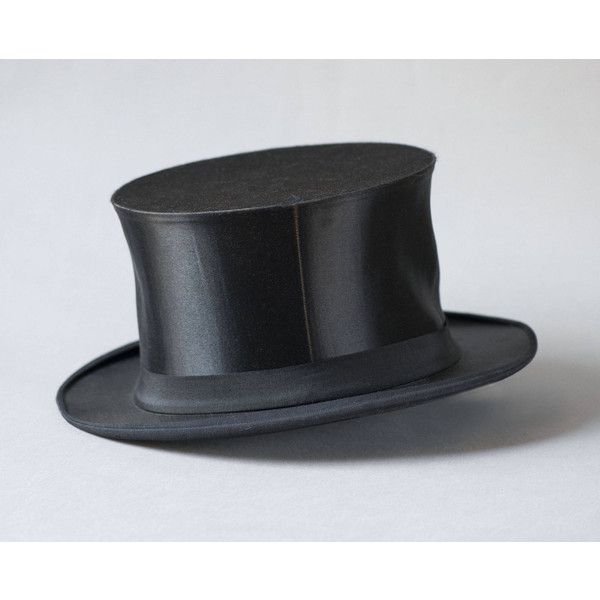
“They could not stand that, nor the huge bats, black as a top-hat, either…”  (The Hobbit, Chapter Eight, “Flies and Spiders”)

Was this Tolkien the 1930s narrator?  Or was this allowed to stand, like potatoes and tobacco and the train, because he felt that it somehow fit the story?  Or was this simply something he missed?  I suppose that we’ll never know, as this is something that JRRT, unlike a bat, kept under his hat.

As ever, thanks for reading.

Stay well,

Ponder what recipe one might need for a bat cake,

And know that, as always, there’s

MTCIDC

O

PS

There is a very interesting article on Dr. Johnson, early English dictionaries, and his dictionary at:  https://johnsonsdictionaryonline.com/blog/about-johnsons-dictionary/

PPS

For more on hobby horses, see:  https://en.wikipedia.org/wiki/Hobby_horse_(toy)

Creeped Out

01 Wednesday Nov 2023

Posted by Ollamh in Uncategorized

≈ Leave a comment

As ever, dear readers, welcome.

The English language has many challenges for those learning it—pronunciation vs spelling is a big one, but another is caused by a linguistic feature called ablaut.  You see it in some nouns, where a change in spelling can cause a change in meaning, as in foot/feet and woman/women, where even the pronunciation changes.  It also occurs in verbs and, sometimes, it can seem pretty spectacular, as in some old verbs, like smite/smote/smitten and slay/slew/slain.

This brings me to creep.  Is it creep/creeped/creeped?  No—it’s creep/crept/crept.  But then there’s the expression which forms the title of this posting.

If you go browsing the various etymological sites, like Etymonline (https://www.etymonline.com/word/creep) or the now defunct (isn’t that a great word?  from Latin defungor, “to finish/have done with something”, used euphemistically of the dead) The Word Detective (http://word-detective.com/2011/09/the-creeps/ ), you find that the basic idea is that, if you’re spooked (another great word, seemingly in English from Dutch spook, “ghost”—and there’s the Swedish spoeke, “scarecrow”, which can really spook you out—for how this is said in Swedish, see:   https://en.glosbe.com/en/sv/scarecrow )

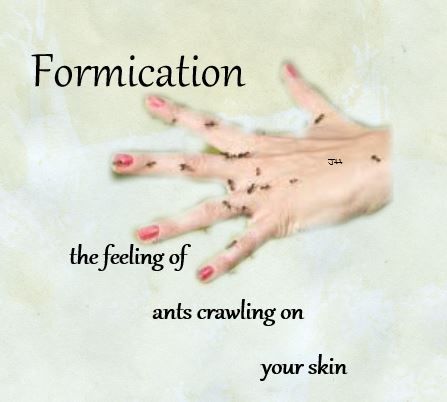
it’s as if you can feel something crawling across your skin.  (A medical term for this is formication, from Latin formica, “ant” and a very vivid term it is, too!)

It’s Halloween time again (not “Holloween”, although I hear that all the time—see the posting “Holloween”, 5 February, 2020, for more) and, although things can spook us during the year, this season, when according to ancient Western belief, the doors between the worlds lie open and the dead may return, is particularly rich in weirdiosity (from Old English wyrd, meaning, among other things, “fate” plus Latin –osus, “full of” plus Latin –itas, which creates an abstract noun).  In other words, more creeps us out.

For me, it’s usually not the obvious—

although, given a darkened movie theatre or living room late at night, I wouldn’t say that I felt completely safe in the parking lot afterwards or going to the kitchen for a snack—but it’s more the implied which makes me look over my shoulder in dim places.

For an example, take M.R. James’ (1862-1936) 

(Dr. Montague Rhodes James was actually a prominent member of the English academic community, hence the gown.)

short story, “Oh, Whistle and I’ll Come to You, My Lad” from his 1904 collection, Ghost Stories of an Antiquary.

The title comes from a lyric by Robert Burns to a slightly older tune, the lyric beginning with the chorus:

 “O, whistle, and I’ll come to you, my lad;
  O, whistle, and I’ll come to you, my lad;
  Tho’ father, and mother, and a’ should gae mad,
  O, whistle, and I’ll come to you, my lad.”

(You can read the rest here:  https://en.wikipedia.org/wiki/Oh,_whistle_and_I%27ll_come_to_you,_my_lad and hear a lovely performance by the Canadian mezzo, Patricia Hammond, here:   https://www.youtube.com/watch?v=542RhM5K9mI )

This seems like the opening of something rather gentle, but that title is typical of a James story, just as he describes:

“Two ingredients most valuable in the concocting of a ghost story are, to me, the atmosphere and the nicely managed crescendo. … Let us, then, be introduced to the actors in a placid way; let us see them going about their ordinary business, undisturbed by forebodings, pleased with their surroundings; and into this calm environment let the ominous thing put out its head, unobtrusively at first, and then more insistently, until it holds the stage.” (originally in V.H. Collins, Ghosts and Marvels, 1924, quoted in the M.R. James Wiki article:  https://en.wikipedia.org/wiki/M._R._James )

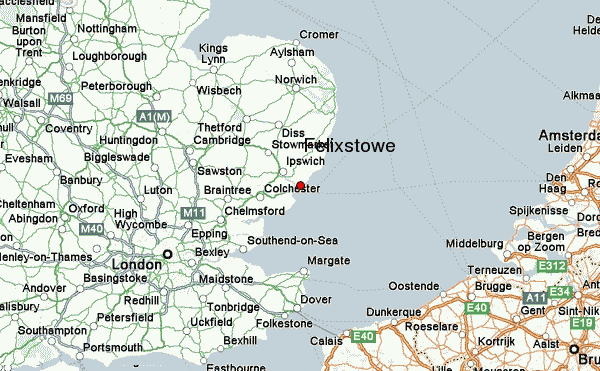
This story begins at dinner in a Cambridge University college.  Professor Parkins announces that he’s going to the seaside to work and to play golf at a local course.  (It’s called “Burnstow” in the story, but is actually Felixstowe—

which does have a golf course, the Felixstowe Ferry Golf Club being the fifth oldest in England.)

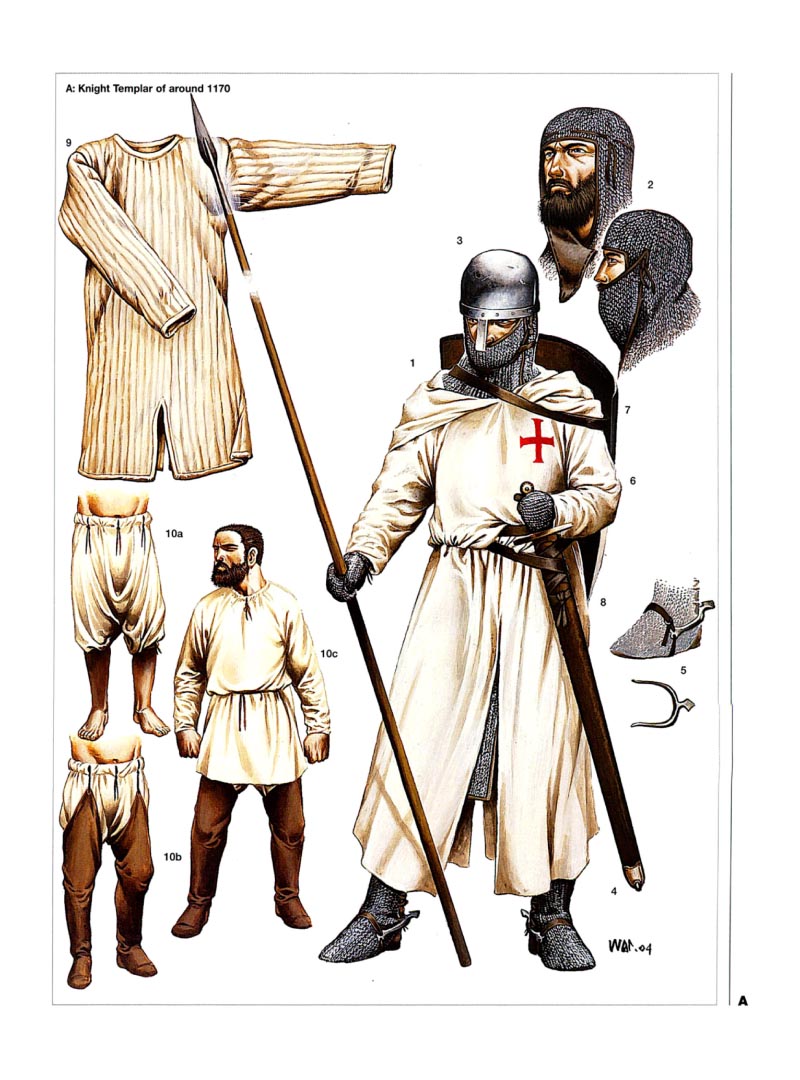
Another (unnamed) faculty member casually asks him to check the site of the “Templars’ preceptory” there to see if it’s worth excavating the following summer.

The Templars were a medieval military order much involved with the Holy Land and the Crusades,

and built nearly a thousand foundations and fortresses in their two centuries of existence.  Here’s an actual preceptory (a kind of administrative center) at Balantrodoch, in Scotland, south of Edinburgh.

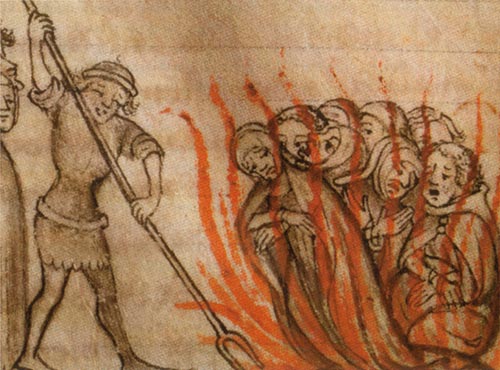
The order ran into trouble in the early 14th century and was disbanded by Pope Clement V in 1312, but not before state violence against some of its members, including some burned at the stake.

Because of this trouble, the “Templars” (they take that name from their capitol in Jerusalem, which they claimed was perched on  top of Solomon’s temple—for more about them, see this very detailed WIKI article:  https://en.wikipedia.org/wiki/Knights_Templar ) gained a certain dark reputation and we might imagine that the anonymous scholar’s request to Parkins already suggests something different for him on his vacation than he had planned.

Off he goes, however, to academic work and golf, but (literally) stumbles on the remains of the preceptory and discovers a little bronze whistle at the site

with two inscriptions on it in Latin.  He appears unable to translate the first, but the second says:  “Quis est iste qui venit”—“Who is that one who comes (or “has come”, depending upon the sound of the e in venit).”  As he turns to go back to his hotel, he notices a odd figure behind him, “in the shape of a rather indistinct personage in the distance, who seemed to be making great efforts to catch up with him, but made little, if any, progress.”  This makes Parkins vaguely uneasy, but he proceeds to the hotel and dinner. 

In fact, he should have paid more attention to the first inscription, which reads, almost in the form of a puzzle:

                              fla

                        fur      bis

                             fle

“Thief—you will blow, you will weep”.

I don’t want to spoil the story for you, but, needless to say, Parkins cleans and blows the whistle and things begin to happen, things particularly unexpected by a man who has declared that he doesn’t believe in the supernatural.  I’ll add the two original illustrations from the 1904 publication to give you a hint—

And I’ll add one caution:  don’t expect obvious violence (although others of James’ stories have such an element)—what happens is, to my mind, not shocking, but eerie, a word which comes to us probably through Scots and has this, among other definitions, in The Scottish National Dictionary:  “an undefined sense of fear; dread” (see:  https://dsl.ac.uk/entry/snd/eerie ).  This undefined dread makes this one of my favorite stories of this sort (though I don’t read it too often, remembering the first time I did, and the two days of such dread I felt afterwards).   Read it here:   https://archive.org/details/ghoststoriesana00jamegoog  and see if you agree with what James wrote in his preface:

“The stories themselves do not make any very exalted claim.  If any of them succeed in causing their readers to feel pleasantly uncomfortable when walking along a solitary road at nightfall, or sitting over a dying fire in the small hours, my purpose in writing them will have been attained.”

Will you, too, be creeped out?

Stay well,

Remember that fiends of any sort can’t cross running water,

(this is from a series of wood carvings of Robert Burns’ “Tam O’Shanter”, c.1860 from a great website:  https://monsterbrains.blogspot.com/2015/10/thomas-hall-tweedy-tam-oshanter-wood.html  )

And remember, as well, that there’s always

MTCIDC

O

PS

Does it also suggest something vaguely sinister that James’ preface is dated “Allhallows’ Eve”?

The Doubtful Sea Series Facebook Page

The Doubtful Sea Series Facebook Page

  • Ollamh

Categories

  • Artists and Illustrators
  • Economics in Middle-earth
  • Fairy Tales and Myths
  • Films and Music
  • Games
  • Heroes
  • Imaginary History
  • J.R.R. Tolkien
  • Language
  • Literary History
  • Maps
  • Medieval Russia
  • Military History
  • Military History of Middle-earth
  • Narnia
  • Narrative Methods
  • Poetry
  • Research
  • Star Wars
  • Terra Australis
  • The Rohirrim
  • Theatre and Performance
  • Tolkien
  • Uncategorized
  • Villains
  • Writing as Collaborators
Follow doubtfulsea on WordPress.com

Across the Doubtful Sea

Recent Postings

  • A Moon disfigured December 17, 2025
  • On the Roads Again—Once More December 10, 2025
  • (Not) Crossing Bridges December 3, 2025
  • On the Road(s) Again—Again November 26, 2025
  • On the Road(s) Again November 19, 2025
  • To Bree (Part 2) November 12, 2025
  • To Bree (Part 1) November 5, 2025
  • A Plague o’ Both—No, o’ All Your Houses! October 29, 2025
  • It’s in Writing (2:  I’st a Prologue, or a Poesie for a Ring?) October 22, 2025

Blog Statistics

  • 103,189 Views

Posting Archive

  • December 2025 (3)
  • November 2025 (4)
  • October 2025 (5)
  • September 2025 (4)
  • August 2025 (4)
  • July 2025 (5)
  • June 2025 (4)
  • May 2025 (4)
  • April 2025 (5)
  • March 2025 (4)
  • February 2025 (4)
  • January 2025 (5)
  • December 2024 (4)
  • November 2024 (4)
  • October 2024 (5)
  • September 2024 (4)
  • August 2024 (4)
  • July 2024 (5)
  • June 2024 (4)
  • May 2024 (5)
  • April 2024 (4)
  • March 2024 (4)
  • February 2024 (4)
  • January 2024 (5)
  • December 2023 (4)
  • November 2023 (5)
  • October 2023 (4)
  • September 2023 (4)
  • August 2023 (5)
  • July 2023 (4)
  • June 2023 (4)
  • May 2023 (5)
  • April 2023 (4)
  • March 2023 (5)
  • February 2023 (4)
  • January 2023 (4)
  • December 2022 (4)
  • November 2022 (5)
  • October 2022 (4)
  • September 2022 (4)
  • August 2022 (5)
  • July 2022 (4)
  • June 2022 (5)
  • May 2022 (4)
  • April 2022 (4)
  • March 2022 (5)
  • February 2022 (4)
  • January 2022 (4)
  • December 2021 (5)
  • November 2021 (4)
  • October 2021 (4)
  • September 2021 (5)
  • August 2021 (4)
  • July 2021 (4)
  • June 2021 (5)
  • May 2021 (4)
  • April 2021 (4)
  • March 2021 (5)
  • February 2021 (4)
  • January 2021 (4)
  • December 2020 (5)
  • November 2020 (4)
  • October 2020 (4)
  • September 2020 (5)
  • August 2020 (4)
  • July 2020 (5)
  • June 2020 (4)
  • May 2020 (4)
  • April 2020 (5)
  • March 2020 (4)
  • February 2020 (4)
  • January 2020 (6)
  • December 2019 (4)
  • November 2019 (4)
  • October 2019 (5)
  • September 2019 (4)
  • August 2019 (4)
  • July 2019 (5)
  • June 2019 (4)
  • May 2019 (5)
  • April 2019 (4)
  • March 2019 (4)
  • February 2019 (4)
  • January 2019 (5)
  • December 2018 (4)
  • November 2018 (4)
  • October 2018 (5)
  • September 2018 (4)
  • August 2018 (5)
  • July 2018 (4)
  • June 2018 (4)
  • May 2018 (5)
  • April 2018 (4)
  • March 2018 (4)
  • February 2018 (4)
  • January 2018 (5)
  • December 2017 (4)
  • November 2017 (4)
  • October 2017 (4)
  • September 2017 (4)
  • August 2017 (5)
  • July 2017 (4)
  • June 2017 (4)
  • May 2017 (5)
  • April 2017 (4)
  • March 2017 (5)
  • February 2017 (4)
  • January 2017 (4)
  • December 2016 (4)
  • November 2016 (5)
  • October 2016 (6)
  • September 2016 (5)
  • August 2016 (5)
  • July 2016 (5)
  • June 2016 (5)
  • May 2016 (4)
  • April 2016 (4)
  • March 2016 (5)
  • February 2016 (4)
  • January 2016 (4)
  • December 2015 (5)
  • November 2015 (5)
  • October 2015 (4)
  • September 2015 (5)
  • August 2015 (4)
  • July 2015 (5)
  • June 2015 (5)
  • May 2015 (4)
  • April 2015 (3)
  • March 2015 (4)
  • February 2015 (4)
  • January 2015 (4)
  • December 2014 (5)
  • November 2014 (4)
  • October 2014 (6)
  • September 2014 (1)

Blog at WordPress.com.

  • Subscribe Subscribed
    • doubtfulsea
    • Join 78 other subscribers
    • Already have a WordPress.com account? Log in now.
    • doubtfulsea
    • Subscribe Subscribed
    • Sign up
    • Log in
    • Report this content
    • View site in Reader
    • Manage subscriptions
    • Collapse this bar
 

Loading Comments...